15 Dog Grooming Tips for a Stress-Free Grooming Session: Keep Your Pup Happy and Calm

Dog Grooming Tips – Grooming your dog doesn’t have to be a struggle full of wiggling or worried looks. It’s common for dogs to feel anxious during grooming, especially if they’re not used to being handled or had uncomfortable experiences before.
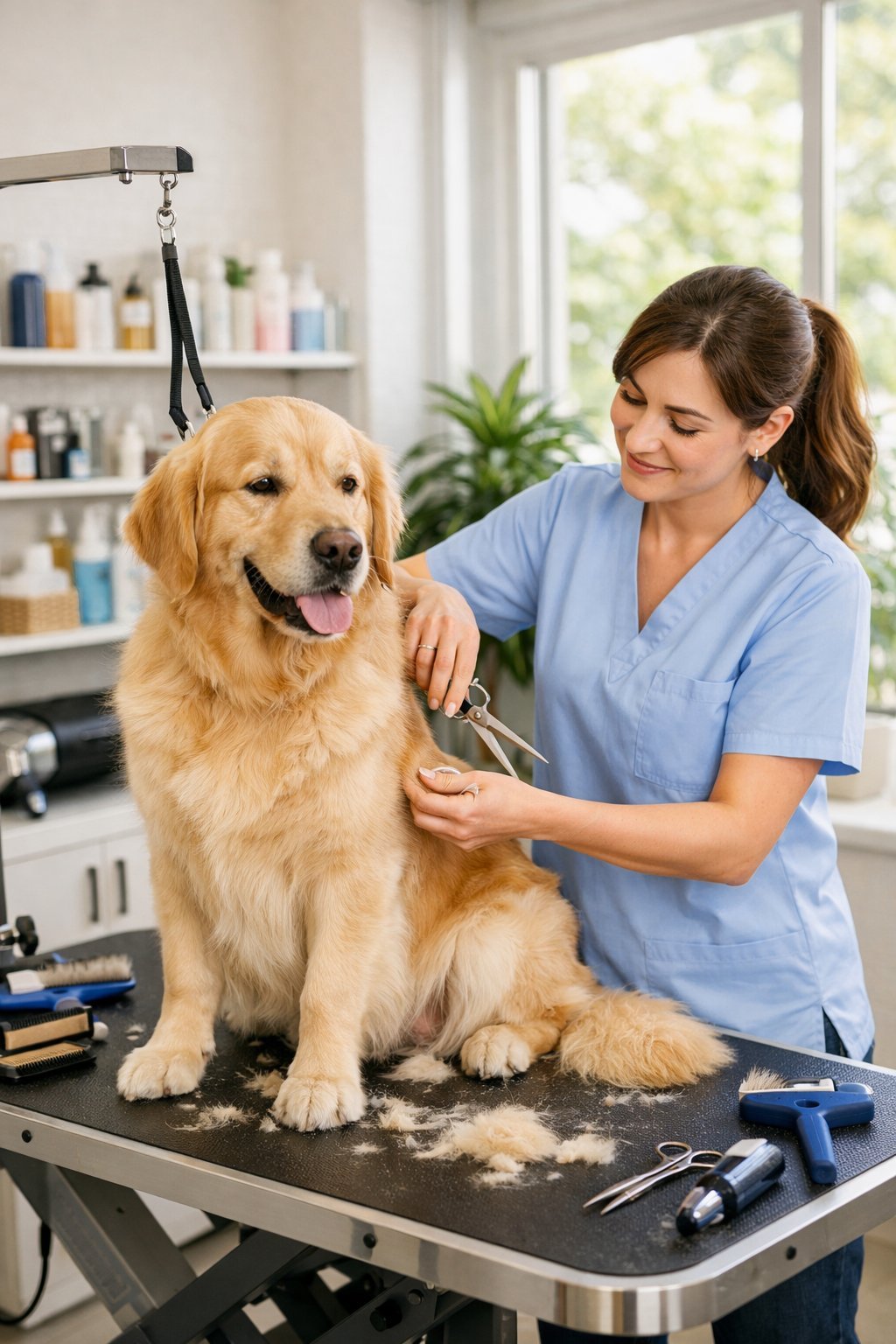
The good news is, with some patience and the right approach, you can turn grooming sessions into something positive. Creating a calm environment and using gentle techniques makes a world of difference.
Whether you have a nervous puppy or an older dog, these tips can help make grooming more pleasant for both of you. Building positive associations with grooming tools is one of the best ways to reduce your dog’s anxiety.
I’ll share practical strategies for everything from setting up your space to handling tricky spots like paws and ears. These methods focus on trust and keeping your dog comfortable throughout the process.
Key Takeaways
- A calm environment and positive reinforcement help reduce your dog’s grooming anxiety.
- Start with short sessions and build up gradually to make grooming less overwhelming.
- The right tools and a consistent routine can turn grooming into a fun bonding time.
Preparing for a Calm Grooming Session

Getting ready ahead of time can make a big difference in how relaxed your dog feels. Setting up the right space, picking good tools, and letting your dog get comfortable with supplies sets you both up for success.
Setting Up a Safe Grooming Area
I always pick a spot where my dog feels secure and comfortable. Good lighting is important so I can see what I’m doing and avoid accidents.
For small dogs, a sturdy table with a non-slip mat works well. Larger dogs usually prefer the floor where they feel more stable.
Distractions like toys, food bowls, and other pets are kept away during grooming time. This helps my dog focus and stay calm.
I make sure the room temperature is comfortable—not too hot or cold. Keeping all my supplies within arm’s reach means I never have to leave my dog alone.
Choosing the Right Tools for Your Dog’s Coat
Different coat types need different brushes and tools. My short-haired dog does great with a rubber curry brush and a soft bristle brush.
Long-haired pups need slicker brushes and metal combs to prevent tangles. Here are the basics I always have on hand:
- Nail clippers suited to my dog’s size
- Dog-safe shampoo and conditioner
- Cotton balls for ears
- Styptic powder for nail mishaps
- Pet towels
Quality tools are worth the investment. Cheap or dull clippers can hurt and make dogs nervous. Sharp, well-maintained tools make grooming smoother and faster.
For thick coats, thinning shears are helpful. Electric clippers work too, but I always check they’re cool before using them on my dog’s skin.
Introducing Your Dog to Grooming Supplies
Before I start grooming, I let my dog sniff and check out the tools at their own pace. Positive reinforcement is my go-to—treats for calm curiosity go a long way.
I’ll gently touch my dog with the brush before actually grooming, and reward calm behavior. For electric clippers, I let my dog hear the sound from a distance first, then gradually bring it closer over a few days.
Touching my dog’s paws, ears, and tail during playtime helps them get used to being handled in those sensitive spots.
Essential Dog Grooming Techniques
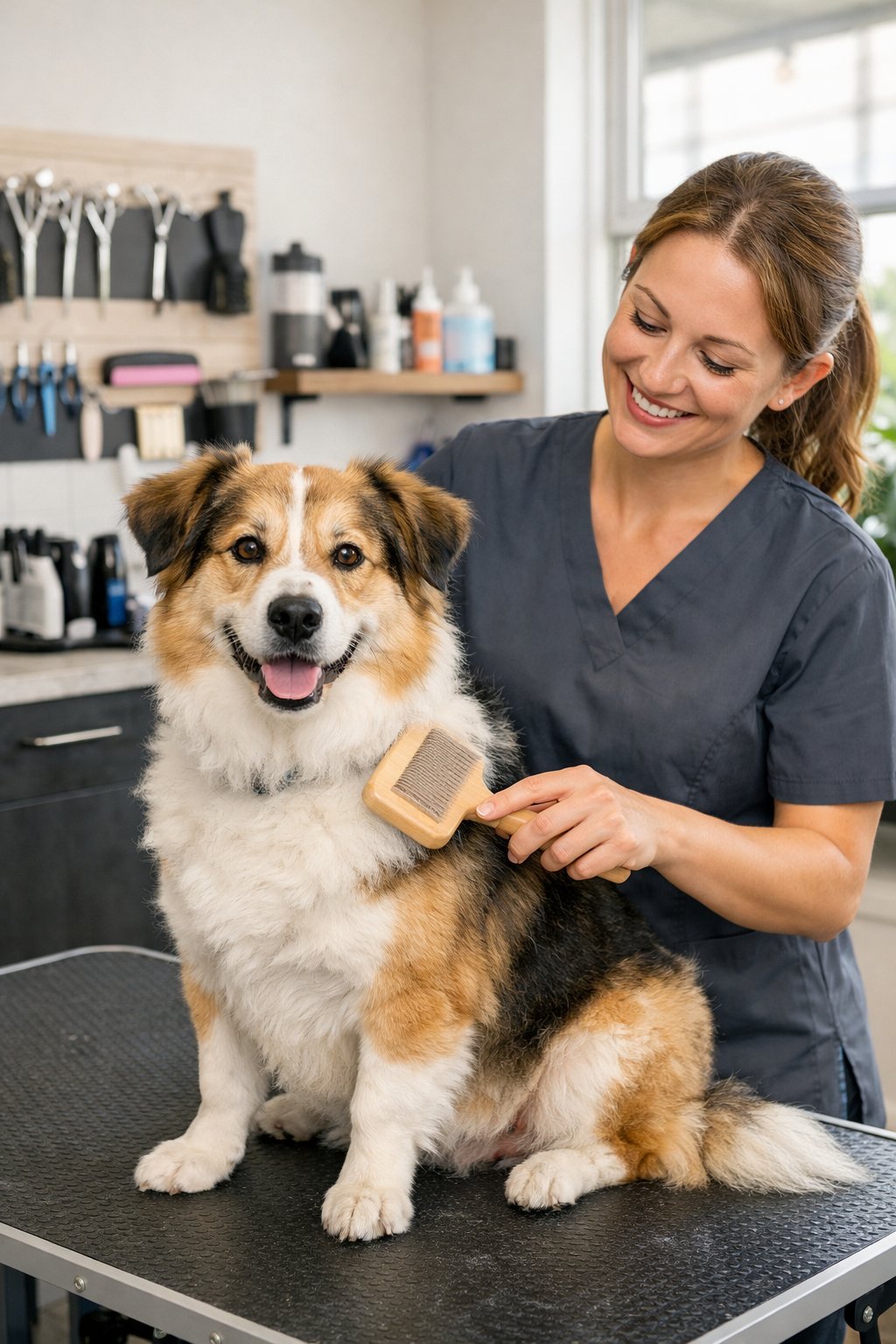
Using the right grooming techniques can mean the difference between a calm pup and a stressed one. The right methods for brushing, bathing, and drying keep things comfortable and make the process easier for both of us.
Brushing and Detangling Fur
I always start with the right brush for my dog’s coat. Short-haired dogs do best with a soft bristle or rubber curry brush, while long-haired ones need a slicker brush or metal comb.
Before brushing, I check for mats or tangles. I use my fingers to gently separate any tough spots and hold the fur close to the skin while brushing to avoid pulling.
Brushing in the direction of hair growth with slow, gentle strokes helps. I make sure to cover the chest, belly, legs, and tail.
Short sessions—about 5-10 minutes—work better than trying to do everything at once. Regular brushing removes loose hair, spreads natural oils, and helps me spot skin issues early.
Bathing Your Dog the Gentle Way
I fill the tub with lukewarm water before bringing my dog in. Some dogs get nervous from the sound of running water, so I try to keep things calm.
I wet my dog’s body first and save the head for last to avoid getting water in their ears and eyes. Dog-specific shampoo is a must—I lather gently and massage it into the coat.
Staying calm myself helps keep my dog relaxed. I talk in a soft, reassuring voice throughout the bath.
Rinsing thoroughly is important since leftover shampoo can irritate the skin. I rinse twice to make sure all the soap is out. For the face, I use a damp washcloth instead of spraying water.
Drying Without Stress
Right after the bath, I wrap my dog in a big, absorbent towel. I gently squeeze out the water instead of rubbing, especially for long-haired dogs.
If I use a blow dryer, I stick with the lowest heat and speed. I keep it at least 6-8 inches away and move it around so it doesn’t get too hot.
Many dogs prefer air drying, especially if they’re nervous around dryers. I’ll use extra towels and let my dog dry in a warm room. Brushing while the coat is still a little damp helps prevent new tangles.
Easing Anxiety During Grooming
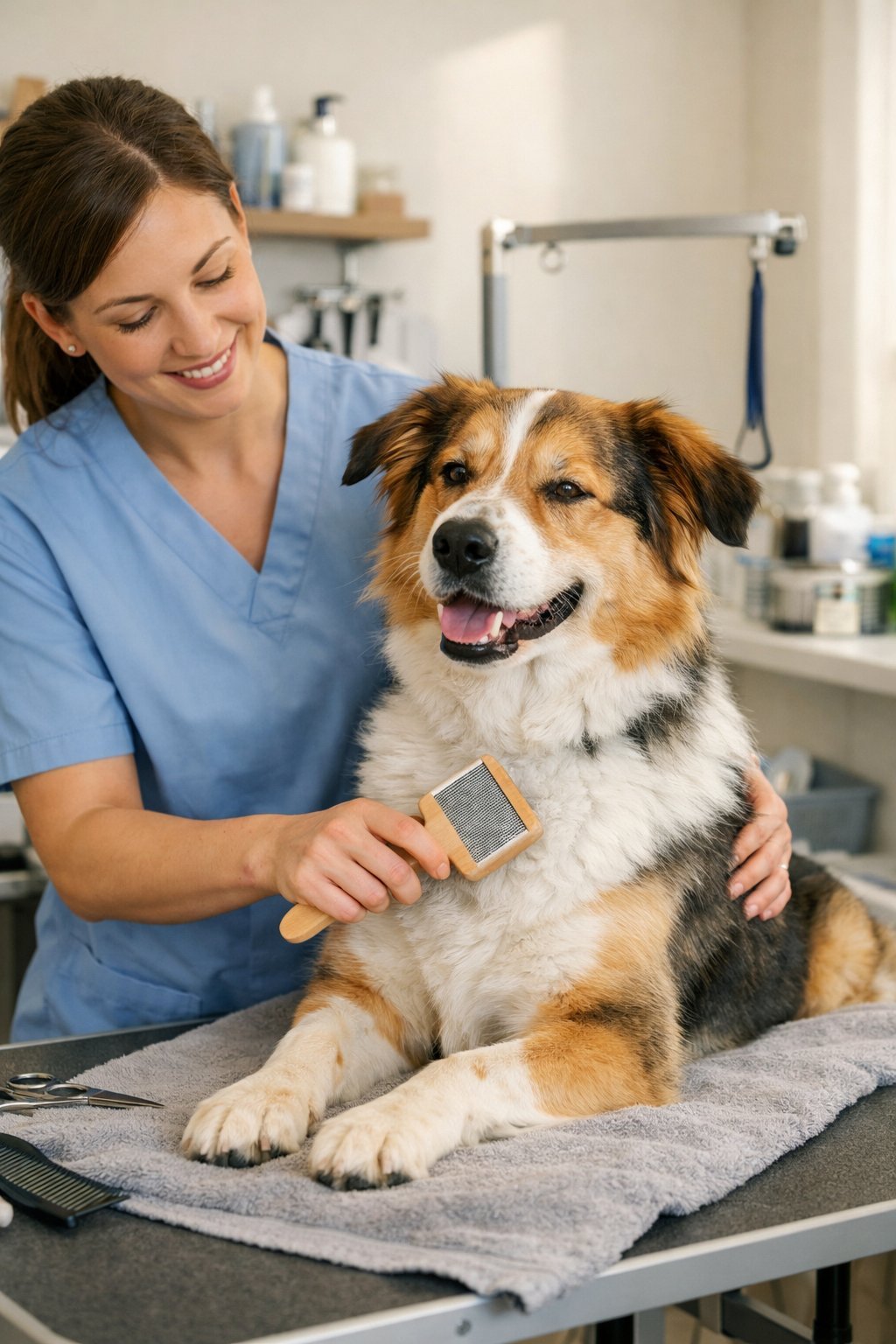
Grooming can be tough for anxious dogs, but spotting stress signals, rewarding calm behavior, and taking breaks can make things much easier.
Recognizing Signs of Stress in Dogs
I pay close attention to my dog’s body language during grooming. Signs like panting, drooling, yawning, or lip licking (when they’re not hot or hungry) can mean they’re stressed.
Posture is a big clue too. A tucked tail, flattened ears, or a lowered head usually means my dog needs a break.
Some dogs freeze or try to pull away from grooming tools. Shaking, trembling, or showing the whites of their eyes (whale eye) are also clear signs of fear.
Using Treats and Positive Reinforcement
I always keep high-value treats nearby. Small, soft treats are perfect because my dog can eat them quickly and stay focused.
I reward calm behavior, even if it’s just for a few seconds at first. Timing is everything—treats come right after my dog does something good, like standing still or letting me touch their paws.
Positive reinforcement builds good associations with grooming over time. I start by rewarding my dog just for being near the tools, then gradually ask for more.
Verbal praise goes a long way too. A happy, calm voice lets my dog know they’re doing great.
Taking Breaks When Needed
I never rush grooming if my dog starts to get stressed. Short sessions are better than trying to get everything done at once.
Usually, I groom for 5-10 minutes, then let my dog take a break to walk or play. These breaks help lower stress before we continue.
If my dog starts panting heavily or tries to escape, I stop right away. It’s better to take it slow and make gradual progress than to push through and make things worse.
I always plan grooming sessions for times when I’m not in a hurry. That way, I can be patient and give my dog the breaks they need.
Managing Specific Grooming Challenges

Some parts of grooming need a little extra patience and care. Working slowly and using the right techniques makes these tricky spots much easier for everyone.
Handling Sensitive Areas
Certain spots—like the face, paws, tail, and belly—are extra sensitive for most dogs. I start by gently touching these areas during playtime to help my dog get used to being handled.
Building trust through gradual introduction is key. When I work on the face, I use my free hand to gently support my dog’s head and keep tools away from the eyes.
For the paws, I hold them firmly but gently and work quickly to avoid frustration. The groin and rear areas need special care too.
I keep those sessions short and offer treats right after finishing. If my dog pulls away or whines, I take a break and try again later.
Trimming Nails Safely and Easily
Nail trimming can be scary for many dogs, but it doesn’t have to be stressful. I use sharp clippers that are the right size for my dog to make clean cuts.
The key is knowing where to cut. I look for the quick, which is the pink area inside the nail that has blood vessels and nerves.
On dark nails, I trim off small amounts at a time and watch for a gray or pink oval on the cut surface. I only trim the curved tip of each nail to avoid hitting the quick.
Cutting too much can cause pain and bleeding. If I accidentally cut the quick, I use styptic powder or cornstarch to stop the bleeding fast.
When starting out, I only trim a few nails at a time. My dog handles this much better than doing all four paws at once.
Cleaning Ears with Care
Cleaning your dog’s ears helps prevent infections and keeps them comfortable. I check my dog’s ears every week for dirt, redness, or any bad smells.
Instead of water, I use a vet-approved ear cleaning solution. I fill the ear canal with the solution and massage the base of the ear for 20-30 seconds.
My dog usually shakes their head after this, which is totally normal and helps get rid of debris. I then wipe out the visible part of the ear with cotton balls or gauze.
I never stick anything deep into the ear canal, since that can hurt the eardrum. Cotton swabs are only for cleaning the outer ear flap.
If my dog’s ears look red, smell bad, or seem painful, I skip cleaning and call my vet.
Finishing Touches and Aftercare

After grooming, I always take a few extra minutes to check my dog’s overall health. These final steps help catch any problems early and make grooming a positive experience.
Checking for Parasites and Skin Issues
I use this time to give my dog a thorough once-over for any health concerns. I run my hands over their body, feeling for lumps, bumps, or anything unusual under the fur.
I check between the toes and paw pads for ticks, which love warm, moist spots. I also look behind the ears, under the collar, and around the tail base where parasites like to hide.
While examining my dog, I watch for signs of skin problems like redness, flaking, or hot spots. I pay attention to any spots where my dog seems sensitive.
If I see a lot of scratching, bald patches, or inflamed skin, I make a note to call the vet. I also check the ears for any unusual odor, discharge, or redness.
The eyes should be clear and free of excessive tearing or discharge.
Rewarding Your Dog Post-Grooming
I always end grooming with praise and rewards. This helps my dog connect grooming with good things.
Right after we finish, I give my dog their favorite treat. Some dogs prefer playtime with a special toy, so I pick the reward that works best for my dog.
I use a happy, upbeat voice to tell my dog what a good job they did. Gentle pets or belly rubs are great if my dog likes affection after grooming.
If my dog seems energized, we might go for a short walk or have a quick play session. This positive reinforcement helps create stress-free grooming sessions that my dog actually looks forward to.
Establishing a Regular Grooming Schedule
I create a consistent grooming routine based on my dog’s breed, coat type, and lifestyle. Short-haired breeds typically need grooming every 8-12 weeks, while long-haired dogs often require sessions every 4-6 weeks.
I mark grooming days on my calendar so I don’t forget. This helps me keep up with regular care.
During shedding season in spring and fall, I increase brushing frequency. Even if full grooming sessions stay on the same schedule, the extra brushing helps manage loose hair.
Between professional grooming appointments, I do quick brushing sessions 2-3 times per week. I also trim nails every 3-4 weeks and clean ears weekly to stay ahead of any problems.