
Dog Grooming Tubs: Your Complete Guide to Choosing the Perfect Bathing Station

Giving your dog a bath at home can be a real workout. A dog grooming tub is a special bathing station designed to make washing your pet easier and safer by keeping them at a comfortable height and in a contained space.
Whether you’re a professional groomer or a pet owner who wants to skip the grooming salon, having the right tub can change everything.

I’ve learned that professional dog grooming tubs come in many styles and materials. You can find stainless steel models, walk-in designs, and adjustable-height options.
The best choice for you depends on your dog’s size, how often you bathe them, and where you plan to set up the tub. Dog grooming tubs are built with features like non-slip surfaces, drain systems, and adjustable grooming arms.
These tools help keep your dog calm and secure during bath time. The right tub saves your back from bending over and makes the whole process faster and less stressful for both of you.
Key Takeaways
- Dog grooming tubs come in different types including stainless steel, walk-in, and portable options to fit various needs and budgets
- The right tub size and features depend on your dog’s size, your available space, and how often you groom
- Regular cleaning and proper safety practices help your grooming tub last longer and keep bath time safe for your pet
Types of Dog Grooming Tubs

Dog grooming tubs come in three main material types, each with distinct advantages for different grooming situations. Stainless steel offers professional durability, plastic provides budget-friendly versatility, and portable options give you flexibility for mobile grooming.
Stainless Steel Grooming Tubs
I recommend stainless steel tubs if you want a long-lasting grooming solution. These tubs resist rust and corrosion, making them ideal for frequent use.
Professional groomers often prefer stainless steel because it stands up to daily wear and chemicals found in shampoos and treatments. The material is easy to clean and sanitize between dogs.
Stainless steel tubs typically feature 304-grade steel construction with fully welded seams. They don’t absorb odors or stains like some other materials do.
The smooth surface prevents bacteria buildup. These tubs cost more upfront than plastic options.
However, they last for many years without cracking, fading, or warping. I find them worth the investment if you groom dogs regularly or run a professional grooming business.
Polyethylene and Plastic Tubs
Plastic and polyethylene tubs offer an affordable entry point for home groomers. These lightweight options are easier to move and install than metal alternatives.
ABS plastic is a common material choice because it resists impacts and scratches. Fiberglass and plastic tubs provide good durability at a lower price point than stainless steel.
I like that plastic tubs come in various colors to match your grooming space. They retain heat better than metal, keeping bathwater warmer for longer periods.
This makes dogs more comfortable during bathing. The main drawback is that plastic can crack over time, especially with heavy use.
Some cheaper plastic tubs may stain or hold odors if not cleaned properly. They work well for occasional home grooming but may need replacement sooner than steel options.
Portable and Foldable Tub Options
Portable grooming tubs solve space constraints and allow mobile grooming. I find these especially useful for apartment living or traveling groomers.
Foldable tubs collapse flat for storage in closets, cars, or small spaces. They typically use waterproof fabric stretched over a collapsible frame.
Most portable options weigh under 15 pounds when empty. These tubs work best for small to medium-sized dogs.
Large breeds may not fit comfortably in most portable models. The setup takes just a few minutes, and teardown is equally quick.
I notice that portable tubs lack the stability of permanent installations. They sit lower to the ground, requiring you to bend more during grooming.
However, they cost much less than built-in options and give you flexibility to groom anywhere with a water source.
Choosing the Right Dog Grooming Tub

I’ve learned that selecting the right grooming tub depends on your dog’s size, the safety features you need, and how much you’re willing to spend for a tub that lasts.
Size Considerations for Different Breeds
I always tell people that the tub should be large enough to comfortably fit your pet with room to move. For small dogs under 25 pounds, a tub that’s 24 to 30 inches long works well.
Medium dogs between 25 and 60 pounds need tubs around 36 to 42 inches long. Large breeds over 60 pounds require tubs at least 48 inches long or more.
I measure my dog from nose to tail before shopping to avoid buying a tub that’s too cramped. The tub depth matters too.
I prefer tubs with walls between 10 and 16 inches high. This height keeps water contained while still letting me reach my dog easily.
Taller walls work better for dogs that shake or splash a lot.
Tub Features for Comfort and Safety
I look for non-slip surfaces on the tub bottom first. This prevents my dog from sliding around and getting scared during bath time.
Textured rubber mats or built-in grip patterns work best. Restraint loops or leash attachments are essential for keeping active dogs in place.
I attach a grooming loop to these anchor points so my hands stay free for washing. Adjustable legs or ramps help dogs with joint problems get in and out safely.
I also check for ergonomic design features that make grooming easier on my back. Tubs at waist height save me from bending over.
Built-in storage shelves keep shampoo and tools within reach. Some tubs include spray hoses with adjustable pressure settings, which I find helpful for rinsing thick coats thoroughly.
Budget and Durability Factors
I’ve found that materials like stainless steel, fiberglass, and ABS plastic each have different price points and lifespans. Stainless steel tubs cost more upfront but resist rust and last for years.
They’re my top choice for daily use. Fiberglass tubs offer a mid-range price and hold up well with regular care.
ABS plastic tubs cost the least but may crack or fade over time. I consider how often I’ll use the tub before deciding.
For professional groomers, investing in a durable commercial-grade tub makes sense. For home use, I balance my budget with how long I expect the tub to last.
I also factor in assembly difficulty and warranty coverage when comparing options.
Installation and Setup
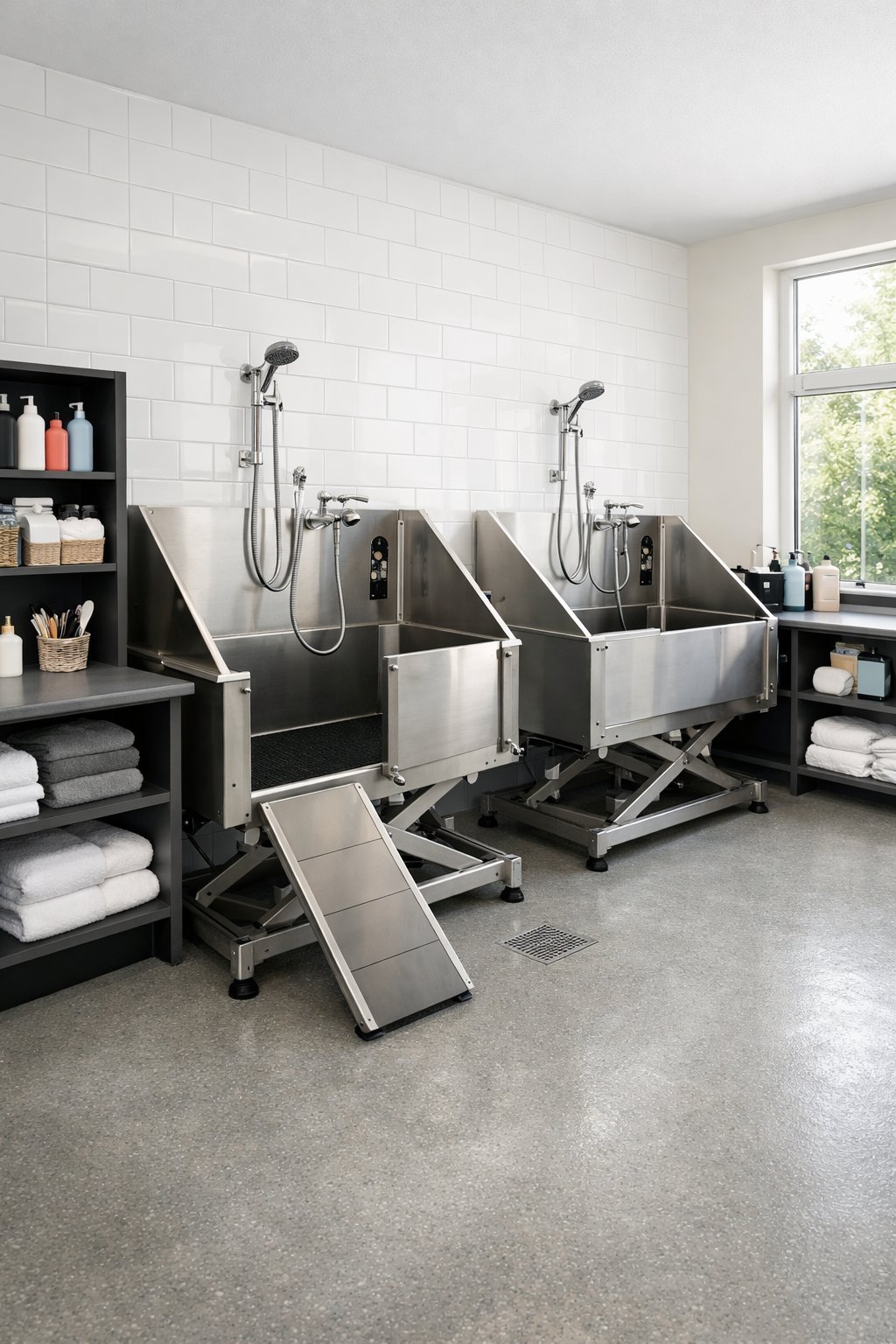
Proper installation requires attention to water connections, drain placement, and adjustable leveling feet. I recommend planning your space layout before assembly to avoid repositioning a heavy tub later.
Plumbing and Drainage Requirements
I always start by checking the water supply lines and drain access in my chosen location. Most grooming tubs need both hot and cold water connections, typically with standard ½-inch threaded fittings.
The drain system is critical for proper function. I position the tub so the drain end sits slightly lower than the rest of the unit, which helps water flow out smoothly.
According to VEVOR’s installation instructions, adjusting the leaking end to keep it low makes waste water emissions more efficient. I make sure to install a P-trap beneath the drain to prevent sewer gases from entering my grooming area.
The drain line should have a minimum 1.5-inch diameter for adequate water flow when emptying the tub.
Location and Space Planning
I consider several factors when choosing where to install my grooming tub. The area needs enough clearance around all sides for me to move comfortably while bathing dogs of different sizes.
Floor strength matters more than most people realize. A filled tub with a large dog can weigh several hundred pounds, so I verify the floor can support this load.
I prefer locations near exterior walls or over basement support beams. Access to utilities simplifies installation significantly.
I look for spots close to existing water lines and drains to minimize plumbing runs. Good lighting and ventilation are equally important for a comfortable grooming environment.
Assembly Tips for Home and Professional Use
I recommend laying out all parts before starting assembly to verify nothing is missing. Most tubs come with detailed assembly and installation guides that I follow step by step.
Key assembly steps I follow:
- Attach legs and support brackets first
- Install the faucet and spray hose before positioning the tub
- Connect drain components loosely, then tighten after testing alignment
- Add non-slip mats or surfaces inside the tub
After installation, I adjust the leveling feet on each leg to keep the tub stable and ensure proper drainage angle. I always run water through the system for several minutes to check for leaks at all connection points before using the tub with a dog.
Cleaning and Maintenance
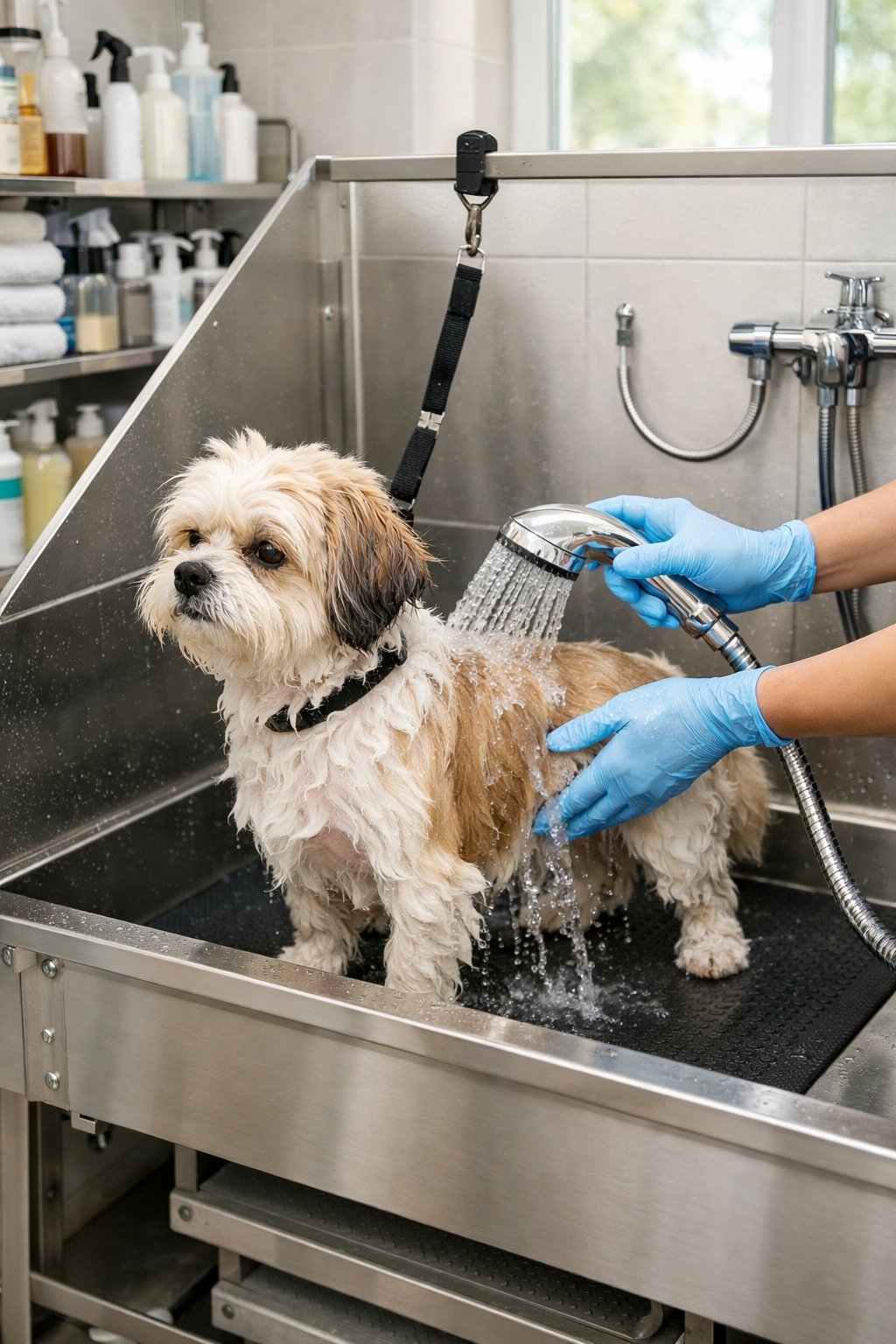
Regular cleaning keeps your grooming tub safe and hygienic for every dog that uses it. I’ve found that a consistent maintenance routine prevents buildup and extends the life of your equipment.
Daily Cleaning Routine
I always rinse my tub thoroughly after each grooming session to remove loose hair and soap residue. This simple step takes less than a minute but makes a huge difference.
For daily cleaning of pet grooming tubs, I use warm water and a mild detergent or pet-safe disinfectant. I scrub all surfaces with a soft brush or cloth, paying special attention to corners and drain areas where hair tends to collect.
After washing, I rinse everything completely to remove all cleaning product. I then dry the tub with a clean towel to prevent water spots on stainless steel surfaces.
The drain should be checked and cleared of any trapped hair before the next use. I also wipe down faucets, spray nozzles, and handles with disinfectant.
These high-touch areas can harbor bacteria if not cleaned regularly.
Preventing Mold and Odors
Moisture creates the perfect environment for mold growth and bad smells in grooming tubs. I make sure to dry my tub completely after each use, including hard-to-reach areas.
Proper ventilation is critical in my grooming space. I keep air flowing to help surfaces dry faster and prevent humidity buildup.
If possible, I leave the tub area open to air between appointments. For stainless steel tubs, I’ve learned that vinegar is an effective natural cleaning and disinfecting agent that also helps eliminate odors.
I spray undiluted white vinegar on surfaces weekly and let it sit for a few minutes before rinsing. I regularly inspect rubber seals, drain gaskets, and grout lines for signs of mold.
These spots need immediate attention if I notice any dark spots or musty smells.
Long-Term Maintenance Practices
I schedule deep cleaning sessions monthly to maintain my grooming equipment properly. This includes removing and cleaning drain components.
I also check plumbing connections for leaks and inspect the tub structure for damage. For stainless steel grooming tubs, I polish surfaces every so often to keep them shiny and protected.
I avoid using abrasive cleaners since they can scratch the metal and make it easier for bacteria to hide. All moving parts like adjustable legs, ramps, and restraint attachments get checked every few months.
I tighten any loose bolts and lubricate hinges as needed. Swapping out worn rubber components before they break helps prevent water damage and keeps everything working smoothly.
Safety Tips and Best Practices

Keeping your dog safe during grooming starts with preventing falls and making sure they’re secured properly. Using the right tools the right way helps protect both you and your pet from accidents.
Preventing Slips and Injuries
I always check that the tub bottom has a non-slip surface before bathing any dog. Anti-slip dog grooming tubs are great for preventing falls and injuries, especially if dogs get nervous or try to jump out.
If my tub doesn’t have built-in traction, I put a rubber mat on the bottom. This gives dogs better footing and helps them feel more secure during bath time.
I test the water temperature before putting my dog in the tub. It should feel lukewarm on my wrist—about the same as you’d use for a baby.
Water that’s too hot can burn their skin, and cold water can make them uncomfortable or squirmy. I also make sure the area around the tub stays dry.
Wet floors are slippery for me too, so I lay towels on the floor to catch splashes and keep my footing steady when I’m lifting my pet.
Securing Dogs During Bath Time
I use a grooming loop or tether attached to the tub to keep my dog in place. The loop goes around their neck, but I always make sure it’s loose enough so they can stand comfortably and tight enough so they can’t jump out.
I never leave my dog unattended while they’re secured in the tub. Even a minute alone can be risky if they panic.
For dogs who get extra nervous, I ask someone to help hold them gently instead of just using restraints. Having an extra set of hands makes things easier and safer for everyone.
I keep one hand on my dog at all times during the bath to reassure them and stay in control.
Proper Use of Grooming Tools in the Tub
I keep my grooming tools organized and within easy reach before starting the bath. This way, I don’t have to leave my dog unattended to grab shampoo or a brush.
When using handheld sprayers, I point the nozzle away from my dog’s face and ears. Water in these sensitive areas can cause discomfort or ear infections.
I use a damp washcloth for cleaning their face instead. This is much gentler and keeps water out of their eyes and ears.
I test all electric tools like dryers or clippers away from water sources. These should never be used while my dog is still in a wet tub because of the risk of electric shock.
I also keep sharp tools like scissors in a secure holder when not actively using them. A struggling dog can easily get cut if scissors are loose in the tub area.