
Dog Harness Guide: How to Choose the Perfect Fit for Your Furry Friend

Dog Harness Guide – Choosing the right gear for walks with your dog can feel overwhelming with so many options available. A dog harness distributes pressure across your dog’s chest and shoulders instead of their neck, making walks safer and more comfortable while giving you better control.
This makes harnesses especially helpful for dogs that pull, have neck problems, or need extra support during outdoor activities.

I’ve spent time researching what makes a good harness and why so many dog owners are switching from traditional collars. Dog harnesses provide better control during walks while reducing the risk of neck injuries.
Whether you have a small puppy or a large active dog, understanding harness options will help you make the best choice for your pet. The right harness should fit well and allow your dog to move naturally without rubbing or restricting their movement.
From no-pull designs to sport harnesses, each type serves different needs and activities. Let me walk you through everything you need to know about finding and using the perfect harness for your dog.
Key Takeaways
- Harnesses spread pressure across your dog’s body to protect their neck and give you more control during walks
- Different harness styles work better for specific dog sizes, behaviors, and activities
- Proper fitting and regular cleaning help your harness last longer and keep your dog comfortable
Types of Dog Harnesses
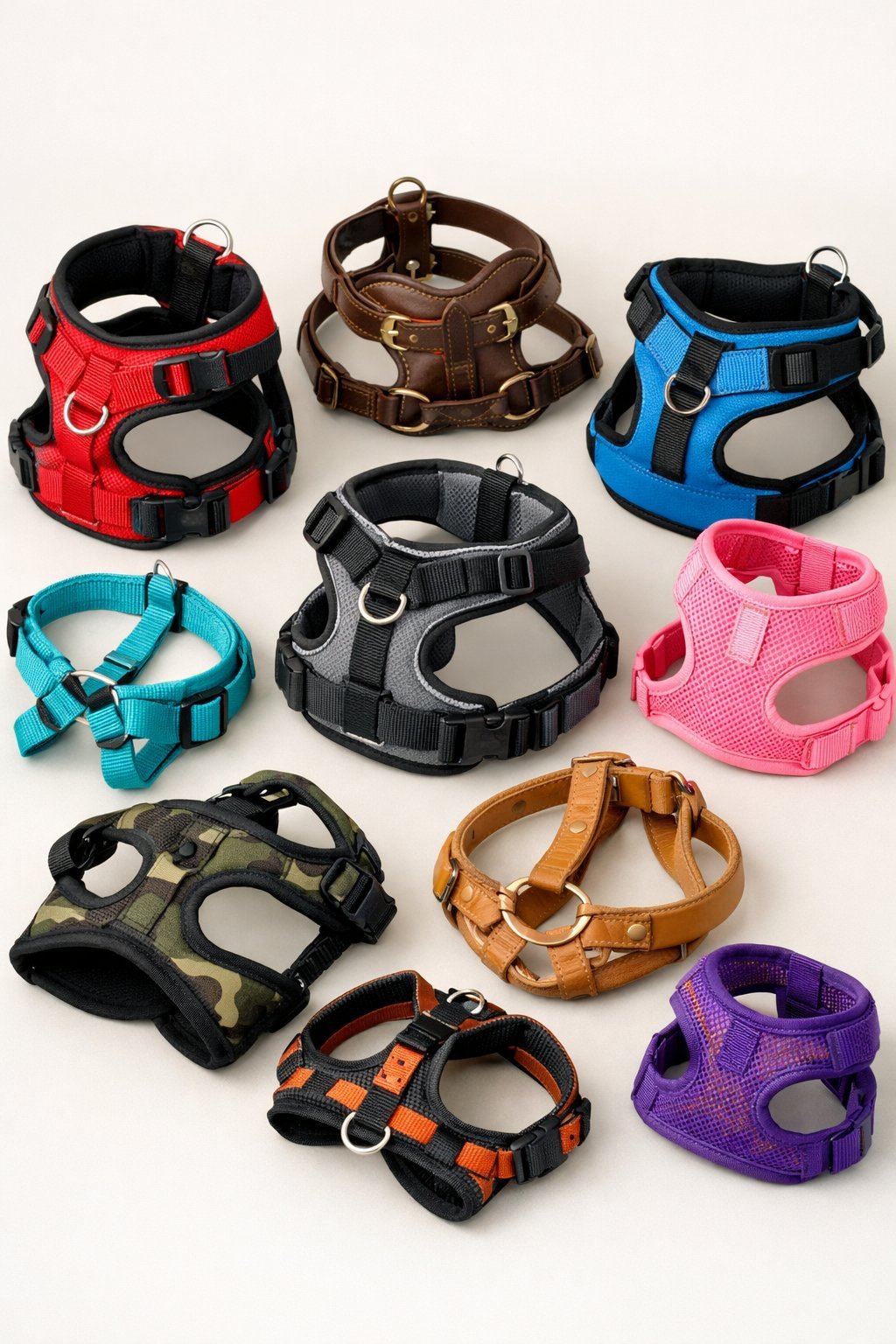
Dog harnesses come in several main styles, each designed to work differently based on where they clip and how they fit your dog. The right type depends on your dog’s behavior, size, and what activities you do together.
Standard Harnesses
Standard harnesses are the most common type you’ll see at pet stores and on walks around your neighborhood. These harnesses typically have a back-clip attachment point between your dog’s shoulder blades where you connect the leash.
I find that standard harnesses work well for dogs who already walk calmly on a leash. They distribute pressure evenly across the chest and shoulders instead of putting strain on the neck like a collar does.
Key features include:
- Simple clip attachment on the back
- Even weight distribution
- Easy to put on most dogs
- Available in many colors and patterns
The main drawback is that back-clip harnesses give you less control if your dog pulls. When a dog pulls forward, the clip location actually makes it easier for them to use their full body strength.
No-Pull Harnesses
No-pull harnesses attach at the front of your dog’s chest rather than on their back. This front attachment point is the key feature that helps reduce pulling behavior.
When your dog tries to pull forward with a front-clip harness, the leash naturally turns them back toward you. This helps with training because pulling becomes less rewarding for your dog.
I recommend these harnesses for strong pullers or dogs still learning leash manners. Some no-pull harnesses have dual clips, giving you both front and back attachment options.
Benefits of no-pull designs:
- Discourages pulling naturally
- Gives you better steering control
- Reduces strain on your arms and shoulders
- Works well for training purposes
These harnesses need proper fitting to work correctly. If the chest strap sits too low, it can interfere with your dog’s front legs while walking.
Step-In Harnesses
Step-in harnesses are exactly what they sound like. Your dog steps into two leg holes, then you pull the harness up and clip it on their back.
I think these are the easiest harnesses to put on dogs who don’t like things going over their heads. You simply lay the harness flat on the ground, have your dog place their front paws in the openings, then lift and buckle.
Main advantages:
- No overhead placement needed
- Quick and simple to use
- Less stressful for anxious dogs
- Secure fit when properly sized
The challenge with step-in harnesses is getting some dogs to cooperate with placing their paws in the right spots. They also might not provide as much control as other harness types for very strong pullers.
Vest Harnesses
Vest harnesses cover more of your dog’s chest and back area with padded material. They look like small jackets and provide the most coverage of any harness style.
I prefer vest harnesses for small dogs or dogs with delicate frames because they spread pressure across a larger area. The extra padding makes them comfortable for all-day wear during long adventures.
Features that make vest harnesses unique:
- Maximum padding and coverage
- Extra comfortable for extended wear
- Often include reflective strips for safety
- Can provide warmth in cool weather
- May have handle on top for lifting assistance
These harnesses work great for older dogs who need gentle support. The wider straps won’t dig into your dog’s skin or fur like thin webbing can.
Just keep in mind that vest harnesses can be warmer, so they might not be ideal for hot summer days or thick-coated breeds.
Selecting the Right Dog Harness
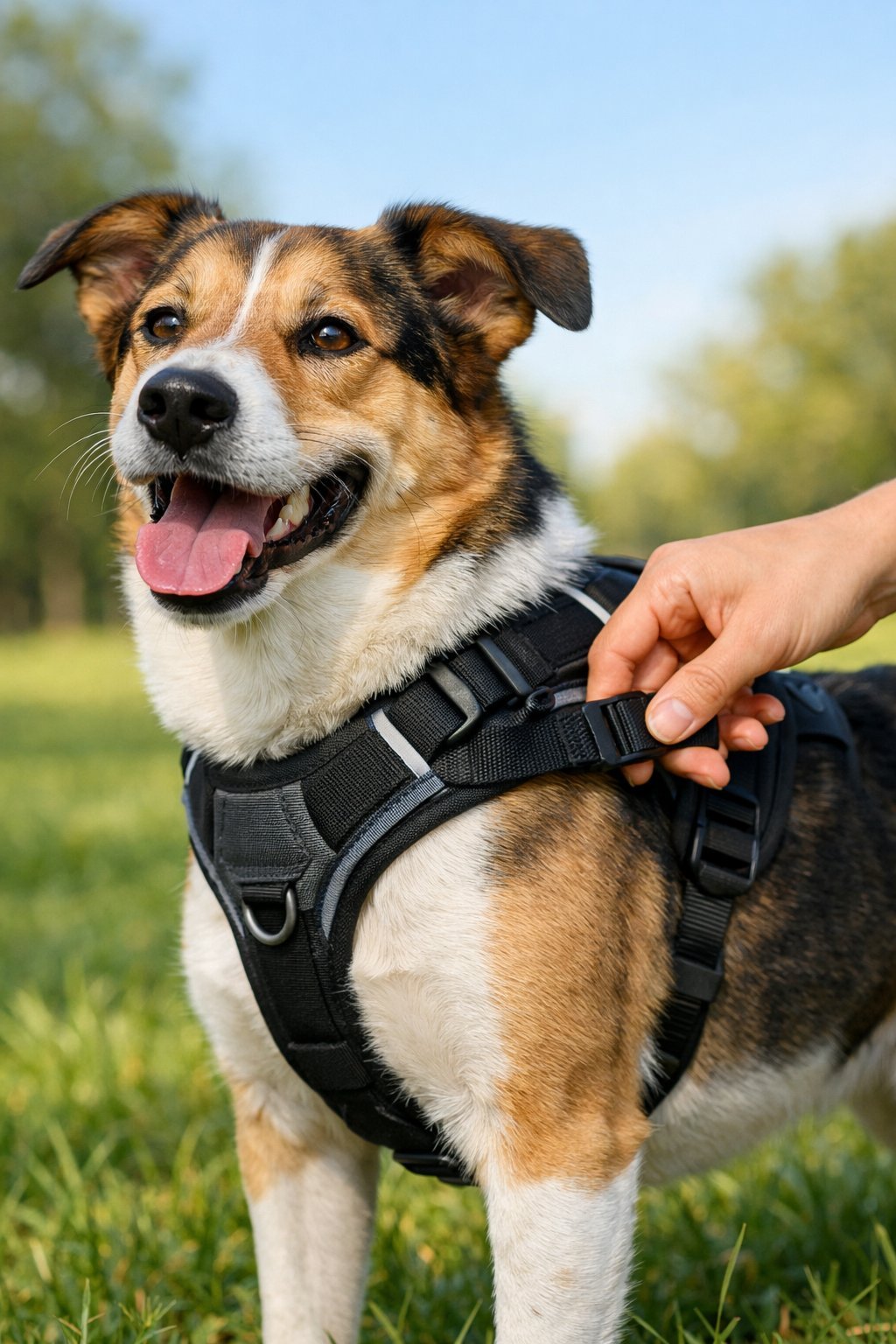
Getting the right harness means thinking about your dog’s size, what the harness is made of, and your dog’s specific breed traits.
Size and Fit Considerations
I always measure my dog’s chest before buying a harness. You need to wrap a soft tape measure around the widest part of your dog’s ribcage, right behind the front legs.
Proper sizing is critical because a too-tight harness can hurt your dog, while a too-loose one lets them slip out. I add two fingers of space between the harness and my dog’s body to check the fit.
Most harnesses come in sizes like small, medium, and large. But I prefer brands that list exact chest measurements in inches.
This helps me pick the right size the first time. I also check that the harness doesn’t rub against my dog’s armpits or neck.
Different harness styles have different fits, so I look for adjustable straps on the chest and shoulders. These let me fine-tune the fit as my dog grows or if their weight changes.
Material and Comfort
I look for harnesses made from soft, breathable materials. Mesh fabrics work well in hot weather because they don’t trap heat against my dog’s skin.
Padded straps prevent chafing during long walks. I check that any padding sits flat and doesn’t bunch up in areas where the harness touches my dog’s body.
Nylon is durable and easy to clean, but it can be stiff at first. I prefer harnesses with fleece lining or neoprene padding for extra comfort.
The hardware matters too—I choose plastic buckles for lightweight comfort or metal clasps for stronger dogs. Reflective strips help drivers see us during evening walks.
I wash the harness regularly to keep it fresh and check for worn spots that might irritate my dog’s skin.
Breed-Specific Needs
Small breeds need harnesses that don’t put pressure on their delicate necks and throats. I use harnesses that distribute pulling force across the chest instead.
Dogs with short noses like Bulldogs or Pugs need harnesses designed for their body shape. Their deep chests and thick necks require wider straps and more adjustment points.
Long-backed breeds like Dachshunds benefit from harnesses that support their spine. I look for styles that extend further down the back to prevent strain.
Active breeds that pull need front-clip harnesses. The leash attachment on the chest gives me better control without choking my dog.
For calm walkers, I use back-clip harnesses that are easier to put on and take off.
How to Properly Use a Dog Harness

Getting the fit right and helping your dog feel comfortable makes all the difference when using a harness. I’ll walk you through the key steps to ensure your dog’s harness works safely and effectively.
Fitting and Adjustment Tips
I always start by measuring my dog correctly around the chest and neck before buying a harness. The chest measurement should be taken at the widest part, right behind the front legs.
Once I have the harness on my dog, I check that I can fit two fingers between the straps and my dog’s body. This ensures the harness isn’t too tight or too loose.
Key fit checks I always do:
- Check that the chest strap sits in the middle of the chest, not too close to the neck
- Make sure the back strap lies flat between the shoulder blades
- Verify that leg straps don’t rub against the armpits
- Ensure buckles are securely fastened
I adjust the harness while my dog is standing in a natural position. If the harness shifts around too much during movement, I tighten it slightly.
A properly fitted harness protects my dog and helps prevent escape attempts.
Introducing a Harness to Your Dog
I let my dog sniff and investigate the harness before trying to put it on. This helps reduce anxiety about the new equipment.
For the first few attempts, I use treats to create positive associations. I reward my dog each time they allow me to place the harness near them or touch them with it.
I start with short sessions. On day one, I might just drape the harness over my dog’s back for a few seconds, then remove it and give treats.
The next day, I work on fastening one buckle. Some dogs feel nervous about putting their head through overhead harnesses.
If my dog resists, I try a step-in style harness instead. These require the dog to step into leg holes, which many dogs find less intimidating.
I never force the harness on or punish my dog for resisting. Patience during this introduction phase prevents long-term harness aversion.
Safe Walking and Training Practices
I attach the leash to the back clip for regular walks with dogs who don’t pull much. For dogs who pull, I use the front clip, which redirects their momentum toward me when they try to move forward.
Walking safety rules I follow:
- Never leave a harness on an unattended dog
- Check the harness before each walk for wear or damage
- Avoid retractable leashes with harnesses, as they encourage pulling
- Keep the leash loose to prevent strain
I use the harness as a training tool to manage pulling behavior. When my dog pulls, I stop walking immediately.
I only move forward again when the leash goes slack. For dogs learning leash manners, I reward them for walking beside me with the leash relaxed.
The harness gives me better control without putting pressure on my dog’s throat like a collar would.
Benefits of Using a Dog Harness

Dog harnesses offer better control during walks, protect your dog’s neck from injury, and make training easier for dogs that pull or get excited outdoors.
Improved Control and Safety
I find that harnesses give me much better control over my dog compared to a standard collar. When my dog pulls or lunges, a harness redirects their momentum to the side instead of letting them use their full forward strength.
This makes walks safer for both of us. The design helps prevent my dog from slipping out and running away.
A properly fitted harness follows my dog’s body structure and keeps them secure even when they twist or back up. I also appreciate how harnesses help me guide my dog away from dangers.
If another dog approaches or my dog spots something interesting, I can redirect them quickly without yanking on their neck. This extra control means I worry less during our outdoor adventures.
Reduced Strain on Neck
My dog’s neck is more delicate than I initially realized. Using a collar puts direct pressure on the throat, windpipe, and spine when my dog pulls.
A harness protects these sensitive areas by spreading pressure across the chest and shoulders instead. This reduces the risk of tracheal collapse or spinal issues, especially for dogs that pull hard on their leash.
Short-nosed breeds like Bulldogs or Pugs can have breathing problems when pressure is applied to their throat. My harness lets these dogs explore comfortably without risking their health.
Enhanced Training Effectiveness
Training my dog to walk calmly became easier once I switched to a harness. I can guide my dog’s movement without causing discomfort or pain that might make them resistant to learning.
The harness minimizes pulling behavior by giving me better leverage and control. When my dog tries to pull forward, the harness gently discourages this without hurting them.
This helps them learn proper walking behavior faster. I also use the harness as a training tool for basic commands.
The multiple attachment points let me adjust how I guide my dog during training sessions. My dog responds better because they’re comfortable and not distracted by neck pressure.
Caring for Your Dog Harness
Regular cleaning and routine checks help your dog’s harness last longer and keep your pup safe during walks. I recommend building these simple maintenance tasks into your regular pet care routine.
Cleaning and Washing Guidelines
I always check the care label on my dog’s harness before washing it. Most nylon and mesh harnesses can go in the washing machine on a gentle cycle with cold water.
I place the harness in a mesh laundry bag to protect the buckles and straps. For hand washing, I use mild soap and warm water, scrubbing any dirty spots with a soft brush.
Proper cleaning of dog gear removes dirt, bacteria, and odors that build up over time. I avoid using bleach or harsh chemicals that can weaken the fabric.
After washing, I let the harness air dry completely before putting it back on my dog. I never use a dryer because the heat can damage the materials and cause straps to shrink or warp.
Inspecting for Wear and Tear
I check my dog’s harness before each walk for signs of damage. I look closely at the stitching, buckles, and D-rings for any fraying, cracks, or loose threads.
The areas where my dog pulls the most tend to wear out first. I run my fingers along all the straps to feel for weak spots or thinning fabric.
I replace the harness immediately if I notice any metal pieces that look bent or plastic buckles with cracks. I also check that all adjustable straps still hold securely and don’t slip during walks.
When the harness no longer fits properly or shows significant wear, I know it’s time for a replacement.
