Dog House DIY Plans: Easy Step-by-Step Guides for Building Your Pet’s Perfect Home

Dog House Diy – Plans Building a dog house for your furry friend doesn’t have to be complicated or expensive. You can create a comfortable shelter for your dog using free DIY plans with step-by-step instructions, material lists, and diagrams.
Many budget-friendly dog house plans can be completed for under $100. This makes the project accessible for most pet owners.
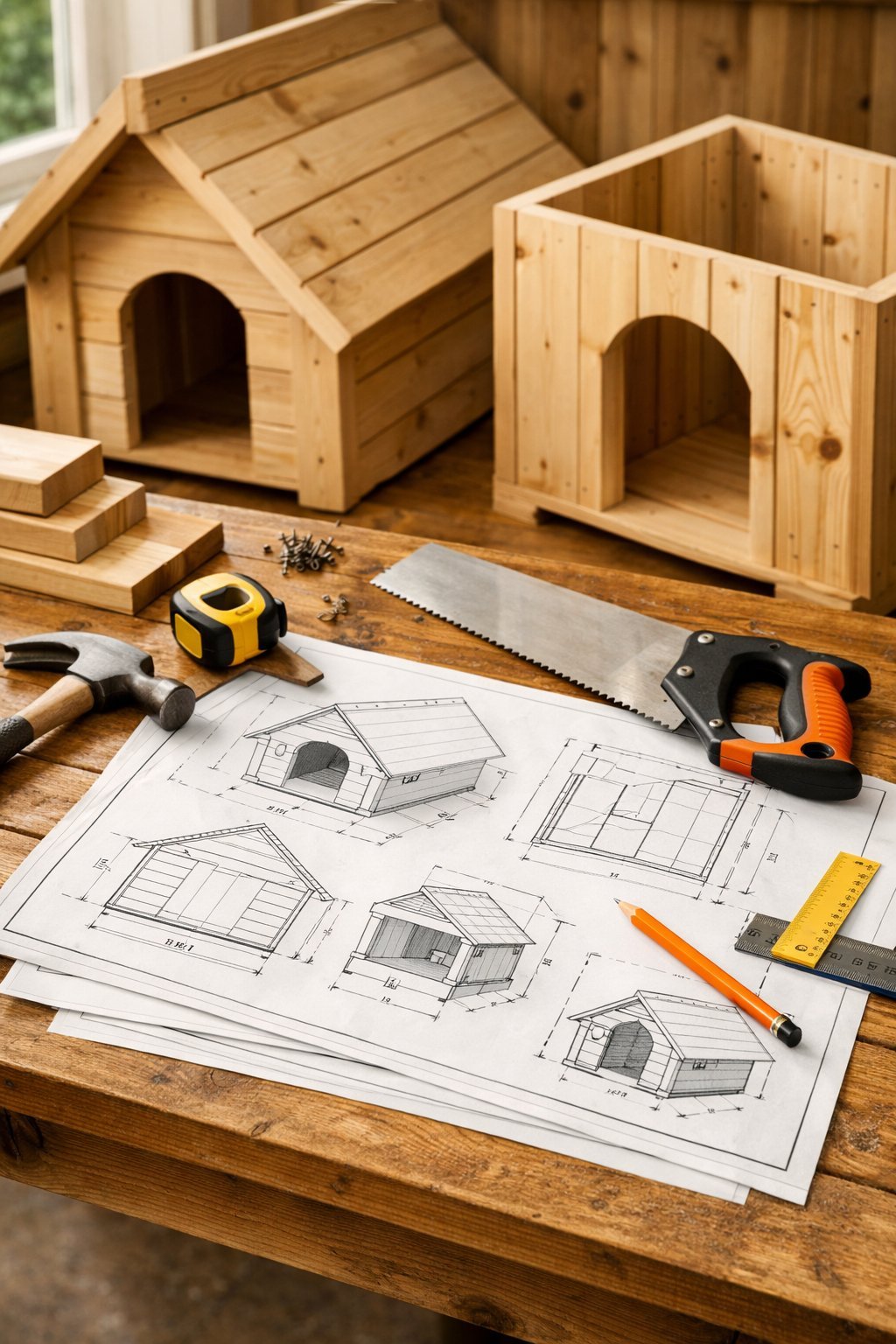
I’ve gathered info about the best DIY dog house plans online to help you get started. Whether you have a small terrier or a big breed, there are options for every dog’s size and your skill level.
From simple A-frame designs to insulated houses with porches, there’s a plan for every builder. The key is picking the right design and having clear instructions to follow.
I’ll walk you through everything you need to know, from selecting materials and tools to adding custom features. With the right plan and a weekend of work, you can build a cozy space your dog will love.
Key Takeaways
- Free DIY dog house plans with detailed instructions make it easy to build a shelter for under $100.
- You can choose from various designs, including insulated options, large breed houses, and beginner-friendly builds.
- Proper planning with the right tools, materials, and safety steps ensures a sturdy and comfortable home for your dog.
Essential Tools and Materials for DIY Dog Houses
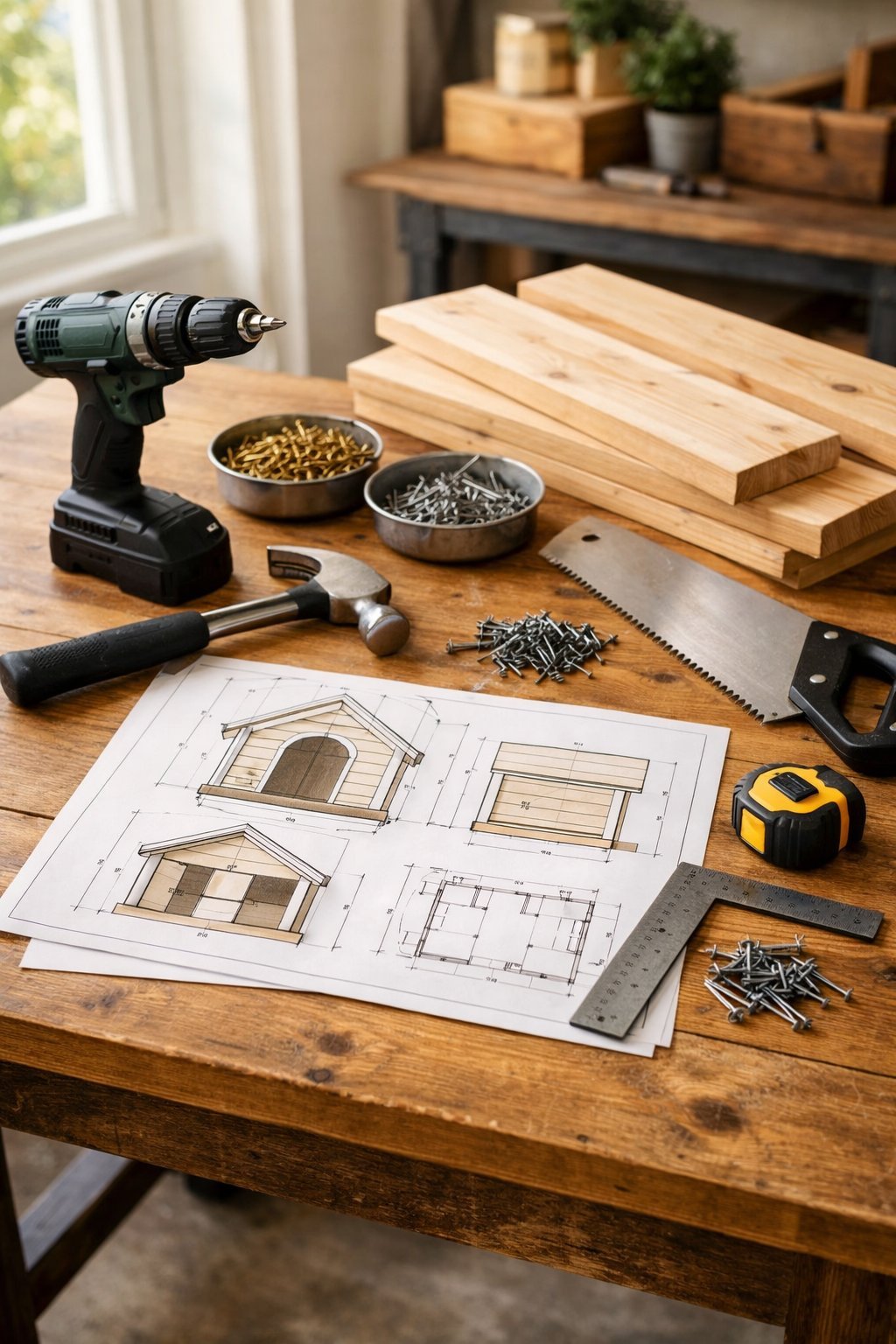
Building a dog house takes specific materials and tools to create a safe, durable shelter. The right wood, proper hardware, and basic carpentry tools make the construction process easier and help your project last for years.
Choosing the Right Wood and Hardware
I recommend using exterior-grade plywood or cedar for building a dog house since they resist weather damage. Cedar naturally repels insects and moisture, making it great for outdoor structures.
Pressure-treated lumber is good for the base, but I avoid it on interior walls where my dog might chew. For hardware, I use galvanized or stainless steel screws instead of nails.
Screws hold better over time and won’t work loose as the wood shifts. I use 2.5-inch deck screws for most joints and 1.5-inch screws for thinner pieces.
I like 3/4-inch plywood for walls and floors to provide insulation and strength. For the roof, I add a layer of asphalt shingles or metal roofing over the plywood to keep water out.
Recommended Tools for Building
My basic tool list includes a circular saw or table saw, a drill with bits, and a measuring tape. I keep a carpenter’s square handy to make sure corners stay at 90 degrees.
A hammer helps with adjustments, even if I mostly use screws. For finishing, I use sandpaper to smooth rough edges and a paintbrush or roller for exterior stain or paint.
Safety gear matters, too. I always wear safety glasses when cutting and a dust mask when sanding.
Eco-Friendly Material Options
To be more eco-friendly, I sometimes use reclaimed wood from old pallets or construction sites. This cuts down on waste and can be cheaper than buying new lumber.
I check that the wood hasn’t been treated with toxic chemicals. Water-based stains and paints release fewer fumes than oil-based ones and are safer for my dog.
For insulation, I like recycled denim or wool instead of fiberglass. Bamboo flooring is another sustainable choice since it grows quickly and resists moisture.
Designing the Perfect Dog House
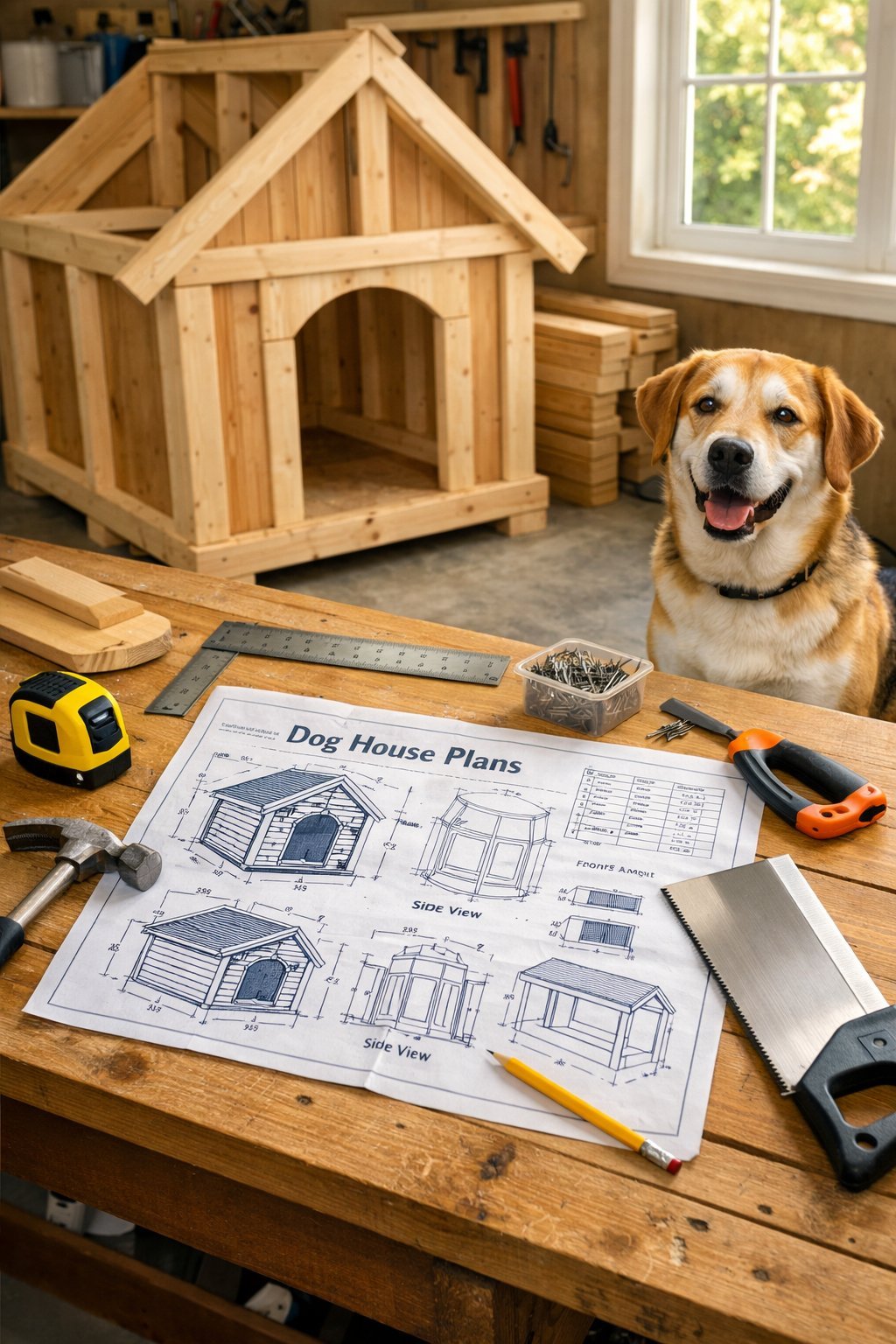
A well-designed dog house keeps your pet comfy in all kinds of weather. I’ll walk you through the key measurements, weather protection, and features for a dog house that works for your furry friend.
Sizing for Your Dog’s Comfort
I always start by measuring my dog from nose to tail and from the ground to the top of their head when sitting. The dog house should be about 25% longer than your dog’s body and tall enough for them to stand without ducking.
The doorway should be about three-quarters of your dog’s shoulder height. This lets them enter easily while keeping out cold drafts.
Here’s my sizing guide:
- Small dogs (under 25 lbs): 24-30 inches long
- Medium dogs (25-50 lbs): 30-36 inches long
- Large dogs (50-80 lbs): 36-42 inches long
- Extra-large dogs (over 80 lbs): 42-60 inches long
A house that’s too large won’t hold your dog’s body heat in winter, so bigger isn’t always better.
Weatherproofing Considerations
To protect my DIY dog house plans from rain and snow, I add a sloped roof with at least a 30-degree angle. Water runs off quickly instead of pooling.
I elevate the floor 3-4 inches off the ground using pressure-treated wood or concrete blocks. This keeps the house dry during heavy rain.
For the exterior, I use waterproof sealant or outdoor-rated paint. I seal all joints and corners, and add roof shingles or metal roofing for extra protection.
Ventilation and Insulation Design
I drill 2-3 small ventilation holes near the roof to keep air circulating. These should be about 1-2 inches in diameter and placed away from strong winds.
For insulated dog house plans, I use foam board insulation between the walls. One inch is good for mild climates, and two inches for colder areas.
I cover all insulation with plywood so my dog can’t chew it. The floor also needs insulation, especially in cold areas.
In summer, ventilation is even more important. Sometimes I add a small window with hardware cloth for extra airflow.
Step-by-Step Dog House Construction Plans
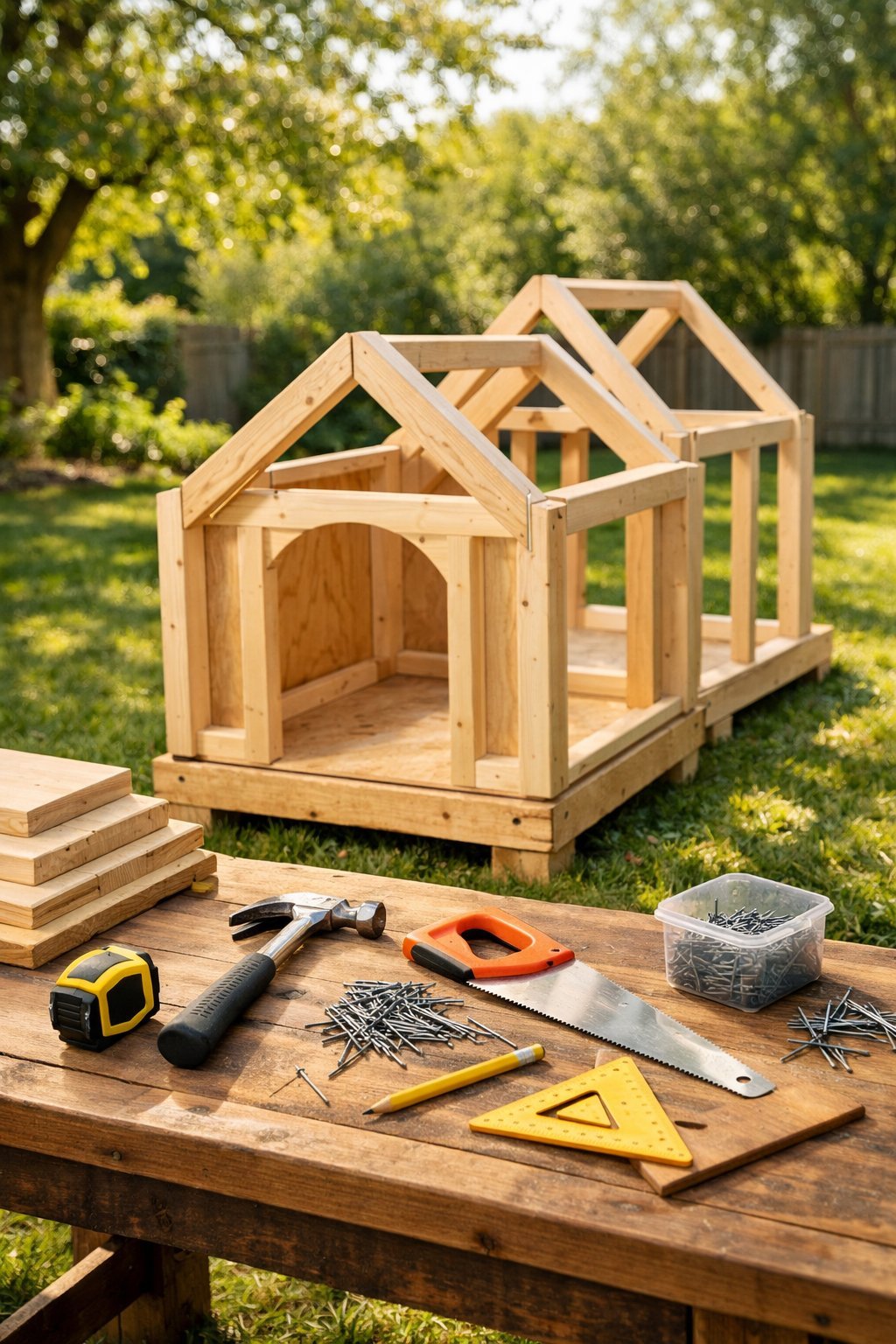
Building a dog house involves three main stages: creating a stable base, constructing sturdy walls, and adding a protective roof. Each step uses different materials and techniques to make sure your dog’s home is safe and comfy.
Foundation and Floor Assembly
I always start with the foundation to keep the dog house dry and level. Cut four 2×4 boards to form a rectangular frame that matches your dog’s size.
Secure the frame corners with 3-inch deck screws or galvanized nails. Attach the boards at 90-degree angles to create a solid rectangle.
Add floor joists across the frame for extra support. Space these 2×4 supports about 16 inches apart.
Cut a piece of 3/4-inch plywood to fit on top of the frame. Fasten it down with 2-inch screws every 6 inches along the edges and joists.
This creates a raised platform to prevent moisture from reaching your dog’s sleeping area.
Framing and Walls
The wall framing process starts by cutting vertical 2×4 studs for each corner. I make these about 30-36 inches tall, depending on my dog’s height.
Build each wall section flat on the ground before attaching it to the floor. Use a top and bottom plate with vertical studs spaced 16 inches apart.
Leave an opening for the doorway on one wall. Cut the doorway about 2-3 inches taller than your dog’s shoulder height and wide enough for easy entry.
Frame around the opening with extra 2x4s for stability. Attach exterior plywood or cedar boards to each wall frame.
Stand each wall up and screw it into the floor platform, then connect the corners together.
Roof Styles and Installation
Simple A-frame roofs are popular because they shed water and snow easily. Cut two pieces of plywood at matching angles to form a peak.
Attach 2×4 rafters across the top of the walls to support the roof panels. I usually go with a 45-degree slope for good drainage.
Secure the plywood roof panels to the rafters with screws. Cover the seam at the peak with a ridge cap made from wood or metal flashing.
Add shingles or waterproof roofing material over the plywood. I staple roofing felt first, then attach asphalt shingles from the bottom up to keep rain out.
Custom Features and Finishing Touches
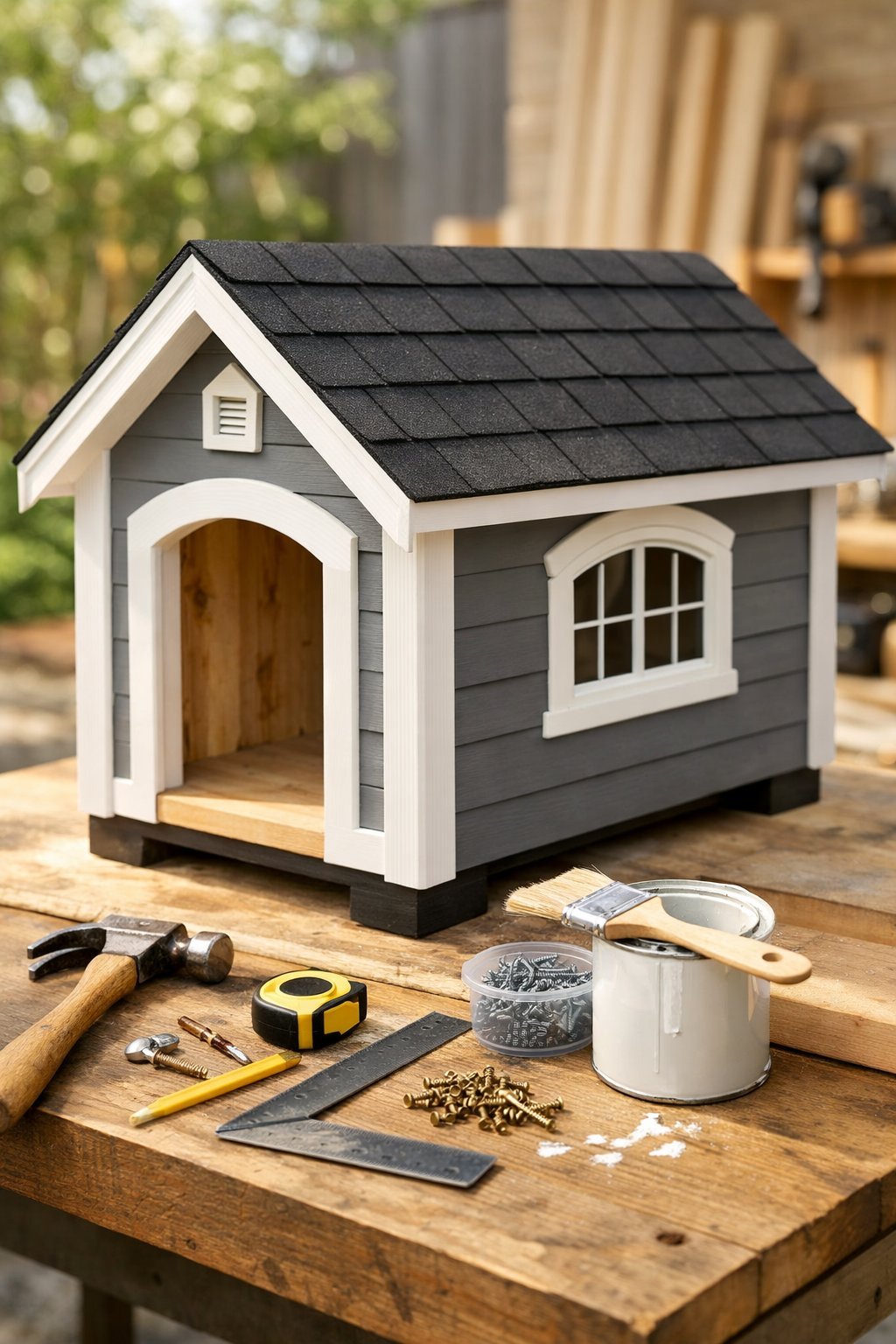
Once you’ve built the basic structure, adding custom features and protective finishes will make your dog house both functional and attractive. Small details like proper openings, weather-resistant coatings, and personal touches turn a simple shelter into a comfortable home for your pet.
Adding Doors and Windows
Size the door opening based on your dog’s measurements. The entrance should be about three-quarters of your dog’s shoulder height and wide enough for them to walk through comfortably.
You can add a flexible door flap to keep out drafts and rain. Vinyl or rubber flaps work well because they’re durable and easy for dogs to push through.
Attach the flap with hinges or velcro strips at the top of the opening. Windows provide ventilation and natural light.
Drill 2-3 inch holes near the roof line on opposite walls for airflow. You can also cut small square openings and cover them with wire mesh to keep bugs out.
For cold climates, insulated dog house plans often include adjustable vent covers. These let you control airflow based on the season.
Paint, Stain, and Sealant Choices
I always use exterior-grade finishes on outdoor dog houses. Regular interior paint just won’t hold up to the weather.
Recommended finish options:
- Paint: Exterior latex or acrylic in light colors to reflect heat
- Stain: Solid or semi-transparent outdoor wood stain
- Sealant: Water-based polyurethane or marine-grade sealant
I apply at least two coats of paint or stain to bare wood. The first coat soaks in, and the second provides protection.
Let each coat dry completely before adding the next. Non-toxic finishes are a must since dogs may chew or lick surfaces.
I look for products labeled pet-safe or zero-VOC. Cedar naturally resists rot and insects, so it needs less chemical treatment than other woods.
Seal all joints and seams with exterior caulk to prevent water damage. This step is especially important around the roof and floor edges.
Personalizing With Creative Details
I like to add my dog’s name above the entrance using stencils or vinyl letters. This simple touch makes the house feel more special and helps identify it if you have multiple pets.
Decorative trim around the door and roofline gives the house a finished look. I use leftover wood scraps cut into simple shapes.
Some DIY dog house builders even create elaborate designs like ranch-style homes with shutters and flower boxes.
Inside, I add a raised floor platform to keep bedding off the ground. A removable cushion or cedar chips make the space more comfortable.
I also install hooks on the outside walls to hang leashes or toys.
Outdoor lighting helps my dog find the house at night. I mount a small solar light above the entrance or string battery-powered LED strips under the roof overhang.
Maintenance and Safety for Your DIY Dog House
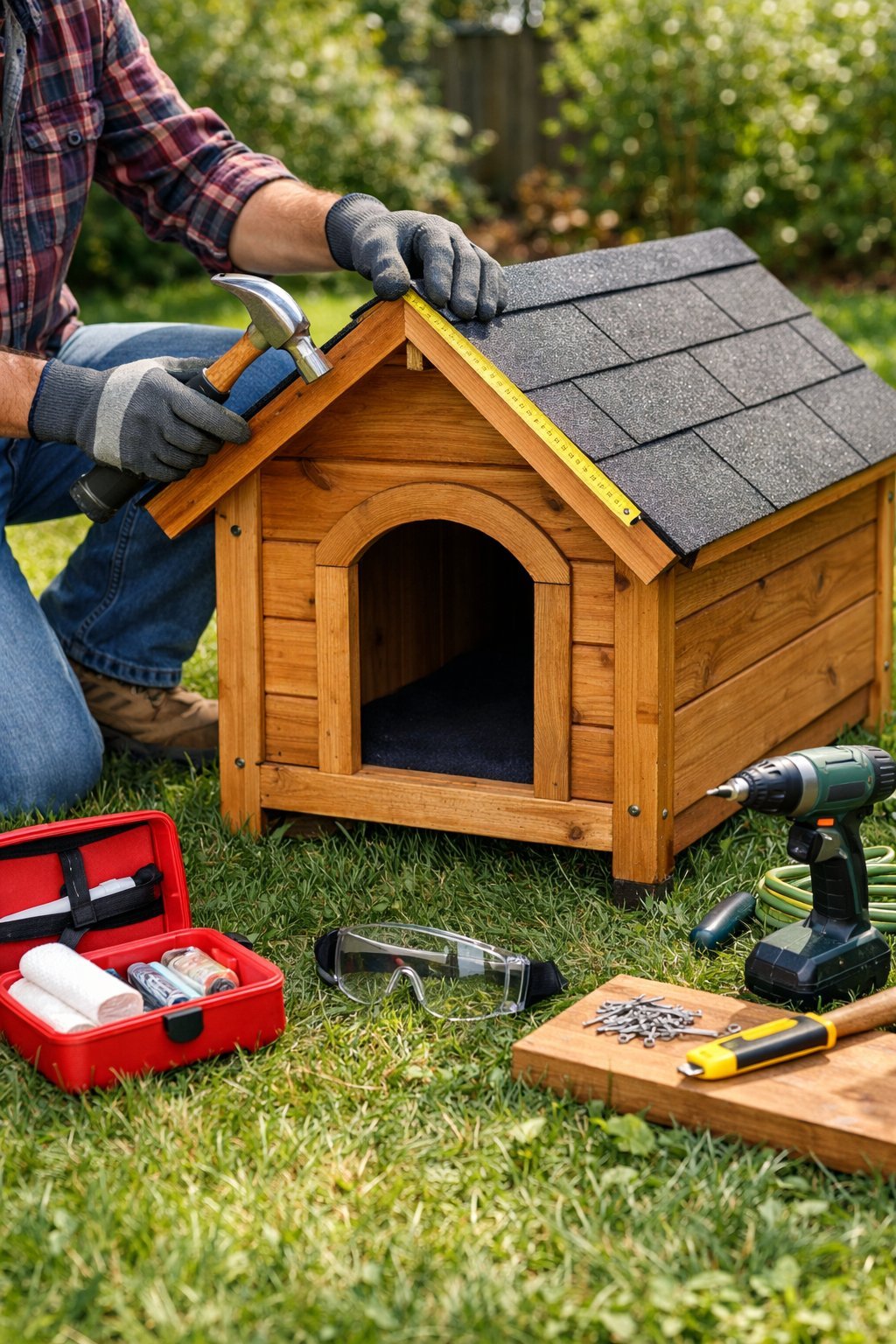
Regular upkeep keeps your dog’s house clean, safe, and comfortable throughout the year. Simple checks and cleaning routines help the structure last longer.
Routine Cleaning Tips
I recommend cleaning your dog’s house at least once a week to keep it healthy and fresh. Start by removing all bedding, toys, and food bowls from inside.
Sweep out dirt, hair, and debris with a stiff brush or broom. For deeper cleaning, I mix one part white vinegar with one part water in a spray bottle.
Spray down all interior surfaces and let the solution sit for five minutes. Wipe everything down with a clean cloth and allow the house to air dry completely before adding bedding back inside.
Wash bedding materials in hot water every week. Replace worn or damaged bedding right away to keep your dog comfortable.
During muddy or rainy seasons, I increase cleaning to twice per week. This helps prevent mold and keeps odors under control.
Inspecting for Wear and Damage
I check my dog’s house every month for signs of damage or wear. Look closely at corners, joints, and the roof where problems often start.
Check for loose nails, screws, or hardware that need tightening. Examine wood for cracks, splinters, or rot that could hurt your dog.
Test the stability of the structure by gently pushing on different walls. Any wobbling means you need to reinforce the frame or tighten connections.
Look at the roof for leaks, gaps, or damage after heavy rain or storms. Water damage spreads quickly and can make the house unsafe.
Check the floor for soft spots that might indicate rot from moisture. I also look for sharp edges or protruding hardware that could injure my dog.
Replace damaged parts immediately rather than waiting. Small problems can turn into big repairs if ignored.
Seasonal Adjustments and Upkeep
Different seasons call for different ways to care for your dog house. In spring, I like to do a thorough inspection after winter and fix up any damage.
When summer rolls around, I make sure the ventilation is working well and add some extra shade if needed. I also try to keep the house cool by moving it out of the harsh afternoon sun.
Before fall, I put on a fresh coat of weatherproofing to the outside surfaces. It’s also a good time to check that the roof is sealed up for the rainy or snowy months ahead.
Getting ready for winter might mean adding extra insulation, especially if you live somewhere cold. I always check that the entrance flap or door seal keeps out drafts.
After big storms, I look over the house for any new damage. It’s also important to clear away leaves, branches, or debris that pile up around the dog house during the year.