Dog Play Area Ideas That Keep Dogs Busy and Happy: Creative Solutions for Active Pups

Dogs need both physical exercise and mental challenges to stay happy and healthy. A well-designed play area in your backyard gives your dog a safe space to burn energy and explore new activities.

Creating a dedicated dog play area with interactive toys, agility equipment, and water features keeps your pet engaged while giving them the exercise they need. I’ve found that engaging your pet’s senses with durable toys makes playtime more enjoyable.
You don’t need a huge yard or expensive equipment to get started. Whether you have a small patio or a large backyard, I’ll share practical ideas that work for different spaces and budgets.
From splash zones for hot days to tether toys that let dogs play alone, these solutions will transform your outdoor space into a fun playground for your furry friend.
Key Takeaways
- A good dog play area combines safety features with engaging toys and equipment that challenge both body and mind.
- You can create an effective play space on any budget using DIY projects and simple additions like water features or agility obstacles.
- Regular outdoor play in a dedicated area helps prevent boredom and keeps dogs physically fit and mentally stimulated.
Designing a Safe Dog Play Area

A secure play space needs proper boundaries, safe ground materials, and protection from weather elements. These three components work together to create an environment where dogs can play without risk of injury or escape.
Fencing and Boundaries
I always start with a sturdy fence as the foundation of any dog play area. The fence height depends on your dog’s size and jumping ability, but I recommend at least 4 feet for small dogs and 6 feet for larger or athletic breeds.
Check the fence regularly for gaps, loose boards, or areas where a dog might dig underneath. I suggest burying the fence at least 6 inches below ground or adding a barrier along the bottom to prevent escape artists from tunneling out.
Fence Material Options:
- Wood panels (durable but require maintenance)
- Chain link (affordable and long-lasting)
- Vinyl (low maintenance and weather-resistant)
- Metal pickets (strong for large dogs)
Make sure there are no sharp edges, protruding nails, or spaces where a collar could get caught. I also keep gates secure with latches that dogs can’t accidentally open.
It’s a good idea to position gates away from busy streets or other potential dangers.
Non-Toxic Ground Cover Options
The surface material in my dog’s play area matters for both safety and comfort. I avoid materials that can injure paws or cause health problems if accidentally eaten.
Safe Ground Cover Choices:
- Natural grass (soft but requires maintenance)
- Artificial turf (easy to clean and durable)
- Mulch made from cedar or pine (cushions falls)
- Pea gravel (drains well and stays cool)
- Sand (gentle on joints)
I stay away from cocoa mulch because it’s toxic to dogs. Rubber mulch can also cause problems if dogs chew and swallow pieces.
When I create a dog-friendly play zone, I test the ground cover in hot weather to make sure it doesn’t burn paws. Good drainage prevents muddy patches and keeps the area cleaner.
I slope the ground slightly or add drainage materials underneath the surface layer.
Shade and Weather Protection
Dogs need protection from sun, rain, and extreme temperatures. I provide at least one shaded area where my dog can cool down during play sessions.
Trees offer natural shade and help keep the space cooler overall. If trees aren’t available, I use shade sails, pergolas, or large umbrellas positioned over rest areas.
A weatherproof playhouse gives dogs shelter from both sun and rain. I place water bowls in shaded spots so the water stays cool longer.
During summer months, I add extra shade structures and limit outdoor play during the hottest parts of the day. In winter, I clear snow from walking paths and provide a weatherproof lounger where my dog can rest while staying dry.
Interactive Features for Mental Stimulation
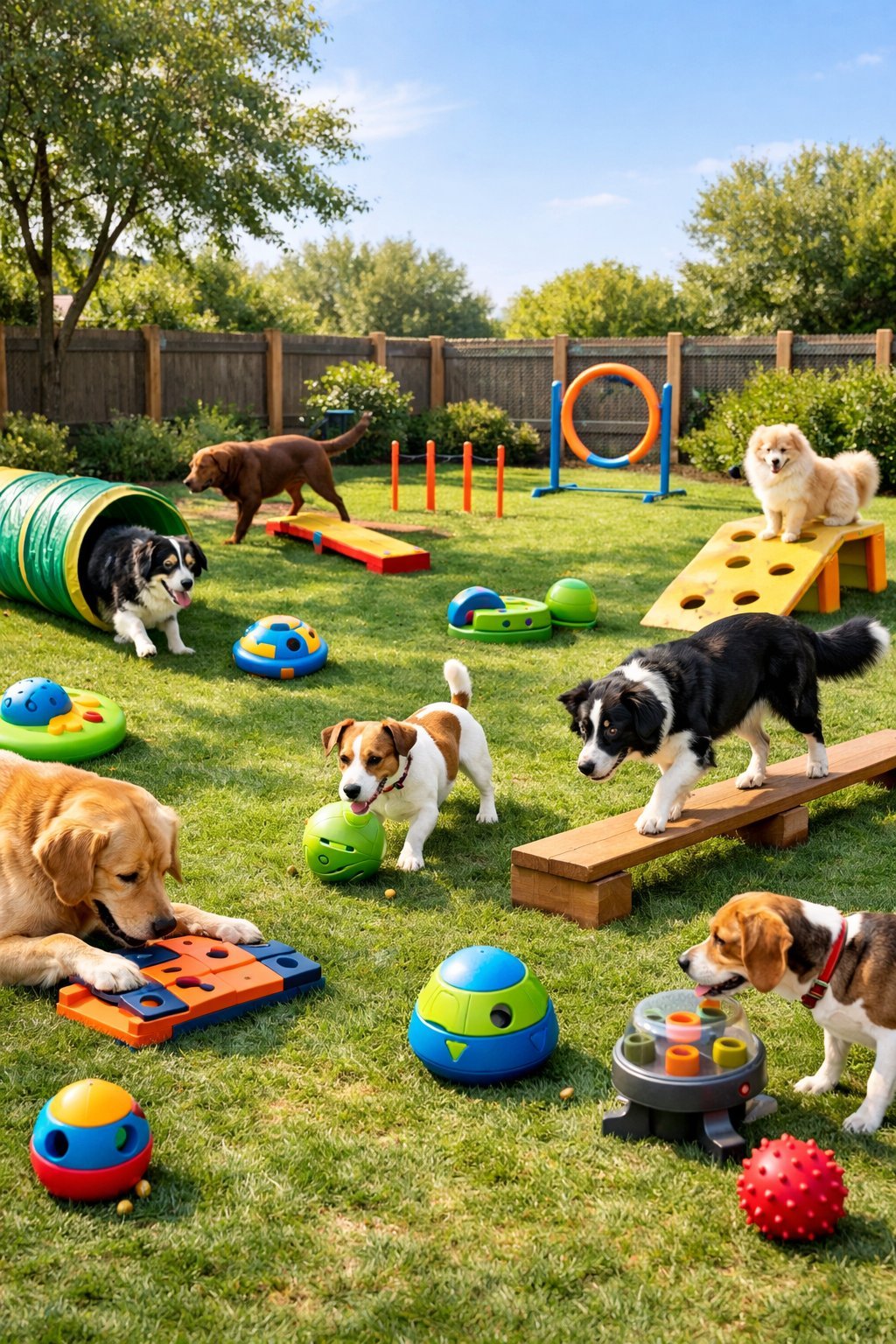
Dogs need mental exercise just as much as physical activity to stay happy and healthy. Adding features like obstacle courses, puzzle stations, and sensory paths to your dog’s play area keeps their mind engaged.
Obstacle Courses
I recommend setting up an obstacle course with tunnels, weave poles, and low jumps to challenge your dog’s problem-solving skills. You can use affordable materials like PVC pipes for weave poles or children’s play tunnels for crawling exercises.
Start with simple layouts and gradually increase difficulty as your dog masters each level.
Basic Obstacle Course Elements:
- Tunnels (3-6 feet long)
- Weave poles (spaced 18-24 inches apart)
- Low jumps (6-12 inches high)
- A-frame ramps
- Balance beams or planks
I’ve found that rotating obstacle configurations every few weeks keeps dogs interested and engaged. You can also create elevated platforms using stable wooden boxes or crates for your dog to climb on and navigate around.
This type of activity builds confidence while providing both mental and physical stimulation.
Puzzle Toys and Treat Dispensers
Interactive puzzle toys challenge your dog to work out how to access treats or kibble hidden inside. I like installing permanent puzzle stations in my dog’s play area, such as mounted treat-dispensing boards or sliding panel games.
You can attach puzzle feeders to fence posts or create a dedicated puzzle wall where you rotate different difficulty levels. Puzzle toys with sliding panels and raised patterns turn treat time into brain-teasing play sessions.
I suggest starting with easier puzzles and moving to more complex ones as your dog learns. Some dogs solve puzzles in minutes while others need more time to figure them out.
Keep several puzzle types available so your dog doesn’t get bored with the same challenge.
Sensory Paths
I create sensory paths by laying out different textures and surfaces for my dog to walk across and explore. Use materials like rubber mats, artificial turf, smooth river rocks, wood chips, and textured pavers arranged in a winding path through your play area.
Sensory Path Materials:
- Textured surfaces: rubber mats, artificial grass, sand
- Natural elements: smooth stones, mulch, wood rounds
- Sound features: crunchy leaves, bells on posts
- Scent stations: herb gardens (dog-safe plants like rosemary)
I add scent elements by planting dog-safe herbs along the path or hiding treats in specific spots for scent work practice. The variety of textures stimulates your dog’s paws and encourages exploration.
Change up the path layout monthly to maintain novelty and interest.
Physical Activities That Keep Dogs Busy

Dogs need regular exercise to stay healthy and burn off extra energy. Setting up the right equipment in your play area makes it easy to give your dog fun physical challenges every day.
Agility Equipment
I’ve found that agility equipment turns a basic yard into an exciting training ground. Simple items like weave poles, jumps, and tunnels give dogs a chance to run, jump, and think at the same time.
You can start with basic obstacles like a low jump made from PVC pipes or a simple A-frame. These items help build your dog’s confidence and coordination.
Most dogs pick up agility skills quickly when you use treats and praise. Tether toys keep dogs busy with lots of tugging and work well for dogs who enjoy physical challenges.
I recommend starting with one or two pieces of equipment and adding more as your dog learns. You don’t need expensive gear to create an effective course.
Basic agility items to consider:
- Jump bars set at safe heights
- Weave poles for coordination
- Tunnels for running through
- Pause tables for impulse control
Fetch and Ball Launchers
Ball launchers save your arm while giving your dog the exercise they need. These tools throw balls much farther than you can by hand, which means more running for your dog.
Automatic ball launchers work great if you have a dog who loves fetch but you can’t always throw for them. Some models let dogs reload the ball themselves, creating independent play time.
I like using regular ball throwers too since they’re simple and portable. Fetch games work well in any sized space.
You can adjust the throwing distance based on your yard size and your dog’s fitness level.
Creative DIY Dog Play Area Ideas

Building play structures from items you already own saves money while giving your dog exciting new features. Water zones and raised platforms add variety that keeps dogs interested and active throughout the day.
Repurposed Materials for Play Structures
I love using old tires to create DIY dog playground obstacles that cost almost nothing. You can stack them horizontally for jump-through hoops or lay them flat as stepping stones.
Paint them with pet-safe colors to make them look nicer in your yard. Wooden pallets work great for building ramps and balance beams.
I sand them down smooth to prevent splinters and secure them firmly to the ground. These can be arranged into weave poles or small hurdles that help with agility training.
PVC pipes are another budget-friendly option I use often. Cut them into different lengths to make tunnel entrances or frame structures.
They’re lightweight, easy to clean, and hold up well in different weather conditions. Old plastic kiddie pools become digging boxes when filled with sand or play pits.
I also turn sturdy cardboard boxes into temporary tunnels and hideaways my dog enjoys exploring.
Safe Water Play Zones
A shallow splash area keeps dogs cool during hot weather. I use a kiddie pool filled with just 3-4 inches of water so my dog can wade safely without risk of drowning.
This depth lets smaller dogs enjoy it too. Setting up a non-spill dog water bowl nearby ensures fresh drinking water stays available.
I position it in a shaded spot to keep the water cooler longer. Sprinklers add extra fun to water play areas.
I attach a simple oscillating sprinkler to a hose timer so it runs during the hottest part of the day. My dog loves jumping through the streams and cooling off.
The ground around water zones needs good drainage. I add pea gravel or mulch to prevent muddy messes that track into the house.
Multi-Level Platforms
Raised outdoor dog play platforms give dogs different heights to explore and jump between. I build mine using pressure-treated lumber at heights between 6-18 inches, depending on my dog’s size and jumping ability.
Adding ramps or pet stairs between levels helps older dogs navigate the space comfortably. I keep the incline gentle at about 30 degrees and add rubber treads for grip.
Platform surfaces need texture to prevent slipping. I attach outdoor carpet remnants or rubber mats with stainless steel screws that won’t rust.
I space platforms 2-3 feet apart so my dog can easily hop from one to another without strain. Multiple levels create interesting pathways dogs enjoy following.
Enhancing Social and Well-Being Aspects
Supporting your dog’s emotional health goes beyond just physical play. I like to design areas that encourage positive interactions, provide calm retreats, and engage all the senses to keep dogs mentally balanced.
Safe Dog Socialization Spaces
Setting up a dedicated area where dogs can interact with others in a controlled way is super helpful. The space should have clear boundaries and enough room for multiple dogs to move around comfortably.
Structured activities in dog daycare settings help define safe spaces for interaction. I suggest using low fencing or natural barriers like shrubs to create smaller zones within the play area.
Key features I include:
- Non-slip surfaces to prevent injuries during play
- Multiple entry and exit points so dogs don’t feel trapped
- Shade structures where dogs can take breaks
- Water stations placed throughout the space
I like to vary the terrain with flat areas for running and slightly elevated spots where shy dogs can observe from a distance. This way, each dog can choose their comfort level during social time.
Relaxation and Quiet Zones
Every dog needs a place to decompress after active play. I create quiet zones away from the main play areas where dogs can rest without disruption.
I use comfortable surfaces like outdoor dog beds, raised platforms, or even simple grass patches in shaded spots. These areas should be positioned where dogs can still see activity but aren’t in the middle of it.
Elements I add to quiet zones:
- Covered structures or natural shade from trees
- Soft bedding or cushioned platforms
- Privacy screens made from lattice or plants
- Calming background sounds from water features
I position these spaces near the edges of the play area rather than in high-traffic zones. Dogs naturally seek out quiet spots when they need them, so I make sure they’re easy to access but clearly separated from active zones.
Sensory Gardens
Sensory gardens give dogs choices, which supports their mental health by letting them make decisions. I design these spaces to engage smell, touch, sight, and sound through different plants and textures.
I plant dog-safe herbs like rosemary, mint, and lavender that dogs can sniff and explore. Different ground textures like mulch, smooth stones, and grass paths give their paws varied sensations.
My sensory garden includes:
- Safe plants at different heights for exploring
- Textured pathways with various materials
- Hidden treats or toys in designated digging spots
- Wind chimes or rustling grasses for auditory interest
I add water play zones for cooling off and as another sensory element. Small fountains or shallow pools provide sound and touch stimulation, plus low-impact exercise options for older dogs.
Frequently Asked Questions
Dogs need both mental and physical activities to stay content. Outdoor play platforms, agility courses, puzzle feeders, and scent games all help keep their minds and bodies busy.
What are some engaging outdoor dog play area designs?
I recommend starting with an outdoor dog playpen fence to create a secure boundary where your dog can explore safely. This gives you peace of mind while letting your dog enjoy the fresh air.
Adding multi-level play platforms creates an exciting space for dogs who love to climb and explore different heights. You can also include ramps or stairs to help dogs reach elevated areas without jumping.
A simple agility course with tunnels, weave poles, and low jumps keeps active dogs engaged. Even basic obstacles made from PVC pipes or wooden boxes work well for training and play.
A digging pit filled with sand or soft dirt gives dogs a designated spot to satisfy their natural digging instincts. This protects the rest of your yard while providing a fun activity.
How can I create an indoor play space for my dog that’s both fun and stimulating?
Set up a rotation of interactive toys in different rooms to keep things interesting. Puzzle feeders, treat-dispensing balls, and snuffle mats engage your dog’s problem-solving skills.
Create a small indoor agility setup using cushions, boxes, and blankets for your dog to navigate around. This is great on rainy days when outdoor play isn’t possible.
I like to hide treats or toys around the house for scent games. Start with easy hiding spots and gradually make them more challenging as your dog learns the game.
Can you suggest any DIY projects for dog enrichment at home?
A muffin tin puzzle is one of my favorite easy projects. Place treats in the cups and cover them with tennis balls so your dog has to remove the balls to get the rewards.
I make frozen treat toys by filling Kong toys or ice cube trays with peanut butter, yogurt, or wet dog food mixed with water. These keep dogs busy for extended periods while cooling them down.
A snuffle mat made from fleece strips tied to a rubber mat provides great mental stimulation. Hide kibble or treats in the fabric strips and let your dog sniff them out.
Cardboard box puzzles cost nothing and provide hours of fun. I put treats inside boxes of varying sizes and let my dog figure out how to get them open.
What homemade brain games can I make to entertain my dog?
The three-cup game works like a shell game for dogs. I hide a treat under one of three cups, shuffle them around, and let my dog find the correct cup.
I create scent discrimination games by putting treats in only one of several identical containers. This teaches dogs to use their noses rather than just their eyes.
A DIY treat dispenser made from a plastic bottle with holes cut in it keeps dogs engaged. They have to roll and bat the bottle around to get the treats to fall out.
Name recognition games help build your dog’s vocabulary. I teach my dog the names of different toys and then ask them to fetch specific ones.
What are some ways to keep my dog happy and active when I’m away at work?
I leave puzzle feeders filled with my dog’s breakfast so they have to work for their food throughout the morning. This provides both mental stimulation and slows down eating.
Treat-dispensing cameras let me check in and toss treats to my dog remotely. This breaks up the day and gives my dog something to look forward to.
I rotate which toys are available each day so my dog doesn’t get bored with the same items. Fresh toys feel more exciting even if they’ve been used before.
A pet walker or dog daycare a few times per week provides social interaction and exercise. This breaks up long stretches of alone time.
Can you recommend a variety of games to keep my dog entertained inside?
Hide and seek is simple but effective. I have my dog stay in one room while I hide, then call them to come find me with lots of praise when they succeed.
Tug of war is great for physical exercise in a small space. I use a rope toy and let my dog pull and shake it while I hold the other end.
Indoor fetch works well in hallways or larger rooms. I use lightweight balls or soft toys that won’t damage furniture or walls.
The “find it” game is another fun option. I toss treats on the floor and tell my dog to search for them, which keeps them moving and engages their sense of smell.
Training sessions for new tricks are awesome for mental exercise. I work on commands like spin, play dead, or shake for five to ten minutes at a time.