
Dog Play Area Ideas That Keep Dogs Busy and Happy: Creative Solutions for Active Pups

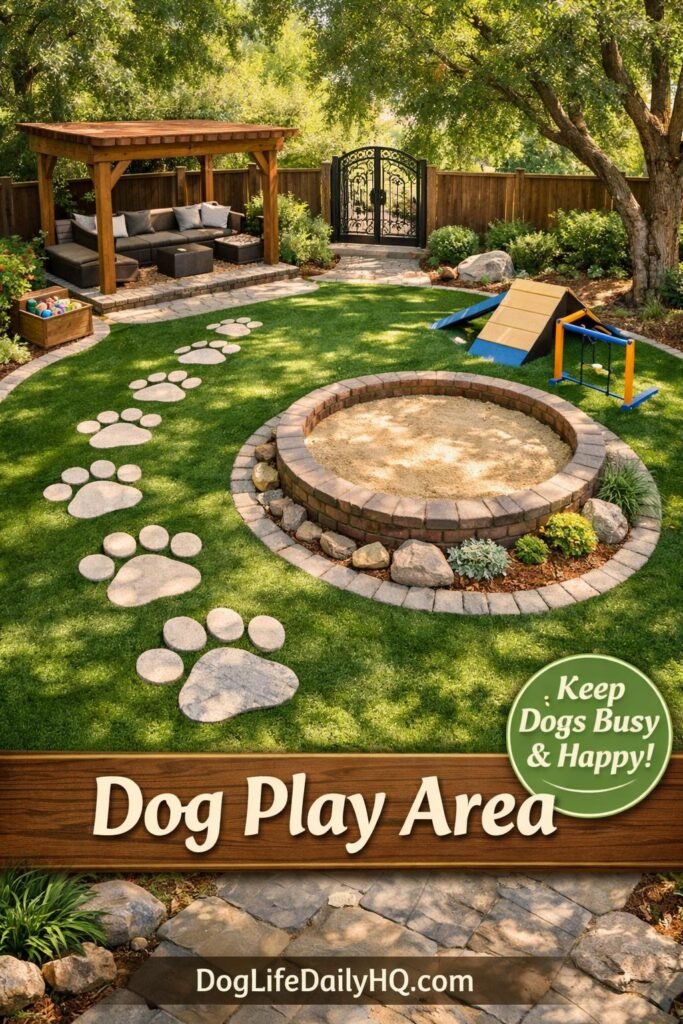
Dog Play Area – Dogs need both physical exercise and mental challenges to stay happy and healthy. A well-designed play area in your backyard gives your dog a safe space to burn energy and explore new activities.
Creating a dedicated dog play area with interactive toys, agility equipment, and water features keeps your pet engaged while giving them the exercise they need. I’ve found that engaging your pet’s senses with durable toys makes playtime more enjoyable.
You don’t need a huge yard or expensive equipment to get started. Whether you have a small patio or a large backyard, I’ll share practical ideas that work for different spaces and budgets.
From splash zones for hot days to tether toys that let dogs play alone, these solutions will transform your outdoor space into a fun playground for your furry friend.
Key Takeaways
- A good dog play area combines safety features with engaging toys and equipment that challenge both body and mind.
- You can create an effective play space on any budget using DIY projects and simple additions like water features or agility obstacles.
- Regular outdoor play in a dedicated area helps prevent boredom and keeps dogs physically fit and mentally stimulated.
Designing A Safe Dog Play Area
A secure play space needs proper boundaries, safe ground materials, and protection from weather elements. These three components work together to create an environment where dogs can play without risk of injury or escape.
Fencing And Boundaries
I always start with a sturdy fence as the foundation of any dog play area. The fence height depends on your dog’s size and jumping ability, but I recommend at least 4 feet for small dogs and 6 feet for larger or athletic breeds.
Check the fence regularly for gaps, loose boards, or areas where a dog might dig underneath. I suggest burying the fence at least 6 inches below ground or adding a barrier along the bottom to prevent escape artists from tunneling out.
Fence Material Options:
- Wood panels (durable but require maintenance)
- Chain link (affordable and long-lasting)
- Vinyl (low maintenance and weather-resistant)
- Metal pickets (strong for large dogs)
Make sure there are no sharp edges, protruding nails, or spaces where a collar could get caught. I also keep gates secure with latches that dogs can’t accidentally open.
🐾 Create a Safe Boundary Instantly
✅ Portable Dog Exercise Pen — set up a safe outdoor play zone anywhere, no digging or installation required
Non-Toxic Ground Cover Options
The surface material in my dog’s play area matters for both safety and comfort. I avoid materials that can injure paws or cause health problems if accidentally eaten.
Safe Ground Cover Choices:
- Natural grass (soft but requires maintenance)
- Artificial turf (easy to clean and durable)
- Mulch made from cedar or pine (cushions falls)
- Pea gravel (drains well and stays cool)
- Sand (gentle on joints)
I stay away from cocoa mulch because it’s toxic to dogs. Rubber mulch can also cause problems if dogs chew and swallow pieces. When I create a dog-friendly play zone, I test the ground cover in hot weather to make sure it doesn’t burn paws.
🐾 The Best Low-Maintenance Ground Cover
✅ Artificial Grass Turf for Dogs — looks great, easy to hose down, and gentle on paws year-round
Shade And Weather Protection
Dogs need protection from sun, rain, and extreme temperatures. I provide at least one shaded area where my dog can cool down during play sessions. Trees offer natural shade and help keep the space cooler overall. If trees aren’t available, I use shade sails, pergolas, or large umbrellas positioned over rest areas.
During summer months, I add extra shade structures and limit outdoor play during the hottest parts of the day. In winter, I clear snow from walking paths and provide a weatherproof lounger where my dog can rest while staying dry.
🐾 Keep Your Pup Cool All Summer
✅ Shade Sail Canopy — easy to install over any play area, blocks harsh UV rays and keeps the space comfortable
Interactive Features For Mental Stimulation
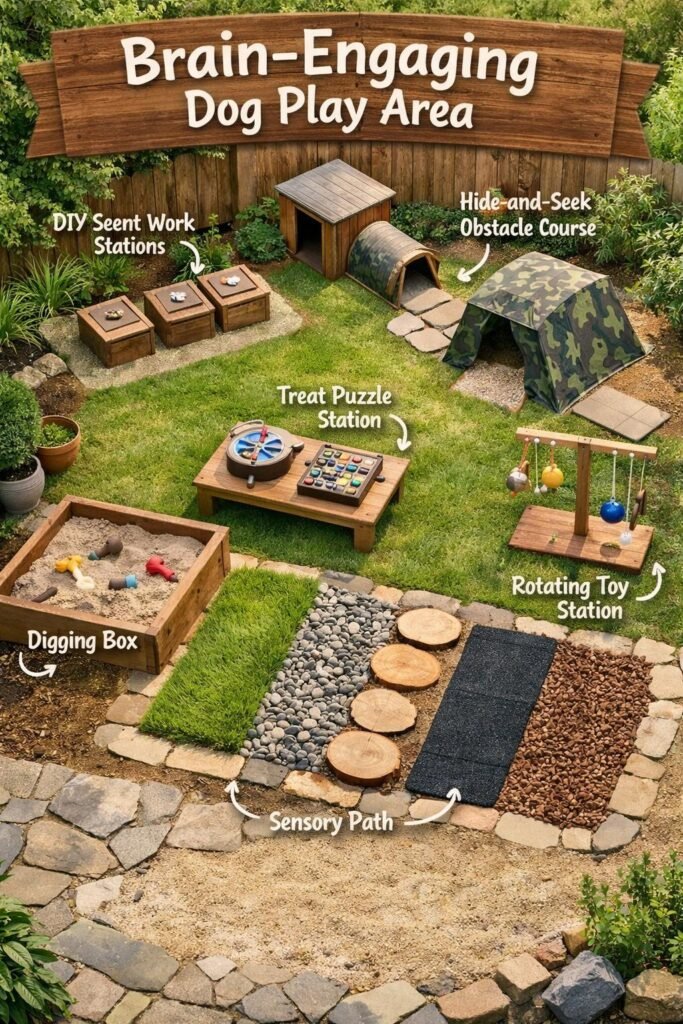
Dogs need mental exercise just as much as physical activity to stay happy and healthy. Adding features like obstacle courses, puzzle stations, and sensory paths to your dog’s play area keeps their mind engaged.
Obstacle Courses
I recommend setting up an obstacle course with tunnels, weave poles, and low jumps to challenge your dog’s problem-solving skills. You can use affordable materials like PVC pipes for weave poles or children’s play tunnels for crawling exercises. Start with simple layouts and gradually increase difficulty as your dog masters each level.
Basic Obstacle Course Elements:
- Tunnels (3-6 feet long)
- Weave poles (spaced 18-24 inches apart)
- Low jumps (6-12 inches high)
- A-frame ramps
- Balance beams or planks
🐾 Add a Fun Obstacle Your Dog Will Love
✅ Dog Agility Tunnel — collapsible and easy to set up, perfect for backyard obstacle courses of any size
✅ Dog Agility Jump Set — adjustable heights work for any size dog, great for building coordination and confidence
Puzzle Toys And Treat Dispensers
Interactive puzzle toys challenge your dog to work out how to access treats or kibble hidden inside. I like installing permanent puzzle stations in my dog’s play area, such as mounted treat-dispensing boards or sliding panel games. You can attach puzzle feeders to fence posts or create a dedicated puzzle wall where you rotate different difficulty levels.
I suggest starting with easier puzzles and moving to more complex ones as your dog learns. Some dogs solve puzzles in minutes while others need more time to figure them out. Keep several puzzle types available so your dog doesn’t get bored with the same challenge.
🐾 Keep Their Brain Busy While They Play
✅ Interactive Dog Puzzle Toy — hides treats so dogs have to work for their reward, great for mental stimulation outdoors
Physical Activities That Keep Dogs Busy
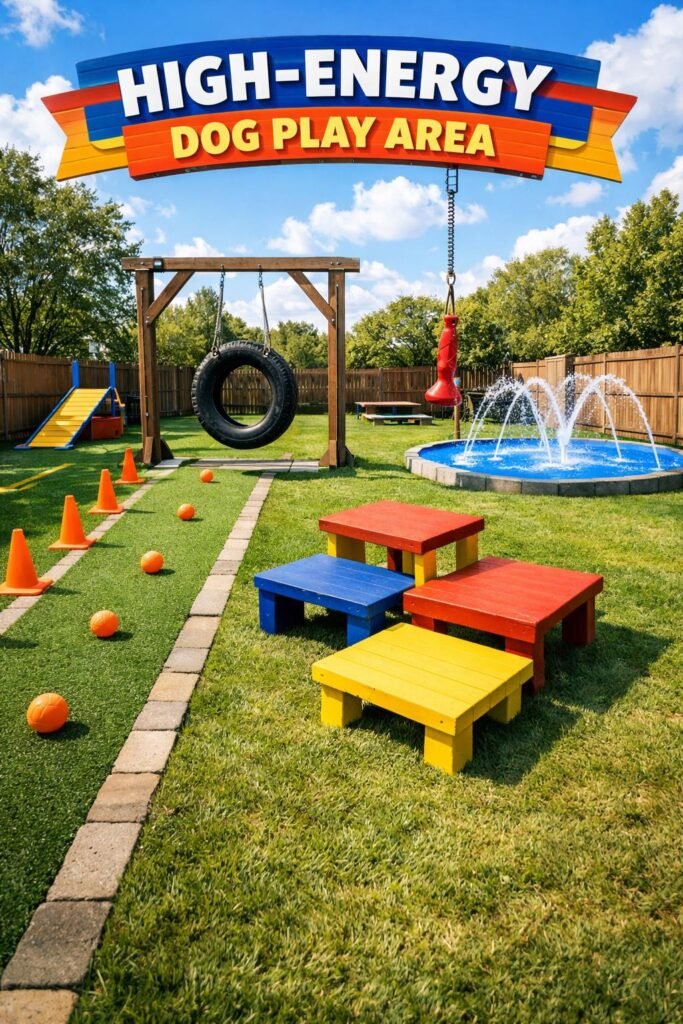
Dogs need regular exercise to stay healthy and burn off extra energy. Setting up the right equipment in your play area makes it easy to give your dog fun physical challenges every day.
Fetch And Ball Launchers
Ball launchers save your arm while giving your dog the exercise they need. These tools throw balls much farther than you can by hand, which means more running for your dog. Automatic ball launchers work great if you have a dog who loves fetch but you can’t always throw for them. Some models let dogs reload the ball themselves, creating independent play time.
🐾 Fetch Without the Tired Arm
✅ Automatic Dog Ball Launcher — launches balls at multiple distances so your dog gets a real workout without you having to throw
Creative DIY Dog Play Area Ideas
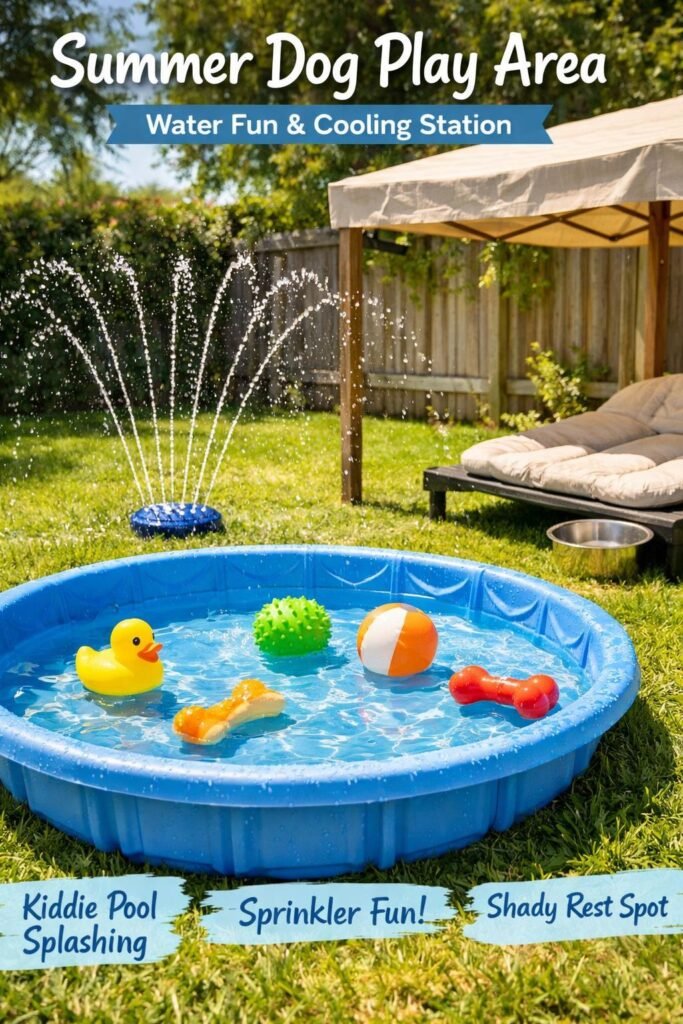
Building play structures from items you already own saves money while giving your dog exciting new features. Water zones and raised platforms add variety that keeps dogs interested and active throughout the day.
Safe Water Play Zones
A shallow splash area keeps dogs cool during hot weather. I use a kiddie pool filled with just 3-4 inches of water so my dog can wade safely without risk of drowning. This depth lets smaller dogs enjoy it too. I position it in a shaded spot to keep the water cooler longer. Sprinklers add extra fun to water play areas — my dog loves jumping through the streams and cooling off.
🐾 Summer Fun Your Dog Will Go Crazy For
✅ Dog Splash Pad Sprinkler — connects to any garden hose, keeps dogs cool and entertained on hot days
Repurposed Materials For Play Structures
I love using old tires to create DIY dog playground obstacles that cost almost nothing. You can stack them horizontally for jump-through hoops or lay them flat as stepping stones. Paint them with pet-safe colors to make them look nicer in your yard. Wooden pallets work great for building ramps and balance beams — I sand them down smooth to prevent splinters and secure them firmly to the ground.
PVC pipes are another budget-friendly option I use often. Cut them into different lengths to make tunnel entrances or frame structures. They’re lightweight, easy to clean, and hold up well in different weather conditions. Old plastic kiddie pools become digging boxes when filled with sand or play pits.
Enhancing Social And Well-Being Aspects
Supporting your dog’s emotional health goes beyond just physical play. I like to design areas that encourage positive interactions, provide calm retreats, and engage all the senses to keep dogs mentally balanced.
Relaxation And Quiet Zones
Every dog needs a place to decompress after active play. I create quiet zones away from the main play areas where dogs can rest without disruption. I use comfortable surfaces like outdoor dog beds, raised platforms, or even simple grass patches in shaded spots.
Elements I add to quiet zones:
- Covered structures or natural shade from trees
- Soft bedding or cushioned platforms
- Privacy screens made from lattice or plants
- Calming background sounds from water features
Sensory Gardens
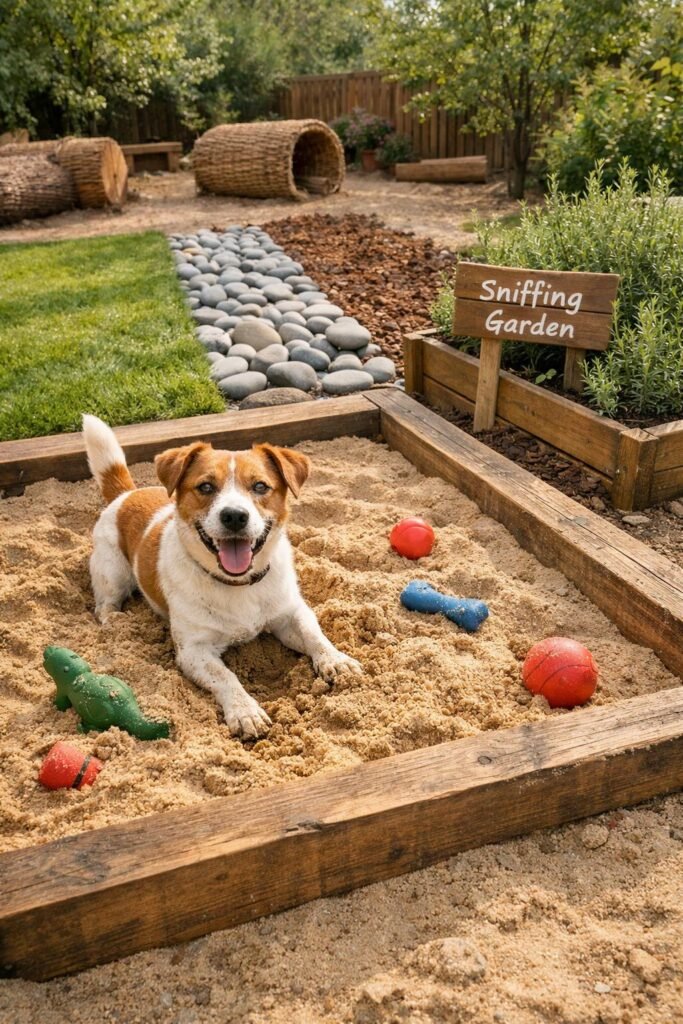
Sensory gardens give dogs choices, which supports their mental health by letting them make decisions. I plant dog-safe herbs like rosemary, mint, and lavender that dogs can sniff and explore. Different ground textures like mulch, smooth stones, and grass paths give their paws varied sensations.
Digging Zones And Sand Pits
Build a designated digging area to save the rest of your yard from random holes. This gives your dog an acceptable place to follow natural instincts. A simple sandbox works perfectly for this purpose — use a 4×4 foot wooden frame filled with sand about 12 inches deep. To encourage use, bury some toys and treats in the sand at first.
✨ Quick Takeaways — Dog Play Area Cheat Sheet
- Start with safe boundaries — good fencing is the foundation of any play area
- Choose the right ground cover — artificial turf and pea gravel are the most low-maintenance options
- Add shade first — dogs overheat quickly, shade is non-negotiable
- Mix physical and mental activities — agility + puzzle toys = a truly happy dog
- Include a water zone in summer — a splash pad or kiddie pool makes a huge difference on hot days
- Create a quiet zone too — dogs need a place to decompress after active play
Creating a dedicated dog play area doesn’t have to be expensive or complicated. Start with one or two elements that match your dog’s personality and your budget, then build from there. Your dog will thank you every single day. 🐾
Save this post so you always have it handy, and share it with a fellow dog mom who’s ready to transform her backyard into the ultimate pup paradise!
📖 Related Reads You Might Love
- → Dog Playground Backyard DIY: Easy Ideas to Create the Ultimate Play Space for Your Pup
- → DIY Dog Enrichment Toys for a Happy Pup
- → Dog Potty Area Outside: Simple Steps to Create the Perfect Outdoor Spot for Your Pup
