Dog Potty Area Outside: Simple Steps to Create the Perfect Outdoor Spot for Your Pup

Dog Potty Area Outside – Setting up a dog potty area outside can save you time and keep your yard looking neat. If you’re tired of finding surprise messes all over your lawn or dealing with muddy paw prints after every bathroom break, a dedicated spot makes life easier for both you and your dog.

A well-designed outdoor dog potty area gives your dog a consistent place to go while protecting the rest of your yard from damage and odors. I’ve found that creating a designated potty space works great whether you have a new puppy or a senior dog.
The setup doesn’t have to be complicated or expensive either.
Choosing the right location and materials makes all the difference in how well your potty area works. I’ll walk you through everything from picking the perfect spot in your yard to training your dog to use it regularly.
Key Takeaways
- Pick a spot close to your house with good drainage and some privacy for your dog
- Use low-maintenance materials like gravel or artificial turf that are easy to clean
- Train your dog consistently to use the area and clean it regularly to prevent odors
Planning Your Dog Potty Area Outside
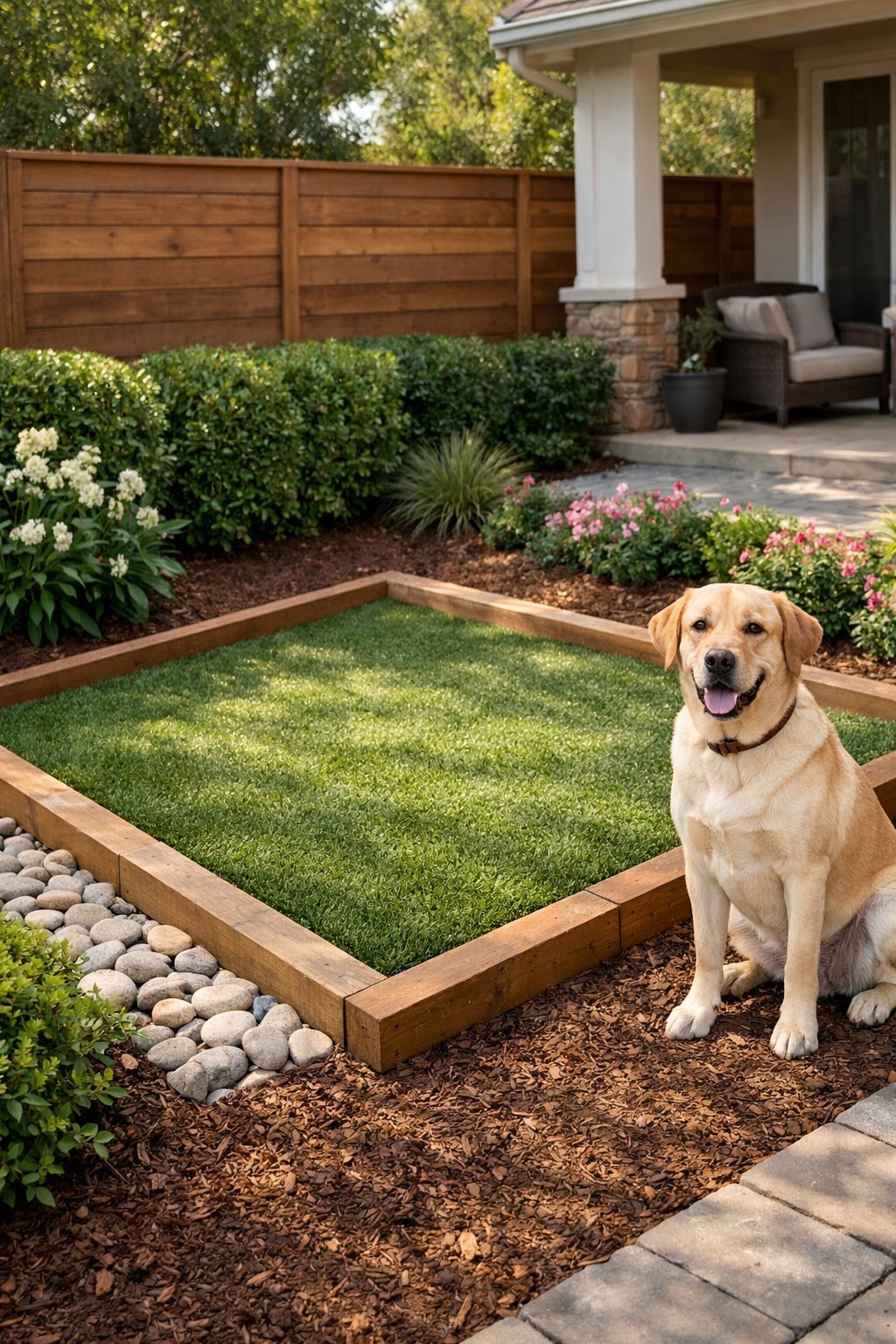
A successful outdoor potty area starts with careful planning that considers location, size, and practical features like drainage. Getting these basics right from the start will save you time and frustration later.
Choosing the Right Location
I recommend picking a spot that’s close to your home for easy access, especially during bad weather or late-night potty breaks. You want convenience without sacrificing your dog’s comfort.
Privacy matters to many dogs. I’ve found that choosing a quieter corner of the yard away from busy areas helps dogs feel more comfortable doing their business.
Weather conditions play a big role too. Avoid spots that get flooded when it rains or become extremely hot in summer sun.
Look for areas with some natural shade or plan to add protection later. If you already have a concrete patio where your dog normally goes, consider building the potty area right on top of that spot.
This takes advantage of your dog’s existing habits.
Determining the Ideal Size
The size of your potty area depends on your dog’s breed and size. Small dogs need about 3 feet by 4 feet of space, while large breeds require at least 4 feet by 8 feet or more.
I always add a few extra feet beyond the minimum. Dogs like to circle and sniff before going, so cramped spaces don’t work well.
Multiple dogs need more room. Calculate the space for your largest dog, then add at least 2 extra feet in each direction for each additional pet.
Assessing Drainage and Safety
Good drainage is essential for keeping the area clean and odor-free. Water and urine need somewhere to go, or you’ll end up with standing puddles and smells.
Check the natural slope of your chosen spot. If it slants toward your house, urine could flow toward your back door.
I look for areas that slope away from the home or are relatively flat. Gravel and pea gravel are popular choices because they drain well and require little maintenance.
Grass and artificial turf also work but need different drainage solutions underneath. Make sure the area is free from hazards like sharp objects, toxic plants, or chemicals.
I keep the potty zone separate from gardens where fertilizers or pesticides might be used.
Selecting the Best Materials for Dog Potty Areas

The right surface material makes cleanup easier and keeps your dog comfortable during bathroom breaks. Materials like natural grass, artificial turf, gravel, and pavers each offer different benefits for drainage, maintenance, and durability.
Natural Grass vs. Synthetic Turf
Natural grass creates a familiar bathroom surface that most dogs instinctively recognize. It feels soft on paws and provides natural drainage when the soil underneath is healthy.
However, grass requires regular mowing, watering, and fertilizing to stay green. Dog urine can create brown spots that need reseeding or patching.
I’ve found that hardy grass varieties like perennial ryegrass or tall fescue hold up better to repeated use. Artificial turf eliminates lawn maintenance while giving your dog a grass-like surface.
Modern pet turf products include antimicrobial backing and efficient drainage systems. You’ll need to rinse the area regularly and use enzyme cleaners to prevent odor buildup.
The upfront cost is higher than natural grass, but synthetic options last 10-15 years with proper care. Some dogs take time adjusting to the feel and smell of artificial surfaces.
Gravel and Pea Stone Options
Pea gravel is the most popular material for outdoor dog potty zones because it drains quickly and resists odor absorption. The small, rounded stones are gentle on paws and easy to rake clean.
I recommend a 2-4 inch depth over landscape fabric to prevent weeds. You’ll need to remove solid waste daily and rinse the gravel weekly with a hose.
Replace the stones every 1-2 years as urine saturates them over time. Crushed stone and river rock work similarly but have sharper edges that some dogs find uncomfortable.
Larger rocks make waste removal easier since solid waste sits on top rather than falling between stones.
Paver and Concrete Solutions
Concrete pads and pavers create permanent, easy-to-clean surfaces that last decades. A slight slope helps water and urine run off toward a drain or grass area.
I suggest sealing concrete annually to prevent staining and odor absorption. Pavers offer better drainage than solid concrete when installed with gaps filled by gravel or sand.
They’re simple to pressure wash and won’t develop brown spots like grass. The hard surface can be tough on older dogs with joint issues, though.
Both options work well in small spaces or balconies where other materials aren’t practical. Adding a patch of artificial turf on top gives dogs a more natural feeling spot while keeping cleanup simple.
Designing a Functional Dog Potty Space

A well-designed potty space needs good smell control, proper boundaries, and easy walkways for both you and your dog. These three elements work together to create a spot that’s simple to use and maintain every day.
Incorporating Odor Control Features
I’ve learned that managing smells is one of the biggest challenges when creating an outdoor dog potty area. The right ground material makes a huge difference in controlling odors.
Gravel and pea gravel are popular choices because they drain well and don’t trap smells. I recommend a layer at least 3-4 inches deep for proper drainage.
Artificial grass with good drainage systems helps reduce odors too. Look for turf with antimicrobial backing that prevents bacteria growth.
Regular hosing keeps it fresh. Adding a rinse station nearby makes cleanup easier.
A simple outdoor spigot with a hose lets me spray down the area weekly. Some people install drainage systems that connect to their regular plumbing for automatic flushing.
Natural odor absorbers like baking soda or pet-safe enzyme sprays work well between deep cleanings. I avoid strong chemical cleaners that might hurt my dog’s paws or nose.
Fencing and Containment Options
I use fencing to keep my dog in the right spot and protect the rest of my yard. A low fence around 2-3 feet high works for most dogs and clearly marks the potty zone.
The type of fence depends on my budget and yard style:
- Wire fencing – Cheap and easy to install
- Wooden picket fencing – Looks nice and provides privacy
- Decorative metal panels – Long-lasting and attractive
- Living borders – Shrubs or hedges for a natural look
For small dogs, even a simple border made from landscaping stones or timber can work. Larger or more active dogs need sturdier options.
I make sure the fence height matches my dog’s jumping ability. Gates make entering and leaving simple during training.
A self-closing gate helps ensure my dog doesn’t wander into other parts of the yard.
Creating Easy Access Paths
I build clear paths so my dog learns the fastest route to the potty area. This helps with training and keeps muddy paws from tracking through my yard.
Stepping stones or pavers create a defined walkway that stays clean in wet weather. I space them based on my dog’s stride length for comfortable walking.
Mulch or gravel between stones prevents mud and looks tidy. The path should be wide enough for me to walk alongside my dog during training sessions.
I keep it at least 2-3 feet wide. Good lighting matters for nighttime potty breaks.
Solar path lights or motion-sensor lights help both of us see where we’re going. I place lights along the walkway edges to mark the route clearly.
I avoid stairs or steep slopes when possible since older dogs or puppies struggle with them. A gentle slope with good traction works better than steps.
Maintaining a Clean and Healthy Area

Regular cleaning prevents disease spread, controls odors, and keeps pests away from your dog’s outdoor potty space. I recommend establishing daily routines paired with deeper cleaning schedules to maintain proper hygiene year-round.
Daily Cleaning Practices
I pick up solid waste at least once daily, preferably twice if I’m home. This simple habit stops unpleasant odors and pest infestations from developing in my yard.
I keep a dog waste station with bags, a scooper, and a trash bin near the potty area for quick cleanup. Having supplies readily available makes me more likely to clean up promptly.
After removing solid waste, I spray the area with water from my garden hose. This rinses away urine and prevents buildup on grass, gravel, or other surfaces.
I focus extra attention on spots my dog uses most frequently. For quick odor control between deeper cleanings, I use an enzyme-based spray designed for pet waste.
These products break down organic matter naturally without harsh chemicals that might harm my dog’s paws.
Deep Cleaning and Disinfection
I perform thorough cleaning of my dog’s potty area every two to four weeks. This involves removing all solid waste first, then saturating the entire space with a pet-safe disinfectant solution.
For gravel or mulch areas, I rake through the material to expose hidden waste and allow cleaning products to penetrate deeper. Grass areas need extra rinsing after applying cleaners to prevent damage to the lawn.
I let disinfectants sit for 10-15 minutes before rinsing thoroughly with my hose. Never use bleach or ammonia-based cleaners, as these can be toxic to dogs and may actually attract them to urinate in the same spot.
Every few months, I replace the top layer of gravel or mulch in my dog’s potty zone. This removes accumulated waste particles that regular cleaning can’t eliminate.
Seasonal Upkeep Tips
During summer, I clean more frequently because heat intensifies odors and accelerates bacterial growth. I water the area daily to dilute urine and keep surfaces cooler for my dog’s comfort.
In winter, I shovel snow from the potty area to maintain access. Frozen waste is easier to pick up, but I still check daily since cold temperatures can mask odors that return during thaws.
Spring brings heavy rain that can wash waste into other parts of my yard. I inspect drainage patterns and adjust the potty area’s borders if needed to contain runoff.
Fall leaf buildup can hide waste and create damp conditions where bacteria thrive. I rake leaves from the potty zone weekly and check underneath piles before disposing of them.
Training Your Dog to Use the Potty Area
I’ve found that successful potty area training relies on three key elements: proper introductions to the designated spot, consistent rewards for correct behavior, and knowing how to address setbacks when they happen.
Introducing Your Dog to the Area
I always start by taking my dog directly to the potty area on a leash, even if it’s just in my backyard. This prevents wandering and helps them focus on the task at hand.
I make sure to visit the spot at key times throughout the day. These include first thing in the morning, after meals, after playtime, and before bed.
Puppies need trips every 1-2 hours, while adult dogs can usually wait 4-6 hours. When I arrive at the area, I use a specific command phrase like “go potty” or “do your business.”
I say this in a calm, encouraging voice each time. The repetition helps my dog connect the words with the action.
I give my dog about 5-10 minutes to sniff around and go. If nothing happens, I take them back inside and try again in 15-20 minutes.
I don’t let them play or explore other parts of the yard until they’ve finished their business in the designated area.
Positive Reinforcement Techniques
I’ve learned that positive reinforcement and patience are the most effective training tools. The moment my dog finishes going in the right spot, I immediately give them praise and a small treat.
My timing matters a lot here. I reward within 3-5 seconds of them finishing so they understand exactly what earned the reward.
I use high-value treats like small pieces of chicken or special training treats that they only get for potty success. I also add verbal praise in an excited, happy voice.
My dog responds well to phrases like “good potty!” or “yes, good job!” The enthusiasm in my tone tells them they did something great.
I keep treats in a container near the door so I can grab them quickly. Some people use a clicker along with treats to mark the exact moment of success.
Troubleshooting Common Issues
When accidents happen inside, I’ve learned to ignore them and avoid giving attention for unwanted behaviors. Yelling or punishing only creates fear and confusion.
I clean up accidents thoroughly with an enzyme cleaner to remove all scent traces. Dogs often return to spots that smell like previous accidents.
If my dog consistently has accidents in one indoor location, I block access to that area during training.
Weather can be a big challenge. Some dogs refuse to go outside when it’s raining, snowing, or windy.
I’ve had success by going out with my dog, holding an umbrella over them, or shoveling a small path in the snow to their potty spot.
If my dog seems confused about where to go, I make the designated area smaller at first. I can always expand it later once they understand the concept.