Dog Proof Fence: Essential Guide to Secure and Safe Yards

Your dog’s safety depends on having a secure dog proof fence. Standard fences often have gaps, low heights, or weak spots that let dogs escape.
Whether your dog digs, jumps, or squeezes through openings, an unsecured yard puts them at risk of getting lost, injured, or hit by a car. I’ve seen too many worried pet owners searching for their missing dogs because their fence wasn’t properly secured.

Dog proofing a fence involves addressing common escape routes by blocking gaps, preventing climbing and jumping, stopping digging underneath, and reinforcing weak areas to keep your dog safely contained in your yard. The good news is that you don’t need to replace your entire fence to make it secure.
There are many affordable and effective ways to dog-proof different types of fences that work for various dog sizes and behaviors. In this guide, I’ll walk you through practical solutions that keep your dog safe and give you peace of mind.
From simple fixes like adding chicken wire to more permanent options like installing coyote rollers, you’ll find the right approach for your situation.
Key Takeaways
- Dog proofing your fence protects your pet from injury, getting lost, or running into traffic
- Different escape methods require specific solutions like blocking gaps, adding height extensions, or burying barriers underground
- You can secure most existing fences without complete replacement using materials like chicken wire, lattice panels, or concrete footings
Why Dog Proofing Your Fence Matters

Dogs are naturally curious and athletic animals that can find creative ways to escape even well-built fences. When a dog gets out of a yard, they face serious dangers like traffic, aggressive animals, and getting lost far from home.
Common Ways Dogs Escape Yards
I’ve seen dogs use several clever methods to break free from their yards. Digging under fences is one of the most common escape tactics.
Many dogs instinctively dig when they’re bored, anxious, or chasing a scent on the other side. Jumping or climbing over fences happens more often than people expect.
Large or athletic breeds can easily clear a four-foot fence. Some determined dogs even use objects near the fence line as stepping stones.
Squeezing through gaps works for smaller dogs or puppies. Loose boards, wide spaces between fence panels, or damaged sections create openings.
Chain-link fences with large gaps are particularly easy for small breeds to push through. Pushing through weak spots is another problem I encounter.
Old wooden fences with rotted posts or loose panels give way when a strong dog pushes against them. Gates with broken latches or hinges also fail to keep dogs contained.
Risks of Escaped Dogs
When dogs escape, the consequences can be devastating. Traffic accidents are the biggest threat.
Dogs running into streets often get hit by cars, leading to serious injuries or death. Fights with other animals pose another major risk.
An escaped dog might encounter aggressive dogs, wildlife like coyotes, or even cats they want to chase. These confrontations often result in bite wounds and infections.
Getting lost happens quickly once a dog leaves familiar territory. Dogs can travel miles in a short time.
Without identification tags or microchips, reuniting with owners becomes much harder. Legal and financial problems also arise from escaped dogs.
If my dog damages someone’s property or bites another person or pet, I’m legally responsible. Vet bills, liability claims, and potential fines add up fast.
Importance of Dog-Proofing for Safety
Creating a dog-proof fence gives me peace of mind knowing my pet can enjoy outdoor time safely. A secure fence lets dogs exercise, play, and explore without constant supervision.
Protecting my dog’s life is the primary reason I prioritize fence security. Dog proofing a fence prevents the life-threatening situations that come with escapes.
Maintaining good neighbor relationships matters too. When my dog stays in my yard, they won’t dig up flower beds, bark at people passing by, or leave waste on other properties.
Reducing my stress is an often-overlooked benefit. I don’t have to constantly watch the yard or worry about phone calls from animal control.
Choosing the Right Dog-Proof Fence Solution
The best dog fencing depends on your yard layout and your dog’s specific habits. I’ve found that matching fence type to behavior patterns makes all the difference in keeping dogs safely contained.
Evaluating Your Yard and Dog’s Behavior
Before I pick any dog fence system, I always start by watching how my dog acts in the yard. Does he dig near the fence line? Does she jump when excited?
These behaviors tell me exactly what features I need. I measure my yard’s perimeter and note any slopes or uneven ground.
This helps me figure out which fencing solutions work best for different dog breeds. I also check local regulations about fence height since some areas have specific rules.
My dog’s size matters too. Small dogs can squeeze through surprisingly narrow gaps.
Large athletic breeds need taller barriers. I’ve learned that dogs who can see through fences often bark more at passersby, so visual barriers help with that problem.
Types of Fences for Dogs
A chain link fence costs less and lasts a long time, making it one of the most affordable pet-friendly fence options. I’ve seen these work great for most medium to large dogs.
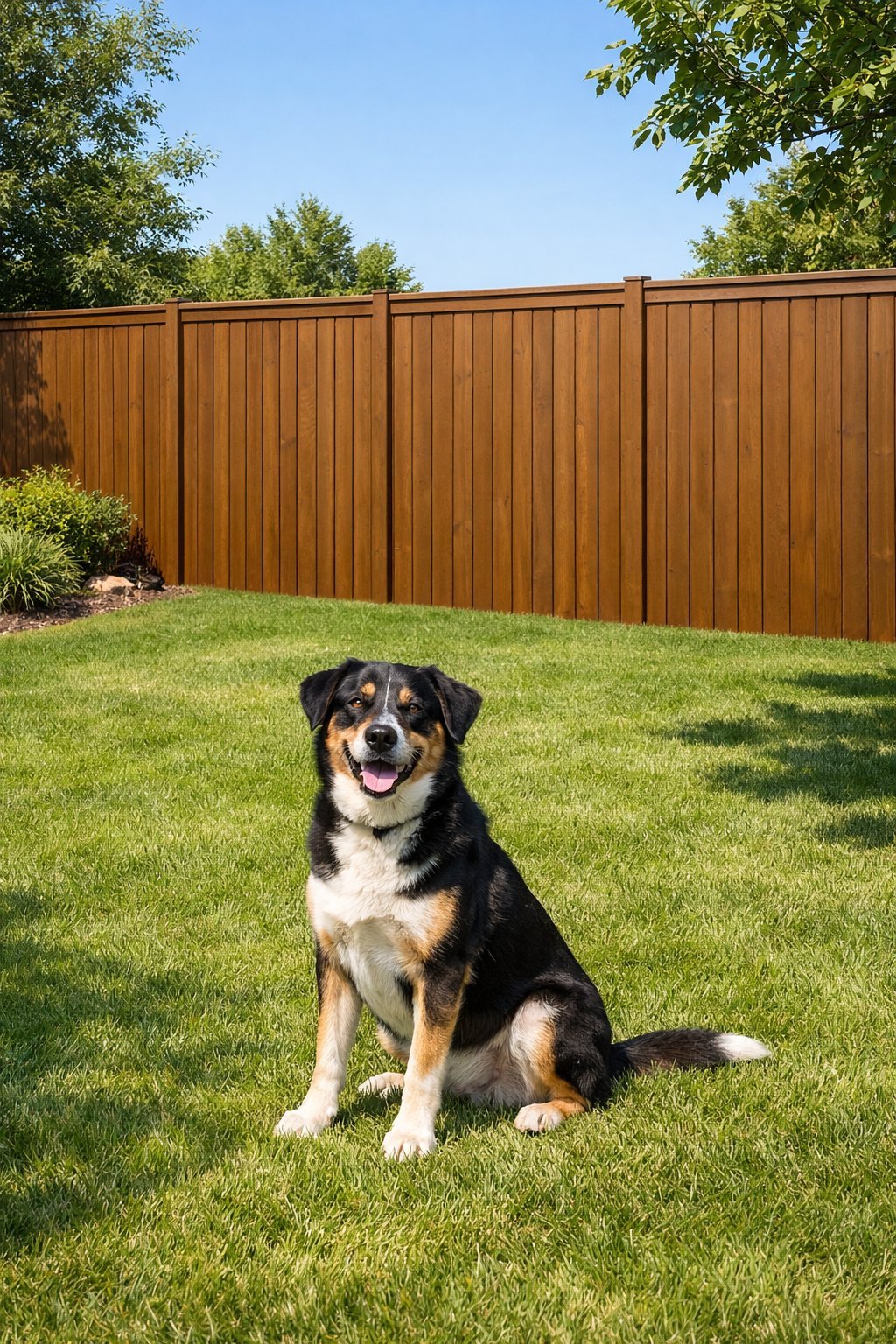
A wooden fence or privacy fence blocks my dog’s view of distractions outside the yard. These typically stand 6 feet tall and stop jumping while reducing barking.
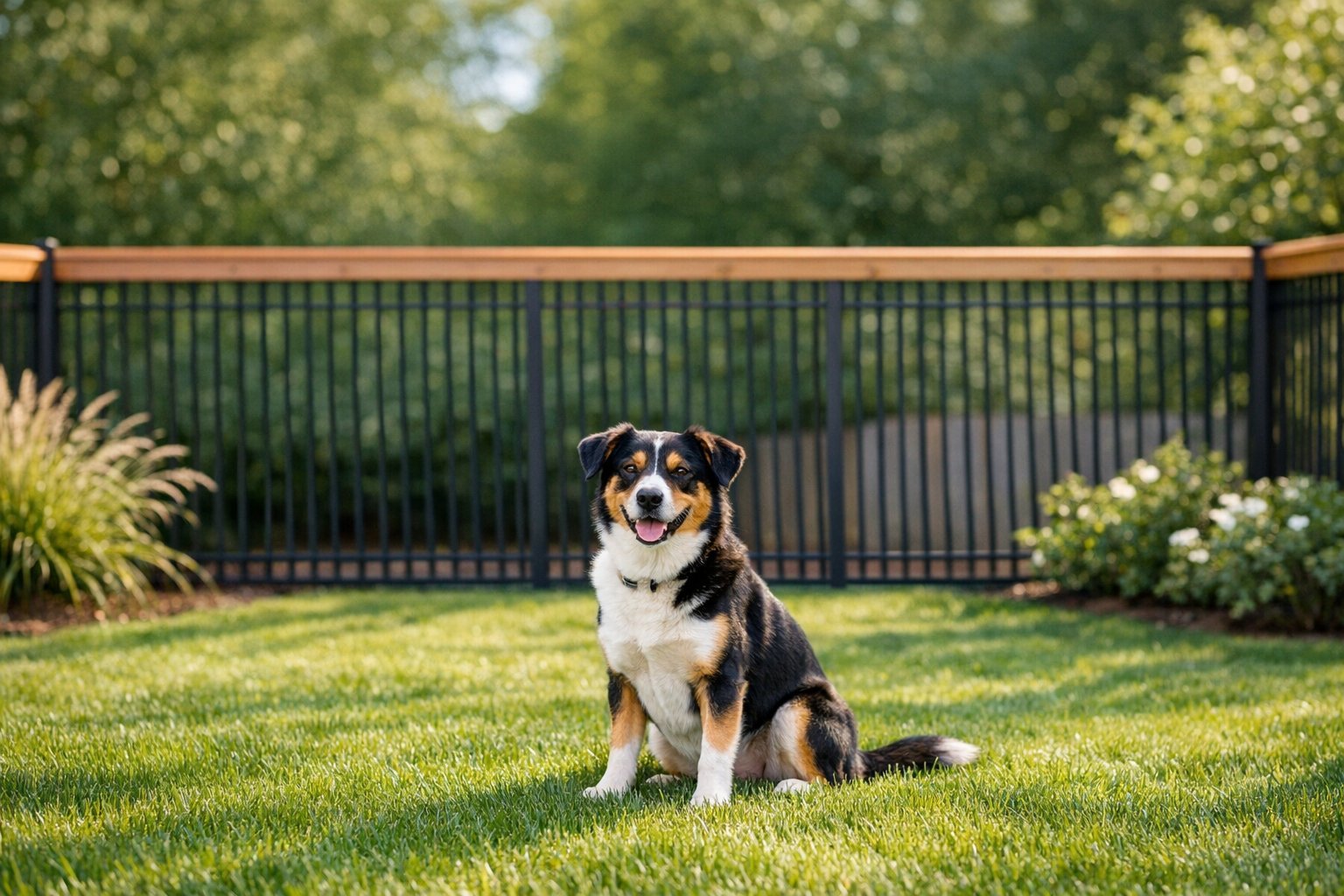
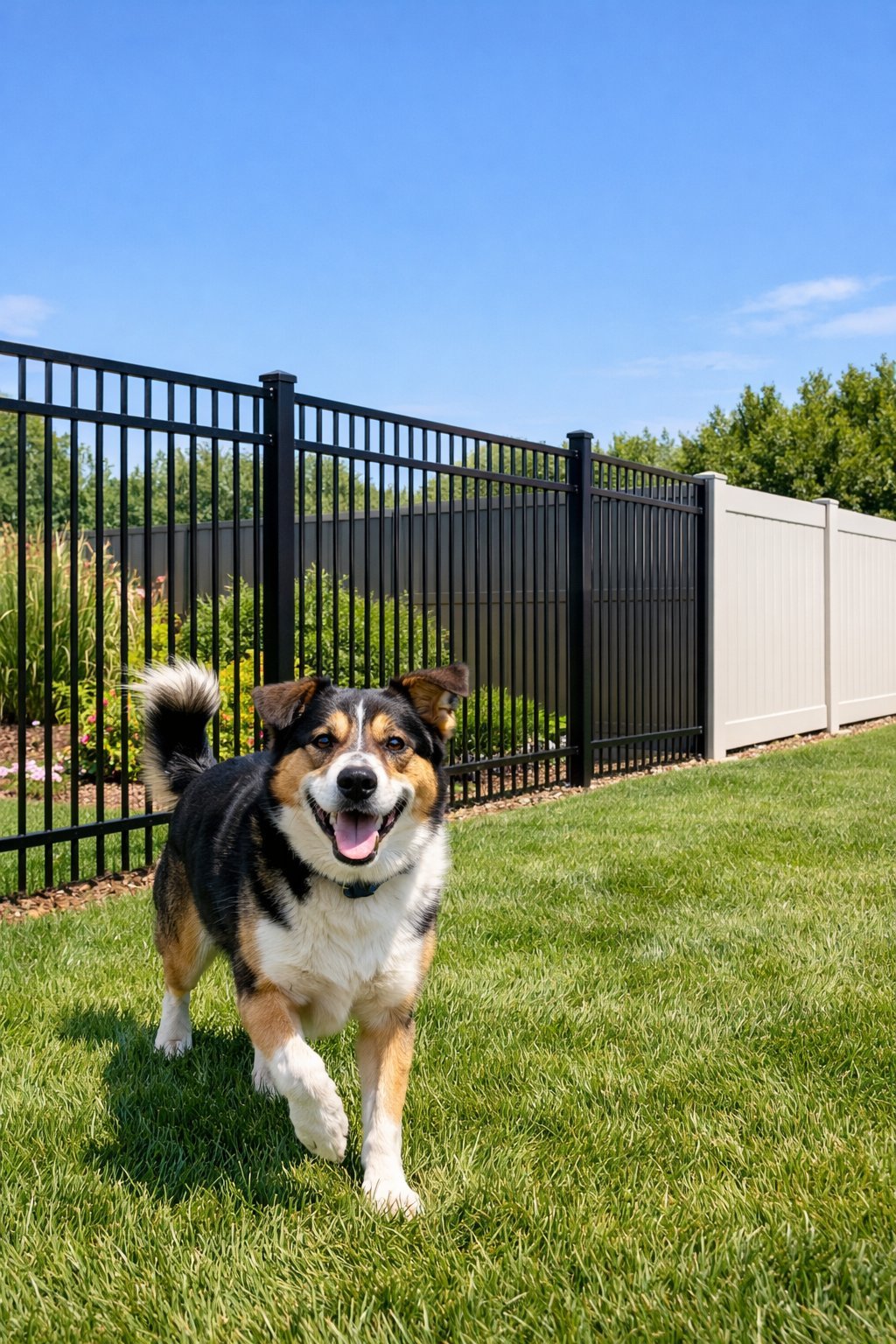
A vinyl fence gives me similar privacy benefits with almost no maintenance required. Wrought iron fence panels look elegant and feel extremely sturdy.
I like these for decorative yards, though smaller dogs might slip between the bars. A free-standing dog enclosure works perfectly when I only need to secure part of my yard.
These portable outdoor dog enclosure systems move easily and don’t require permanent installation.
Key Features of Effective Dog Fencing
I always prioritize height first. Most experts recommend at least 6 feet for medium to large dogs.
Athletic breeds may need 7 or 8 feet to prevent jumping over fences. The fence bottom matters just as much.
I extend fencing 6 to 12 inches below ground or add an L-footer to stop diggers. Some dog fencing solutions include built-in dig barriers.
Gap spacing between boards or bars should be less than 4 inches for small dogs. Self-closing gates with secure latches keep my dog from nudging doors open.
I also check that my fence has no sharp edges or splinters that could hurt paws or noses.
Preventing Dogs from Jumping or Climbing Fences
The right fence modifications can stop even the most athletic dogs from escaping your yard. I’ll show you how adjusting height, adding extensions, installing rollers, and using angled designs create barriers that keep your dog safely contained.
Optimizing Fence Height
The first step I recommend is evaluating your current fence height. Most dogs need at least a 6-foot fence to prevent jumping, but larger or more athletic breeds may require even taller barriers.
If your dog can touch the top of your fence with their front paws, it’s too short. I’ve found that small dogs under 30 pounds typically stay contained with 4-foot fences, while medium dogs need 5 to 6 feet.
Large breeds and high jumpers often require 6 to 8 feet of height. You don’t always need to replace your entire fence.
I can add height by attaching extension materials to your existing structure. This approach saves money while still providing the security you need.
Installing Fence Extensions
A fence extender for dogs adds crucial height without rebuilding your fence from scratch. These kits come in lengths ranging from 50 to 400 feet and include durable materials like poly mesh or welded wire.
I prefer flat-top extensions that create a perpendicular barrier at the top of your fence. When your dog climbs up, they can’t lean back far enough to get over the flat section.
This design works especially well on chain link and wire mesh fences. The Dog Proofer system features a curved arm that arches over your fence, making climbing nearly impossible.
Installation is straightforward with basic tools like hammers, staplers, or zip ties depending on your fence type.
Using Coyote Rollers
Coyote rollers are spinning roller bars installed along the top of your existing fence. When your dog tries to climb over, the roller spins and prevents them from getting a grip.
I’ve seen these work effectively on chain link, wooden, and metal fences. The rollers don’t harm your dog but make it physically impossible to scale the barrier.
They’re particularly useful if you have a determined climber who’s mastered traditional fences. You can purchase pre-made coyote roller kits or create a DIY version using PVC pipe and mounting hardware.
The key is ensuring the roller spins freely so your dog can’t gain traction when attempting to climb.
Curved and Lean-In Fence Designs
Angled fence extensions create an overhang that tilts back toward your yard. I find this design particularly effective because dogs can’t position themselves to jump over the inward angle.
The curve disrupts their climbing trajectory. You can achieve this with flexible materials that bend at the top of your fence, creating a 45-degree angle pointing inward.
This proven solution prevents climbing by removing the leverage point your dog needs to pull themselves over. Some systems combine the angled approach with roller bars for double protection.
The lean-in design stops climbing attempts while the rollers prevent any grip if your dog reaches the top section.
Stopping Escapes Under or Through the Fence
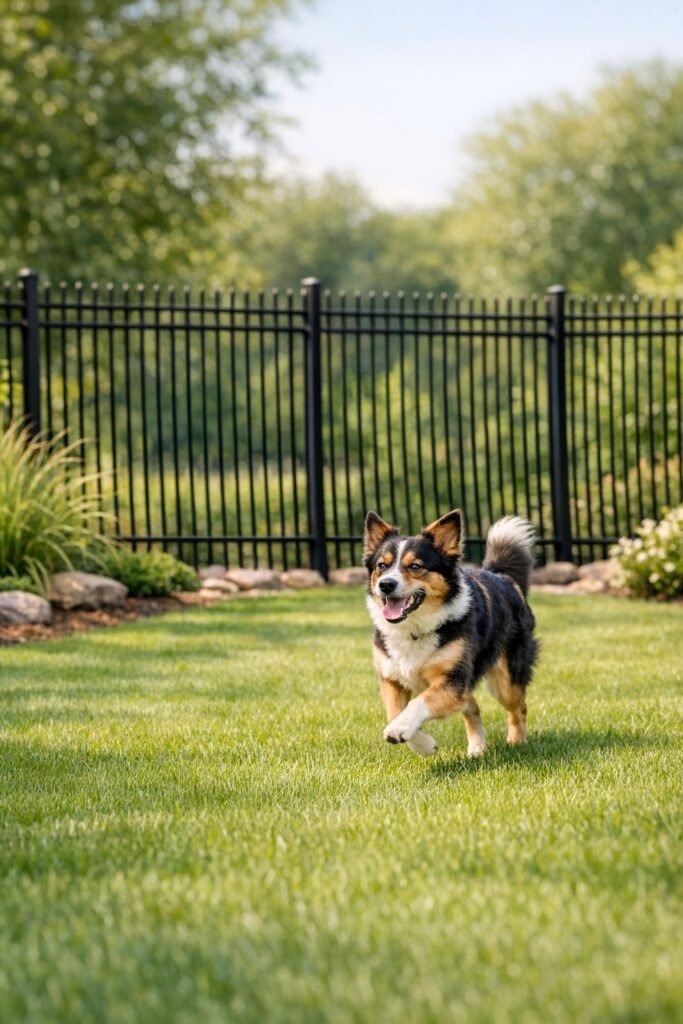
Dogs that dig or squeeze through gaps need different solutions than jumpers and climbers. Installing physical barriers below ground and reinforcing weak spots creates a secure perimeter that stops escape attempts before they succeed.
L-Footers and Barrier Materials
An L-footer is one of my favorite solutions for stopping diggers. This method uses wire fencing laid at the base of your existing fence in a 90-degree angle pointing inward.
The beauty of an L-footer is that it doesn’t require deep trenches. I can simply lay the wire on the ground surface and secure it to the fence bottom.
When my dog tries to dig, they hit the barrier and usually give up. For the wire itself, I recommend using 14-gauge welded wire or chicken wire that extends at least 2 feet out from the fence base.
Some pet owners cover the L-footer with rocks, mulch, or decorative stones to hide it. This makes the yard look better while still keeping the barrier effective.
Barrier nets specifically designed for digging offer another option. These mesh products attach to the fence and spread across the ground to create a dig-proof zone.
Concrete Footers and Dig-Proofing
For determined diggers, I sometimes need a stronger solution. A concrete footer creates a permanent barrier that even the most persistent dogs cannot breach.
This method involves pouring concrete along the fence line before the posts dry. The concrete extends several inches below ground, creating an impenetrable barrier.
While this approach costs more and takes longer to install, it works for dogs that have defeated other methods. Another option is digging a trench about 12 inches deep along the fence line.
I can then install chicken wire or hardware cloth vertically in this trench before filling it back in. This underground fence installation stops digging without using concrete.
Some pet owners also bury large rocks or pavers along the fence base. The rocks make digging much harder and discourage most escape attempts.
Blocking Gaps and Reinforcing Weak Points
Gaps between fence boards or bent sections of chain link give my dog easy escape routes. I walk my entire fence perimeter regularly to find these weak spots before they become problems.
For wooden fences, I check for loose or rotted boards that might allow squeezing through. Replacing damaged boards and adding extra screws or nails keeps everything tight.
If gaps exist at ground level, I can attach wire mesh or hardware cloth to the bottom 2 feet of the fence. Chain link fences sometimes develop bent or loose sections.
I use metal ties or zip ties to secure any loose areas. For larger gaps near gates or corners, I add extra chain link patches.
I also inspect gates carefully since they’re common escape points. Adding weatherstripping or rubber seals along the bottom edge blocks the gap between gate and ground.
Strong latches with secure locks prevent gates from opening accidentally.
Using Dense Shrubs and Landscaping
Dense shrubs planted along the fence perimeter serve multiple purposes for keeping dogs contained. The plants create a natural barrier that makes it harder for my dog to reach the fence itself.
I choose thick, bushy plants like boxwood, holly, or privet that grow close together. These shrubs should be planted about 2-3 feet from the fence to create an effective buffer zone.
The dense foliage discourages both digging and climbing attempts. This landscaping approach also blocks my dog’s view through the fence.
When they can’t see people, animals, or cars on the other side, they feel less motivated to escape. Planting shrubs around the perimeter reduces fence reactivity and obsessive patrolling behavior.
I always verify that my chosen plants are safe for dogs before planting. Some common shrubs are toxic if eaten, so I research each species carefully.
Non-toxic options like rosemary, certain types of sage, and most native grasses work well.
Dog-Proofing Different Fence Types
Each fence material has its own strengths and weak points when it comes to keeping dogs contained. The modifications you need depend on whether you’re working with wood, metal, or vinyl materials.
Wooden Fence Dog-Proofing Tips
I find wooden fences are the easiest to modify because you can attach almost anything to them. If your dog is a jumper, I recommend adding a 2×4 board horizontally near the top to make it harder to grip.
You can also install fence extensions using garden stakes and hardware cloth attached directly to the wooden posts. For diggers, I suggest installing a 2×4 board along the bottom of your wooden fence at ground level.
This creates a solid barrier that’s much harder to dig under than leaving a gap. If you have larger gaps between boards, I’ve had success adding hardware cloth or deer netting to the inside of the fence to block escape routes.
Wooden fences can also develop weak spots over time. I check mine regularly for loose boards or rotting sections that a determined dog might push through.
Securing loose boards with extra screws and replacing damaged sections prevents escape attempts before they happen.
Chain Link and Metal Fence Solutions
Chain-link fences present unique challenges because dogs can see through them and often get more excited by outside distractions. I recommend installing coyote rollers on chain-link and wooden fences to prevent climbing dogs from getting over the top.
These spinning tubes make it impossible for dogs to get a grip when they reach the top. For visibility issues, I’ve found that adding privacy slats between the chain links reduces the temptation to escape.
When dogs can’t see what’s on the other side, they’re less motivated to get out. Metal fences with wider gaps at the bottom need barrier material added.
I attach hardware cloth or chicken wire to the base using zip ties. For persistent diggers, I bury an L-shaped footer of chicken wire along the fence line.
Vinyl and Privacy Fence Upgrades
Vinyl fences and privacy fences are naturally better at blocking your dog’s view of outside distractions. However, they can still be jumped or climbed by athletic dogs.
I find that vinyl is smooth enough to discourage climbing, but tall jumpers still need fence extensions added to the top. The biggest vulnerability I see with vinyl fences is at the bottom.
Many vinyl designs have a small gap between the bottom rail and the ground. I fill these gaps with landscape edging or pavers to prevent small dogs from squeezing through or starting to dig.
Privacy fences made from vinyl are harder to modify than wood because you can’t easily nail or screw into them. I use heavy-duty zip ties or fence clips to attach any additional barriers like deer netting or hardware cloth to the posts rather than the panels themselves.
Additional Containment Solutions and Accessories
Beyond traditional fencing, several specialized products can enhance your dog’s security or provide alternatives when standard fences aren’t practical. These options range from electronic boundaries to physical add-ons that work with your existing setup.
Outdoor Dog Enclosures and Redundant Fencing
I recommend considering outdoor dog enclosures as either standalone solutions or backup containment within your existing yard. These structures create defined play areas where you can supervise your dog safely.
Portable enclosures work well for temporary setups or renters who can’t modify permanent fencing. They’re also useful for creating temporary dog parks during community events or playdates.
Redundant fencing adds a second layer of security inside your primary fence perimeter. This approach gives you peace of mind if your dog is an escape artist.
You can set up garden fencing to protect plants while keeping your dog contained in a designated area of the yard. I find these double-barrier systems particularly helpful during training periods.
They give nervous dogs gradual exposure to outdoor spaces while preventing escapes.
Invisible and Wireless Dog Fence Systems
Invisible fences use underground wires that transmit signals to a collar your dog wears. When your dog approaches the boundary, the collar gives a warning beep followed by a mild correction if they continue.
Wireless containment systems create circular boundaries without requiring buried wires. They’re easier to install and portable if you move homes.
Key considerations for electronic fences:
- Require consistent training for effectiveness
- Work best for dogs that respond to corrections
- Won’t keep other animals or people out
- May not contain highly motivated dogs
- Can handle unlimited pets with additional collars
I’ve seen these systems work well as supplements to physical fencing, especially in areas where fence installation isn’t allowed. However, they shouldn’t be your only containment method for determined escape artists.
Fence Extenders and Specialty Products
Fence extenders for dogs attach to your existing fence to increase height or prevent climbing.
These modifications cost less than replacing your entire fence.
I suggest curved extenders for climbers since they add both height and an overhang that dogs can’t grip.
Straight vertical extensions work well for jumpers who haven’t learned climbing techniques yet.
Common specialty products include:
- L-footer barriers: Prevent digging along the fence base
- Gap barriers: Block spaces in wrought iron or picket fences
- Heavy-duty mesh: Withstands chewing better than standard materials
- Ground stakes: Secure fencing on various terrain types
These additions work with wood, chain link, vinyl, metal, brick, and block fences.