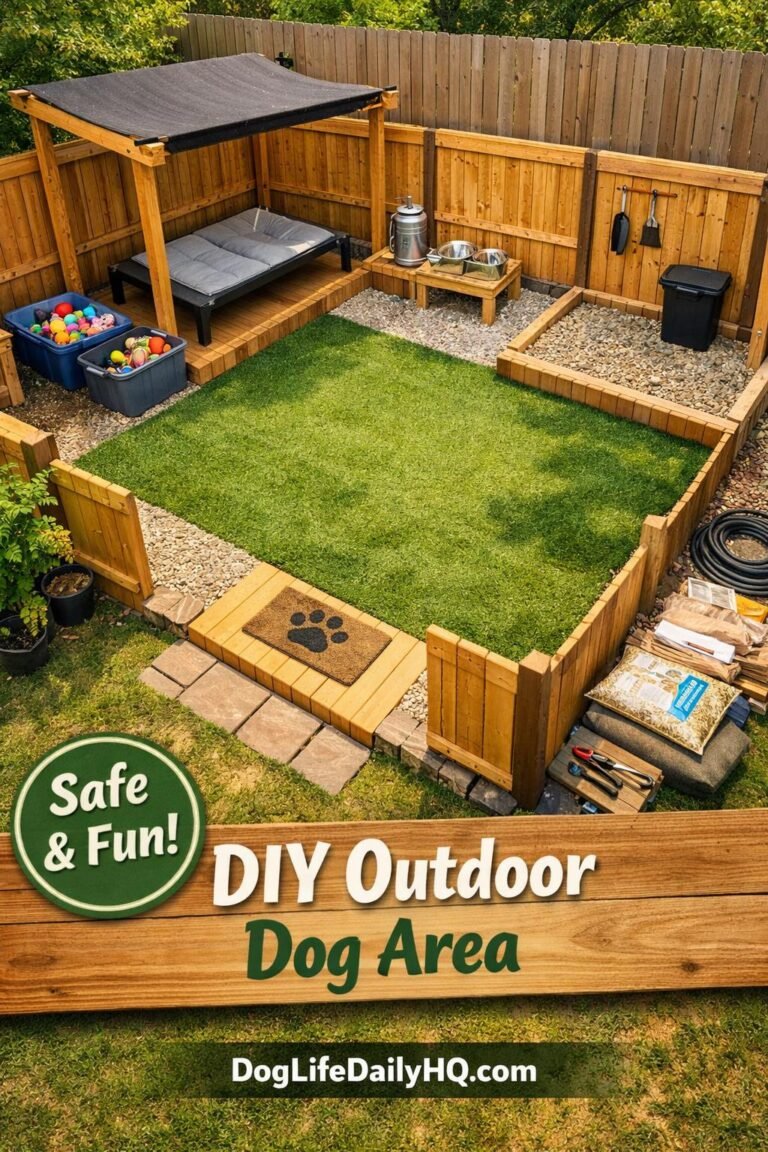

DIY Dog Run: Size Guide, Costs and Step-by-Step Build

A DIY dog run is a fenced section of your yard, usually 4 to 10 feet wide and 10 to 20 feet long, with a gate, a dog-friendly surface, shade and water. Most people build one from wood posts and welded wire, T-posts and wire, or ready-made kennel panels. Below are the size to build for your dog, three build options with rough costs, a materials list for a 10 x 20 foot run, step-by-step instructions, and the safety details that keep dogs from digging out or overheating.
This post contains affiliate links. As an Amazon Associate I earn from qualifying purchases.
Short on time? Buy a ready-made option instead:
- Heavy-duty outdoor dog kennel – a secure run without the build
- Kennel shade cover – sun and rain protection
- Portable playpen – a contained space anywhere
- Artificial turf for dogs – easy to rinse clean
- Elevated outdoor dog bed – keeps your dog off hot or wet ground
Quick Answer
- Size: at least 4 x 10 feet for small dogs, 6 x 15 feet for medium dogs, and 10 x 20 feet for large dogs.
- Fence height: 4 feet for most small and medium dogs, 5 to 6 feet for large dogs and jumpers.
- Best budget build: wood posts with 14-gauge welded wire, about $500 to $800 for a 10 x 20 foot freestanding run. T-posts and wire cost less. Ready-made kennel panels are fastest.
- Stop digging: bury the wire 6 to 12 inches or lay a 12 to 24 inch wire apron along the inside bottom.
- Must have: shade, fresh water, a surface that drains, and a gate latch your dog can’t nose open.
- Before you dig: call 811 to mark buried lines, and check HOA or city fence rules.

How Big Should a Dog Run Be?
There is no official size, but bigger is always better. Your dog should be able to trot a few strides, turn around easily, and lie down in shade away from the potty area.
| Dog size | Minimum run | Better | Fence height |
|---|---|---|---|
| Small (under 20 lb) | 4 x 10 ft | 6 x 12 ft | 4 ft |
| Medium (20 to 50 lb) | 6 x 15 ft | 10 x 15 ft | 4 to 5 ft |
| Large (50 to 90 lb) | 10 x 20 ft | 10 x 30 ft | 5 to 6 ft |
| Giant or athletic jumpers | 10 x 25 ft | 12 x 30 ft or more | 6 ft, with an inward lean or roof if they climb |
| Two dogs | Add about 50% to the size above | Height for the larger dog |
A run is a safe place to hang out, not a replacement for walks and play. Dogs still need daily exercise and time with you.
Choosing a Location
- Partial shade: near a tree or the house, so there is shade most of the day.
- High, level ground: avoid low spots where water pools. A slight slope of about 1/4 inch per foot helps drainage.
- Along an existing fence or wall: you only build three sides, which saves money and materials.
- Visible from the house: easier to keep an eye on your dog, and dogs settle better when they can see you.
- Away from toxic plants, pools, and the neighbor’s fence line if your dog tends to bark at their dogs.
Three Ways to Build It
| Build | Rough cost (10 x 20 ft) | Time | Best for |
|---|---|---|---|
| Wood posts + welded wire | $500 to $800 | 1 to 2 weekends | Permanent, good looking, most dogs |
| Steel T-posts + welded wire | $250 to $400 | 1 day | Budget or temporary runs, calm dogs |
| Ready-made kennel panels | $400 to $1,000+ | A few hours | Renters, fast setup, strong or escape-prone dogs |
Prices are rough national averages for materials only and vary by region, especially lumber.
Materials for a 10 x 20 ft Wood and Wire Run
This list is for a freestanding run with 60 feet of fence, 4 feet tall, and one gate. If you build against an existing fence, you need about a third less.
- 11 pressure-treated 4×4 posts, 8 ft long (corners, one about every 7 feet between, plus a second gate post)
- 15 pressure-treated 2×4 boards, 8 ft long, for top and bottom rails
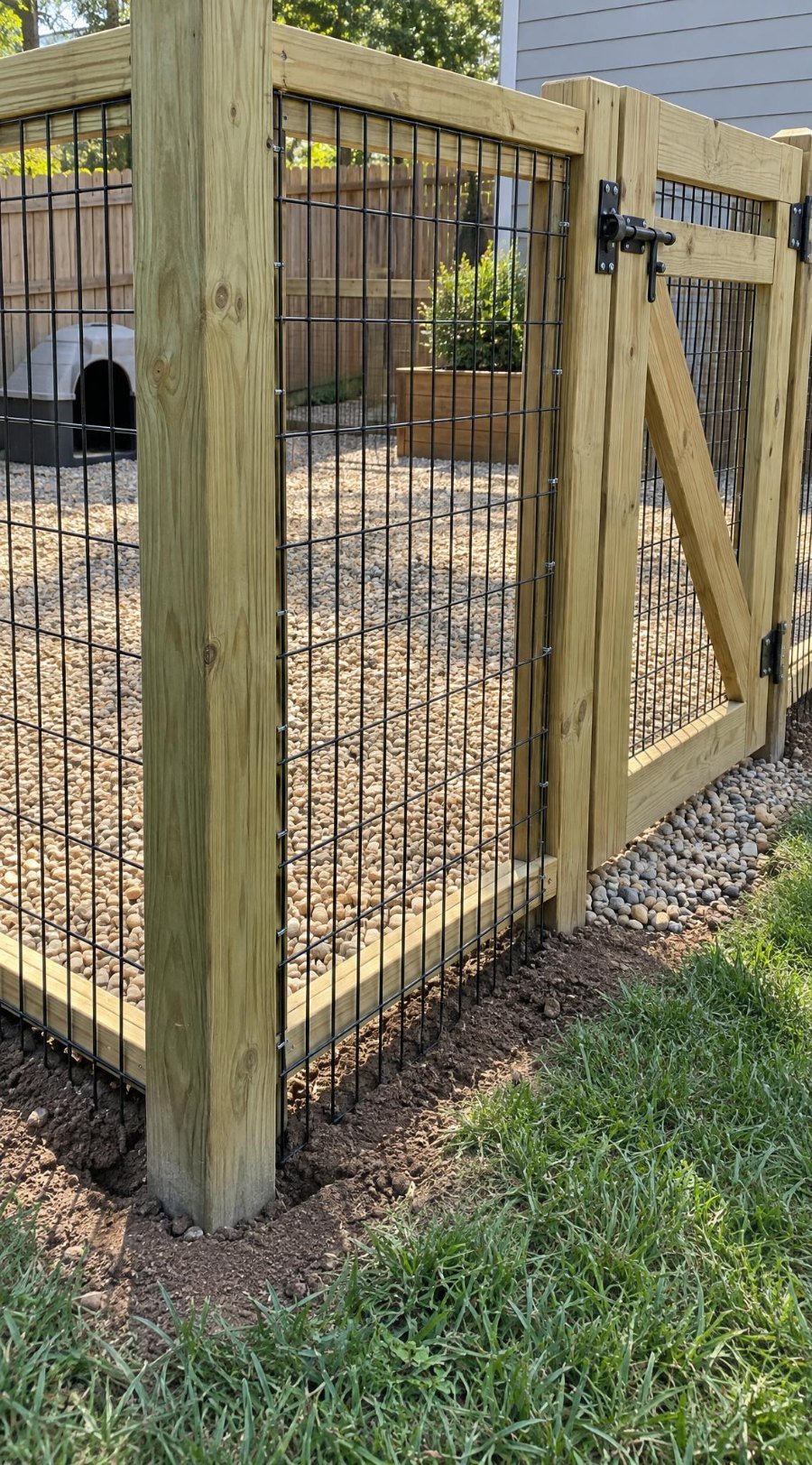
- 2 rolls of 14-gauge welded wire fencing, 4 ft x 50 ft (galvanized or black vinyl-coated). Buy 5 ft tall rolls instead if you plan to bury the bottom 6 to 12 inches.
- 1 extra roll of 2 ft wide welded wire or hardware cloth for a dig apron (optional)
- 22 bags (50 lb) of fast-setting concrete, about 2 per post
- 1 gate kit or a pre-built 3 ft wide gate, with a latch
- Exterior screws (3 inch) and heavy-duty fence staples or wire clips
- About 2 cubic yards of pea gravel for a 3 inch layer, or artificial turf and base
- Landscape fabric (optional, under gravel)
Tools: post hole digger or auger, level, string line and stakes, tape measure, drill/driver, staple gun or hammer, wire cutters, work gloves, shovel and rake.
Step-by-Step: How to Build a Dog Run
- Call 811 and check the rules. Have buried utility lines marked a few days before you dig, and check HOA or city rules on fence height and setbacks.
- Mark the layout. Drive stakes at the corners and run a string line. Measure both diagonals; when they match, the corners are square.
- Dig the post holes about 2 feet deep and 8 to 10 inches wide, no more than 8 feet apart along the line. Set the two gate posts so the opening matches your gate width plus hinge and latch gaps.
- Set the posts. Add 3 inches of gravel to each hole, stand the post, check it is plumb on two sides, and pour the concrete. Let it set as the bag directs, usually 4 hours before light work and 24 hours before hanging the gate.
- Add the rails. Screw 2×4 rails between posts at the top and about 2 inches above the ground. This gives the wire a solid frame.
- Dig the trench. Dig a trench 6 to 12 inches deep along the fence line if your dog digs.
- Hang the wire. Unroll the welded wire on the inside of the posts, pull it tight, and staple it to each post and rail every 6 to 8 inches. Let the bottom edge drop into the trench, then backfill.
- Add a dig apron if you have a determined digger: lay 2 ft wide wire flat on the ground along the inside of the fence, attach it to the bottom of the fence wire, and cover it with gravel.
- Hang the gate. Leave about a 1/2 inch gap on each side, and use a latch your dog can’t push or lift. A spring-loaded gate latch or a carabiner through the latch adds security.
- Prep the ground. Rake it level with a slight slope for drainage, lay landscape fabric if using gravel, then spread your surface.
- Walk the perimeter. Look for sharp wire ends, gaps over 2 inches near the ground, and loose staples. File or bend any cut wire ends outward.
Best Surfaces for a Dog Run
| Surface | Pros | Cons |
|---|---|---|
| Pea gravel | Cheap, drains well, easy to rake | Some dogs dig in it. Can get hot. |
| Artificial turf for dogs | Soft, clean look, easy to hose off | Higher cost. Needs a draining base and rinsing to control odor. |
| Concrete or pavers | Very durable, stops digging, easy to clean | Hard on joints, gets very hot in sun. Add a raised bed. |
| Natural grass | Free, cool and soft | Wears into mud fast in a small run |
| Wood chips or cedar mulch | Soft and cheap | Holds moisture and odor. Never use cocoa mulch, which is toxic to dogs. |
For a dedicated bathroom spot inside the run, see our dog potty area ideas.
Shade, Water and Comfort
- Shade: a shade sail, a tarp or roof over one end, or a covered dog house. Shade should move with the sun so some is always available.
- Water: a tip-proof bowl or a bucket clipped to the fence. Check it often in hot weather.
- A raised cot keeps dogs off hot gravel or wet ground.
- Shelter: an insulated dog house for cold or rainy days. See our DIY insulated dog house and pallet dog house guides.
- Something to do: a chew toy or a lick mat helps prevent boredom barking and digging.

Safety Tips
- Heat is the biggest risk. Never leave a dog in a run without shade and water, and bring dogs inside in extreme heat or cold. Heavy panting, drooling, stumbling or vomiting in the heat is an emergency. Move your dog somewhere cool and call a vet right away.
- Don’t tie dogs inside the run. Tie-outs and chains can tangle and choke.
- Remove collars with tags if your dog climbs or chews at the fence, since tags can catch in wire.
- Check for escape routes weekly: digging spots, sagging wire, loose staples and the gate latch.
- Use the right wire. Chicken wire and thin garden fencing are too weak. Use 14-gauge or heavier welded wire or chain link.
- Supervise at first. Watch your dog the first few times to see if they try to dig, climb or chew.
Cleaning and Upkeep
- Pick up waste daily.
- Hose down gravel, turf or concrete weekly. A pet-safe enzyme cleaner helps with urine odor.
- Rake gravel and top it up every year or two.
- Check posts, wire and the gate latch every month and after storms.
Frequently Asked Questions
What is the cheapest way to build a dog run?
Steel T-posts with 14-gauge welded wire, built against an existing fence. For a calm dog that doesn’t dig or jump, that can come in under $250.
How do I stop my dog from digging under the run?
Bury the bottom of the wire 6 to 12 inches, or lay a 2 ft wide wire apron flat along the inside of the fence and cover it with gravel. Pavers along the fence line also work.
Do I need a permit to build a dog run?
Usually not for a small run under fence-height limits, but rules vary. Check your city and HOA, especially for anything over 6 feet or with a roof.
Can I leave my dog in the run all day?
No. A run is for short stretches with shade, water and shelter. Dogs need daily exercise, time indoors and time with their people.
The Short Version
- Build at least 10 x 20 feet for large dogs, with a 5 to 6 foot fence.
- Wood posts with 14-gauge welded wire is the best balance of cost and strength.
- Bury the wire or add an apron to stop digging.
- Shade, water and a draining surface are not optional.
More Backyard Dog Projects
New puppy at home?
Our 28-Day Puppy Training Plan covers potty training, crate time, biting and first manners in one simple day-by-day schedule, so you always know what to do next. Week 1 is free.