
Dog Shampoo Homemade: Easy DIY Recipes & Safe Bathing Tips

Making your own dog shampoo at home is easier than you might think. It can save you money while giving you complete control over what touches your dog’s skin.
Most recipes use simple ingredients you probably already have in your kitchen, like dish soap, vinegar, and baking soda.
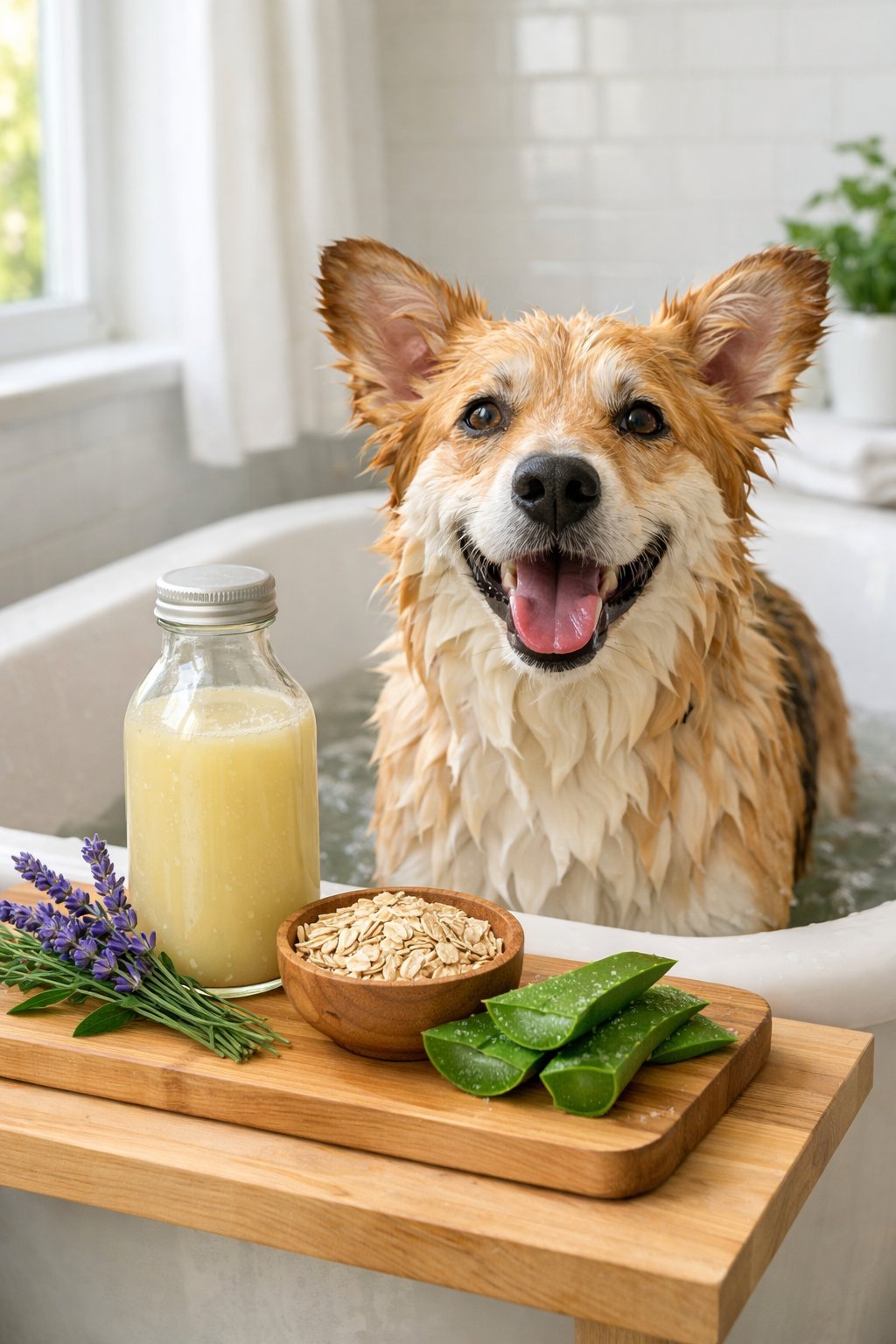
You can create effective homemade dog shampoo using just a few basic ingredients that are safe for your pet and cost a fraction of store-bought products. Understanding what goes into dog shampoo helps you avoid harsh chemicals and customize formulas for your dog’s specific needs.
Whether your pup has dry skin, needs flea protection, or just needs a regular bath, you can mix up the right shampoo.
Knowing exactly what ingredients you’re using is a big advantage. You can adjust recipes based on your dog’s skin type and avoid anything that might cause irritation.
These natural grooming solutions work between regular baths to keep your dog clean and fresh.
Key Takeaways
- Homemade dog shampoo uses common household ingredients like dish soap, vinegar, and baking soda to clean your dog safely.
- You can customize recipes to address specific needs like dry skin, flea prevention, or sensitive skin conditions.
- Making your own shampoo saves money and lets you control the pH balance and ingredients for your dog’s health.
Why Choose Homemade Dog Shampoo?

Making your own dog shampoo gives you control over what touches your pet’s skin. It also saves money and helps you avoid harsh chemicals found in many store products.
Benefits of Natural Ingredients
When you make homemade dog shampoo, you know exactly what goes into it. Natural ingredients like baking soda, white vinegar, and castile soap work effectively without the mystery additives found in commercial products.
Vinegar adds shine and deodorizes your dog’s coat naturally. Baking soda balances pH levels and helps control odors.
These simple ingredients already sit in most kitchens, making them budget-friendly alternatives. Natural dog shampoo recipes often include oatmeal for soothing dry skin or aloe vera gel for moisture.
You can customize formulas based on your dog’s specific needs. If your pup has sensitive skin, add more gentle ingredients.
If fleas are a concern, you might include lavender essential oil. The cost difference is significant—a batch of homemade dog shampoo costs just a few dollars compared to $10-20 for commercial bottles.
Potential Risks of Commercial Shampoos
Many commercial dog shampoos contain ingredients that can be concerning for pet owners. Some products include artificial fragrances, dyes, parabens, and sulfates that can irritate sensitive skin.
Store-bought shampoos sometimes make dogs smell overpowering or cause itching afterward. These reactions often come from synthetic chemicals meant to enhance cleaning or add scent.
Commercial products also use preservatives to extend shelf life. While these help prevent bacterial growth in bottles, they aren’t always necessary for freshly made batches.
Some dogs develop allergic reactions to specific commercial formulas. When this happens, identifying the problem ingredient becomes difficult because product labels list many complex chemical names.
Understanding Your Dog’s Skin and Coat Needs
Dogs have different skin pH levels than humans. A dog’s skin pH ranges between 6.2-7.4, while human skin is more acidic at 5.5-5.6.
This means you should never use human shampoo on your pet. Different coat types need different care approaches:
Dry or sensitive skin: Benefits from oatmeal-based formulas with glycerin.
Oily coats: Works well with dish soap that cuts through grease.
Normal skin: Does fine with basic three-ingredient recipes.
Pay attention to your dog’s scratching, redness, or flaking after baths. These signs tell you whether your natural shampoo formula works or needs adjustment.
Some dogs need more moisturizing ingredients while others require stronger cleaning power for outdoor adventures.
Essential Homemade Dog Shampoo Ingredients

The most effective homemade dog shampoo ingredients include gentle cleaning agents like castile soap and dish soap. Moisturizers such as aloe vera gel and coconut oil, and natural deodorizers like vinegar and essential oils are also useful.
Simple ingredients you likely already have make creating safe, budget-friendly dog shampoo easy.
Safe and Effective Cleaning Agents
Liquid castile soap is a top choice for homemade dog shampoo because it’s gentle and plant-based. Use about 1 tablespoon per recipe to create a good lather without harsh chemicals.
Dawn dish soap works well too, especially for cutting through oils and grease on your dog’s coat. Use non-toxic dish soap in small amounts since it’s formulated to remove dirt effectively.
Baking soda serves double duty as both a cleaning agent and pH balancer. Add 1/2 cup to oatmeal-based recipes because it helps neutralize odors and balances the acidity of vinegar.
When making dog shampoo at home, baking soda keeps the formula at a pH level around 7, which is ideal for dogs. Avoid using human shampoo because our skin pH ranges from 5.5-5.6, while dogs’ pH is between 6.2-7.4.
Moisturizers and Soothing Additives
Aloe vera gel is perfect for dogs with itchy or sensitive skin. Use 2 tablespoons in most recipes because it provides soothing relief and helps with skin irritation.
Coconut oil adds moisture and leaves your dog’s coat shiny. Melt it first before mixing it into recipes, using about 1-2 tablespoons depending on your dog’s coat length.
Vegetable glycerin is a moisturizer found in pharmacies and some grocery stores. Add 1/3 cup to dry skin formulas because it helps lock in moisture without making the coat greasy.
For dogs with dry, flaky skin, combine these ingredients with uncooked oatmeal ground into flour consistency. Oatmeal shampoo recipes work especially well because oatmeal has natural soothing properties.
Deodorizers and Natural Fragrances
White vinegar and apple cider vinegar are excellent deodorizers that also add shine to your dog’s coat. Use 1/2 to 1 cup per recipe, being careful to avoid getting it in their eyes.
Lavender essential oil is one of the few safe essential oils for dogs. Add only 2 drops maximum because it has natural antibacterial properties and may help repel fleas.
Peppermint essential oil and eucalyptus essential oil can freshen your dog’s scent, but use these sparingly and only after confirming they’re safe for your specific dog. Some dogs have severe reactions to certain oils, so always check with your vet first.
Avoid applying 100% essential oils directly on dogs and make sure they don’t ingest any. Cornstarch offers a fragrance-free alternative for absorbing odors between baths when mixed into dry shampoo formulas.
Core Dog Shampoo Homemade Recipes

Making your own dog shampoo at home gives you complete control over what touches your pet’s skin. These recipes use simple ingredients you likely already have in your pantry.
Each one targets specific needs from basic cleaning to soothing irritated skin.
Everyday 3-Ingredient Dog Shampoo
This is a basic dog shampoo recipe that’s quick and effective. Mix 2 cups of warm water, 1/4 cup of non-toxic dish soap, and 1/2 cup of white vinegar in a spray bottle.
The dish soap cuts through oils and dirt on your dog’s coat. White vinegar works as both a deodorizer and adds shine to the fur.
Shake the bottle well to combine everything. Wet your dog with warm water and spray the shampoo on, being careful around the eyes.
Work it into a lather, then rinse thoroughly multiple times to make sure all the soap is gone.
Key ingredients:
- Non-toxic dish soap for cleaning
- White vinegar for shine and odor control
- Warm water as the base
Oatmeal Dog Shampoo for Sensitive Skin
For dry or itchy skin, try this soothing oatmeal dog shampoo formula. Grind 1 cup of uncooked oatmeal in a coffee grinder until it looks like flour.
Mix it with 1/2 cup of baking soda and 1 quart of warm water. Oatmeal naturally soothes irritated skin and acts as a gentle cleanser.
The baking soda helps balance the pH level to match your dog’s skin needs. Apply this mixture to your wet dog and let it sit for a few minutes before rinsing.
The oatmeal creates a creamy texture that feels gentle on sensitive areas.
Aloe Vera and Glycerin Dog Shampoo
For dogs with ongoing skin issues, try this moisturizing shampoo with aloe vera. Combine 1 quart of water, 1 cup of white or apple cider vinegar, 1/3 cup of glycerin, 1 cup of baby shampoo or non-toxic dish soap, and 2 tablespoons of aloe vera gel.
The glycerin adds extra moisture that helps with dry patches. Aloe vera gel provides natural healing properties for irritated skin.
Mix everything in a spray bottle and shake well. After wetting your dog, spray this mixture and work it through the coat thoroughly.
The glycerin makes the fur feel softer.
Coconut Oil Dog Shampoo for Nourishment
Add coconut oil to your DIY dog shampoo for extra nourishment. Melt 2 tablespoons of coconut oil and mix it with 1 cup of warm water, 1/4 cup of non-toxic dish soap, and 1/2 cup of white vinegar.
Coconut oil contains natural fatty acids that condition the fur and moisturize the skin. It also has mild antibacterial properties.
Make sure the coconut oil is fully melted before mixing so it blends smoothly. This creates a rich, conditioning shampoo that leaves your dog’s coat soft and shiny.
Specialized Homemade Dog Shampoo Formulas

Different skin conditions and grooming needs require specific ingredients to work effectively. Customizing recipes based on your dog’s particular issues delivers better results than using a one-size-fits-all approach.
Dog Shampoo for Itchy or Dry Skin
Oatmeal-based shampoos are recommended for dogs with itchy or dry skin because oatmeal naturally soothes irritation and moisturizes. To make an effective formula, grind plain unflavored oatmeal into a fine powder using a blender or food processor.
For a simple soothing bath, mix half a cup of ground oatmeal into warm water and let your dog soak for 5 to 10 minutes. This gives the healing ingredients time to work on the skin.
My Go-To Recipe for Itchy Skin:
- 1½ cups water
- ½ cup liquid Castile soap
- ¼ cup apple cider vinegar
- 2 tablespoons pure aloe vera
- 1 tablespoon coconut oil or olive oil
Combine all ingredients in a bottle and shake well before each use. The apple cider vinegar helps balance pH levels while the aloe vera provides extra moisture.
When using essential oils in dog shampoo for sensitive skin, stick to lavender or chamomile at just 4 to 5 drops per batch.
Flea-Repellent Dog Shampoo
Certain natural ingredients help repel fleas without harsh chemicals. Essential oils like peppermint, eucalyptus, and rosemary work as natural deterrents when used in small amounts.
A flea-fighting shampoo recipe combines 10 ounces of water with 2 ounces aloe vera gel and 1 tablespoon liquid Castile soap. Add 2 drops each of peppermint, eucalyptus, lavender, and rosemary essential oils.
Avoid tea tree oil entirely because it can be toxic to dogs even in small amounts. After applying the shampoo, let it sit on your dog’s coat for about 10 minutes before rinsing thoroughly.
Deodorizing and Odor-Control Dog Shampoo
White vinegar is effective for neutralizing dog odor without just covering it up with fragrance. Mix 2 cups warm water with ½ cup white vinegar and ¼ cup gentle dish detergent in a spray bottle.
For a dry dog shampoo option between baths, combine 1 cup baking soda with 1 cup cornstarch. Baking soda absorbs odors while cornstarch soaks up excess oils.
Sprinkle this powder mixture onto your dog’s dry coat, massage it through, and then brush it out completely. Adding coconut oil to deodorizing formulas helps condition the coat while the vinegar tackles smells.
Rosemary-infused shampoos leave a fresh, clean scent that lasts several days after bathing.
Bathing Your Dog with Homemade Shampoo
Getting the bath right makes all the difference when using DIY dog shampoo. Proper prep work, knowing how often to bathe, and thorough rinsing create the best results for your dog’s coat and skin.
Preparation and Application Tips
Always start by brushing your dog before bath time to remove loose fur and tangles. This helps the homemade dog shampoo work better on the coat.
Wet your dog completely with warm water before applying any shampoo. The water temperature should feel comfortable on your wrist, not too hot or cold.
Make sure to wet down to the skin, not just the top layer of fur. When applying the dog shampoo, start at the neck and work back toward the tail.
Use gentle circular motions to work the shampoo into a lather. Pay extra attention to areas that get dirtiest like the paws, belly, and rear end.
Be careful to avoid getting shampoo in your dog’s eyes, ears, and nose. If you need to clean the face, use a damp washcloth instead of applying shampoo directly.
Bathing Frequency Guidelines
Bathe your dog every 4 to 6 weeks for normal maintenance. Dogs with healthy skin and coats don’t need frequent baths.
Dogs with skin conditions or those who get dirty often may need more frequent dog wash sessions. Check with your vet if your dog needs baths more than once a week.
Bathing frequency by coat type:
- Short-haired dogs: every 6-8 weeks
- Medium-haired dogs: every 4-6 weeks
- Long-haired dogs: every 4 weeks
- Dogs with oily coats: every 2-4 weeks
Never bathe your dog more than necessary because it can strip natural oils from the skin. This leads to dryness and irritation even with gentle homemade formulas.
Rinsing and Drying for Best Results
I spend more time rinsing than shampooing because leftover soap causes itchy skin. I rinse my dog thoroughly until the water runs completely clear and I don’t feel any slippery residue in the coat.
I rinse against the direction of hair growth to make sure I remove all the shampoo from the undercoat. I go over each area at least twice.
After rinsing, I squeeze excess water from my dog’s coat with my hands before towel drying. I use absorbent towels and pat rather than rub to avoid tangles.
I let my dog air dry in a warm room if possible. If I use a blow dryer, I keep it on the cool or warm setting and hold it at least 6 inches away from the skin.
I never use hot air because it can burn sensitive skin.
