
Dog Snacks Homemade: Easy Recipes to Spoil Your Pup With Healthy Treats

Dog Snacks Homemade – Store-bought dog treats often contain additives, preservatives, and fillers that you can’t even pronounce. When you flip over the package and see ingredients like BHA and corn syrup, it’s natural to wonder if there’s a better option for your furry friend.

Making homemade dog snacks lets you control exactly what goes into your pup’s treats while saving money and having fun in the kitchen. I’ve discovered that making dog treats at home is easier than most people think.
Many recipes require just three simple ingredients you probably already have in your pantry. Whether your dog goes crazy for peanut butter, sweet potato, or chicken, I’ll show you how to create wholesome snacks that will have their tail wagging.
From crunchy biscuits to soft training treats, these recipes work for dogs of all ages and sizes.
Key Takeaways
- Homemade dog treats give you complete control over ingredients and eliminate harmful additives found in store-bought options
- Most recipes require only basic ingredients and simple kitchen tools you already own
- Proper storage keeps homemade treats fresh for weeks and ensures your pup enjoys safe, healthy snacks
Benefits of Homemade Dog Snacks
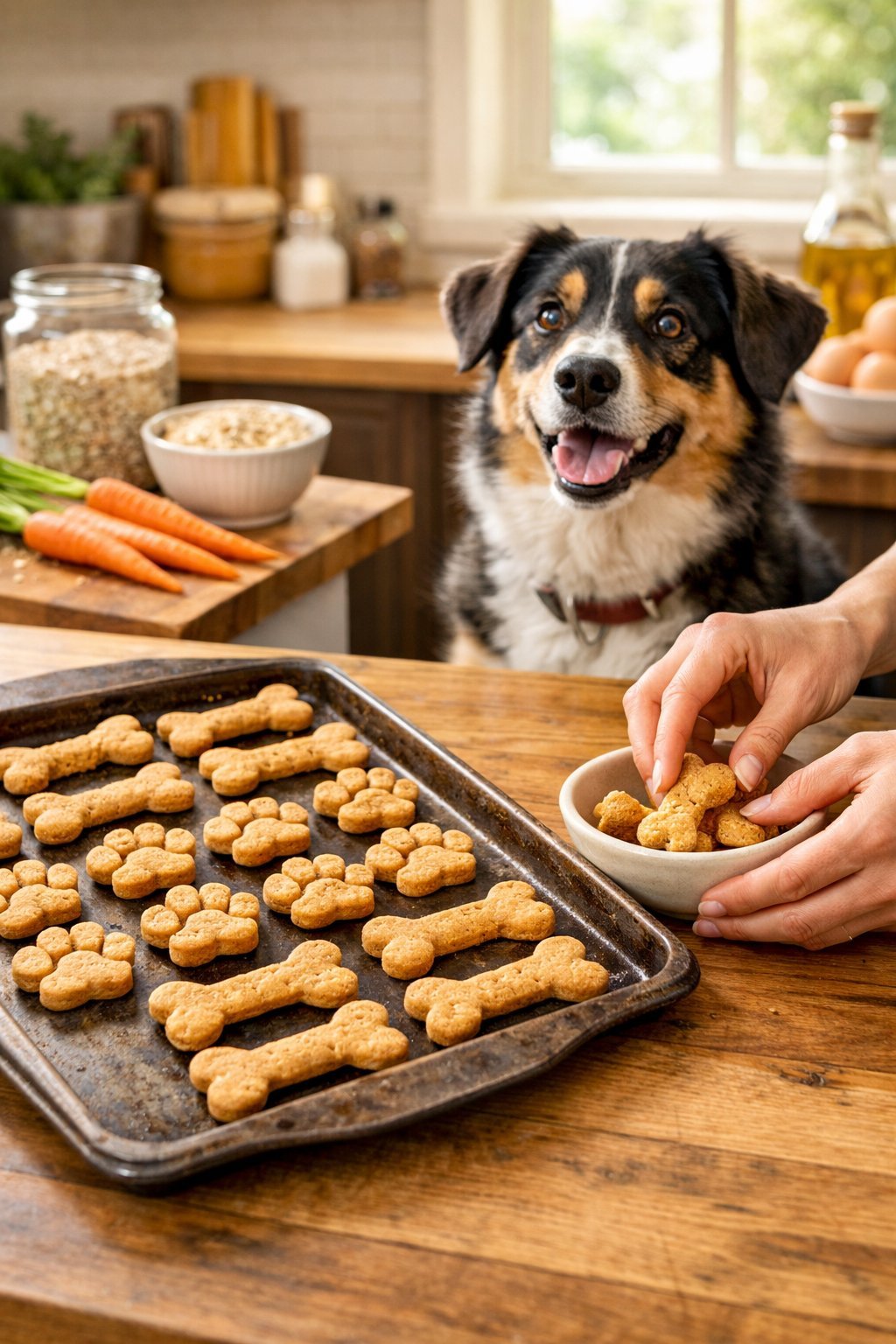
Making treats at home gives me full control over what my dog eats while saving money. I can pick quality ingredients that match my pup’s specific health needs and taste preferences.
Nutritional Advantages
When I make dog snacks at home, I choose fresh, whole ingredients that pack more nutrition than many store-bought options. I can add lean proteins like chicken or turkey, which help build strong muscles.
I also include vegetables like sweet potatoes and pumpkin that provide vitamins and fiber. Store-bought treats often use fillers like corn or wheat that don’t offer much nutritional value.
My homemade versions focus on ingredients that actually benefit my dog’s health. I can boost treats with ingredients like flaxseeds for omega-3 fatty acids or blueberries for antioxidants.
Making homemade dog treats means I know exactly how much protein, fat, and carbohydrates go into each batch. This helps me balance my dog’s overall diet better.
Avoiding Additives and Preservatives
Store-bought treats often contain chemicals I can’t even pronounce. BHA, corn syrup, and vague terms like “natural flavors” show up on ingredient lists all the time.
These additives help products last longer on shelves but don’t help my dog’s health. When I make snacks at home, I skip all those unnecessary extras.
My treats might not last as long without preservatives, but I can freeze extras to keep them fresh. This way, my dog gets real food without artificial colors, flavors, or mystery ingredients.
I also avoid common allergens that sneak into commercial treats. Many brands use cheap fillers that can upset sensitive stomachs or cause skin issues.
Supporting Special Dietary Needs
My homemade approach works perfectly when my dog has specific health requirements. If my pup needs a low-fat diet, I can adjust recipes to use lean meats and skip oils.
For dogs with allergies, I simply leave out problem ingredients like chicken or grains. Senior dogs benefit from softer textures that are easier to chew.
I can make treats specifically for older pups by adjusting cooking times or choosing softer base ingredients. Puppies need different nutrition than adult dogs, and homemade treats let me customize for their growth needs.
Dogs with kidney issues, diabetes, or weight problems need careful treat selection. Homemade options let me control sodium, sugar, and calorie content precisely.
I can make treats that taste great while supporting my dog’s medical requirements.
Essential Ingredients and Tools for Homemade Dog Snacks
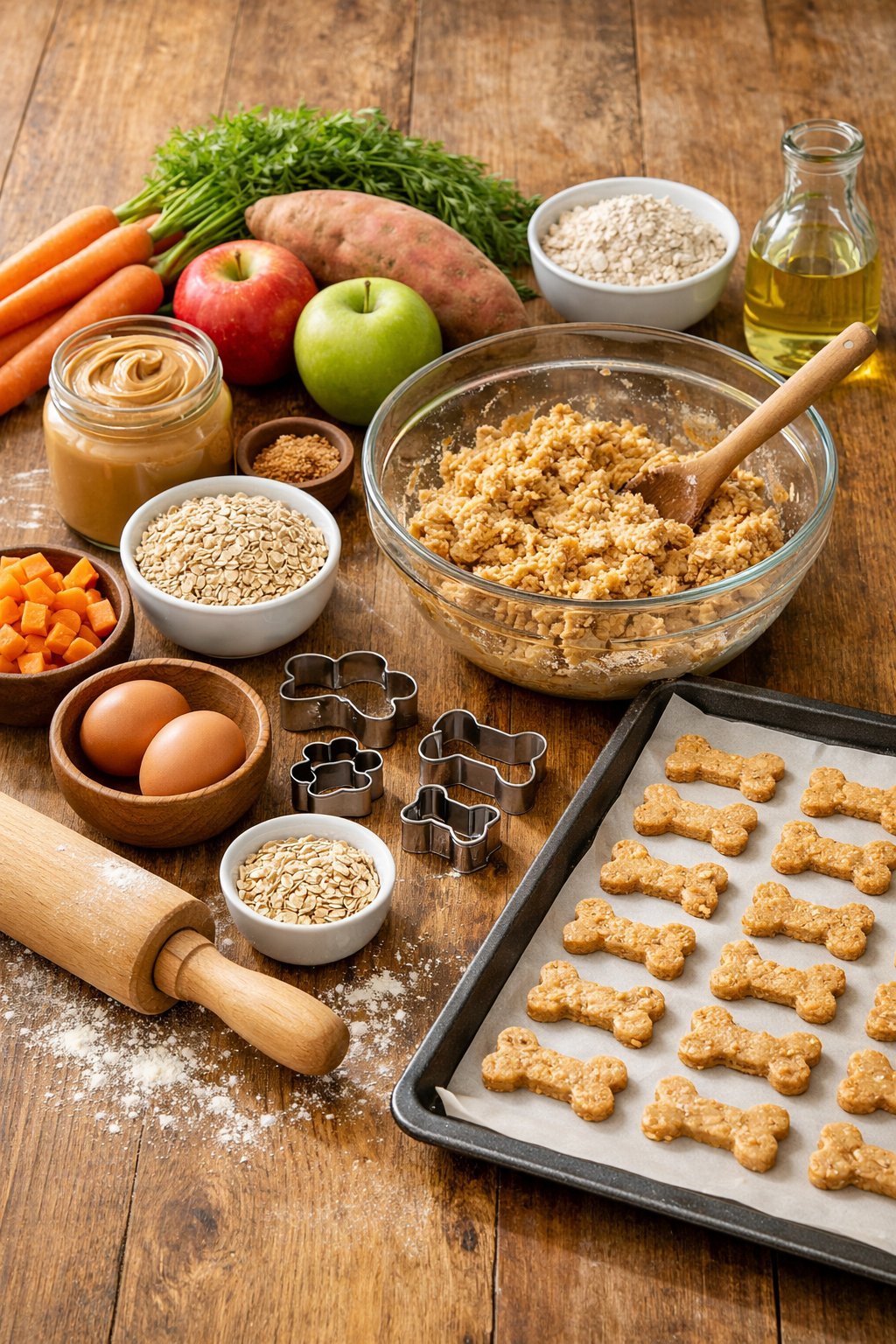
Making dog treats at home starts with knowing which ingredients are safe and having the right tools on hand. I’ll walk you through the basics so you can get started with confidence.
Dog-Safe Ingredients to Use
I always keep a few core ingredients in my pantry for making dog snacks. Whole wheat flour or oat flour work great as bases for most baked treats.
Rice flour is another good option if your pup has grain sensitivities. For protein, I use peanut butter (make sure it doesn’t contain xylitol), eggs, plain Greek yogurt, or cooked lean meats like chicken and turkey.
Pumpkin puree is one of my favorites because it’s good for digestion and dogs love the taste. I also add sweet potatoes, carrots, apples (without seeds), and blueberries for extra nutrients and flavor.
Banana adds natural sweetness and moisture to recipes. For healthy fats, I sometimes include a small amount of coconut oil or olive oil.
When selecting peanut butter, plain unsweetened varieties work best. The same goes for yogurt—stick with unflavored versions without added sugars or artificial sweeteners.
Ingredients to Avoid
Some common foods are dangerous for dogs and should never go into homemade treats. Xylitol is the biggest threat—this artificial sweetener appears in many peanut butters, gums, and baked goods and can be fatal to dogs.
Chocolate, grapes, raisins, onions, garlic, and macadamia nuts are all toxic to dogs. I never use these ingredients in any recipe, even in small amounts.
Excessive salt and sugar should also be avoided. While a small amount won’t harm your dog, these ingredients offer no nutritional value and can lead to health problems over time.
Avocado, raw yeast dough, and nutmeg are other ingredients I keep away from my dog treats. When in doubt about any ingredient, I check with my vet before using it.
Recommended Kitchen Tools
You don’t need fancy equipment to make healthy dog snacks at home. I use basic items I already have in my kitchen.
A mixing bowl, measuring cups, and measuring spoons handle the prep work. A whisk or fork works fine for combining ingredients—no stand mixer needed.
For baking, I rely on a cookie sheet or baking pan lined with parchment paper. Cookie cutters in fun shapes make treats more appealing, though I often just roll the dough and cut it into squares with a knife or pizza cutter.
A food processor or blender comes in handy for pureeing ingredients like pumpkin or sweet potato. For frozen treats, I use ice cube trays or silicone molds.
Airtight containers are essential for storing finished treats. I keep mine in the refrigerator for up to a week or freeze them for longer storage.
Easy Dog Snack Recipes for Beginners
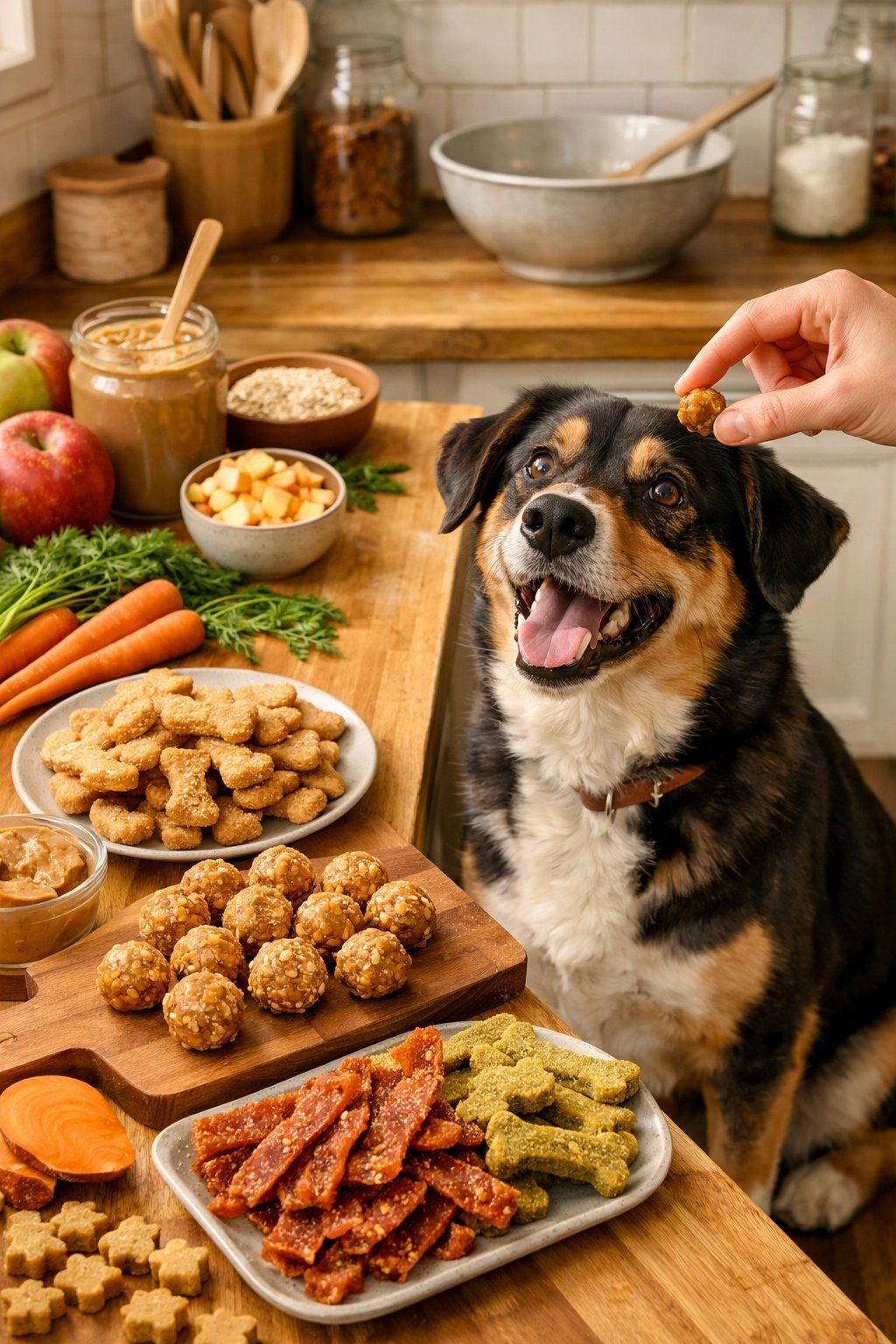
Starting with simple recipes helps you build confidence in the kitchen while giving your pup tasty treats. These three methods require basic ingredients and minimal skills, making them perfect for first-time treat makers.
No-Bake Peanut Butter Treats
I love making no-bake treats because they’re quick and don’t require turning on the oven. The most basic recipe combines peanut butter with oats and a bit of honey.
Mix 1 cup of natural peanut butter (make sure it doesn’t contain xylitol, which is toxic to dogs) with 2 cups of rolled oats. Add 2 tablespoons of honey to help bind everything together.
Roll the mixture into small balls about the size of a marble. Place them on a baking sheet lined with parchment paper and refrigerate for at least an hour until firm.
These simple dog treat recipes store well in the fridge for up to two weeks. You can also freeze them for longer storage.
Oven-Baked Biscuit Recipes
Baked biscuits give your dog that satisfying crunch they love. My go-to beginner recipe uses just three ingredients: whole wheat flour, eggs, and broth.
Preheat your oven to 350°F. Mix 2 cups of whole wheat flour with 1 egg and ½ cup of low-sodium chicken or beef broth until you form a dough.
Roll the dough out to about ¼ inch thick on a floured surface. Cut into shapes using cookie cutters or simply slice into squares with a knife.
Place on a baking sheet and bake for 25-30 minutes until golden and crispy. Let them cool completely before giving them to your pup.
These homemade dog treats stay fresh in an airtight container for about a week.
Frozen Yogurt Bites
Frozen treats are perfect for hot days or teething puppies. I make mine with plain yogurt and fruit that’s safe for dogs.
Mix 1 cup of plain, unsweetened yogurt with ½ cup of mashed banana or pureed strawberries. Spoon the mixture into ice cube trays or silicone molds.
Freeze for at least 3 hours until solid. Pop them out and store in a freezer bag.
These easy homemade dog treat recipes are great for keeping your pup cool and entertained. You can also add a dollop of peanut butter to each cube before freezing for extra flavor.
Just remember to use plain yogurt without artificial sweeteners.
Creative Recipes to Spoil Your Pup
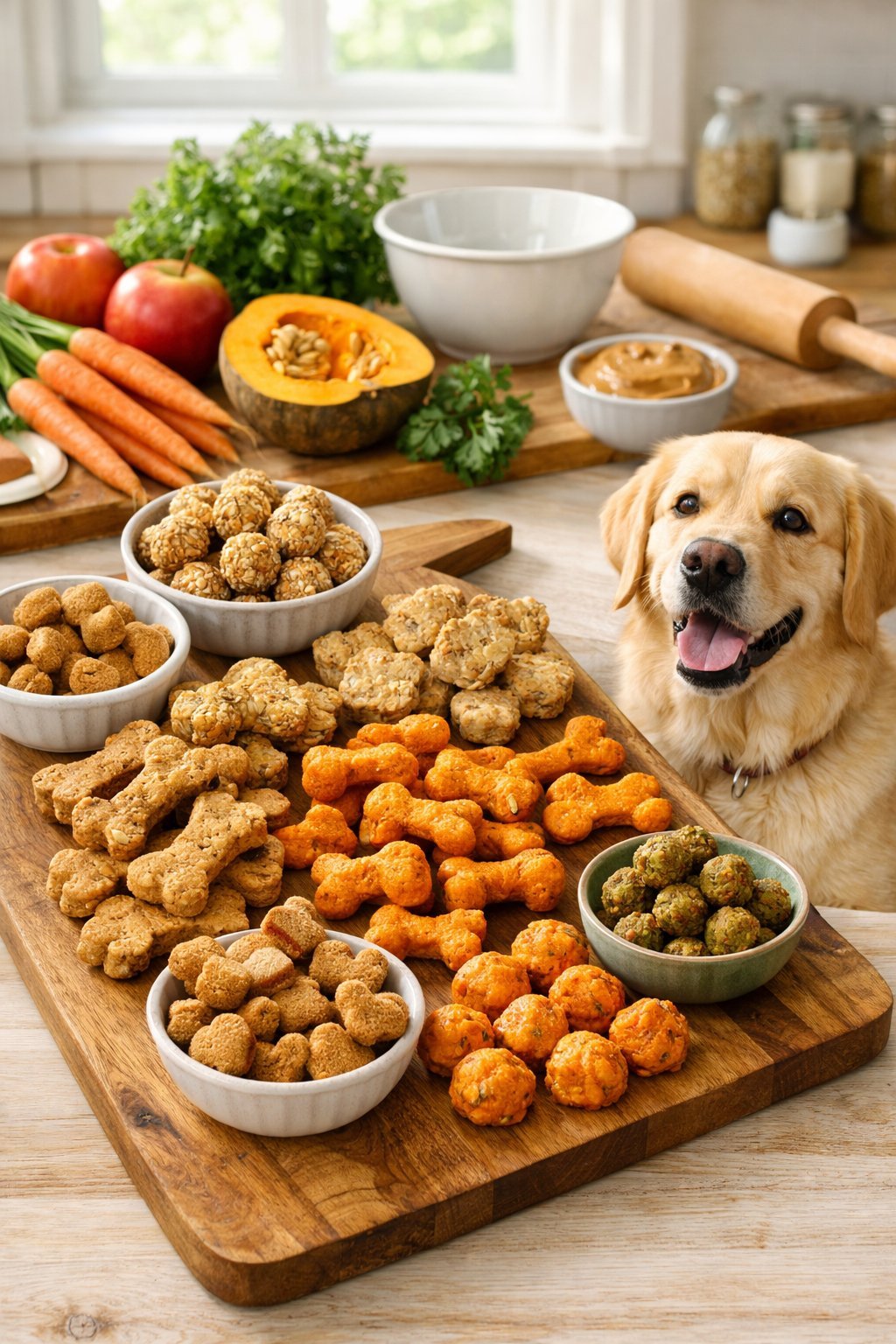
I’ve found that the best homemade dog snacks combine simple ingredients with creative twists that keep my pup excited at treat time. These recipes cover everything from grain-free options to protein-packed bites and fruity treats made with ingredients you likely already have in your kitchen.
Gluten-Free Snack Options
I started making gluten-free treats when I noticed some dogs have sensitive stomachs with wheat products. My go-to base uses chickpea flour or oat flour, which both work great for binding ingredients together.
One of my favorite recipes combines 2 cups of chickpea flour with 1 egg, 1/4 cup peanut butter, and a bit of water. I roll the dough flat, cut it into shapes, and bake at 350°F for 15 minutes.
The treats come out crunchy and keep well in an airtight container. Sweet potato treats are another winner.
I slice sweet potatoes into thin rounds and bake them at 250°F for about 3 hours until they’re dried and chewy. They’re naturally sweet and packed with vitamins.
For dogs who need fully grain-free options, I use coconut flour mixed with mashed banana and a tablespoon of coconut oil. These wholesome ingredients give me full control over what goes into each bite.
Meat-Based Morsels
My pup goes absolutely crazy for meat treats. I keep it simple by using lean proteins like chicken, turkey, or beef.
Chicken jerky is probably the easiest treat I make. I slice chicken breasts into thin strips and place them on a baking sheet.
After baking at 200°F for 2-3 hours, they turn into chewy strips that my dog loves. For training treats, I cook ground turkey in a pan with no seasoning, then crumble it into tiny pieces.
I freeze what I don’t use right away. These cost under $3 per batch and work perfectly for quick rewards.
Beef liver treats are nutrient-dense but smell strong while cooking. I blend raw liver with a bit of flour, spread it thin on a baking sheet, and bake until firm.
Then I cut it into small squares.
Fruity Bites with Natural Sweeteners
I love adding fruit to treats because it provides natural sweetness without added sugar. Blueberries, apples, and bananas are my top picks.
Frozen banana bites are the quickest treat I make. I slice bananas, dip them in plain yogurt, and freeze them on parchment paper.
My pup enjoys them on hot days. Apple pupcakes combine shredded apple, whole wheat flour, an egg, and a touch of honey.
I bake them in a mini muffin tin at 350°F for 20 minutes. They come out moist and cake-like.
For a no-bake option, I mash bananas with oats and a spoonful of peanut butter, then roll the mixture into balls. After chilling them in the fridge for an hour, they’re ready to serve.
Seasonal and Holiday-Inspired Snacks
I enjoy switching up treats based on the season. It keeps things interesting for both me and my pup.
In fall, I make pumpkin treats using canned pumpkin puree, oat flour, and an egg. The dough rolls out easily, and I use cookie cutters to make fun shapes.
Pumpkin is great for digestion too. During winter holidays, I add a pinch of cinnamon to my basic biscuit recipe.
The smell fills my kitchen and makes the treats feel festive. Summer calls for frozen treats.
I blend watermelon with a bit of plain yogurt and freeze the mixture in ice cube trays. My dog loves crunching on these frozen delights when it’s hot outside.
For special occasions, I make a dog-safe “birthday cake” using mashed sweet potato, flour, and an egg. I frost it with plain yogurt and let my pup dig in.
Storing and Serving Homemade Snacks Safely
Homemade dog snacks need the right storage to stay fresh and safe. I always make sure to cool treats completely before packing them away.
The serving size depends on your dog’s weight and activity level.
Proper Storage Methods
I always store homemade dog treats in airtight containers after they’ve cooled completely. This prevents moisture from building up inside the container, which can make treats soggy or moldy.
For short-term storage, I keep my dog’s treats on the counter in a sealed jar if they’re dry and crunchy. Baked biscuits and dehydrated snacks do well at room temperature for up to a week.
I put treats with meat, cheese, or fresh ingredients in the refrigerator right away. These last about 3 to 5 days in a sealed container.
For longer storage, I use freezer bags or airtight containers and freeze treats for up to 3 months. I double-bag soft treats to prevent freezer burn.
When I’m ready to serve them, I thaw frozen treats in the refrigerator overnight.
Shelf Life and Freshness Tips
Dry, crunchy treats last the longest because they have less moisture. I can keep these at room temperature for 7 to 10 days in an airtight container.
Treats made with peanut butter, pumpkin, or yogurt need refrigeration and stay fresh for 3 to 5 days. I always check treats before serving them to my dog.
If they smell off, look moldy, or feel slimy, I throw them away. I write the date on each container so I know when I made the batch.
Frozen treats maintain their quality for 2 to 3 months. I portion them into serving sizes before freezing so I can grab just what I need.
Portion Sizes for Different Dogs
I follow this basic guide for daily treat portions:
- Small dogs (under 20 lbs): 1 to 2 small treats per day
- Medium dogs (20-50 lbs): 2 to 3 medium treats per day
- Large dogs (over 50 lbs): 3 to 4 large treats per day
Treats should make up no more than 10% of my dog’s daily calories. For a 50-pound dog eating 1,000 calories per day, that’s about 100 calories from treats.
I adjust portion sizes based on my dog’s activity level and weight goals. Active dogs can handle slightly more treats, while dogs trying to lose weight need smaller portions.
I break large treats into smaller pieces for training sessions. This lets me reward my dog more often without overfeeding.
Frequently Asked Questions
Making treats at home raises common questions about recipes, storage, and safe ingredients. Here are answers to help you create the best snacks for your furry friend.
What are some easy recipes for homemade dog treats that are veterinarian-approved?
I recommend starting with simple vet-approved recipes that use basic ingredients you already have in your kitchen. Sweet potato chips are one of the easiest options—just slice sweet potatoes thin, arrange them on a baking sheet, and bake at 250°F for about three hours until they’re crispy.
Another great option is plain chicken jerky. I cut boneless, skinless chicken breasts into thin strips and bake them at 200°F for two to three hours.
Pumpkin and oat biscuits are also popular with vets. I mix one cup of pure pumpkin puree with two cups of oat flour and one egg, then cut out shapes and bake at 350°F for 25 minutes.
Can you share a simple 3-ingredient recipe for dog treats?
My favorite three-ingredient dog treat uses two cups of whole wheat flour, one cup of peanut butter, and two eggs. I mix all the ingredients in a bowl until they form a dough, then roll it out to about half an inch thick.
I use cookie cutters to make fun shapes, though you can also just cut the dough into squares with a knife. Place the treats on a parchment-lined baking sheet and bake at 350°F for 20 minutes.
These treats come out crunchy and store well in an airtight container for up to two weeks. You can also freeze them for longer storage.
How can I make shelf-stable dog snacks at home?
The key to making long-lasting homemade treats is removing as much moisture as possible during baking. I bake my treats at a lower temperature for a longer time to dry them out completely.
After baking, I let the treats cool completely on a wire rack before storing them. Any remaining moisture can lead to mold growth, so patience is important here.
I store my shelf-stable treats in airtight containers with a food-safe silica gel packet to absorb any excess moisture. Keep them in a cool, dry place away from direct sunlight.
Properly dried treats can last four to six weeks at room temperature. Dehydrated treats last even longer.
I use a food dehydrator set to 160°F for about eight hours to make jerky-style treats from lean meats.
What’s a good recipe for homemade dog treats that doesn’t include peanut butter?
I love making banana and oat treats for dogs who can’t have peanut butter. Mash two ripe bananas in a bowl, then mix in two cups of rolled oats and one egg until you have a thick batter.
Drop spoonfuls of the mixture onto a baking sheet lined with parchment paper. Bake at 350°F for 15 to 20 minutes until the edges turn golden brown.
Another peanut butter-free option is apple and carrot biscuits. I grate one cup of carrots and one cup of apples, then mix them with two cups of whole wheat flour, half a cup of water, and one tablespoon of coconut oil.
Roll out the dough, cut into shapes, and bake at 350°F for 30 minutes. Cheese and herb treats are also delicious.
Mix one cup of shredded cheddar cheese with two cups of flour, half a cup of plain yogurt, and a tablespoon of fresh parsley.
Are there unique and healthy treat recipes I can make for my dog?
I like to make frozen treats for hot days using plain yogurt and fresh fruit. I blend one cup of plain yogurt with half a cup of blueberries, pour the mixture into ice cube trays, and freeze them for at least four hours.
Tuna fudge is another unique option my dogs go crazy for. I mix one can of drained tuna with two eggs and two cups of flour, spread it thin on a baking sheet, and bake at 350°F for 20 minutes before cutting it into small squares.
Sweet potato and turmeric treats offer anti-inflammatory benefits. I cook and mash one large sweet potato, mix it with two cups of oat flour, one egg, and half a teaspoon of turmeric, then bake at 350°F for 25 minutes.
Sardine bites are packed with omega-3 fatty acids. I mash one can of sardines with two cups of flour and one egg, form small balls, and bake them at 350°F for 15 minutes.
What ingredients should I avoid when making homemade dog snacks?
I never use chocolate in any form because it contains theobromine, which is toxic to dogs. Even small amounts can cause serious health problems.
Xylitol is extremely dangerous for dogs and is found in many sugar-free products. I always check peanut butter labels to make sure they don’t contain this artificial sweetener.
Grapes, raisins, onions, and garlic are all toxic to dogs. I avoid these ingredients completely, even in small amounts.
Macadamia nuts should never go into dog treats. They can cause weakness, vomiting, and tremors in dogs.
I also skip adding salt, sugar, or artificial sweeteners to my dog treat recipes. Dogs don’t need these additives, and they can lead to health issues over time.
