
Dog Toy Storage Ideas That Keep Your Home Tidy: Simple Solutions for Pet Parents

Dog Toy Storage Ideas – Dog toys have a way of taking over every room in your house. Squeaky toys under the couch, rope toys by the door, and tennis balls rolling across the floor can make even the cleanest home look messy.
If you love your pup but hate the clutter, you’re not alone.
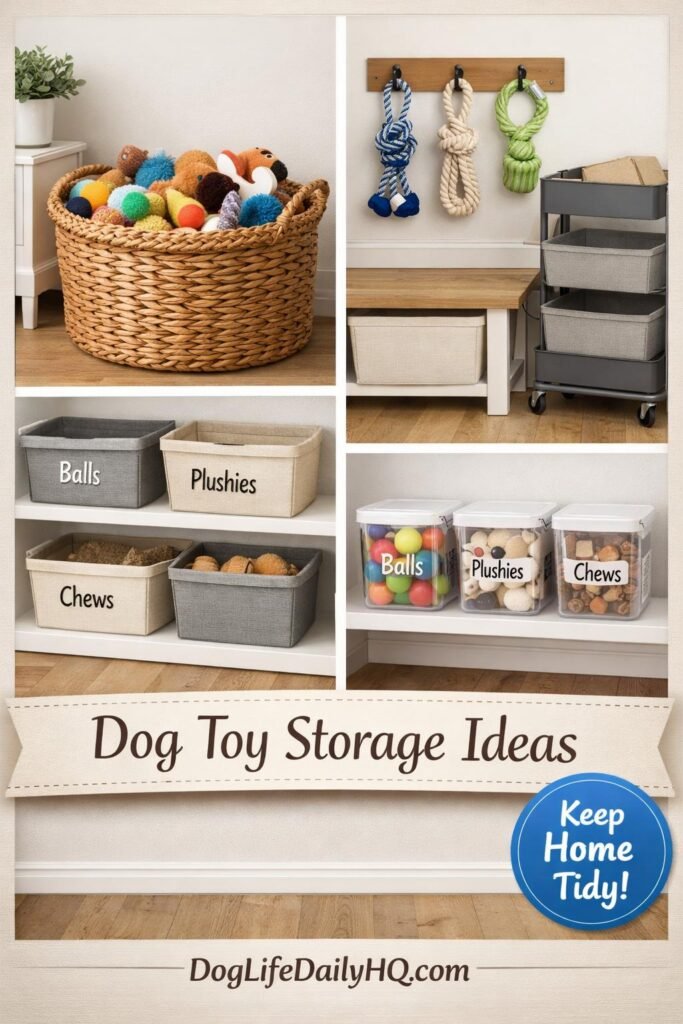
The good news is that simple storage solutions can help you keep dog toys organized while making them easy for your pet to access. The right storage setup doesn’t just tidy up your space—it also helps your dog learn where their toys belong and can even extend the life of their favorite playthings.
Whether you have a small apartment or a large house, there are storage ideas that work for every space. From baskets and bins to creative DIY projects, the right approach can transform your home from chaotic to calm.
Let me share some practical solutions that have helped me and other dog owners create a more organized living space.
Key Takeaways
- Using designated storage containers keeps dog toys organized and makes your home look cleaner.
- Different rooms benefit from different storage solutions like baskets, bins, and repurposed furniture.
- Regular cleaning and rotating toys helps maintain organization and keeps your dog interested in their playthings.
Why Organized Dog Toy Storage Matters

Keeping dog toys organized goes beyond just making your home look neat. It protects your pet’s health, prevents accidents, and makes daily life easier for everyone in your household.
Benefits for Home Cleanliness
Scattered dog toys make any room look messy, even when the rest of the space is clean. When toys pile up on floors, couches, and under furniture, they collect dust and dirt that spreads throughout your home.
Organized storage solutions help maintain a tidy living space by giving every toy a designated spot. After playtime, it’s easy to toss toys into bins or baskets instead of leaving them scattered around.
This approach also makes vacuuming and cleaning floors much easier. The time you save on daily tidying really adds up.
Supporting Pet Health and Safety
Proper toy storage helps keep your dog’s toys clean and safe to use. Toys left on the floor get stepped on, collect bacteria, and can become damaged with sharp edges or loose parts.
Containers that allow air circulation prevent mold and mildew growth. This keeps toys fresher and safer for your dog to chew on.
It’s also easier to spot toys that need washing or should be thrown away when they’re all in one place. Smart storage solutions prevent choking hazards by keeping small toy pieces contained.
When you organize toys by size and type, you can monitor which ones are wearing out and need replacement before they become dangerous.
Reducing Stress for Pets and Owners
Dogs can get overwhelmed when too many toys are available at once. Having all the toys out creates overstimulation and makes it harder for your dog to focus during playtime.
Using toy rotation through organized storage keeps your dog more engaged with their toys. Rotate which toys are available each week to make old toys feel new again.
For owners, organized storage eliminates the frustration of tripping over toys or searching for a specific one. You know exactly where to find the rope toy or the puzzle feeder when you need it.
This simple system makes daily routines calmer and more enjoyable for both you and your pup.
Creative Dog Toy Storage Ideas
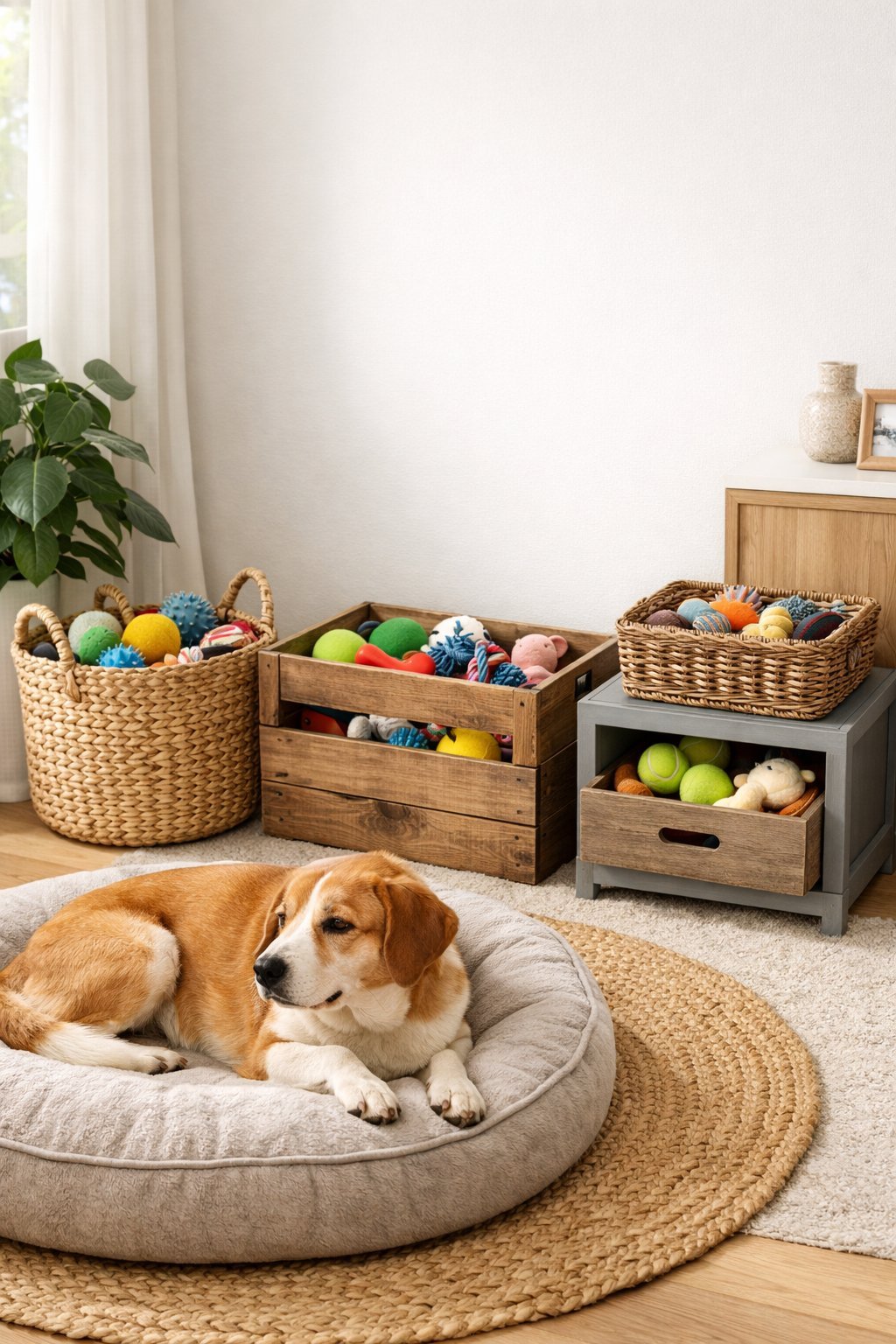
The best storage solutions blend function with style, turning cluttered spaces into organized areas that actually enhance your home’s look. From natural wicker pieces to furniture that pulls double duty, these options keep toys accessible for your pup while maintaining a clean living space.
Wicker Baskets and Decorative Bins
Wicker baskets are my go-to solution because they look good in any room and can hold a surprising amount of toys. I place them in corners or next to my couch where my dog plays most often.
The natural texture adds warmth to a space instead of looking like obvious pet storage. Decorative bins work the same way but give you more color and pattern options.
Match bins to your existing decor so they blend right in. The key is choosing bins that are low enough for your dog to access but sturdy enough to handle daily use.
Both options are portable, which is great for moving them from room to room or tucking them away when guests come over. Cleanup is a breeze—just toss toys in as you find them throughout the day.
Storage Ottomans and Benches
Storage ottomans serve as seating, a footrest, and toy storage all in one piece. I keep mine in my living room where it looks like regular furniture but hides all the squeaky toys and ropes inside.
Benches with storage work great near entryways or in mudrooms. I use mine to store toys along with leashes and other dog supplies.
The cushioned tops on these pieces protect the toys from getting dusty while keeping them out of sight. These stylish storage solutions fit seamlessly into your existing furniture layout.
Hanging Wall Organizers
Wall-mounted storage keeps toys completely off the floor, which saves valuable space. I installed fabric pocket organizers in my laundry room where I store smaller toys my dog uses during training sessions.
The pockets keep different toy types separated and easy to find. Hanging baskets work well for this too.
I mounted three metal baskets in a vertical line on my wall, and each one holds different categories of toys. The bottom basket stays within my dog’s reach for their favorite daily toys.
This approach works especially well in apartments or small spaces where floor space is limited. Wall organizers also keep toys away from walkways, reducing tripping hazards.
Repurposed Furniture Solutions
Old dressers make excellent dog storage stations when you remove a few drawers and add labels. I converted a short dresser by taking out the bottom drawer and using that space for toy bins while keeping the top drawers for supplies.
Vintage crates and wooden boxes add character while solving storage problems. I stacked two old wine crates on their sides to create cubby-style storage that holds rope toys and balls.
Bookshelves work surprisingly well for toy organization too. I dedicated the bottom two shelves of my bookcase to canvas bins filled with toys, keeping them within my dog’s reach.
DIY Dog Toy Storage Solutions

Making your own dog toy storage saves money and lets you customize the look to match your home. You can turn everyday items into practical storage spots that keep toys off the floor.
Upcycled Crates and Boxes
I love using old wooden crates because they’re sturdy and add a rustic look to any room. You can find these at flea markets, craft stores, or sometimes get them free from grocery stores.
Sand down any rough edges to protect your dog’s paws and nose. I recommend applying a coat of pet-safe stain or paint to match your decor.
Stack crates on their side to create cubby-style storage, or add wheels to the bottom for a mobile toy box. You can also attach rope handles to make them easier to move around.
Cardboard boxes work too if you’re on a tight budget. Cover them with contact paper or fabric to make them more durable and attractive.
Homemade Fabric Baskets
I make fabric baskets using canvas, denim, or any heavy-duty material I have around the house. These DIY storage solutions are soft, washable, and safe for dogs.
Cut two pieces of fabric into circles or rectangles depending on your preferred shape. Sew the pieces together with the right sides facing each other, leaving the top open.
Turn the basket right side out and fold down the top edge to create a cuff. You can add interfacing between layers to help the basket hold its shape better.
Personalize with your dog’s name using iron-on letters or fabric paint. These baskets collapse flat when not in use, which is perfect for small spaces.
Custom Floating Shelves
Floating shelves keep dog toys organized without taking up valuable floor space. Install them at a height where you can easily reach but your dog can’t knock them over.
Use basic shelf brackets and wood boards from any hardware store. Make sure you anchor the brackets into wall studs for maximum strength.
Arrange toys by type on different shelves—plush toys on one, balls on another, and chew toys on a third. Add small bins or containers on the shelves to keep smaller items from rolling off.
Paint or stain the shelves to blend with your wall color or create an accent feature.
Smart Storage Tips for Every Room

Different rooms in your home need different storage approaches based on how you and your dog use each space. Matching storage solutions to specific rooms makes it easier to keep toys organized and accessible.
Living Room Solutions
The living room is where most dogs spend time playing and relaxing with their families. Place a decorative storage basket next to the couch or under a side table to keep toys within easy reach.
Woven baskets, fabric bins, and wooden crates blend into your decor while holding plenty of toys. Wall-mounted options work well if you have limited floor space.
Low shelves that your dog can access independently encourage them to grab their own toys. This helps with training them to put toys back too.
For open-concept living areas, try storage ottomans that serve two purposes. They provide extra seating while hiding toys inside.
Decorative bins that match your furniture and color scheme also work well. Keep only your dog’s favorite toys in the living room and rotate them weekly to prevent clutter.
Bedroom Toy Management
Bedrooms need simpler storage since most dogs only bring one or two toys to bed. Keep a small basket or bin next to your dog’s bed for nighttime favorites.
This prevents you from stepping on squeaky toys in the dark. Under-bed storage containers work perfectly for extra toys you want to keep out of sight.
Use shallow bins that slide easily and keep seasonal toys stored until needed. Hanging storage baskets attached to bedroom doors are another space-saving option.
If your dog sleeps in a kid’s room, try a small toy box that matches the room’s theme. Label it clearly so children know where dog toys belong.
Keep the bedroom collection minimal with just comfort toys and quieter options for bedtime.
Entryway and Mudroom Organization
The entryway is a great spot for outdoor toys and walking supplies. I installed hooks at dog height for leashes and a bin below for balls and fetch toys.
This setup makes grabbing items before walks super quick. Mudroom storage should handle dirty or wet toys, so I use a plastic bin with drainage holes for anything that needs cleaning after outdoor play.
A wall-mounted organizer keeps leashes, waste bags, and small toys off the floor and in one place. I also keep a towel hook nearby for wiping muddy paws and wet toys.
A boot tray under the toy bin catches water and dirt. This helps stop messes from spreading through the house after rainy walks.
Tips for Keeping Dog Toys Clean and Sanitized
Keeping dog toys clean is important for your pet’s health and your home’s tidiness. Simple cleaning habits and the right storage materials make a big difference.
Regular Cleaning Routines
I wash my dog’s toys at least once a week to keep bacteria at bay. Hard rubber and plastic toys go in the dishwasher on the top rack with hot water and pet-safe dish soap.
Soft plush toys get a trip through the washing machine every week or two. I use a mesh laundry bag to protect them and let them air dry completely.
For rope toys, I soak them in water and white vinegar for 10 minutes, rinse well, and dry them in the sun. The sun’s UV rays help sanitize them.
If a toy has rips, loose parts, or can’t be cleaned, I toss it. Damaged toys can harbor bacteria and be a choking hazard.
Choosing Easy-To-Clean Storage Materials
I stick to storage containers made from plastic or metal since they’re easy to wipe down. These materials don’t absorb moisture or odors like fabric baskets.
I clean my storage baskets and organizers with disinfectant wipes once a month. Wire baskets are awesome because air flows through them, preventing mold.
I avoid fabric bins unless they have removable liners I can wash. For outdoor toy storage, I use weatherproof plastic bins with drainage holes so water doesn’t pool.
Smooth surfaces are best since they don’t trap dirt in cracks or crevices. This makes cleaning much easier.
Rotating Toys for Hygiene
I keep only five to seven toys out at a time and store the rest. Rotating toys means each one gets cleaned more often and keeps my dog interested.
Every week, I swap out the current toys for clean ones from storage. Used toys get washed and sanitized before going back into the clean toy bin.
I label two bins as “clean” and “needs washing” to stay organized. When a toy gets dirty, it goes straight into the washing bin.
Frequently Asked Questions
Dog owners often wonder how to keep their pet’s toys organized while making their living space look good. Finding storage that fits small spaces, your budget, and your style can really help.
What are some creative ways to store dog toys in a small space?
Wall-mounted baskets are great when you’re short on floor space. You can hang them low for your dog or higher if you want more control.
Over-the-door organizers with pockets save space and hold lots of toys. Under-furniture storage bins slide neatly beneath couches or beds and use up hidden spaces.
How can I organize dog toys effectively using items from IKEA?
The IKEA Frakta bag is an affordable, durable toy holder that’s easy to move around. It stands up on its own and holds a ton of toys.
IKEA’s Trofast system with bins is customizable and makes cleanup quick. I’ve also used IKEA baskets like the Knipsa or Bullig for stylish and functional storage that blends with my decor.
What are some DIY solutions for organizing dog toys to maintain a tidy home?
A wooden crate or wine box makes a simple DIY toy holder. I sand down rough edges and paint or stain it to match my furniture.
Repurposing an old dresser drawer creates unique storage with character. Some people add wheels or rope handles for easier moving.
Converting old furniture pieces into dedicated dog stations gives you functional storage and helps reduce waste. An unused nightstand or small bookshelf works great for this.
Are there any dog toy storage solutions that also serve as decor?
Decorative woven baskets in natural materials like seagrass or wicker look great in most homes. I keep mine near the couch so it blends in.
Vintage wooden crates or galvanized metal bins add farmhouse charm while holding toys. Modern fabric bins with fun patterns or colors can also make storage feel intentional and stylish.
How can I keep my dog’s toys easily accessible but out of the way?
I use low-profile bins that tuck into corners or beside furniture. This keeps toys within my dog’s reach but out of the way.
Designating a specific spot for toy storage helps your dog know where to find their toys and makes cleanup easier. I keep our toy bin in the living room where my dog hangs out most.
Ottomans with hidden storage are super handy. I can stash toys inside and use the top as a footrest or extra seat.
What are the most popular dog toy storage organizers recommended by pet owners?
The best storage containers include rope baskets, canvas bins, and wire baskets with fabric liners. Pet owners like options that are easy to clean and sturdy enough for daily use.
Many dog parents recommend collapsible toy boxes because they save space. These fold flat, which is handy if you need extra room sometimes.
Rolling carts with multiple tiers are great for organizing different types of toys. They work well if you have more than one dog or want to keep squeaky toys separate from chew toys.
