Dog Treat Recipes: Easy Homemade Snacks Your Pup Will Love

Store-bought dog treats often contain preservatives and fillers that you might not want your dog eating. Making treats at home lets you control exactly what goes into your pet’s snacks.
You can create healthy, delicious dog treats using simple ingredients you probably already have in your kitchen, and most recipes take less than 30 minutes from start to finish.

I’ve found that homemade treats are not only healthier but also more affordable than premium store-bought options. Many simple recipes use five ingredients or less, making them easy for anyone to prepare.
Whether your dog needs grain-free options, has food allergies, or just deserves something special, making treats at home gives you complete flexibility. The best part about baking homemade dog treats is seeing your dog’s excitement when they smell something fresh coming out of the oven.
From peanut butter biscuits to frozen yogurt treats, you can customize recipes to match your dog’s preferences and dietary needs.
Key Takeaways
- Homemade dog treats give you full control over ingredients and are often healthier than store-bought versions
- Most dog treat recipes are simple to make with basic ingredients and require minimal baking experience
- You can easily adapt recipes for special diets, seasonal occasions, and proper storage to keep treats fresh longer
How to Make Safe and Healthy Dog Treats

Making treats at home gives you complete control over what your dog eats and helps you avoid harmful ingredients found in some store-bought options. I’ll walk you through the essential nutrition requirements, which ingredients work best, and how to keep your homemade treats fresh.
Understanding Dog Nutrition Needs
Dogs need a balanced diet that includes proteins, fats, carbohydrates, vitamins, and minerals. When I make treats, I remember that treats should make up no more than 10% of your dog’s daily caloric intake.
Protein is the most important nutrient for dogs. Good protein sources include lean meats like chicken, turkey, and beef.
I also use eggs and fish like salmon. Healthy fats support your dog’s skin, coat, and brain function.
I add small amounts of olive oil or fish oil to my recipes. Carbohydrates provide energy, and I use whole grains like oats or brown rice.
Dogs also need vitamins and minerals. I include vegetables like carrots, sweet potatoes, and pumpkin.
These add fiber and essential nutrients without extra calories.
Common Ingredients to Use and Avoid
Safe ingredients I use regularly:
- Lean meats (chicken, turkey, beef)
- Fish (salmon, sardines)
- Eggs
- Peanut butter (xylitol-free only)
- Pumpkin puree
- Sweet potatoes
- Carrots
- Apples (without seeds)
- Oats and whole wheat flour
- Plain yogurt
Ingredients I always avoid:
| Toxic Ingredient | Why It’s Dangerous |
|---|---|
| Chocolate | Contains theobromine which is toxic |
| Xylitol | Causes liver failure and low blood sugar |
| Grapes and raisins | Can cause kidney failure |
| Onions and garlic | Damages red blood cells |
| Macadamia nuts | Causes weakness and vomiting |
| Avocado | Contains persin which is toxic |
I always check peanut butter labels for xylitol. This artificial sweetener is deadly to dogs even in tiny amounts.
Tips for Preserving Homemade Dog Treats
Fresh treats don’t contain preservatives, so they need proper storage. I keep my homemade treats in airtight containers in the refrigerator for up to one week.
For longer storage, I freeze treats in freezer bags or containers. They stay fresh for up to three months.
I label each batch with the date so I know when I made them. Baked treats last longer than soft ones.
I bake treats until they’re completely dry and crunchy. The drier the treat, the longer it lasts at room temperature.
I store room temperature treats in sealed containers with a silica gel packet to absorb moisture. These last about five days.
If I notice any mold, strange smells, or changes in texture, I throw the treats away immediately.
Easy Homemade Dog Treat Recipes
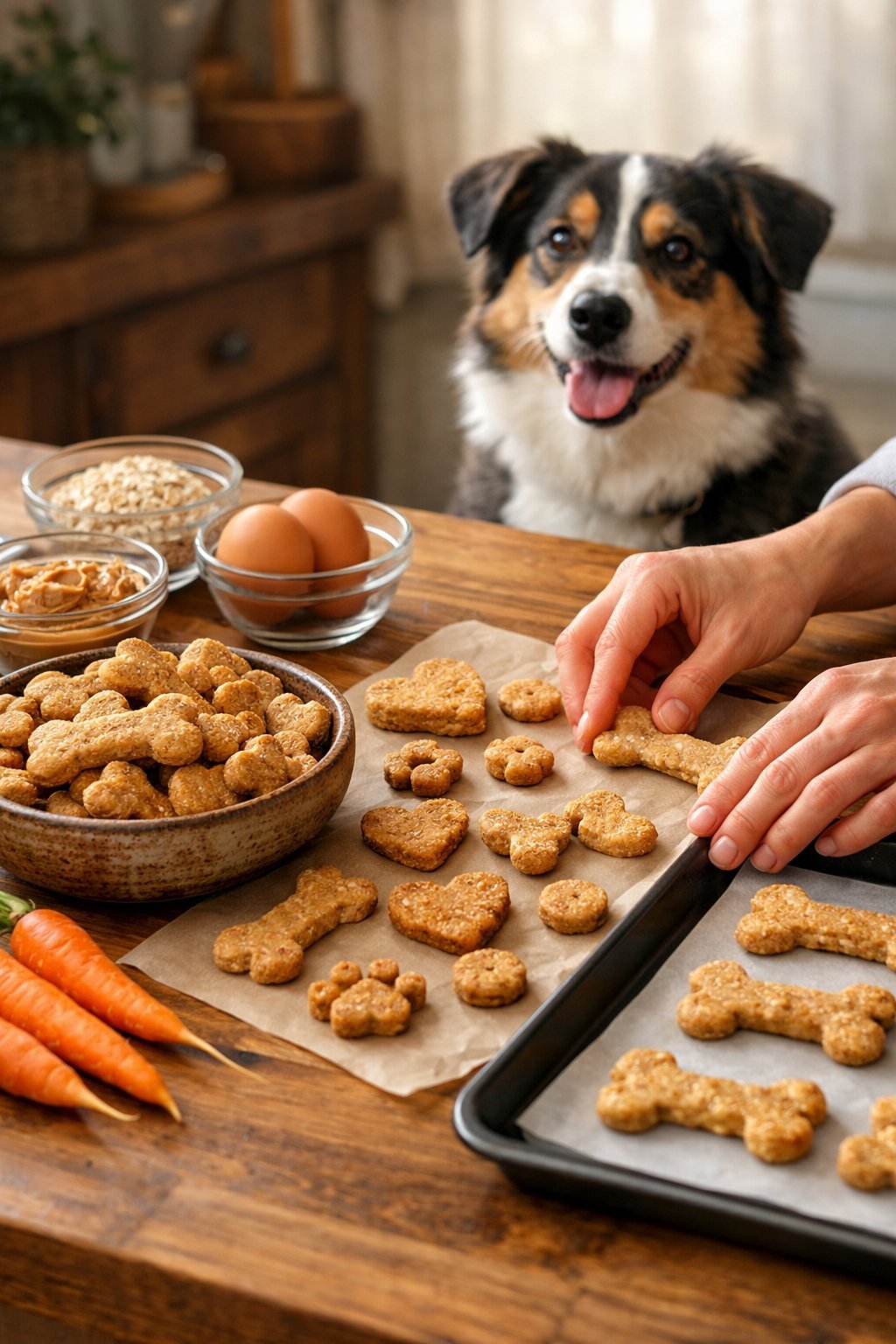
Making treats for your dog at home gives you full control over the ingredients while saving money. These three recipes use common kitchen staples and take less than 30 minutes to prepare.
Peanut Butter and Pumpkin Biscuits
I love making these biscuits because they only require a few ingredients and my dog goes crazy for them. You’ll need 2 cups of whole wheat flour, 1/2 cup of pure pumpkin puree, 1/2 cup of natural peanut butter (make sure it doesn’t contain xylitol), and 2 eggs.
Mix all the ingredients in a bowl until you get a firm dough. Roll it out to about 1/4 inch thick on a floured surface.
Use cookie cutters to create fun shapes, or just cut the dough into squares with a knife. Place the treats on a baking sheet lined with parchment paper and bake at 350°F for 20-25 minutes until they’re golden brown.
Let them cool completely before giving them to your pup. These vet-approved dog treats store well in an airtight container for up to two weeks in the fridge.
Oatmeal Banana Bites
These no-bake treats are perfect when I don’t want to turn on the oven. You only need 1 ripe banana, 1 cup of old-fashioned oats, and 2 tablespoons of natural peanut butter.
Mash the banana completely in a bowl until it’s smooth. Add the oats and peanut butter, then mix everything together until well combined.
Roll the mixture into small balls about the size of a marble. Place them on a plate or baking sheet and refrigerate for at least one hour until firm.
These treats work great as training rewards because they’re bite-sized and easy to break apart. I keep mine in the fridge for up to five days.
They’re one of the simple dog treat recipes that require minimal effort but deliver maximum tail wags.
Chicken and Rice Delights
My dogs love these protein-packed treats that use leftover ingredients I already have. You’ll need 1 cup of cooked chicken (shredded or chopped small), 1 cup of cooked rice, 1/4 cup of chicken broth, and 1 egg.
Mix all ingredients together in a bowl. The mixture should be sticky but moldable.
If it’s too wet, add a tablespoon of flour. Scoop small amounts onto a greased baking sheet using a teaspoon.
Flatten each scoop slightly with your fingers. Bake at 350°F for 15-20 minutes until they’re firm and lightly browned on the edges.
These treats are especially good for dogs with sensitive stomachs since chicken and rice are gentle on digestion. Store them in the refrigerator for up to one week or freeze them for longer storage.
Grain-Free and Special Diet Dog Treats
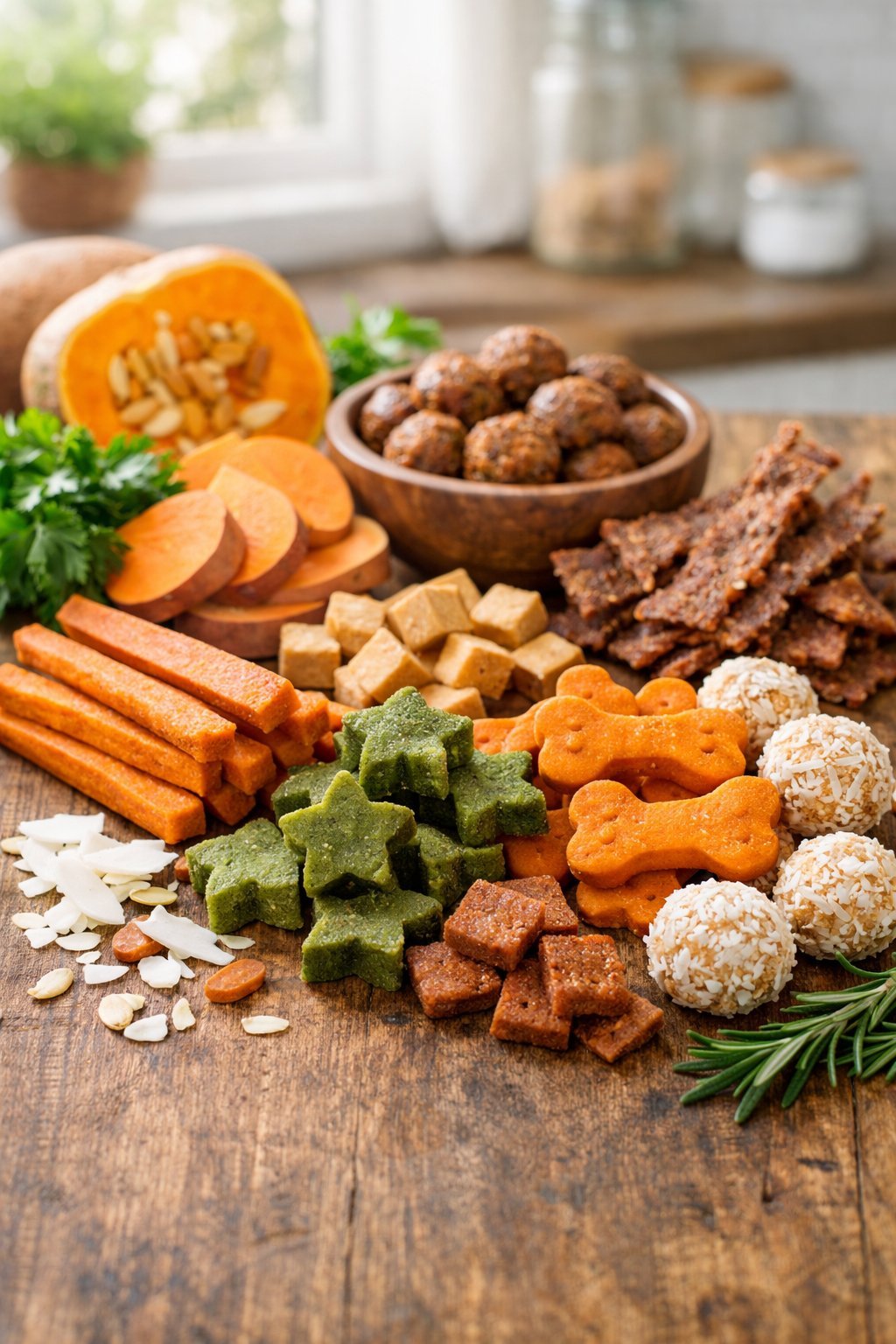
Making treats at home lets me control exactly what goes into my dog’s snacks, which is especially helpful when dealing with food sensitivities or allergies. Simple ingredients like meat, vegetables, and alternative flours can create nutritious options that keep dogs happy and healthy.
Single-Ingredient Meat Chews
I find that jerky treats are one of the easiest things to make at home, even though store-bought versions can be expensive. I start with boneless chicken breasts and cut them into small, bite-sized strips.
Then I place them on a baking sheet and bake at 200°F for about 2-3 hours until they’re dried out and chewy. Beef and turkey work just as well for homemade jerky.
I slice the meat thin against the grain to make it easier for my dog to chew. Dehydrating the meat removes moisture, which helps it last longer when stored in the fridge.
Fish like salmon also makes excellent single-ingredient treats. I bake thin strips at low temperature until they’re completely dry.
These protein-packed snacks are perfect for training because they’re small and motivating.
Vegetable-Based Snacks
Sweet potatoes make fantastic grain-free treats that I can prepare in minutes. I slice them into thin rounds and bake at 250°F for about 3 hours, flipping halfway through.
The result is a crunchy chip that most dogs love. Pumpkin works well combined with coconut flour and peanut butter to create simple grain-free treats.
I mix these ingredients together, roll out the dough, and cut shapes before baking. These treats are easy to customize for different dog sizes.
Carrots and green beans can be dehydrated on their own for a low-calorie snack option. I cut them into appropriate sizes and dry them in the oven or dehydrator until they reach the desired texture.
Hypoallergenic Recipe Ideas
When my dog needs treats for special diets, I focus on limited ingredients to avoid potential triggers. I use alternative flours like coconut flour or almond flour instead of wheat-based options.
These flours bind ingredients together while keeping treats grain-free. For dogs with multiple sensitivities, I stick to novel proteins they haven’t eaten before.
Duck, venison, or rabbit can work well for dogs with common protein allergies. I combine one protein source with a single vegetable and one type of flour to keep recipes simple.
It’s important to remember that grain-free isn’t inherently better for all dogs. Each dog has unique nutritional needs based on breed, size, age, and health conditions.
I always consult my veterinarian before making significant changes to my dog’s diet, especially if they have existing health concerns.
Seasonal and Festive Dog Treat Recipes

Making treats that match the season adds fun to your dog’s routine while using fresh ingredients that are in season. Cold weather calls for baked goods while hot months work better with frozen snacks.
Holiday-Themed Dog Biscuits
I love making holiday dog treats because they’re simple and my dog gets excited about the special flavors. For Christmas, I use ingredients like pumpkin, sweet potato, and plain cooked chicken as my base.
Basic Holiday Biscuit Recipe:
- 2 cups whole wheat flour
- 1/2 cup pumpkin puree or mashed sweet potato
- 1 egg
- 2 tablespoons peanut butter (xylitol-free)
I mix everything together, roll the dough to 1/4 inch thick, and use cookie cutters in holiday shapes. The treats bake at 350°F for 20-25 minutes until they’re golden and crispy.
For spring, I add shredded carrots to the dough. Fall recipes work great with apple pieces (no seeds).
I avoid using artificial colors and stick with natural ingredients that are safe for dogs.
Frozen Summer Pup Treats
When temperatures rise, I make frozen treats to help my dog cool down. These are the easiest treats I’ve ever made because they require no baking.
My go-to recipe uses plain yogurt (make sure your dog tolerates dairy) mixed with mashed banana. I pour the mixture into ice cube trays or silicone molds and freeze for 4 hours.
Other Frozen Treat Ideas:
- Watermelon chunks (seedless)
- Chicken broth ice cubes
- Blended berries with water
- Peanut butter mixed with pumpkin
I also freeze dog-safe fruits in water for a crunchy snack. Blueberries and small apple pieces work perfectly.
These DIY seasonal treats take just 5 minutes to prepare.
Creative Dog Treat Presentation and Storage
Making treats look appealing and storing them properly keeps them fresh while adding a personal touch. The right shapes and decorations make homemade treats more enjoyable, and thoughtful packaging turns them into perfect gifts.
Fun Shapes and Decorating Tips
I use cookie cutters to create fun shapes like bones, hearts, paws, and fire hydrants. These simple tools instantly make treats more visually interesting for gift-giving or special occasions.
For decorating, I stick with dog-safe ingredients. Carob coating works as a chocolate substitute, while peanut butter or plain yogurt can be drizzled on top.
I also use small amounts of pureed sweet potato or beet juice to add natural color. Creative decorating approaches include using a piping bag to add details or pressing seeds into the dough before baking.
Simple stamping with food-safe stamps can add texture and patterns. I press them gently into the dough before baking for a professional look.
Packaging Treats for Gifts
I package homemade treats in clear cellophane bags tied with ribbon to show off the shapes and colors. Mason jars work well too, especially when I layer different types of treats inside.
For a more personal touch, I add custom labels with the treat name, ingredients, and date. Gift wrapping for dog treats becomes part of the experience for pet owners.
I sometimes include feeding instructions or storage tips on the label. Adding small items like bandanas or toys creates gift bundles that feel more complete.
Small kraft boxes or tins protect treats during transport and look professional. I store my treats in airtight containers at room temperature for up to one week.
Alternatively, I freeze them for up to three months. This keeps them fresh and prevents moisture from making them soft.