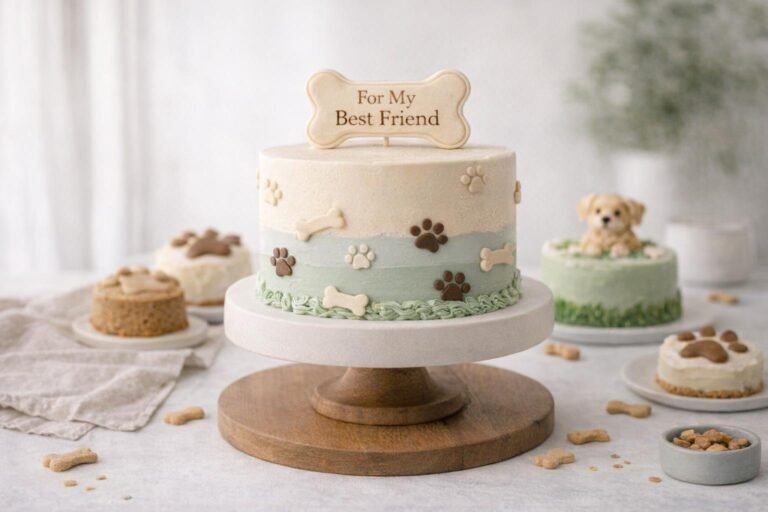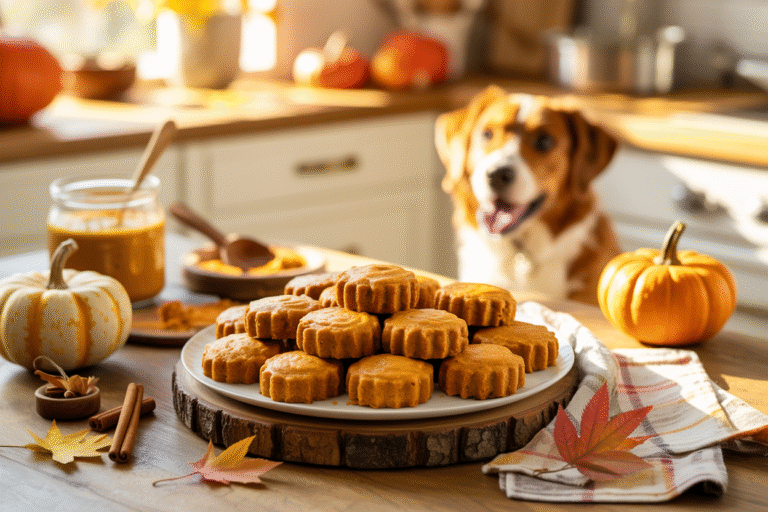
10 Dog Treats Homemade Recipes Your Dog Will Love: Easy and Healthy Ideas for Every Pup

Dog Treats Homemade Recipes – I know you want to give your dog the best treats possible. Store-bought options often have preservatives and additives you might not want your furry friend eating.
Making homemade dog treats lets you control exactly what goes into your dog’s snacks. You’ll save money and show your pup some extra love at the same time.

Homemade dog treat recipes are simple and don’t need fancy equipment or weird ingredients. Most recipes use basics like peanut butter, pumpkin, and oats.
Your dog won’t care if the treats look perfect—they’ll just be excited to taste something made by you. I’ve rounded up ten easy recipes, from crunchy biscuits to soft training treats.
Each recipe uses wholesome ingredients that are safe for dogs of all ages. Whether your pup likes savory or sweet, you’ll find something to make their tail wag.
Key Takeaways
- Homemade dog treats let you pick the ingredients, so you avoid preservatives and additives.
- Most recipes use pantry staples like peanut butter, oats, and pumpkin.
- Storing your treats the right way keeps them fresh and safe for your dog.
Why Homemade Dog Treats Are Healthier
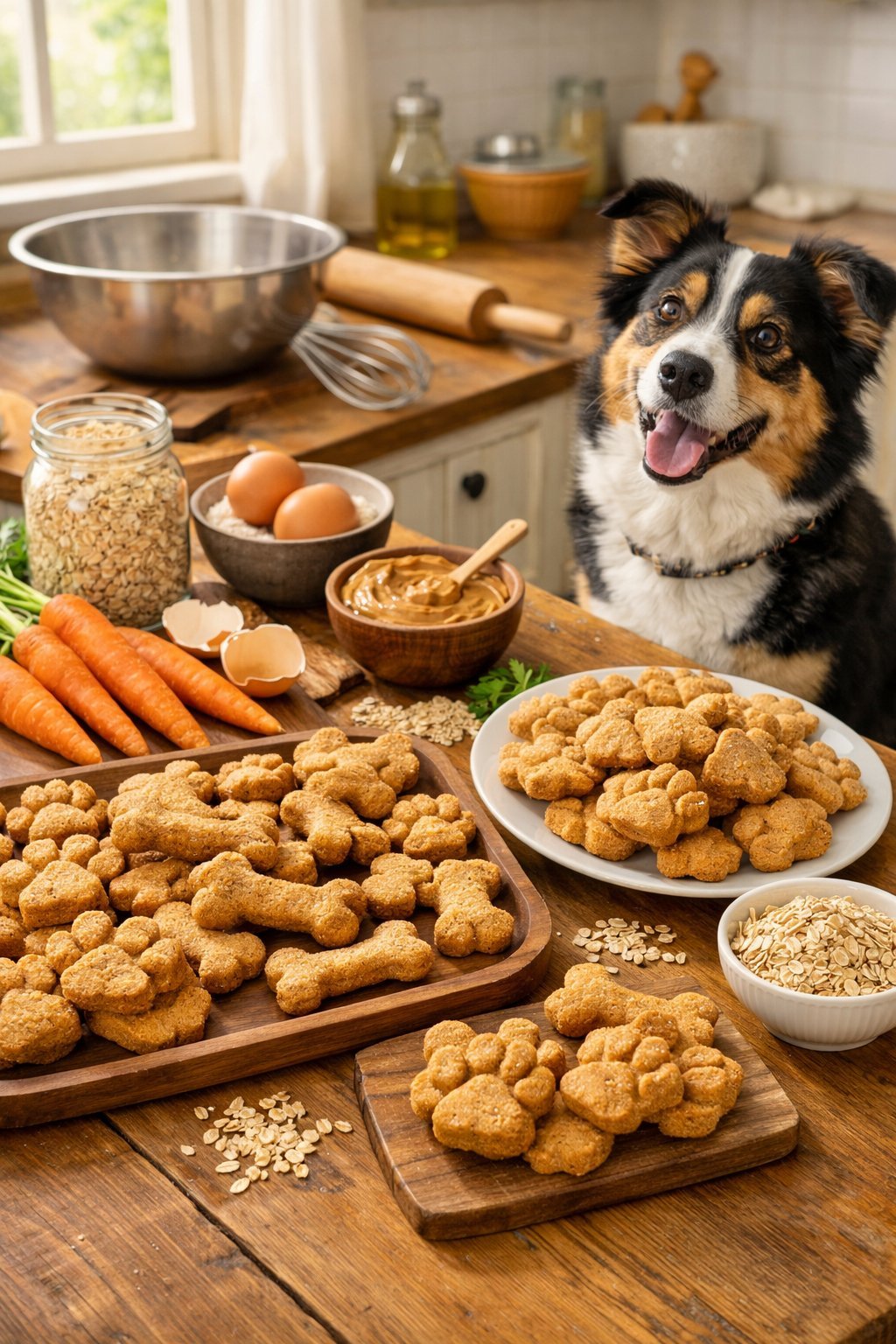
Making treats at home gives me full control over what goes into my dog’s snacks. I can skip the additives and make sure every ingredient is fresh and nutritious.
Benefits of Homemade Over Store-Bought
When I make treats at home, I know exactly what my dog is eating. Store-bought treats often have preservatives and artificial colors that aren’t great for your pet’s health.
A lot of commercial dog treats use fillers that don’t really benefit your dog. Homemade treats let me skip those unnecessary extras.
I also save money by making treats myself. A batch of homemade treats costs less than buying several bags at the store.
The quality of ingredients I use at home is usually better than what you’ll find in mass-produced treats. I can even choose organic or local items if I want.
Controlling Ingredients and Freshness
I get to decide what goes into each treat. Most homemade dog treats use simple ingredients like peanut butter, pumpkin, oats, broth, and flour.
Fresh ingredients mean better nutrition for my dog. Store-bought treats sit on shelves for months and lose nutritional value.
If I’m out of an ingredient, I can swap it for something similar. This makes treat-making pretty flexible and convenient.
I also control the shelf life. I make smaller batches more often to keep things fresh, or freeze them for later.
Allergy-Friendly Options
My dog has specific dietary needs, and homemade treats let me work around them. If my dog’s allergic to chicken or wheat, I just leave those out.
Common dog allergies include beef, dairy, wheat, and soy. By making treats at home, I can avoid these completely.
If my dog needs low-fat or grain-free treats, I can adjust the recipe. Sweet potato, carrots, and green beans are all safe options for pups with sensitivities.
Essential Ingredients for Homemade Dog Treats
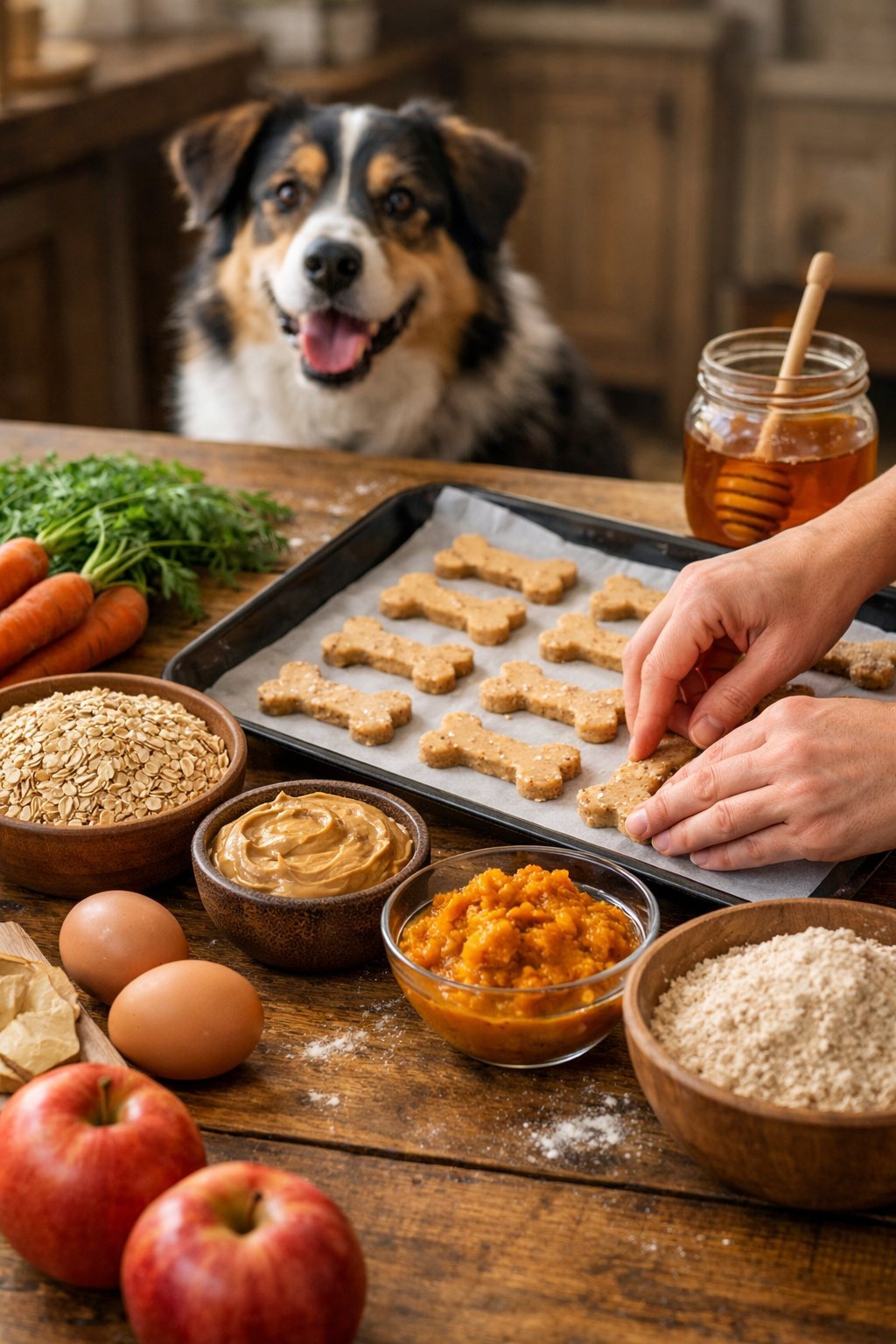
When I make dog treats, I focus on three main ingredient groups: safe grains and flours, quality proteins, and fresh fruits and veggies.
Dog-Safe Grains and Flours
I usually start with whole wheat flour—it’s affordable and works well in most recipes. It also has fiber to help with digestion.
Oat flour is another favorite, especially for dogs with wheat sensitivities. Rice flour is great for pups with grain allergies, and I grind it fine for a smooth texture.
For grain-free treats, I use coconut flour or chickpea flour. These add extra protein and still hold together when baked.
Coconut flour absorbs more liquid, so I adjust my recipes as needed.
Common Safe Flours:
- Whole wheat flour
- Oat flour
- Rice flour
- Coconut flour
- Chickpea flour
Protein Sources for Dogs
I include lean proteins because dogs need them for healthy muscles. Peanut butter is my go-to, but I always check that it doesn’t have xylitol.
Eggs are another easy protein and help bind everything together. I use them scrambled or raw, depending on the recipe.
Ground chicken, turkey, or beef work great for meat-based treats. I cook the meat before mixing it in.
Plain Greek yogurt adds protein and probiotics, but I use small amounts to keep calories in check.
Fruits and Vegetables Dogs Can Eat
I add fruits and veggies to boost nutrition and change up flavors. Pumpkin puree is a favorite—it’s full of fiber and most dogs love it.
Sweet potatoes give vitamins A and C. Blueberries are great mix-ins for antioxidants, and I use them fresh or frozen.
Apples add a sweet crunch, but I always remove the seeds and core. Carrots are another safe veggie I grate or chop.
Bananas make treats moist and add potassium. I mash them well before mixing them in.
Top 10 Dog Treats Homemade Recipes Your Dog Will Love
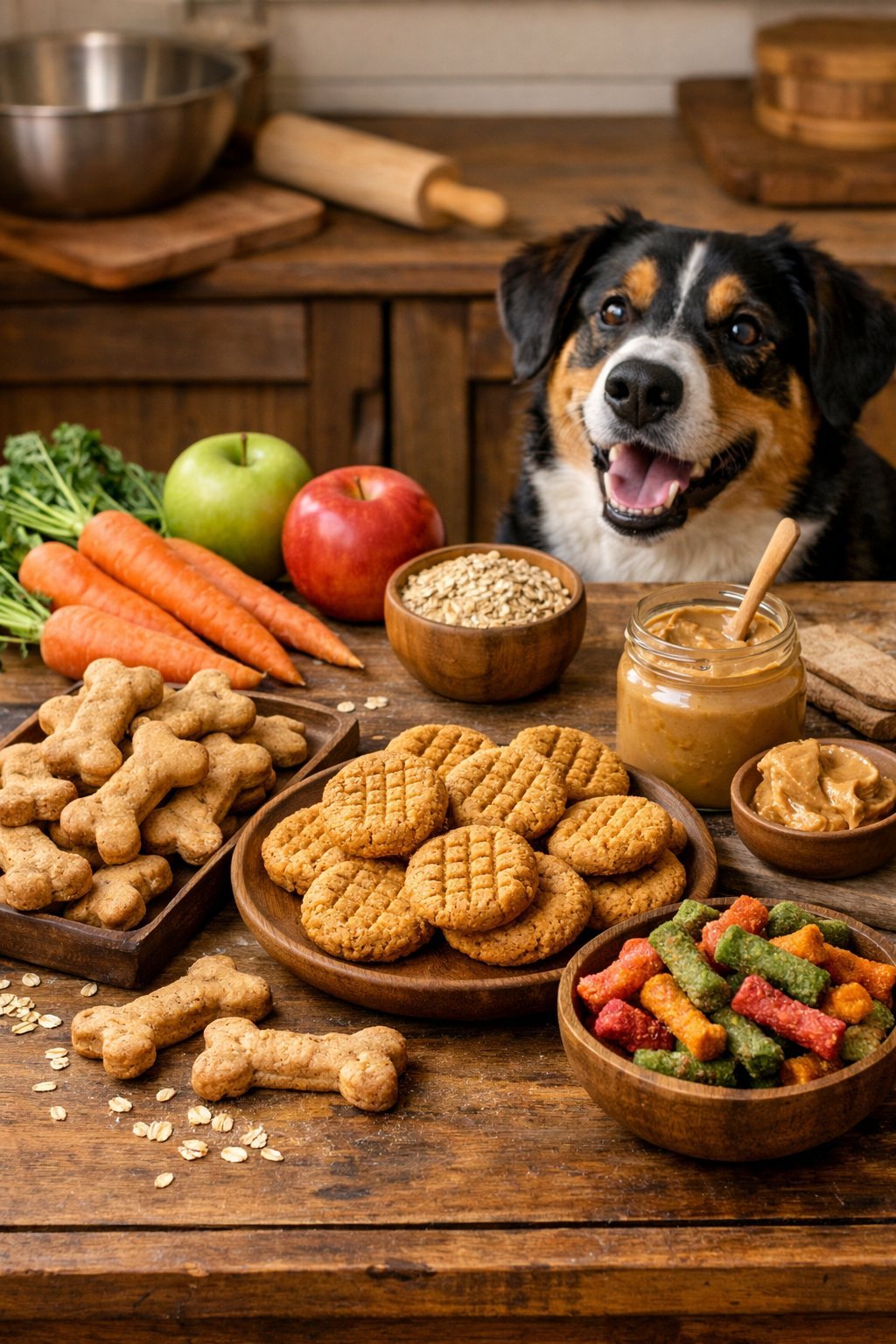
Making treats at home lets me control what my dog eats and saves money. These four recipes use simple ingredients you probably already have.
They’re perfect for dogs of all ages and sizes.
Peanut Butter Pumpkin Biscuits
These biscuits combine two ingredients most dogs love. Peanut butter brings protein and healthy fats, while pumpkin adds fiber for digestion.
To make them, I mix 2 cups of whole wheat flour, 1/2 cup of canned pumpkin, and 1/2 cup of natural peanut butter. Make sure the peanut butter doesn’t have xylitol.
I add 2 eggs and about 1/4 cup of water until the dough comes together. Then I roll the dough out to about 1/4 inch thick and cut it into shapes.
I bake them at 350°F for 20-25 minutes until they’re golden and crispy. These store well in an airtight container for up to two weeks.
I also freeze batches so I always have treats ready.
Chicken and Sweet Potato Bites
These are perfect for training because they’re small and packed with protein. Sweet potatoes add vitamins and a touch of sweetness.
I cook 2 cups of diced chicken breast and 1 large sweet potato until both are done. Once cool, I mash the sweet potato and shred the chicken.
I mix them with 1 cup of oat flour and 1 egg. Then I form the mixture into small balls and place them on a lined baking sheet.
I bake at 350°F for 15-20 minutes. These bites stay fresh in the fridge for about five days or in the freezer for up to three months.
Banana Oat Training Cookies
I make these when I need quick training rewards. Bananas add natural sweetness and potassium, while oats provide gentle fiber.
I mash 2 ripe bananas, then mix in 1 cup of old-fashioned oats and 1/4 cup of natural peanut butter. If the dough is too wet, I add more oats.
I drop small spoonfuls onto a parchment-lined baking sheet and flatten them with a fork. They bake at 325°F for about 15 minutes.
These cookies come out soft and are easy to break into small pieces for training. I keep some in my treat pouch for walks.
Cheesy Apple Delights
These treats mix savory cheese with sweet apples for a combo my dog loves. Apples add crunch and vitamins, but I always remove the seeds and core.
I grate 1 cup of cheddar cheese and 1 peeled apple. Then I mix them with 1 1/2 cups of whole wheat flour and 1/4 cup of water.
The dough should be firm enough to roll out. I cut them into small squares or use cookie cutters.
I bake at 350°F for 25-30 minutes until they’re firm and slightly golden. The cheesy smell always gets my dog excited.
I store these in the fridge since they have cheese. They last about a week in an airtight container.
Fun Variations and Customizations
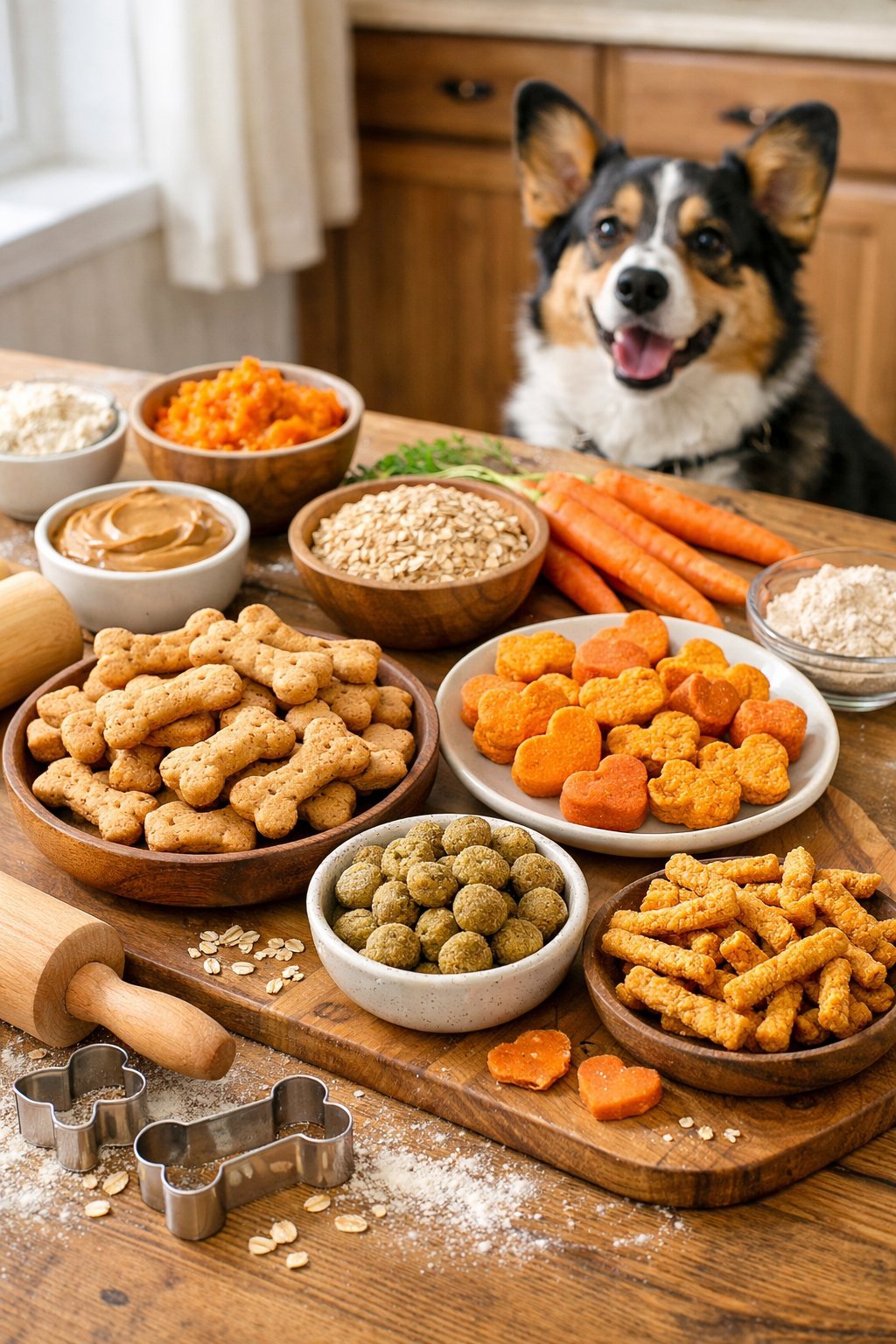
I love trying out new treat recipes to keep my dog happy and healthy. You can switch up ingredients based on the season, your dog’s needs, or just for fun.
Seasonal Dog Treat Ideas
I like to switch up my dog treat recipes throughout the year to match what’s fresh and in season.
In fall, I add pumpkin puree and cinnamon to biscuit dough for a cozy twist.
Winter calls for warming ingredients like sweet potato and oats.
Spring is perfect for adding fresh blueberries or strawberries to frozen treats.
I freeze low-sodium chicken broth in ice cube trays with small pieces of fruit for a refreshing snack.
Summer treats need to be cooling, so I make frozen yogurt drops with plain Greek yogurt and banana.
I also blend watermelon with a bit of coconut oil and freeze it in small molds.
Treats for Special Dog Diets
I’ve learned to adjust recipes when my dog has specific dietary needs.
For grain-free diets, I replace wheat flour with coconut flour or chickpea flour.
Dogs with sensitive stomachs do well with single-protein treats using just chicken or turkey.
If your dog needs low-fat options, I recommend using lean meats and skipping oils.
Sweet potato and apple make great bases without added fats.
For dogs with allergies, I avoid common triggers like beef, dairy, and wheat.
I use alternatives like duck, venison, or fish as protein sources.
Rice flour and oat flour work well as binders.
Many vet-approved homemade dog treats recipes can be modified to fit special diets by swapping ingredients.
Chewy vs. Crunchy Treat Textures
I find that texture matters just as much as flavor to dogs.
For crunchy treats, I bake dough at lower temperatures for longer times to remove moisture completely.
Rolling the dough thinner also creates crispier results.
Chewy treats need more moisture, so I add ingredients like applesauce, pumpkin, or honey.
I bake these at higher temperatures for shorter periods.
Taking them out while they’re still soft in the middle gives that chewy texture.
Some dogs prefer one texture over another.
My dog loves crunchy treats for satisfying his chewing instinct, but chewy treats work better for training rewards since they’re easier to eat quickly.
Tips for Storing and Serving Homemade Treats
Proper storage keeps your homemade dog treats fresh and safe.
Creative serving methods make treat time more exciting for your pup.
Safe Storage Practices
I always make sure my homemade treats are completely cool before storing them.
Any remaining warmth can create moisture inside containers, which leads to mold growth.
For storing homemade dog treats, I use airtight containers or freezer bags.
Glass jars with tight-fitting lids work great for counter storage.
I keep dry, crunchy treats in my pantry for up to two weeks.
Treats with meat, cheese, or other wet ingredients need refrigeration.
I store these in sealed containers in my fridge for up to one week.
For longer storage, I freeze treats in portions.
I put them in double bags to prevent freezer burn.
Frozen treats stay good for three to four months.
I label each container with the date I made the treats.
This helps me use older batches first and throw out anything past its prime.
Storage Guidelines:
- Counter: Dry treats only, 1-2 weeks
- Refrigerator: Moist treats, up to 1 week
- Freezer: All treats, 3-4 months
Creative Presentation for Your Pup
I like to make treat time special by presenting homemade dog treats in fun ways. I use puzzle toys and fill them with small treat pieces for mental stimulation.
I freeze treats inside ice cube trays with low-sodium broth for hot days. My dog loves working to lick out each frozen cube.
For training sessions, I cut treats into tiny pieces. This way, I can reward my dog multiple times without overfeeding.
I also hide treats around the yard or house for scavenger hunt games. This turns snack time into an activity that burns energy and keeps my dog engaged.