
Doodle Haircut Dog Grooming: Essential Tips for Keeping Your Pup Looking Fresh

Doodle breeds like Goldendoodles and Labradoodles are super popular these days. Their fluffy coats are adorable, but they need regular grooming to stay healthy and look their best.
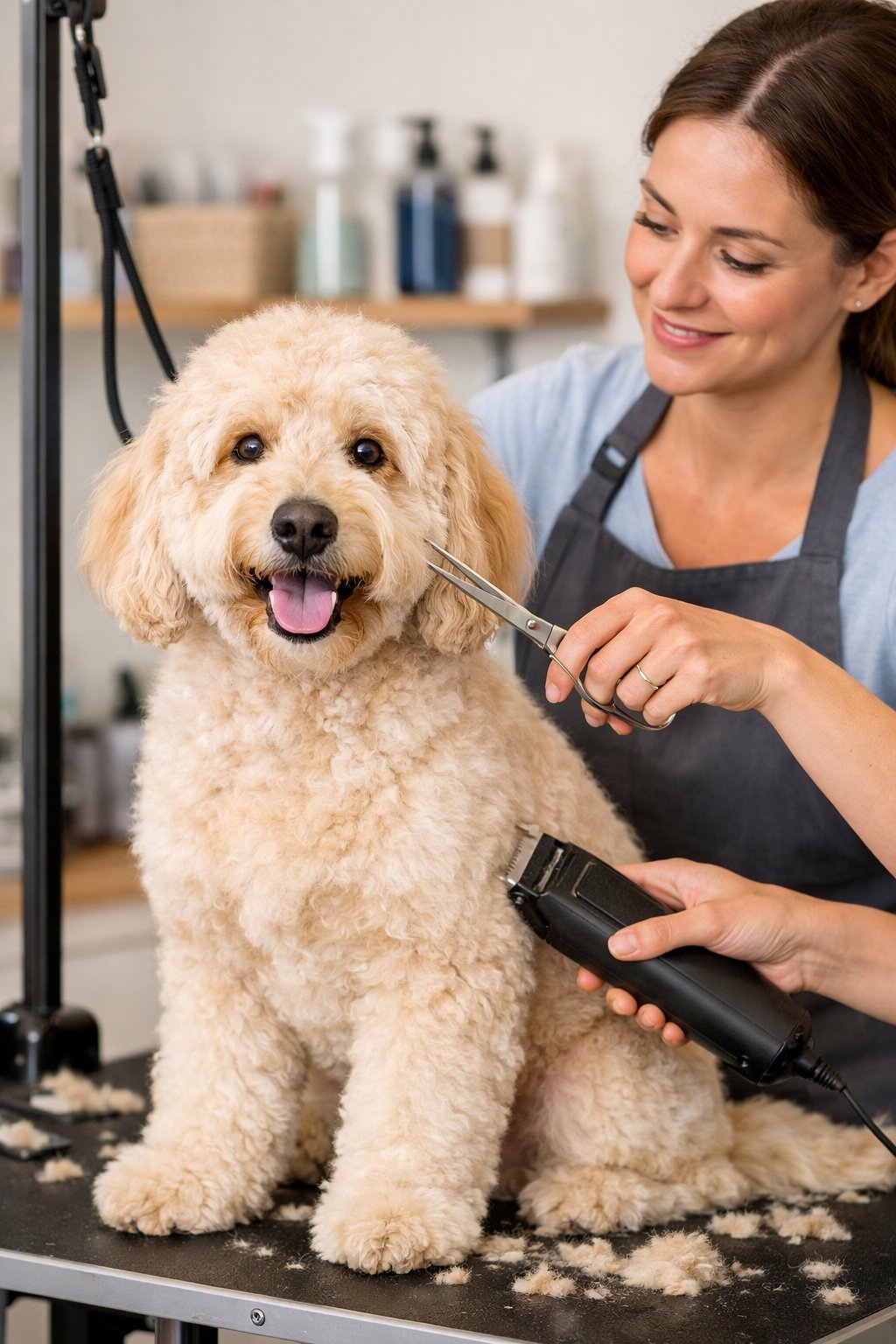
The right doodle haircut keeps your dog comfortable, prevents painful mats, and makes coat care much easier between grooming sessions. Choosing the right style depends on your dog’s coat type, your lifestyle, and how much time you can spend on maintenance.
Some cuts require visits to a professional groomer every 6-8 weeks, while others are easier to maintain at home. Whether you’re taking your doodle to a groomer or learning to do it yourself, understanding the different doodle grooming styles and cuts will help you make the best choice for your pup.
I’ll walk you through everything from prep work to popular styles so you can keep your doodle looking great year-round.
Key Takeaways
- Different doodle coat types need specific grooming approaches and tools to prevent matting.
- Popular haircut styles range from low-maintenance short clips to fluffy teddy bear cuts that need more upkeep.
- Regular brushing between grooming appointments is essential to keep your doodle’s coat healthy and tangle-free.
Understanding Doodle Coat Types
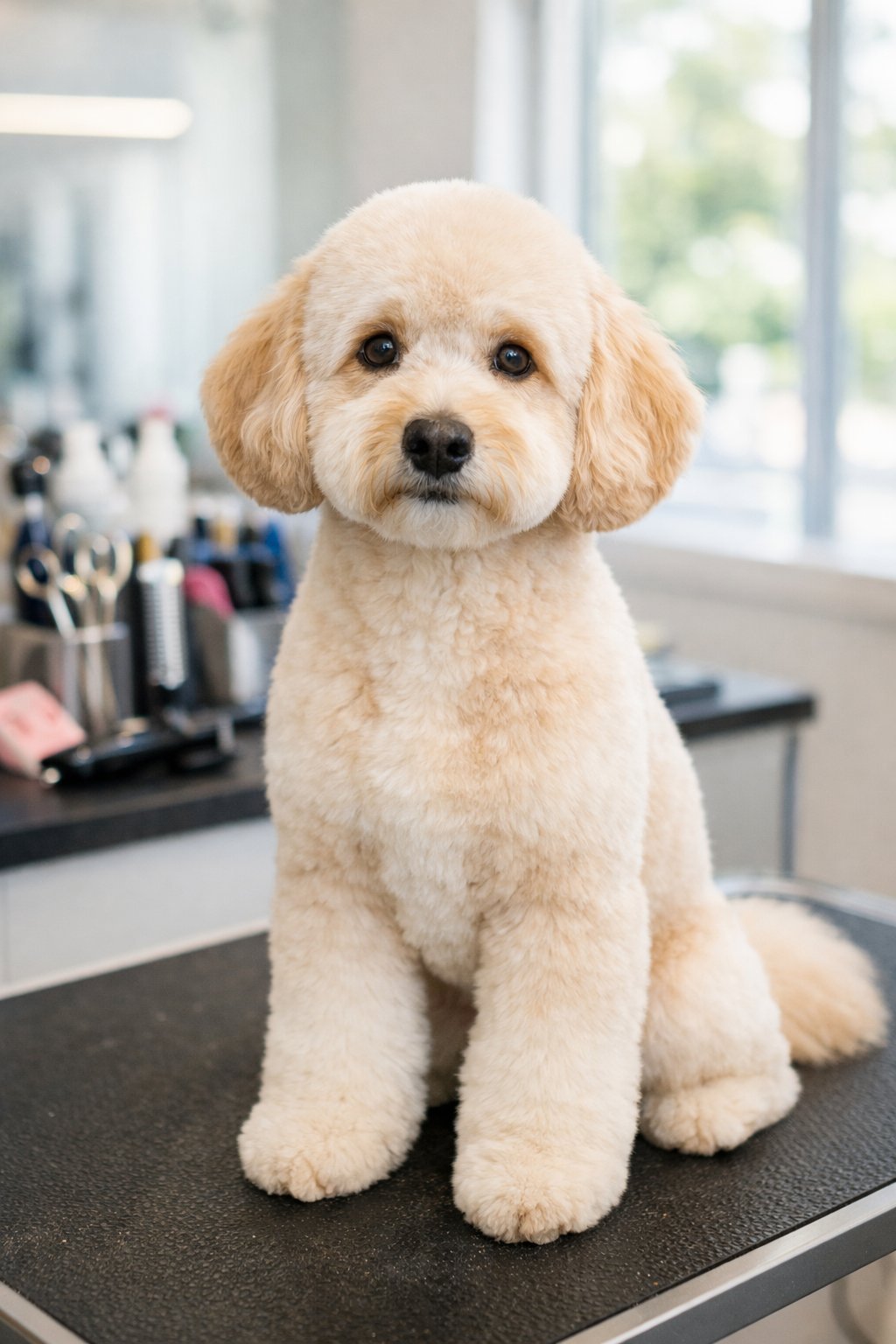
Doodle coats come in three main textures that affect grooming needs and maintenance routines. Knowing your doodle’s specific coat type helps you figure out the best way to care for them.
Common Doodle Breeds and Their Coats
Goldendoodles usually have wavy to curly coats that shed minimally. Their fur is soft and needs regular brushing.
Labradoodles have similar coat patterns but often with slightly coarser hair. Their coats range from loose waves to tight curls depending on their generation.
Bernedoodles tend to have thicker, more textured coats from their Bernese Mountain Dog side. Their fur often comes in beautiful tricolor patterns with wave or curl.
Aussiedoodles usually sport medium-length wavy coats. Their Australian Shepherd genetics add unique color variations and feathering around the legs and tail.
The three main doodle coat types include straight, curly, and wavy. Curly coats need the most maintenance to prevent matting, while straight coats are easier to manage but may shed more.
Assessing Coat Health
I check coat health by running my fingers through the fur to feel for mats or tangles. Healthy doodle coats feel soft and springy, not brittle or dry.
Look for these signs of good coat health:
-
Shine and luster in natural light
-
Minimal shedding when brushing
-
No flaking or dandruff on the skin
-
Even texture throughout the body
Dull or brittle fur often means your doodle needs better nutrition or more frequent grooming. Dogs with healthy coats have skin that moves freely when touched, not tight or irritated.
Red or inflamed skin under the coat can be a sign of allergies or skin conditions. If you spot these issues during grooming, it’s a good idea to schedule a vet visit.
Regular brushing helps you keep an eye on coat health between professional grooming appointments. You can catch problems early before they become serious.
Coat Changes as Doodles Mature
Doodle puppies start with soft, fluffy coats that don’t represent their adult fur texture. Big changes usually happen between 6 to 12 months of age.
The puppy coat gradually sheds and gets replaced by adult fur. This transition period is when matting can get really bad because both coat types tangle together easily.
Adult coats typically finish developing by 18 months old. The final texture might be curlier or straighter than what your puppy had at first.
First-generation doodles (F1) show more coat variety than multi-generation breeds. It’s hard to predict their adult coat based on puppy appearance alone.
F1B doodles (bred back to a Poodle) usually develop curlier, more Poodle-like coats. These require more frequent professional grooming to maintain.
Daily brushing during the coat transition prevents painful mats from forming. I always increase grooming frequency during this time to keep my doodle comfortable.
Essential Tools and Prep for Doodle Haircuts
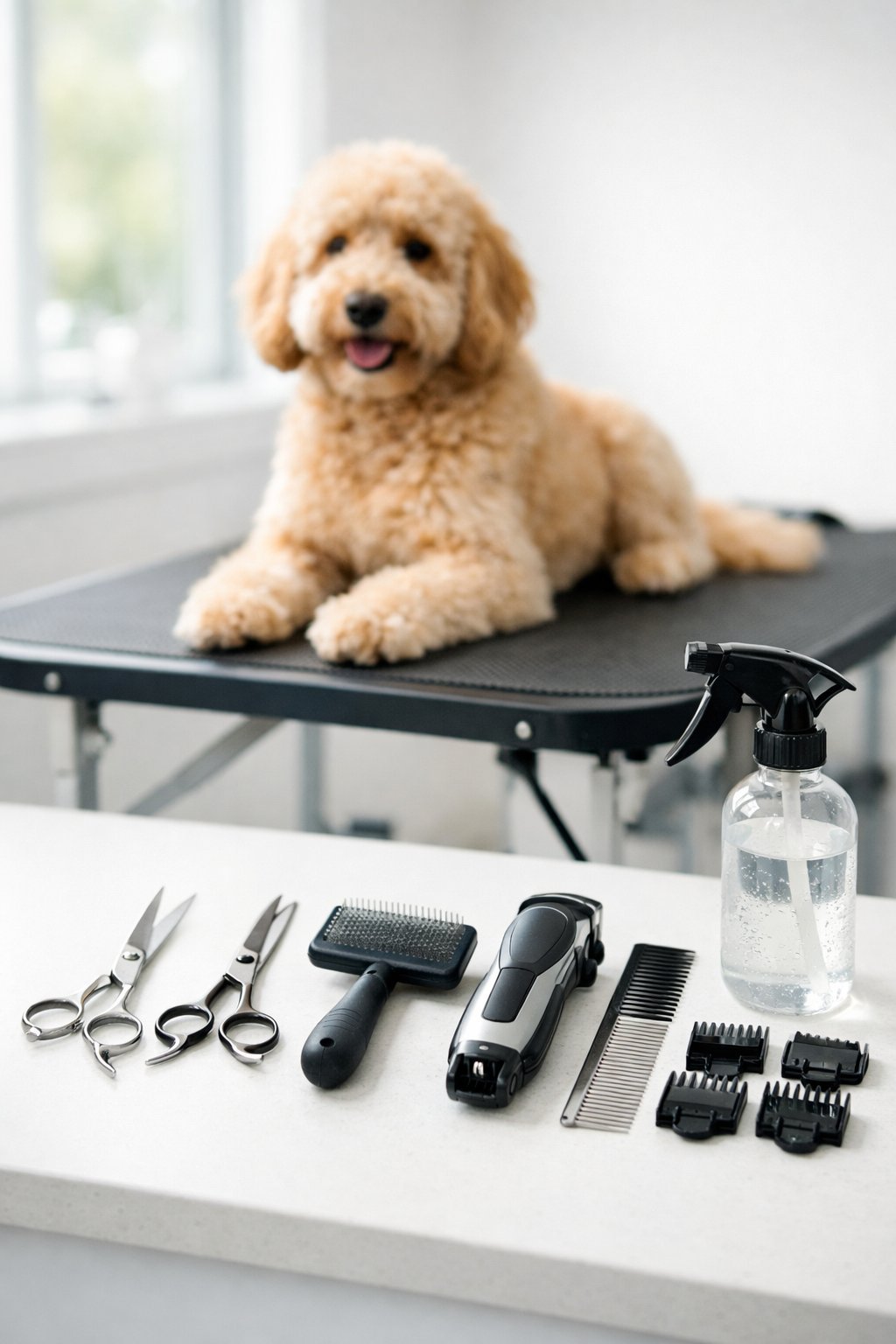
Getting the right tools and prepping your doodle properly makes grooming easier and safer for both of you. I always start by gathering quality equipment and working through any tangles before I pick up clippers or scissors.
Selecting the Right Grooming Tools
I recommend investing in professional-quality grooming tools made for doodle coats. A slicker brush is my go-to for everyday maintenance, while a metal comb helps me check for hidden mats near the skin.
For haircuts, you’ll want a good pair of dog grooming clippers with multiple blade lengths. I like clippers with a #4, #7, and #10 blade for different body areas. Sharp grooming scissors are key for detail work around the face, paws, and tail.
My basic toolkit includes:
-
Slicker brush – removes loose hair and prevents mats
-
Metal comb – checks for tangles at the skin level
-
Clippers with multiple blades – cuts body hair efficiently
-
Thinning shears – blends and softens harsh lines
-
Straight scissors – trims face and paws precisely
-
Nail clippers – keeps nails at a safe length
I also keep detangling spray on hand to make brushing easier. A grooming table with a non-slip surface helps me work at a comfortable height.
Brushing and Detangling Techniques
I always brush my doodle completely before giving a haircut. Starting with matted hair will pull on the skin and dull my clipper blades quickly.
I work in sections using a proper brushing technique called line brushing. This means I part the coat and brush from the skin outward in small sections.
I start at the feet and work my way up to avoid missing any spots. For stubborn tangles, I use detangling spray and gently work through them with my fingers first.
Then I use the slicker brush in short strokes. If a mat is too tight, I carefully cut it out with scissors rather than pulling.
I pay extra attention to areas that mat easily like behind the ears, under the legs, and around the collar area.
Preparing Your Dog for Grooming
I give my doodle a bath before haircuts so I’m working with clean, fluffy hair. Dirty coats can harbor bacteria and make clippers work harder.
After the bath, I completely dry the coat using a blow dryer on a cool or warm setting. I brush while drying to straighten the hair and remove any remaining tangles.
Wet hair cuts unevenly and can jam clipper blades. I make sure my workspace is ready with all tools within reach.
My dog stays calmer when I’m not constantly moving around searching for equipment. I use treats and praise throughout the process to keep the experience positive.
Before I start cutting, I check that my dog is comfortable and relaxed. If they seem anxious, I take a break and try again later.
Popular Doodle Haircut Styles
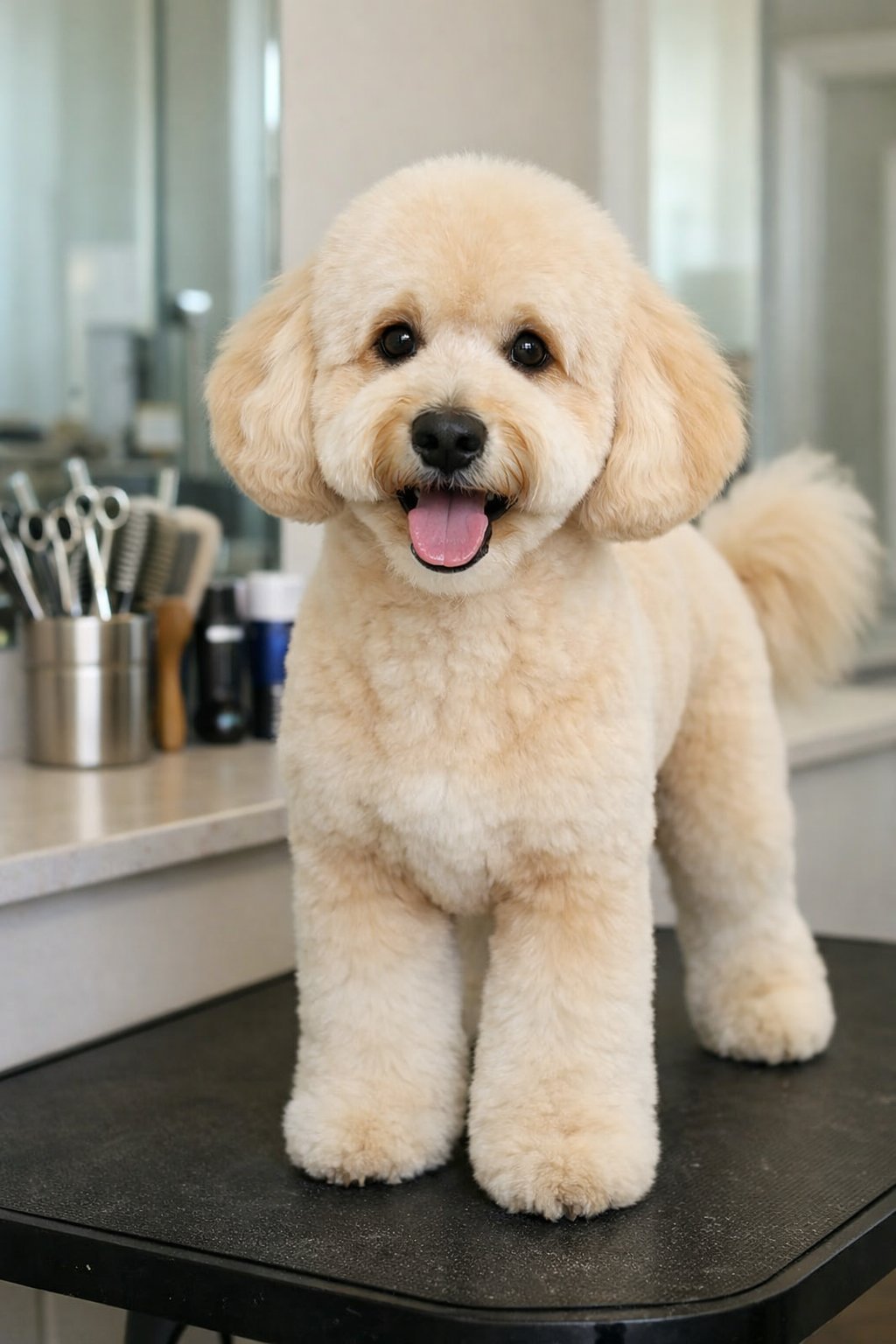
Doodle owners have several go-to haircut styles that keep their pups looking adorable while managing their unique coats. Each style offers different benefits for maintenance, comfort, and appearance depending on your lifestyle and climate.
The Teddy Bear Cut
The teddy bear cut is one of my favorites because it makes doodles look like cuddly stuffed animals. This cut keeps the hair around 1 to 2 inches long all over the body, creating a soft and rounded appearance.
I recommend this style for owners who want a balanced look between cute and practical. The face gets trimmed into a rounded shape, and the ears stay fluffy but neat.
The legs and body maintain even length throughout. This cut works well for most doodle breeds and coat types.
It requires brushing about 3 to 4 times per week to prevent matting. I suggest scheduling grooming appointments every 6 to 8 weeks to maintain the shape.
Your groomer will trim around the eyes and paws for safety and cleanliness.
The Lamb Cut
The lamb cut creates a distinctive look with shorter body hair and longer leg hair. I’ve seen this style transform doodles into elegant-looking pups with a unique silhouette.
The body gets clipped short, usually around half an inch to 1 inch in length. The legs stay longer and fluffy, often 2 to 3 inches.
This creates a contrast that many owners love. I find this cut helpful for dogs who get dirty easily or live in muddy areas.
The shorter body hair dries faster and collects less debris. The poodle cut style is similar, featuring short belly and face areas.
This style needs regular brushing on the legs to prevent tangles. I recommend brushing the longer leg hair daily or every other day.
The short body requires less maintenance but still needs weekly attention.
Puppy Cut Variations
I love puppy cuts because they’re versatile and easy to maintain. This style keeps hair at a uniform length between 1 to 3 inches all over the body, creating a youthful appearance.
The basic puppy cut offers flexibility in length based on your preference. Some owners choose shorter versions at 1 inch for summer, while others prefer 2 to 3 inches year-round.
The face can be trimmed shorter for a clean look or left slightly longer. Multiple adorable variations exist within the puppy cut style.
Groomers can adjust the ears, tail, and legs to create different looks while keeping the overall concept. This cut is perfect for busy families who want low maintenance.
It requires brushing 2 to 3 times per week and grooming appointments every 8 to 10 weeks. The even length makes it easier to spot mats early.
Functional Summer Trims
Summer trims help keep doodles cool during hot weather while protecting their skin. I always remind owners that these cuts need careful planning to avoid sunburn and skin irritation.
A typical summer trim keeps hair between half an inch to 1 inch long. This length provides cooling without exposing sensitive skin to direct sunlight.
The belly area can go slightly shorter since it gets less sun exposure. Picking the wrong style can lead to problems like mats, irritation, or skin issues.
Summer cuts need special attention to problem areas like armpits and behind the ears where matting occurs easily. These trims work best for dogs who swim frequently or spend lots of time outdoors.
The shorter coat dries quickly and collects fewer burrs and stickers. I suggest applying dog-safe sunscreen to exposed areas, especially on lighter-colored doodles.
Plan grooming visits every 4 to 6 weeks during summer months. Brush weekly to maintain coat health even with shorter hair.
Step-by-Step Doodle Grooming Guide
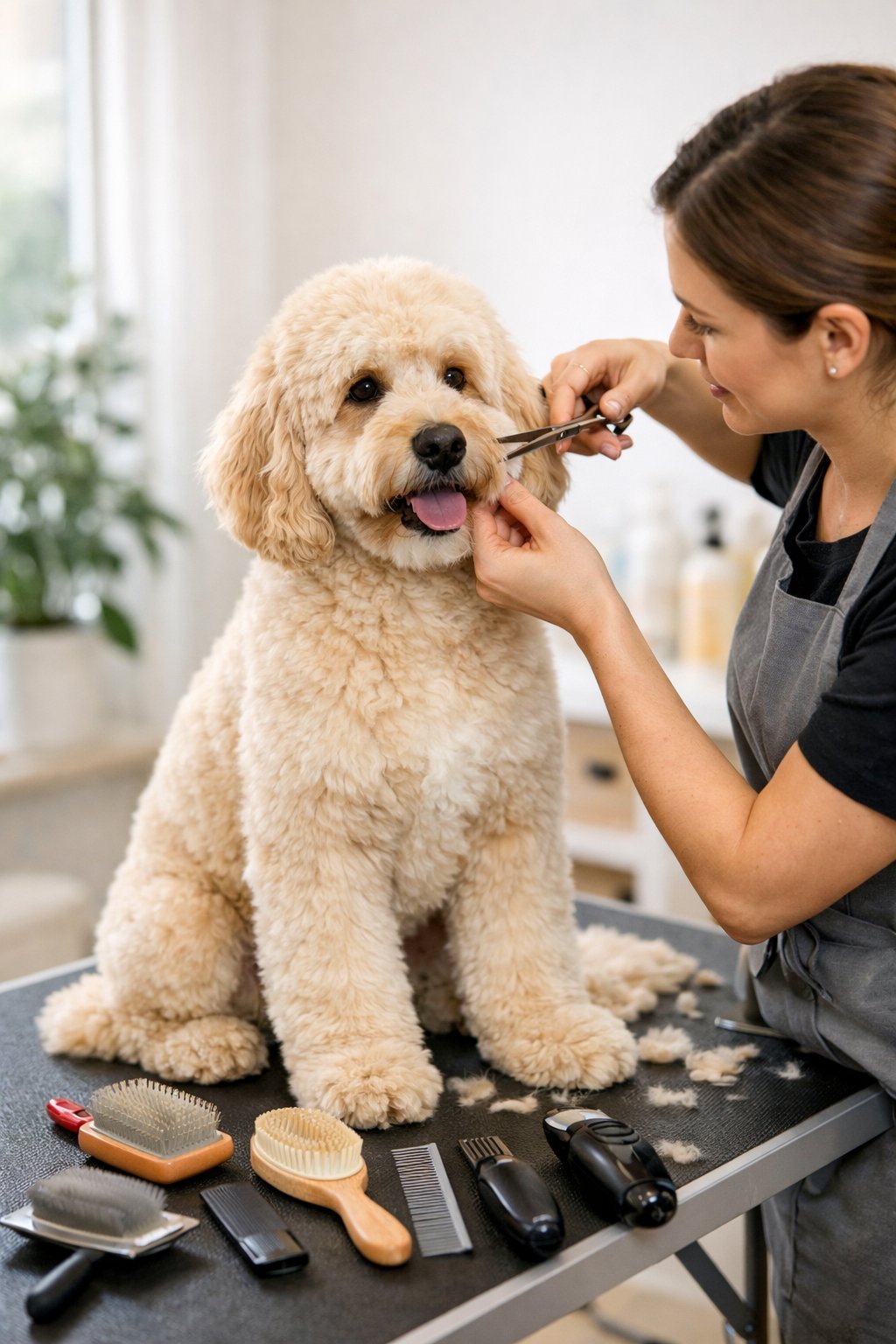
I recommend bathing your doodle every 4-6 weeks. Trim the face carefully to keep that signature teddy bear look, and use proper clipper techniques on the body to prevent matting.
Washing and Drying the Coat
I always start by brushing out my doodle completely before the bath. This helps remove tangles and mats that water can make worse.
I use lukewarm water and a dog-specific shampoo made for curly coats. I work the shampoo through the whole coat, making sure to get down to the skin.
I focus extra on areas that get dirty fast, like the paws, belly, and rear end. After rinsing thoroughly, I apply conditioner to help prevent future tangles.
I let the conditioner sit for a couple of minutes before rinsing again. For drying, I squeeze out excess water with a towel first.
Then I use a high-velocity dryer or a regular blow dryer on a cool setting. I brush as I dry to keep the coat from curling up and forming mats.
The coat needs to be completely dry before any trimming, since wet hair cuts differently than dry hair.
How to Trim the Face and Ears
I trim the face to get that classic rounded teddy bear look most doodle owners love. Thinning shears are great for detailed face work and for blending lines.
For the eyes, I carefully trim the hair between them so my doodle can see clearly. I round the hair above the eyes and blend it into the top of the head.
I trim around the muzzle to create a circular appearance when looking straight on. When working around the ears, I’m extra careful.
I trim the hair on top of the ear flaps shorter than the hanging hair. Then I blend the ear into the head so there’s no harsh line.
I also trim underneath the ear flaps and use my fingers to clean out any excess hair from inside the ear canal. Blunt-tip scissors are a must near the eyes and face for safety.
Body and Leg Haircut Methods
I use clippers with the right guard length for the body—usually a 1-inch guard looks great on most doodles. I always clip in the direction of hair growth for an even cut.
I start at the neck and work my way down the back toward the tail. Then I do the sides, moving from front to back.
I go slowly and carefully around the sensitive belly area. For the legs, I have two main options.
I can use clippers to match the body length, or I can scissor-cut them for fluffy teddy bear legs. If I’m scissoring, I comb the hair straight out and trim to create cylindrical shapes.
I trim the paws by lifting each one and cutting the hair flush with the paw pads. I also shape the hair around the outside of each paw into a neat, rounded look.
To finish, I trim the sanitary areas for cleanliness.
Tips for Safe and Stress-Free Grooming
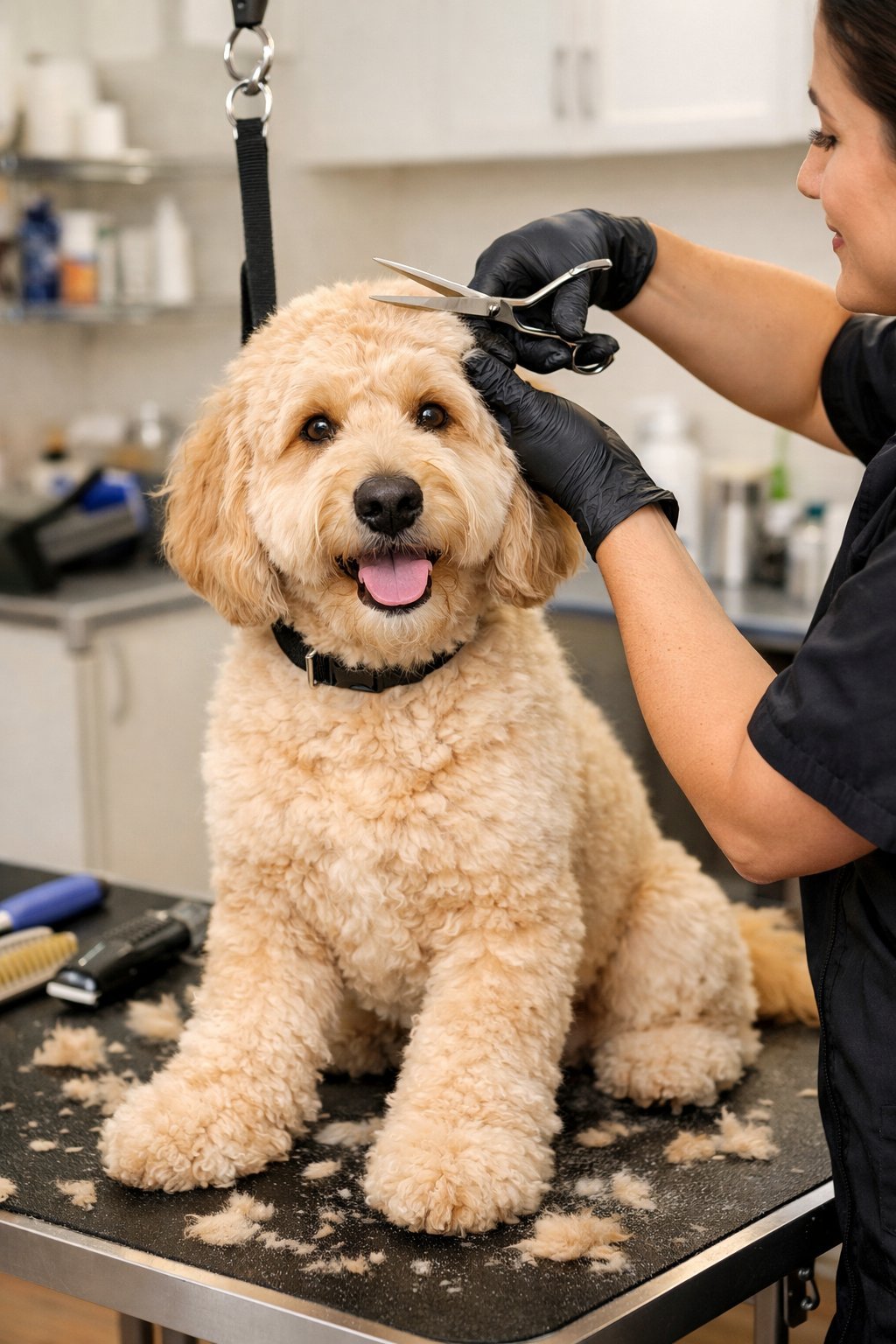
I always work slowly and gently around delicate spots on my doodle. Preventing mats is much easier than trying to remove them later.
Handling Sensitive Areas
I pay special attention when grooming around my doodle’s eyes, ears, paws, and sanitary areas. These spots are super sensitive and need a gentle touch.
For the face and eyes, I use rounded-tip scissors to avoid accidental pokes. I trim carefully so hair doesn’t block my dog’s vision or cause irritation.
When working on the ears, I lift them gently and check for any redness or odor before trimming. I use my fingers to feel for mats behind the ears, since that’s a common trouble spot.
For paw pads, I carefully trim the hair between the toes to prevent ice balls in winter and keep debris out. I hold each paw firmly but gently and always trim away from the pad itself.
Grooming difficult or anxious doodles takes extra patience in these areas. I make sure to give my dog breaks and treats when working on sensitive spots.
This helps create positive vibes around grooming time.
Dealing With Mats and Tangles
I’ve found that regular brushing keeps mats from forming. I brush my doodle at least three times a week and make sure to get through all layers of the coat.
When I spot a mat, I never yank or pull on it. Instead, I hold the hair close to the skin and gently work through the tangle with my fingers.
This helps avoid any painful pulling on my dog’s skin. For really stubborn mats, I grab a detangling spray and start working from the outside of the mat toward the center.
I use a slicker brush or a metal comb, always using short, gentle strokes. If a mat is too tight or close to the skin, I carefully cut it out with scissors.
I always slide a comb between the mat and the skin before cutting. This helps protect my dog from accidental nicks.

