
Easy Dog House Plans: Build a Cozy Shelter for Your Furry Friend in a Weekend

Easy Dog House – Building a dog house might sound hard, but it doesn’t have to be. You can build a cozy dog house for under $100 using basic tools and free plans that include step-by-step instructions.
Most DIY dog house projects can be completed in a weekend, even if you’ve never built anything before.

I’ve gathered the best tips and plans to help you create a comfortable home for your dog. Whether you want a simple design or something more creative, the right plan makes the process easy.
You’ll save money compared to buying a store-bought dog house. Your pet will have a shelter made just for them.
The best part is that building a dog house requires only basic DIY skills. I’ll show you how to pick the right materials, follow simple building steps, and keep your finished dog house in good shape.
Your furry friend deserves a safe and dry place to rest, and you can make it happen.
Key Takeaways
- You can build a budget-friendly dog house in a weekend using free plans with simple instructions
- Choosing the right materials and design helps create a comfortable shelter that fits your dog’s size
- Regular cleaning and basic maintenance keeps your dog house in good condition for years
Benefits of Building an Easy Dog House

Building a dog house myself gives my pet a secure shelter while letting me save money and create exactly what my dog needs.
Comfort and Safety for Your Dog
A dog house provides my pet with a protected space away from rain, wind, and harsh sun. My dog gets a spot to retreat when feeling overwhelmed or tired.
The shelter keeps my pet dry during storms and shaded on hot days. I can add insulation to keep my dog warm in winter and cool in summer.
Proper ventilation prevents the space from getting stuffy or overheated. The raised floor keeps my dog off cold or damp ground.
My dog feels more secure having a space that belongs only to them. This private area reduces stress and gives my pet somewhere to relax.
The structure also protects my dog from wild animals or other outdoor dangers.
Cost-Effective Solution
I can build a dog house for under $100 using basic materials from a hardware store. This costs much less than buying a pre-made dog house that often sells for $200 to $500.
I save even more by using leftover wood or materials from other projects. The tools I need are simple items most people already own.
A saw, hammer, drill, and measuring tape handle most of the work. I don’t need to hire anyone or rent expensive equipment.
Building the dog house myself means I control the budget from start to finish. I can choose cheaper materials without sacrificing quality.
The project typically takes just one weekend to complete.
Customization Options
I can build the dog house to match my dog’s exact size and needs. A small dog needs different dimensions than a large breed.
I measure my pet to ensure the space fits properly. The design options let me add features store-bought houses don’t include.
I can install a removable roof for easy cleaning or add extra windows for better airflow. My dog’s name or decorative trim makes the house unique.
I choose materials based on my climate and budget. Cedar naturally resists rot and insects.
Plywood with weatherproof paint works well in dry areas. I can also match the dog house style to my home’s exterior for a cohesive look in my yard.
Choosing the Right Materials for an Easy Dog House

I’ve found that picking durable wood, considering budget-friendly alternatives, and using non-toxic finishes makes building a dog house simple and safe for your pet.
Weather-Resistant Woods
Cedar and redwood are my top picks when choosing the best material for a dog house. These woods naturally resist rot and insects without needing chemical treatments.
Cedar costs less than redwood but still lasts for years. I like that it also smells nice and repels bugs naturally.
Redwood handles moisture even better but will increase your budget. Pressure-treated pine works well too, especially for the base and floor.
It costs much less than cedar or redwood. Just make sure to let it dry completely before your dog uses the house, since the chemicals need time to settle.
Plywood is easy to work with and affordable. I recommend using exterior-grade plywood that’s at least half an inch thick.
It won’t last as long as solid wood, but a good sealant helps it hold up to rain and snow.
Eco-Friendly and Budget Materials
Recycled plastic lumber is becoming popular for dog houses. It never rots, doesn’t need painting, and cleans easily with just soap and water.
I’ve seen these materials last decades without any maintenance. Pallets offer a free or cheap option if you’re on a tight budget.
Many businesses give them away. Just inspect each pallet carefully for broken boards, nails sticking out, or chemical stains before using them.
Corrugated plastic sheets work great for roofing. They’re lightweight, waterproof, and easy to cut with basic tools.
I’ve used them on several dog houses and they keep rain out perfectly. Straw bales provide excellent insulation for winter dog houses.
They’re cheap and natural. You can use them as temporary walls or pack them around a simpler structure.
Safe Paints and Finishes
I always choose water-based, non-toxic paints for dog houses. Regular house paint contains chemicals that can harm dogs if they chew or lick the walls.
Look for paints labeled as zero-VOC or low-VOC. VOC stands for volatile organic compounds, which are the harmful fumes in paint.
Pet-safe paints are available at most hardware stores and cost about the same as regular paint. Natural oils like linseed or tung oil seal wood without toxic chemicals.
I apply two or three coats and let each one dry completely. These oils soak into the wood and protect it from moisture.
Skip the paint entirely if you’re using cedar or redwood. A clear, pet-safe sealant is all you need.
This keeps the natural wood look while still protecting against weather. Wait at least a week after painting before letting your dog use the house.
This gives finishes time to cure and release any remaining fumes.
Step-by-Step Guide to Building an Easy Dog House
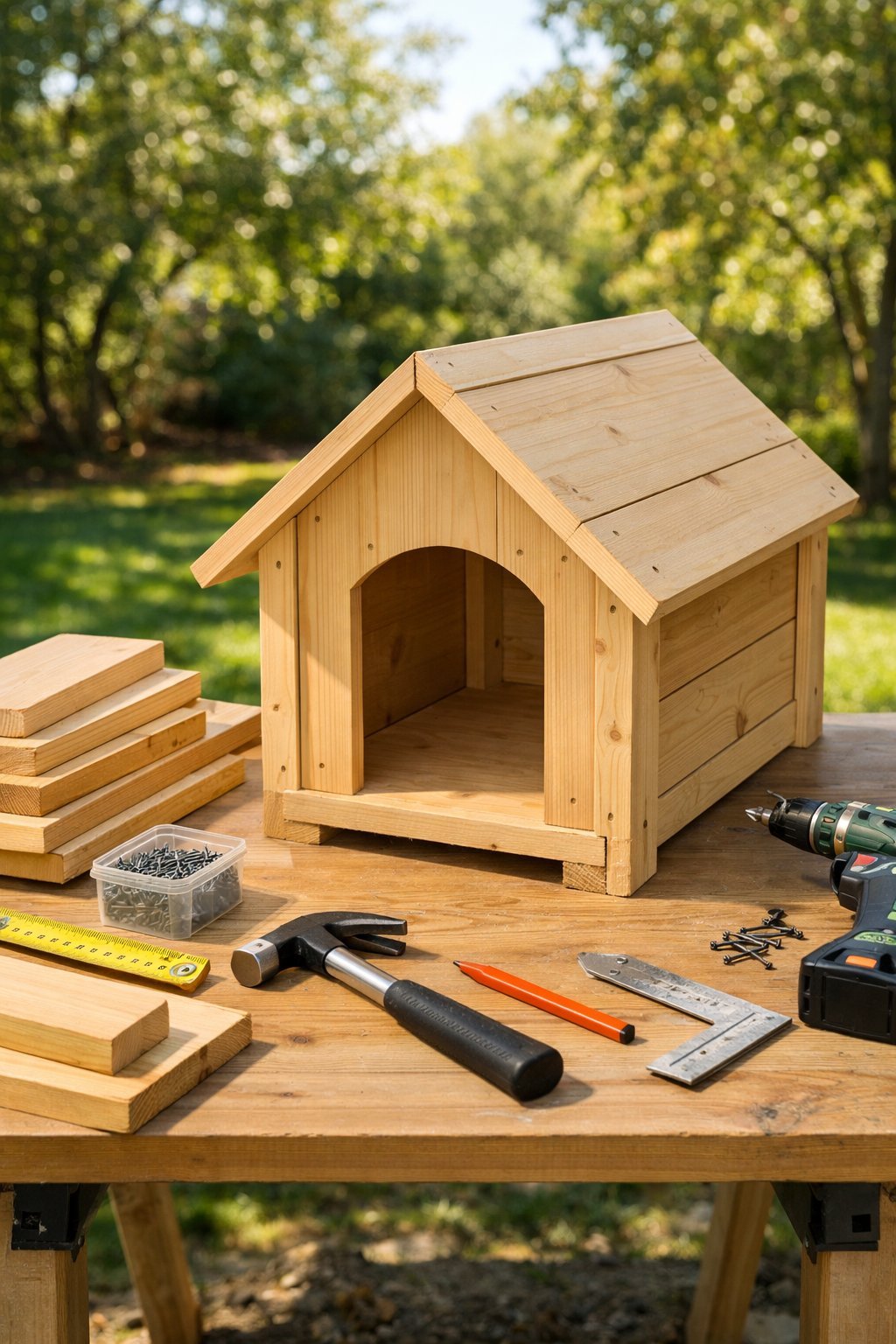
Building a dog house requires basic tools, simple techniques, and a clear assembly process. I’ll walk you through what you need and how to put everything together.
Essential Tools and Supplies
I recommend gathering all your materials before starting. You’ll need a saw (circular or hand saw), drill with bits, measuring tape, carpenter’s square, and a hammer or nail gun.
For materials, I use pressure-treated lumber for the frame, exterior-grade plywood for walls and roof, and wood screws or galvanized nails. Pre-cutting your wood makes the construction process smoother.
Basic Supply List:
- 2×4 lumber for framing
- 3/4-inch plywood sheets
- 1-inch wood screws
- Exterior paint or stain
- Roofing material (shingles or metal)
- Sandpaper
- Wood glue
I also keep safety glasses and work gloves on hand. Most plans can be completed for under $100, making this an affordable project.
Simple Construction Techniques
I start by building a base frame using 2x4s cut to size. The frame should be slightly larger than my dog when lying down.
I measure my dog from nose to tail and add 6-8 inches. For walls, I cut plywood panels to fit the frame dimensions.
I make sure to cut a door opening on one side that’s tall enough for my dog to enter comfortably. The opening should be about 75% of my dog’s shoulder height.
I use wood screws instead of nails because they hold better and won’t pop out over time. I apply wood glue to joints before screwing them together for extra strength.
The roof should have a slight slope for water drainage. I typically use a 15-20 degree angle, which is easy to achieve by making one wall slightly taller than the other.
Assembling the Dog House
I begin by attaching the floor to the base frame with screws every 8 inches along the perimeter. Next, I stand up the wall panels and secure them to the base and to each other at the corners.
I make sure all corners are square using my carpenter’s square before fully tightening screws. This prevents gaps and ensures stability.
For the roof, I attach plywood panels to the top of the walls, ensuring they overhang by 2-3 inches on all sides for rain protection. I then add roofing material using roofing nails or staples.
I sand all rough edges to prevent splinters and apply two coats of exterior paint or weatherproof stain. Finally, I add a raised floor inside using small wooden blocks to keep my dog off the cold ground.
Design Ideas for Easy Dog Houses

Simple dog house designs can fit any space and budget while keeping your pet comfortable. From small footprints to wheels that roll, these ideas help you pick the right style for your furry friend.
Compact Dog House Styles
I love compact dog houses because they work great for small yards or indoor spaces. An A-frame design is one of the easiest styles to build and uses minimal materials.
This triangular shape sheds rain naturally and needs just a few boards to construct. For tight spaces, I recommend a basic box-style house with a flat or slightly sloped roof.
These budget-friendly dog house plans can be built for under $100 and take up less room than elaborate designs. Corner dog houses fit perfectly against walls or fences to save even more space.
I suggest measuring your dog first so they can stand, turn around, and lie down comfortably inside. Add 2-4 inches to their height and length for the right fit.
Portable Dog House Designs
Portable dog houses let me move my pet’s shelter wherever needed. Mobile dog house options include wheels, handles, or lightweight frames that make relocation simple.
I often see designs with caster wheels attached to the bottom corners. These roll smoothly across patios or garage floors.
For camping trips, collapsible fabric houses pack flat and set up in minutes. Lightweight wooden houses with built-in handles work well too.
I can carry these from the backyard to the front porch depending on weather or shade needs. Some portable designs even fold down for storage during winter months.
Creative Decorating Tips
I enjoy personalizing dog houses with paint colors that match my home’s exterior. Non-toxic outdoor paint in blues, greens, or earth tones looks professional and protects the wood.
Adding your dog’s name above the door makes it special. I use stencils or vinyl letters for clean results.
Small shutters, flower boxes, or a mini porch rail give cozy kennel designs extra charm without much cost. Inside, I place washable mats or old blankets for cushioning.
Stick-on hooks hold leashes or toys on the walls. A battery-powered puck light helps my dog see at night without running electrical cords.
Tips for Maintaining and Cleaning Your Dog House
I’ve found that keeping my dog’s house clean requires regular attention to prevent dirt buildup, odors, and unwanted pests. Simple weekly cleaning routines combined with seasonal deep maintenance will keep the space fresh and safe for my furry friend year-round.
Routine Cleaning Advice
I remove all bedding and toys from my dog’s house once a week for a thorough cleaning.
I shake out or vacuum loose dirt and debris from the floor and corners.
For the interior, I mix warm water with a pet-safe cleaner or simple dish soap.
I scrub all surfaces with a brush, paying extra attention to corners where grime collects.
I rinse everything with clean water and let it air dry completely before putting bedding back inside.
I wash my dog’s bedding in hot water weekly to kill bacteria and remove odors.
Between washes, I spot-clean any accidents immediately to prevent stains and smells from setting in.
Weekly cleaning checklist:
- Remove and shake out all bedding
- Vacuum or sweep the floor
- Wipe down walls and ceiling
- Clean food and water bowls
- Check for damage or wear
I also wipe down the exterior with a damp cloth to remove dust and dirt.
This helps me spot any damage early.
Seasonal Maintenance Steps
Every spring and fall, I do a deep clean of my dog’s house.
I take everything out and inspect the structure for cracks, rot, or damage that needs repair.
I use a pressure washer or garden hose to clean the exterior thoroughly.
For wooden houses, I check if the paint or sealant needs touching up to protect against weather damage.
I apply a fresh coat when needed to prevent water from seeping into the wood.
During winter prep, I add extra insulation or weather stripping around doors to keep cold air out.
I also elevate the house slightly if it sits directly on the ground to prevent moisture buildup underneath.
In summer, I make sure the house has proper ventilation to prevent overheating.
I check that vents aren’t blocked and consider adding shade structures if the house sits in direct sunlight all day.
I replace worn bedding seasonally and switch to lighter or heavier materials based on the temperature.
Keeping the Dog House Pest-Free
I inspect my dog’s house monthly for signs of fleas, ticks, ants, or other pests. I look for droppings, eggs, or the insects themselves in corners and bedding.
To prevent infestations, I keep the area around the house clean. I trim back vegetation that touches the structure, as pests often use plants as bridges to get inside.
I also make sure food bowls aren’t left in the house overnight since they attract ants and rodents.
I use pet-safe pest deterrents like diatomaceous earth sprinkled around the outside perimeter. This natural powder kills crawling insects without harming my dog.
For the interior, I wash bedding in hot water regularly since heat kills flea eggs and larvae.
If I spot spiders or wasps building nests, I remove them immediately before they become established. I check under the roof and in corners where they like to hide.
Natural pest prevention methods:
- Cedar chips in bedding (repels fleas)
- Regular vacuuming
- Keeping grass short around the house
- Sealing cracks and gaps
- Using elevated feeders
I avoid chemical pesticides inside the dog house since my pet spends time there and could get sick from exposure.
