
Easy Dog House Plans for Your Furry Friend’s Perfect Outdoor Retreat

Easy Dog House Plans – Building a dog house might sound hard, but it’s actually one of the easiest weekend projects you can do for your pet.
You can build a simple dog house in just a few hours using basic tools and materials that cost less than $100.
Most DIY dog house plans work for all skill levels, so you don’t need to be an expert builder.
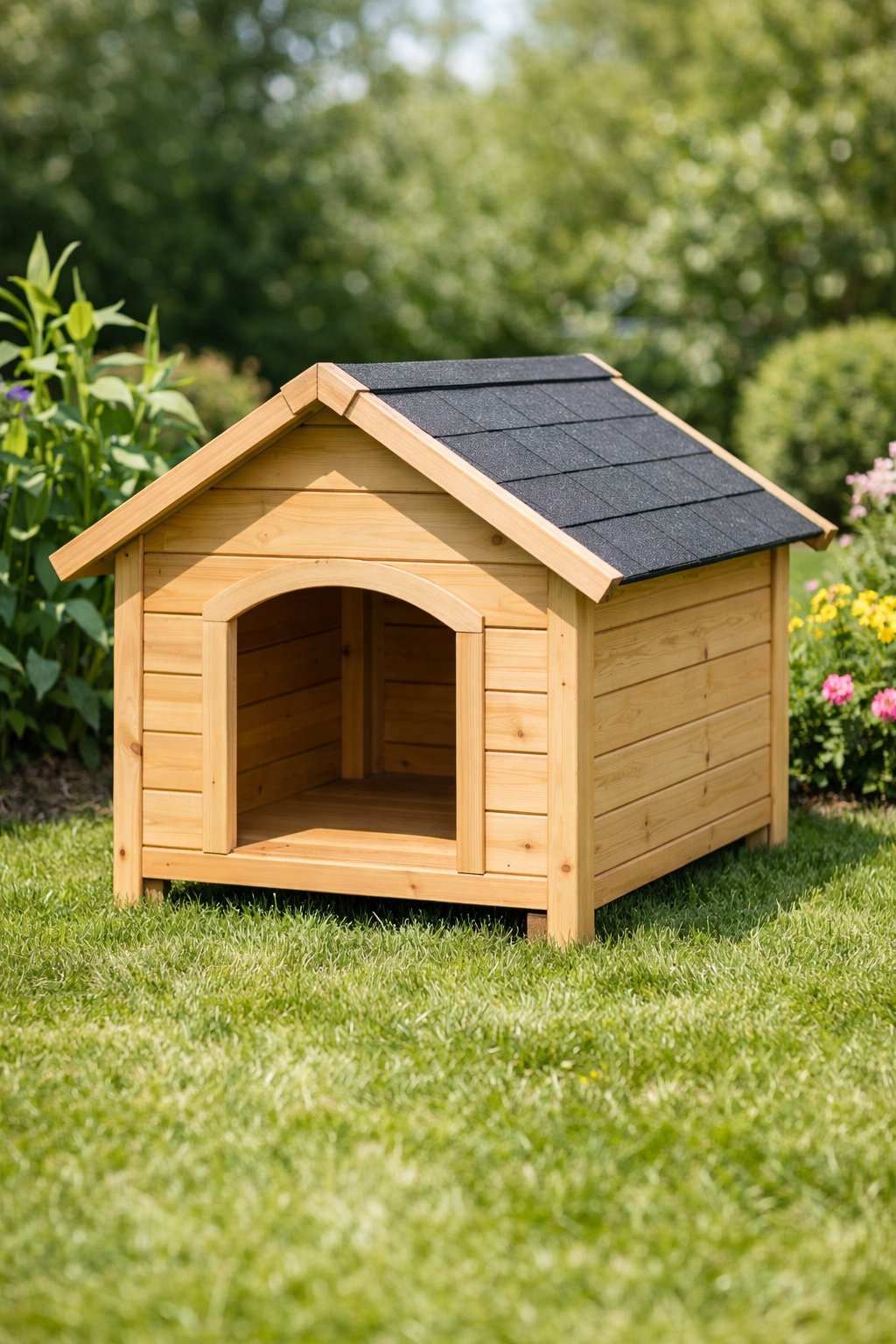
I’ve put together this guide to show you how to create a safe and comfortable home for your dog without spending a lot of money or time.
Whether your dog lives outside or just needs a cozy spot in the yard, a homemade dog house gives them shelter from rain, sun, and cold weather.
The best part about building a dog house yourself is that you can make it the perfect size for your pet and add your own style.
From simple A-frame designs to more creative options, you’ll find a plan that fits your skills and your dog’s needs.
Key Takeaways
- You can build a basic dog house in one weekend using simple materials and tools you might already have
- Most dog house projects cost under $100 and work well for beginners with no special building experience
- Custom features like insulation, weatherproofing, and proper sizing keep your dog safe and comfortable year-round
Easy Dog House Plans Basics
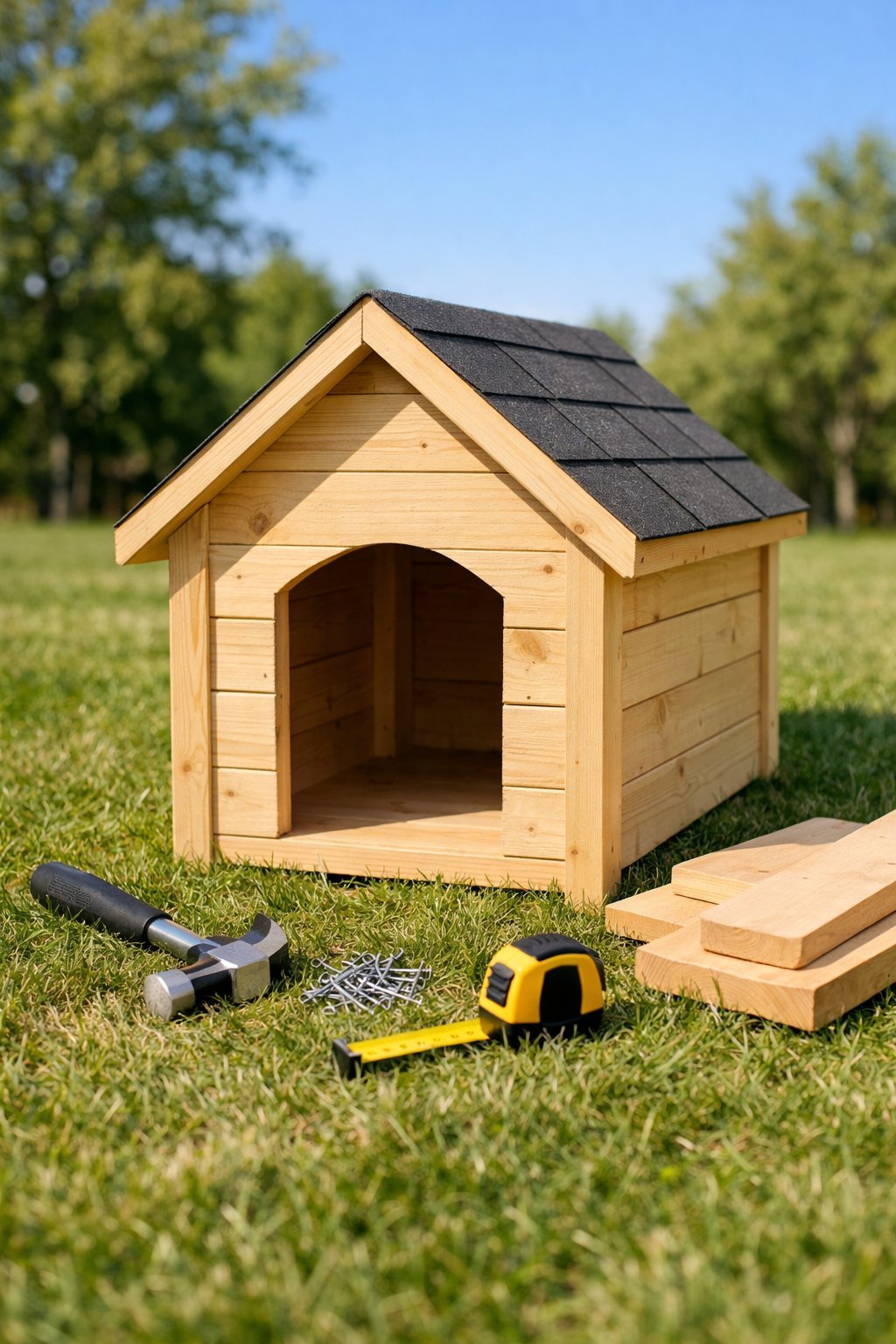
Building a dog house doesn’t require advanced carpentry skills or expensive tools.
The right design, basic comfort features, and beginner-friendly materials make the project manageable for anyone willing to spend a weekend creating shelter for their pet.
What Makes a Dog House Easy to Build
I’ve found that simple designs work best for first-time builders.
A-frame and basic rectangular structures require fewer cuts and less precision than complex designs.
Pre-cut lumber saves time and reduces mistakes.
Most home improvement stores will cut wood to your measurements for free or a small fee.
Basic tools are all you need.
I recommend having a saw, drill, hammer, measuring tape, and level.
These items cover most construction steps.
Clear instructions matter more than fancy features.
I look for plans that include material lists and step-by-step diagrams.
Plans with PDF blueprints help me visualize each stage before I start cutting.
Modular construction makes the job easier.
Building walls separately and then assembling them reduces awkward angles and heavy lifting.
Essential Features for Comfort
My dog needs protection from wind, rain, and extreme temperatures.
I make sure the entrance faces away from prevailing winds in my area.
Raised floors keep the interior dry.
I add 2-4 inches of clearance between the ground and the floor to prevent moisture from seeping in.
Key comfort elements include:
- Sloped roof for water drainage
- Proper ventilation to prevent condensation
- Entry size matching my dog’s measurements
- Insulation for temperature control
- Removable roof for easy cleaning
I measure my dog while he’s standing and lying down.
The house should be tall enough for him to stand and wide enough to turn around comfortably.
Too much extra space makes heating difficult in winter.
Bedding creates a cozy spot inside.
I use cedar shavings or washable blankets that I can change regularly.
Choosing Materials Suitable for Beginners
I prefer plywood for walls and floors because it’s affordable and easy to work with.
Three-quarter-inch exterior-grade plywood provides good durability.
Cedar and pine are my top wood choices.
Cedar naturally resists rot and insects, while pine costs less and works fine with proper sealing.
Beginner-friendly materials:
| Material | Best Use | Cost Level |
|---|---|---|
| Plywood | Walls, floor, roof | Low |
| 2×4 lumber | Frame | Low |
| Asphalt shingles | Roof covering | Low |
| Wood stain | Weatherproofing | Low |
I avoid pressure-treated wood for interior surfaces since chemicals can irritate my dog’s skin.
It’s fine for the base or frame that won’t contact my pet directly.
Screws work better than nails for beginners.
They’re easier to remove if I make a mistake and create stronger joints.
Building a dog house for under $100 is realistic with smart material choices.
I shop sales at hardware stores and check for scrap wood that works for smaller pieces.
Step-by-Step Building Guide
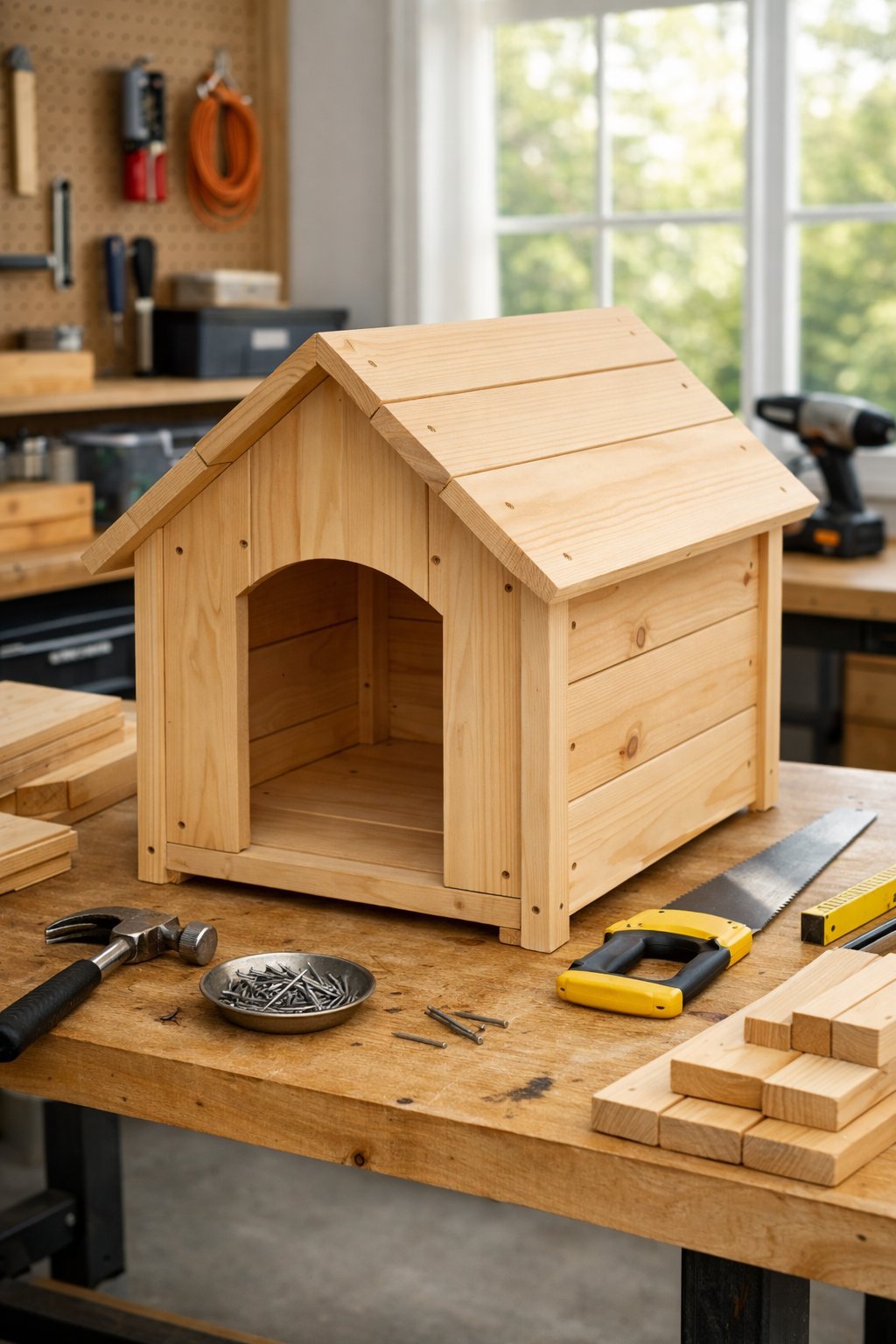
Building a dog house requires proper tools, precise cutting, and careful assembly to create a sturdy shelter your dog will enjoy for years.
Gathering Tools and Supplies
I always start by collecting everything I need before beginning construction.
This saves time and prevents frustrating trips to the hardware store mid-project.
For tools, I gather a circular saw or hand saw, drill with bits, measuring tape, carpenter’s square, and a pencil for marking.
I also grab sandpaper, a hammer, and safety glasses.
Essential Materials:
- Plywood sheets (3/4 inch for the floor, 1/2 inch for walls and roof)
- 2×4 lumber for framing
- Wood screws (2.5 and 3 inches)
- Wood glue
- Exterior paint or stain
- Roofing material (shingles or waterproof coating)
Many budget-friendly plans can be completed for under $100, making this an affordable project.
I recommend choosing pressure-treated or cedar wood for outdoor durability.
Cutting and Assembling the Frame
Pre-cutting all wood pieces ensures I have materials ready once construction begins.
I measure my dog while standing and add 3-4 inches to determine the interior height.
I cut four 2×4 pieces for the base frame to match my planned dimensions.
Then I cut wall studs and attach them to the base using 3-inch screws.
The doorway should be sized so my dog can enter comfortably.
I position it off-center to create a windbreak inside.
I secure the plywood floor to the base frame, then attach wall panels to the studs.
I always check that corners are square using my carpenter’s square.
This prevents wobbling and ensures the roof fits properly later.
Adding the Roof and Finishing Touches
I build the roof with a slight slope to allow water runoff.
A slanted or A-frame design works better than a flat roof in rainy climates.
I attach roof panels at an angle, leaving a small overhang on all sides for weather protection.
I seal joints with wood glue before screwing panels together for extra strength.
After assembly, I sand rough edges to prevent splinters.
I apply two coats of exterior paint or waterproof sealant to protect against moisture and UV damage.
I add shingles or roofing felt on top for extra weatherproofing.
Inside, I place a raised floor or bedding to keep my dog comfortable and dry.
Some people add decorative touches like trim or a nameplate to personalize their creation.
Best Designs for Beginners
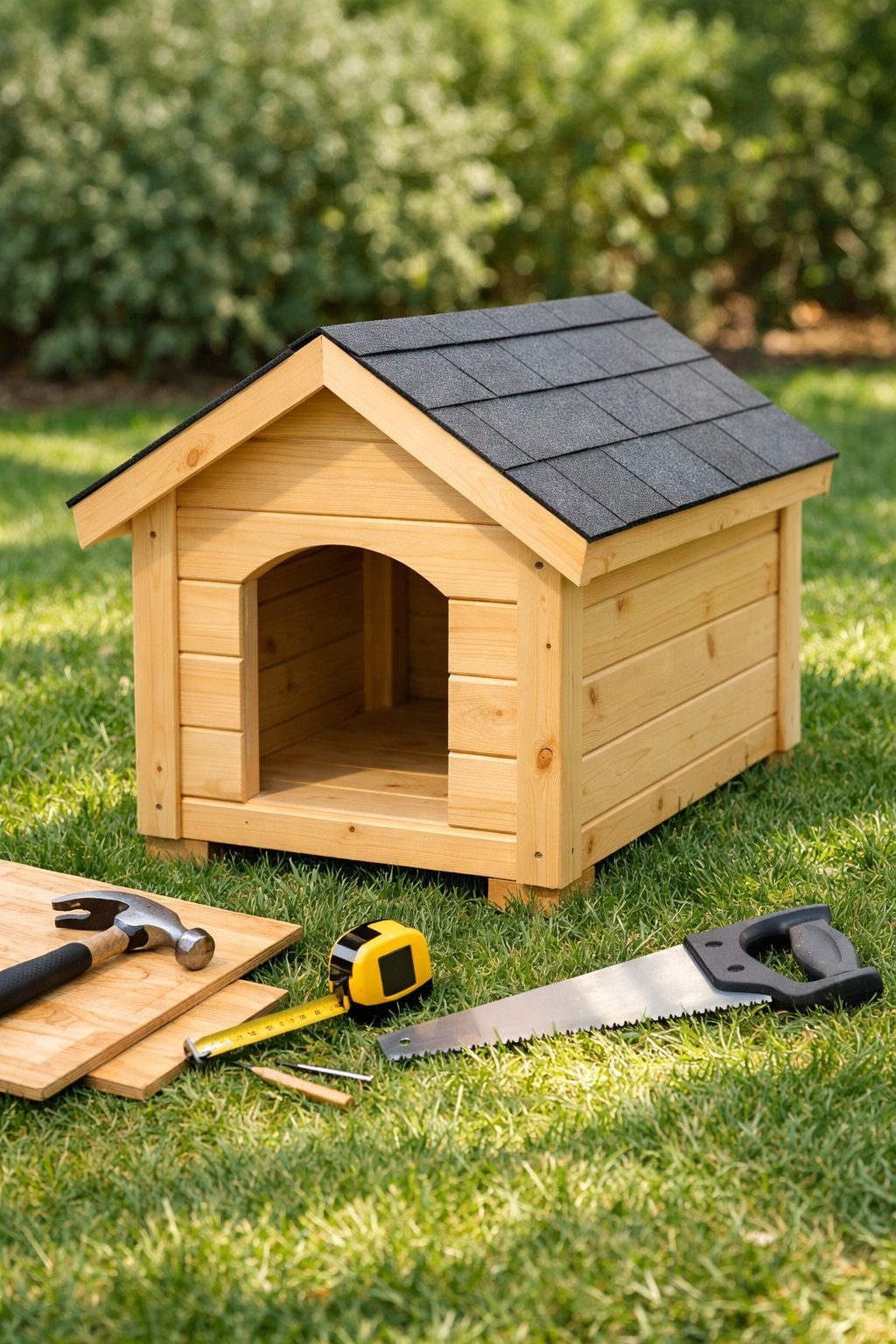
A-frame structures offer the easiest construction method for first-time builders.
Eco-friendly materials keep costs down and portable options give you flexibility to move the house around your yard.
Simple A-Frame Dog House
The A-frame design is my top pick for anyone starting their first dog house project.
This style uses just two large panels that meet at the top to form a triangular shape, which means fewer cuts and less measuring than other designs.
I recommend this design because it only requires basic tools like a saw, drill, and hammer.
The slanted roof naturally sheds rain and snow without needing complex waterproofing.
You can build budget-friendly A-frame houses for under $100 using plywood sheets and 2×4 lumber.
The construction takes just a few hours.
I suggest making the front panel slightly shorter to create an entrance opening.
You can add a hinged roof section for easy cleaning inside.
Eco-Friendly Options
I like using recycled materials to build dog houses because they save money and reduce waste.
Old wooden pallets work great as walls and flooring after a good sanding.
Reclaimed barn wood adds character while keeping your budget low.
For insulation, I stuff the walls with old blankets or recycled denim insulation.
These materials keep your dog warm in winter without the chemicals found in new insulation products.
You can seal gaps with non-toxic caulk made from plant-based ingredients.
I paint the exterior with zero-VOC paint to protect the wood from weather.
A living roof covered in drought-resistant plants adds extra insulation and looks nice in your yard.
Portable Dog House Ideas
Portable houses let me move my dog’s shelter to follow shade throughout the day.
I add wheels or build lightweight frames that one person can carry easily.
The mobile dog house design works well for camping trips or visiting family.
I use lighter materials like cedar fence boards instead of heavy plywood.
Adding handles on both ends makes lifting much easier.
I keep portable houses under 40 pounds for small to medium dogs.
For larger breeds, I attach locking caster wheels to the bottom so I can roll it instead of lifting.
A detachable roof makes these houses fold flat for storage or transport in my vehicle.
Customizing Your Easy Dog House
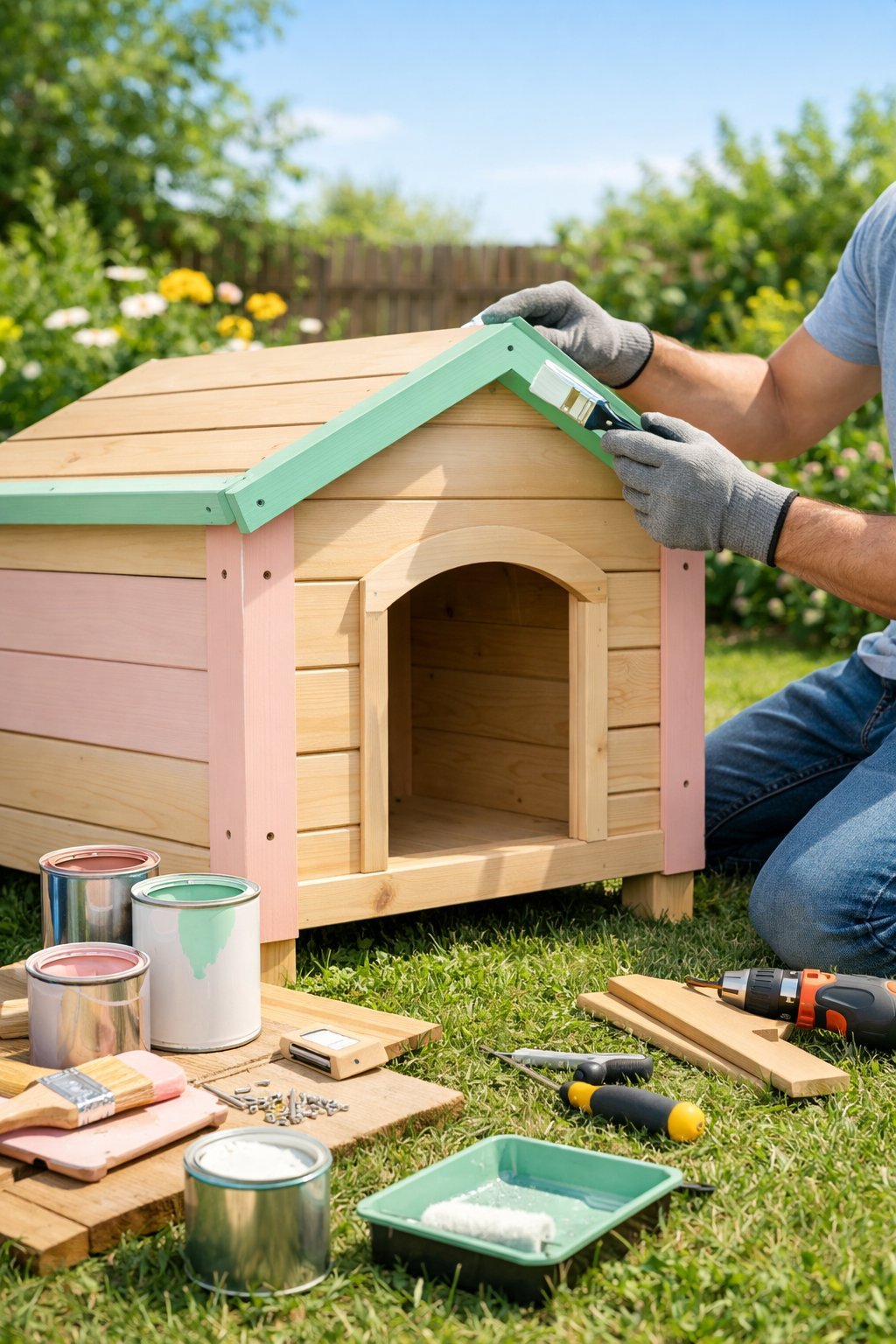
Once you finish building, I add personal touches through paint choices, weather protection upgrades, and comfort additions that make the space more inviting for my dog.
Paint and Decoration Tips
I always use pet-safe, non-toxic paint when decorating a dog house.
Regular paint can contain harmful chemicals that my dog might lick or inhale.
I choose exterior-grade paint that holds up against rain and sun.
Light colors work best because they reflect heat during summer months.
Dark colors absorb heat and make the inside too hot.
I’ve found that neutral tones like beige, light gray, or cream look good in most yards.
Before painting, I sand any rough spots and apply a primer coat.
This helps the paint stick better and last longer.
I wait at least 24 hours between coats so everything dries completely.
For decoration, I add my dog’s name above the door using stencils or vinyl letters.
Some people paint paw prints or bones on the sides.
I keep decorations simple so they don’t peel or fade quickly.
Seasonal Weatherproofing
I prepare the dog house differently based on the season.
Winter requires insulation to keep my dog warm.
I add foam board insulation to the walls and ceiling, then cover it so my dog can’t chew it.
I hang a plastic or rubber flap over the doorway to block cold wind.
The flap should be big enough to cover the opening but light enough for my dog to push through easily.
I also raise the house a few inches off the ground using blocks or a platform to prevent cold from seeping up through the floor.
For summer, I focus on ventilation and shade.
I drill small holes near the roof line to let hot air escape.
I position the house in a shaded spot or add an awning over the entrance.
I check the roof for leaks before rainy seasons start.
I apply waterproof sealant to any cracks or gaps.
I make sure the roof has a slight slope so water runs off instead of pooling.
Adding Comfort Features
I place a raised bed or thick cushion inside so my dog isn’t lying directly on the floor.
Elevated beds allow air to flow underneath and stay cleaner than regular cushions.
I choose washable covers that I can remove and clean regularly.
I attach a food and water bowl holder to the porch area if the dog house has a covered entrance.
This keeps bowls stable and off the ground.
I use stainless steel bowls because they don’t absorb odors or bacteria like plastic does.
Some dogs like having a toy basket or storage box attached to the outside wall.
I mount it low enough that I can reach it easily.
A small solar light near the entrance helps me see at night when I need to check on my dog.
Safety and Maintenance Tips
A dog house needs regular checks and care to keep your pet safe and comfortable. I focus on three key areas: looking for dangers, keeping things clean, and stopping pests from moving in.
Inspecting for Hazards
I check my dog’s house at least once a month for anything that could hurt them. I look for exposed nails, screws, or staples that might have popped out.
Sharp edges on wood or metal can cut paws or skin. I run my hand along all surfaces to feel for splinters or rough spots.
After storms or heavy weather, I do an extra inspection since wind and rain can loosen parts or create new problems. I test the door and any moving parts to make sure they work smoothly.
Hinges should be tight and not rusty. I also check that the structure stays away from hazards like sharp objects or busy areas.
The roof needs special attention. I look for loose shingles, cracks, or holes where water could drip through.
I make sure the floor stays dry and solid without any soft or rotting spots.
Cleaning and Upkeep
I clean my dog’s house every two weeks to keep it fresh and healthy. I remove all bedding and sweep out dirt, hair, and debris first.
I wash the inside with pet-safe cleaner and warm water. A mixture of mild soap works well without harsh chemicals.
I scrub the walls, floor, and ceiling with a brush. After washing, I let everything dry for at least 24 hours before my dog goes back inside.
Moisture can lead to mold and mildew problems. I use detachable bedding that I can throw in the washing machine.
I check the paint or sealant every few months. When it starts to chip or fade, I apply a fresh coat.
This protects the wood from water damage and rot.
Pest Prevention
I keep bugs and rodents away by sealing any gaps or cracks in the walls and floor. Even small openings can let pests inside.
I raise the dog house off the ground with blocks or a platform. This stops moisture buildup and makes it harder for pests to nest underneath.
I check under the house regularly for signs of animals or insects.
I avoid leaving food or treats inside the dog house. Crumbs and spills attract ants, flies, and mice.
I store all food in sealed containers away from the shelter.
I inspect for pest signs like droppings, chewed wood, or webs. Checking after rain or snow is especially important since pests look for dry shelter.
I use pet-safe pest control products around the outside if needed.

