Frozen Dog Treats: Cool and Healthy Homemade Ideas for Dogs

When summer heat rolls around, I’m always looking for ways to keep my dog cool and happy. Frozen dog treats are simple homemade snacks made from dog-safe ingredients like yogurt, peanut butter, and fruit that help keep your pup refreshed and hydrated on hot days.
They’re also a great way to give your dog a special treat without the mystery ingredients found in store-bought options.
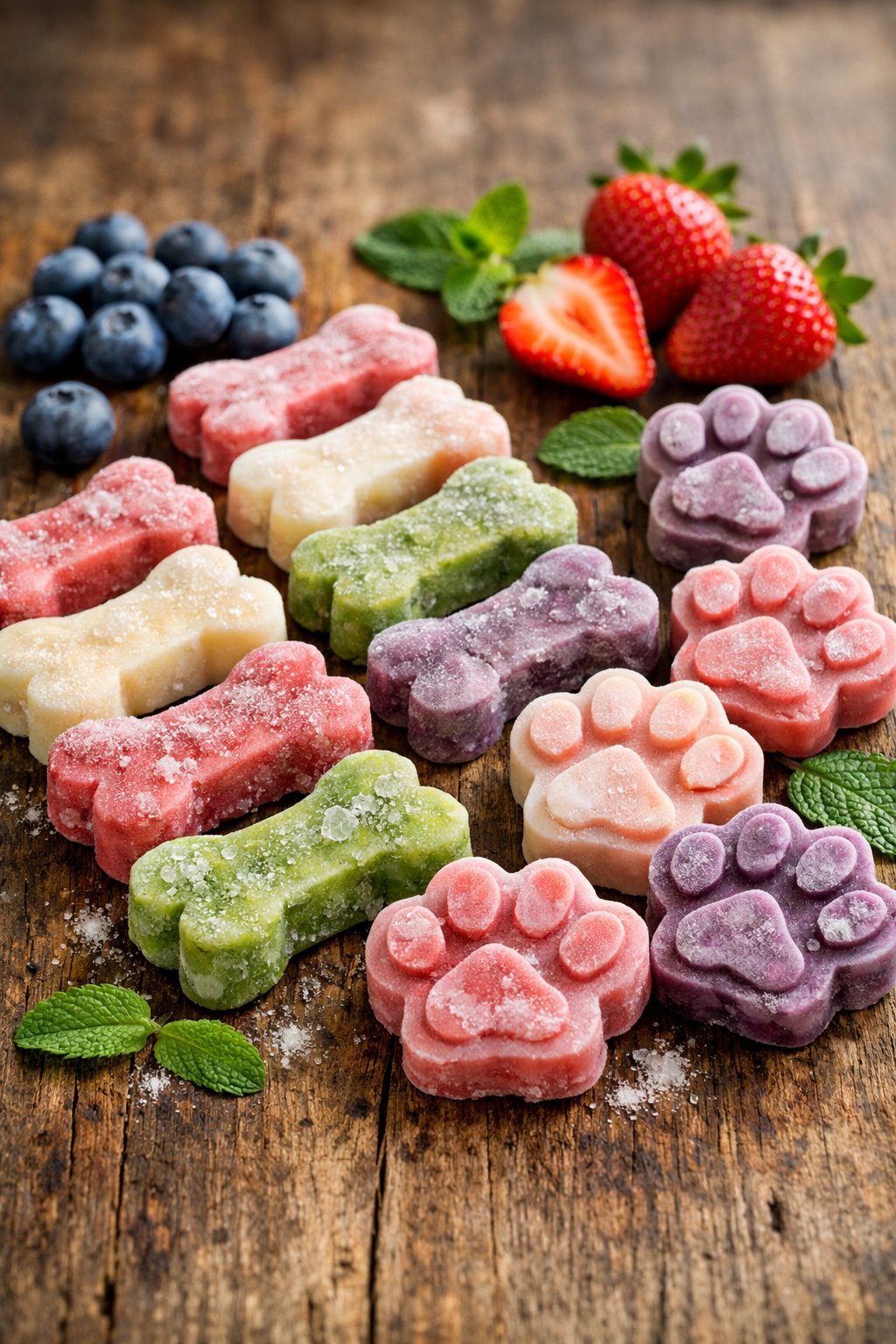
Making frozen dog treats at home is easier than you might think. You probably already have most of the ingredients in your kitchen right now.
With just a blender, some silicone molds or ice cube trays, and a freezer, you can create tasty treats your dog will love. I’ve put together this guide to show you how to make frozen dog treats that are both safe and delicious.
You’ll learn which ingredients work best, what to avoid, and get simple recipes that take just minutes to prepare.
Key Takeaways
- Frozen dog treats help keep your pup cool while using simple ingredients you already have at home
- Always use dog-safe ingredients and avoid foods that are toxic to dogs
- These treats should make up no more than 10% of your dog’s daily calorie intake
What Are Frozen Dog Treats?
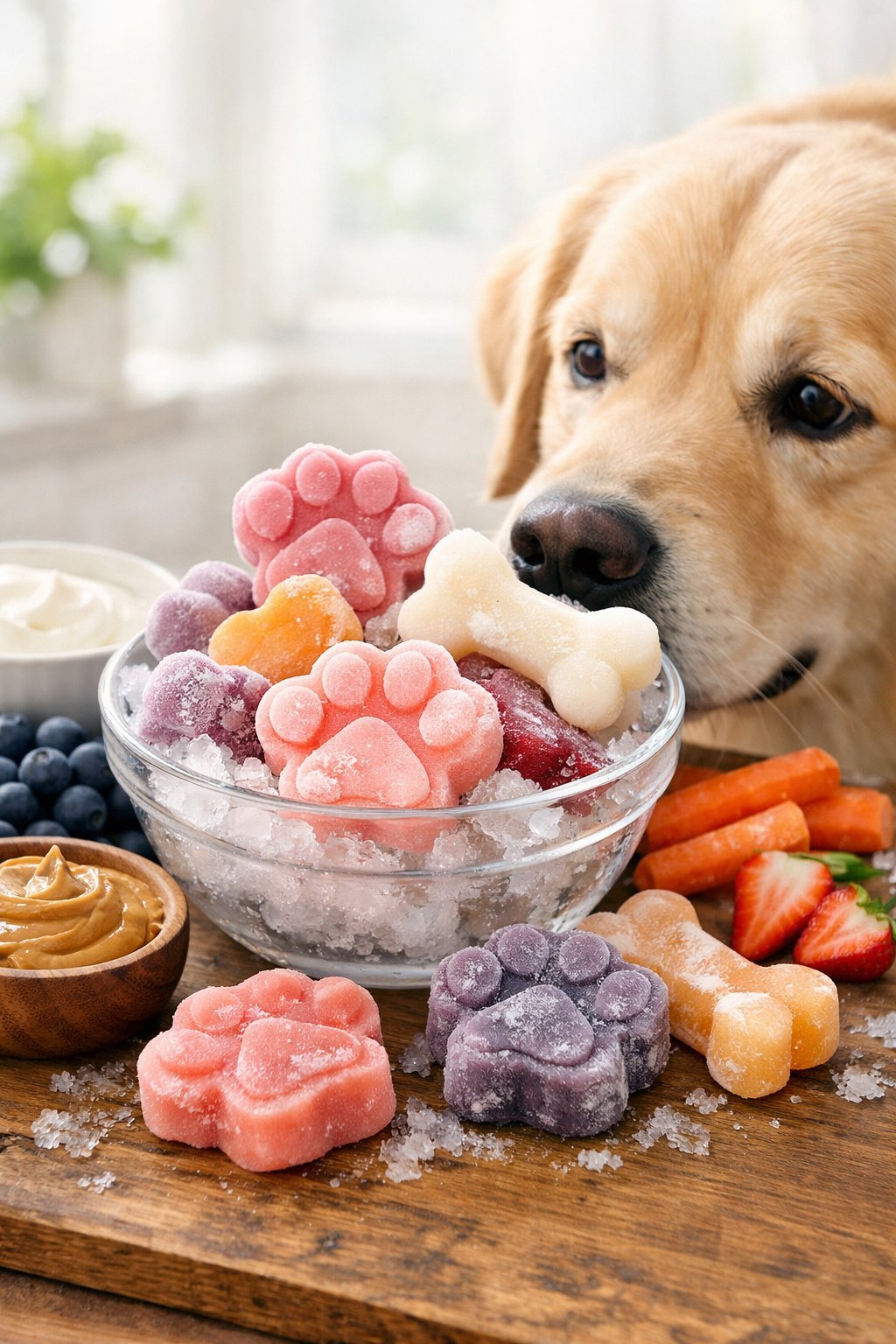
Frozen dog treats are cold snacks made specifically for dogs that combine healthy ingredients like yogurt, fruit, or broth and freeze them into a solid form. They provide cooling relief on hot days while delivering nutrition and entertainment for your pup.
Benefits of Frozen Dog Treats
Frozen treats offer multiple advantages beyond just being a tasty snack. They help dogs cool down during warm weather by lowering their body temperature from the inside out.
This makes them perfect for summer days or after exercise. These treats also provide mental stimulation and enrichment.
When I give my dog a frozen treat, it keeps him busy for 15 to 20 minutes as he licks and chews. This extended eating time can reduce boredom and anxiety.
Frozen treats support dental health by helping clean teeth as dogs gnaw on them. The cold temperature can also soothe sore gums in teething puppies.
For dogs on weight management programs, frozen treats made with low-calorie ingredients like watermelon or bone broth offer a satisfying reward without excess calories. Hydration is another key benefit.
Many frozen treats contain water-rich ingredients that help keep dogs hydrated during hot months when they need extra fluids.
Popular Types of Frozen Dog Treats
Pupsicles or pup-sicles represent one of the most common frozen treat styles. These typically use popsicle molds and include a base of plain yogurt, kefir, or pureed fruit mixed with dog-safe ingredients.
Frozen Kong stuffing involves filling a Kong toy with ingredients like peanut butter, mashed banana, or wet dog food and freezing it solid. This creates an interactive treat that challenges dogs mentally.
Ice cube treats are the simplest option. I often freeze bone broth, diluted goat milk, or small pieces of fruit in standard ice cube trays for quick treats.
Fruit-based frozen treats use ingredients like blueberries, strawberries, or watermelon as the main component. Some recipes blend fruit with yogurt while others freeze whole fruit pieces.
Savory frozen treats appeal to dogs who prefer meaty flavors over sweet ones. These use chicken broth, beef broth, or pureed meat as the base ingredient.
How Frozen Dog Treats Differ from Regular Treats
The temperature and texture create the biggest differences. Regular treats are shelf-stable at room temperature while frozen treats must stay in the freezer until serving time.
This cold temperature provides cooling benefits that standard treats cannot offer. Frozen treats take much longer to consume.
A regular biscuit disappears in seconds but a frozen treat can occupy a dog for 10 to 30 minutes depending on size. Ingredient profiles often differ too.
Frozen treats typically contain more moisture-rich ingredients like yogurt, broth, or pureed vegetables compared to the dry, crunchy composition of traditional biscuits. This higher moisture content makes them more hydrating.
Storage requirements also vary. Regular treats sit in a pantry while frozen options require freezer space and planning ahead since they need several hours to freeze solid before serving.
Choosing Dog-Safe Ingredients
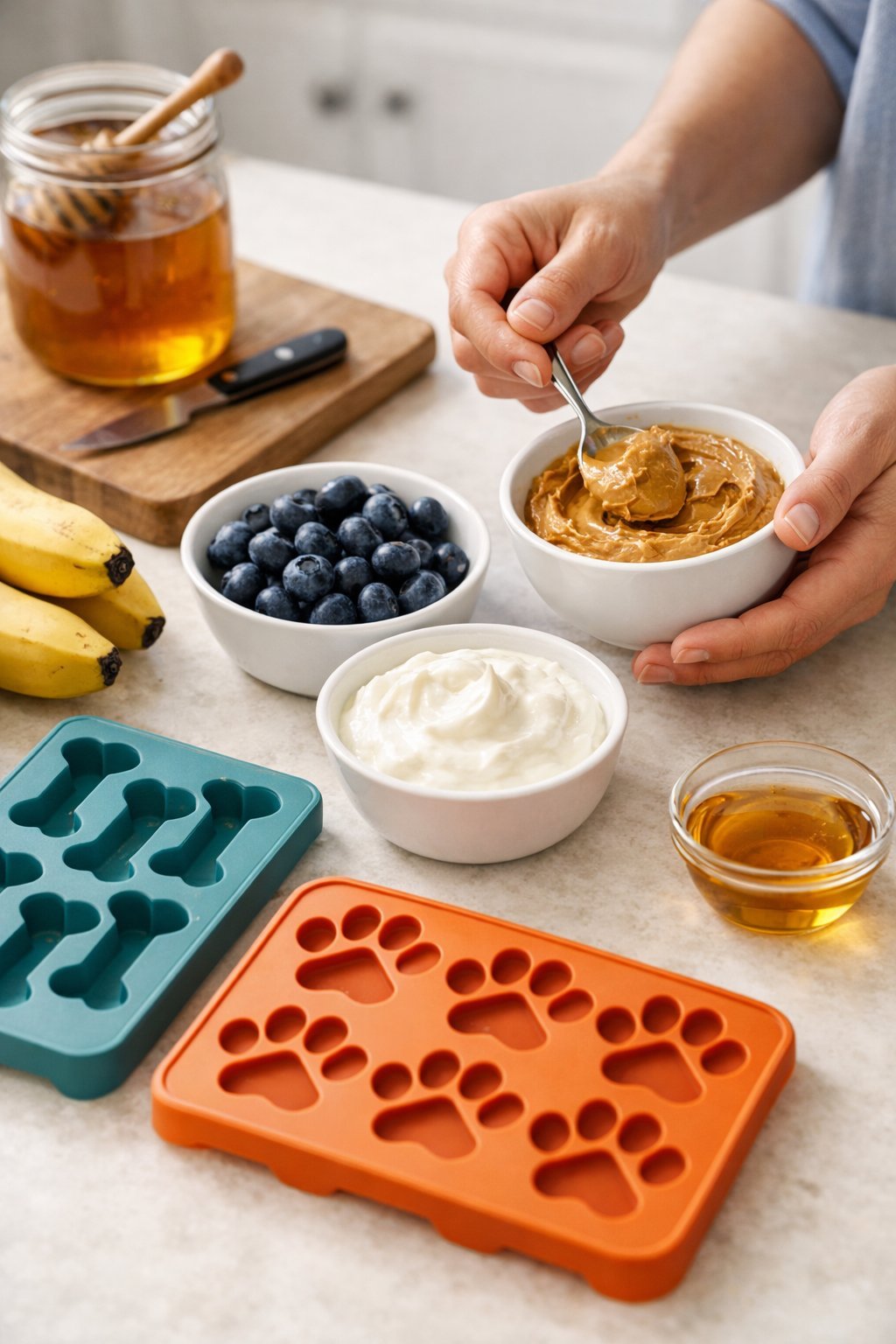
When making frozen treats for your dog, stick to simple whole foods like plain yogurt, pumpkin puree, and xylitol-free peanut butter. I always check labels carefully and avoid anything with artificial sweeteners or added sugars.
Fruits and Vegetables Dogs Can Eat
I’ve found that most dogs love frozen fruits because they’re naturally sweet and refreshing. Bananas, blueberries, and strawberries are excellent choices that you can blend into treats or freeze whole for a quick snack.
Watermelon without seeds or rind makes a hydrating summer treat. Apples are safe too, but I always remove the seeds and core first since they contain compounds that aren’t good for dogs.
For vegetables, I use dog-safe vegetables like carrots, green beans, and sweet potatoes in my frozen treat recipes. Pumpkin puree is one of my favorites because it’s packed with fiber and most dogs find it delicious.
Just make sure you buy 100% pure pumpkin and not pumpkin pie filling. Never use grapes, raisins, onions, garlic, or avocado in dog treats.
These foods are toxic to dogs and can cause serious health problems.
Safe Dairy and Dairy Alternatives
Plain yogurt is my go-to base for frozen dog treats because it contains probiotics that support digestive health. I always choose unsweetened varieties and check that they don’t contain xylitol or other artificial sweeteners.
Greek yogurt works even better since it has more protein and less lactose. Some dogs are lactose intolerant, so watch for signs like gas or diarrhea after giving dairy-based treats.
If your dog can’t tolerate dairy, unsweetened coconut milk makes an excellent alternative. It creates a creamy texture without the lactose.
Kefir is another option that’s easier to digest than regular yogurt because it contains more beneficial bacteria.
Safe Dairy Options:
- Plain, unsweetened yogurt
- Greek yogurt
- Kefir
Dairy-Free Alternatives:
- Unsweetened coconut milk
- Bone broth
- Pureed fruits with water
Nut Butters and Other Add-Ins
Xylitol-free peanut butter is one of the most popular ingredients I use in frozen dog treats. Dogs absolutely love the taste, and it adds healthy fats and protein.
I read every label because xylitol is extremely dangerous for dogs. Look for peanut butter with just peanuts on the ingredient list, or peanuts and a small amount of salt.
Avoid anything with added sugars or oils. Other safe add-ins include small pieces of cooked, unseasoned chicken or turkey.
I sometimes add a tiny bit of honey for extra sweetness, though it’s not necessary. Fresh parsley can help freshen breath when mixed into treats.
Bone broth makes a savory alternative to sweet treats and provides nutrients that support joint health and digestion. Just make sure it’s low-sodium and doesn’t contain onions or garlic.
Essential Tools and Storage for Frozen Dog Treats
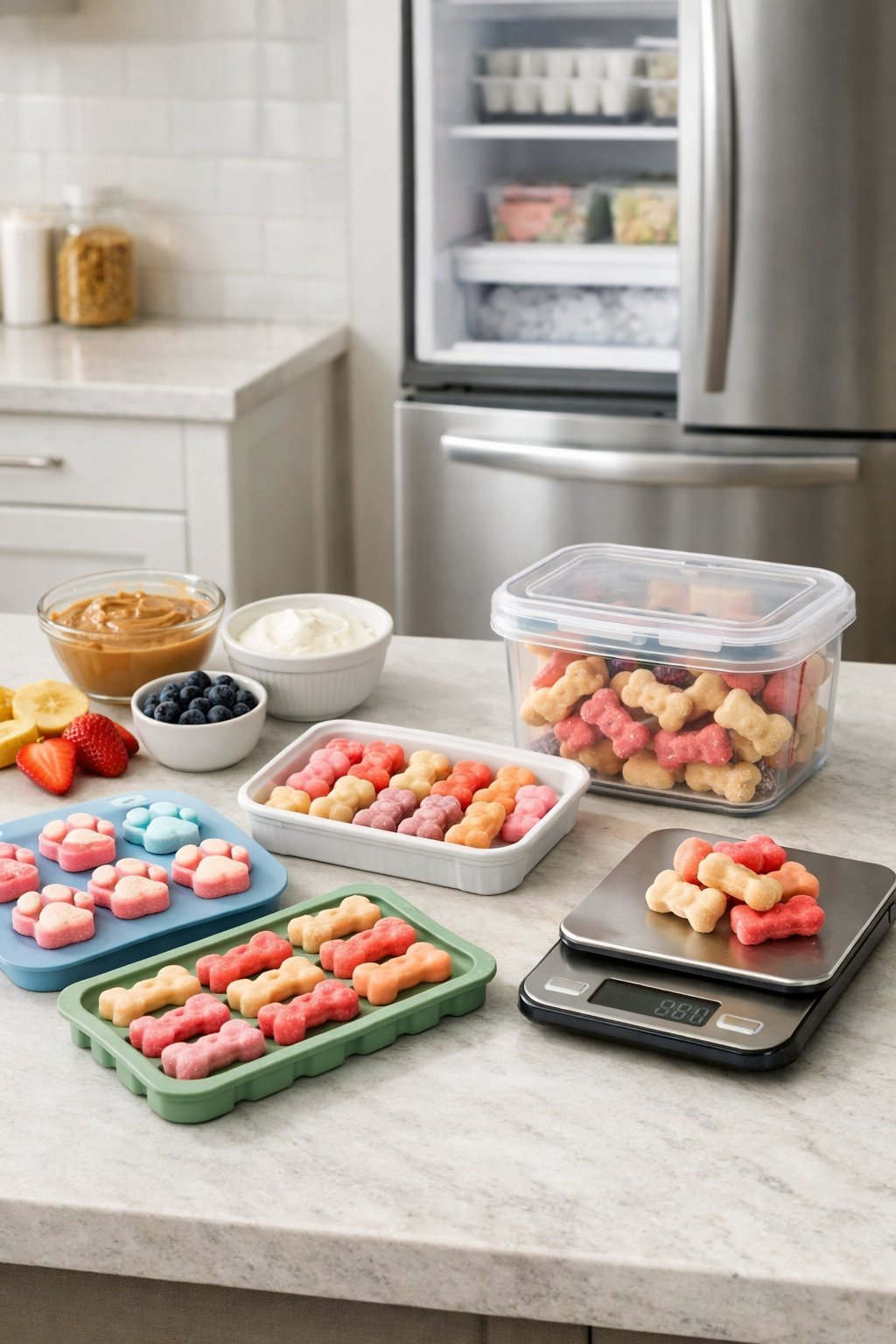
The right tools make creating and storing frozen dog treats simple and effective. I focus on equipment that keeps treats fresh, prevents freezer burn, and makes portion control easy.
Using Ice Cube Trays and Silicone Molds
I find that ice cube trays work perfectly for making small, single-serving frozen treats. Standard ice cube trays create bite-sized portions that are ideal for training or quick snacks.
I simply pour my treat mixture into each compartment and freeze for 3-4 hours. Silicone molds offer more flexibility than plastic trays.
They pop out treats easily without cracking or breaking. I use bone-shaped or paw-print molds for fun shapes that my dog enjoys.
When choosing between options, I consider these factors:
- Size: Smaller molds for small dogs, larger ones for big breeds
- Material: Silicone bends easily for treat removal
- Shape: Fun shapes add variety but simple cubes work just as well
- Durability: Food-grade silicone lasts longer than plastic
Ice cube trays are an excellent storage option because I can freeze treats first, then transfer the cubes to containers for long-term storage.
Cleaning and Preparing Equipment
I wash all trays and molds with hot, soapy water before first use. This removes any manufacturing residue that could affect my dog’s treats.
Between batches, I scrub each compartment thoroughly. Silicone can trap odors and oils, so I sometimes soak molds in a baking soda solution for 15 minutes.
I rinse everything completely and air dry before the next batch. I never use harsh chemicals or abrasive scrubbers that could damage the material.
Dishwasher-safe molds make cleanup easier, but I hand-wash to extend their life.
Freezing and Storage Best Practices
I store frozen treats in airtight containers to prevent freezer burn and maintain freshness. Once treats are completely frozen, I transfer them from trays into containers or freezer bags.
Homemade frozen dog treats last 2 to 3 months when stored properly. I label each container with the date and ingredients so I know when I made them.
My storage strategy includes:
- Removing as much air as possible from freezer bags
- Keeping treats in the coldest part of my freezer
- Storing different flavors separately to prevent taste mixing
- Taking out only what I need for the week
I keep a small container in the front of my freezer for easy access. The bulk of my treats stays in the back where temperatures remain most stable.
Easy Homemade Frozen Dog Treat Recipes
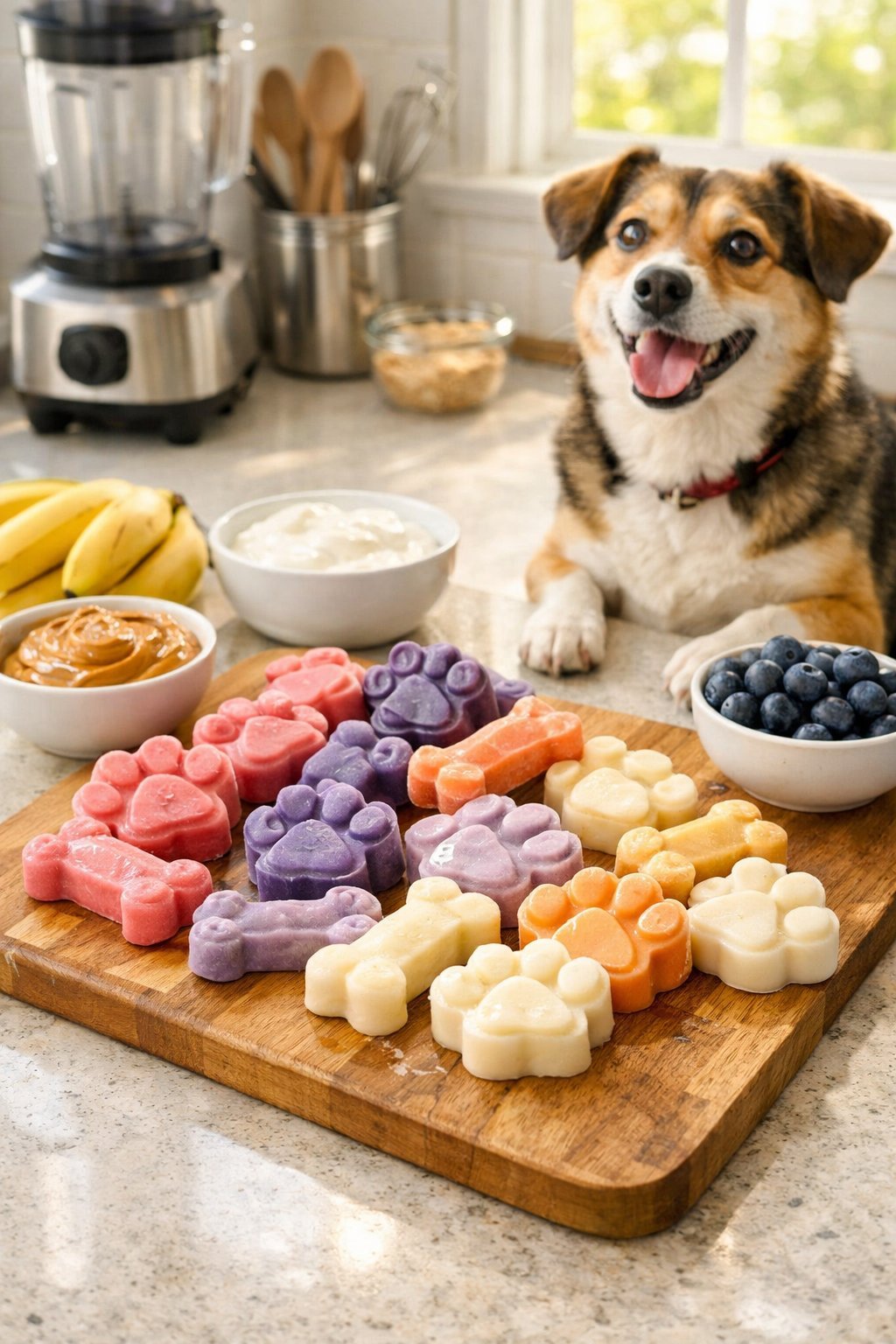
I love making frozen dog treats at home because they’re simple to prepare and use ingredients I already have in my kitchen. These homemade frozen dog treats keep my dog cool on hot days while providing healthy snacks made from peanut butter, banana, yogurt, berries, and pumpkin.
Peanut Butter and Banana Frozen Dog Treats
I find that banana dog treats are some of the easiest frozen snacks to make. The simplest version requires just cutting a banana into pieces and freezing them for 30 minutes.
For a more exciting treat, I blend peanut butter with banana and yogurt. I pour this mixture into silicone molds or ice cube trays and freeze for a few hours.
Basic Ingredients:
- 1 ripe banana
- 2 tablespoons peanut butter
- 1/4 cup plain yogurt
I always use xylitol-free peanut butter since xylitol is toxic to dogs. These DIY frozen dog treats can be customized with different mold shapes like paws or bones.
Yogurt and Berry Pupsicles
I make berry yogurt frozen treats using frozen blueberries and strawberries mixed with plain yogurt. These colorful pupsicles look fancy but take minimal effort.
My favorite recipe combines yogurt, peanut butter, and blueberries. I add a dog biscuit or chicken jerky as a popsicle stick to make handling easier.
Simple Steps:
- Blend 1 cup plain yogurt with 1/2 cup mixed berries
- Pour into popsicle molds
- Insert a small dog treat as a handle
- Freeze for 2-3 hours
I only use plain, unsweetened yogurt without artificial sweeteners. These treats stay fresh in my freezer for up to two months in an airtight container.
Pumpkin Dog Treat Recipes
I turn to pumpkin dog treats when my dog needs something gentle on his stomach. Pumpkin works great for dogs with food allergies since it’s naturally soothing.
My go-to recipe uses just four ingredients: pumpkin puree, yogurt, honey, and banana. I mix them together and pour into silicone molds for cute frozen pumpkin dog treats.
I use 100% pure pumpkin puree, not pumpkin pie filling which contains spices and sugar. I give these treats in moderation since they should make up no more than 10% of my dog’s daily calories.
Creative Flavors and Fun Variations
I love experimenting with different ingredients to keep my dog excited about treat time. Broth-based frozen treats provide savory options, vegetable combinations add nutrients, and tropical flavors bring sweet refreshment.
Frozen Dog Treats with Broth
I find that broth-based frozen treats work perfectly for dogs who prefer savory flavors over sweet ones. Low-sodium chicken broth makes an excellent base because it has less salt than regular broth and won’t upset my dog’s stomach.
I simply pour the broth into ice cube trays and freeze them for easy portion control. For added nutrition, I sometimes mix in small pieces of cooked chicken or carrots before freezing.
Beef broth is another option I rotate into my treat rotation. I always check that any broth I use contains no onions, garlic, or excessive sodium.
These frozen broth cubes double as a great way to keep my dog hydrated on hot days since they’re mostly water-based.
Dog-Friendly Vegetable Frozen Treats
Vegetables add fiber and vitamins to frozen treats without extra calories. I blend dog-safe vegetables like cooked sweet potato, cucumber, or green beans with a bit of water to create a smooth mixture.
Pumpkin puree is one of my favorite vegetable additions because it supports healthy digestion. I mix plain canned pumpkin with a spoonful of plain yogurt and freeze it in silicone molds.
This combination gives my dog fiber and probiotics in one treat.
Carrots and peas work well when I want to add texture. I either blend them smooth or leave small chunks for my dog to crunch on.
Mixing vegetables with broth instead of water creates protein-packed frozen treats that even picky eaters enjoy.
Tropical-Inspired Frozen Dog Treats
I turn to tropical fruits when I want to make special summer treats. Bananas blend smoothly and provide natural sweetness without added sugar.
I mash ripe bananas with unsweetened coconut milk for a creamy tropical combination. Watermelon is another tropical option I use since it contains over 90% water.
I remove all seeds and rind, then blend the pink flesh with a splash of water before freezing. For variety, I combine pineapple chunks with banana slices in my silicone molds.
I always use fresh or frozen fruit without any syrup or added sweeteners. These tropical treats help cool my dog down while providing vitamins A and C.
Serving Tips and Safety Guidelines
Knowing how much to serve and when to introduce new frozen treats helps keep your dog healthy and happy. Proper storage in airtight containers and smart portioning ensure these cool snacks stay safe and beneficial.
Portion Control and Serving Frequency
I always recommend treating frozen dog treats as extras, not meal replacements. They should make up no more than 10% of your dog’s daily calories.
For small dogs under 20 pounds, I give one small frozen treat (about the size of an ice cube) per day. Medium dogs between 20-50 pounds can handle one to two treats daily.
Large dogs over 50 pounds can enjoy two to three portions.
Portion Guide by Dog Size:
- Small dogs: 1 cube-sized treat daily
- Medium dogs: 1-2 treats daily
- Large dogs: 2-3 treats daily
I space out treats throughout the day rather than giving them all at once. This prevents stomach upset and keeps the excitement going.
Active dogs might burn more calories and can handle slightly larger portions, while less active pets need smaller amounts.
Introducing New Treats Safely
I introduce new frozen dog treats one ingredient at a time over three to five days. This helps me spot any allergic reactions or digestive issues quickly.
Watch for signs like itching, vomiting, diarrhea, or excessive gas after serving a new treat. If I notice any of these symptoms, I stop that treat immediately and contact my vet.
I start with a small piece, about one-quarter of a regular serving, on the first day. If my dog tolerates it well, I increase to half a serving the next day.
By day three or four, I work up to a full portion if everything goes smoothly.
Safe handling practices include storing frozen dog treats in airtight containers and keeping them at 0°F or below. I label each container with the date I made them and toss anything older than three months.
Seasonal and Special Occasion Ideas
I adjust my frozen treat recipes based on the weather and special events throughout the year. Summer calls for extra hydrating ingredients like watermelon or cucumber blended into ice cubes.
During winter months, I still serve frozen treats but add warming ingredients like pumpkin puree mixed with peanut butter before freezing.
For birthdays or holidays, I make special shapes using silicone molds. Heart shapes work great for Valentine’s Day, while bone-shaped treats fit any celebration.
I freeze low-sodium chicken broth with tiny pieces of cooked chicken inside for a protein-packed party treat.
On hot days, I serve treats straight from the freezer. In cooler weather, I let them sit at room temperature for two to three minutes to slightly soften before serving.