
Frozen Dog Treats Homemade: Easy Recipes, Tips & Safe Ingredients

Frozen Dog Treats Homemade – Making frozen dog treats at home is simple and rewarding. You just blend dog-safe ingredients like plain yogurt, pumpkin puree, or bone broth with fruits or vegetables, pour the mixture into molds, and freeze them until solid.
I’ve been making these treats for my dogs for years. They go crazy every time I open the freezer.
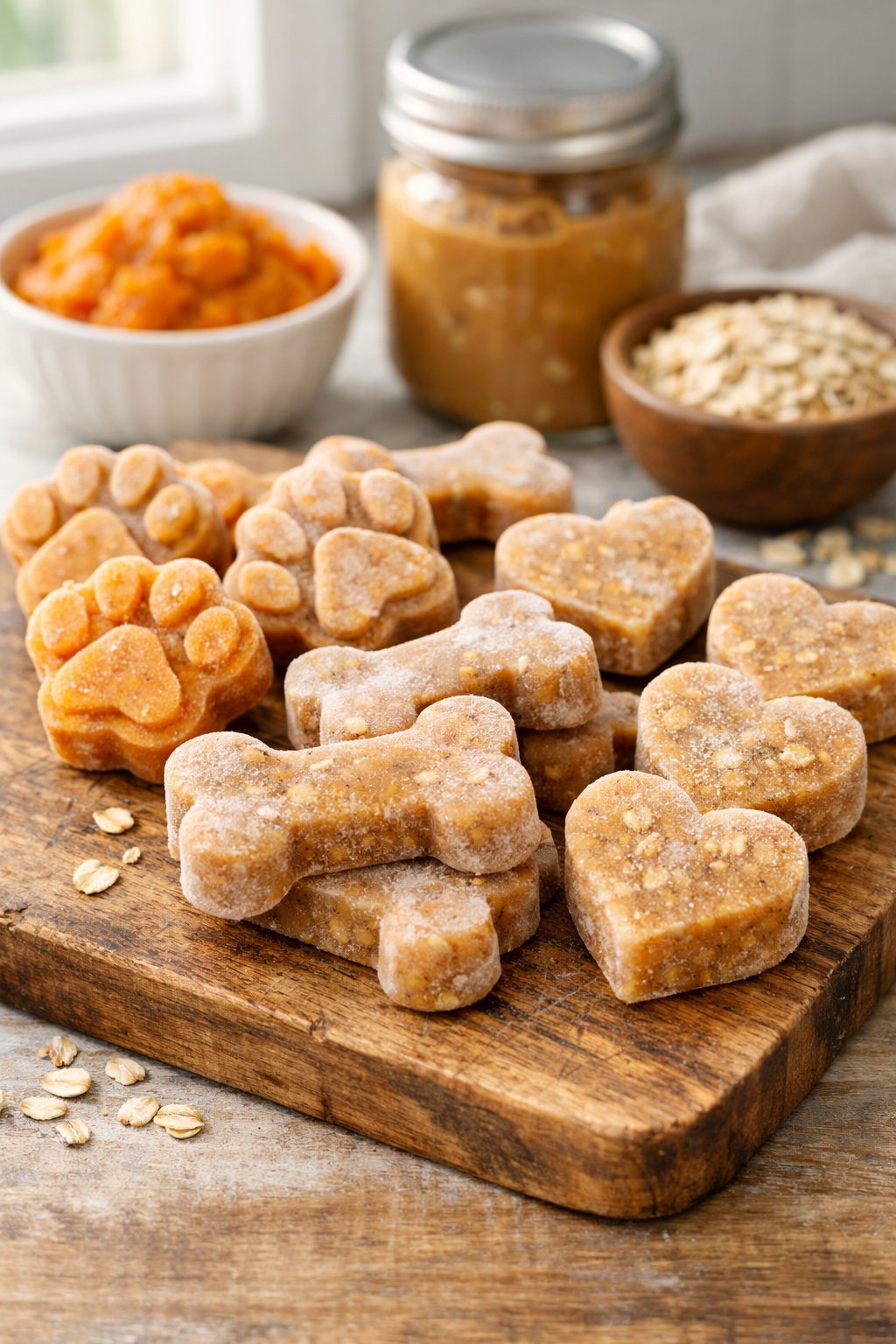
Homemade frozen treats give you complete control over what your dog eats. You can avoid artificial ingredients and allergens while saving money compared to store-bought options.
Whether your dog needs low-calorie snacks or has special dietary requirements, you can customize every recipe to fit their needs. These treats are perfect for hot days, teething puppies, or just as a special reward.
I’ll walk you through easy recipes for beginners, safe ingredients to use, and tips for storage.
Key Takeaways
- Homemade frozen dog treats require only simple ingredients like yogurt, fruits, and broth that you blend and freeze in molds
- Always avoid toxic ingredients like xylitol, grapes, chocolate, and onions when making treats for your dog
- Store frozen treats in airtight containers for up to three months to prevent freezer burn and maintain freshness
Why Make Frozen Dog Treats at Home?

Making frozen dog treats at home gives you complete control over what goes into your dog’s snacks while saving money and providing real health benefits. These treats offer cooling relief, mental stimulation, and hydration support.
Health Benefits for Dogs
When I make homemade frozen dog treats, I know exactly what my dog is eating. Store-bought options often contain preservatives, artificial colors, and added sugars that dogs don’t need.
By creating DIY frozen dog treats at home, I can use fresh, whole ingredients like plain yogurt, pumpkin puree, and fresh fruits. These natural ingredients provide vitamins, minerals, and probiotics that support digestive health.
I avoid ingredients that might trigger allergies or sensitivities in my dog. If your dog has a sensitive stomach or food allergies, homemade treats let you customize recipes to their specific needs.
The best part is eliminating xylitol, an artificial sweetener that’s extremely toxic to dogs. Many commercial peanut butter products contain this dangerous ingredient, but when I make frozen peanut butter banana dog treats myself, I choose all-natural peanut butter with just peanuts listed on the label.
Cooling and Hydration for Hot Weather
Frozen treats help dogs regulate their body temperature during hot summer days. Dogs don’t sweat like humans do, so they rely on panting and external cooling methods to stay comfortable.
I’ve found that offering my dog a frozen treat after a walk or play session helps him cool down quickly. The cold temperature provides immediate relief while the moisture content supports hydration.
Using a bone broth or water base in homemade frozen dog treats adds extra fluids to your dog’s diet. This is especially helpful for dogs who don’t drink enough water throughout the day.
Dog ice cream made with yogurt or pureed watermelon offers both cooling and nutritional benefits. The combination of cold temperature and hydrating ingredients makes these treats perfect for preventing overheating during summer activities.
Mental Enrichment and Teething
Frozen treats provide more than just nutrition. They offer mental stimulation as dogs work to lick and chew their way through the frozen snack.
I use frozen treats to keep my dog occupied when I need him to settle down. A frozen peanut butter banana dog treat in a silicone mold can keep him busy for 15-20 minutes.
For teething puppies, frozen treats are incredibly soothing. The cold temperature numbs sore gums and provides relief during this uncomfortable developmental stage.
You can freeze treats in different shapes and sizes to add variety. I rotate between small cubes for quick rewards and larger bone-shaped molds for longer entertainment sessions.
Cost-Effectiveness and Ingredient Control
Making frozen dog treats at home costs significantly less than buying premium frozen options from pet stores. A batch of homemade treats using yogurt, peanut butter, and banana might cost $3-4 and yield 20-30 treats.
Store-bought frozen dog treats often cost $1-2 per serving. The savings add up quickly, especially if you have multiple dogs or give treats regularly.
I buy ingredients in bulk and make large batches at once. A Sunday afternoon prep session gives me enough treats for 2-3 weeks stored in my freezer.
You also reduce packaging waste by using reusable silicone molds instead of buying individually wrapped commercial products. I keep my frozen treats in a single freezer-safe container, which is both economical and environmentally friendly.
Choosing Safe and Healthy Ingredients

When I make frozen treats for my dog, picking the right ingredients keeps my pup safe and healthy. Some common foods in my kitchen work great for dog treats, while others can be dangerous or even deadly.
Dog-Safe Ingredients to Use
I always start with ingredients I know are safe for dogs. Apples make excellent frozen treats as long as I remove the seeds and core first.
Carrots are another favorite of mine because they’re low in calories and packed with fiber and beta-carotene. Plain yogurt is one of my go-to ingredients.
It adds calcium and probiotics that help with digestion. I prefer plain Greek yogurt because it has more protein and less sugar than regular yogurt.
Bananas blend smoothly and add natural sweetness. Blueberries and strawberries are also safe choices that I use often.
For a savory option, I freeze low-sodium broth in ice cube trays. Pumpkin puree works well in homemade frozen dog treats because it’s gentle on stomachs.
Watermelon without seeds provides hydration on hot days. Sweet potatoes offer vitamins and a slightly sweet taste dogs enjoy.
Ingredients to Avoid in Homemade Treats
I never use chocolate in any dog treat because it contains theobromine, which is toxic to dogs. Even small amounts can make a dog very sick.
Grapes and raisins stay out of my dog’s treats completely. These fruits can cause kidney failure in dogs.
Macadamia nuts are also off-limits because they cause weakness, vomiting, and overheating. Artificial sweeteners pose serious risks.
Onions and garlic damage red blood cells in dogs. Avocados contain persin, which can upset a dog’s stomach.
I skip adding salt or sugar to my recipes. Dogs don’t need extra sodium or sweeteners in their diet.
Understanding Dairy and Yogurt Options
Not all dairy products work well for dogs. I stick with unsweetened yogurt because added sugars aren’t good for dogs.
Some dogs have trouble digesting dairy, so I introduce it slowly at first. Plain Greek yogurt is my top choice.
It has live cultures that support gut health and less lactose than milk. I avoid flavored yogurts because they often contain added sugars or artificial sweeteners.
If my dog shows signs of an upset stomach after eating yogurt, I know to avoid dairy in future treats. Making safe frozen treats means watching how my dog reacts to new ingredients.
Cottage cheese is another option I use sometimes. It’s lower in lactose than other cheeses and provides protein.
Importance of Xylitol-Free Peanut Butter
Xylitol-free peanut butter is critical when I make treats for my dog. Xylitol is an artificial sweetener that causes a rapid insulin release in dogs, leading to low blood sugar and liver failure.
I always read labels carefully before buying peanut butter. Many brands now use xylitol to reduce sugar content.
Even a small amount can be deadly for dogs. All-natural peanut butter with just peanuts and maybe salt is the safest choice.
I look for products with no added sweeteners, oils, or preservatives. The ingredients list should be short and simple.
Some peanut butters labeled as “sugar-free” or “no sugar added” often contain xylitol. I never assume a product is safe without checking the label first.
Essential Tools and Preparation Tips

You don’t need fancy equipment to start making frozen treats for your dog. A few basic kitchen tools and proper preparation methods will help you create safe, tasty snacks that your pup will love.
Recommended Dog Treat Molds and Trays
I’ve found that silicone molds work best for frozen dog treats because they’re flexible and make popping out treats super easy. You can use ice cube trays you already have at home, or grab specialized dog treat molds shaped like bones or paws.
Small molds work well for tiny dogs or training treats. Larger molds are better for big dogs who need more substantial snacks.
Consider having a few different sizes on hand. I like using mini muffin tins for medium-sized portions that fit most dogs.
Silicone is my top choice because it’s dishwasher safe and doesn’t hold odors. Plastic trays can work too, but they might crack over time in the freezer.
Metal trays are durable but sometimes the treats stick to them.
Mixing, Blending, and Freezing Techniques
I use a regular blender or food processor to mix ingredients until smooth. This creates a nice texture that freezes evenly without ice crystals.
Pour your mixture into molds slowly to avoid spilling. Fill them about three-quarters full since liquids expand when frozen.
Tap the filled molds gently on the counter to release any air bubbles. Place molds on a flat surface in your freezer.
Make sure they’re level so the treats freeze evenly. Most treats need 4-6 hours to freeze completely, though larger molds might take longer.
I freeze a big batch at once to save time. Once solid, I pop them out and transfer them to storage containers.
Storage and Serving Suggestions
Store your frozen treats in airtight freezer bags or containers to prevent freezer burn. Label them with the date you made them so you know when to use them.
Most homemade frozen dog treats last 2-3 months in the freezer. I write the ingredients on each container too, which helps if I’m making multiple recipes.
Take treats out of the freezer a minute or two before serving if they’re too hard. I give them to my dog outside or on a towel since they can get messy as they melt.
Start with small portions to see how your dog’s stomach handles new treats. One treat per day is a good starting point for most dogs.
Popular Homemade Frozen Dog Treat Recipes

These four recipes use simple, dog-safe ingredients and require minimal prep time. Each one offers different flavors and nutritional benefits to keep your pup happy and cool.
Peanut Butter Banana Frozen Dog Treats
This classic combination creates what I call homemade peanut butter banana ice cream for dogs. The natural sweetness of banana pairs perfectly with creamy peanut butter.
To make these treats, mash two ripe bananas in a bowl until smooth. Mix in half a cup of all-natural peanut butter that contains no xylitol.
You can add a quarter cup of plain yogurt for extra creaminess if you want. Pour the mixture into silicone molds or an ice cube tray.
Freeze for at least four hours until solid. Important reminder: Always check your peanut butter label carefully.
Xylitol is extremely toxic to dogs and appears in many sugar-free varieties. These frozen peanut butter banana dog treats are high in potassium and protein.
I give them to my dog after long walks as a special reward.
Berry Yogurt Frozen Bites
Berry yogurt treats offer antioxidants and probiotics in one refreshing snack. I use whatever berries I have on hand, which makes this recipe very flexible.
Blend one cup of plain Greek yogurt with half a cup of mixed berries. Blueberries, strawberries, and raspberries all work beautifully.
You can use fresh or frozen berries for this recipe. The mixture should be smooth but you can leave some small berry chunks if your dog enjoys texture.
Spoon into molds and freeze overnight.
Berry Benefits:
- Blueberries: Rich in antioxidants
- Strawberries: High in vitamin C and fiber
- Raspberries: Anti-inflammatory properties
These frozen yogurt dog treats store well for up to three months in an airtight container.
The probiotics in yogurt support healthy digestion while berries add natural sweetness without added sugar.
Pumpkin Puree Frozen Snacks
Pumpkin is excellent for digestive health and most dogs love the taste. I make these pumpkin dog treats year-round.
Mix one cup of pure pumpkin puree with half a cup of plain yogurt or water. You can add a tablespoon of honey for sweetness, though it’s optional.
Pour into molds and freeze for four to six hours. The result is a smooth, creamy treat that’s gentle on sensitive stomachs.
Critical note: Use 100% pure pumpkin puree, not pumpkin pie filling. Pie filling contains spices and sugar that aren’t ideal for dogs.
The fiber in pumpkin helps regulate both diarrhea and constipation naturally.
Broth-Based Pupsicles
Savory treats offer a nice change from sweet options. These broth-based dog popsicles are basically frozen bone broth that provides hydration and flavor.
Use low-sodium chicken, beef, or vegetable broth as your base. Pour directly into ice cube trays for small treats or larger molds for big dogs.
You can add mix-ins for extra nutrition and visual appeal. Try dropping a few blueberries, small carrot pieces, or bits of cooked chicken into each mold before freezing.
These pupsicles are perfect for picky eaters who might not enjoy fruit-based treats. The savory flavor appeals to dogs who prefer meat over sweets.
I make a big batch every week and store them in freezer bags for easy access.
Creative Flavor Variations and Special Diets
Dogs have different taste preferences and dietary needs. I like to mix up flavors and adapt recipes for allergies, weight management, and special occasions.
From fresh berries to holiday-themed combinations, there are plenty of ways to create frozen dog treats that keep your pup cool and satisfied.
Fruit and Veggie Frozen Delights
I’ve found that fruits and vegetables make excellent bases for frozen dog treats. Berries like blueberries and strawberries work perfectly in berry yogurt frozen treats that dogs love.
Bananas are another favorite—I simply slice them into pieces and freeze them for 30 minutes. Watermelon makes refreshing pink popsicles when blended with carrots.
I also use pumpkin regularly since it’s gentle on dog stomachs and pairs well with yogurt and honey.
Popular fruit and veggie combinations:
- Blueberry and strawberry with plain yogurt
- Mango with dog-friendly broth
- Sweet potato with coconut
- Apple with oatmeal
- Carrot with watermelon
I make sure all fruits are seedless. Vegetables are cooked when needed for easier digestion.
Allergy-Friendly and Low-Calorie Options
When dogs have food sensitivities, I stick to allergy-friendly frozen dog treats using just four ingredients: pumpkin, yogurt, honey, and banana.
For weight management, I reduce calorie counts by using more water or low-sodium broth as the base instead of yogurt. I also portion treats smaller using mini ice cube trays.
Plain frozen green beans or cucumber slices work as ultra-low-calorie options.
Low-calorie swaps:
- Replace peanut butter with pumpkin puree
- Use fat-free yogurt instead of regular
- Add extra water to dilute calorie-dense ingredients
- Choose vegetables over fruit for lower sugar content
I always remember that treats should make up no more than 10% of my dog’s daily calories.
Seasonal and Holiday-Inspired Treats
I create special frozen treats for different times of year using seasonal ingredients. In summer, I make watermelon pupsicles.
Fall calls for pumpkin and sweet potato combinations. For holidays, I use silicone molds shaped like bones, hearts, or paw prints to make treats look festive.
During winter celebrations, I add a touch of carob (never chocolate) drizzled on top after freezing. Dog biscuits or chicken jerky sticks work as popsicle handles for fancy pup-sicles.
I also prepare breath-freshening treats with chicken stock, peanut butter, and curly parsley only (Petroselinum crispum) for post-meal refreshment. Birthday treats can include multiple layers of different flavors frozen in stages for a colorful appearance.
Troubleshooting and Safety Tips
Getting portions right and watching how your dog reacts to new ingredients will help you avoid upset stomachs and keep treat time safe and enjoyable.
Portion Control and Moderation
When I make frozen dog treats at home, I always remember that these count toward my dog’s daily calories.
Treats should make up no more than 10% of what your dog eats each day.
For small dogs under 20 pounds, I use mini ice cube trays or silicone molds that hold about one tablespoon. Medium dogs between 20-50 pounds can handle treats that are two to three tablespoons.
Large dogs over 50 pounds can enjoy bigger portions, but I still keep each treat under half a cup.
I check my dog while he eats frozen treats to prevent choking. Some dogs try to swallow big chunks too quickly.
If your dog does this, try these options:
- Make treats in smaller molds
- Let the treat thaw for a few minutes before serving
- Hold the treat while your dog licks it
- Use a special treat-holder toy designed for frozen snacks
High-calorie ingredients like peanut butter need extra attention. I limit these to one or two tablespoons per batch when I make frozen dog treats.
Introducing New Ingredients Safely
I always test one new ingredient at a time when making homemade frozen dog treats. This helps me spot any food sensitivities or allergies right away.
Start with a tiny amount of the new ingredient mixed into something your dog already eats without problems. I wait 24-48 hours and watch for these warning signs:
- Vomiting or diarrhea
- Excessive gas or stomach gurgling
- Itching or skin irritation
- Changes in energy levels
If your dog shows any of these symptoms, stop giving that ingredient and call your vet.
Some dogs have trouble digesting dairy even though yogurt is a common base for frozen treats. Others might react to certain fruits or proteins.
I keep a simple notebook where I write down what ingredients I used and how my dog responded. This makes it easy to recreate recipes your dog loves and avoid anything that caused problems.
