Golden Retriever Puppy: Your Complete Guide to Bringing Home Your New Best Friend

Getting a Golden Retriever puppy is one of the most exciting decisions you can make. These friendly dogs are known for their gentle nature and love for families.
They make great companions whether you want a playful friend or a loyal helper.

Golden Retriever puppies need proper care, training, and socialization from the day you bring them home to grow into healthy, well-behaved adult dogs. I’ve learned that Golden Retrievers are incredibly affectionate and intelligent, which makes them wonderful family pets.
They get along well with children and other animals when raised correctly.
Before you start looking at Golden Retriever puppies for sale, you need to understand what these dogs require. From picking the right puppy to training and daily care, there’s a lot to learn.
This guide will walk you through everything you need to know about raising a happy and healthy Golden Retriever puppy.
Key Takeaways
- Choose your puppy carefully from a responsible breeder and prepare your home before bringing them back
- Start training and socialization early to help your puppy develop good behavior and confidence
- Provide proper nutrition, exercise, and regular vet care to support healthy growth through each stage of development
Choosing a Golden Retriever Puppy

Finding the right Golden Retriever puppy involves selecting a responsible breeder. You should also evaluate individual puppies in the litter and make sure the breed fits your lifestyle and experience level.
Finding Reputable Breeders
I always recommend starting your search with breeders who prioritize health testing and proper socialization. A good breeder will test their dogs for hip dysplasia, elbow dysplasia, heart conditions, and eye diseases before breeding.
When I visit a breeder, I look for clean facilities where puppies live in the home rather than kennels. The breeder should welcome questions and provide health clearances for both parent dogs.
They’ll also ask you questions about your lifestyle and home to ensure their puppies go to suitable families.
Red flags to avoid:
- Breeders who have multiple litters available at once
- No health testing documentation
- Puppies available before 8 weeks old
- Unwillingness to show you where puppies are raised
- No written contract or health guarantee
Choosing a reputable breeder is the most important step in finding a healthy puppy. I suggest checking with the Golden Retriever Club of America for breeder referrals.
Selecting the Right Puppy
When I visit a litter, I observe how puppies interact with their littermates and respond to people. A well-adjusted puppy should be curious and friendly, not overly shy or aggressive.
I recommend choosing your puppy at 6-8 weeks old after their first vet visit. Watch for puppies with clear eyes, clean ears, and healthy coats.
The puppy should walk without limping and have good energy levels. Consider whether you want a male or female and what shade of golden coloring appeals to you.
Males typically grow larger and may be more outgoing, while females are often slightly smaller. I pay attention to each puppy’s personality.
Some are more energetic and playful, while others are calmer and more laid-back. Match the puppy’s energy level to your own lifestyle and activity preferences.
First-Time Owner Considerations
If this is my first Golden Retriever, I need to understand that these dogs will be part of my family for 10-12 years. They require daily exercise, regular grooming, and consistent training from the start.
Golden Retrievers are friendly and eager to please, making them good for first-time owners. However, they need at least an hour of exercise daily and shed heavily year-round.
I should budget for quality food, veterinary care, grooming supplies, and training classes. Before bringing a puppy home, I prepare my space with a crate, food and water bowls, toys, and puppy-proofing measures.
I also schedule time off work for the first few days to help my new puppy adjust. These dogs thrive on companionship and don’t do well when left alone for long periods.
Golden Retriever Puppy Care Essentials

Your new Golden Retriever puppy needs proper nutrition, regular grooming, and consistent veterinary care to grow into a healthy adult dog. These three areas form the foundation of good puppy care.
Feeding and Nutrition
I recommend feeding your Golden Retriever puppy a high-quality puppy food formulated for large breeds. Puppies need more calories and nutrients than adult dogs to support their rapid growth.
Feed your puppy three to four times per day until they reach about six months old. After that, you can switch to twice daily feedings.
The amount depends on your puppy’s age and weight, so check the food package for guidance.
Daily Feeding Schedule:
- 8 weeks to 3 months: 4 meals per day
- 3 to 6 months: 3 meals per day
- 6 months and older: 2 meals per day
I suggest using a slow feeder bowl to help with digestion and prevent bloat. Always provide fresh water throughout the day.
Avoid giving your puppy table scraps or foods that are toxic to dogs like chocolate, grapes, or onions.
Grooming Basics
Golden Retriever puppies have thick, fluffy coats that need regular brushing to stay healthy. I brush my puppy at least three times per week to prevent mats and tangles.
Start grooming early so your puppy gets used to being handled. Use a slicker brush or pin brush designed for long-haired breeds.
Pay special attention to areas behind the ears and under the legs where mats form easily. Bath your puppy once every four to six weeks using dog shampoo.
Trim their nails every two to three weeks. Check and clean their ears weekly to prevent infections.
Health and Veterinary Visits
I schedule my puppy’s first vet visit within a few days of bringing them home. Your puppy needs a series of vaccinations starting at six to eight weeks old and continuing until they’re about 16 weeks old.
Essential Puppy Vaccinations:
- Distemper, parvovirus, and adenovirus (DHPP)
- Rabies
- Bordetella (kennel cough)
Plan for vet visits every three to four weeks during the first few months for vaccines and health checks. Discuss flea, tick, and heartworm prevention with your vet.
I also recommend getting pet insurance early since Golden Retrievers can be prone to hip dysplasia and other health issues.
Training Your Golden Retriever Puppy

I recommend starting training as early as possible because puppies learn best between 8 and 16 weeks of age. Golden Retrievers respond best to positive reinforcement and short training sessions that keep them engaged.
Housebreaking
I take my puppy outside first thing in the morning, after meals, after naps, and before bedtime. This schedule helps them learn when and where to go potty.
I always bring my puppy to the same spot in the yard so they associate that area with going to the bathroom. When they do their business outside, I praise them right away with a happy voice and a small treat.
Accidents will happen inside, and I never punish my puppy for them. Instead, I clean up the mess with an enzyme cleaner to remove the smell completely.
I watch for signs that my puppy needs to go, like sniffing around in circles or whining. When I see these behaviors, I take them outside immediately.
Most puppies can hold their bladder for about one hour per month of age, so a three-month-old puppy needs to go out every three hours.
Obedience Training
I start with basic commands like sit, stay, and come because these build a foundation for all other training. I keep training sessions to just 5 minutes at a time since puppies have short attention spans.
For the sit command, I hold a treat close to my puppy’s nose and slowly move it back over their head. Their bottom naturally goes down as they follow the treat.
I say “sit” as they do it and give them the treat immediately. I practice the stay command by having my puppy sit, then holding my hand up like a stop sign while saying “stay.”
I take one step back and if they stay put, I return and reward them. I gradually increase the distance and time as they improve.
The come command is one of the most important for safety. I call my puppy’s name followed by “come” in an excited voice.
When they run to me, I reward them with treats and lots of praise.
Crate Training
I make the crate a positive space by putting soft bedding, safe toys, and treats inside. My puppy needs to see their crate as a den, not a punishment.
I start by leaving the crate door open and letting my puppy explore it on their own. I toss treats inside to encourage them to go in voluntarily.
Once they’re comfortable, I feed them meals inside the crate with the door still open. After a few days, I close the door for short periods while I’m in the room.
I gradually increase the time from a few minutes to 30 minutes. My puppy should be tired before crate time so they’re more likely to rest quietly.
I never leave a young puppy in the crate for more than a few hours except at night. The crate should be just big enough for them to stand up, turn around, and lie down comfortably.
Socialization Tips
I expose my puppy to different people, places, sounds, and experiences during their critical socialization window before 16 weeks old. Early socialization helps Golden Retrievers develop their calm demeanor.
I introduce my puppy to friendly, vaccinated dogs in controlled environments like puppy classes or playdates. These positive interactions teach them proper dog manners and play behavior.
I take my puppy on car rides, walks in different neighborhoods, and visits to pet-friendly stores. Each new experience builds their confidence.
I bring treats to create positive associations with new sights and sounds. I let different people of various ages pet my puppy gently.
I make sure each interaction is calm and positive so my puppy learns that strangers are friends. Children should always be supervised when meeting my puppy to keep everyone safe.
Golden Retriever Puppy Growth and Development
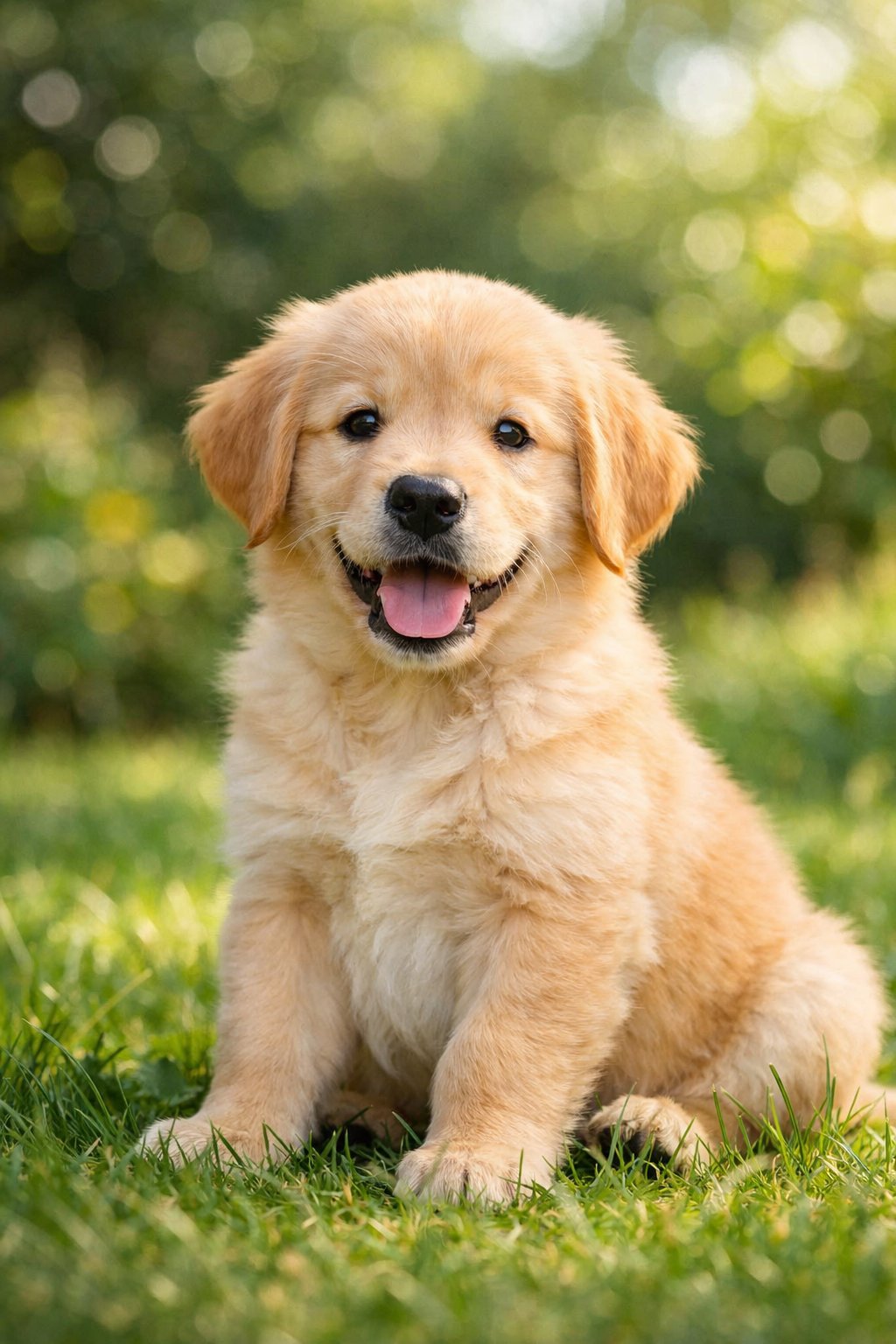
Golden Retriever puppies grow rapidly during their first year. They transform from tiny newborns into strong young dogs with distinct personalities and energy levels that change with each stage.
Milestones by Age
I’ve watched many Golden Retriever puppies grow, and the changes happen fast. At birth, puppies weigh about one pound and can’t see or hear.
Their eyes open around two weeks old. By eight weeks, when most puppies go to their new homes, they weigh between 10 and 15 pounds.
They’re ready to start basic training and socialization. Training a Golden Retriever puppy requires understanding these early stages.
Between three and six months, puppies enter their most rapid growth phase. They’ll gain about five to ten pounds per month.
Their adult teeth come in around four months old. Most Golden Retrievers reach their full height by one year old, standing 20 to 24 inches tall at the shoulder.
Males typically grow larger than females. They continue filling out and gaining muscle until about two years old, when they’re considered fully grown adults.
Behavioral Changes
Golden Retriever puppies go through several distinct behavior stages as they mature. The first eight weeks focus on learning from their mother and littermates.
This teaches them important dog communication skills. From 8 to 12 weeks, puppies are in their prime socialization window.
I always recommend exposing them to different people, places, and sounds during this time. It shapes their confidence for life.
The teenage phase hits around six months and lasts until about 18 months. Puppies may test boundaries and seem to forget their training.
They become more independent and sometimes stubborn. During adolescence, some puppies show fear of things they previously accepted.
This is normal. Patient, positive reinforcement helps them work through it.
Exercise Needs
Puppy exercise requirements change as they grow. I follow a simple rule: five minutes of exercise per month of age, twice daily.
An eight-week-old puppy needs about 10 minutes of walking twice per day.
Exercise Guidelines by Age:
- 2-3 months: 10-15 minutes, twice daily
- 4-6 months: 20-30 minutes, twice daily
- 7-12 months: 35-60 minutes, twice daily
- Over 12 months: 60-90 minutes daily
Too much exercise damages growing joints and bones. I avoid long runs, jumping, and repetitive activities like fetching for extended periods until puppies reach full maturity.
Short play sessions work better for young puppies. Mental stimulation matters just as much as physical exercise.
Training sessions, puzzle toys, and nose work games tire puppies out without stressing their developing bodies.
Bonding Activities
I’ve found that spending quality one-on-one time with my Golden Retriever puppy strengthens our connection every day. Simple activities like gentle grooming sessions, hand-feeding treats during training, or quiet cuddle time on the couch build trust and affection.
Daily walks offer excellent bonding opportunities beyond just exercise. I make sure to let my puppy sniff and explore at their own pace, which shows them I respect their needs.
Training sessions also double as bonding time when I keep them positive and fun. I use treats, praise, and play rewards to make learning enjoyable.
Working together on basic commands like sit, stay, and come helps my puppy see me as a patient guide. I also include my puppy in daily activities like cooking or yard work.
Just having them nearby while I do tasks helps them feel like part of my routine. Reading aloud or talking to my puppy in a calm voice during quiet moments creates a soothing presence they associate with safety and comfort.
Enrichment and Play
Mental stimulation is just as important as physical exercise for my Golden Retriever puppy’s happiness. I rotate different types of toys weekly to keep things interesting, including puzzle feeders, chew toys, and soft plush toys for comfort.
Proper socialization during the critical early period helps my puppy become confident around new people, animals, and environments. I introduce them to different surfaces like grass, concrete, and sand, plus various sounds like vacuum cleaners and doorbells.
I set up simple indoor games on rainy days:
- Hide and seek with treats around the house
- Treasure hunts using their nose to find hidden toys
- Indoor fetch in a hallway with soft toys
- Tug-of-war with appropriate rope toys
Food-dispensing toys keep my puppy busy and satisfied. I stuff Kong toys with frozen peanut butter or their regular kibble mixed with wet food for longer-lasting entertainment.
Traveling With Your Puppy
I start car training early by making short, positive trips to fun destinations like parks or pet stores. This prevents my puppy from associating the car only with vet visits.
Safety comes first, so I always secure my puppy with a crash-tested harness or travel crate in the back seat. I never let them ride in the front seat or stick their head out the window.
For longer trips, I pack essentials like water, food, bowls, waste bags, and familiar toys. I also bring copies of vaccination records and my vet’s contact information.
I stop every two hours to let my puppy stretch, drink water, and go to the bathroom.
I practice crate training at home so my puppy feels comfortable in their travel crate. Adding a worn t-shirt with my scent helps them feel secure in unfamiliar places like hotels or relatives’ homes.