Homemade Dog Food: 3 Balanced Recipes and How Much to Feed

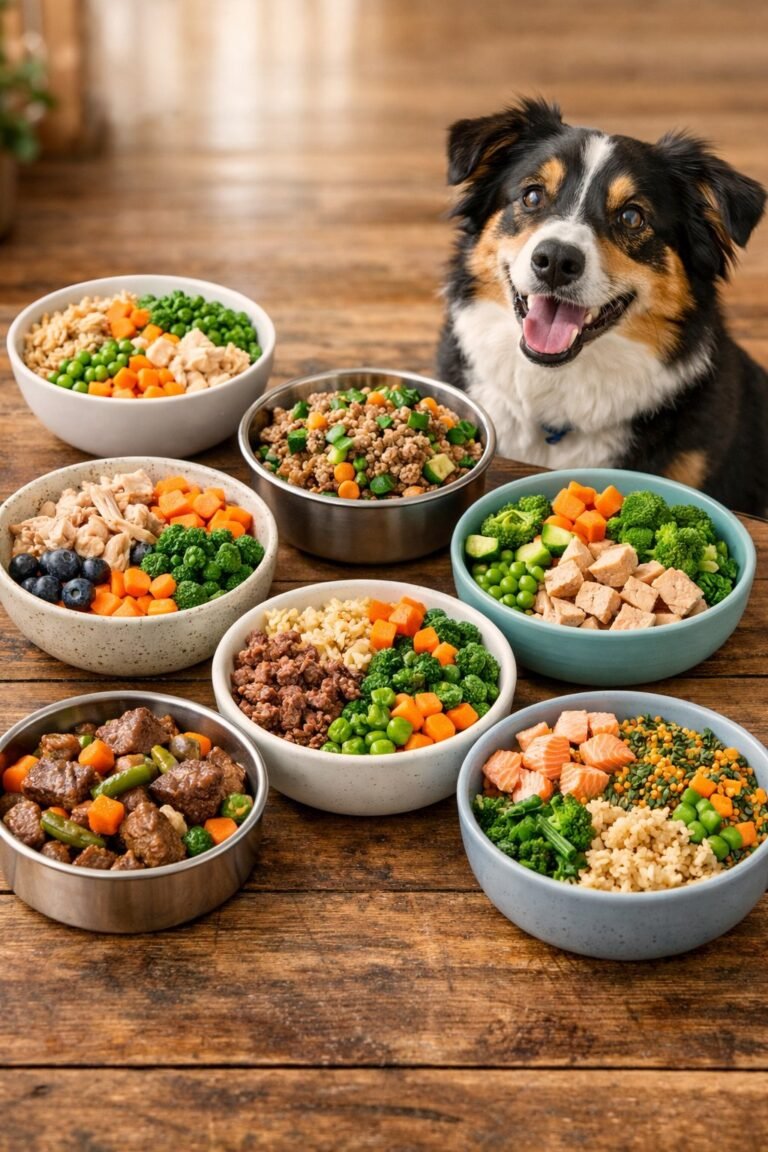
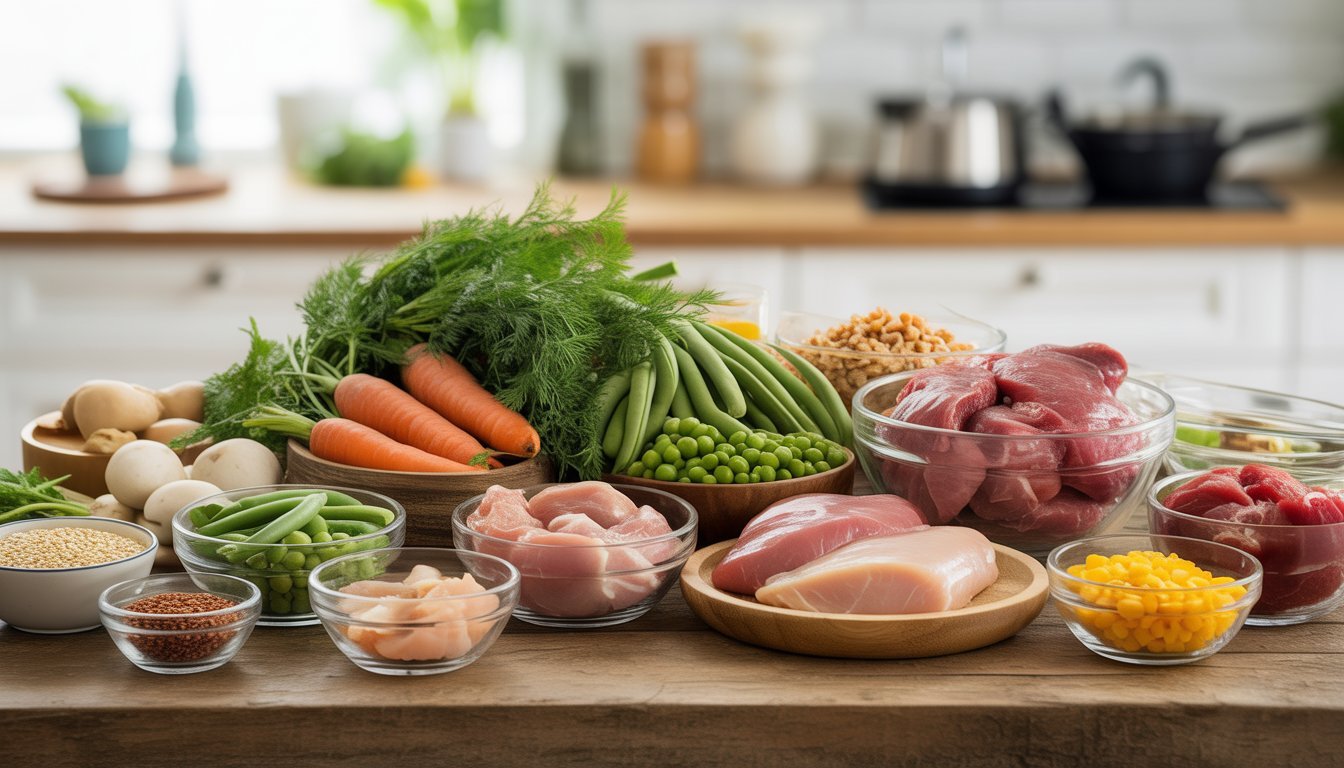
Homemade dog food is lean cooked protein, a cooked carbohydrate like rice, oats or sweet potato, dog-safe vegetables, a little oil, and one thing most recipes leave out: a vitamin and mineral supplement made for homemade dog food. Below are three batch recipes with exact amounts and calories per cup, how much to feed by weight, how to switch your dog over safely, storage times, and the ingredients to never use.
This post contains affiliate links. As an Amazon Associate I earn from qualifying purchases.
What you’ll need to make it:
Large slow cooker, Digital kitchen scale, Freezer-safe meal prep containers, Silicone freezer portion trays, Fish oil for dogs, Nutrient mix for homemade dog food.
Quick Answer
- Basic formula: about 40% to 50% cooked lean protein, 25% to 30% cooked carbohydrate, 20% to 25% vegetables, plus a small amount of oil.
- Must add: a vitamin and mineral supplement made to balance homemade dog food, dosed by its label. Without it, homemade meals usually fall short on calcium, zinc, vitamin D, vitamin E and choline.
- Easiest recipe: 2 lb lean ground turkey, 1 1/2 cups dry brown rice, 2 cups carrots, 1 1/2 cups green beans, 1 cup spinach, 1 tablespoon olive oil. About 10 cups at roughly 260 calories per cup.
- How much: a 40 lb adult dog eats roughly 850 to 1,000 calories a day, or about 3 1/4 to 3 3/4 cups of that recipe.
- Storage: 3 to 4 days in the fridge, 2 to 3 months in the freezer.
- Talk to your vet first, especially for puppies, seniors and dogs with kidney, liver, pancreas or skin conditions.
Read This Before You Cook
Meat, rice and vegetables taste great to dogs, but on their own they are not a complete diet. A UC Davis study of 200 published homemade dog food recipes found that only a handful supplied every essential nutrient. The most common gaps were calcium, zinc, vitamin D, vitamin E and choline. Over months, those gaps can cause bone, skin and other health problems.
You have two good options if homemade food will be your dog’s main diet:
- Use a supplement designed to balance homemade dog food and follow its dosing and recipe guidance.
- Get a recipe made for your dog by a board-certified veterinary nutritionist. Your vet can refer you, and some services create custom recipes online.
If you only want to use homemade food as a topper, keep it to about 10% to 20% of the daily calories and feed a complete commercial food for the rest. That keeps the overall diet balanced without a supplement.
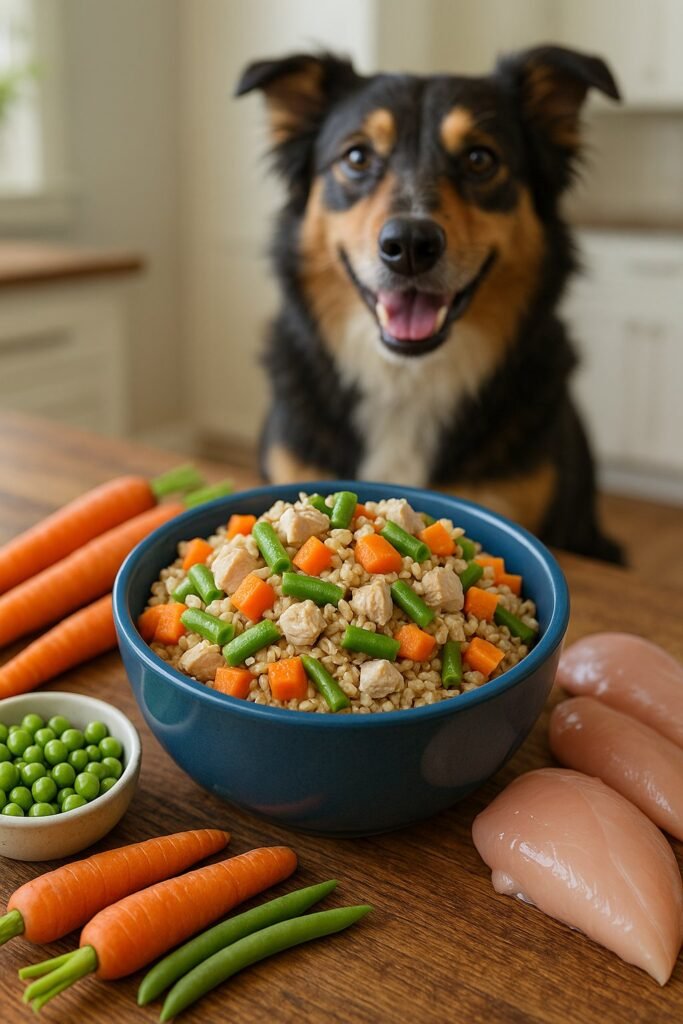
Recipe 1: Turkey, Brown Rice and Vegetables
Makes: about 10 cups | Prep: 15 min | Cook: about 45 min | About 260 calories per cup (estimated)
Ingredients
- 2 lb (907 g) 93% lean ground turkey
- 1 1/2 cups (about 280 g) dry brown rice
- 3 1/2 cups water for the rice
- 2 cups diced carrots (about 3 medium)
- 1 1/2 cups chopped green beans
- 1 cup packed fresh spinach, chopped
- 1 tablespoon olive oil
- A vitamin and mineral supplement made for homemade dog food, dosed per the label (add after cooking)
Steps
- Cook the rice. Bring the water to a boil, add the rice, cover and simmer 40 to 45 minutes until soft.
- Brown the turkey in a large pot over medium heat, breaking it up, until no pink remains (165°F). Don’t add salt, onion or garlic.
- Add the carrots and green beans with 1/2 cup water. Cover and simmer 10 minutes until soft.
- Stir in the spinach for the last 2 minutes, until wilted.
- Combine the turkey mixture, cooked rice and olive oil.
- Cool completely, then mix in the supplement at the label dose for the batch. Heat can damage some vitamins.
Recipe 2: Beef and Sweet Potato
Makes: about 8 cups | Prep: 15 min | Cook: about 30 min | About 280 calories per cup (estimated)
Ingredients
- 2 lb (907 g) 90% lean ground beef
- 2 medium sweet potatoes (about 1 lb), peeled and diced into 1/2 inch cubes
- 1 cup frozen peas
- 1 cup diced zucchini
- 2 large eggs
- A vitamin and mineral supplement made for homemade dog food, dosed per the label (add after cooking)
Steps
- Simmer the sweet potato in water for 12 to 15 minutes until fork tender. Drain.
- Brown the beef in a large pot until fully cooked. Drain off extra fat.
- Add the peas and zucchini and cook 5 minutes.
- Push the beef to one side, crack in the eggs and scramble until set, then stir everything together with the sweet potato.
- Cool completely and mix in the supplement.
Beef is higher in fat than turkey or chicken. Use Recipe 1 or 3 for dogs that need lower-fat food.
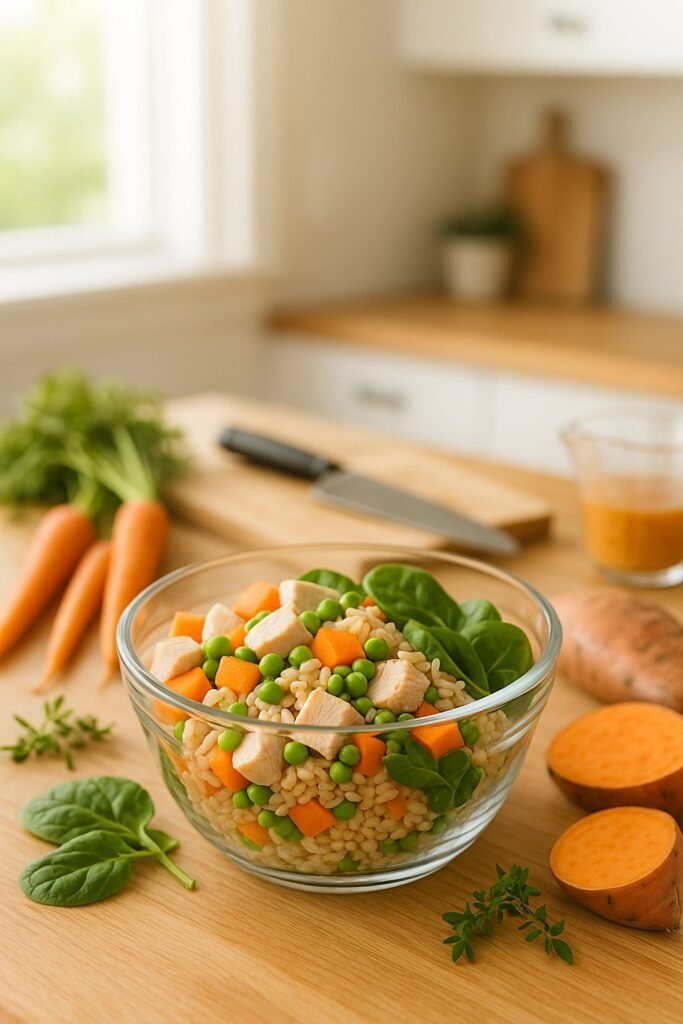
Recipe 3: Chicken, Oats and Pumpkin
Makes: about 8 cups | Prep: 10 min | Cook: about 30 min | About 240 calories per cup (estimated)
Ingredients
- 2 lb (907 g) boneless, skinless chicken thighs
- 2 cups rolled oats
- 4 cups water
- 1 cup plain pumpkin puree (not pie filling)
- 1 cup chopped green beans
- 1 tablespoon olive oil
- A vitamin and mineral supplement made for homemade dog food, dosed per the label (add after cooking)
Steps
- Simmer the chicken in the water for 20 to 25 minutes until it reaches 165°F. Remove the chicken and keep the cooking water.
- Cook the oats and green beans in the reserved water for 5 to 7 minutes until thick and soft.
- Shred or dice the chicken and check for any bones.
- Stir together the chicken, oats, pumpkin and olive oil.
- Cool completely and mix in the supplement.
Soft and easy to chew, so it suits many senior dogs. For a hands-off version, see our crockpot dog food recipes, or try our Farmer’s Dog copycat recipe.
How Much Homemade Food to Feed
These are starting points for a spayed or neutered adult dog at a healthy weight. Active dogs need more. Seniors and less active dogs need less.
| Dog weight | Approx. calories per day | Recipe 1 (260 cal/cup) |
|---|---|---|
| 10 lb | 300 to 350 | About 1 1/4 cups |
| 20 lb | 500 to 600 | About 2 to 2 1/4 cups |
| 40 lb | 850 to 1,000 | About 3 1/4 to 3 3/4 cups |
| 60 lb | 1,150 to 1,300 | About 4 1/2 to 5 cups |
| 80 lb | 1,450 to 1,650 | About 5 1/2 to 6 1/3 cups |
For the other recipes, divide your dog’s daily calories by the calories per cup. Split the total into two meals. Weigh your dog every 2 weeks and adjust portions by about 10% if they gain or lose weight.
Safe Ingredients
- Proteins: lean ground turkey, chicken, lean beef, eggs, white fish like cod (boneless)
- Carbohydrates: brown or white rice, rolled oats, sweet potato, plain potato (cooked), quinoa
- Vegetables: carrots, green beans, peas, spinach, zucchini, plain pumpkin, broccoli in small amounts
- Fats: a small amount of olive oil, or fish oil if your vet recommends it
Never Use
- Onion, garlic, chives and leeks, including powders, broths and seasoning blends
- Grapes, raisins and currants
- Chocolate, coffee and anything with caffeine
- Xylitol (birch sugar)
- Macadamia nuts
- Cooked bones, which can splinter
- Salt, heavy seasoning, and fatty trimmings or bacon grease
What About Raw Homemade Diets?
Raw diets are popular, but the FDA and the American Veterinary Medical Association advise against feeding raw meat because it can carry Salmonella, Listeria and E. coli. Those bacteria can make dogs sick and spread to the people in your home, especially children, older adults and anyone with a weakened immune system. Cooking the meat to a safe temperature removes that risk. If you still want to feed raw, work with your vet and follow strict kitchen hygiene.
How to Switch Your Dog to Homemade Food
Change food slowly to avoid an upset stomach.
| Days | Old food | Homemade food |
|---|---|---|
| 1 to 2 | 75% | 25% |
| 3 to 4 | 50% | 50% |
| 5 to 6 | 25% | 75% |
| 7 and on | 0% | 100% |
Slow down if you see loose stools. Call your vet for vomiting, diarrhea lasting more than a day, low energy, or weight loss.
Batch Cooking and Storage
- Weigh or measure portions into containers as soon as the food cools.
- Fridge: 3 to 4 days in sealed containers.
- Freezer: 2 to 3 months. Thaw overnight in the fridge, not on the counter.
- Serve cold or slightly warmed. Never microwave until hot, and stir to remove hot spots.
- Toss leftovers that sit in the bowl for more than 2 hours.
Frequently Asked Questions
Is homemade dog food healthier than kibble?
It can be fresher and easier to digest, and you control every ingredient. It is only healthier if it is complete and balanced, which means adding the right supplement or using a vet nutritionist recipe.
Is homemade dog food cheaper?
Usually not. Once you add quality meat and a supplement, it often costs more than mid-range kibble, though less than many fresh-food delivery services.
Can puppies eat homemade dog food?
Only on a plan from a veterinary nutritionist. Puppies, especially large breeds, need precise calcium and phosphorus levels for healthy bone growth, and mistakes can cause lasting problems.
Can I use just chicken and rice?
For a day or two when your vet suggests a bland diet, yes. Long term, chicken and rice alone are missing many essential nutrients.
Do I need to add calcium?
Yes. Meat is high in phosphorus and low in calcium. A supplement made for homemade dog food covers calcium along with other vitamins and minerals. Don’t guess the amount.
The Short Version
- Cook lean protein, a carbohydrate and vegetables with no onion, garlic or salt.
- Always add a vitamin and mineral supplement made for homemade dog food, after cooking.
- Feed by calories, split into two meals, and weigh your dog every 2 weeks.
- Switch over 7 days and store batches 3 to 4 days in the fridge or up to 3 months frozen.
More Homemade Dog Recipes
Printable Recipe Card
Want just the essential recipe details without scrolling through the article? Get our printable recipe card with just the ingredients and instructions.