Homemade Dog Toys: Easy DIY Ideas to Keep Your Pup Entertained

Store-bought dog toys can get expensive, especially when your pup tears through them in days.
You can make fun and safe dog toys at home using items you already have, like old t-shirts, towels, and plastic bottles.
I’ve found that making my own toys saves money and keeps my dog just as happy as expensive store options.

Making DIY dog toys lets you create something perfect for your dog’s size and play style.
Your furry friend needs mental stimulation and physical activity, and homemade toys provide both.
You can make new toys whenever your dog needs fresh entertainment.
I’ll show you how to turn everyday household items into toys your dog will love.
These projects are simple enough to finish in minutes, and most cost little to nothing to make.
Key Takeaways
- You can create safe and entertaining dog toys from household items like old clothes and bottles
- Homemade toys provide mental enrichment while saving money compared to store-bought options
- Always supervise your dog during play and check homemade toys regularly for damage
Benefits of Homemade Dog Toys

Making toys for my dog at home saves money while giving me full control over what materials touch my pet’s mouth and paws.
I can design each toy to match my dog’s specific play style and chewing habits.
Cost Savings
I’ve found that creating homemade dog toys cuts down on pet expenses dramatically.
Store-bought toys can cost anywhere from $5 to $30 each, and some dogs destroy them within hours.
Instead, I use items I already have around my house.
Old t-shirts, worn-out towels, and lonely socks all make excellent toy materials.
I can turn a single t-shirt into three or four braided tug toys at no cost.
Empty plastic bottles, cardboard boxes, and tennis balls also work great.
These inexpensive materials like old t-shirts, socks, and rubber balls can become tug-of-war ropes, stuffed toys, or ball toss games.
When my dog destroys a homemade toy, I simply make another one without feeling guilty about wasted money.
Customization for Your Dog
I can tailor each toy to fit my dog’s unique personality and preferences.
My small dog needs softer, lighter toys while my friend’s large dog requires tougher materials.
If my dog loves squeaky sounds, I add a clean, empty water bottle inside a sock.
For dogs that enjoy treats, I stuff rope toys with small bits of their favorite snacks.
I adjust the size, texture, and difficulty level based on what keeps my dog engaged.
Encouraging creative play and problem-solving helps stimulate my dog’s mind and body.
I can make puzzle toys harder or easier depending on my dog’s skill level.
This personal touch keeps my dog interested longer than generic store options.
Safety and Material Control
I know exactly what goes into every toy I make for my dog.
Store-bought toys sometimes contain harmful chemicals, loose parts, or dyes that could make my pet sick.
When I create engaging toys from everyday items, I choose only safe, non-toxic materials.
I avoid buttons, ribbons, or small plastic pieces that could cause choking.
I wash all fabrics before using them and check for any damage regularly.
I can also match materials to my dog’s chewing strength.
Gentle chewers do fine with fleece, while aggressive chewers need denim or canvas.
This control reduces the risk of my dog swallowing dangerous fragments or getting hurt during play.
Essential Supplies for DIY Dog Toys

Making dog toys at home requires simple materials you probably already have.
I’ll focus on safe, budget-friendly items that work well for creating durable toys.
Common Household Materials
I find that old t-shirts are perfect for making braided tug toys or knotted chew toys.
They’re soft, washable, and dogs love the texture.
Socks that have lost their match make excellent puzzle toys when you stuff them with treats or crinkly water bottles.
Cardboard boxes and toilet paper rolls are fantastic for interactive toys.
I use them to create treat-hiding games that keep my dog busy for hours.
Tennis balls work great for fetch toys, and you can cut a small slit to insert treats for added fun.
Empty plastic bottles create satisfying crunch sounds that many dogs enjoy.
I always remove the cap and any plastic rings first.
Rope from the hardware store is ideal for tug toys, but I make sure it’s thick enough that my dog can’t swallow loose fibers.
Old household items can be transformed into engaging toys without spending extra money.
Safe Fabrics and Fillings
I stick to non-toxic materials when choosing fabrics for dog toys.
Cotton and fleece are my top choices because they’re durable and safe if my dog accidentally swallows small pieces.
I avoid synthetic fabrics that might contain harmful chemicals or break down into sharp pieces.
For stuffing, I use old fabric scraps, cut-up t-shirts, or batting from worn pillows.
Rice or dried pasta works well for noise-making toys, but I always sew these securely inside so they can’t spill out.
Tennis ball fuzz and crinkly material from food wrappers add interesting textures.
I never use foam, buttons, or small plastic parts that could become choking hazards.
About 70% of dog owners report their pets enjoy homemade toys as much as store-bought options when made with safe materials.
Tools You Might Need
I keep basic crafting tools on hand for toy-making projects.
Sharp scissors are essential for cutting fabric and rope cleanly.
A needle and strong thread help me sew toys securely, though a sewing machine speeds up the process.
Hot glue guns work well for quick projects, but I use them sparingly since dogs might chew through glue spots.
Measuring tape helps me cut materials to the right size for my dog’s breed and play style.
I also keep treats nearby for stuffing puzzle toys.
A marker lets me label toys with dates so I know when to replace them.
Easy Homemade Dog Toy Ideas
Making your own dog toys at home doesn’t require special skills or expensive materials.
Most of these projects use items you already have around your house and take just a few minutes to complete.
Braided Rope Toys
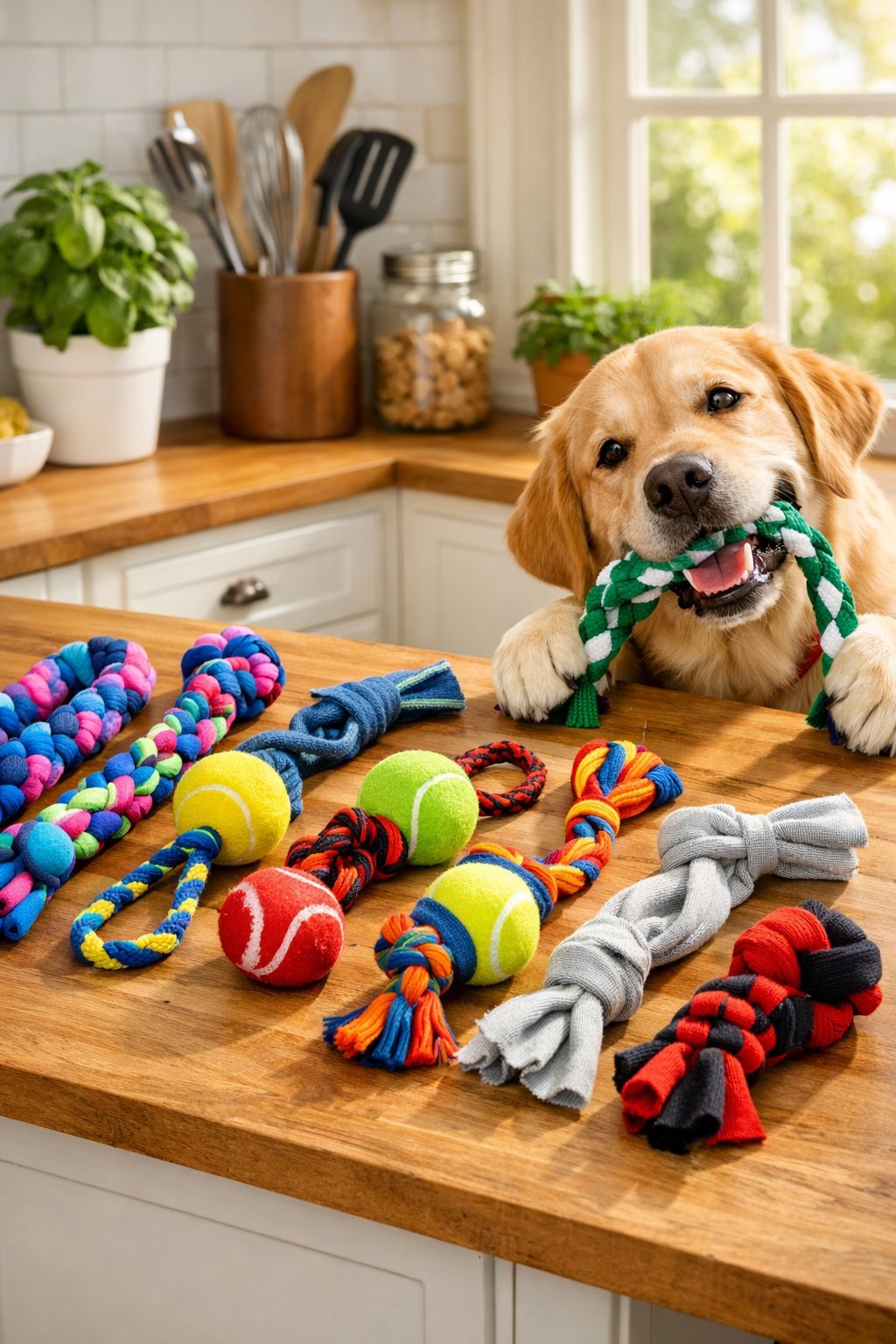
I find that braided rope toys are perfect for dogs who love to play tug-of-war.
You can make one by cutting three strips of old fabric from t-shirts or towels, each about 2 inches wide and 3 feet long.
Tie the three strips together at one end with a tight knot.
Braid them together firmly, then secure the other end with another knot.
The great thing about these homemade tug toys is that you can adjust the thickness and length based on your dog’s size.
For bigger dogs, I recommend using more strips or thicker fabric.
Smaller dogs do well with thinner, shorter braids.
These braided toys work great for interactive play and help clean your dog’s teeth as they chew.
Just make sure to supervise your dog and replace the toy when it starts to fray.
T-Shirt Knots
T-shirt knot toys are one of the simplest options I’ve discovered.
All you need is an old t-shirt that you don’t mind cutting up.
Cut the shirt into long strips, removing any seams or hems.
Gather 3-5 strips together and tie them in a big knot in the middle.
You can leave the ends loose for a floppy toy or tie additional knots at each end for more grip.
I like to make these in different sizes for variety.
Creating toys from old t-shirts and towels saves money while giving your dog something new to play with.
These knotted toys are soft enough for gentle play but durable enough for most chewers.
They’re also machine washable, which makes cleanup easy.
Sock Balls
Sock balls are my go-to solution when I have mismatched or worn-out socks.
Take one sock and roll it into a tight ball, then stuff it inside another sock.
Keep adding more socks until you create a firm ball shape.
Tie off the open end or tuck it in securely.
For extra excitement, I sometimes put a small squeaker or crinkly paper inside before rolling.
This creates an interesting sound that keeps my dog engaged.
These simple balls work well for fetch games indoors or outdoors.
They’re soft enough that they won’t damage furniture or walls.
If your dog is an aggressive chewer, check the toy regularly and remove it if pieces start coming loose.
Water Bottle Crunch Toys
The crunching sound of plastic bottles drives many dogs wild with excitement.
I make these toys by taking an empty plastic water bottle and removing the cap and any loose labels.
Slip the bottle inside a clean sock, then tie the open end closed with a knot.
You can also use fabric scraps to wrap and secure the bottle.
My dog loves the crackly noise these DIY crunchy toys make when squeezed.
The sock protects my dog from any sharp edges if the bottle breaks.
Always watch your dog with bottle toys.
Replace them when the plastic starts to crack or break apart.
Some dogs try to eat the plastic, so this toy isn’t suitable for every pet.
Interactive and Enrichment Dog Toys

Mental stimulation keeps dogs happy and tired in ways that physical exercise alone can’t match.
These toys challenge your dog’s brain while rewarding their natural instincts to hunt, sniff, and solve problems.
Treat-Puzzle Toys
I love making DIY puzzle toys because they’re simple to create and keep my dog busy for ages.
A muffin tin works perfectly as a puzzle feeder.
I place treats in the cups and cover them with tennis balls, forcing my dog to figure out how to remove each ball to get the reward.
Another easy option involves a plastic bottle with the cap removed.
I cut small holes in the sides just big enough for kibble to fall through.
My dog rolls it around until all the food comes out.
For a no-cost option, I stuff treats inside a cardboard box and seal it with tape.
My dog tears through the layers to reach the goodies inside.
You can make this harder by nesting smaller boxes inside larger ones.
Safety tip: I always supervise these activities and throw away any torn pieces right away to prevent choking.
Snuffle Mats
Snuffle mats let dogs use their powerful sense of smell to find hidden food.
I made mine using a rubber sink mat with holes and fleece fabric strips.
I tied the strips through the holes, creating a shaggy surface where I hide kibble or treats deep in the folds.
My dog has to sniff and root through the fabric to find every piece.
This mimics natural foraging behavior that dogs would do in the wild.
It tires out my dog’s brain faster than a regular bowl feeding.
A simpler version uses a towel laid flat with treats sprinkled on top.
I roll it up loosely so my dog can unroll it with their nose and paws.
This works great when I need a quick enrichment activity.
Scent Games
I hide treats around the house and let my dog search for them using only their nose.
I start easy by placing treats in visible spots, then gradually make it harder by hiding them under cups or behind furniture.
The cup game is my go-to activity.
I line up three plastic cups, hide a treat under one, and shuffle them around.
My dog has to sniff out which cup holds the reward.
For outdoor fun, I create scent trails by dragging a treat along the ground in a path.
My dog follows the scent trail to find the jackpot treat at the end.
Safety Tips for DIY Dog Toys
When I make toys for my dog, I always put safety first by selecting the right materials.
I check toys regularly for damage and watch how my pet plays with them.
Choosing Non-Toxic Materials
I never use materials that could harm my dog if swallowed or chewed.
Old t-shirts, fleece blankets, and denim jeans work well because they’re soft and safe for most dogs.
I avoid anything treated with chemicals or dyes that might be toxic.
When I’m making DIY dog toys, I stay away from items that have been exposed to cleaning products or other household chemicals.
Natural fibers like cotton and wool are good choices.
I also skip materials with strong chemical smells.
I make sure to remove any buttons, zippers, or decorative items before turning old clothes into toys.
These small parts can break off and become choking hazards.
Rope toys should be made from natural cotton rope, not synthetic materials that can fray into dangerous strings.
Inspecting for Wear and Tear
I check my dog’s homemade toys before every play session.
I look for loose threads, tears, or pieces that might come off.
If I find any damage, I either fix it right away or throw the toy out.
Fabric toys can develop holes where stuffing might escape.
I watch for frayed edges on rope toys since dogs can swallow loose fibers.
Hard materials like plastic bottles inside toys need checking for cracks or sharp edges.
I replace toys that show signs of heavy wear.
I set aside time each week to go through all my dog’s toys and remove any that look worn out.
Supervised Play Recommendations
I always supervise my dog when introducing a new homemade toy. This lets me see how my dog interacts with it and spot any potential problems.
Some dogs are gentle chewers while others can destroy toys quickly. I avoid strings and small parts that might fall off and become choking hazards.
If a toy falls apart during play, I take it away immediately. I never leave my dog alone with toys that have loose pieces.
For aggressive chewers, I limit play sessions to shorter periods. I rotate toys to keep them interesting.