
10 Homemade Dog Treats Easy Enough for Beginners to Make Today

Making treats for your dog at home doesn’t have to be complicated or time-consuming. Homemade dog treats let you control exactly what ingredients go into your pup’s snacks while avoiding the additives and preservatives found in many store-bought options.
I’ve put together ten simple recipes that require just a few basic ingredients and minimal baking skills.
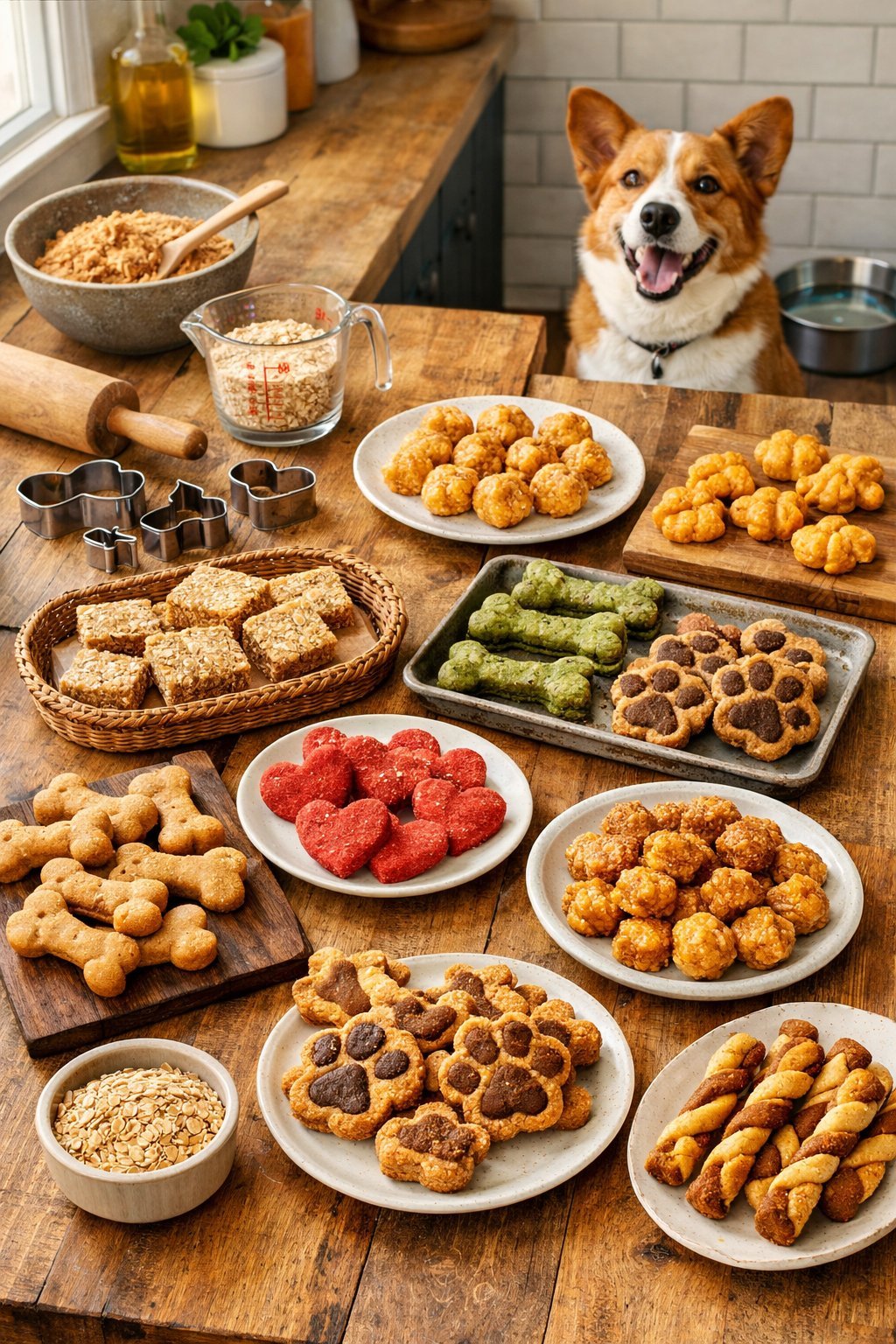
The best part about making your own dog treats is that most recipes use ingredients you probably already have in your kitchen. Things like peanut butter, pumpkin, oats, and flour are common staples that work great for simple dog treat recipes with five ingredients or less.
Your dog will love the fresh taste, and you’ll love knowing exactly what they’re eating.
Whether you want crunchy biscuits or soft treats for training, these recipes are perfect for beginners. I’ll walk you through everything from the basic ingredients and tools you need to storage tips that keep your treats fresh.
Key Takeaways
- You can make healthy dog treats at home with just a few simple ingredients you likely already own
- Basic kitchen tools like a mixing bowl, baking sheet, and oven are all you need to get started
- Homemade treats can be stored properly to stay fresh and safe for your dog to enjoy
Essential Ingredients for Homemade Dog Treats
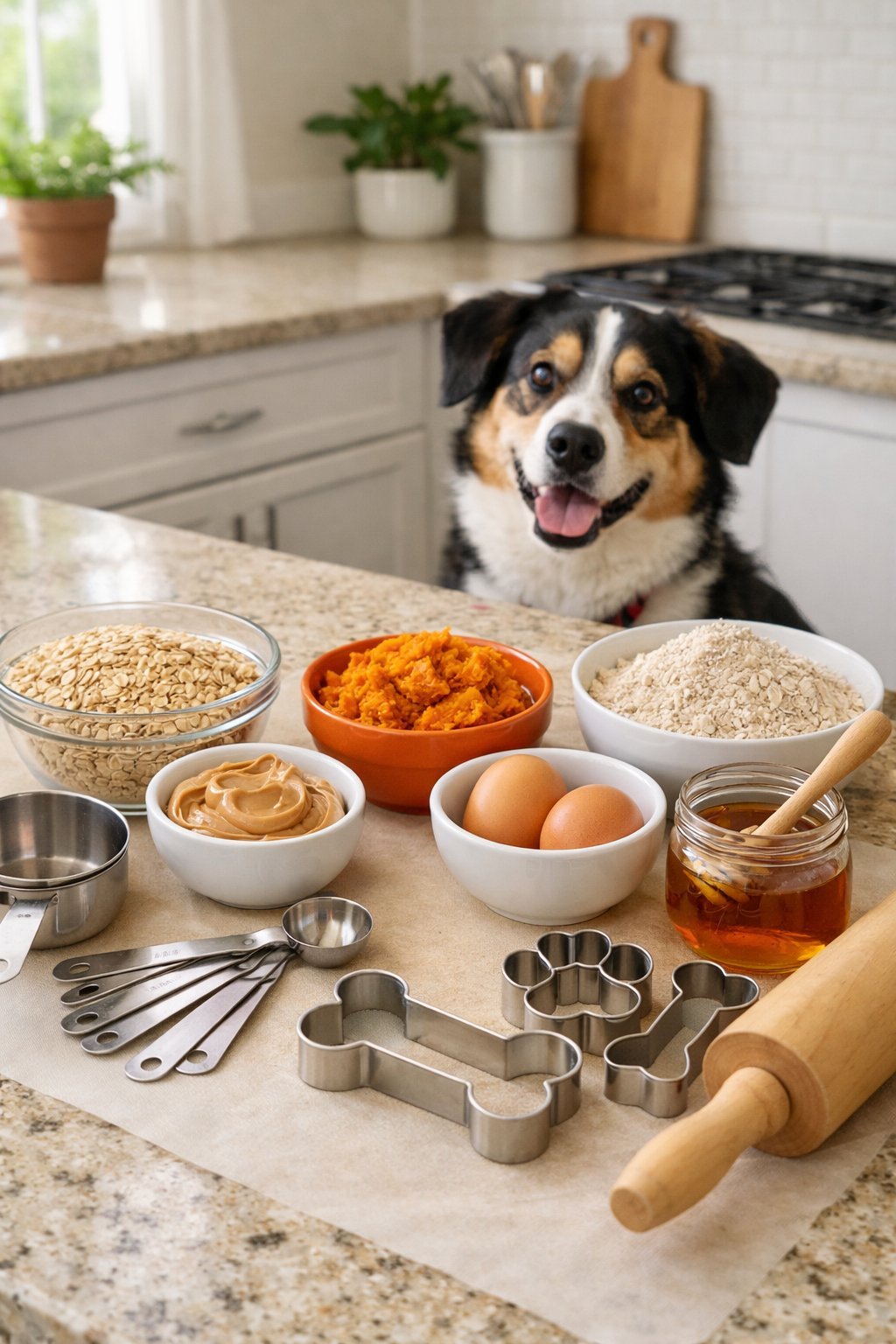
When I make dog treats at home, I focus on using whole food ingredients that provide nutrition and taste great. The key is choosing dog-safe options while avoiding ingredients that can harm your pup.
Safe and Healthy Choices
I always start with a base of whole wheat flour, oat flour, or rice flour for my dog treats. These flours give treats structure and are easy for dogs to digest.
Whole wheat flour works well for most recipes, while oat flour is gentler on sensitive stomachs. For protein, I use peanut butter (xylitol-free only), eggs, plain yogurt, or canned pumpkin.
Peanut butter adds flavor dogs love, but I always check the label to make sure it doesn’t contain xylitol, which is toxic to dogs. Eggs bind ingredients together and add protein.
I include fresh ingredients like sweet potatoes, carrots, apples, and bananas for natural sweetness and vitamins. These fruits and vegetables are safe for dogs and add moisture to treats.
Chicken or beef broth (low-sodium) can make treats more appealing to picky eaters. Healthy fats like coconut oil or olive oil help with absorption of vitamins.
I use small amounts since too much fat can upset a dog’s stomach.
Common Allergens to Avoid
I never use chocolate, grapes, raisins, onions, garlic, or xylitol in dog treats. These ingredients are toxic to dogs and can cause serious health problems.
Chocolate contains theobromine, which dogs cannot process safely. Macadamia nuts are also dangerous for dogs—even small amounts can cause weakness and vomiting.
I skip all nuts except peanuts and cashews, which are safe in moderation. Some dogs have allergies to wheat, dairy, or chicken.
I watch for signs like itching, ear infections, or digestive issues after introducing new ingredients. If I notice these symptoms, I eliminate the suspected allergen from future recipes.
Salt and sugar should be limited in dog treats. While not toxic in small amounts, treats should make up no more than 10% of your dog’s daily calories, so I keep these ingredients minimal.
Ingredient Substitutions for Special Diets
For grain-free treats, I replace wheat flour with coconut flour, chickpea flour, or almond flour. Coconut flour absorbs more liquid, so I use less of it than regular flour.
Chickpea flour works well in savory recipes. If my dog is allergic to peanut butter, I use sunflower seed butter or mashed banana instead.
Both provide moisture and binding properties. Pumpkin puree is another good substitute that adds fiber.
For dairy-free recipes, I swap yogurt with applesauce or additional pumpkin. These ingredients keep treats moist without using milk products.
Coconut milk can also work in some recipes. I replace eggs with ground flaxseed mixed with water (1 tablespoon flaxseed plus 3 tablespoons water equals one egg).
This mixture needs to sit for five minutes before adding to the recipe. Mashed banana can also replace eggs in sweet treats.
Must-Have Kitchen Tools and Equipment
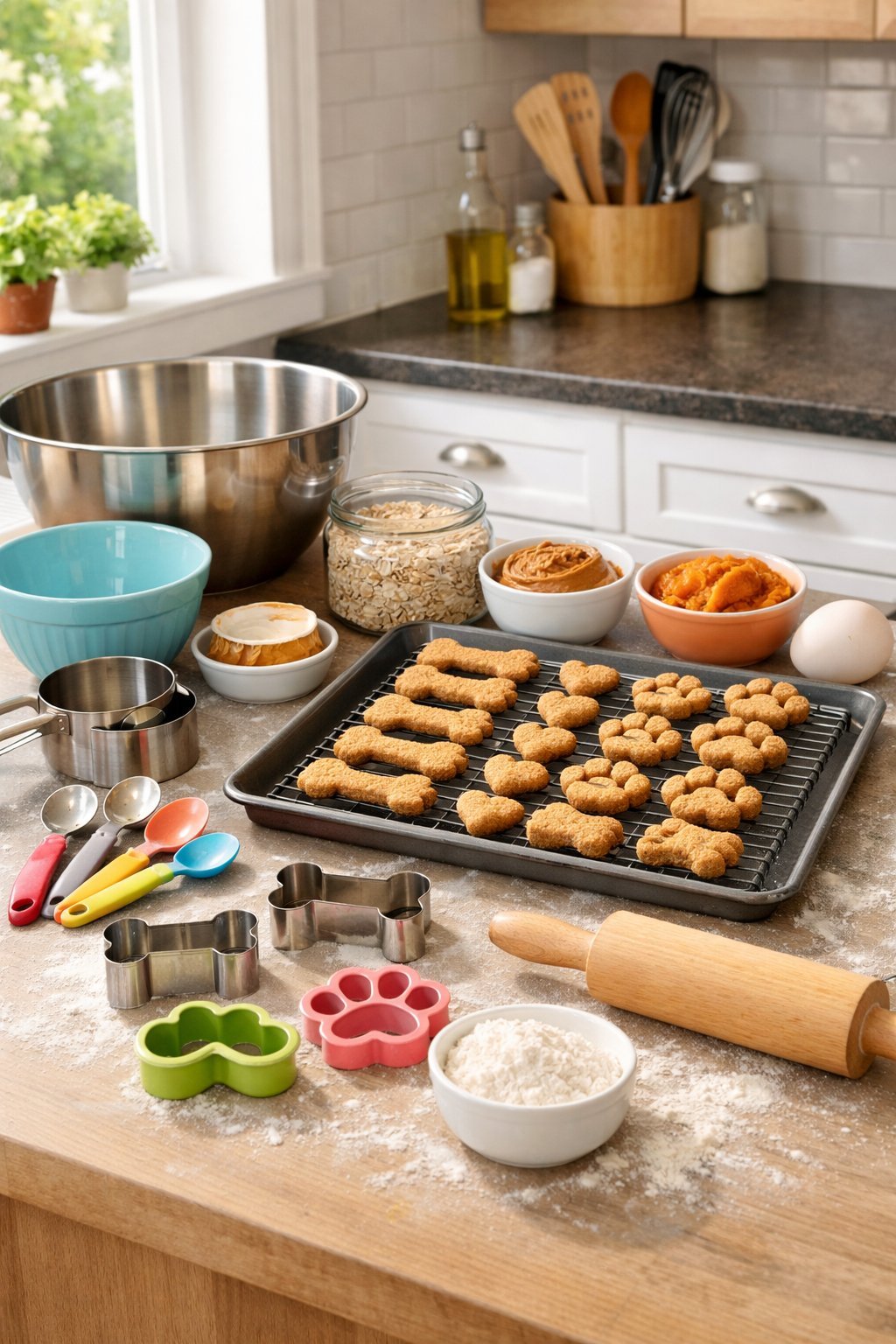
You don’t need to buy expensive or specialized equipment to start making dog treats at home. Basic kitchen tools like mixing bowls and baking sheets will get you started, plus a few helpful gadgets can make the process even easier.
Basic Baking Supplies
I recommend gathering these essential items before you begin:
Mixing bowls – I use at least two different sizes for combining wet and dry ingredients separately.
Measuring cups and spoons – Accurate measurements help your treats turn out right every time.
Baking sheets – Standard cookie sheets work perfectly for most treat recipes.
Parchment paper – This prevents sticking and makes cleanup much faster.
Cookie cutters – Bone-shaped cutters are fun, but any shape works fine for your dog.
Rolling pin – I use this to flatten dough to an even thickness before cutting shapes.
Most recipes require only these basic kitchen tools and equipment, which you probably already own.
Useful Gadgets for Beginners
A few extra tools can speed up the treat-making process.
Silicone baking mats – These are reusable alternatives to parchment paper that last for years.
Food processor – I use mine to quickly mix ingredients and puree fruits or vegetables.
Airtight storage containers – These keep finished treats fresh for up to two weeks in the refrigerator.
Wire cooling rack – This allows air to circulate around treats so they cool evenly and get crispy.
Treat molds – Silicone molds let you skip the rolling and cutting steps entirely.
None of these gadgets are required, but they make creating homemade treats simpler and more enjoyable.
Top 10 Easy Homemade Dog Treat Recipes
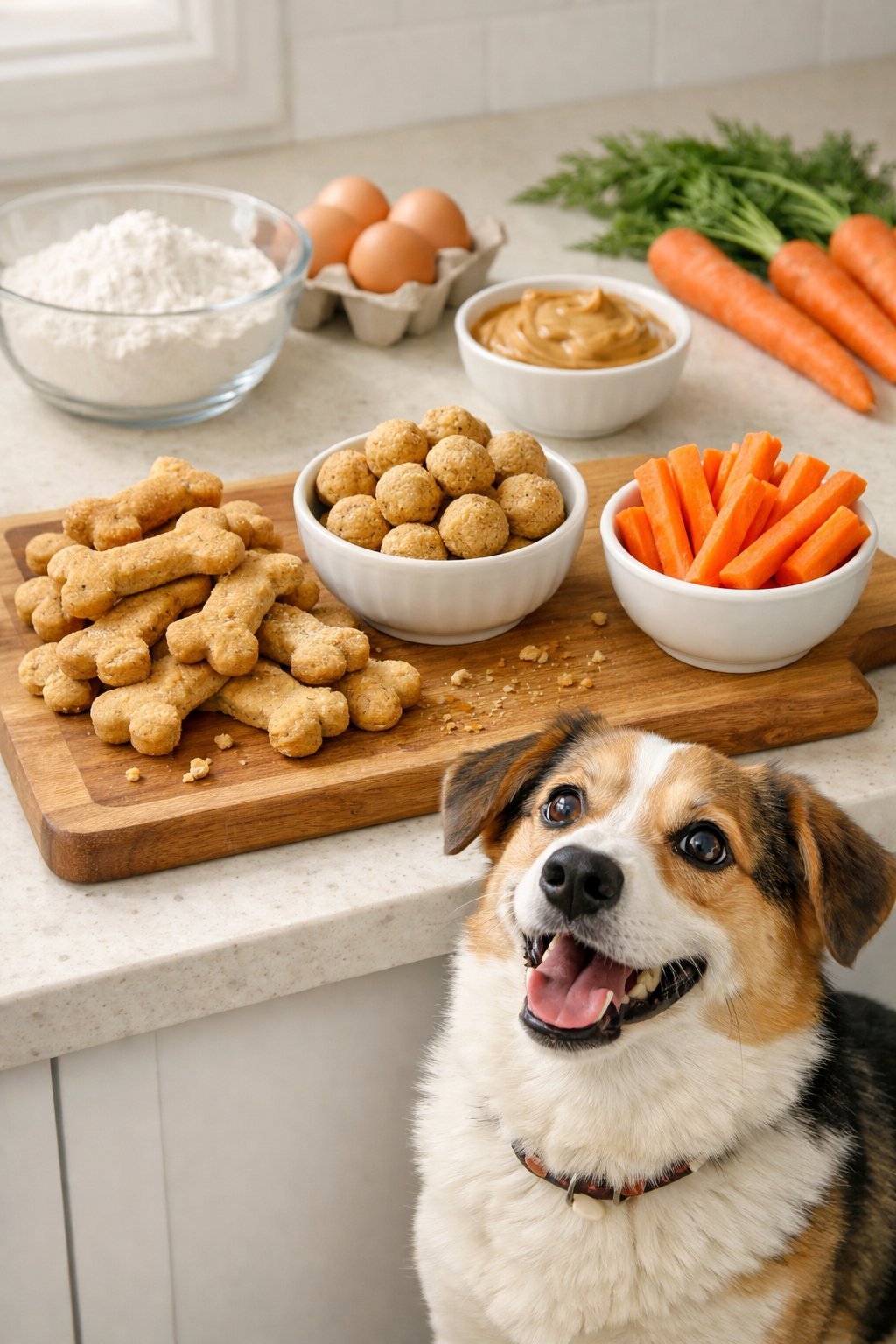
These four recipes use basic ingredients you probably already have in your kitchen. Each one takes less than 30 minutes to prepare and requires no special baking skills.
Peanut Butter and Oat Biscuits
I love making these biscuits because they only need three main ingredients: rolled oats, peanut butter, and water. Make sure to use unsalted peanut butter without xylitol, which is toxic to dogs.
Mix 2 cups of rolled oats with 1 cup of peanut butter and 1/2 cup of water until you get a thick dough. Roll it out to about 1/4 inch thick on a floured surface.
Cut shapes with cookie cutters or just slice into squares. Bake at 350°F for 15-20 minutes until the edges turn golden brown.
Let them cool completely before giving them to your dog. These treats stay fresh in an airtight container for up to two weeks.
I find that most dogs go crazy for the peanut butter smell when these are baking. You can also add a mashed banana to the dough for extra flavor.
Pumpkin and Apple Bites
Pumpkin is great for dogs’ digestion, and apples add natural sweetness and crunch. I use canned pure pumpkin (not pie filling) because it’s easier than cooking fresh pumpkin.
Combine 1 cup of pumpkin puree, 1 grated apple (remove the seeds first), 2 1/2 cups of whole wheat flour, and 2 eggs. Mix until you have a firm dough that you can roll out.
Cut into small bite-sized pieces since these treats are soft and chewy. Bake at 350°F for 25-30 minutes.
They should feel firm to the touch when done. Store them in the fridge for up to a week or freeze them for longer storage.
Chicken and Sweet Potato Chews
I make these when I want to give my dog something special that feels like a real meal. You’ll need cooked chicken breast and one large sweet potato.
Slice the sweet potato into thin strips about 1/4 inch thick. Cut the cooked chicken into small chunks.
Lay the sweet potato strips on a baking sheet lined with parchment paper and top each one with a piece of chicken. Bake at 250°F for 3 hours to dehydrate them into chewy treats.
The low temperature and long cooking time removes moisture so they last longer. Check them every hour to make sure they don’t burn.
These take more time but very little active work. My dog loves the meaty flavor and chewy texture.
Keep them in the fridge for up to 10 days.
Frozen Banana Yogurt Pops
These frozen treats are perfect for hot days or after walks. I use plain Greek yogurt because it has more protein and less sugar than regular yogurt.
Mash 2 ripe bananas in a bowl and mix in 1 cup of plain yogurt. Pour the mixture into ice cube trays or small silicone molds.
Freeze for at least 4 hours until solid. Pop one out whenever your dog needs a cool snack.
These work great as training rewards too since dogs usually finish them quickly. I also add a spoonful of peanut butter to some of the molds for variety.
They require no baking and last for months in the freezer. Just make sure your dog doesn’t have any dairy sensitivities before trying these.
Step-by-Step Guide to Making Dog Treats at Home
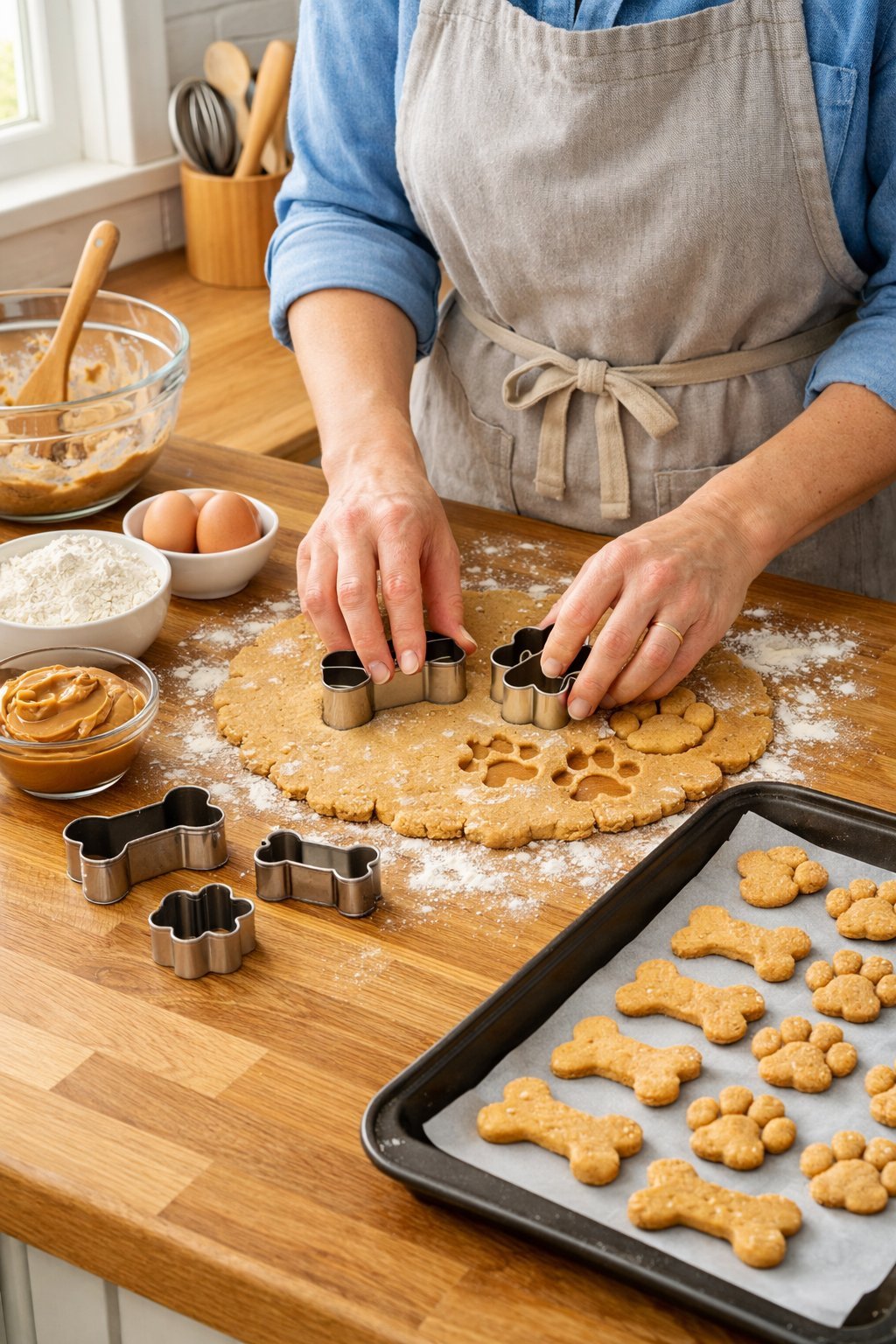
Making dog treats involves three main steps: mixing your ingredients into a workable dough, shaping and baking them properly, and storing them so they stay fresh for your pup.
Preparing the Dough and Mixing Ingredients
I always start by gathering all my ingredients before I begin mixing. This makes the process smoother and helps me avoid forgetting anything important.
Most homemade dog treat recipes use basic ingredients like whole wheat flour, oats, peanut butter, eggs, and water or broth. I measure everything carefully and place it in a large mixing bowl.
When combining ingredients, I start with the wet ingredients first. I mix things like peanut butter, eggs, and any liquids until they’re well blended.
Then I gradually add the dry ingredients. The key is to mix until I get a dough that holds together but isn’t too sticky.
If the dough feels too wet, I add a tablespoon of flour at a time. If it’s too dry and crumbly, I add water one teaspoon at a time.
I knead the dough for about 2-3 minutes on a lightly floured surface. This helps everything combine evenly and makes the dough easier to work with.
Shaping and Baking Treats
I roll out the dough to about 1/4 inch thickness on a floured surface or between two pieces of parchment paper. This thickness helps the treats bake evenly and get nice and crunchy.
For shaping, I use cookie cutters in fun shapes like bones or hearts. My dog doesn’t care about the shape, but it makes the process more enjoyable for me.
You can also just cut the dough into small squares with a knife or pizza cutter. It’s quick and easy if you don’t have cookie cutters handy.
I place the shaped treats on a parchment-lined baking sheet, leaving about half an inch between each one. Most treats bake at 350°F for 20-30 minutes, depending on thickness.
I check them at the 20-minute mark. The treats should be firm and slightly golden around the edges.
For crunchier treats, I turn off the oven and let them sit inside for another 10-15 minutes.
Cooling and Storage Methods
I always let the treats cool completely on a wire rack before storing them. This usually takes about 30-40 minutes.
If I store them while they’re still warm, moisture can get trapped and they might get moldy. Once cooled, I store my homemade treats in an airtight container at room temperature.
They typically stay fresh for about one week this way. For longer storage, I keep them in the refrigerator for up to two weeks.
I can also freeze them in freezer-safe bags for up to three months. Proper storage prevents spoilage since homemade treats don’t have preservatives like store-bought ones.
I label my containers with the date I made them so I know when to toss any old batches. If I notice any signs of mold or an off smell, I throw them out right away.
Tips for Storing and Serving Homemade Treats
Proper storage keeps your homemade treats fresh and safe for weeks or months. Serving the right portion size based on your dog’s weight helps prevent overfeeding and upset stomachs.
Shelf Life and Refrigeration
I always store dry, crunchy treats like biscuits in airtight containers at room temperature. These treats usually stay fresh for up to two weeks on the counter if they’re completely dry and contain no meat or dairy.
For treats with moisture or ingredients like peanut butter, pumpkin, or meat, I refrigerate them in sealed containers. Most homemade dog treats can safely stay fresh for 1-3 months when properly refrigerated or frozen.
I freeze batches of treats in freezer bags or airtight containers when I make large quantities. This extends the shelf life of baked goods and is great for frozen treats.
I label each container with the date I made them so I can track freshness.
Signs your treats have gone bad:
- Mold or discoloration
- Sour or rancid smell
- Slimy texture
- Crumbling or excessive hardness
Portion Control for Different Dog Sizes
I follow the 10% rule when giving my dogs treats. Treats should make up no more than 10% of their daily calories.
| Dog Size | Weight Range | Treat Portion |
|---|---|---|
| Small | Under 20 lbs | 1-2 small treats |
| Medium | 20-50 lbs | 2-3 medium treats |
| Large | 50-100 lbs | 3-4 large treats |
| Giant | Over 100 lbs | 4-5 large treats |
When I’m training, I break larger treats into smaller pieces. That way, I can reward my dog more often without overdoing it.
For puppies, I cut portions in half since they don’t need as many calories as adults.