Mud Room Dog Feeding Station: Creating a Clean and Organized Space for Your Pet

Your mudroom can do more than just store shoes and coats. Adding a dog feeding station to this space keeps food bowls off your kitchen floor and creates a dedicated spot for your pet to eat. A mud room dog feeding station combines storage for pet supplies with a designated feeding area, making mealtime more organized and keeping your home cleaner.
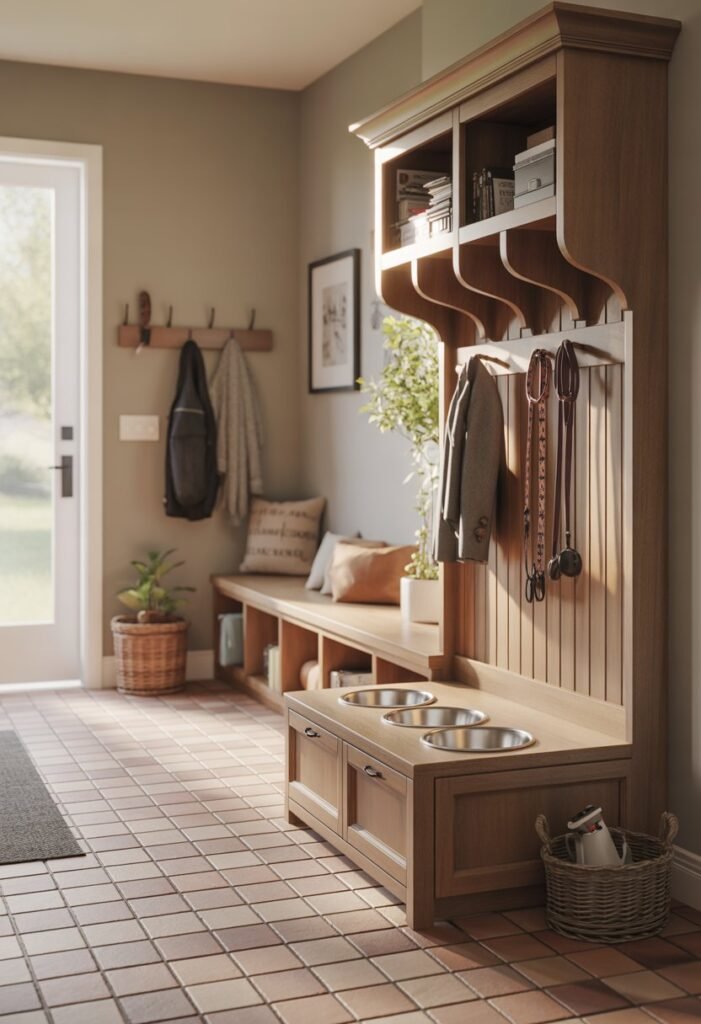
I’ve seen how much easier life becomes when pet items have their own place. Built-in dog food stations blend style with practicality and help you avoid tripping over bowls or searching for food containers. The mudroom location makes sense because pets often enter through this area after walks and outdoor time.
Setting up a feeding station doesn’t require a complete renovation. You can use existing cabinets, add pull-out drawers for food storage, or create a simple raised platform for bowls. The key is designing something that works for your space and makes daily pet care simpler.
Key Takeaways
- A mudroom dog feeding station keeps pet supplies organized and meals contained in one area
- You can create a functional feeding station using built-in cabinets, pull-out storage, or simple raised platforms
- The best designs combine food storage, water access, and easy cleanup features in your mudroom space
What Is a Mud Room Dog Feeding Station?
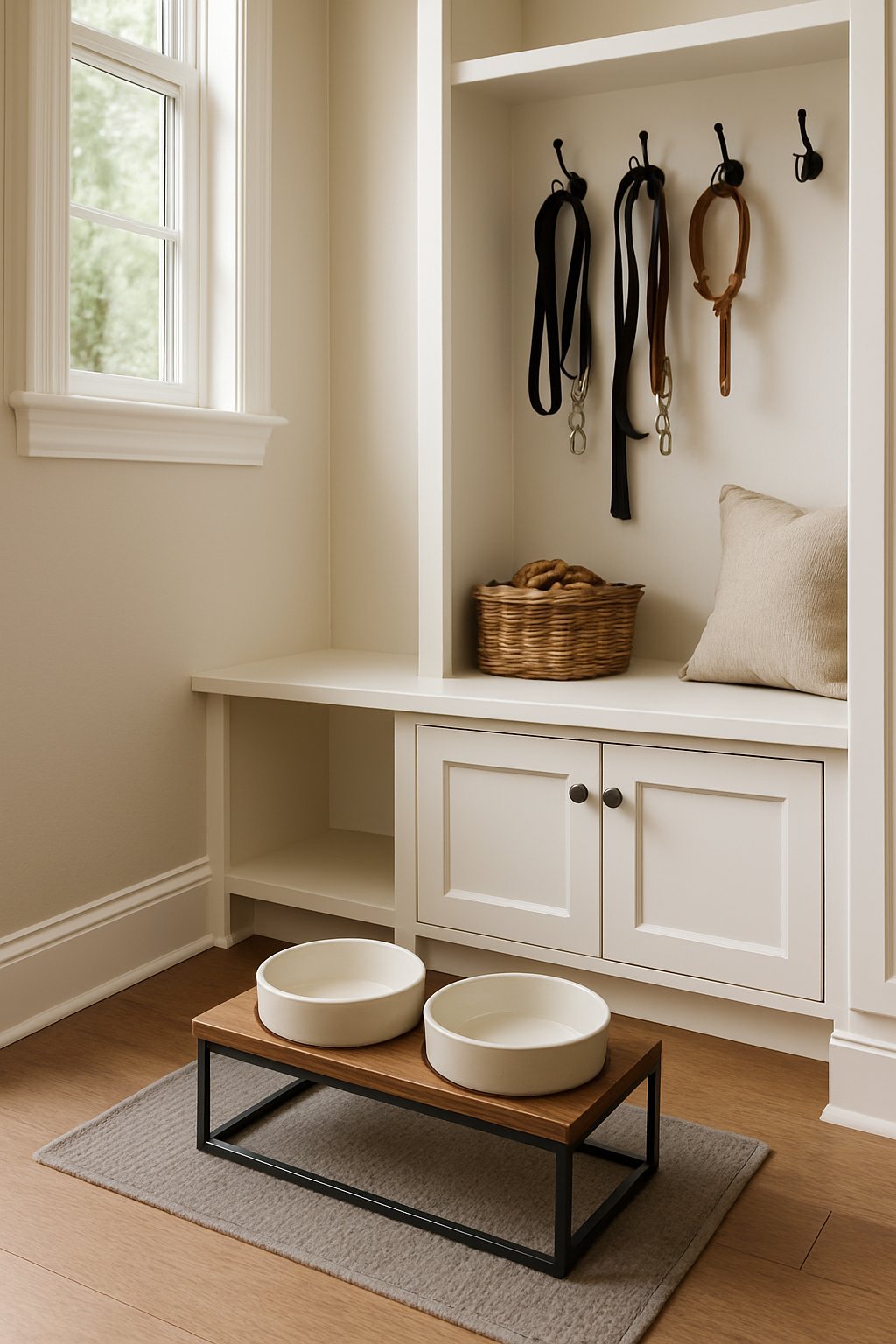
A mud room dog feeding station combines a dedicated eating area for your pet with the practical benefits of a mudroom entry space. This setup keeps food bowls, water dishes, and pet supplies organized in one convenient spot near your home’s entrance.
Defining Mud Room Spaces
A mudroom is a transitional area between the outdoors and the main living spaces of your home. It’s typically located near a back door, side entrance, or garage entry. I find that mudrooms serve as catch-all zones where families remove dirty shoes, hang coats, and store outdoor gear.
These spaces usually include storage cabinets, benches, hooks, and shelving. The flooring in mudrooms is often tile, vinyl, or another water-resistant material that’s easy to clean. Most mudrooms range from 20 to 50 square feet, though some homes have larger or smaller versions.
Pet owners have started transforming these practical spaces into pet-friendly mudrooms that accommodate their dogs’ needs. The location makes sense since pets often enter through the same doors after outdoor activities.
Features of a Dog Feeding Station
A dog feeding station in a mudroom typically includes raised or floor-level bowls for food and water. Many homeowners use built-in cabinets with open lower spaces to create a dedicated feeding nook.
Common features include:
- Food storage containers or pull-out drawers for kibble
- Elevated bowl holders for larger dogs or senior pets
- Water bowls with plumbing connections for automatic filling
- Mat or tray underneath to catch spills
- Pull-out drawers for treats and feeding accessories
I recommend choosing materials that resist moisture and are easy to wipe down. Stainless steel bowls work better than plastic since they don’t harbor bacteria. Some stations incorporate a small drawer for scoops, medications, or feeding instructions.
Benefits for Pets and Owners
Setting up a feeding station in the mudroom keeps pet mess contained in one area. I don’t have to worry about food bowls cluttering my kitchen or water spills on carpeted floors.
The location makes cleanup simpler after messy outdoor adventures. Dogs can eat right after walks without tracking dirt through the house. Storage for pet supplies stays organized when everything has a designated spot in one location.
This arrangement also promotes routine and consistency for your dog during feeding times. Pets learn to associate the mudroom with mealtime, which can reduce begging behavior in other rooms. The setup keeps food smells away from main living areas too.
Planning Your Mud Room Feeding Station
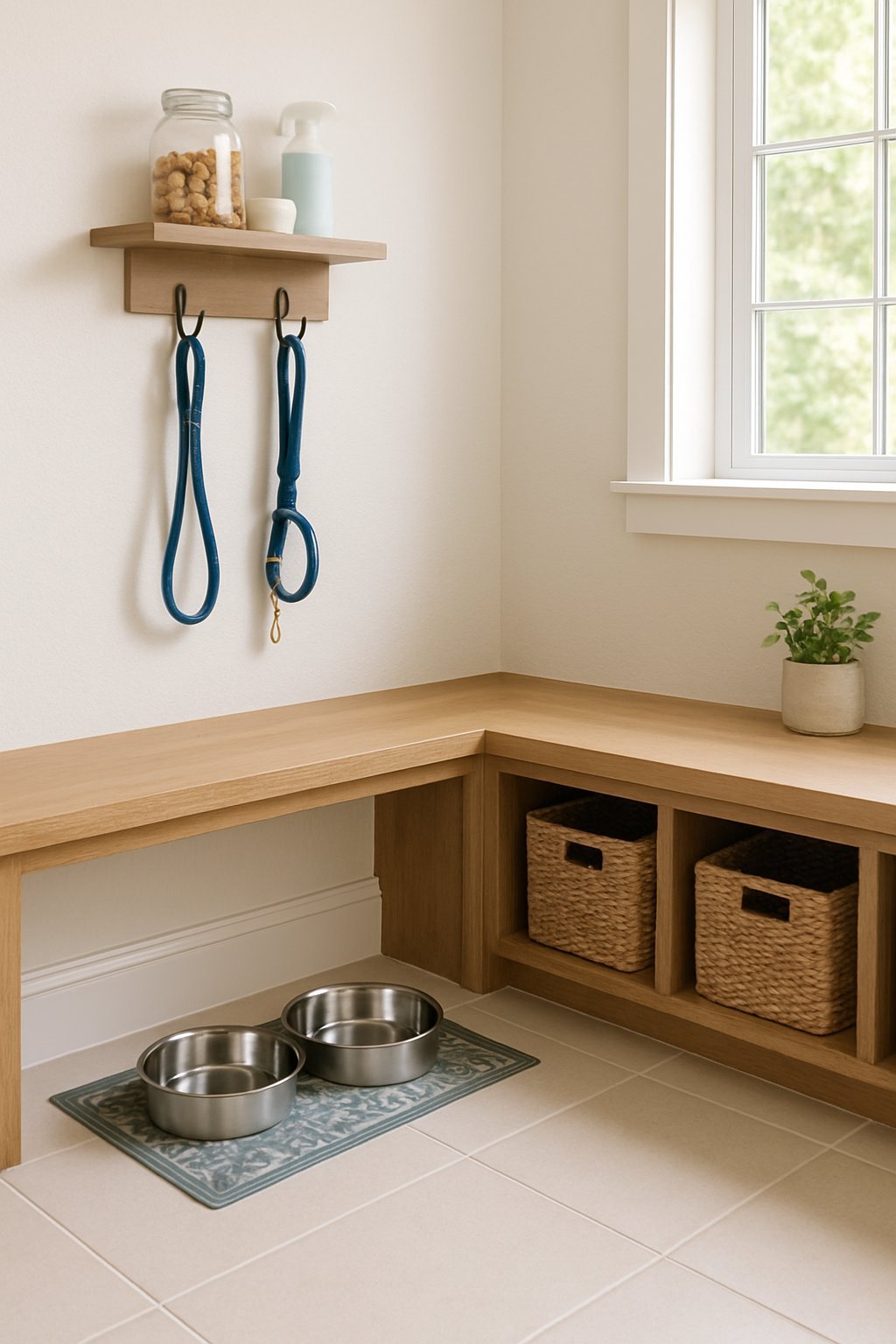
A successful feeding station starts with understanding your space limits and picking a spot that works for both daily routines and cleanup needs. I recommend thinking about how your dog moves through the area and what other pet care tasks you can handle in the same space.
Assessing Space and Layout
I always start by measuring the available floor space in my mudroom. Most dog bowls need about 18-24 inches of width for a comfortable feeding area. If I’m planning a built-in feeding station, I need to account for the depth of base cabinets, which typically run 24 inches deep.
I measure the height from floor to counter as well. Lower cabinet spaces work perfectly for bowl cutouts. I also check for nearby plumbing lines if I want to add a water spout later.
The layout should allow my dog to approach the bowls without blocking doorways or main walking paths. I sketch out a simple floor plan showing where people enter and exit. This helps me avoid placing the feeding area in high-traffic zones where someone might trip over bowls.
Choosing the Right Location
I look for a dedicated area that’s easy to clean and positioned away from the main walkway. Corner spaces work great because they use areas that often go to waste. I can tuck the feeding station there without it getting in anyone’s way.
The best spot has flooring that handles water spills and food messes. Tile or vinyl works better than carpet. I also prefer locations near a wall where I can install modular built-ins for storage.
If my mudroom connects to the kitchen or laundry room, I position the feeding station on the mudroom side. This keeps pet smells and messes contained in a space designed for easy cleanup.
Combining Feeding With Other Pet Needs
I plan my pet station to handle multiple tasks beyond just feeding. Base cabinets can store dog food bags, treats, and leashes. I add hooks nearby for hanging leashes and towels.
A drawer or bin system keeps grooming supplies organized. Some mudrooms have enough space for a small dog washing station next to the feeding area. This makes sense because both activities need water access and durable flooring.
I also think about waste management. A small trash bin for empty food cans or used grooming wipes fits under the counter. If I have cats too, the mudroom can house a litter box in a separate cabinet with ventilation.
Essential Design Elements for a Functional Station
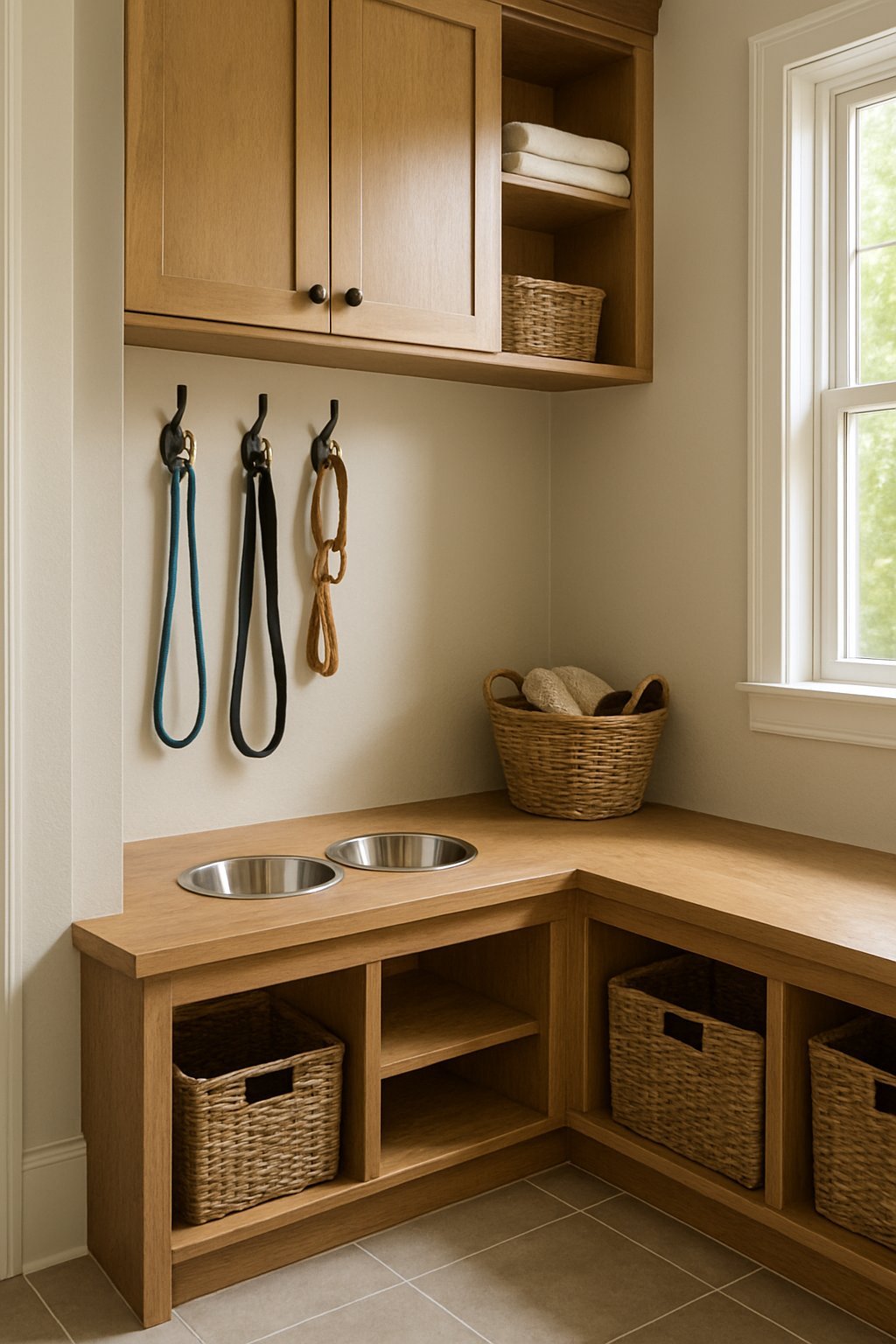
A well-designed feeding area needs the right mix of practical features to work smoothly every day. The best setups combine smart storage, durable materials, and built-in features that make feeding time easier for both you and your dog.
Built-In Feeding Solutions
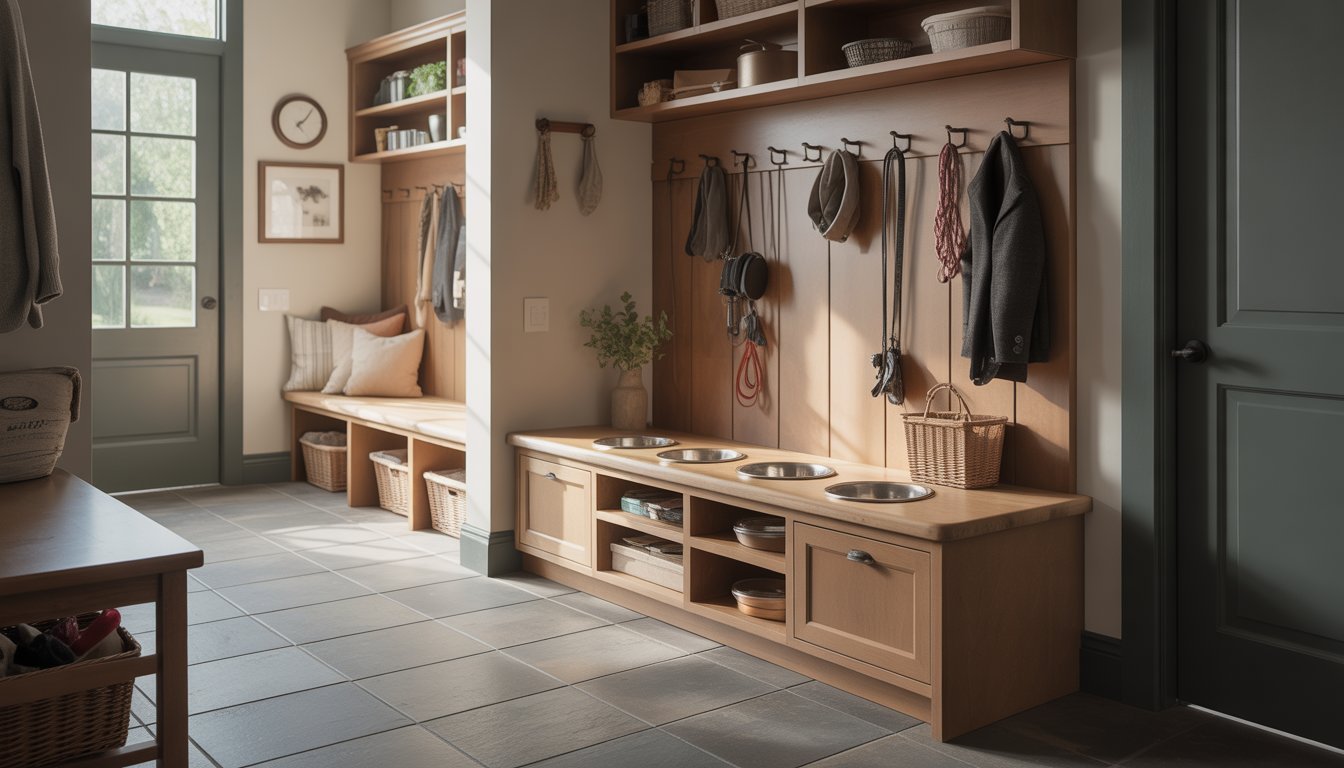
I recommend creating a feeding station with a low, built-in bar area that includes a counter with cutout holes for dog bowls. This design keeps bowls in place and prevents spills from sliding across the floor.
Raised feeding platforms work well in a mudroom because they bring food up to a comfortable height for larger dogs. I suggest installing these platforms at least 6 to 8 inches off the ground for medium-sized dogs and 12 inches for larger breeds.
Built-in feeding areas also help establish a routine. When your dog has a specific spot for meals, it creates structure around feeding time. The permanent setup means you won’t need to move bowls around or worry about them sliding on smooth floors.
Storage for Food and Supplies
Base wastebaskets and pull-out drawers make excellent pet food storage solutions in a mudroom or laundry room. I keep dry food in airtight containers to maintain freshness and prevent pests.
Floor-to-ceiling cabinets provide ample space for storing treats, medications, leashes, and grooming supplies all in one spot. I organize these items in labeled bins or baskets so everything stays easy to find.
Consider adding hooks or a small cabinet near the dog feeding station for storing food scoops, placemats, and extra bowls. This keeps everything you need within arm’s reach during feeding time.
Pet-Friendly Flooring and Surfaces
Durable, waterproof flooring is essential in any mudroom feeding area. I prefer tile, vinyl, or sealed concrete because these materials handle spills and water without staining or warping.
Stain-proof fabrics and hard-surface floors make cleanup quick after messy meals. Place a washable mat or tray under the feeding station to catch food debris and water splashes.
Avoid porous materials like unsealed wood or carpet near feeding areas. These surfaces absorb moisture and odors that become difficult to clean over time. Non-slip flooring also helps prevent your dog from sliding while eating.
Creating a Multi-Purpose Pet Zone
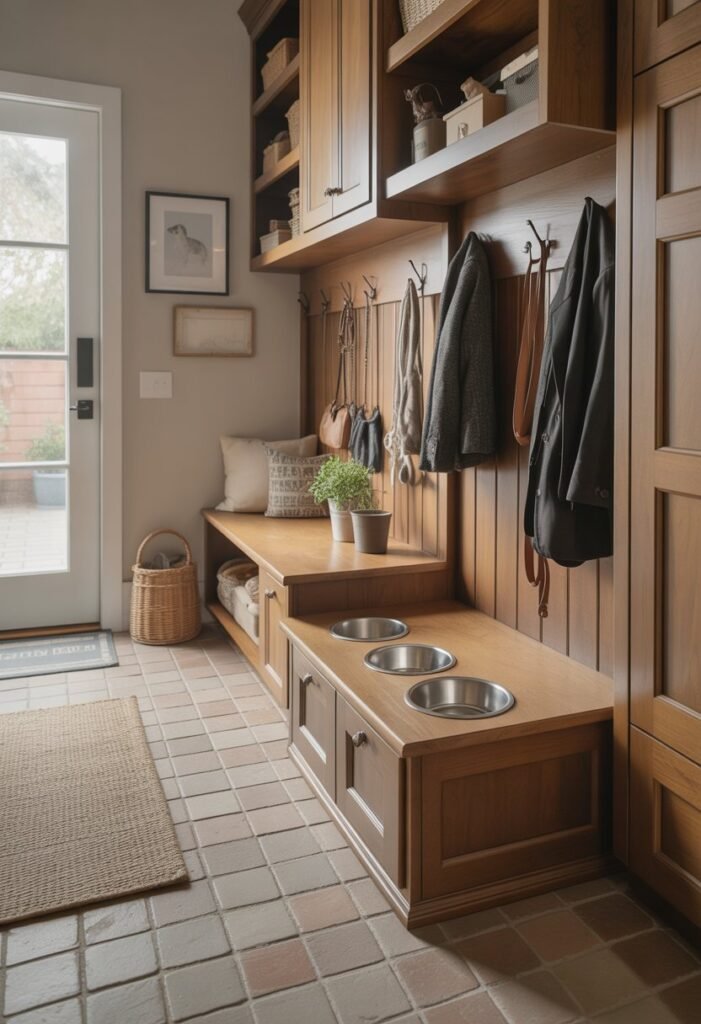
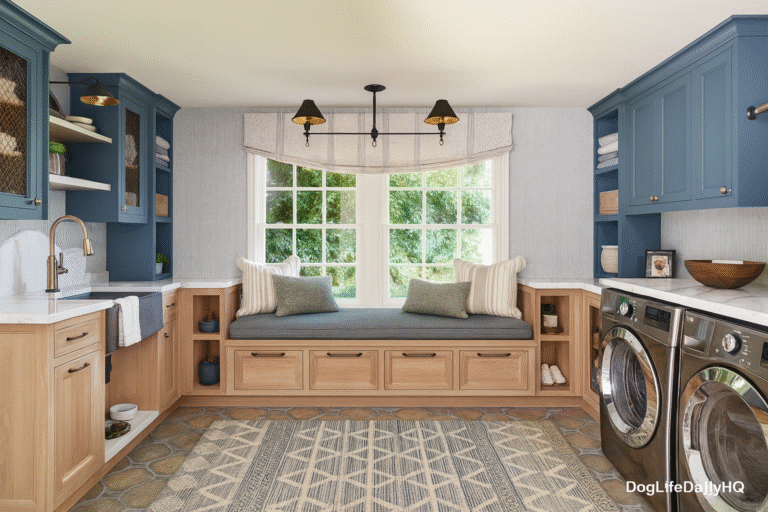
I’ve found that combining different functions in one mudroom space saves room and makes pet care much easier. A well-planned pet zone can include washing areas, food storage, and laundry functions all in one spot.
Integrating a Dog Wash Area
I recommend adding a dog wash station to your mudroom if you have the space and budget. A low basin or utility sink works great for bathing dogs after muddy walks.
I suggest installing a handheld sprayer or detachable showerhead. This makes it easy to rinse your dog thoroughly without splashing water everywhere.
Waterproof walls are important around the wash area. I like using tile or water-resistant panels that go up at least four feet from the floor. This protects your walls from water damage and makes cleanup simple.
Storage near the wash station keeps dog shampoo, towels, and grooming tools within reach. I use hooks for hanging wet towels and a small cabinet or shelf for bottles and brushes. A non-slip mat in the wash basin keeps my dog safe and comfortable during bath time.
Combining Laundry and Feeding Zones
I’ve seen many homeowners successfully combine laundry rooms with pet feeding stations. This setup works well because both areas need easy-to-clean floors and access to water.
I place food bowls away from the washer and dryer to avoid disturbing my dog during meals. A dedicated corner or wall section works perfectly. I use base cabinets to store dog food bags, which keeps them fresh and hidden.
Floor-to-ceiling cabinets provide storage for both laundry supplies and pet items. I keep dog treats, toys, and grooming supplies on lower shelves where I can grab them easily. Laundry detergent and other cleaning products go on higher shelves away from pets.
Non-slip mats under food bowls protect my floor and prevent bowls from sliding around. I choose mats that match my mudroom style but are easy to remove and clean.
Mudroom Entryway Considerations
I always think about traffic flow when setting up a pet-friendly mudroom. The feeding station should be positioned where people won’t trip over bowls when entering or leaving.
I install hooks at different heights for leashes, coats, and bags. Lower hooks work great for dog leashes and towels. I keep a basket near the door for muddy paws wipes and quick cleanup supplies.
Durable flooring is essential in a mudroom entryway. I prefer tile, luxury vinyl, or sealed concrete that can handle wet paws, spills, and heavy foot traffic. These materials clean up quickly and don’t stain.
I add a bench or seating area near the entrance. This gives me a spot to sit while putting on shoes and also works as a surface for grooming my dog before he enters the main house. Storage underneath the bench holds extra pet supplies or seasonal items.
Style and Personalization Tips
I always recommend choosing materials and finishes that work with your home’s existing design while meeting your dog’s practical needs. The right aesthetic choices and custom features make your feeding station feel like a natural part of your mudroom instead of an afterthought.
Selecting Materials and Finishes
I’ve found that durability matters most when picking materials for a dog feeding station. Stainless steel bowls resist scratches and clean easily, while ceramic options add visual appeal but chip more easily.
For the station base, I suggest water-resistant materials like sealed wood, laminate, or tile. These surfaces handle spills without damage. Quartz countertops work well for elevated dog bowl stations because they resist stains and stay sanitary.
I prefer matte finishes over glossy ones since they hide paw prints and water spots better. Dark colors show less dirt between cleanings, though lighter tones can brighten small spaces.
Consider adding a backsplash behind the feeding area. This protects your walls from food splatter and water. Subway tile or beadboard are both attractive and easy to wipe down.
Matching Kitchen or Laundry Room Aesthetics
I make sure my dog feeding station coordinates with nearby rooms to create a cohesive look throughout my home. If your mudroom connects to your kitchen, match the cabinet hardware and paint colors for a unified feel.
When your kitchen design features white cabinets, I’d use the same color for your feeding station storage. This creates visual flow between spaces. The same principle applies to wood tones and metal finishes.
I also consider matching flooring materials or using complementary options. If your kitchen has hardwood, extend it into the mudroom or choose a similar tone in tile.
Style consistency includes small details like drawer pulls, cabinet door styles, and trim work. These elements tie everything together without requiring major changes.
Customization for Your Dog’s Size and Needs
I always measure my dog before building or buying a feeding station. Small dogs need bowls 2-4 inches off the ground, while large breeds benefit from heights of 12-18 inches to reduce neck strain.
Bowl placement depends on how many pets you have. I space multiple bowls at least 12 inches apart to prevent food aggression. Storage solutions for food and supplies should sit within easy reach but out of your dog’s access.
I add features based on my dog’s habits. Messy eaters need deeper containment trays or raised edges. Dogs who gulp water benefit from slow-feed bowl inserts or splash guards.
For homes with multiple dogs or growing puppies, I recommend adjustable height stations. These adapt as your pets’ needs change without requiring a complete rebuild.