No Bake Dog Treats Homemade: Quick and Easy Recipes Your Furry Friend Will Love

No Bake Dog Treats Homemade – Making homemade dog treats doesn’t have to mean heating up your oven or spending hours in the kitchen.
No bake dog treats let you create healthy, delicious snacks for your pup using simple ingredients that set in the fridge or freezer instead of requiring any baking time.
I love how these easy homemade no-bake dog treats come together in just minutes with ingredients you probably already have in your pantry.

I’ve found that no bake treats are perfect for busy pet parents who want to give their dogs something special without the fuss.
These recipes combine dog-safe ingredients like peanut butter, oats, and pumpkin into treats that can be made in under ten minutes of active time.
Your dog gets a tasty reward while you skip the mess and wait time of traditional baking.
Whether you’re looking for simple 3 ingredient recipes or want to try something more creative, no bake treats offer endless possibilities.
I’m excited to share my favorite recipes and tips so you can start making these quick snacks for your furry friend today.
Key Takeaways
- No bake dog treats require only mixing ingredients and chilling them instead of using an oven
- Most recipes use simple, healthy ingredients like peanut butter, oats, and pumpkin that take less than ten minutes to prepare
- These homemade treats let you control what your dog eats while saving time and avoiding kitchen cleanup
Benefits of No Bake Dog Treats Homemade
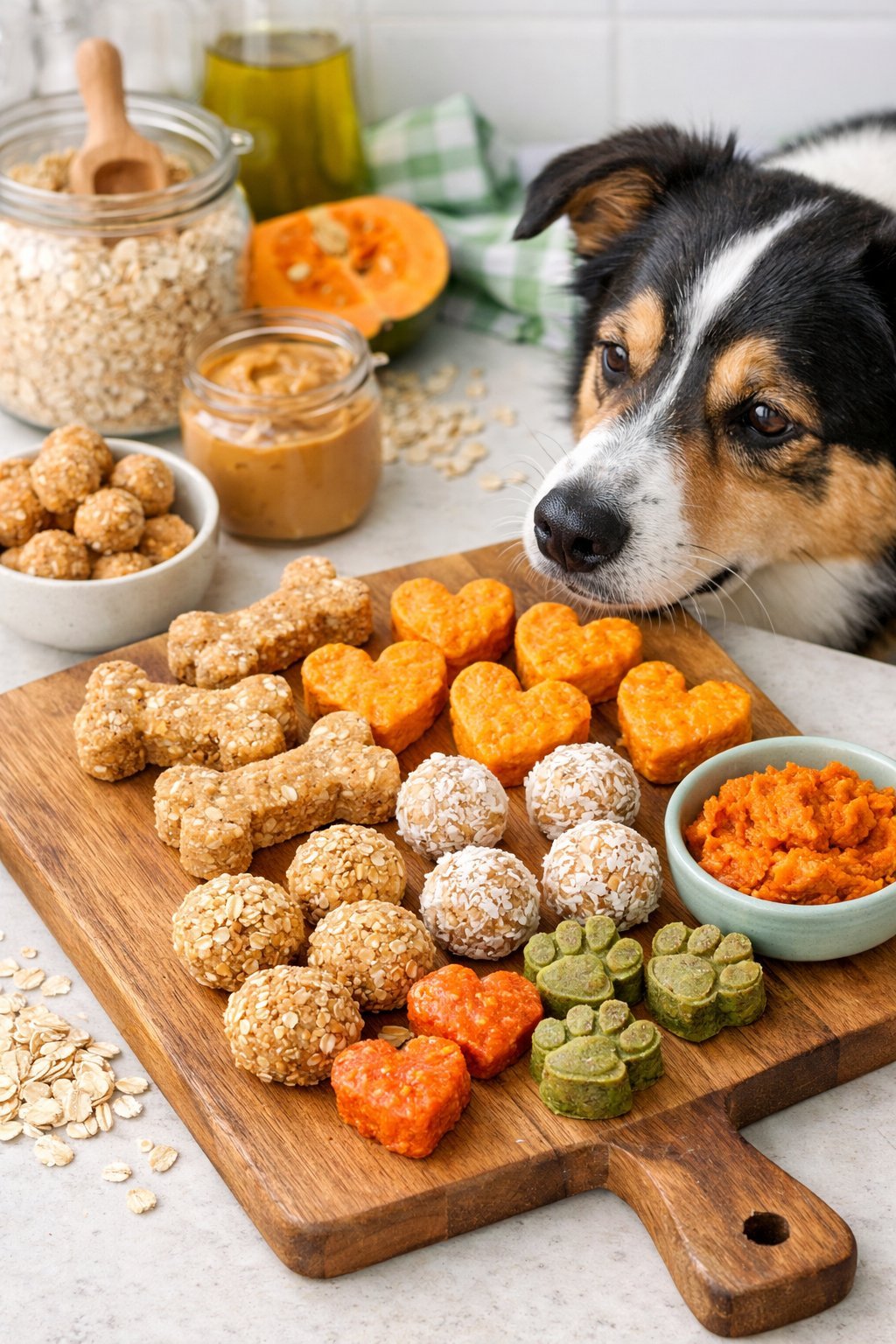
Making treats at home gives you control over what your dog eats while saving time in the kitchen.
No-bake dog treats let you create healthy snacks in minutes without turning on your oven.
Healthier Ingredients for Your Pup
When I make treats at home, I know exactly what goes into each bite.
Store-bought treats often contain preservatives, fillers, and artificial flavors that my dog doesn’t need.
I can choose whole food ingredients like peanut butter, oats, bananas, and pumpkin.
These wholesome, simple ingredients provide real nutrition instead of empty calories.
Many commercial treats use low-quality proteins and cheap fillers to cut costs.
By making my own, I pick high-quality ingredients that support my dog’s health.
I avoid added sugars, salt, and mystery ingredients that appear on store-bought labels.
Convenience and Speed
No-bake treats require zero oven time but still deliver results my dog loves.
I can whip up a batch in just a few minutes when I’m running low on treats.
The process is simple: mix ingredients, shape them, and let them chill.
I don’t need to preheat an oven, watch baking times, or worry about burning anything.
Most recipes only need a fridge or freezer to set.
This speed makes it easy to prepare treats even on busy days.
I can make a fresh batch during commercial breaks or while my coffee brews in the morning.
Customizable Recipes
I love that I can adjust recipes based on what my dog enjoys most.
If my pup prefers chicken over beef, I simply swap the protein.
Picky eaters get flavors they actually want to eat.
I can also control portion sizes to match my dog’s needs.
Small dogs get bite-sized pieces while larger dogs get bigger treats.
The texture is easy to adjust too—I make them softer for senior dogs or firmer for active chewers.
Adding ingredients my dog loves, like blueberries or sweet potato, makes treats more exciting.
I rotate flavors to keep things interesting and prevent boredom.
Allergy-Friendly Options
Dogs with food sensitivities benefit most from homemade treats.
I can avoid preservatives and common allergens that trigger reactions in sensitive pups.
Common allergens in commercial treats include:
- Wheat and corn
- Dairy products
- Chicken or beef (for some dogs)
- Artificial colors and flavors
- Soy
When my dog has allergies, I create recipes that work with their dietary restrictions.
A dog allergic to chicken can enjoy treats made with turkey or fish instead.
Grain-free options use ingredients like coconut flour or ground flaxseed.
This level of customization isn’t possible with store-bought treats.
I control every ingredient, which gives me peace of mind about what my dog consumes.
Essential Ingredients and Supplies
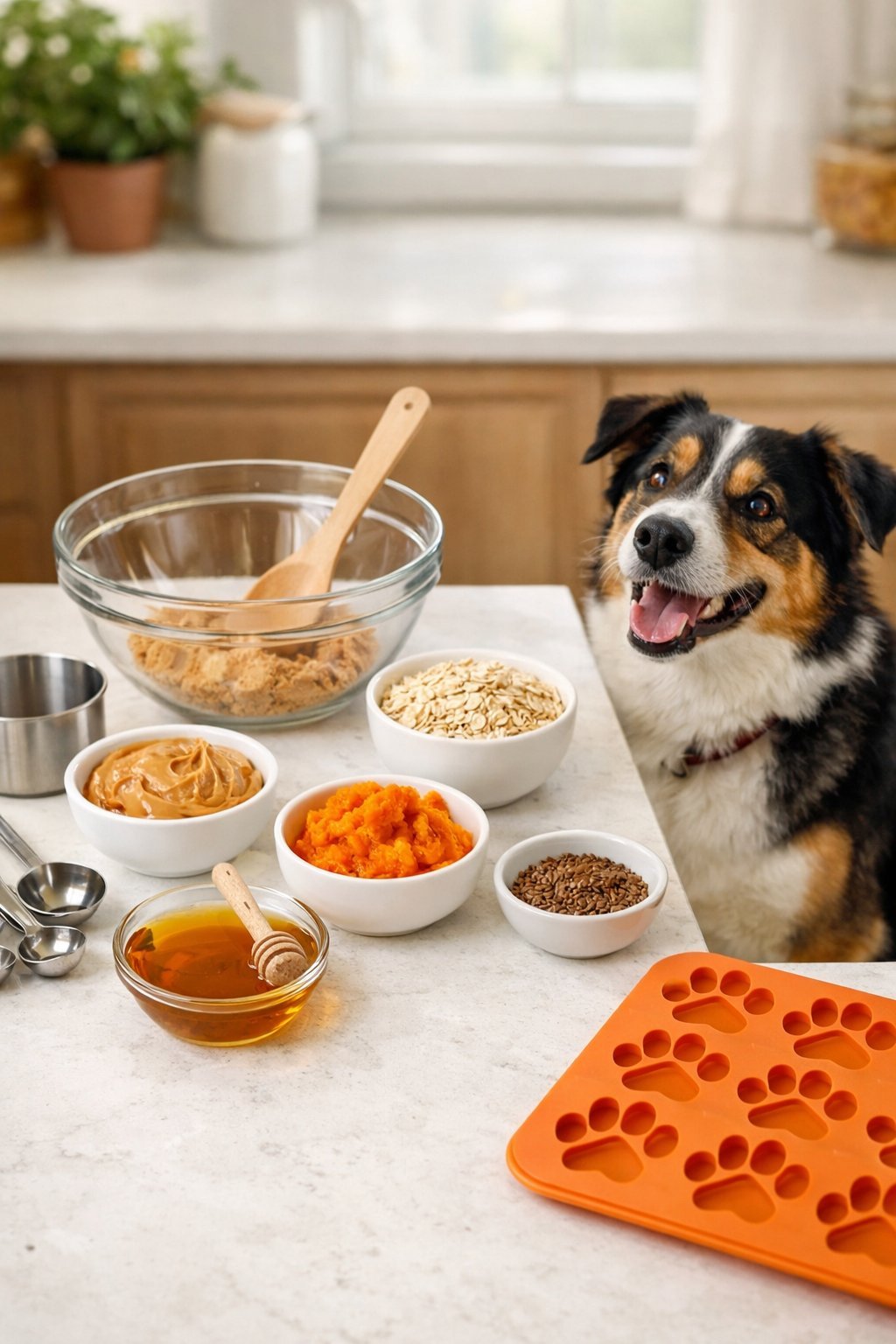
Making no-bake dog treats requires just a few basic ingredients and simple kitchen tools you probably already have at home.
I’ll walk you through the safe ingredients your dog will love, the supplies that make treat-making easy, and the foods you should never include.
Dog-Safe Ingredients to Use
Peanut butter is one of the best bases for no-bake dog treats.
I always use natural peanut butter without xylitol, which is toxic to dogs.
Look for brands with just peanuts and maybe a bit of salt.
Greek yogurt works great for frozen treats and adds protein.
Plain, unsweetened yogurt is what I stick with since dogs don’t need added sugars.
Oats provide fiber and help bind ingredients together.
I use rolled oats or oat flour in most of my recipes.
Bananas add natural sweetness and make treats creamy.
They mash easily and dogs love the taste.
Other safe ingredients include:
- Pumpkin puree (not pie filling)
- Blueberries
- Sweet potato
- Carrots
- Unsweetened applesauce
- Coconut oil
- Honey (in small amounts)
Must-Have Kitchen Tools
I keep my treat-making simple with basic tools.
A mixing bowl and spoon are essential for combining ingredients.
Measuring cups help me get portions right.
Silicone molds or ice cube trays work perfectly for shaping treats, and they make removal easy after freezing.
A food processor speeds up the process when I need to blend ingredients smooth.
Parchment paper prevents sticking when I roll out treat dough.
Storage containers keep finished treats fresh.
I use airtight containers for refrigerated treats and freezer bags for frozen ones.
Ingredients to Avoid
Never use these ingredients in dog treats:
- Xylitol (found in sugar-free products)
- Chocolate
- Grapes or raisins
- Onions and garlic
- Macadamia nuts
- Avocado
Xylitol is the most dangerous ingredient I watch for.
It’s hidden in many peanut butters and baked goods, and even small amounts can be deadly to dogs.
Artificial sweeteners should stay out of dog treats completely.
I also avoid ingredients high in salt or sugar.
While a tiny bit won’t hurt, dogs don’t process these well.
Quick and Easy No Bake Dog Treat Recipes
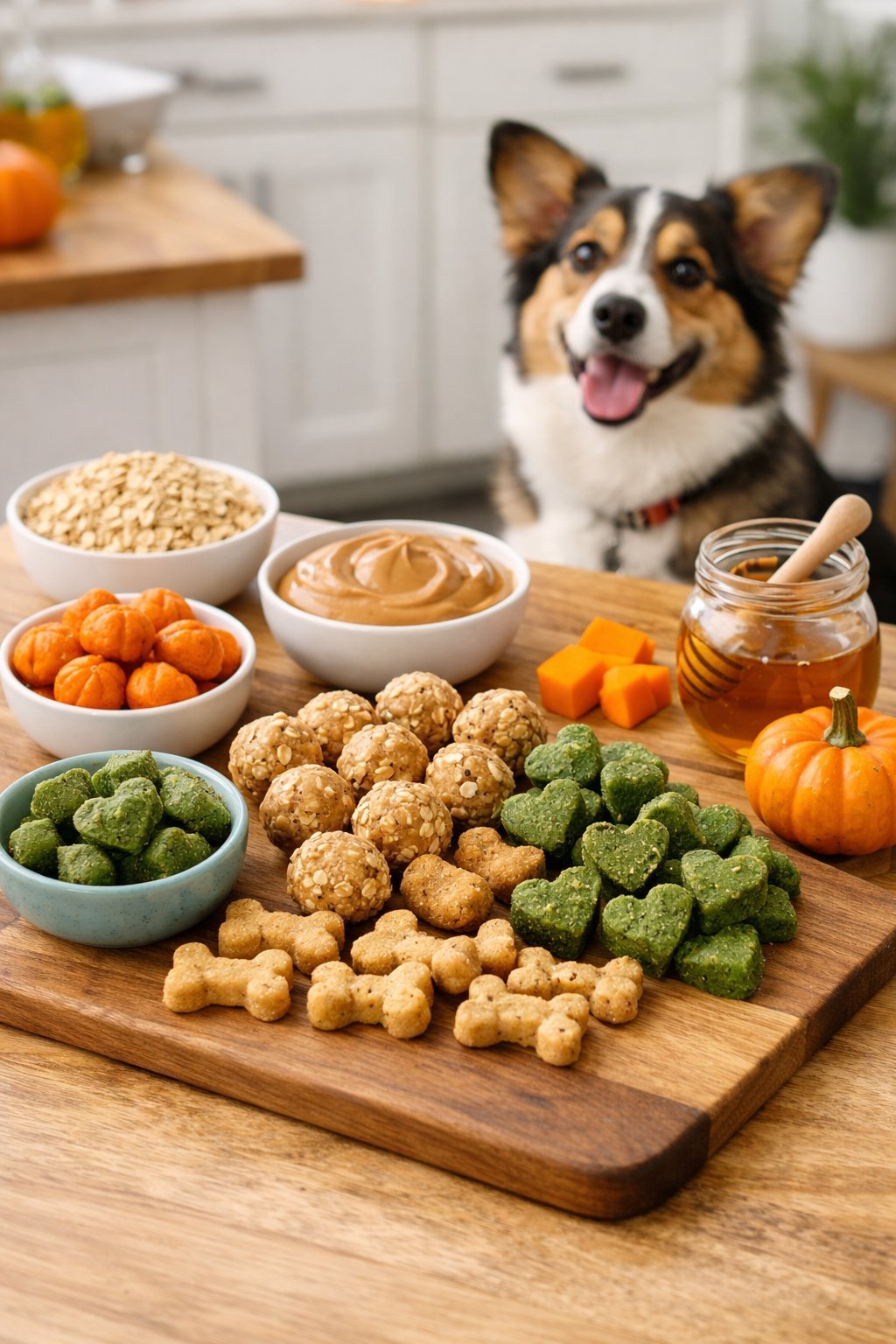
I’ve put together four simple recipes that use basic ingredients like peanut butter, oats, pumpkin, and banana.
These treats take just minutes to prepare and require nothing more than a refrigerator or freezer to set.
Peanut Butter and Oat Bites
I love making these quick no-bake treats because they only need three ingredients.
All I do is mix 1 cup of oats, 1/2 cup of unsalted peanut butter, and 2 tablespoons of honey in a bowl.
Once the mixture sticks together, I roll it into small balls about the size of a grape.
I always make sure to use peanut butter without xylitol, which is toxic to dogs.
I place the balls on a plate and refrigerate them for 30 minutes until they firm up.
These bites last up to two weeks in the fridge or three months in the freezer.
My dog goes crazy for these protein-packed snacks.
Pumpkin Yogurt Freezer Treats
These frozen treats are perfect for hot days or dogs who need something cool to chew on.
I mix 1 cup of plain pumpkin puree with 1 cup of plain yogurt until smooth.
Then I pour the mixture into ice cube trays or silicone molds.
I stick them in the freezer for at least 4 hours.
The pumpkin helps with digestion while the yogurt provides calcium.
I use only plain yogurt without added sugars or artificial sweeteners.
These treats are especially helpful for dogs with sensitive stomachs.
I can store them in the freezer for up to 3 months in an airtight container.
Banana Coconut Drops
I mash 2 ripe bananas in a bowl until they’re smooth and creamy.
Then I add 1/4 cup of unsweetened shredded coconut and mix well.
Using a spoon, I drop small portions onto a parchment-lined tray.
I freeze them for about 2 hours until solid.
The natural sweetness from bananas makes these homemade snacks irresistible to most dogs.
These drops work great as training rewards because they’re bite-sized.
I keep them in a freezer bag for up to 2 months.
The coconut adds healthy fats that support my dog’s coat.
Sweet Potato and Apple Chews
I cook one medium sweet potato until soft, then mash it completely.
I peel and grate one apple, removing the seeds and core first.
I combine the sweet potato and apple together, then spread the mixture about 1/4 inch thick on a parchment-lined tray.
I refrigerate it for several hours until it’s firm enough to cut into strips or squares.
Storage tips:
- Keep in the fridge for up to 5 days
- Freeze for up to 2 months
- Let frozen treats thaw slightly before serving
These chewy treats provide vitamins A and C.
I find they’re softer than store-bought chews, which makes them easier on older dogs’ teeth.
Tips for Making No Bake Treats at Home
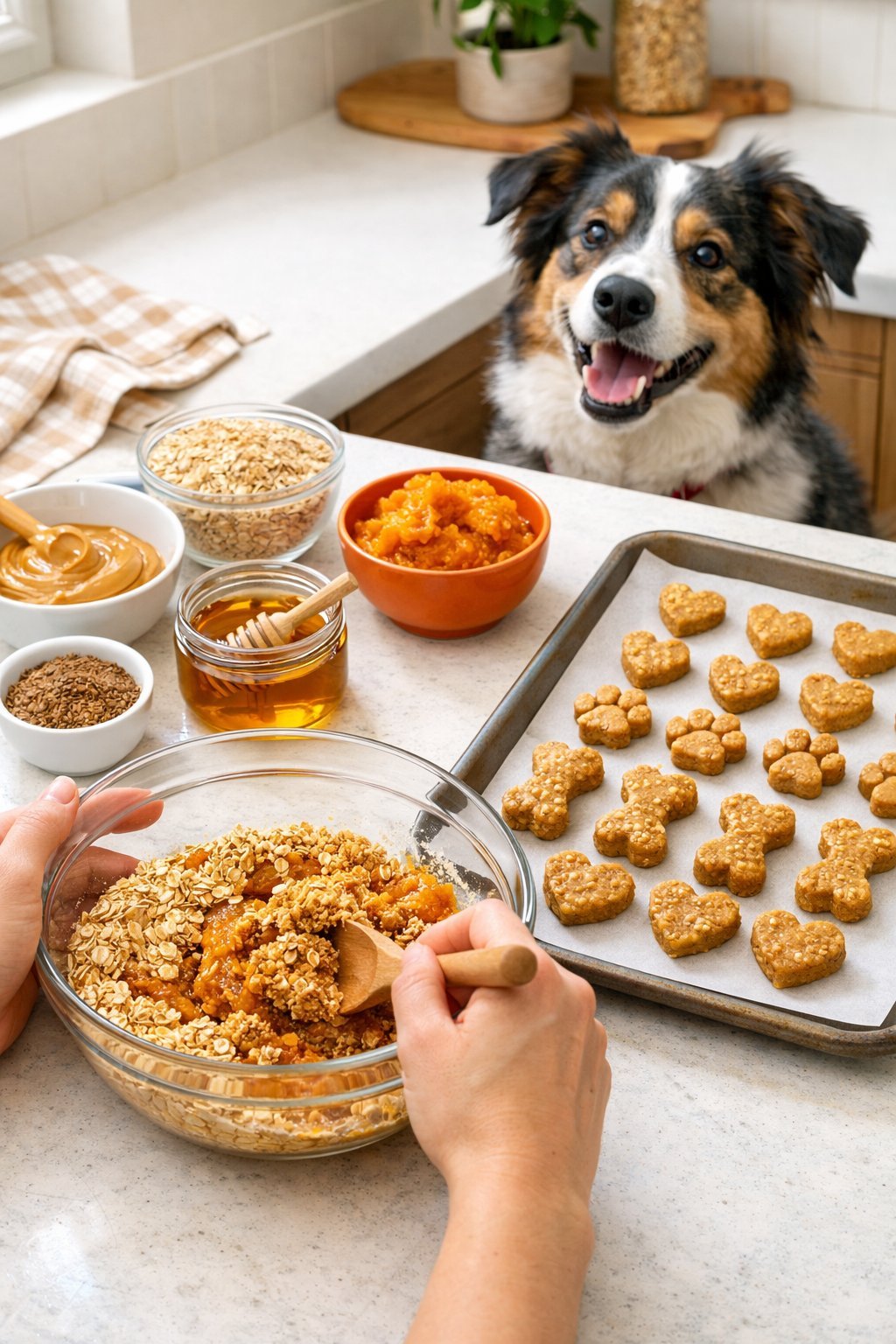
Proper storage keeps treats fresh for weeks, while correct portion sizes prevent overfeeding and weight gain.
Adding supplements to homemade treats can boost your dog’s health without extra effort.
How to Store Homemade Dog Treats
I always store my no-bake dog treats in airtight containers to keep them fresh. The fridge works best for treats with wet ingredients like peanut butter, yogurt, or pumpkin.
These treats stay good for up to two weeks when refrigerated. For longer storage, I use the freezer.
Most no-bake treats freeze well for up to three months. I label each container with the date I made the treats so I can keep track of freshness.
Room temperature storage only works for completely dry treats. Even then, I don’t keep them out for more than three to five days.
Storage Guidelines:
- Refrigerator: 1-2 weeks for moist treats
- Freezer: 2-3 months for all treats
- Room temperature: 3-5 days for dry treats only
- Always use airtight containers
Portion Sizes for Different Dogs
I base treat portions on my dog’s weight and daily calorie needs. Treats should make up no more than 10% of a dog’s daily calories to avoid weight gain.
For small dogs under 20 pounds, I give one to two small treats per day. Medium dogs between 20 and 50 pounds can have two to four treats.
Large dogs over 50 pounds can enjoy four to six treats daily, depending on their activity level.
Daily Treat Limits by Weight:
| Dog Size | Weight Range | Number of Treats |
|---|---|---|
| Small | Under 20 lbs | 1-2 treats |
| Medium | 20-50 lbs | 2-4 treats |
| Large | Over 50 lbs | 4-6 treats |
I adjust these amounts based on the treat size. Smaller, bite-sized pieces let me give more frequent rewards without adding extra calories.
Incorporating Supplements
I add supplements to homemade no-bake treats to boost my dog’s health. Fish oil supports joint health and gives my dog a shiny coat.
I mix in one pump of liquid fish oil per batch of treats. Glucosamine powder helps older dogs with joint pain.
I add it directly to the treat mixture before shaping. Probiotics support digestive health, and I use powder forms that mix easily into wet ingredients.
Common supplement additions:
- Fish oil for coat and joints
- Glucosamine for mobility
- Probiotics for digestion
- Turmeric for inflammation
I always check with my vet before adding new supplements. Some dogs need specific amounts based on their size and health conditions.
Ground flaxseed is another option I use for omega-3 fatty acids without the fishy smell.
Safety Guidelines for Homemade Dog Treats
Making treats at home gives you control over what goes into your dog’s snacks, but you need to know which ingredients are safe and how to spot problems. I always check that my recipes avoid toxic foods and watch my dog for any signs of allergies.
Avoiding Harmful Foods
Some common foods in my kitchen are dangerous for dogs. Chocolate, grapes, raisins, onions, and garlic can cause serious health problems or even death.
I never use xylitol, an artificial sweetener found in peanut butter and other products, because it’s extremely toxic to dogs. Macadamia nuts, avocados, and anything with caffeine also belong on my no-go list.
Even small amounts of these foods can make dogs sick. When I’m checking safe ingredients for homemade treats, I make sure my peanut butter is xylitol-free.
Salt and high-fat foods should be limited too. While they might not be immediately toxic, they can lead to pancreatitis or other health issues.
I avoid adding extra salt to my recipes and keep fat content moderate. Raw yeast dough is another hazard because it can expand in a dog’s stomach and cause bloating.
I stick to no-bake recipes that don’t involve any rising agents.
Signs of Food Allergies in Dogs
I watch my dog carefully after introducing new treats to catch any allergic reactions early. Common signs include itchy skin, excessive scratching, or red patches on their body.
Some dogs also develop ear infections repeatedly when they’re allergic to certain foods. Digestive problems like vomiting, diarrhea, or gas can point to food sensitivities.
I notice if my dog has these symptoms within a few hours of eating a new treat. Swelling around the face, especially the eyes or muzzle, needs immediate attention.
Hair loss or hot spots might develop over time with ongoing exposure to allergen ingredients. I keep track of which ingredients I use so I can identify patterns if problems appear.
If my dog shows any of these signs, I stop giving the new treats right away.
Discussing Treats With Your Veterinarian
I talk to my vet before making major changes to my dog’s diet or adding lots of homemade treats. They know my dog’s health history and can warn me about ingredients that might cause problems based on existing conditions.
Dogs with diabetes, kidney disease, or weight issues need special consideration. My vet helps me understand proper portion sizes for treats.
I ask about safe ingredient guidelines specific to my dog’s needs. If my dog takes medication, I check whether any treat ingredients might interfere with it.
Some foods can affect how medications work. My vet can also recommend supplements or nutritious additions to make my homemade treats even healthier.
Frequently Asked Questions
Many dog owners wonder about the basics of making no-bake treats, from simple two-ingredient recipes to vet-approved options that use common pantry staples like peanut butter and oats.
What are some quick and easy 2-ingredient no-bake dog treat recipes?
I love making 2-ingredient treats because they’re fast and simple. One of my favorite combinations is ripe banana and peanut butter.
I mash one banana with half a cup of natural peanut butter, then roll the mixture into small balls and refrigerate them for about 30 minutes. Another easy option is mixing plain Greek yogurt with pureed pumpkin.
I use equal parts of each ingredient, spoon the mixture into ice cube trays, and freeze them. These work great as cooling treats on hot days.
Sweet potato and coconut oil also make a tasty combo. I mix mashed cooked sweet potato with melted coconut oil until I get a thick consistency, then shape them into bite-sized pieces.
How can I make no-bake dog treats with peanut butter?
Peanut butter is perfect for binding ingredients together without needing to bake. I start by choosing natural peanut butter without xylitol, which is toxic to dogs.
Always check the label before using any peanut butter product. My go-to recipe combines one cup of peanut butter with two cups of rolled oats.
I mix them together, roll the dough into balls, and refrigerate for at least an hour. The oats absorb the peanut butter’s moisture and create a firm texture.
For a softer treat, I blend peanut butter with ripe bananas and a small amount of honey. This mixture can be spread into silicone molds or rolled into small portions.
I store these in the freezer for up to three months.
Can I prepare 3-ingredient dog treats without using an oven?
I frequently make 3-ingredient no-bake dog treats that come together in just minutes. One simple recipe uses oats, peanut butter, and banana.
I blend these ingredients until they form a dough, then shape them into small treats. Another combination I enjoy making uses plain yogurt, blueberries, and honey.
I mix these together and freeze them in ice cube trays. My dogs love these as frozen snacks during summer.
Pumpkin puree, oats, and cinnamon create a fall-inspired treat. I combine one cup of pumpkin with two cups of oats and a pinch of cinnamon, then refrigerate the mixture until firm enough to cut into squares.
What are some healthy no-bake oatmeal dog treat recipes?
Oatmeal provides great fiber and energy for dogs. I use rolled oats as a base ingredient in many of my no-bake recipes.
One healthy option combines oats with unsweetened applesauce and a small amount of ground flaxseed. For a protein-rich treat, I mix oats with plain Greek yogurt and fresh blueberries.
I press this mixture into a pan, refrigerate it for a few hours, then cut it into small squares. This recipe gives me about 30 treats per batch.
I also make oatmeal and carrot treats by mixing finely shredded carrots with oats and a bit of coconut oil. The coconut oil helps bind everything together while adding healthy fats to my dog’s diet.
Could you suggest any vet-approved homemade dog treats that don’t require baking?
I always recommend checking with your vet about any new treats, especially if your dog has allergies or health issues. Vet-approved no-bake recipes typically use whole food ingredients without additives or preservatives.
A simple vet-friendly option combines plain pumpkin puree with unsweetened shredded coconut. I mix equal parts of each, form them into small balls, and refrigerate them.
Pumpkin is gentle on dog stomachs and provides vitamins. Another approved option uses ground turkey or chicken mixed with cooked sweet potato.
I cook the meat thoroughly, let it cool, then mix it with mashed sweet potato and refrigerate. These protein-packed treats work well for training sessions.
What’s the simplest way to make homemade dog treats without baking them?
The easiest method I’ve found is using a food processor to blend ingredients quickly. I throw in my chosen ingredients, pulse until combined, then shape and chill.
Freezing is my go-to no-bake technique. I blend fruits like watermelon or strawberries with a bit of water, pour the mixture into ice cube trays, and freeze.
My dogs enjoy these frozen treats year-round. For a super quick option, I use silicone molds.
I mix ingredients like peanut butter and mashed banana, pour them into small molds, and refrigerate for 30 minutes. This way, I get perfectly portioned treats without any rolling or cutting.