
No Pergola, No Problem — This DIY Backyard Shade Sail Is All Your Dog Needs to Stay Cool and Protected

Your backyard doesn’t have trees, and your dog is panting in the summer heat. Watching your furry friend struggle to find a cool spot outside is tough.
A DIY shade sail is a simple, budget-friendly way to create instant shade for your dog without the hassle or cost of building a pergola.
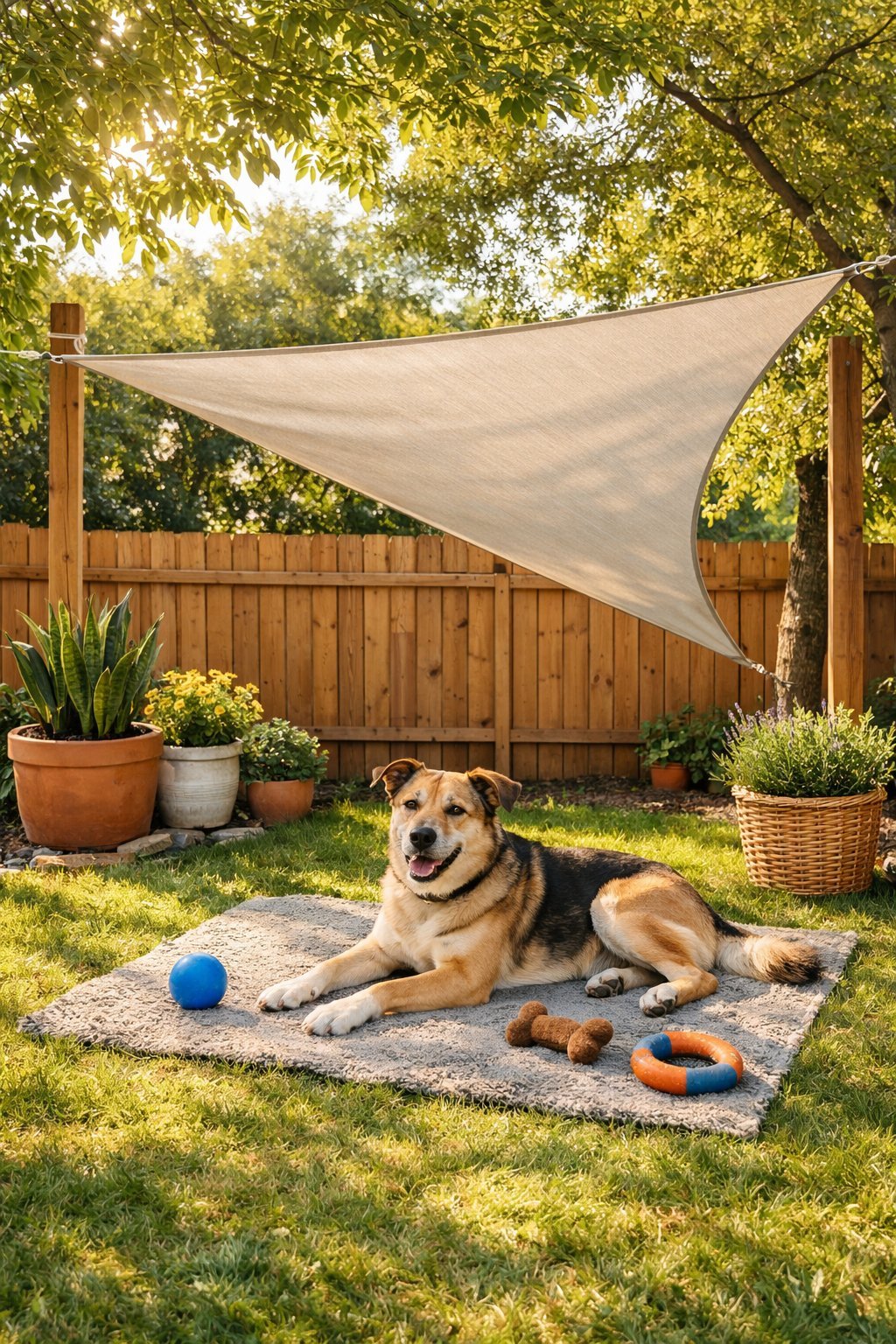
I’ve seen plenty of pet owners skip outdoor time because their yards turn into hot zones. Shade sails offer an affordable and stylish backyard upgrade that doesn’t require deep post holes, complicated plans, or even permits in most places.
They’re perfect for keeping your pup comfortable while you both enjoy the outdoors. The best part? This project is way simpler than you might think.
With just a few basic materials and a weekend afternoon, you can turn your sunny yard into a shaded retreat where your dog will actually want to hang out. Let’s walk through everything you need to know.
Key Takeaways
- Shade sails provide quick, affordable outdoor shade for your dog without building a pergola.
- Installation requires basic materials and can be finished in one weekend with minimal tools.
- Regular maintenance and good positioning keep your shade sail working for years.
Why Shade Sails Are Perfect for Pet-Friendly Yards
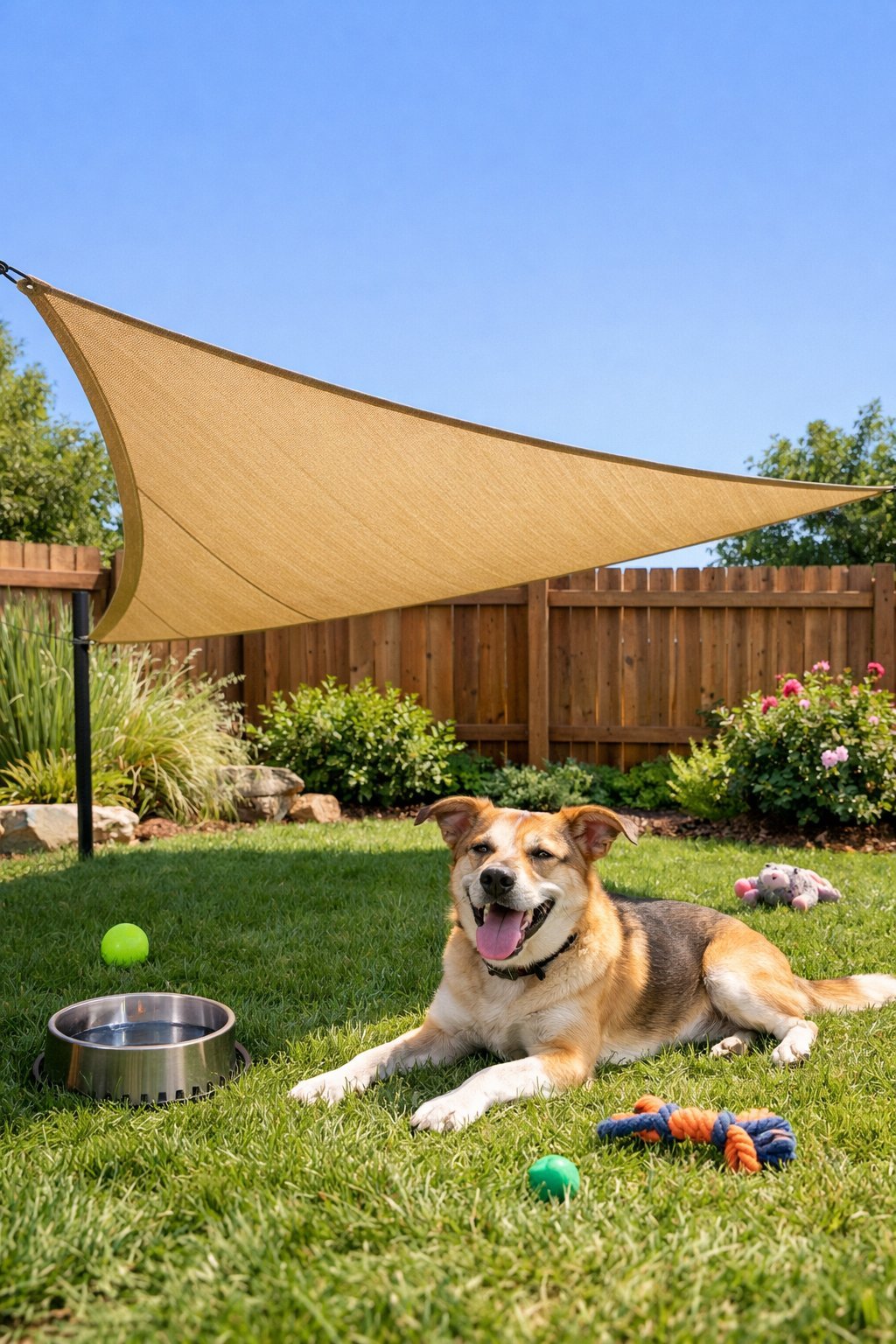
Shade sails offer a smart mix of affordability, flexibility, and pet safety, making them a great choice for dog owners. They protect your furry friends from the heat while creating a comfy outdoor space, all without the cost or permanence of a pergola.
Benefits Over Traditional Pergolas
Shade sails are a cost-effective alternative to building a full pergola structure. You can install them for a fraction of the price, often spending just a few hundred dollars instead of thousands.
The installation process is simple enough for a weekend DIY project. You don’t need contractors or complex tools to set up shade sail attachment points in your yard.
Key advantages:
- No permanent structure required
- Easy to remove for winter storage
- Flexible positioning based on sun movement
- Lightweight design won’t damage your property
- Multiple shapes available (triangle, square, rectangle)
You can move or adjust your shade sails as needed throughout the seasons. This flexibility means you’re not stuck with one shaded area like you would be with a fixed pergola.
Health and Comfort for Dogs
Dogs are vulnerable to heat exhaustion and sunburn, especially breeds with short coats or light-colored fur. Shade sails help you create cool outdoor spaces where your dog can safely play and rest during hot days.
The fabric blocks most UV rays while still letting air flow through. This keeps the shaded area cooler than a solid roof would, helping your dog regulate body temperature naturally.
The filtered light creates a pleasant environment without harsh direct sun, so your dog can spend more time outside comfortably.
All-Season Versatility
Shade sails work beyond just summer. The permeable fabric lets rain pass through without pooling, so you don’t have to worry about water damage or sagging during wet weather.
You can layer multiple sails to create larger shaded zones as your needs change. Adding or removing panels gives you control over how much coverage your dog gets throughout the year.
When winter comes, just take down the sails and store them. This protects your investment and lets you reconfigure the setup each spring based on your dog’s favorite hangout spots.
Planning Your DIY Backyard Shade Sail Project
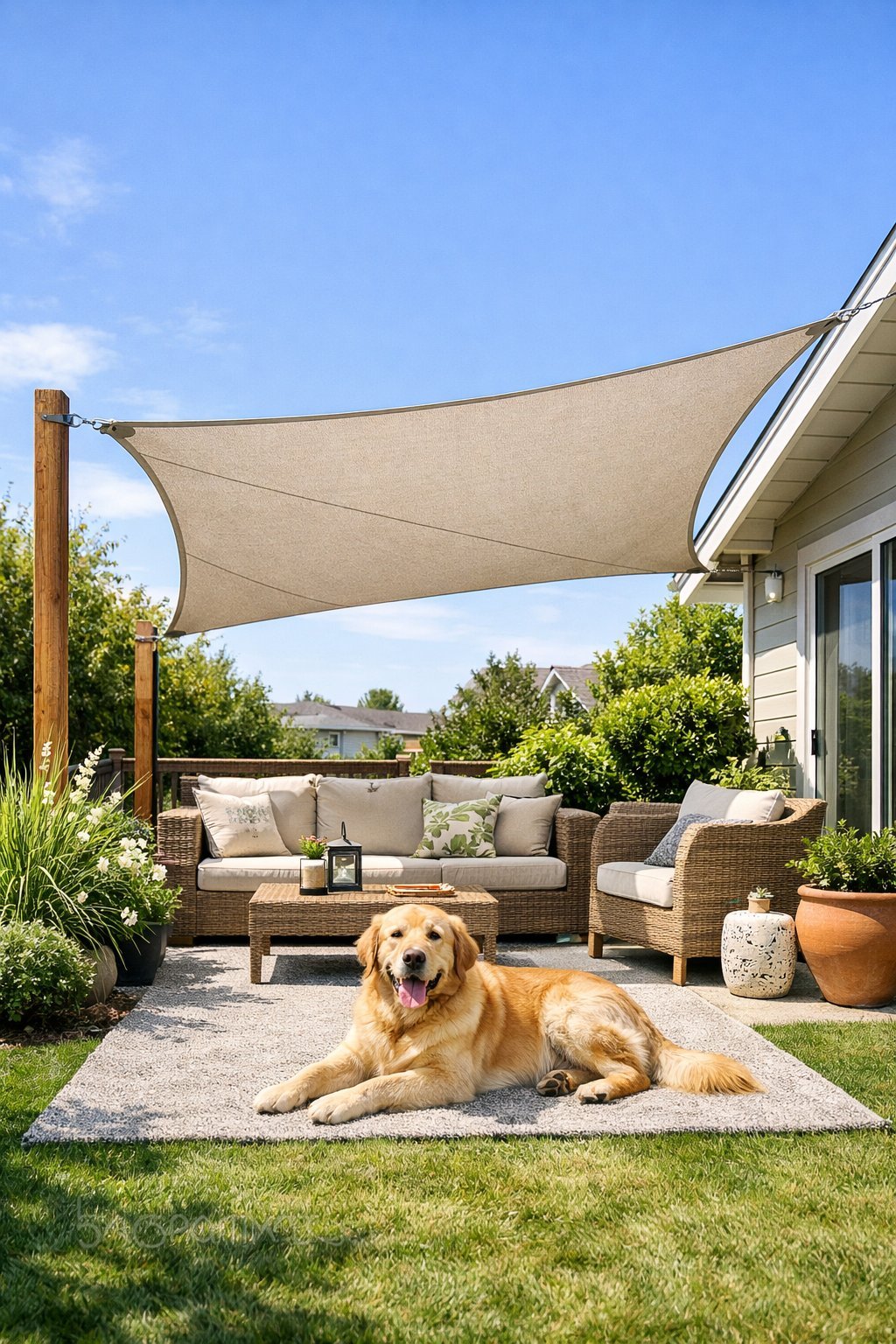
I always start by finding the perfect spot, taking measurements, and watching how the sun moves across my yard during the day. These steps help you create shade that actually works for your dog.
Choosing the Right Location
Look for areas where your dog spends the most time during hot days. This might be near the back door, by their water bowl, or in a shady corner where they like to relax.
Pick a spot with sturdy anchor points like fence posts, house walls, or trees. If you don’t have existing structures, you’ll need to install posts for your shade sail.
Make sure the area has good drainage. Water pooling under the shade sail can create muddy spots that make your dog dirty and uncomfortable.
Aim for a 20 to 40 degree slope so water runs off instead of pooling on top of the fabric.
Measuring and Sizing for Maximum Coverage
Mark the anchor points with stakes and measure the distance between each point to figure out what size sail you need. Leave 6 to 12 inches between the sail edge and each attachment point for hardware and proper tension.
If your space is 12 feet wide, you’ll need a sail that’s about 11 feet. Consider your dog’s size when choosing dimensions—bigger dogs need more coverage.
Add extra space so your dog can move around comfortably in the shaded area.
Understanding Sun Patterns
Spend a day watching how sunlight moves across your yard. Note the times when the sun hits hardest, usually between 10 AM and 4 PM.
Take photos every couple of hours to see where shadows fall at different times. Since the sun’s path changes with the seasons, plan for summer when the sun is highest and strongest.
Position the sail to block the most intense afternoon sun, usually by angling it toward the west or southwest.
Selecting Materials and Tools for Success
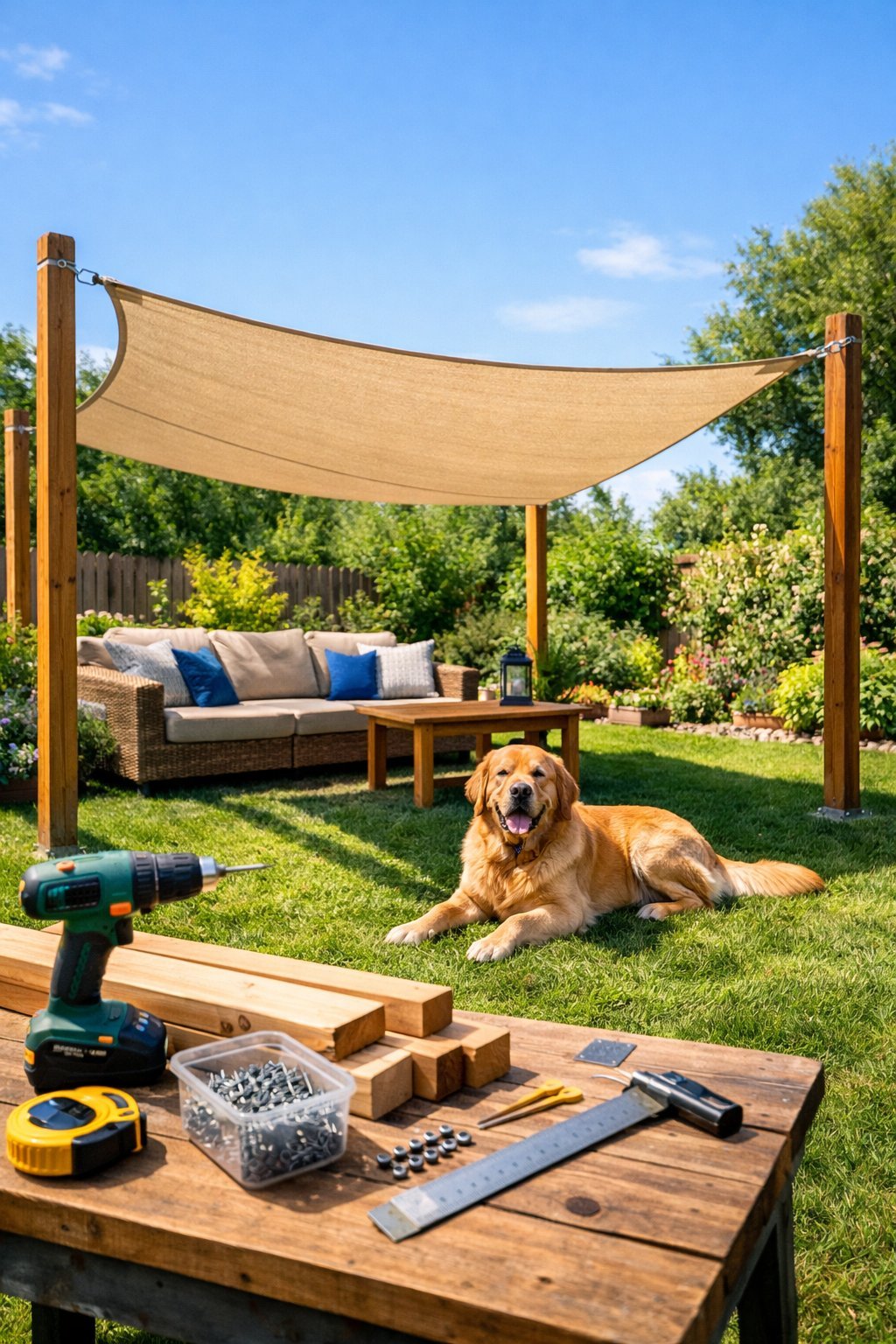
Choosing the right materials makes all the difference when building a shade sail for your dog. The fabric needs to handle pet activity while blocking harmful sun rays, and the right hardware keeps everything secure.
Best Fabric Options for Pets
UV-resistant polyethylene is a great choice for dog shade sails because it blocks up to 95% of harmful rays and stands up to scratching. This material is easy to clean when your dog tracks dirt underneath, and it dries quickly after rain.
Breathable mesh fabrics work well too, since they let air flow through while providing shade. Look for materials rated for at least 185 GSM (grams per square meter), as thinner fabrics tear more easily when dogs play rough.
Key fabric features:
- Waterproof or water-resistant coating
- Reinforced corners with double stitching
- Mold and mildew resistance
- At least a 5-year warranty
Lighter colors like beige or light gray reflect heat better and keep the area underneath cooler for your dog.
Essential Hardware
You’ll need four main hardware pieces: stainless steel D-rings or carabiners, turnbuckles for tension adjustment, mounting plates, and concrete anchors or ground stakes. Stainless steel resists rust from water bowls and accidents.
Turnbuckles help you tighten the sail so it doesn’t sag or flap in the wind. For most setups, 6-8 inch turnbuckles work well.
For anchor points, you can mount to existing structures or install dedicated posts. Ground stakes are fine for temporary setups, but concrete footings at least 2 feet deep are best for permanent installations.
Hardware checklist:
- 4 stainless steel carabiners (rated for 500+ lbs)
- 4 turnbuckles (6-8 inches)
- 4 mounting plates or eye bolts
- Concrete anchors or 4×4 inch posts
Recommended Tools
You’ll want a drill with masonry bits, a tape measure at least 25 feet long, a level, and an adjustable wrench. A ladder is helpful since mounting points usually sit 8-10 feet high.
If you’re installing new support posts, a post hole digger is necessary. Dig holes about 2-3 feet deep, depending on your local frost line.
For fabric cutting, use sharp scissors or a utility knife with extra blades. A marker helps you note where grommets or attachment points should go before installation.
Step-by-Step Installation Guide
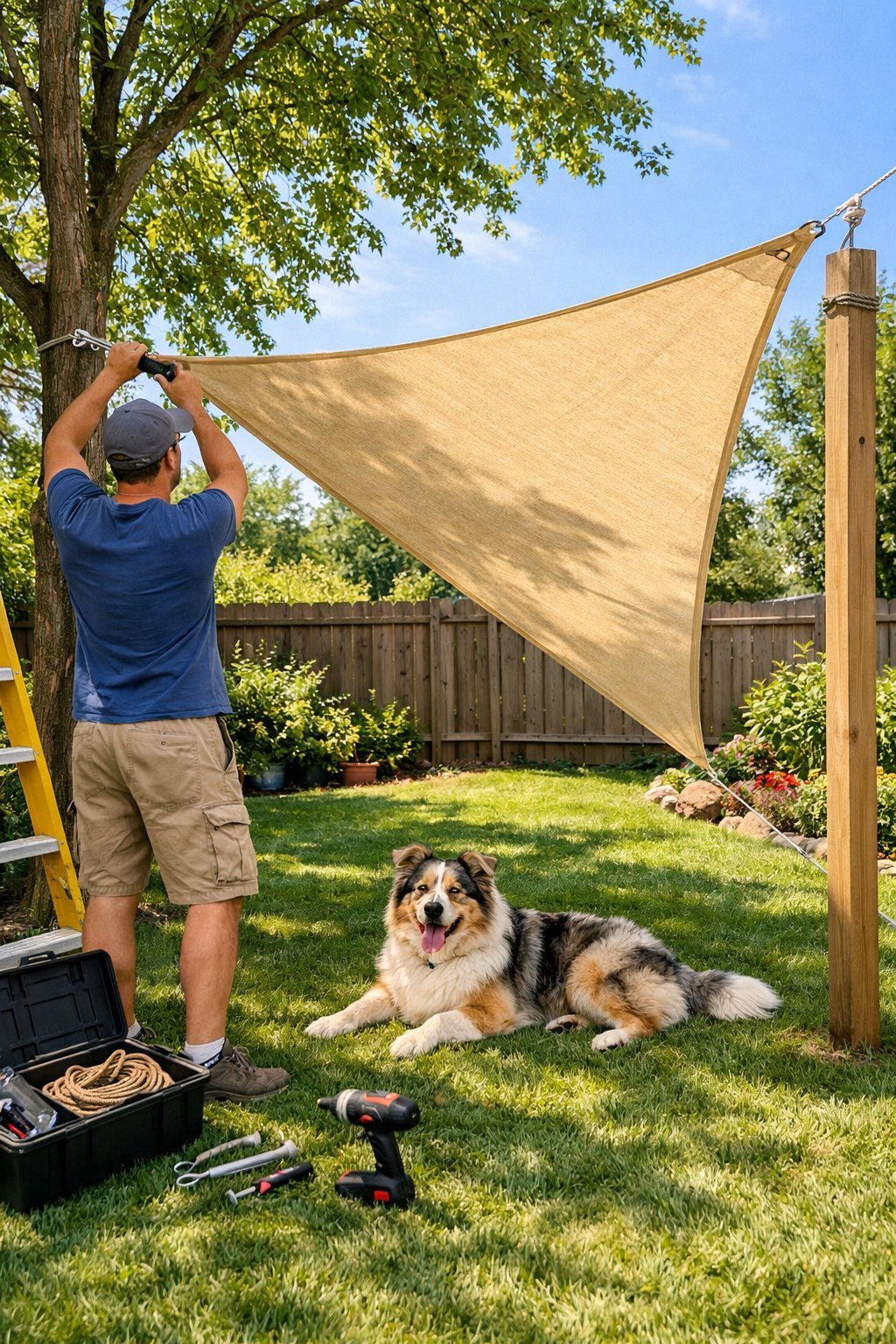
Installing a shade sail for your dog’s comfort is a weekend project. Here’s how to secure posts, attach the sail, and make sure everything stays safe and stable.
Setting Up Support Posts
Start by measuring the area where your dog spends the most time. Posts should be at least 8 to 10 feet tall to create good shade and airflow.
Dig holes 2 to 3 feet deep for stability. The general rule is that one-third of the post should be underground, so for a 9-foot post, dig down about 3 feet.
Post installation checklist:
- Use 4×4 treated lumber or metal posts
- Pour concrete around each post for stability
- Let concrete cure for 24 to 48 hours before attaching the sail
- Check that posts are perfectly vertical with a level
Space your posts based on the shade sail dimensions. For a triangular sail, place three posts in a triangle pattern with sides matching the sail measurements minus 6 inches to create proper tension.
Attaching and Tensioning the Shade Sail
Attach hardware like turnbuckles and D-rings to each post before connecting the sail. These pieces let you adjust tension easily.
Connect one corner of the sail first, then move to the corner diagonal from it, and finish with the third corner. This method helps prevent wrinkles and ensures even tension.
Tensioning steps:
- Attach carabiners to each corner grommet.
- Connect carabiners to turnbuckles on posts.
- Tighten turnbuckles gradually, rotating between all corners.
- Pull fabric taut but not overly tight.
Make sure the sail has a slight downward angle for water drainage—a slope of about 20 to 40 degrees works well. The fabric should be firm but still have a little give when you push on it.
Safety Checks and Adjustments
Inspect all connection points after installation. Each turnbuckle should be finger-tight plus an extra quarter turn.
Check that the posts don’t lean or wobble. If they do, add extra concrete or install support brackets.
The shade sail creates wind resistance, so sturdy posts are important for your dog’s safety.
Weekly maintenance:
- Inspect grommets for tears or fraying
- Tighten turnbuckles if fabric has loosened
- Check post stability after storms
- Remove debris that collects on top
Adjust the tension as the seasons change. The fabric expands in heat and contracts in cold weather, so loosen the turnbuckles slightly during summer to prevent overstretching.
Maintenance Tips and Creative Enhancements
Proper care extends the life of a shade sail, and a few creative touches make the space more inviting for you and your dog. Regular upkeep helps prevent damage and keeps the sail looking fresh.
Cleaning and Storage Advice
I clean my shade sail every few months to prevent dirt buildup and mildew. I use a soft brush with mild soap and water, scrubbing gently in circular motions.
For stubborn stains, I let the soapy water sit for 10 minutes before rinsing thoroughly with a garden hose. I never use bleach or harsh chemicals because they break down the fabric fibers.
During winter or extreme weather, I take down my sail to avoid damage from heavy snow or strong winds. I fold the sail loosely and store it in a dry, ventilated space like a garage or shed.
Before storing, I make sure the fabric is completely dry to prevent mold growth.
Adding Decorative Touches
I hang outdoor string lights along the edges of my shade sail to create a cozy evening atmosphere. My dog enjoys lounging under the sail even after sunset when the lights are on.
I added a comfortable outdoor rug underneath to define the shaded area and give my pup a soft surface. Potted plants around the perimeter add natural beauty and extra cooling.
I chose pet-safe plants like spider plants and Boston ferns. A water bowl station with a decorative stand keeps my dog hydrated while matching the outdoor decor.
Some dog owners add wind chimes or attach fabric streamers to the corners for visual interest. I installed a mounting hook on one post to hang toys or a cooling vest when not in use.
Keeping Your Shade Sail Secure
I check all attachment points monthly for signs of wear or loosening. The hardware can loosen over time from wind movement and temperature changes.
I tighten the turnbuckles or carabiners as needed to keep the sail secure. I inspect the fabric edges where they connect to mounting points because these areas experience the most stress.
If I notice fraying, I reinforce it immediately with outdoor-grade thread or replace the sail. During high winds, I adjust the tension slightly looser to allow some flex, which helps prevent tearing.
The posts or anchor points also need inspection to ensure they haven’t shifted in the ground or developed cracks.
Frequently Asked Questions
Installing a shade sail involves choosing the right mounting points and preparing sturdy posts. Ensuring proper tension is also key.
I’ll cover everything from installation basics to alternative shade options that work well for your dog.
How can I install a heavy-duty sun shade sail in my backyard?
I start by identifying strong anchor points like existing structures, walls, or posts. Each mounting point needs to handle the tension created by the sail when it’s stretched tight.
I measure my space carefully and plan for a slight slope so rainwater runs off instead of pooling. Installing shade sails requires UV-resistant fabric made from high-density polyethylene.
I attach heavy-duty hardware like turnbuckles and D-rings at each corner. These let me adjust the tension and keep the sail secure even in windy weather.
What are some creative shade sail installation ideas for my garden?
I like layering multiple smaller sails at different heights to create visual interest while covering more ground. This approach also lets me adjust individual sections if needed.
Connecting sails between trees, fence posts, and the house creates unique shapes that work with my existing layout. I can combine triangle and square sails to fit odd-shaped spaces.
Bright colors or patterns can make the shade sail a focal point in your yard. Mixing sail shades with climbing vines on trellises adds natural beauty alongside the fabric coverage.
Can you provide tips for setting posts for a shade sail securely?
I dig post holes that are at least one-third the height of the above-ground portion of the post. For an 8-foot post, I’d dig down about 3 feet.
I use pressure-treated 4×4 or 6×6 posts that resist rot and insect damage. Pouring concrete around the base keeps everything stable and prevents shifting over time.
I let the concrete cure for at least 48 hours before attaching the shade sail. This waiting period ensures the posts are fully secure and won’t move under tension.
What’s the best way to handle a shade sail that seems too big for my space?
I measure my area twice before ordering to avoid this problem. If my sail is oversized, I can’t simply fold or bunch the fabric because it creates weak points and looks messy.
My best option is returning it for the correct size. Some retailers let me exchange for a smaller sail that fits properly.
If returning isn’t possible, I can add an extra post or mounting point to accommodate the larger dimensions. This actually increases my shaded area if I have room for it.
How deep do shade sail posts need to be for proper safety and stability?
I dig my post holes to a depth of 2 to 3 feet for most residential shade sails. The exact depth depends on my soil type and the size of the sail.
Sandy or loose soil requires deeper holes than compact clay. I go deeper in areas with strong winds to prevent the posts from leaning or pulling out.
I use the one-third rule as my guide. If my post extends 6 feet above ground, I bury at least 2 feet below ground in concrete.
Are there any alternative methods for creating shade for my dog in the backyard?
I can install pergolas or gazebos for more permanent shade structures. These also add value to my home and work well over patios or designated dog areas.
Large patio umbrellas offer portable shade that I can move around as needed. I just need to make sure the base is weighted properly so it doesn’t tip over if my dog bumps into it.
Retractable awnings attached to my house let me control how much shade I provide throughout the day. For a budget-friendly option, I can create simple DIY shade structures using tarps stretched between posts.
