
DIY Portable Dog Fence RV Camping: Easy Setup Guide for Pet Owners on the Road

Taking your dog on RV camping trips is one of the best parts of life on the road, but keeping them safe at campsites can be tricky. A store-bought portable fence can cost hundreds of dollars and might not fit your specific campsite layout or your dog’s needs.
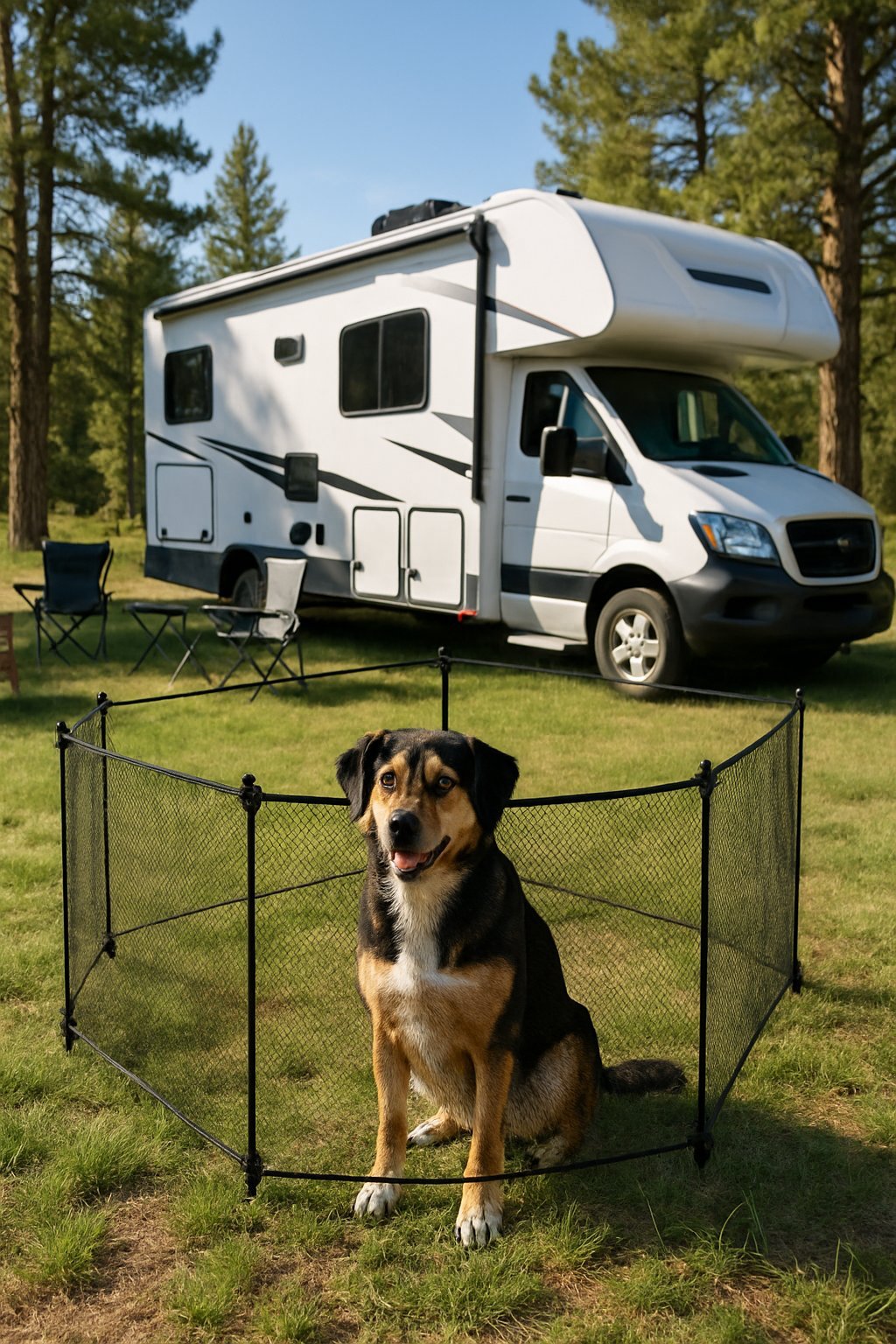
Building your own portable dog fence for RV camping lets you create a custom setup that fits any campsite, costs less than commercial options, and can be adjusted as your travel plans change. I’ve found that DIY temporary dog fences work well for renters and travelers who need flexible solutions. The beauty of making your own fence is that you control the size, shape, and materials based on your RV lifestyle.
Whether you’re weekend camping or full-time RVing, a portable dog fence gives your pet freedom to move around while you relax. The right setup keeps your dog contained safely without tying them to a leash all day. I’ll show you how to build an affordable dog fence that works for backyard or RV camping situations and travels with you wherever you go.
Key Takeaways
- DIY portable dog fences save money and can be customized to fit different campsite layouts
- Choose lightweight materials that are easy to transport and set up quickly at each location
- Regular maintenance and proper storage keep your fence working well for many camping trips
Benefits of a DIY Portable Dog Fence for RV Camping
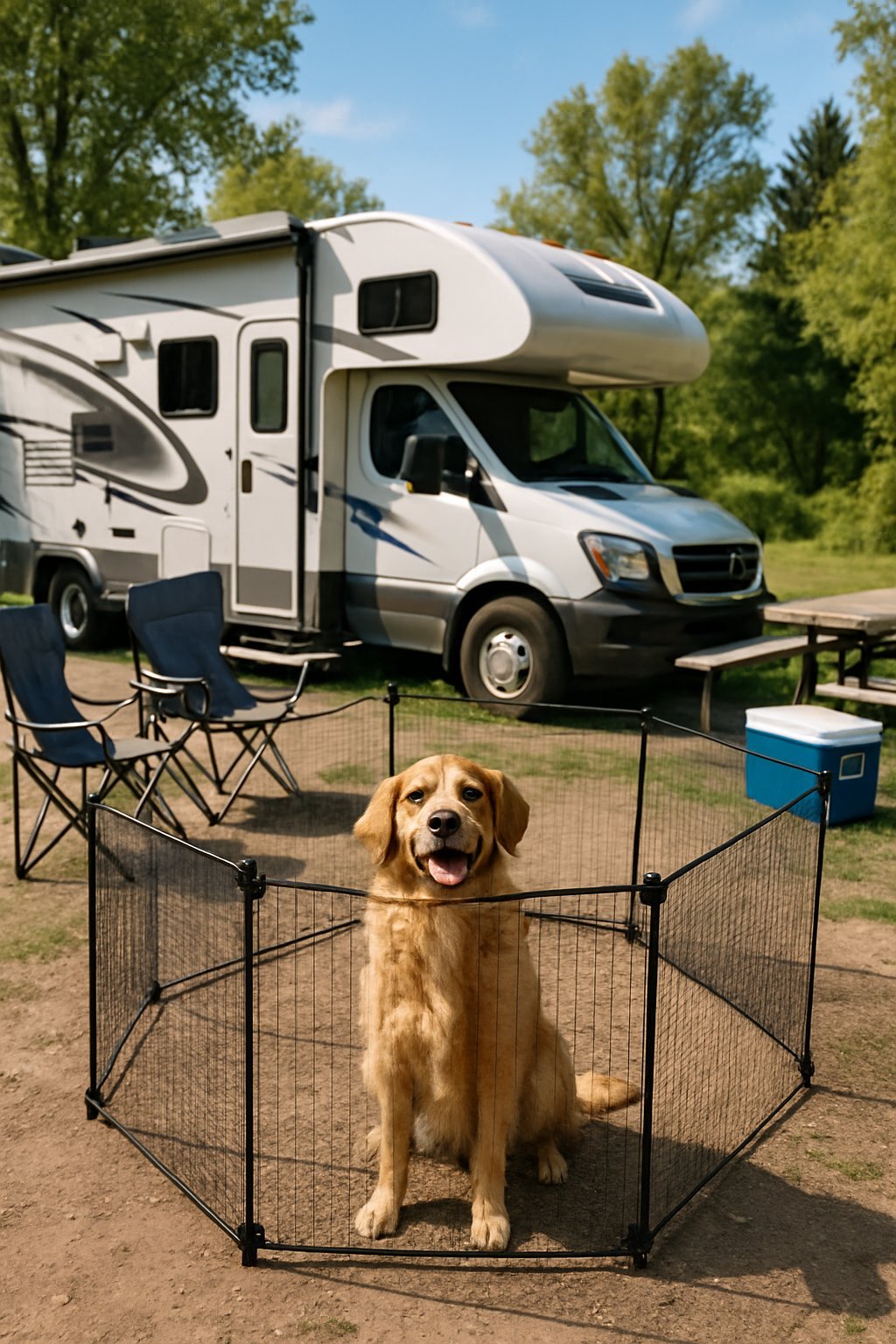
A DIY portable dog fence gives my furry companion freedom to enjoy the outdoors while staying protected from hazards. Building my own fence saves money and lets me customize the size and features for my specific camping needs.
Ensuring Pet Safety at Campgrounds
My biggest worry when camping is keeping my dog from wandering into dangerous situations. A portable dog fence for RV camping creates a clear boundary that prevents my pet from running into roads, getting lost in unfamiliar terrain, or approaching other campers who might not welcome dogs.
Many campgrounds have rules about keeping pets contained. A DIY fence helps me follow these regulations without tying my dog to a stake or keeping them inside the RV all day. I can set up the enclosure right at my campsite and know exactly where my dog is at all times.
The fence also stops my dog from eating unknown plants or drinking from puddles that might contain harmful bacteria. I’ve found that having a designated safe zone reduces my stress and lets me actually relax during my camping trip instead of constantly watching my pet.
Creating a Comfortable Play Space
My dog needs room to move around and play, even when we’re camping. A DIY fence gives them their own outdoor area where they can stretch their legs and enjoy fresh air. I can make the enclosure as large or small as my campsite allows.
Inside the fenced area, I set up my dog’s water bowl, favorite toys, and a shaded spot for resting. This familiar setup helps my pet feel comfortable in a new environment. They can watch the activity around the campground without feeling cooped up in the RV.
The camping dog fence lets my dog socialize safely when other campers with pets walk by. I control when interactions happen by opening the gate, which prevents unexpected encounters that might stress my pet.
Protecting Small Dogs from Wildlife
Small dogs face extra dangers at campgrounds because they’re vulnerable to predators. My DIY fence adds a layer of protection against animals like coyotes, hawks, and even aggressive squirrels that might see my small dog as prey.
The barrier also keeps curious wildlife out of my dog’s space. I’ve watched raccoons and foxes approach campsites at dusk, and having a physical fence between them and my pet gives me peace of mind. Even birds of prey think twice about swooping down when there’s a fence in the way.
Small dogs often don’t understand how to react to wild animals. The fence prevents them from chasing after creatures that could lead them into danger or from freezing in fear when a larger animal approaches. I can enjoy evening campfires knowing my small companion is safely enclosed nearby.
Essential Features of the Best Portable Dog Fence
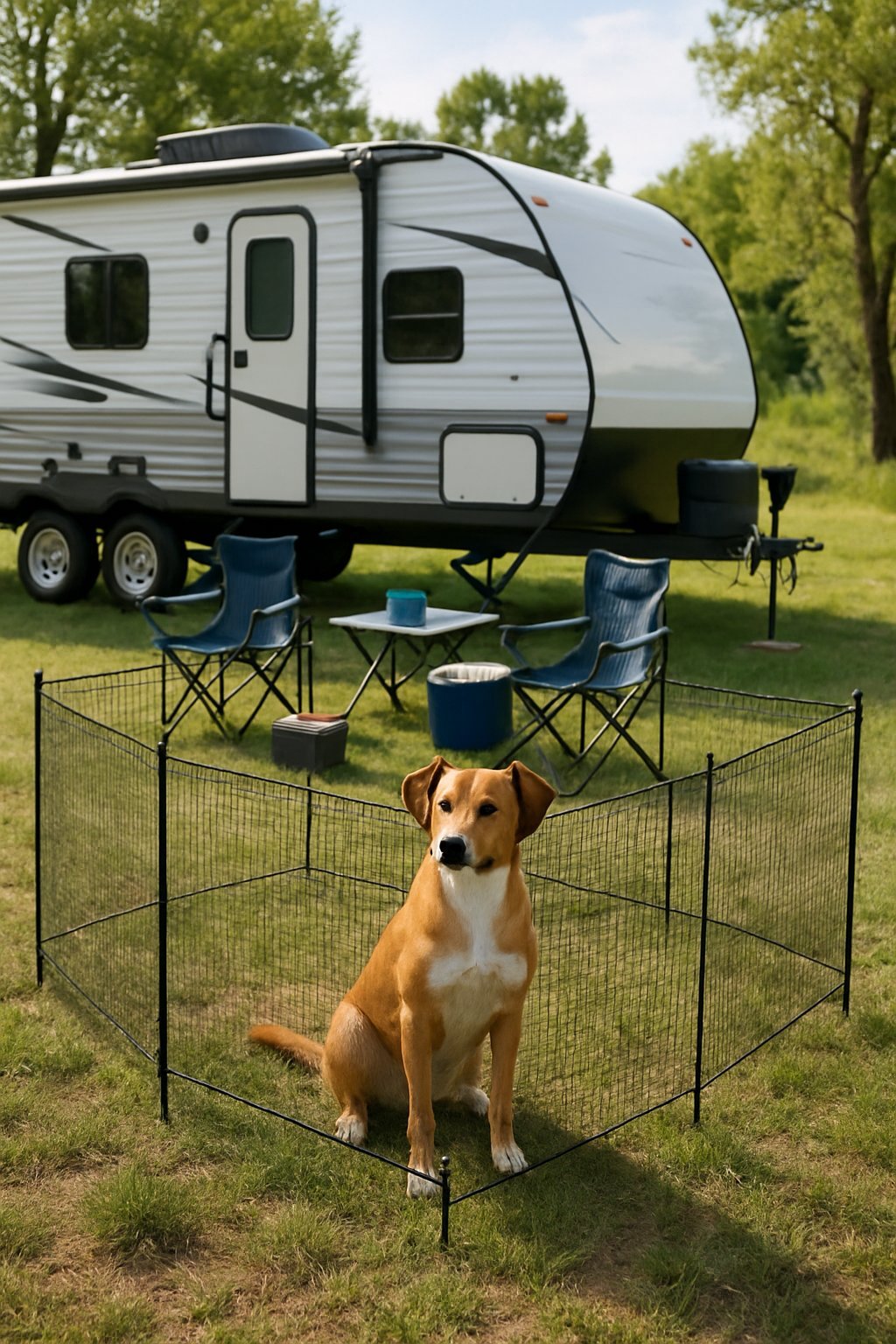
When I’m selecting a portable fence for camping trips, I focus on three main factors: getting the right dimensions for my dog’s needs, finding materials that handle outdoor conditions, and keeping the setup light enough to move easily.
Choosing the Right Size and Height
The size of my dog pen depends entirely on my pet’s breed and energy level. Small dogs need at least 16 square feet of space to move comfortably, while larger breeds require 32 square feet or more.
Height matters just as much as floor space. I’ve learned that small dogs need panels at least 24 inches tall, but medium to large dogs require 36 to 48 inches to prevent jumping. Active breeds need extra height regardless of their size.
I always consider how my dog behaves when deciding on dimensions. If my pet tends to jump or climb, I add 6-12 inches to the recommended height. The best portable dog fence options come in various configurations, so I can adjust the shape to fit my campsite while giving my dog enough room.
Material and Weather Resistance
I look for fences made from heavy-duty materials that won’t fall apart after a few camping trips. Metal wire panels with powder coating resist rust and last for years. Fabric mesh works well for small dogs but tears more easily.
Weather resistance is critical for outdoor use. I need materials that handle rain, sun, and temperature changes without breaking down. UV-resistant fabrics and rust-proof metal frames maintain their strength through multiple seasons.
The best materials balance durability with visibility. Wire mesh lets me see my dog while providing ventilation. Solid panels offer more privacy but can make monitoring harder.
Weight and Portability Considerations
Lightweight designs make setup and teardown faster at each campsite. I prefer fences under 15 pounds that fold flat for storage in my RV or vehicle.
Key portability features I look for:
- Carrying handles or storage bags
- Panels that fold or collapse quickly
- No-tool assembly with simple connectors
- Compact folded dimensions
The weight affects how easily I can move the fence during my trip. Metal panels are sturdier but heavier, while fabric options pack lighter. I balance weight with my dog’s strength and escape abilities when making my choice.
DIY Approaches to Building a Portable Dog Fence
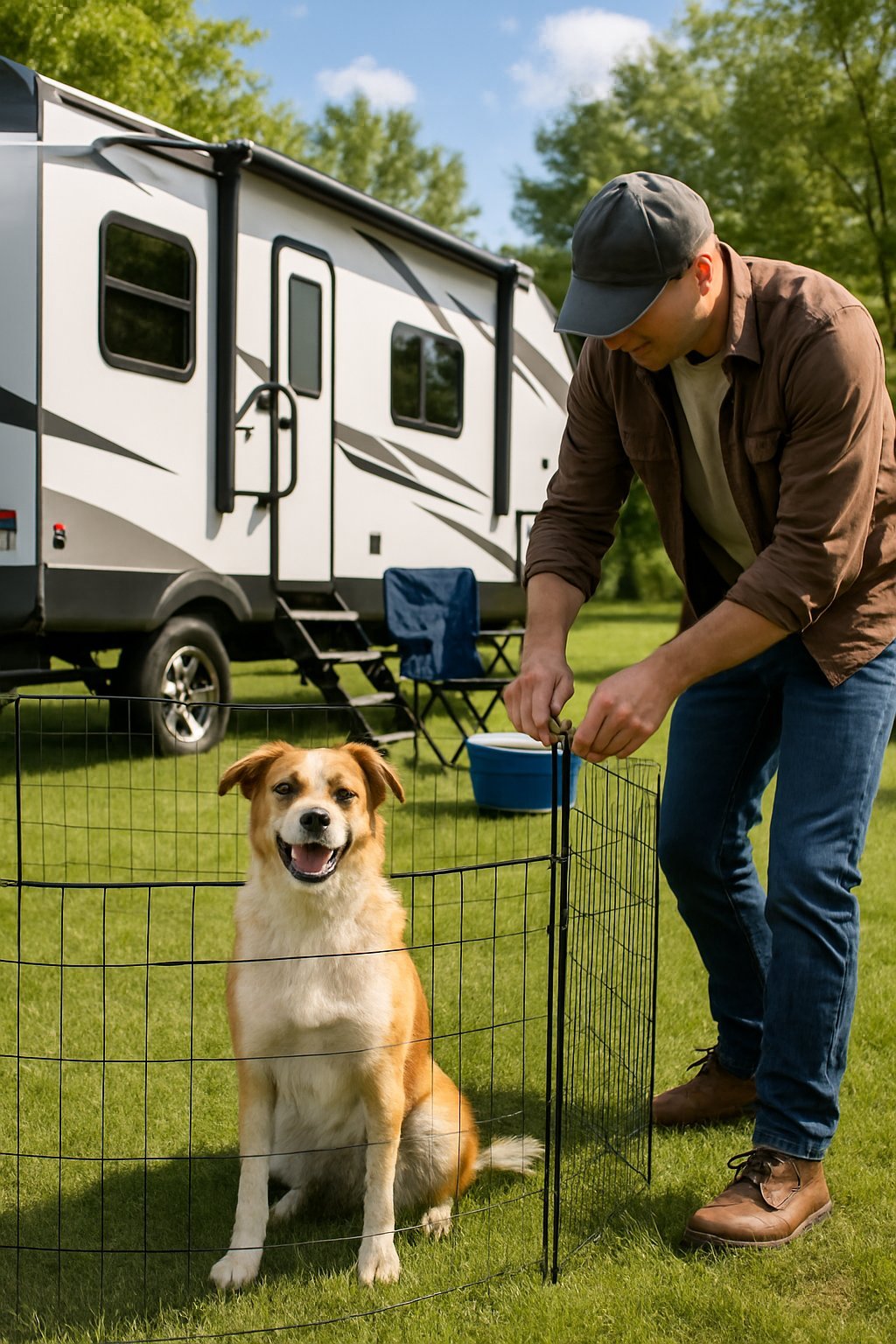
Building your own portable dog fence for RV camping involves simple materials like PVC pipe, wire mesh, and basic hardware. Most projects use lightweight components that pack flat and assemble quickly at your campsite.
Step-by-Step Build Guides
I’ve found that using rebar, PVC pipe, and garden fencing creates an easily removable fence that works perfectly for RV camping. Here’s what I do:
Materials needed:
- PVC pipes (3/4 inch diameter)
- Rebar stakes or T-posts
- Wire mesh or welded wire fencing
- Zip ties or wire clips
- Rubber mallet
I start by measuring my desired dog pen area at the campsite. Then I drive rebar stakes into the ground about 4-6 feet apart around the perimeter. I slide PVC pipes over each stake to create vertical posts. The wire fencing attaches to these posts using zip ties.
For corners, I cut PVC elbows to connect sections smoothly. The whole setup takes about 20 minutes to install. When it’s time to leave, I simply pull up the stakes and roll the fencing for storage.
Creative Materials for Temporary Fencing
I like exploring different materials beyond standard wire mesh for my portable dog fence. A temporary dog fence can be built with T-posts or rebar combined with PVC for varied designs.
Plastic garden edging works well for small dogs who don’t jump high. I’ve also used snow fencing attached to collapsible tent poles. Exercise pen panels connected with carabiners create a modular system I can reshape for different campsite layouts.
Mesh fabric designed for construction sites is lightweight and packs smaller than wire. I attach it to fiberglass poles used for driveway markers. For wooded campsites, I sometimes string rope between trees and hang mesh panels from the rope line using shower curtain rings.
Budget-Friendly Fence Ideas
My most affordable diy portable dog fence rv camping setup cost under $50 total. I bought 100 feet of chicken wire for $25 and used ten pieces of rebar at $2 each.
Cost breakdown for basic fence:
| Item | Price |
|---|---|
| Chicken wire roll (4 ft × 100 ft) | $25 |
| Rebar stakes (10 pieces) | $20 |
| Zip ties (100 pack) | $5 |
| Total | $50 |
I skip PVC sleeves and attach wire directly to rebar using zip ties. This creates a budget-friendly solution without sacrificing function.
Another money-saving approach uses wooden stakes instead of rebar. I buy 1×2 furring strips and sharpen one end with a hand saw. These cost about $1 each at hardware stores. Plastic garden netting runs cheaper than wire fencing and weighs less for packing.
Setup Tips and Customization for RV Campsites
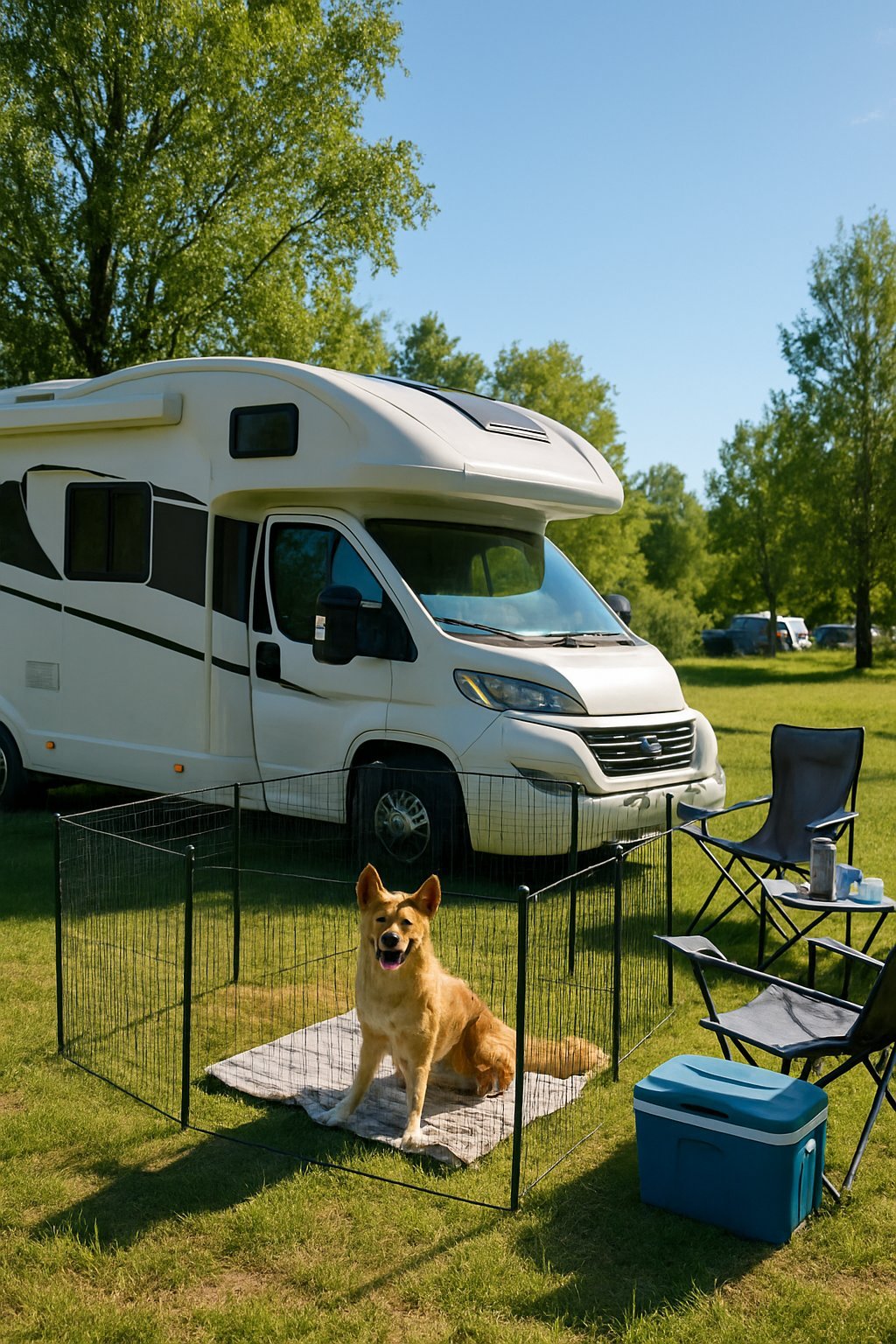
Getting your camping dog fence properly set up takes some planning based on where you park. The ground surface, your RV’s layout, and potential escape routes all need attention to keep your dog safely contained.
Securing the Fence on Various Surfaces
I’ve learned that different campgrounds have completely different ground types. Grass sites are the easiest because I can push stakes deep into the soil. Most portable fences come with metal stakes that work well in soft earth.
Gravel and hard-packed dirt need a different approach. I use heavy-duty tent stakes or spiral anchors that twist into the ground. These grip better than regular stakes in tough surfaces.
Concrete pads are the trickiest. I can’t use stakes at all on these surfaces. Instead, I attach the fence panels to my RV’s stabilizer jacks or tire wells using bungee cords or zip ties. I also place heavy sandbags or water weights at the base of each panel.
For asphalt sites, I avoid making holes. I connect the fence directly to my RV and use weighted bases. Some portable dog fence options include weighted feet that don’t need ground stakes.
Preventing Escapes Under the RV
Small dogs are experts at finding gaps under RVs and fences. I’ve seen dogs squeeze through spaces I thought were too small.
I block the area under my RV by extending the fence panels all the way to the ground. Sometimes I add a ground skirt made from tarp material or chicken wire along the bottom edge. This stops dogs from digging or crawling underneath.
The gap between my RV’s bumper and the fence is always a problem spot. I fill this space with extra panels bent at angles or use tension rods to create a tight seal. I also stack firewood or camping gear in these gaps as temporary blockers.
I check all connection points twice before letting my dog into the enclosed space. Even a six-inch gap can be an escape route for determined small dogs at campgrounds.
Adapting to Different RV Layouts
Every RV has different doors, slide-outs, and awnings that affect fence placement. I position my camping with dogs fence to include the entry door so I can let my dog in and out easily.
When I have slide-outs extended, I build the fence around them to maximize space. This gives my dog more room to move. I avoid placing fence panels where they’ll interfere with slide-out operation.
My awning creates natural shade within the fenced area. I set up the fence to take advantage of this covered space during hot days. The awning legs also serve as anchor points for securing fence panels.
For Class A motorhomes with no rear access, I create an L-shaped enclosure along one side. For travel trailers, I often make a U-shape around the back and sides to use the trailer itself as one wall of the enclosure.
Maintenance and Storage of Your Portable Dog Fence
Regular cleaning and proper storage will help your portable dog fence last for many camping seasons. I’ve found that spending a few minutes on basic upkeep after each trip prevents bigger problems down the road.
Cleaning and Rust Prevention
I always clean my portable dog fence before packing it away. Dirt, mud, and moisture can cause rust on metal components and weaken fabric panels over time.
I use a garden hose to spray down metal panels and posts after each camping trip. For stubborn dirt, I scrub with a soft brush and mild soap. I make sure to dry all parts completely with a towel before storage.
Metal fencing needs protection from rust. I apply a light coating of WD-40 or silicone spray to hinges, clips, and connecting points. This creates a barrier against moisture.
For dog pens with fabric or mesh sections, I wipe them down with pet-safe disinfectant. This removes bacteria and odors that build up from my dog’s paws and nose. I let everything air dry in the sun before putting it away.
Repairing Wear and Tear
I check my dog pen for damage after every camping trip. Small problems become big ones if I ignore them.
I inspect all connection points and fasteners first. Loose screws get tightened, and I replace any missing clips or pins right away. I keep spare parts in my RV toolkit.
Bent panels need attention. I carefully bend metal sections back into shape using pliers. If a panel won’t straighten, I replace it before my next trip.
For mesh or fabric tears, I use repair patches designed for outdoor gear. Small holes under two inches work fine with patches. Larger tears mean I need to replace that section. I also check for fraying along seams and edges, which I reinforce with heavy-duty thread.
Packing and Storing for Travel
I fold or collapse my portable dog fence in a specific order every time. This prevents tangles and makes setup faster at the next campsite.
I store fence panels flat or rolled, depending on the design. Metal panels stack together with foam padding between them to prevent scratching. I secure the stack with bungee cords so nothing shifts while driving.
Transporting pet fencing in an RV requires smart space management. I keep my fence in an exterior storage compartment when possible. If I must store it inside, I place it under the bed or along a wall where it won’t slide around.
I put all stakes, clips, and small parts in a labeled bag. This bag goes in the same storage spot every time so I never waste time hunting for pieces. I also keep my instruction manual with the fence for quick reference during setup.
