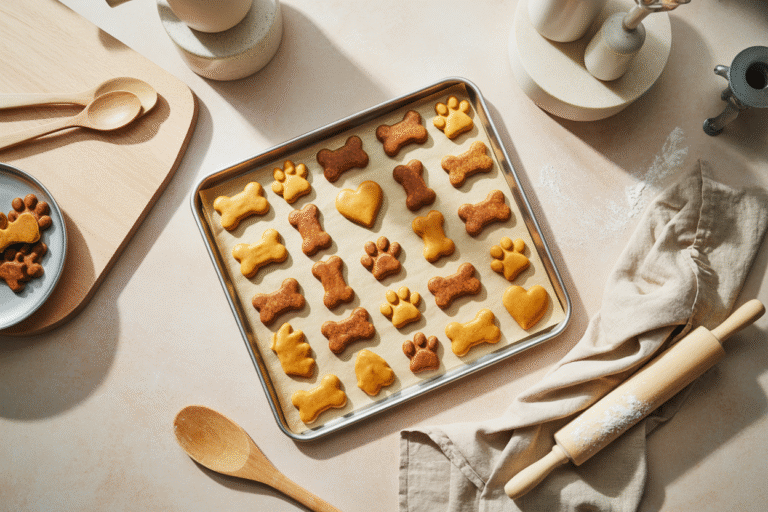

Pumpkin Dog Treats: Healthy, Homemade Recipes Your Pup Will Love

Pumpkin dog treats are homemade snacks made with pumpkin puree that dogs love and that can provide health benefits like digestive support. I’ve found that making these treats at home is surprisingly easy and much more affordable than buying specialty dog treats at the store.
Pumpkin dog treats can be made with just a few simple ingredients like pumpkin puree, peanut butter, and flour, and most recipes take less than 30 minutes from start to finish.
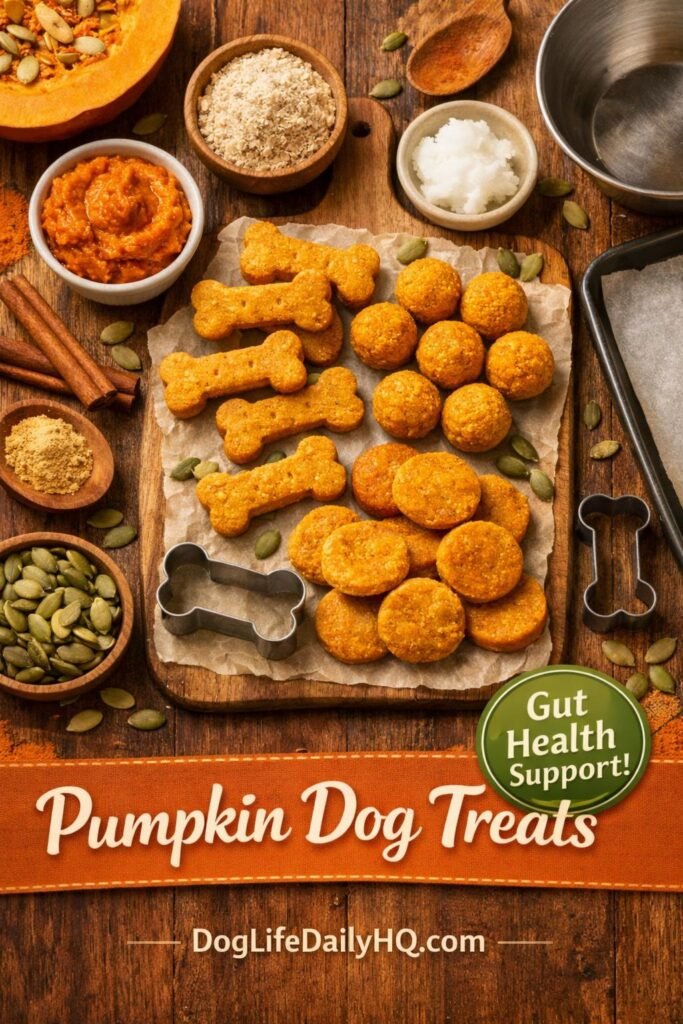
What I love most about homemade pumpkin dog treats is that I know exactly what’s going into them. There are no weird preservatives or ingredients I can’t pronounce.
Plus, pumpkin is naturally good for dogs and can help with digestive issues. Whether you want to bake crunchy biscuits or make frozen treats, there are dozens of ways to use pumpkin in your dog’s snacks.
I’ll show you the easiest recipes, the best ingredients to use, and how to store your treats so they stay fresh for weeks.
Key Takeaways
- Pumpkin dog treats are simple to make at home with basic ingredients and offer health benefits for your dog
- Most recipes require only three to four ingredients and can be prepared in under 30 minutes
- Homemade treats can be stored in the freezer or refrigerator and customized to fit your dog’s preferences
Why Pumpkin Dog Treats Are Great for Dogs

Pumpkin offers dogs a range of health benefits that make it one of the best ingredients you can add to homemade treats. This orange vegetable provides fiber for better digestion, vitamins that support immune function, and nutrients that help keep your dog healthy at every stage of life.
Nutritional Benefits of Pumpkin for Dogs
Pumpkin stands out as a nutritional powerhouse for dogs. It contains high amounts of fiber while staying low in calories, which makes it perfect for dogs who need to watch their weight.
The vegetable is naturally sweet without any added sugar. This means I can use it in treats without worrying about giving my dog unnecessary calories or ingredients that might spike blood sugar levels.
Pumpkin provides essential nutrients that support dogs of all ages and activity levels. It’s gentle on the stomach and packed with vitamins and minerals that keep dogs healthy.
Pure pumpkin puree works best for dog treats. I always avoid pumpkin pie filling because it contains sweeteners and spices that can harm dogs.
Digestive Health and Fiber
The fiber in pumpkin helps regulate a dog’s digestive system in both directions. It can ease constipation by adding moisture and bulk to stool.
It can also help with diarrhea by absorbing excess water. Pumpkin contains both soluble and insoluble fiber, which work together to keep the digestive tract running smoothly.
The soluble fiber helps balance moisture levels in the stool. This makes pumpkin treats useful when my dog has an upset stomach.
The fiber content supports regular bowel movements and helps maintain good gut health over time.
Vitamins and Antioxidants
Pumpkin delivers several important vitamins that protect my dog’s health. Vitamin A supports vision health, especially in older dogs.
Vitamin C strengthens the immune system and helps maintain healthy joints and connective tissues. Vitamin E acts as an antioxidant.
The beta carotene in pumpkin converts to vitamin A inside my dog’s body. This nutrient helps maintain healthy eyesight as dogs age.
Pumpkin also contains zinc and natural antioxidants. These nutrients nourish the skin from the inside and help keep my dog’s coat shiny and soft.
Pumpkin in a Balanced Canine Diet
I use pumpkin as part of my dog’s regular diet, not as a replacement for complete nutrition. Adding a spoonful of pure pumpkin to meals a few times each week provides digestive support and extra nutrients.
Pumpkin works well for diabetic dogs because it adds flavor without added sugar or preservatives. The natural sweetness satisfies dogs without raising blood sugar levels.
When I make homemade treats with pumpkin, I combine it with other healthy ingredients like oats or peanut butter. This creates balanced snacks that provide protein, healthy fats, and the nutritional benefits of pumpkin in every bite.
Key Ingredients for Pumpkin Dog Treats
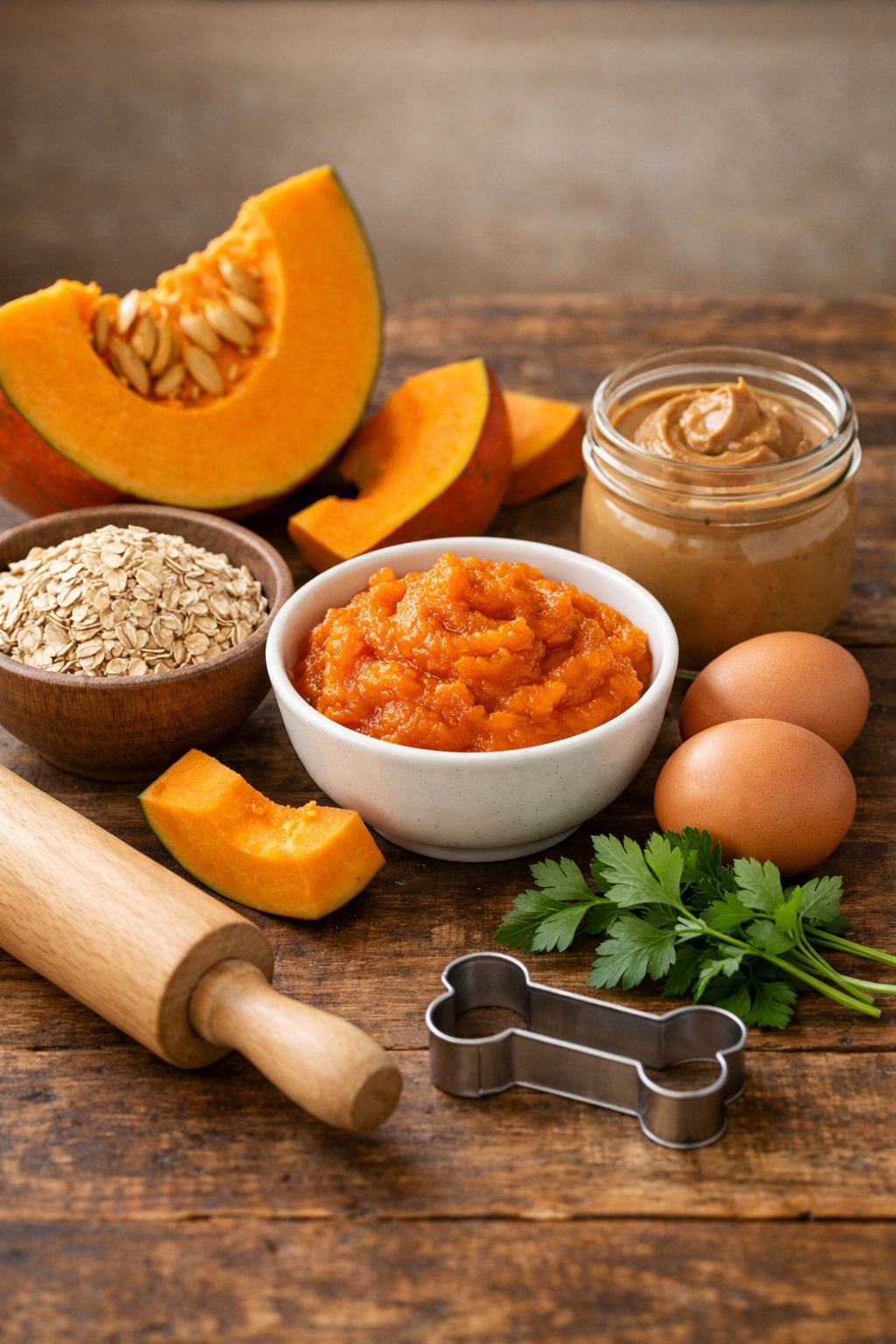
When I make pumpkin dog treats at home, I focus on choosing ingredients that are both safe and nutritious for my pup. The right combination of pumpkin, flour, and healthy additions creates treats that dogs love while supporting their health.
Pumpkin Options: Canned vs. Fresh
I always reach for canned pumpkin puree when I’m baking dog treats because it’s convenient and consistent. Plain canned pumpkin contains the same nutrients as fresh pumpkin but saves me time on cooking and mashing.
When I buy canned pumpkin, I make sure to get 100% pure pumpkin. I avoid pumpkin pie filling because it contains added sugars, spices, and other ingredients that aren’t safe for dogs.
The label should only list pumpkin as the ingredient. Fresh pumpkin works well too if I have extra time.
I roast it, remove the skin and seeds, then mash or puree it until smooth. Fresh pumpkin gives me control over the texture, but canned pumpkin puree is my go-to for most recipes.
Choosing the Right Flour
Whole wheat flour is my most common choice for pumpkin dog treats because it provides fiber and helps bind the ingredients together. It creates a firm texture that holds its shape during baking.
I also love using oat flour as an alternative. It’s naturally gluten-free and works perfectly for dogs with wheat sensitivities.
I can make my own oat flour by grinding regular oats in a food processor until they turn into a fine powder. For dogs with specific dietary needs, I sometimes use almond flour, coconut flour, or brown rice flour.
Each flour type absorbs moisture differently, so I adjust the amounts based on the dough consistency.
Safe Peanut Butter Choices
Natural peanut butter is one of my favorite ingredients to add flavor and protein to pumpkin treats. I always check the label carefully before using any peanut butter in dog recipes.
The most important rule I follow is avoiding any peanut butter that contains xylitol. This artificial sweetener is extremely toxic to dogs and can be fatal even in small amounts.
I look for peanut butter with only peanuts and maybe salt listed as ingredients. Dog-safe peanut butter should be free from added sugars, oils, and preservatives.
I prefer brands where the oil separates at the top because this indicates minimal processing and no added stabilizers.
Oats and Other Common Ingredients
I use rolled oats in many of my treat recipes because they add texture and nutritional value. Oats are a good source of fiber and help support healthy digestion in dogs.
Eggs serve as a natural binder in my recipes and add protein. I also incorporate ingredients like plain yogurt, honey in small amounts, and shredded carrots or sweet potatoes for extra nutrition.
These additions complement the pumpkin flavor while keeping treats wholesome and simple.
How to Make Homemade Pumpkin Dog Treats

Making pumpkin dog treats at home requires proper dough handling and baking techniques to achieve the right texture. The key is getting the moisture balance correct and adjusting your baking time based on whether you want crunchy biscuits or softer chews.
Dough Consistency and Mixing Tips
I always start by checking my dough consistency before moving forward with any pumpkin dog treat recipe. The mixture should hold together without being sticky or crumbly.
If my dough feels too wet and sticks to my hands, I add flour one tablespoon at a time. Too much moisture makes treats that spread during baking or don’t hold their shape.
On the other hand, if the dough crumbles and won’t form a ball, I add water a teaspoon at a time or a bit more pumpkin puree. I mix the wet ingredients first before adding the flour.
This means combining pumpkin puree with eggs, peanut butter, or any other liquids completely. Then I gradually stir in the flour until just combined.
Important mixing tip: I don’t overmix the dough once I add the flour. Overworking it makes tough, dense treats instead of the tender texture dogs prefer.
Rolling, Cutting, and Shaping Techniques
I dust my counter and rolling pin with flour before rolling out the dough to prevent sticking. For most homemade dog treats, I roll the dough to about 1/4 inch thick for crunchy treats or 1/2 inch for softer ones.
Cookie cutters work great for fun shapes, but I make sure to dip them in flour between cuts. I press straight down without twisting to get clean edges.
For faster preparation, I sometimes skip cutters and just use a pizza cutter to make simple squares or rectangles. I place the cut treats about 1/2 inch apart on my baking sheet.
They don’t spread much during baking. I gather the leftover dough scraps, press them together gently, and roll them out again to cut more treats.
For frozen treats, I spoon the mixture into ice cube trays or silicone molds instead of rolling. This works perfectly for recipes with yogurt and pumpkin.
Baking for Crunchy or Chewy Treats
The baking time determines whether my homemade pumpkin dog treats turn out crunchy or chewy. I bake at 350°F for most recipes, adjusting the time based on my desired texture.
For chewy treats, I bake for 15-20 minutes until the edges just start to firm up. The centers will still feel slightly soft when I press them.
For crunchy treats, I bake for 25-35 minutes until the edges brown and the treats feel firm all over. Some people even turn off the oven and leave the treats inside for an extra hour to dry them out completely.
This makes them shelf-stable and perfect for dogs who love a good crunch. I always let my treats cool completely on the baking sheet before giving them to my dog.
Hot treats can burn their mouth, and they need time to firm up to their final texture.
Popular Pumpkin Dog Treat Recipes
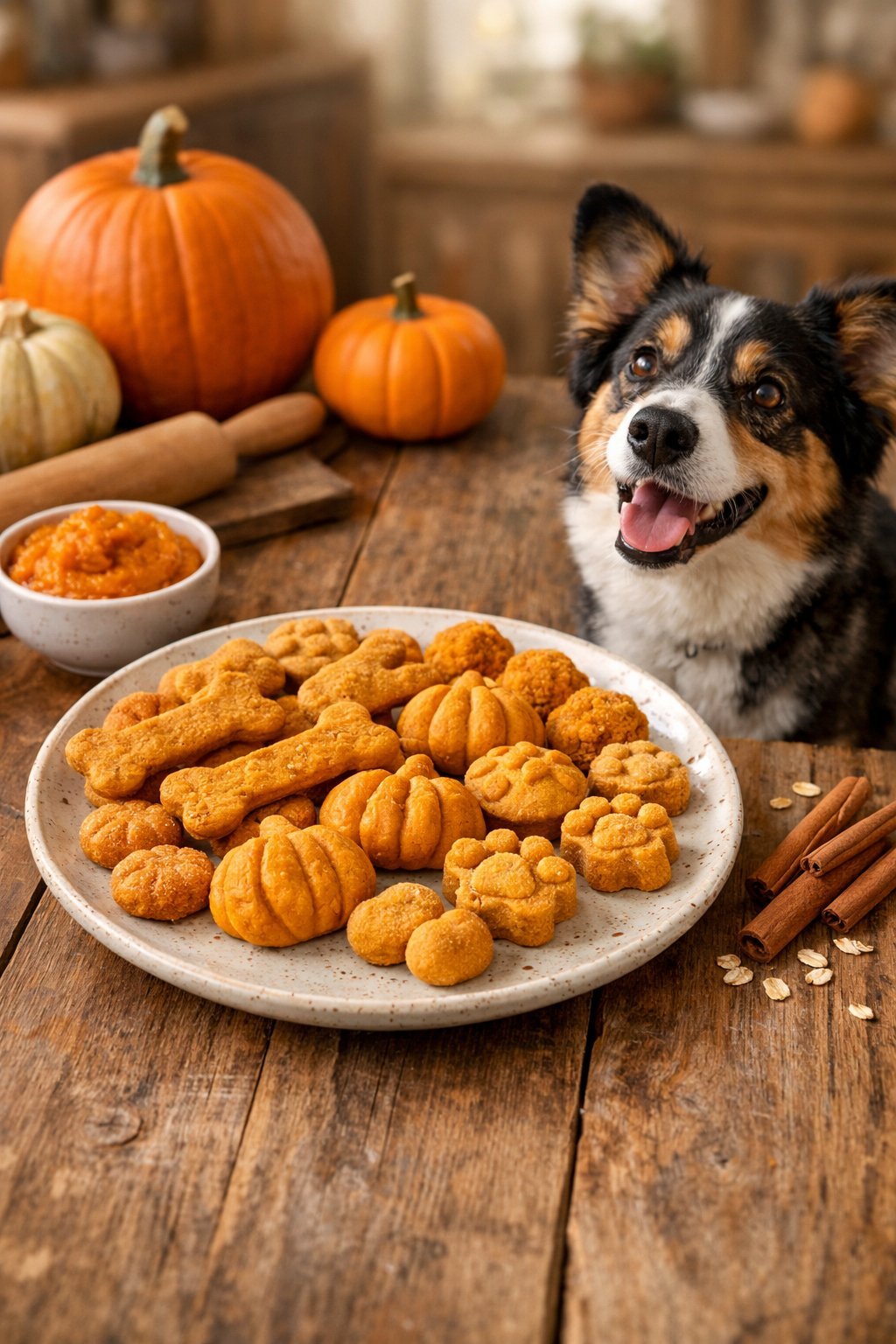
I’ve tested several pumpkin dog treat recipes over the years, and three stand out as favorites among pet owners. These range from traditional baked biscuits to quick three-ingredient options that save time without sacrificing quality.
Classic Pumpkin Dog Biscuits
I always start with the classic version when I’m making homemade pumpkin dog treats for the first time. This recipe combines 1 cup of canned pumpkin puree with 2 cups of whole wheat flour, 1 egg, and a quarter cup of xylitol-free peanut butter.
The dough should be firm enough to roll out to about half-inch thickness. I use cookie cutters to make fun shapes, though a knife works just fine too.
After cutting the shapes, I place them on a parchment-lined baking sheet. The dog biscuits bake at 350°F for 30 to 35 minutes until they turn dry and crispy.
Once cooled completely, these treats stay fresh in an airtight container for up to a week at room temperature or two weeks in the refrigerator.
3-Ingredient Pumpkin Dog Treats
When I need quick easy dog treats, I turn to the three-ingredient pumpkin dog treats recipe. This stripped-down version uses only canned pumpkin, oat flour, and one egg.
I mix these ingredients until they form a thick dough. I can roll the dough into small balls for bite-sized training treats or flatten it and cut shapes.
These bake faster than traditional biscuits because they’re often smaller. I watch them closely and remove them when they firm up, usually around 20 to 25 minutes.
The fiber content makes these particularly good for dogs with sensitive stomachs.
Pumpkin and Peanut Butter Treats
My dogs go crazy for pumpkin and peanut butter dog treats because the combination tastes rich and satisfying. I use 1 cup pumpkin puree, a quarter to half cup of natural peanut butter, 2 to 3 cups of whole wheat or oat flour, and one egg.
The peanut butter must be xylitol-free since this sweetener is toxic to dogs. I check labels carefully every time.
The extra fat from peanut butter makes these treats softer than plain pumpkin biscuits. I can adjust the flour amount to get my preferred texture.
More flour creates crunchier treats, while less flour keeps them chewy. I bake them at 350°F for about 35 minutes and let them cool before serving.
Creative Pumpkin Treat Variations
I love experimenting with different pumpkin treat combinations to keep my dog excited about snack time. Frozen treats work great for warm days, while veggie blends and oat-based recipes offer texture and nutrition variety.
Frozen Pumpkin Dog Treats
I find frozen pumpkin dog treats incredibly easy to make with just a few ingredients. My go-to recipe uses pumpkin puree, plain Greek yogurt, and a dollop of peanut butter mixed together and frozen in ice cube trays or silicone molds.
These treats don’t require any baking. I simply blend the ingredients until smooth and pour them into molds.
After freezing for 1 to 2 hours, they’re ready to serve. My dog loves them on hot summer days, and they help keep her cool and hydrated.
Simple frozen treat ingredients:
- 1 cup pumpkin puree
- 1 cup plain Greek yogurt
- 2 tablespoons peanut butter (xylitol-free)
I also make coconut oil versions for grain-free options. These frozen snacks are perfect for dogs with sensitive teeth since they’re soft and easy to lick.
Pumpkin and Carrot Treats
I combine pumpkin and carrots to create nutrient-packed treats my dog can’t resist. Carrots add extra vitamins and a satisfying crunch when baked into biscuits.
My favorite recipe mixes shredded carrots with pumpkin puree, whole wheat flour, and an egg. I roll out the dough and cut it into shapes before baking at 350°F for about 25 minutes.
The carrots provide vitamin A and fiber alongside the pumpkin’s digestive benefits. I sometimes add a pinch of cinnamon for flavor.
Nutritional benefits include:
- Pumpkin: Fiber for digestion
- Carrots: Beta-carotene for eye health
- Combined: Low-calorie, vitamin-rich snacks
These treats store well in an airtight container for up to two weeks. I keep them on hand for training rewards.
Oat and Pumpkin Combinations
I use oats in my pumpkin dog treat recipes to create a chewy, granola-bar texture. Oats add healthy fiber and make the treats more filling for my dog.
My basic recipe combines rolled oats, pumpkin puree, peanut butter, and a touch of honey. I press the mixture into a baking pan and bake until firm.
After cooling, I cut them into squares. These oat-based treats are great for dogs who need extra energy or have grain sensitivities when I use gluten-free oats.
I sometimes add flaxseed or chia seeds for omega-3 fatty acids. The oats help bind everything together without needing much flour, making them easier to digest than traditional baked biscuits.
Storing and Serving Homemade Pumpkin Dog Treats
Proper storage keeps your homemade pumpkin treats fresh and safe, while correct portion sizes ensure your dog enjoys them without overindulging.
Shelf Life and Storage Tips
I always let my pumpkin dog treats cool completely before storing them. Any trapped steam creates moisture that leads to mold.
For baked biscuits, I keep them in an airtight glass jar on the counter for 5-7 days. They stay crunchy this way.
If you live somewhere humid, store them in the fridge instead—they’ll last up to 2 weeks in a sealed container. Soft pumpkin treats need refrigeration right away.
I use a snap-lid box lined with parchment paper and keep them for about 1 week. The parchment prevents condensation from making them soggy.
The freezer is my go-to for big batches. Homemade treats can last 3 months frozen when stored properly.
I portion them into freezer bags, then double-bag to prevent freezer burn. Label each bag with the date and treat type—it makes rotation easy.
Never refreeze thawed treats. Once they come to room temperature, bacteria can multiply and texture breaks down.
Portion Sizes and Safe Treat Giving
I follow the 10% rule with my dog treats recipe. Treats should make up no more than 10% of my dog’s daily calories.
For a 50-pound dog eating 1,000 calories per day, that’s about 100 treat calories.
Small dogs (under 20 pounds) get 1-2 small treats per day. Medium dogs (20-50 pounds) can have 2-3 treats.
Large dogs (over 50 pounds) can enjoy 3-4 treats daily.
I start with tiny portions when trying any new DIY recipe. A pea-sized piece lets me watch for allergic reactions or digestive upset.
Plain pumpkin is safe for most dogs. Added ingredients might not agree with every pup.
Store treats out of reach between servings. My dog would happily eat the whole batch if given the chance!