
Pumpkin Dog Treats: Easy, Healthy Homemade Dog Biscuits

I love spoiling my dog with homemade treats. Pumpkin dog treats have become one of my favorite recipes to make.
You can make delicious pumpkin dog treats with just four simple ingredients: pumpkin puree, peanut butter, eggs, and whole wheat flour. This pumpkin dog treats recipe is easy to prepare, healthier than most store-bought options, and my pup goes absolutely crazy for them.
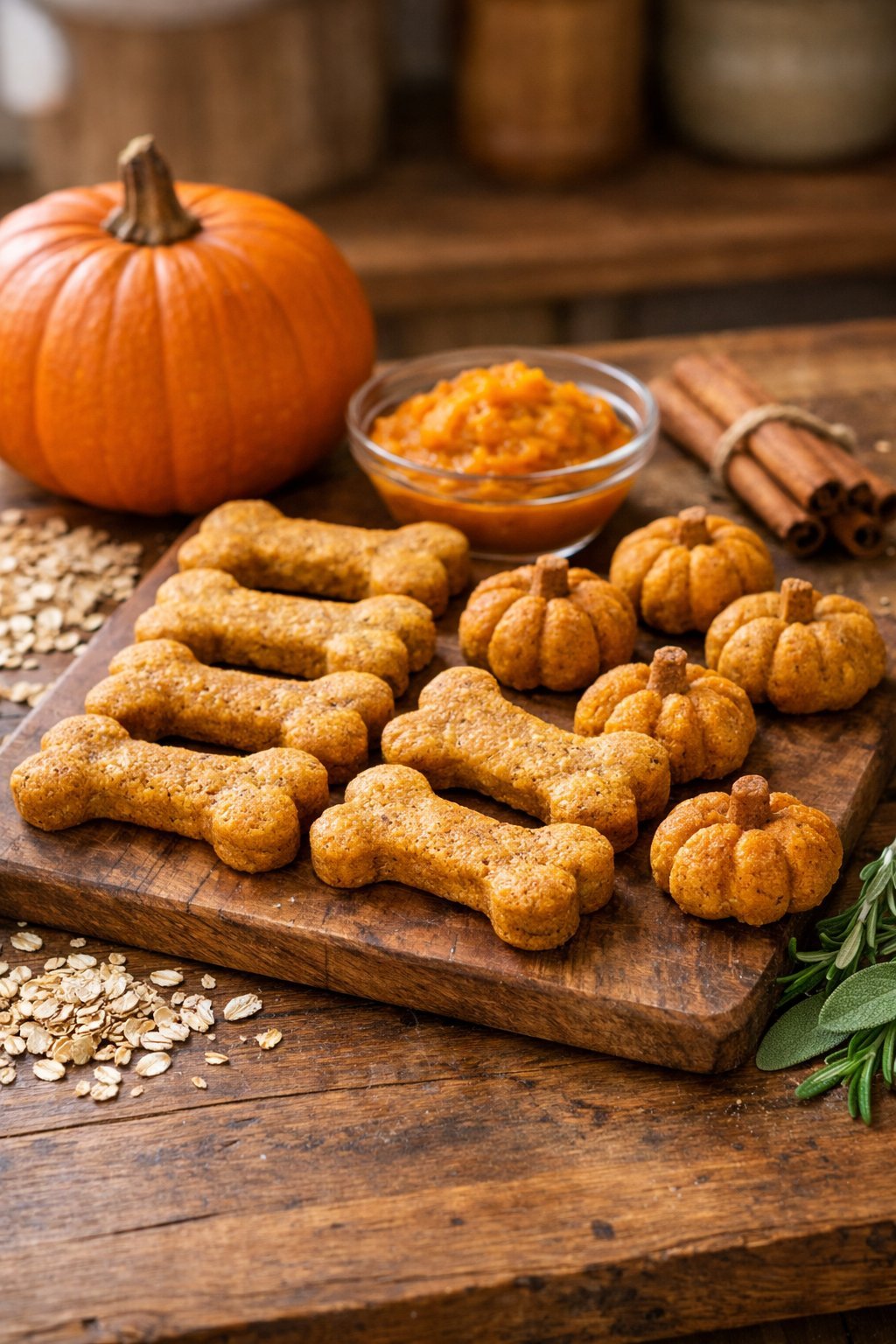
The best part about making homemade pumpkin dog treats is that you control exactly what goes into your dog’s snacks. No mystery ingredients or preservatives.
Pumpkin is great for dogs because it supports healthy digestion and adds natural nutrients to their diet. Whether you want soft and chewy treats or crispy crunchy biscuits, this recipe works for both.
I’ll show you how to mix the dough, cut out fun shapes, and bake them to your dog’s preference. You can even freeze extras so you always have treats ready for training sessions or just because your furry friend deserves a reward.
Key Takeaways
- Pumpkin dog treats require only four basic ingredients and take about 30 minutes to make from start to finish
- You can bake the treats for 20 minutes for a softer texture or add 10 more minutes for crunchy biscuits
- Store finished treats in the fridge for up to one week or freeze them for up to three months
Why Pumpkin Dog Treats Are Great for Your Pup

Pumpkin offers impressive health benefits for dogs, from supporting digestion to providing essential vitamins and minerals. Making homemade pumpkin dog treats gives my pup these nutritional advantages in a tasty form they actually enjoy.
Nutritional Benefits of Pumpkin for Dogs
Pumpkin is packed with vitamins that support my dog’s health. It contains vitamin A, which helps maintain healthy eyes and skin.
The vitamin C in pumpkin supports the immune system. I also appreciate that pumpkin contains important minerals like iron and potassium.
Iron helps transport oxygen throughout my dog’s body. Potassium supports proper muscle and nerve function.
Pure pumpkin is low in calories but high in nutrients. This makes pumpkin dog treats a smart choice when I want to reward my pup without adding too many extra calories to their diet.
How Pumpkin Aids Digestion
The fiber in pumpkin is what makes it so helpful for my dog’s digestive system. This fiber can help with both diarrhea and constipation by adding bulk to stools and regulating digestion.
When I use pure pumpkin in homemade pumpkin dog treats, I’m giving my dog a natural way to maintain healthy digestion. The fiber absorbs excess water in the digestive tract when needed.
It also softens stools when my dog needs that kind of support. Pumpkin works gently compared to some other digestive aids.
It doesn’t cause upset or discomfort. The natural fiber simply helps things move through the digestive system at the right pace.
Pumpkin as a Superfood for Dogs
Pumpkin is considered a superfood because it offers so many benefits in one ingredient. It contains an amino acid called cucurbitacin that may help fight parasites in dogs.
The combination of fiber, vitamins, and minerals makes pumpkin a complete nutritional package. Dogs naturally enjoy the taste of pumpkin, which makes it easy to add to their diet.
I don’t have to trick my pup into eating something healthy. They happily gobble up treats made with pumpkin puree.
Essential Ingredients for Pumpkin Dog Treats

Making pumpkin dog treats at home requires just a few basic ingredients that you probably already have in your pantry. The right pumpkin puree forms the base, while nut butters add protein and flavor, and flours or oats give the treats their structure.
Choosing the Right Pumpkin Puree
I always use 100% pure pumpkin when I bake treats for my dog. The most important thing to remember is to avoid canned pumpkin pie filling, which contains sugar and spices that aren’t good for dogs.
Look for labels that say “100% pumpkin” or “pure pumpkin” with no other ingredients listed. Plain pumpkin puree like Libby’s is a safe choice that adds fiber and vitamins without harmful additives.
Canned pumpkin puree works perfectly for most recipes. It’s already the right consistency and stays fresh in the fridge for about a week after opening.
Fresh pumpkin is another option if you want to go the extra mile. Just make sure to cook it down until it reaches a smooth, thick consistency similar to what you’d find in a can.
Nut Butters: Peanut Butter and Healthy Alternatives
Peanut butter is one of my go-to ingredients because dogs absolutely love the taste. I always check the label to make sure it doesn’t contain xylitol, an artificial sweetener that’s toxic to dogs.
Natural peanut butter from brands like Smucker’s Natural works best since it only contains peanuts and maybe a little salt. Avoid options with added sugars or oils.
If your dog has a peanut allergy, there are other nut butter options to try:
- Almond butter: Rich in healthy fats and vitamin E
- Cashew butter: Creamy and mild-flavored
- Sunflower seed butter: A nut-free alternative that’s safe for sensitive dogs
I use about 1/4 to 1/2 cup of nut butter per batch. It acts as a binder and adds protein while making the treats irresistible to pups.
Flours and Oats: Whole Wheat, Rolled Oats, and More
The flour you choose gives your treats their texture and helps hold everything together. I prefer whole wheat flour for most basic pumpkin dog biscuits because it’s affordable and provides good fiber.
Rolled oats are another excellent option. They add extra fiber and work well in both crunchy and soft treats.
Old-fashioned oats work better than quick oats for maintaining texture. If your dog has grain sensitivities, you can substitute with:
- Coconut flour (use less since it’s very absorbent)
- Almond flour for a lighter texture
- Chickpea flour for a protein boost
- Rice flour for a gentle, easily digestible option
I typically use about 2 to 2.5 cups of flour or oats per cup of pumpkin puree. The dough should be firm enough to roll out but not too dry or crumbly.
Step-by-Step Pumpkin Dog Treats Recipe

Making homemade pumpkin dog treats takes just a few simple ingredients and basic kitchen tools. I’ll walk you through three different methods that range from classic baked biscuits to quick frozen options and nutritious variations.
Classic Baked Pumpkin Dog Biscuits
I start my basic pumpkin dog treats recipe with 1 cup of pure pumpkin puree, 2 cups of whole wheat flour, and 1 egg. I mix these ingredients in a large bowl until they form a firm dough.
If the dough feels too sticky, I add flour one tablespoon at a time. I roll out the dough to about 1/4 inch thick on a floured surface.
Using cookie cutters, I cut the dough into fun shapes like bones or hearts. I place them on a parchment-lined baking sheet and bake at 350°F for 25-30 minutes until they’re golden and crispy.
For 3-ingredient pumpkin dog treats, I simply skip any extras and stick with pumpkin, flour, and eggs. These dog biscuits stay fresh in an airtight container for up to two weeks at room temperature or three weeks in the fridge.
No-Bake and Frozen Pumpkin Dog Treats
I love making frozen pumpkin dog treats when I’m short on time or during hot summer months. My go-to recipe uses 1 cup pumpkin puree mixed with 1/2 cup plain yogurt and 2 tablespoons of xylitol-free peanut butter.
I pour this mixture into silicone molds or ice cube trays. After freezing for 2 hours, I have ready-to-serve treats that help keep my pup cool and happy.
Another simple no-bake option combines 1 cup pumpkin with 1 egg, then I spread it thin on a lined baking sheet and dehydrate it in a low oven at 200°F for 3-4 hours. These chewy strips are perfect for training sessions.
I store frozen treats for up to 3 months in freezer-safe containers.
Banana and Sweet Potato Variations
I add mashed banana to my pumpkin dog treat recipe for extra flavor and natural sweetness. My dogs go crazy for this combination: 1/2 cup pumpkin puree, 1 mashed ripe banana, 1 egg, and 2 cups oat flour.
For sweet potato dog treats with pumpkin, I combine 1/2 cup cooked mashed sweet potato with 1/2 cup pumpkin puree, 1 egg, and 2-3 cups of flour. Sweet potatoes add vitamin A and fiber to complement the pumpkin’s digestive benefits.
I bake both variations at 350°F for 20-25 minutes. The banana version makes softer treats that work well for older dogs, while the sweet potato option creates firmer biscuits.
I can mix and match these ingredients based on what I have in my pantry.
Tips for Safe and Tasty Treat Making

Getting the dough right and choosing safe ingredients makes all the difference when baking homemade dog treats. Small adjustments to texture, size, and ingredients help you create treats your dog will love while keeping them healthy.
Proper Dough Consistency and Handling
The dough should feel like thick cookie dough that holds its shape without crumbling. If it’s too sticky, I add a tablespoon of flour at a time until it’s easy to work with.
If it’s too dry and cracking, I mix in a teaspoon of water or pumpkin puree. I always lightly flour my rolling surface and rolling pin to prevent sticking.
The dough should roll out to about 1/4 inch thick for crunchy treats or 1/2 inch for softer ones. When handling the dough, I work quickly because warm hands can make it sticky.
If it gets too soft, I put it in the fridge for 10-15 minutes before continuing. I never reroll the dough more than twice.
After that, it gets tough from too much handling.
Size and Shape Customization
I cut treats into sizes that match my dog’s mouth. Small dogs need bite-sized pieces about 1/2 inch.
Larger dogs can handle 2-3 inch treats. For training, I make tiny squares or circles no bigger than a fingernail.
These pumpkin training treats work perfectly because dogs can eat several without extra calories. Cookie cutters work great for fun shapes, but I also use a pizza cutter to make simple squares.
Squares bake more evenly than thick bone shapes. Thinner treats get crunchier, which helps clean teeth.
Thicker treats stay softer inside, which older dogs prefer.
Safe Ingredient Substitutes for Dogs
I use oat flour instead of whole wheat flour for dogs with grain sensitivities. I make it by blending rolled oats in a food processor until fine.
Butternut squash works as a perfect substitute for pumpkin in any dog treat recipe. It has similar fiber and vitamins.
I cook and mash it the same way. For dogs with peanut allergies, I swap peanut butter with unsweetened applesauce or mashed banana.
Both add moisture and flavor. Coconut flour absorbs more liquid than regular flour, so I use half the amount called for in recipes.
When following an easy pumpkin dog treat recipe, I adjust accordingly. I always check that peanut butter contains no xylitol, which is toxic to dogs.
Plain ingredients without added sugar or salt keep homemade dog treats healthy.
Storing and Serving Homemade Pumpkin Dog Treats
Proper storage keeps your homemade pumpkin dog treats fresh and safe for your dog to enjoy. The right container and storage method will extend their shelf life significantly.
Using an Air-Tight Container
I always store my dog treats in an air-tight container once they’ve cooled completely. This is the most important step to keep them fresh and prevent mold growth.
Make sure the treats are fully cooled before sealing them. If you put warm treats in a container, condensation forms inside.
This moisture leads to mold and spoilage. For homemade pumpkin dog treats stored at room temperature, an air-tight container keeps them fresh for about 5-7 days.
I use glass jars or plastic containers with tight-fitting lids. Keep the container in a cool, dry place away from direct sunlight.
My pantry works perfectly for this purpose.
Shelf Life and Freezing Options
Refrigerating your dog treats extends their life to about two weeks. I store mine in an air-tight container in the fridge when I want them to last longer.
For the longest storage, freezing is your best option. I place my treats in freezer-safe bags or containers, and they last up to three months.
Make sure to label the container with the date. Frozen pumpkin dog treats can be served straight from the freezer as a cool snack.
They thaw quickly at room temperature, usually within 15-20 minutes. I keep a week’s supply in my pantry and freeze the rest.