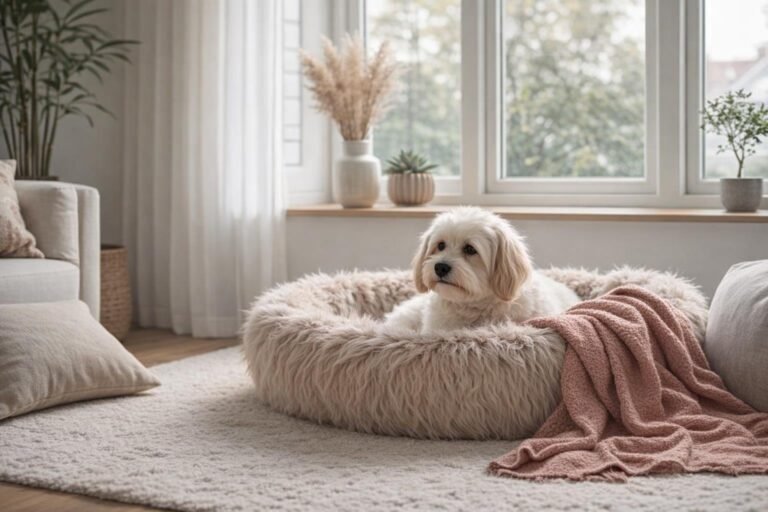
Puppy Essentials: Your Complete Guide to Bringing Home a New Dog

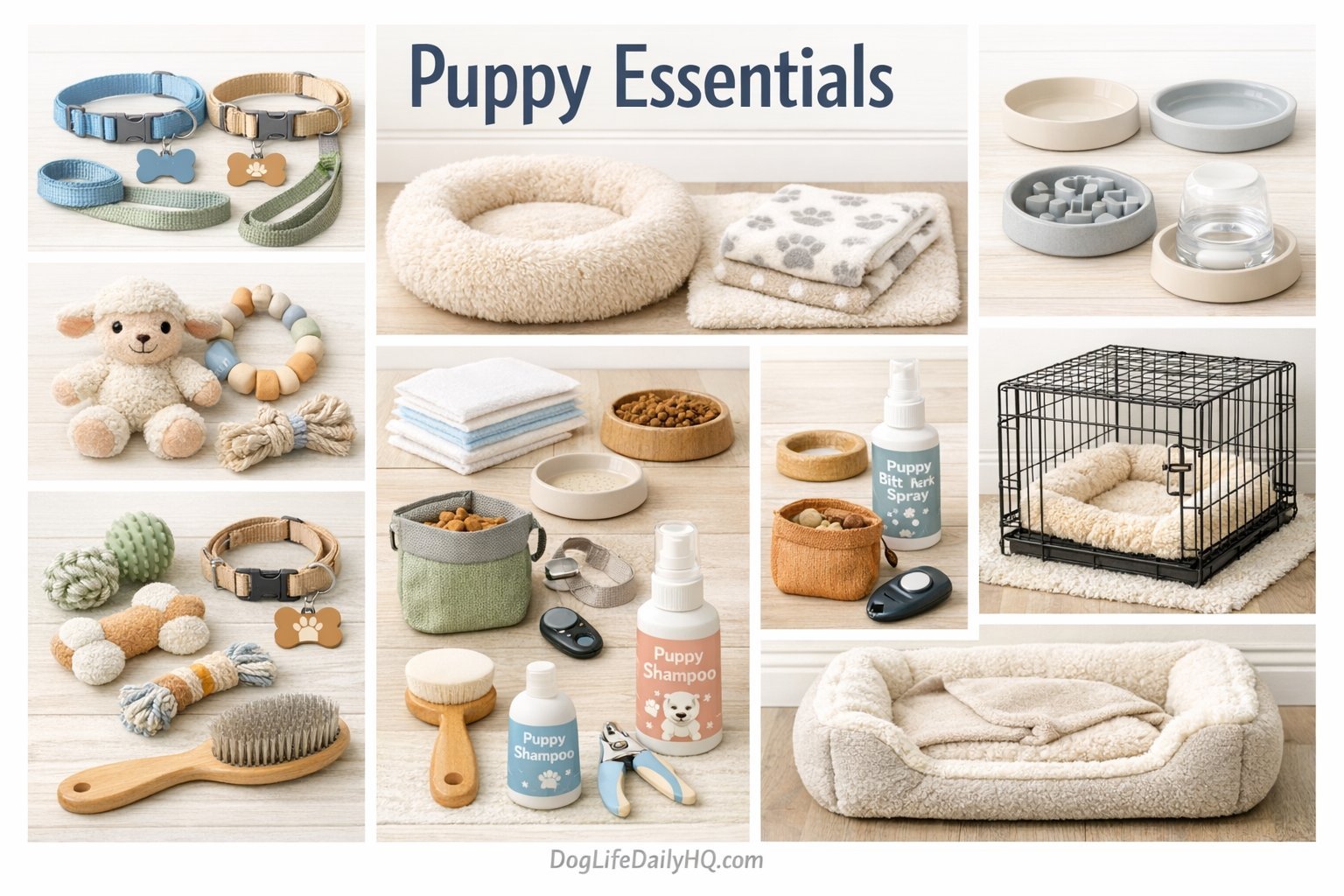
Puppy Essentials – Getting a new puppy is exciting, but it can feel overwhelming when you’re trying to figure out what supplies you actually need. Your new puppy needs basic items like food and water bowls, a collar and leash, a crate, a bed, age-appropriate food, toys, and grooming supplies to get started. I’ve put together this guide to help you prepare your home and gather everything your new furry friend needs to thrive.

You don’t have to buy everything at once or spend a fortune. The key is focusing on the items that will keep your puppy safe, healthy, and comfortable during those important first weeks and months. From essential puppy supplies to training tools and health care basics, I’ll walk you through what matters most.
This checklist covers everything from setting up feeding stations to creating safe spaces for rest and play. I’ll help you understand which items are must-haves right away and which ones you can add as your puppy grows.
Key Takeaways
- You need to puppy-proof your home and set up designated areas for eating, sleeping, and playing before bringing your new dog home
- Stock up on quality puppy food, feeding bowls, and schedule a vet appointment within the first week to establish a health care routine
- Get basic training tools like a collar, leash, and crate along with safe toys to help with socialization and mental stimulation
Preparing Your Home for a Puppy

Before bringing a puppy home, I need to secure dangerous items, gather basic supplies, and set up a comfortable space where my new friend can rest and feel safe.
Puppy-Proofing Basics
I start by getting down on my hands and knees to see my home from a puppy’s perspective. This helps me spot hazards I might miss from standing height.
Electrical cords are a major concern. I tape them to walls or use cord covers to keep curious mouths away. I also move household cleaners, medications, and toxic plants to high shelves or locked cabinets.
Small objects like coins, rubber bands, and children’s toys can cause choking. I check floors and low surfaces daily to keep these items out of reach. Trash cans need secure lids or should go inside cabinets.
I remove or secure dangling items like tablecloths and window blind cords. Puppies love to pull on anything within reach. I also block off stairs with baby gates until my puppy is old enough to navigate them safely.
Essential Supplies Checklist
I gather key puppy supplies before my puppy arrives so I’m not scrambling on the first day.
Food and Water Items:
- Stainless steel or ceramic food bowls
- Water bowl or dispenser
- Age-appropriate puppy food
- Healthy training treats
Comfort and Safety:
- Collar with ID tag
- Leash (4-6 feet works best)
- Crate sized for adult growth
- Soft bedding or blanket
- Toys for chewing and play
Health and Cleaning:
- Puppy pads or outdoor potty area
- Enzyme cleaner for accidents
- Grooming brush
- Nail clippers
- Puppy shampoo
I buy food recommended by the breeder or shelter to avoid stomach upset from sudden diet changes.
Safe Spaces and Crate Setup
Every puppy needs a designated spot to call their own. I choose a quiet area away from heavy foot traffic where my puppy can relax without constant disturbance.
The crate should be large enough for my puppy to stand, turn around, and lie down comfortably. I add soft bedding and place a few safe toys inside to make it inviting.
I position the crate in a room where my family spends time so my puppy doesn’t feel isolated. The kitchen or living room usually works well. I never use the crate as punishment because I want my puppy to see it as a safe den.
I also set up a puppy-proofed play area using baby gates or an exercise pen. This gives my puppy room to move around safely when I can’t watch closely.
Nutrition and Feeding Essentials

Proper nutrition during puppyhood sets the foundation for your dog’s lifelong health. I’ll walk you through selecting quality food, establishing feeding routines, and introducing treats without compromising your puppy’s diet.
Choosing the Right Puppy Food
I always recommend choosing puppy food that’s specifically formulated for growth and development. Puppy food contains higher levels of protein, fat, and calories compared to adult dog food.
Look for foods that meet AAFCO standards for puppy nutrition. These foods provide the right balance of calcium and phosphorus for bone development. I check the ingredient list to make sure a quality protein source like chicken, beef, or fish appears first.
Your puppy’s breed size matters when selecting food. Large breed puppies need specially formulated food that controls their growth rate. Small breed puppies have faster metabolisms and need more calorie-dense food.
Wet food, dry kibble, or a combination both work well. I find that dry kibble helps keep teeth clean. Whatever you choose, make sure it says “complete and balanced” on the label.
Feeding Schedules and Portions
I follow a consistent feeding schedule based on my puppy’s age. Puppies under three months need four meals per day. From three to six months, I feed three times daily.
Basic Feeding Schedule:
- 8 weeks to 3 months: 4 meals per day
- 3 to 6 months: 3 meals per day
- 6 months to 1 year: 2 meals per day
Portion sizes depend on your puppy’s current weight and expected adult size. I always check the feeding guide on the food package as a starting point. Most puppies need about twice the calories per pound compared to adult dogs.
I measure food carefully with a standard measuring cup. Free feeding isn’t recommended because it can lead to overeating. I also watch my puppy’s body condition and adjust portions if they’re getting too thin or pudgy.
Introducing Treats Safely
I limit treats to no more than 10% of my puppy’s daily calories. Too many treats can upset the balanced nutrition your puppy needs and lead to weight gain.
I choose treats made specifically for puppies since they’re softer and easier to chew. Small training treats work best because I can give them frequently during training sessions without overfeeding.
Avoid giving table scraps, chocolate, grapes, onions, or anything with xylitol. I break larger treats into smaller pieces to make them last longer during training. Healthy options include small pieces of cooked chicken, carrots, or green beans.
Health, Hygiene, and Veterinary Care
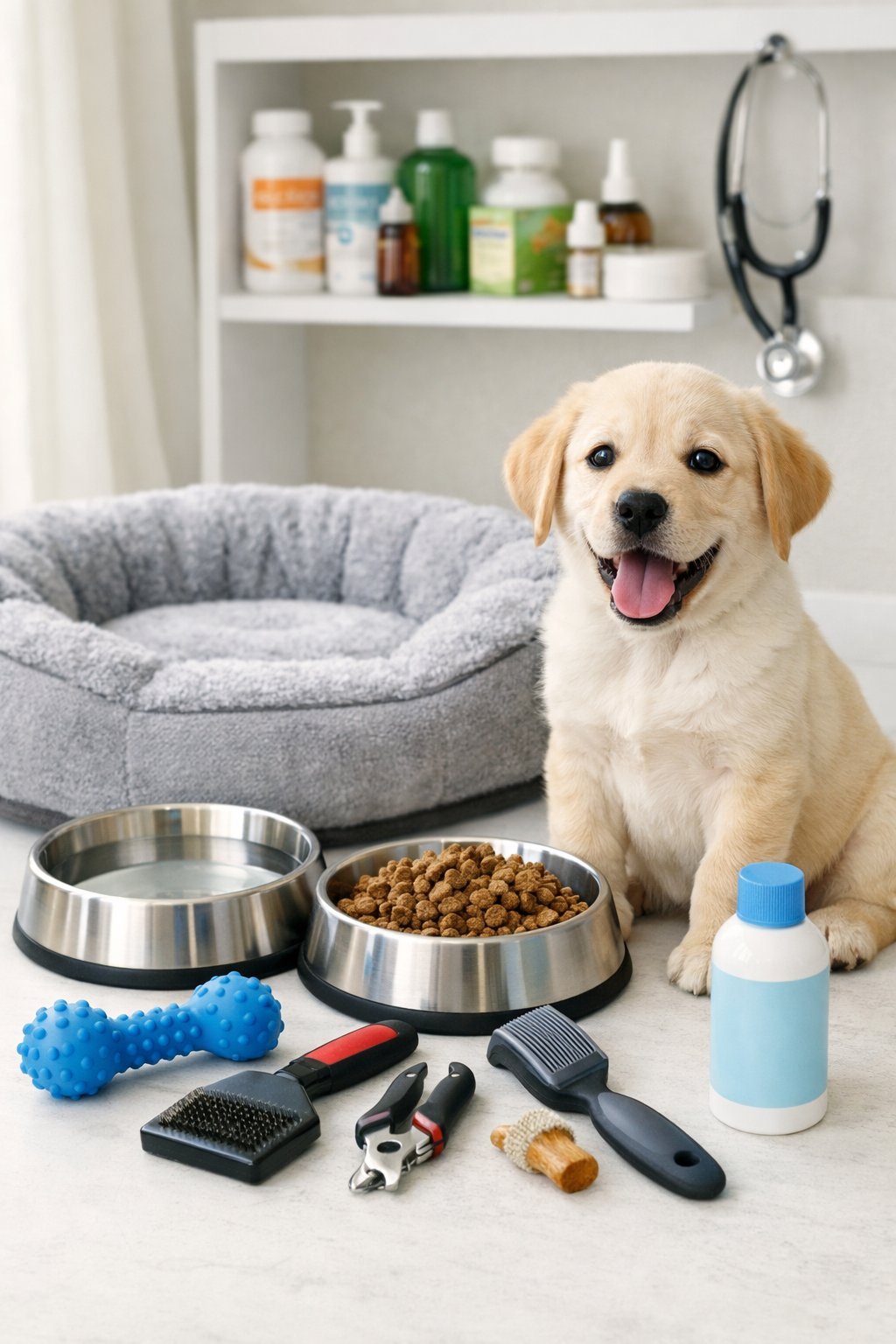
Keeping your puppy healthy starts with regular vet visits, proper vaccinations, and parasite prevention. Daily grooming habits and the right tools help maintain your puppy’s coat, skin, and overall cleanliness.
First Vet Visit and Vaccinations
I recommend scheduling your puppy’s first vet appointment within the first week of bringing them home. This visit lets your vet check your puppy’s overall health and look for any early signs of problems.
Your puppy needs a series of vaccines to protect against serious diseases. Core vaccines include distemper, parvovirus, and rabies. Most puppies get their first shots at 6-8 weeks old, with boosters every 3-4 weeks until they’re 16 weeks old.
During the visit, I bring along any health records from the breeder or shelter. Your vet will also discuss spaying or neutering options and answer questions about your puppy’s diet and behavior. Make sure to ask about a vaccine schedule so you know when to return for follow-up shots.
Flea, Tick, and Worm Prevention
Fleas, ticks, and worms can cause serious health problems for my puppy. Your vet will prescribe monthly preventatives that protect against these parasites.
Flea and tick medications come in several forms, including topical treatments, oral pills, and collars. I apply or give these products on the same day each month so I don’t forget. Heartworm prevention is equally important and requires a monthly dose year-round in most areas.
Puppies often need deworming treatments since intestinal parasites are common. Your vet may recommend deworming every 2-3 weeks until your puppy is about 12 weeks old. After that, regular fecal tests help catch any new infections early.
Bathing and Grooming Tools
I keep my puppy clean with regular baths and daily grooming. Most puppies need a bath every 4-6 weeks, though some breeds require more frequent washing.
For bathing, I use:
- Puppy shampoo (gentle and tear-free)
- Soft towels for drying
- Non-slip mat for the tub
Daily grooming needs include a soft brush or comb suited to your puppy’s coat type. Short-haired puppies need less brushing than long-haired breeds. I also keep nail clippers or a grinder on hand since nails grow quickly.
Routine hygiene care includes checking and cleaning ears weekly with a vet-approved solution. I brush my puppy’s teeth several times a week using dog toothpaste and a small brush. Starting these habits early makes grooming easier as your puppy grows.
Training and Socialization Must-Haves

Getting your puppy started with the right training equipment makes teaching basic commands and good behavior much easier. The right collar, leash, crate, and treats help you create a positive learning environment from day one.
Collars, Harnesses, and Leashes
I recommend starting with a lightweight collar that fits comfortably around your puppy’s neck. You should be able to fit two fingers between the collar and their neck.
For young puppies still learning to walk on a leash, I prefer using a harness instead of just a collar. A harness distributes pressure across the chest rather than the neck, which prevents choking and gives you better control. Look for adjustable harnesses that can grow with your puppy during their first few months.
A standard 4 to 6-foot leash works best for training walks. I avoid retractable leashes during the training phase because they make it harder to teach your puppy to walk beside you. Choose a leash made from durable nylon or leather with a comfortable handle.
Crates and Puppy Gates
A crate serves as your puppy’s safe space and helps with house training. I choose a crate that gives my puppy enough room to stand up, turn around, and lie down comfortably. Getting a crate with a divider panel lets you adjust the space as your puppy grows.
Puppy gates help me control which areas of my home my puppy can access. I use them to block off stairs, rooms with hazards, or spaces I want to keep puppy-free. Gates also create a safe environment for training and socialization by limiting your puppy to designated areas.
Place the crate in a quiet spot where your puppy can rest without too much activity around them. Never use the crate as punishment.
Training Treats and Toys
Small, soft training treats work best because your puppy can eat them quickly and get back to learning. I use treats that are about the size of a pea. High-value treats like small pieces of chicken or cheese help when teaching more challenging commands.
Keep a variety of puppy-safe toys on hand for both training and play. Chew toys satisfy your puppy’s natural urge to bite and help with teething. Interactive toys like puzzle feeders make training more engaging.
I rotate toys every few days to keep my puppy interested. Toys also serve as rewards during training sessions alongside treats.
Comfort, Enrichment, and Ongoing Care
Your puppy needs a cozy place to rest, toys that keep their mind busy, and regular physical activity to grow into a healthy adult dog. These three elements work together to create a balanced environment where your new companion can thrive.
Bedding and Blankets
I recommend getting a soft, washable bed that fits your puppy’s current size with a little room to grow. Puppies sleep between 15 to 20 hours per day, so comfortable bedding is important for their development.
Look for beds with removable covers that you can toss in the washing machine. Accidents will happen during house training, and easy cleanup saves time and stress.
Add a blanket or two that your puppy can burrow into. Many puppies feel more secure when they have something soft to snuggle against. Choose blankets made from durable materials that can handle some chewing and washing.
Place the bed in a quiet corner away from heavy foot traffic. Your puppy needs a safe space where they can retreat when they need rest.
Chew Toys and Puzzles
Puppy-safe toys protect your furniture and give your puppy appropriate outlets for natural chewing behaviors. I always keep a variety of textures and sizes on hand since puppies explore the world with their mouths.
Rubber toys like Kongs work well because you can stuff them with treats or peanut butter. This keeps puppies busy for longer periods. Rope toys help with teething and can also be used for gentle tug games.
Puzzle toys challenge your puppy’s brain and prevent boredom. Start with simple puzzles where they push or flip pieces to find treats. As your puppy gets smarter, you can move to harder puzzles.
Rotate toys every few days to keep things interesting. Too many toys at once can overwhelm puppies, but switching them out makes old toys feel new again.
Routine Exercise Needs
Puppies need exercise, but too much can harm growing joints and bones. I follow the rule of five minutes of exercise per month of age, twice daily. A three-month-old puppy gets about 15 minutes of walking or playtime, two times each day.
Short play sessions in your yard or home work better than long walks for young puppies. Games like fetch, hide and seek, or basic training exercises provide both mental and physical stimulation.
Watch for signs your puppy is tired, like lying down, lagging behind, or excessive panting. Puppies don’t always know when to stop, so I end play sessions before they get overtired.
As your puppy grows, gradually increase exercise duration and intensity. By six months, most puppies can handle 30-minute walks and more active play.