Puppy Routine Schedule for New Dog Owners: A Simple Guide to Your First Weeks Together

Puppy Routine Schedule – Bringing home a new puppy is exciting, but it can feel overwhelming without a plan. Puppies need structure to learn good habits, and you need structure to stay sane during those first few months.
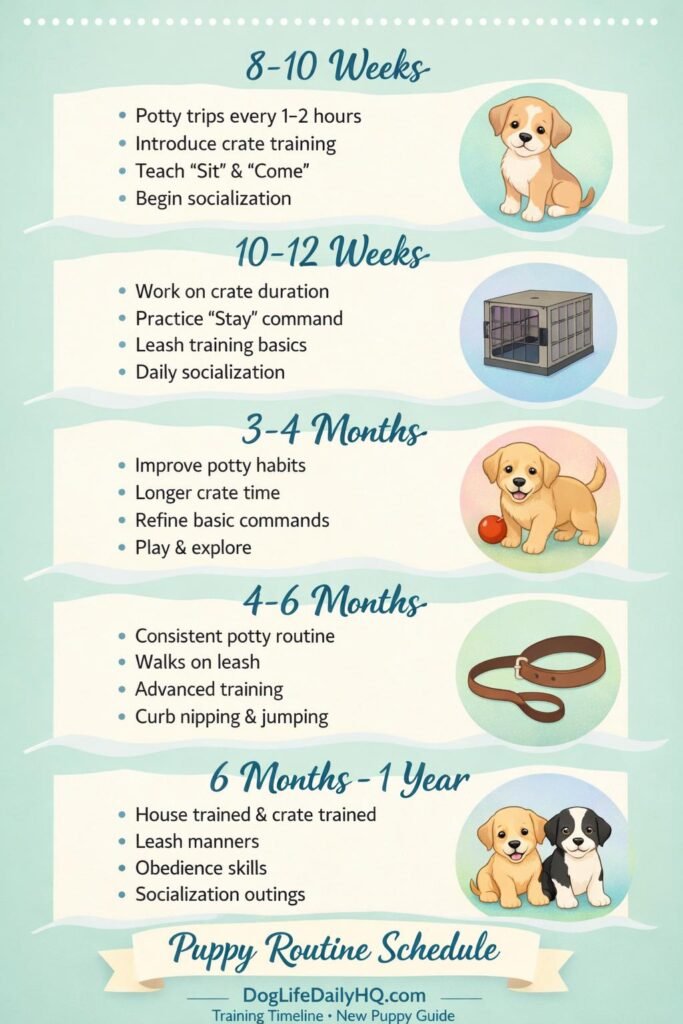
A consistent daily routine helps your puppy learn when to eat, sleep, play, and go potty. This makes training easier and helps cut down on accidents in your home.
When I first got my puppy, I learned that establishing a routine made all the difference between chaos and calm.
The good news is that creating a puppy schedule doesn’t have to be complicated. I’ll walk you through everything from feeding times to potty breaks, so you can build a routine that works for both you and your new furry friend.
Key Takeaways
- A consistent daily routine helps puppies learn faster and reduces house training accidents
- Puppies need regular scheduled times for eating, potty breaks, play, training, and sleep throughout the day
- Your puppy’s schedule will need to change as they grow from 8 weeks to their first year
Creating a Consistent Puppy Routine

Puppies need regular feeding times, frequent bathroom breaks, and predictable morning and evening patterns to feel secure. Good habits form quickly with consistency.
Setting Feeding Times
I recommend feeding your puppy at the same times every day to help with potty training and digestion. Most puppies need to eat three times a day until they’re about six months old.
Scheduling fixed feeding times in the morning, midday, and evening works well. Space meals about four to six hours apart so your puppy’s stomach has time to digest properly.
Sample Feeding Schedule:
- 7:00 AM – Breakfast
- 12:00 PM – Lunch
- 5:00 PM – Dinner
I always measure the food portions based on your puppy’s age and weight. Check the food package for guidelines or ask your vet for specific amounts.
Pick up any leftover food after 15-20 minutes. This teaches your puppy to eat during meal times and helps you predict bathroom breaks better.
Designing a Bathroom Schedule
I take my puppy outside every two hours during the day when they’re young. Puppies can only hold their bladder for about one hour per month of age.
I always bring my puppy out right after they wake up, after eating, after playing, and before bedtime. These are the times when accidents are most likely to happen indoors.
Key Potty Break Times:
- First thing in the morning
- After each meal (within 15-30 minutes)
- After naps
- After play sessions
- Before bedtime
- Every 2 hours in between
I take my puppy to the same spot each time so they recognize the smell. I also use a consistent phrase like “go potty” to help them learn what I expect.
When they go in the right spot, I praise them immediately with treats and excited words.
Morning and Evening Routines
I start each morning by taking my puppy outside right away, before they have a chance to have an accident. After the bathroom break, I feed them breakfast and wait 15-30 minutes before another potty trip.
My morning routine includes a short play session or walk after breakfast. This helps my puppy burn energy and sets a positive tone for the day.
I then give them some quiet time in their crate or a safe space. In the evening, I keep things calmer to help my puppy wind down.
I feed dinner at the same time each night, followed by a bathroom break. I limit water access about two hours before bedtime to reduce nighttime accidents.
My bedtime routine stays the same every night. I take a final potty break, give my puppy a few minutes of gentle attention, and then place them in their crate with a soft blanket.
Building structure through morning and evening patterns helps reduce anxiety and creates a sense of security.
Daily Exercise and Playtime

Puppies need different amounts of exercise based on their age. Getting this balance right prevents behavioral problems and protects growing joints.
The right mix of activity and rest helps puppies develop properly without overdoing it.
Appropriate Activities by Age
Young puppies between 8 to 12 weeks old need short bursts of activity throughout the day. I recommend starting with just 5 to 10 minutes of gentle play per session, repeated several times daily.
As puppies grow from 3 to 6 months, I gradually increase their exercise and playtime to 15 to 20 minutes per session. At this age, they can handle short walks around the block and basic fetch games.
Age-Based Activity Guidelines:
- 8-12 weeks: Gentle indoor play, 5-10 minute sessions
- 3-4 months: Short walks (10-15 minutes), basic fetch
- 5-6 months: Longer walks (20-25 minutes), supervised outdoor play
- 7-12 months: Extended activities (30-45 minutes), more challenging games
I avoid high-impact activities like jumping or running on hard surfaces until my puppy is fully grown. Their bones and joints are still developing, and too much stress can cause lasting damage.
Balancing Rest and Activity
Puppies need 18 to 20 hours of sleep each day to grow properly. I make sure every play session is followed by a rest period in a quiet space.
I watch for signs my puppy is getting overtired. These include biting more than usual, acting hyper, or having trouble focusing.
When I see these signs, it’s time for a nap. A good rule I follow is the “5-minute rule” for structured exercise.
I multiply my puppy’s age in months by five to get the maximum minutes of exercise twice per day. So a 4-month-old puppy gets up to 20 minutes of walking or structured play, two times daily.
Mental exercise is just as tiring as physical activity. I use puzzle toys, training sessions, and sniffing games to wear out my puppy’s brain without overworking their body.
Safe Indoor Play Ideas
I keep several indoor play activities ready for rainy days or when my puppy needs to stay inside. These games provide exercise without requiring outdoor space.
My favorite indoor activities include:
- Hide and seek with treats around the house
- Tug-of-war with appropriate toys
- Indoor fetch with soft toys in a hallway
- “Find it” games using their nose to locate hidden toys
- Puppy-safe obstacle courses with pillows and boxes
I rotate toys weekly to keep my puppy interested. This prevents boredom and makes old toys feel new again.
Training sessions count as playtime too. I spend 5 to 10 minutes several times a day teaching basic commands like sit, stay, and come.
Training Sessions for New Puppies
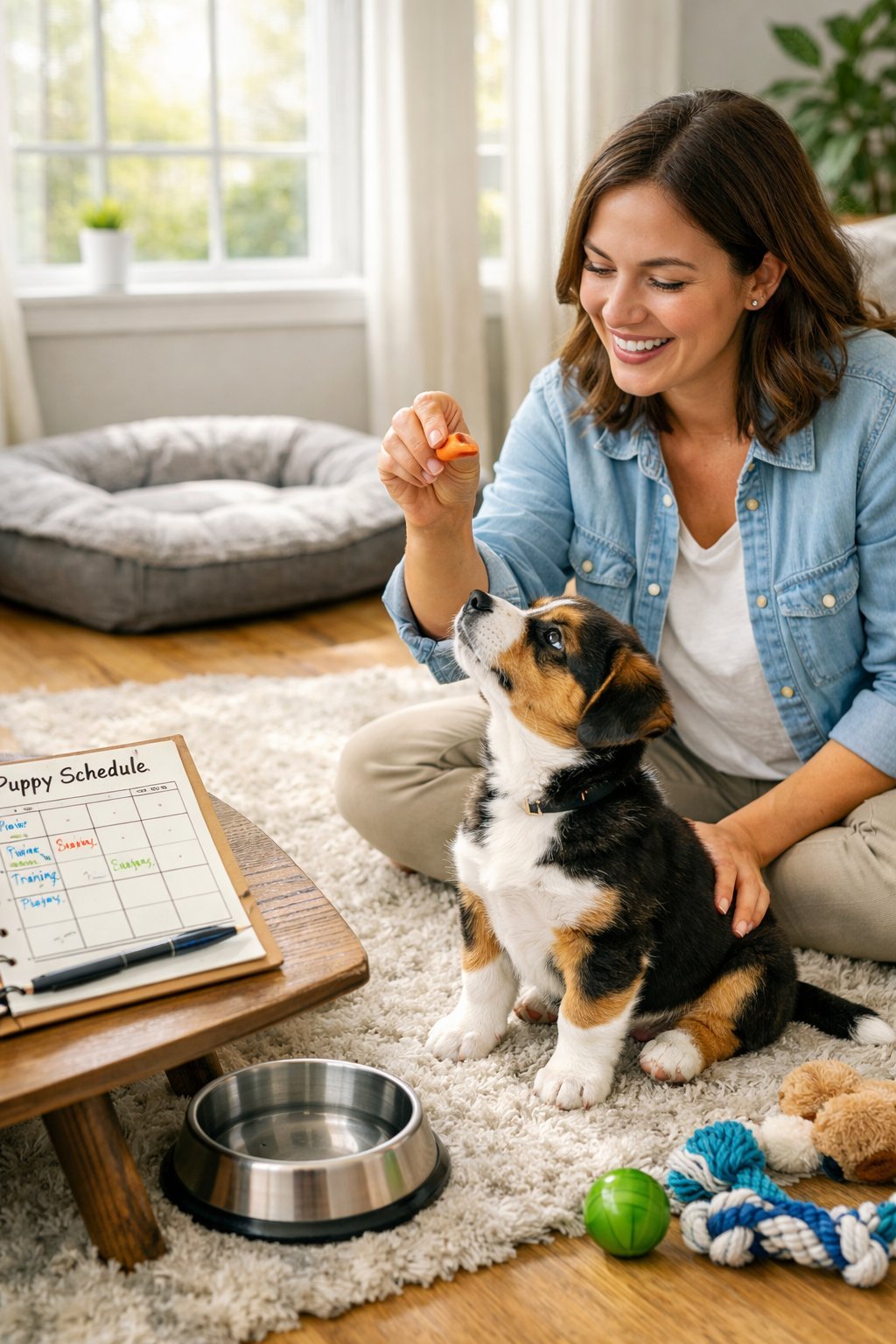
I recommend keeping training sessions short and positive, typically 5 to 10 minutes several times throughout the day. Young puppies have limited attention spans, so frequent brief sessions work better than one long training period.
House Training Essentials
House training requires consistency and patience. I take my puppy outside first thing in the morning, after meals, after naps, and before bedtime.
Puppies usually need to go potty every 2 to 4 hours during the day. I always bring my puppy to the same spot outside.
This helps them recognize where they should go. When they potty in the right place, I praise them immediately with a happy voice and sometimes a small treat.
Accidents will happen during establishing good behaviors in the first few weeks. I never punish my puppy for accidents.
Instead, I clean up the mess with an enzyme cleaner and watch for signs they need to go, like sniffing around or circling. I keep my puppy in a crate or small confined area when I can’t watch them closely.
Puppies naturally avoid soiling their sleeping space, which helps speed up the house training process.
Basic Obedience Commands
Starting with simple commands builds a foundation for good behavior. I focus on teaching sit, come, stay, and leave it during dedicated training sessions each day.
To teach sit, I hold a treat near my puppy’s nose and slowly move it back over their head. Their bottom naturally drops to the ground.
I say “sit” and give the treat right away. For come, I get down to my puppy’s level and call their name followed by “come” in an excited voice.
I reward them with treats and praise when they reach me. I never call my puppy to come for something they dislike, like a bath.
The stay command takes more practice. I start by asking my puppy to sit, then I hold my hand up like a stop sign and say “stay.”
I only step back one foot at first and return quickly to reward them.
Socialization with People and Pets
Early socialization shapes my puppy’s confidence and behavior for life. I introduce my puppy to different people, animals, sounds, and environments between 3 and 14 weeks of age when they’re most receptive to new experiences.
I arrange controlled meetings with vaccinated, friendly dogs. These interactions teach my puppy proper play behavior and dog communication signals.
I always supervise playtime and step in if play gets too rough. Meeting various people helps prevent fear and aggression later.
I let my puppy meet adults, children, people wearing hats, and people with walking aids. Each positive interaction builds their confidence.
I expose my puppy to everyday sounds like vacuum cleaners, doorbells, and traffic noise. I keep these introductions calm and pair them with treats so my puppy forms positive associations.
Healthy Sleep Habits

Puppies need 16 to 19 hours of sleep in a 24-hour period to support their rapid growth and brain development. Sticking to set bedtime routines and providing a cozy sleeping space helps puppies feel secure and develop good sleep patterns.
Establishing a Bedtime Routine
I always recommend starting your puppy’s bedtime routine at the same time each night. Consistency helps your puppy know when it’s time to wind down.
About 30 minutes before bed, I reduce playtime and switch to calming activities. This might include gentle petting or quiet time in their sleep area.
Take your puppy outside for one final potty break right before bed. This reduces the chance of nighttime accidents and helps them sleep longer stretches.
I like to dim the lights and keep noise levels low during the bedtime routine. This signals to your puppy that the day is ending.
You can also offer a small treat or chew toy in their sleeping area to create positive associations with bedtime.
Creating a Comfortable Sleep Environment
Your puppy’s sleeping area should be quiet, dark, and at a comfortable temperature. I suggest choosing a spot away from high-traffic areas where they won’t be disturbed.
A crate or designated bed gives puppies their own safe space. Make sure it’s large enough for your puppy to stand up, turn around, and lie down comfortably.
Add soft bedding like blankets or a cushion to make it cozy. I keep the sleeping area free from toys that might encourage play.
Save one or two calm comfort items like a soft blanket. Some puppies sleep better with white noise or a covered crate that blocks out light and distractions.
Adjusting Your Schedule as Your Puppy Grows
Your puppy’s needs change a lot between 8 weeks and adulthood. It’s important to adjust feeding times, potty breaks, and sleep schedules every few months to match their developing bladder control and energy levels.
Transitioning to Fewer Daily Routines
Puppies need frequent meals and bathroom breaks when they’re young, but these requirements decrease as they get older. At 8 weeks old, I feed puppies four times a day and take them outside every 1-2 hours.
By 3-4 months, I reduce feedings to three times daily. Their bladder control improves enough to extend potty breaks to every 2-3 hours during the day.
Around 6 months, most puppies can handle two meals per day—one in the morning and one in the evening. Bathroom breaks can stretch to every 3-4 hours for most breeds at this age.
Between 8-12 months, your puppy is getting close to their adult routine. I keep the two-meal schedule and allow longer gaps between potty breaks.
A well-planned schedule is the foundation for raising a confident dog.
Common Challenges and Solutions
One big challenge is accidents and anxiety from inconsistent scheduling. If you extend time between bathroom breaks too quickly, regression can happen.
I fix this by adding only 15-30 minutes at a time between breaks. Some puppies resist the switch from three meals to two and may beg or seem extra hungry.
I handle this by slightly increasing portion sizes at the remaining meals and offering a small healthy snack at the old mealtime. Growth spurts can also throw off routines, so I stay flexible and temporarily return to a more frequent schedule if needed.
Frequently Asked Questions
New puppy owners often wonder about feeding times, potty schedules, and how to balance work with their puppy’s needs. Getting specific answers helps you build a routine that works for both you and your new dog.
What is the best daily routine for a new puppy?
I recommend establishing good behaviors from the first few weeks. A good daily routine includes waking up at the same time each morning, taking your puppy outside right away, and feeding at consistent times.
Your puppy needs potty breaks every 2-3 hours during the day. Between these breaks, I suggest short play sessions, training time, and plenty of naps.
Young puppies sleep 18-20 hours per day. I always give my puppy quiet time in a crate or safe space to rest between activities.
How often should I feed my puppy and what times are ideal?
I feed puppies under 12 weeks old four times a day. Puppies between 3-6 months old need three meals daily, while puppies over 6 months can eat twice per day.
I space meals evenly throughout the day. For four meals, I typically feed at 7:00 AM, 11:00 AM, 3:00 PM, and 7:00 PM.
Consistent feeding times help with potty training. I always take my puppy outside 15-30 minutes after each meal since that’s usually when they need to go.
What is a good potty training schedule for puppies?
I take my puppy outside first thing in the morning, right after waking up. Then I bring them out every 2-3 hours during the day, after meals, after naps, and after play sessions.
Young puppies can’t hold their bladder for long. An 8-week-old puppy usually needs to go out every 1-2 hours while awake.
I also take my puppy out right before bedtime. At night, puppies under 16 weeks may need one middle-of-the-night potty break.
How much exercise does a puppy need each day?
I follow the guideline of 5 minutes of exercise per month of age, twice daily. A 3-month-old puppy needs about 15 minutes of walking or play, two times per day.
Too much exercise can harm growing bones and joints, so I avoid long walks or repetitive activities like fetch for extended periods. I focus on short play sessions throughout the day instead of one long activity.
Mental stimulation through training and puzzle toys counts as exercise too.
Can you provide tips on creating a bedtime routine for my new puppy?
I start my puppy’s bedtime routine at the same time every night. This includes a final potty break, a small drink of water, and some quiet time.
I take my puppy outside one last time around 10:00 or 11:00 PM. Then I settle them in their crate with a comfy bed and maybe a safe chew toy.
I keep the room dark and quiet to signal sleep time. Some puppies do better with white noise or soft music playing.
I avoid exciting play right before bed. Instead, I do calm activities like gentle petting or basic training commands with treats.
How can working owners manage a consistent routine for their puppies?
I arrange for a puppy schedule that adapts to my work situation by planning ahead. Coming home during lunch breaks helps young puppies who can’t hold their bladder for 8 hours.
When I can’t come home, I hire a dog walker or pet sitter to visit midday. Doggy daycare a few days per week is another good option for socialization and potty breaks.
I stick to the same morning and evening routine every day, even on weekends. My puppy gets fed, walked, and played with at consistent times before and after work.
Crate training helps keep my puppy safe while I’m gone. I make sure my puppy has had exercise and a potty break before being crated for any length of time.