
Puppy Treats Homemade: Easy Recipes Your Little One Will Love

Puppy Treats Homemade – Making treats at home for your new puppy is a great way to show love while keeping snack time healthy and safe. Store-bought treats can include fillers, artificial colors, and preservatives that aren’t ideal for a growing pup’s sensitive stomach.
When you make homemade puppy treats, you control exactly what goes into each bite. This means your furry friend gets wholesome ingredients designed for their developing digestive system.
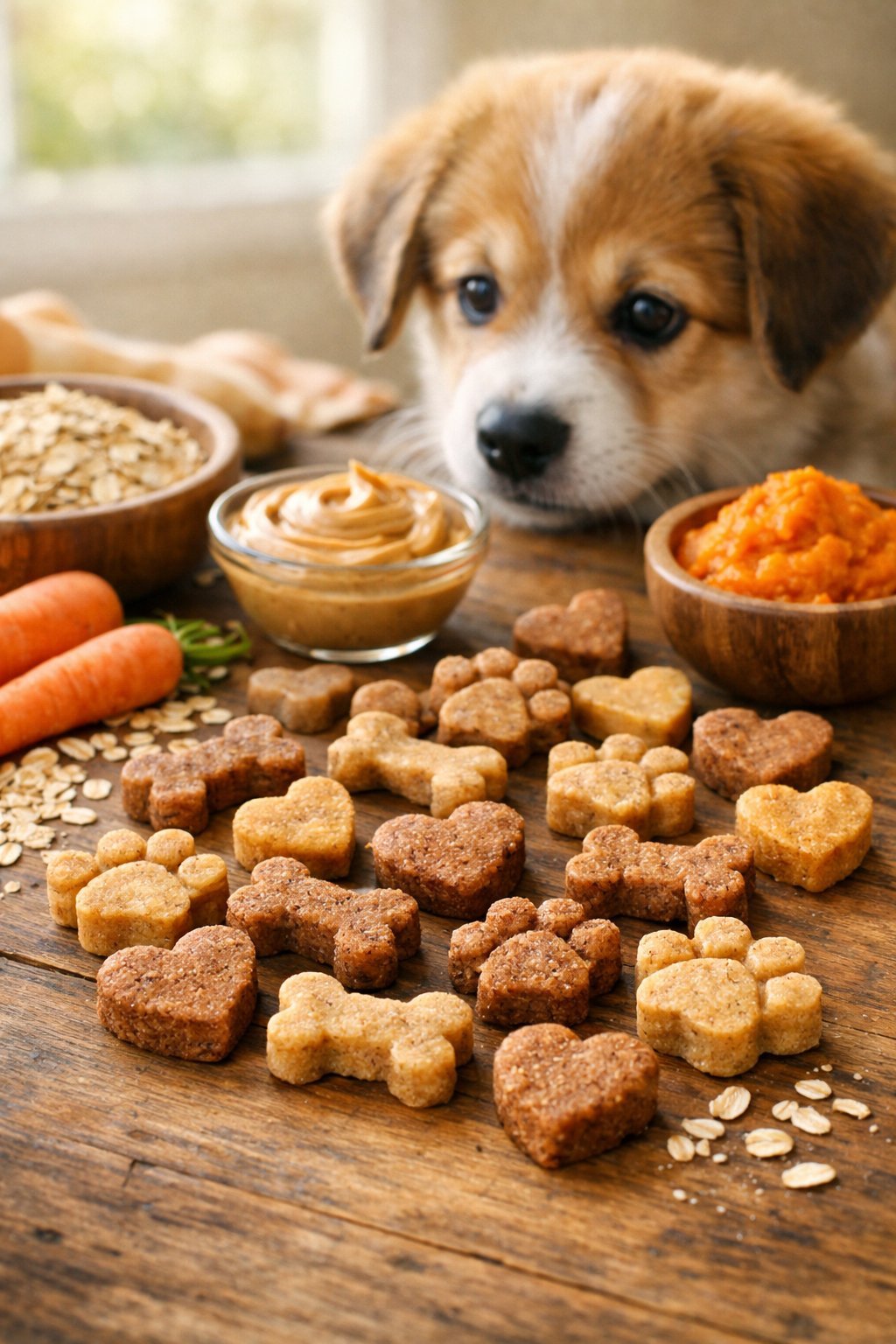
I’ve put together simple recipes that any pet parent can make, even if you’re not confident in the kitchen. These treats are soft, small, and perfect for tiny puppy mouths.
They’re packed with nutrients that support healthy growth during those important early months. The best part is that making homemade dog treats is actually fun and doesn’t require fancy equipment or hard-to-find ingredients.
You probably already have most of what you need in your pantry right now.
Key Takeaways
- Homemade puppy treats let you avoid harmful additives while providing healthy nutrition for your growing pup.
- Simple recipes use basic ingredients you likely already have at home.
- Soft, small treats work best for puppies’ tiny mouths and sensitive stomachs.
Why Choose Homemade Puppy Treats?
Making treats at home lets you control exactly what goes into your puppy’s snacks. It also saves money and creates special moments together in the kitchen.
Healthier Ingredients and Nutrition
Store-bought treats often contain ingredients that are hard to pronounce. When you make treats at home, you know exactly what your puppy is eating.
Commercial treats frequently have excess sodium and chemical preservatives that can cause health problems down the road. Puppies have sensitive stomachs and developing bodies that need clean, simple ingredients.
You can skip the artificial colors, flavors, and fillers that offer no nutritional value. Homemade treats let you add ingredients that actually benefit your puppy, like sweet potatoes for vitamins, pumpkin for digestion, or peanut butter for protein.
If your puppy has allergies or food sensitivities, you can leave out problem ingredients and substitute something safe.
Cost Savings and Customization
A bag of premium puppy treats at the pet store can cost $10 to $15 and only last a week or two. The same amount of money spent on basic ingredients like flour, eggs, and peanut butter makes dozens of treats.
You can bake a large batch on Sunday and have training rewards ready for the entire week. The ingredients you buy work for multiple recipes, so nothing goes to waste.
Customization is another major advantage:
- Adjust treat sizes based on your puppy’s breed and age.
- Make softer textures for teething puppies.
- Create crunchy versions for older pups who need dental benefits.
- Shape treats into tiny pieces for training or larger ones for special rewards.
Bonding with Your Puppy Through Baking
Baking treats turns into quality time with your puppy. Your pup might sit in the kitchen while you mix ingredients, watching every move with excited eyes.
The smell of treats baking gets tails wagging. When you pull the tray from the oven, the anticipation creates a fun, positive experience you share together.
This routine builds trust and strengthens your connection. Making homemade snacks shows love in a tangible way.
You’re not just buying something off a shelf—you’re investing time and care into creating something special for your puppy.
Essential Ingredients for Tiny, Tender Puppy Treats
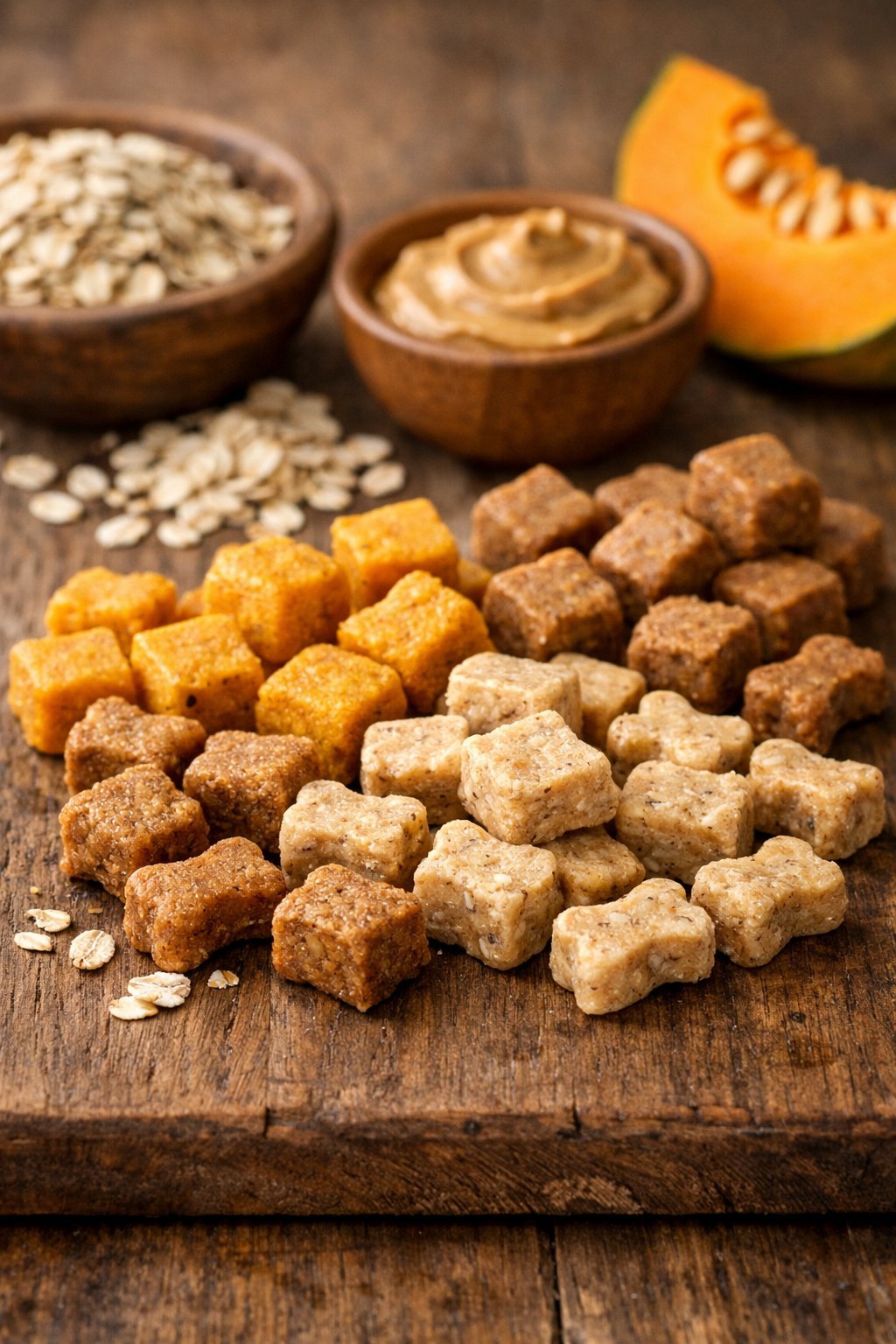
When making treats for your puppy, focus on wholesome ingredients that are gentle on their developing digestive systems. The right combination of safe proteins, healthy grains, and natural flavors creates treats that puppies love without upsetting their stomachs.
Selecting Safe and Nutritious Foods
Start with puppy-safe proteins like lean chicken, turkey, or salmon. These support healthy growth and muscle development in young dogs.
Whole grain flours work wonderfully in homemade puppy treats. Oat flour or brown rice flour are easy to digest, and whole wheat flour is another good option if your puppy doesn’t have grain sensitivities.
Pumpkin puree adds moisture and fiber while being gentle on puppy tummies. Sweet potato is another excellent choice that provides vitamins A and C.
Eggs help bind ingredients together and add protein. Plain yogurt is great too, offering probiotics that support digestive health—just make sure it’s unsweetened and doesn’t contain xylitol.
Avoiding Harmful Additives and Allergens
Never use chocolate, grapes, raisins, onions, or garlic in puppy treats. These foods are toxic to dogs and can cause serious health problems.
Xylitol is extremely dangerous for puppies. This artificial sweetener appears in many human foods and can be fatal, so always check labels carefully before using any packaged ingredient.
Salt and sugar aren’t necessary in puppy treats. Puppies don’t need added sodium, and too much can harm their kidneys.
Skip artificial colors and preservatives entirely since they offer no nutritional value. Some puppies have food sensitivities to dairy or certain grains.
Watch for signs like itching, upset stomach, or loose stools when introducing new ingredients. If you suspect an allergy, switch to alternative ingredients.
Flavor Boosters Puppies Love
Peanut butter is a puppy favorite, but only use varieties without xylitol. Natural peanut butter with just peanuts and maybe salt works best.
Bone broth adds savory flavor that puppies find irresistible. Make your own by simmering chicken or beef bones, or buy low-sodium versions without onions or garlic.
Mashed banana brings natural sweetness and helps bind ingredients. Blueberries add antioxidants and a burst of flavor, and unsweetened applesauce keeps treats moist.
Popular flavor combinations:
- Peanut butter and banana
- Chicken and sweet potato
- Salmon and pumpkin
- Turkey and apple
Step-by-Step Guide to Creating Puppy Treats at Home
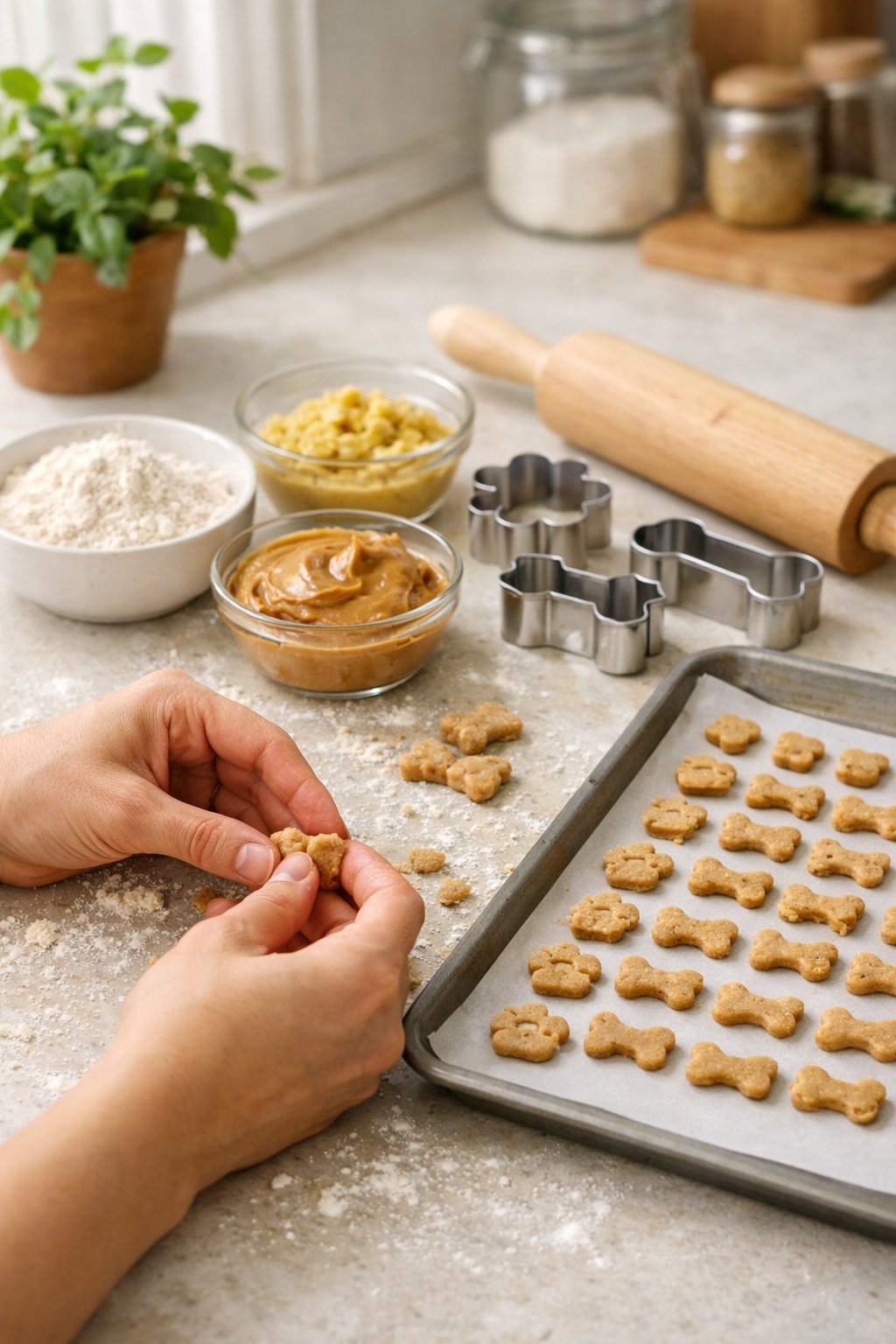
Making treats for your puppy doesn’t require fancy equipment or complicated techniques. Here’s a quick breakdown of the basic tools you need, easy prep tips, and how to shape treats that are just right for your puppy.
Baking Tools and Equipment
Keep your puppy treat baking setup simple with a large mixing bowl, measuring cups and spoons, and a baking sheet lined with parchment paper.
A rolling pin helps flatten dough to the right thickness. Cookie cutters in small sizes are fun for making homemade treats about one inch across or smaller.
A silicone mat makes cleanup easier and prevents sticking. For soft treats, use a piping bag or a plastic bag with the corner snipped off.
A food processor speeds up mixing, but a fork works fine too. Keep a wire cooling rack handy so air can circulate around the treats after baking.
Easy Preparation Tips for Success
Always read the entire recipe before mixing anything. This helps you gather all ingredients and avoid surprises midway through.
Bring ingredients like eggs and peanut butter to room temperature so they blend smoothly. Measure ingredients carefully since small changes can affect texture.
Mix wet ingredients first, then gradually add dry ones to prevent lumps. The dough should be firm enough to handle but not crumbly.
Make a small test batch first to check if your puppy likes the flavor and texture. Store unused dough in the fridge for up to three days if you can’t bake everything at once.
Shaping and Sizing for Small Mouths
Puppy treats need to be much smaller than adult dog treats. Aim for treats about the size of a blueberry or smaller, roughly half an inch across.
This size prevents choking and makes the treats easy to chew. For rolled dough, go for a thickness of about one-quarter inch.
Thinner treats get crispy and crunchy, while thicker ones stay softer in the middle. Use a knife to cut dough into small squares or rectangles if you don’t have cookie cutters.
For soft homemade treats, pipe small dots onto the baking sheet—each about the size of a pea. Treats expand slightly during baking, so leave space between them on the sheet.
Irresistible Recipes for Homemade Puppy Treats
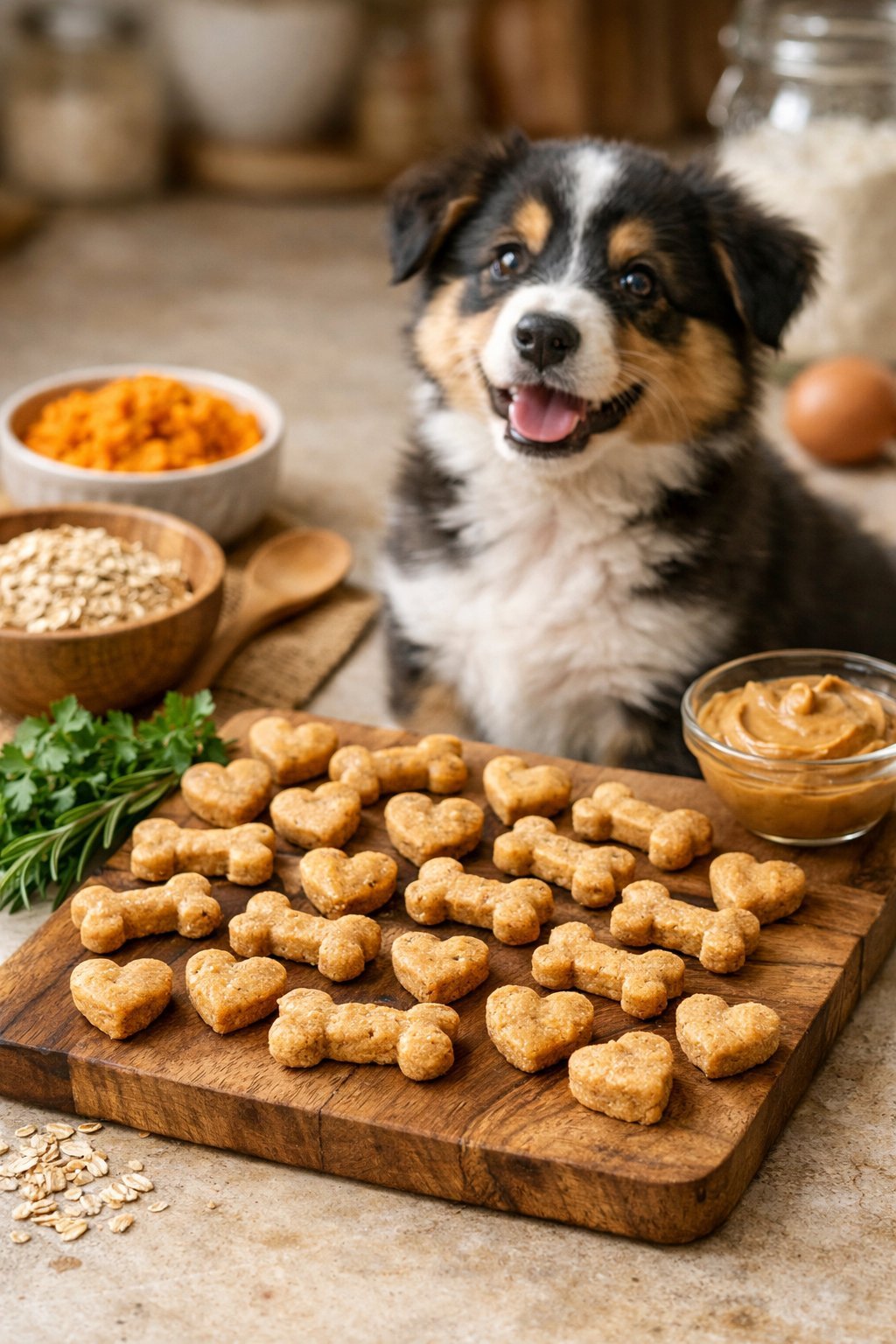
Making treats at home lets you control what goes into your puppy’s snacks. It also keeps them excited about training and playtime.
These recipes use simple ingredients that are gentle on young digestive systems and easy to prepare in your kitchen.
Soft and Chewy Chicken Bites
These soft treats for puppies are perfect for training sessions. You need just three ingredients: cooked chicken breast, an egg, and oat flour.
Blend one cup of cooked chicken with one egg until smooth. Mix in oat flour gradually until you get a thick dough that holds together—usually about one and a half cups of flour.
Roll the dough into small balls or press it flat and cut tiny shapes. Bake at 350°F for 12 to 15 minutes until firm but still tender.
These stay soft enough for young puppies to chew easily. Store them in the fridge for up to five days or freeze them for longer.
Grab a few from the freezer each morning and let them thaw for training later that day.
Grain-Free Veggie Delights
Puppies with sensitive stomachs do well with grain-free options. These treats use sweet potato, carrots, and coconut flour as the base.
Mash one cup of cooked sweet potato with half a cup of finely grated carrots. Add one egg and mix well.
Stir in coconut flour until the mixture becomes workable but not too dry.
Key ingredients:
- 1 cup mashed sweet potato
- 1/2 cup grated carrots
- 1 egg
- 3/4 cup coconut flour
Shape into tiny pieces since puppy treats should be small for little mouths. Bake at 325°F for 20 minutes until edges turn golden.
These provide vitamins while being easy to digest.
Peanut Butter and Banana Minis
This combo is always a favorite with my puppy. You’ll need ripe bananas, natural peanut butter without xylitol, and whole wheat flour.
Mash up two ripe bananas in a bowl and mix in half a cup of peanut butter. Add flour gradually until you have a dough that’s no longer sticky—usually about two cups.
Roll the dough out thin and use a small cookie cutter to make mini shapes. Bake at 300°F for 25 minutes until they’re crispy.
Always double-check that your peanut butter is xylitol-free since it’s toxic to dogs. Natural peanut butter with just peanuts and salt is the safest choice.
Cooling Yogurt Puppy Nibbles
Frozen treats are perfect for soothing teething pain and giving your puppy something delicious. I use plain Greek yogurt and fresh fruit for these healthy homemade treats.
Mix one cup of plain yogurt with mashed blueberries or chopped banana. Pour the mix into ice cube trays or a silicone mold with small compartments.
Freeze for at least four hours before serving. I like to give my puppy one on hot days or after playtime.
These melt fast, so I always keep an eye on my puppy while he enjoys them. The cold helps numb sore gums, and the yogurt adds probiotics for gut health.
Storing and Serving Your Homemade Treats
Proper storage keeps your puppy treats fresh and safe. Getting serving sizes right helps avoid overfeeding and upset tummies.
Introducing new treats slowly lets you spot sensitivities before they turn into bigger issues.
Best Storage Methods for Freshness
I always let homemade treats cool all the way before storing. Any leftover warmth can create moisture and lead to mold.
For dry, crunchy treats, I use airtight containers or freezer bags. These usually stay fresh for about a week at room temperature.
Treats with meat, cheese, or anything moist need the fridge. I keep those in sealed containers for up to two weeks.
Freezer storage is best for long-term freshness. I portion treats into small bags so I only defrost what my puppy needs for the week. Most homemade treats freeze well and last for several months.
I label each container with the date I made the treats. This makes it easy to use older treats first.
Serving Sizes for Puppies
Treats should be less than 10% of your puppy’s daily calories. Puppies are small, so keep portions tiny.
For toy breeds, I use treats no bigger than my pinky fingernail. Small breeds can handle pea-sized treats, and medium to large breeds do well with treats about the size of a dime.
Daily treat limits by puppy weight:
- Under 5 pounds: 2-3 small treats
- 5-15 pounds: 4-6 small treats
- 15-30 pounds: 6-8 medium treats
- Over 30 pounds: 8-10 medium treats
If I give extra treats during training sessions, I adjust meal portions to keep my puppy’s weight healthy.
Introducing New Treats Safely
I start with just one small piece of a new treat and wait 24 hours. This gives me time to watch for any upset stomach or allergic reactions.
If my puppy is fine, I offer two pieces the next day and gradually increase over a few days. I only introduce one new ingredient at a time so it’s easy to pinpoint any issues.
Watch for:
- Vomiting or diarrhea
- Excessive scratching or licking
- Swelling around the face or paws
- Changes in energy level
I keep a simple notebook to track new treats and how my puppy reacts. It’s a handy way to remember which recipes are winners.
Frequently Asked Questions
Making treats at home comes with questions about ingredients and safety. Puppies need special care because their tummies and mouths are still developing.
What are some easy homemade dog treat recipes that only require a few ingredients?
I love simple three-ingredient treats that are quick and easy. One favorite recipe is one cup of whole wheat flour, one mashed banana, and one egg for soft, chewy treats.
Another easy one uses two cups of oat flour, one cup of pumpkin puree, and one egg. I roll out the dough and cut it into small shapes for puppy mouths.
For a protein boost, I mix one cup of cooked, mashed sweet potato with two cups of whole wheat flour and a quarter cup of water. These simple DIY puppy treats are great for training.
Can I make no-bake dog treats that are still healthy and delicious for my puppy?
No-bake treats are perfect when you want something fast or don’t want to use the oven. Frozen treats are awesome in warm weather and puppies love them.
My go-to no-bake recipe is plain Greek yogurt mixed with mashed fruit like blueberries or strawberries. I pour the mix into ice cube trays and freeze.
Another option is natural peanut butter mixed with mashed banana and a little honey. I roll the mixture into small balls and chill them in the fridge until firm.
No-bake treats should be kept in the fridge and used within five days.
How do I make homemade puppy treats that are vet approved?
I stick to whole food ingredients that vets recommend for puppies. Vet-approved recipes avoid additives, extra salt, and anything harmful like chocolate or xylitol.
Lean meats like chicken or turkey are great bases. I cook the meat fully and cut it into tiny pieces for little mouths.
Veggies like carrots, green beans, and sweet potatoes add nutrients without upsetting sensitive tummies. I skip onions, garlic, and grapes since they’re dangerous for dogs.
I always check with my vet about my puppy’s specific dietary needs, especially if there are allergies or sensitivities.
Are there any simple recipes for dog treats without peanut butter for dogs with allergies?
Definitely! I make plenty of peanut butter-free treats since some puppies have nut allergies. Sunflower seed butter is a good swap if your puppy can handle seeds.
One easy recipe is two cups of oat flour, one cup of unsweetened applesauce, and one egg. Applesauce adds moisture and sweetness without nuts.
Pumpkin-based treats are also peanut-free. I mix one cup of pumpkin puree with two and a half cups of whole wheat flour and one egg for a firm dough.
For savory treats, I use cooked ground turkey, shredded carrots, and rice flour. These are perfect for puppies who prefer meaty flavors.
What is a good beginner’s recipe for homemade dog treats that are both tender and tasty?
For beginners, I recommend homemade soft dog treats with simple ingredients. My favorite uses two cups of whole wheat flour, one cup of canned pumpkin, two eggs, and a quarter cup of water.
Mix everything in a bowl to make a soft dough. Roll it out to about a quarter-inch thick and cut into small shapes.
Bake at 350°F for about 20 minutes for tender treats that are gentle on puppy teeth. Let them cool completely before serving.
Store these in the fridge to keep them soft. They’ll last about a week in an airtight container.
Where can I find a recipe for dog biscuits that meet RSPCA (Royal Society for the Prevention of Cruelty to Animals) standards?
When making RSPCA-compliant treats, I focus on using natural ingredients and skipping harmful additives. The organization suggests using whole grains, lean proteins, and fresh vegetables.
A simple recipe uses two cups of whole wheat flour, half a cup of rolled oats, one egg, and a quarter cup of low-sodium chicken broth. Add water as needed to bring the dough together.
Roll the dough out to about half an inch thick, then cut it into small biscuit shapes. Bake them at 325°F for 35 to 40 minutes for a crunchy texture.
Store the biscuits in an airtight container at room temperature, and they’ll stay fresh for around two weeks. Skip salt, sugar, and artificial preservatives to keep the treats healthy for your pup.
