
Shelf Stable Dog Treat Recipe: Easy Homemade Treats That Last for Weeks

Shelf Stable Dog Treat Recipe – Making treats for your dog at home sounds great until you realize most recipes need to be refrigerated and used within a few days. That’s a lot of work for treats that don’t last long.
You can make shelf stable dog treats that stay fresh for weeks at room temperature by removing moisture through proper baking and using the right ingredients like whole wheat flour, peanut butter, and eggs.
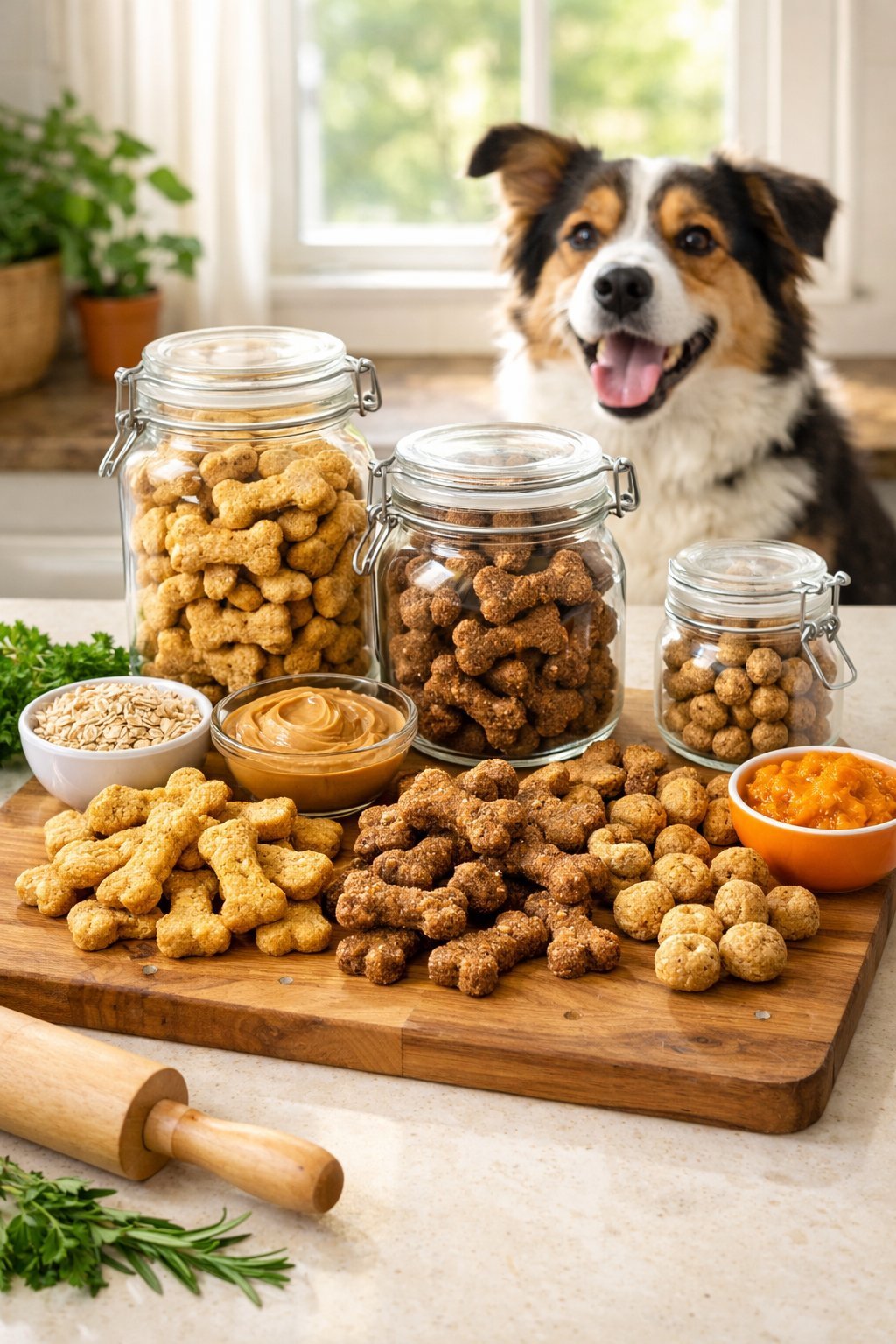
I’ve been making these homemade long-lasting dog treats for my own pups, and they’re game-changers. You bake them once and keep them in a container on your counter.
No need to take up fridge space or worry about them going bad after a few days. The secret is baking them longer to remove extra moisture and choosing ingredients that naturally last longer.
These treats save you money compared to store-bought options and let you control exactly what goes into your dog’s snacks. I’ll show you how to make a simple recipe that your dog will love and that actually lasts.
Key Takeaways
- Shelf stable dog treats stay fresh for weeks when made with low-moisture ingredients and baked until completely dry
- Store your homemade treats in airtight containers at room temperature to keep them fresh and crunchy
- Making your own treats lets you control ingredients while saving money compared to store-bought options
What Makes a Shelf Stable Dog Treat
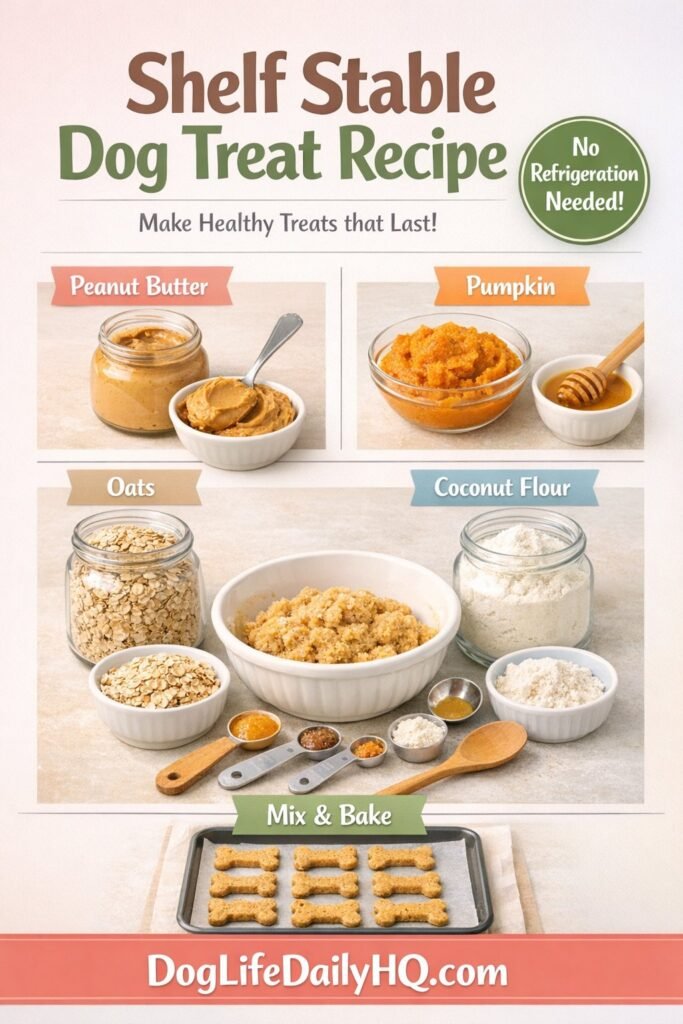
I’ve learned that shelf stable treats stay fresh without refrigeration because they have low moisture content and the right mix of ingredients. Proper preparation and storage methods keep these treats safe for weeks or even months.
Key Ingredients for Long Shelf Life
I always start with dry ingredients that naturally resist spoilage. Whole wheat flour, oat flour, and rolled oats form excellent bases because they contain minimal moisture.
Peanut butter works well as a binder, but I make sure to use the natural kind without added oils or sugars. Pumpkin puree adds flavor my dog loves, though I use it sparingly since too much moisture shortens shelf life.
Eggs help bind ingredients together, but I bake treats thoroughly to remove excess water. I avoid fresh meat, dairy products, and wet ingredients that can spoil quickly.
Best ingredients for shelf stability:
- Whole grain flours (wheat, oat, rice)
- Natural peanut butter
- Dried vegetables (sweet potato powder)
- Coconut oil
- Limited eggs (one or two maximum)
I’ve found that shelf-stable ingredients create treats that stay fresh much longer than recipes with perishable items. The key is baking until completely dry and crispy.
Benefits of Shelf Stable Dog Treats
I save money by making large batches that last for weeks. Store-bought treats often cost three times more than homemade versions.
I control exactly what goes into my dog’s mouth. No mystery preservatives or hard-to-pronounce chemicals appear in my pantry recipes.
Shelf stable treats mean I can take them anywhere without coolers or ice packs. Road trips, park visits, and training sessions become easier when treats travel well.
My favorite benefits include:
- Cost savings: One batch costs about $3 and lasts three weeks
- Customization: I adjust flavors for my dog’s preferences
- Convenience: No refrigeration needed
- Healthier options: Fresh ingredients I recognize
These long-lasting homemade treats give me peace of mind about quality.
Risks of Improper Storage
I’ve seen homemade treats develop mold within days when stored incorrectly. Moisture is the biggest enemy of shelf stability.
Airtight containers are essential for keeping treats fresh. I use glass jars or plastic containers with tight-fitting lids to block humidity and air.
Soft treats with fish or meat spoil fastest in my experience. Even properly dried treats can go bad if exposed to warm, humid conditions.
Storage mistakes I avoid:
- Leaving containers open between uses
- Storing in warm locations near stoves or windows
- Using containers that aren’t completely dry
- Mixing fresh batches with older treats
I always check treats before feeding them to my dog. Any off smells, discoloration, or visible mold means I throw the entire batch away immediately.
The Essential Shelf Stable Dog Treat Recipe
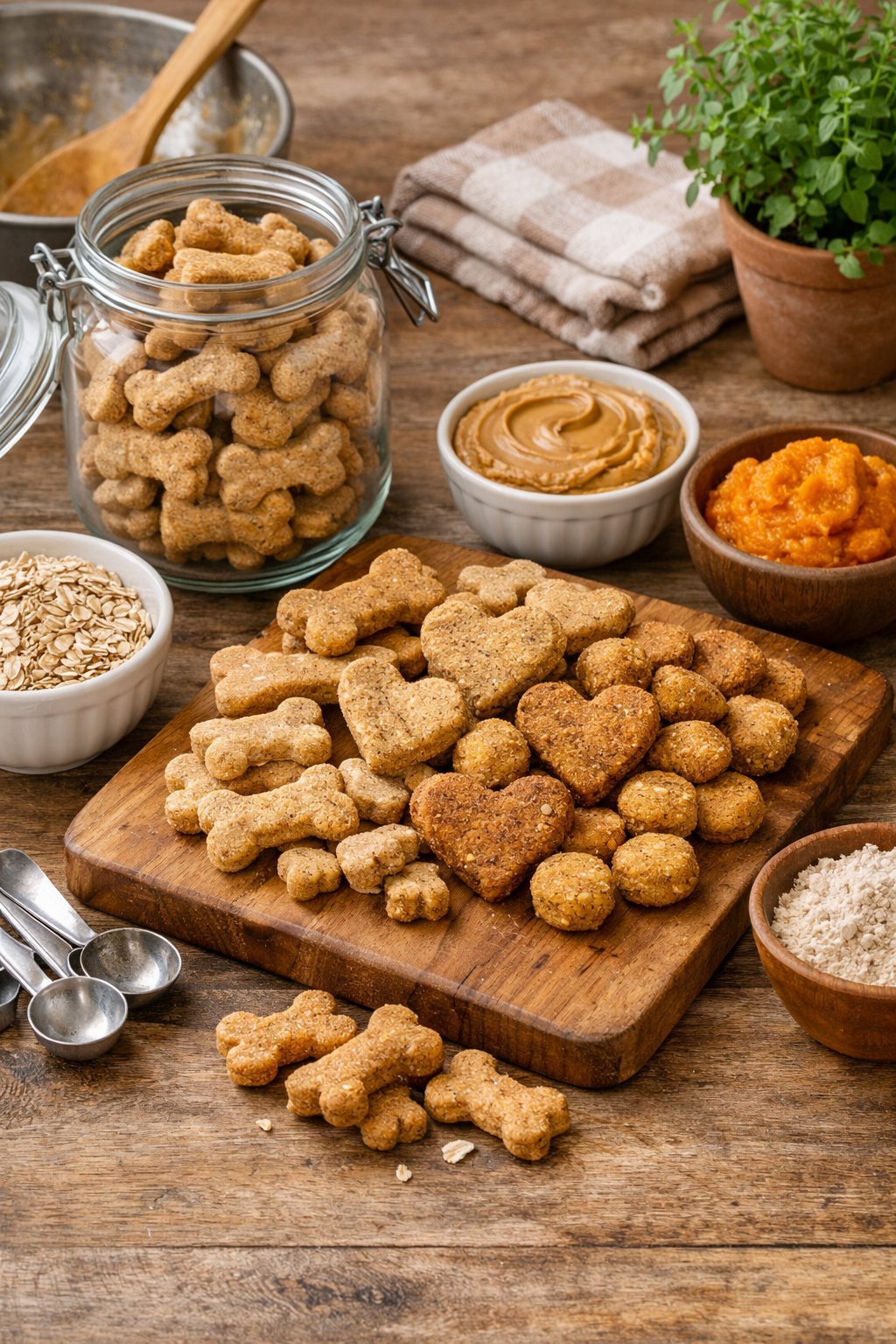
This recipe uses just five simple ingredients to create crunchy biscuits that stay fresh for weeks at room temperature. The key is removing moisture through proper baking and using ingredients that naturally resist spoilage.
Ingredient List and Substitutions
I use whole wheat flour as my base because it creates a sturdy texture that helps treats last longer. You’ll need 2 cups of whole wheat flour, 1 cup of oats, 1/2 cup of peanut butter (xylitol-free), 1 egg, and 1/2 cup of water or low-sodium broth.
The peanut butter acts as a binder and adds flavor dogs love. Make sure it doesn’t contain xylitol, which is toxic to dogs.
For the oats, I prefer old-fashioned rolled oats over instant varieties. They add fiber and help absorb moisture during baking.
Common Substitutions:
- Replace whole wheat flour with oat flour for grain-sensitive dogs
- Swap peanut butter for unsweetened applesauce or pumpkin puree
- Use coconut flour (reduce to 1 cup and add extra liquid)
- Substitute the egg with 1/4 cup of mashed banana for egg allergies
Step-by-Step Preparation Guide
I start by preheating my oven to 350°F. In a large bowl, I mix the flour and oats.
In a separate bowl, I whisk together the peanut butter, egg, and water until smooth. Then I pour the wet mixture into the dry ingredients and stir until a thick dough forms.
I roll the dough out on a floured surface to about 1/4 inch thickness. Thinner treats dry out better and last longer than thick ones.
Using cookie cutters or a knife, I cut the dough into shapes. I transfer them to a parchment-lined baking sheet, leaving about an inch between each treat.
Quick Steps:
- Preheat oven to 350°F
- Mix dry ingredients
- Combine wet ingredients separately
- Form dough and roll to 1/4 inch
- Cut shapes and arrange on baking sheet
Oven-Baking Tips for Better Shelf Life
I bake the treats for 25-30 minutes until they’re golden brown and firm to the touch. The edges should feel dry and hard.
After the initial baking time, I turn off the oven but leave the treats inside for another hour. This helps make homemade dog treats last longer by removing extra moisture.
The treats should be completely hard when cooled. If they still feel soft or bend easily, I put them back in a 200°F oven for 15-20 more minutes.
I let them cool completely on a wire rack before storing. This prevents condensation from forming, which could cause mold.
Allergy-Friendly Variations
For dogs with wheat allergies, I make a batch using 2 cups of rice flour or chickpea flour instead. These flours work well and create shelf-stable ingredients for homemade dog treats.
My peanut-sensitive pup gets treats made with sunflower seed butter or plain pumpkin puree as the wet ingredient. I add an extra tablespoon of coconut oil to help bind everything.
Allergy-Friendly Options:
| Allergen | Replacement | Amount |
|---|---|---|
| Wheat | Rice flour or chickpea flour | 2 cups |
| Peanuts | Sunflower seed butter | 1/2 cup |
| Eggs | Mashed banana or flax egg | 1/4 cup or 1 tbsp flax + 3 tbsp water |
| Grains | Coconut flour + extra pumpkin | 1 cup flour + 3/4 cup pumpkin |
I sometimes add cinnamon or dried parsley for extra flavor and natural preservation. These spices help the treats stay fresh without any artificial preservatives.
Storing Your Treats for Freshness
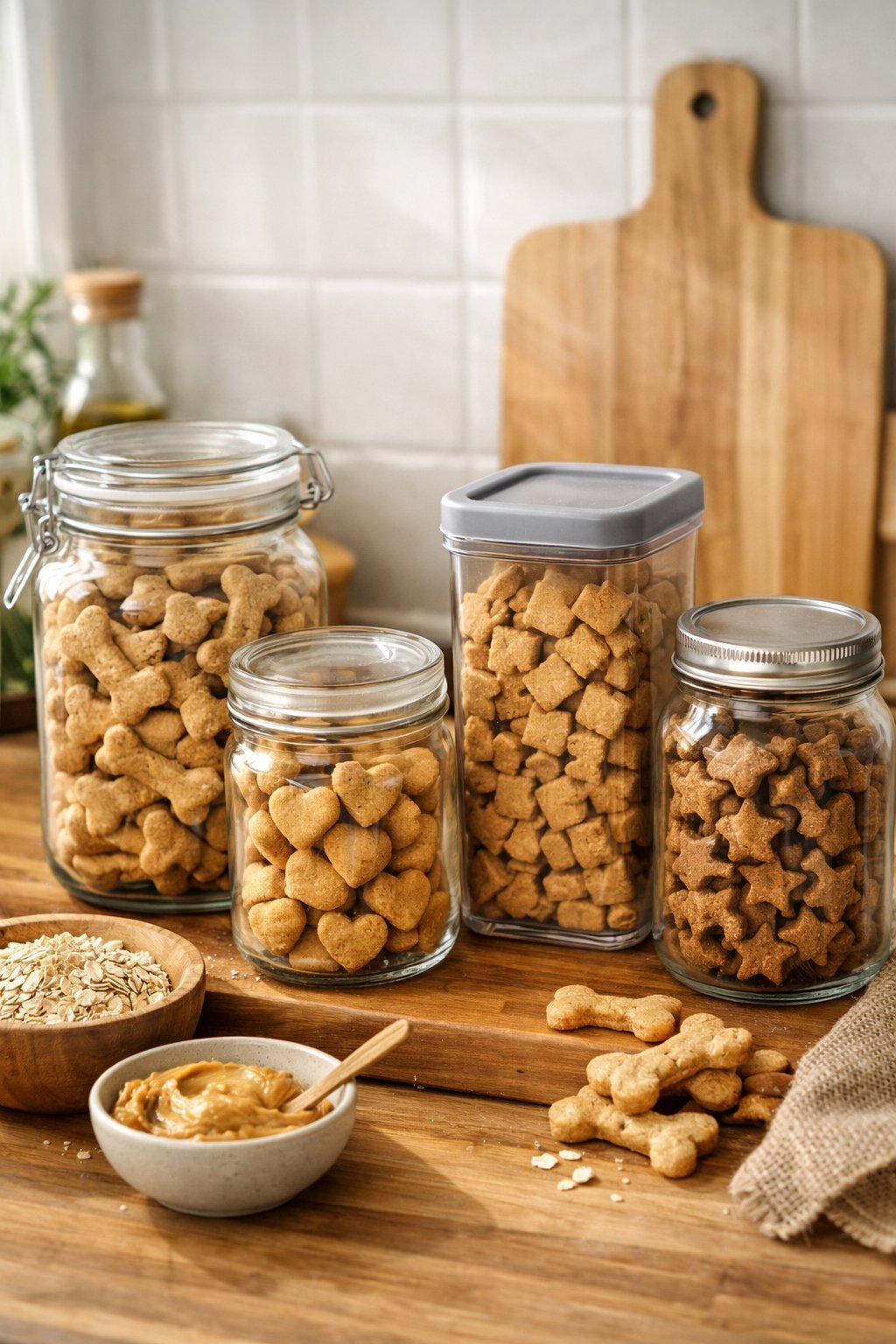
Proper storage makes the difference between treats that last weeks and those that spoil in days. I focus on three key factors: choosing the right containers, keeping moisture away, and knowing when treats have gone bad.
Best Storage Solutions
I always store my homemade dog treats in airtight containers to keep them fresh longest. Glass jars with tight-fitting lids work best because they don’t absorb odors and create a complete seal against air and moisture.
For treats I plan to use within two weeks, I keep them in a cool, dry place like my pantry. The counter works too, as long as it’s away from the stove or any heat sources.
My preferred storage containers:
- Mason jars with rubber seals
- Food-grade plastic containers with snap lids
- Vacuum-sealed bags
- Ziplock freezer bags with air pressed out
I make sure my treats are completely cool before storing them. Warm treats create condensation inside containers, which leads to mold.
For longer storage, I use my freezer where shelf-stable treats can last for months. I label each container with the date I made the treats.
This helps me track freshness and use older batches first.
Avoiding Moisture and Spoilage
Moisture is the biggest enemy of shelf-stable treats. I always bake my treats until they’re completely dry and crunchy throughout.
Soft or chewy centers attract mold growth. I add a food-grade silica gel packet to my storage containers.
These little packets absorb any moisture that gets inside. You can find them at craft stores or order them online.
Signs of moisture problems:
- Soft or soggy texture
- Condensation inside the container
- Musty smell
- Visible mold spots
I never store different batches of treats together until I’m sure the new batch is completely cool. Mixing warm and cool treats creates moisture buildup.
When I take treats out of the container, I close it quickly to prevent humid air from getting inside. My kitchen humidity matters too.
On rainy days, I wait to bake treats or store them in the freezer right away.
Signs Your Treats Have Expired
I check my treats regularly for signs they’ve gone bad. The most obvious sign is visible mold, which appears as fuzzy green, white, or black spots on the surface.
A sour or rancid smell means the fats in the treats have oxidized. Fresh treats should smell pleasant, like the ingredients I used to make them.
I throw away any batch that smells off, even if it looks fine. Texture changes tell me a lot about freshness.
Treats that were crunchy but now feel soft or sticky have absorbed too much moisture. Crispy biscuits typically last weeks at room temperature, but once they lose their crunch, they’re on their way out.
When to toss your treats:
- Any visible mold growth
- Unusual or unpleasant odor
- Change from dry to soft texture
- Discoloration or dark spots
- Past the storage timeline for your recipe
I trust my senses over expiration dates. If something seems wrong, I make a fresh batch instead of risking my dog’s health.
Fun Ways to Serve and Use Your Treats
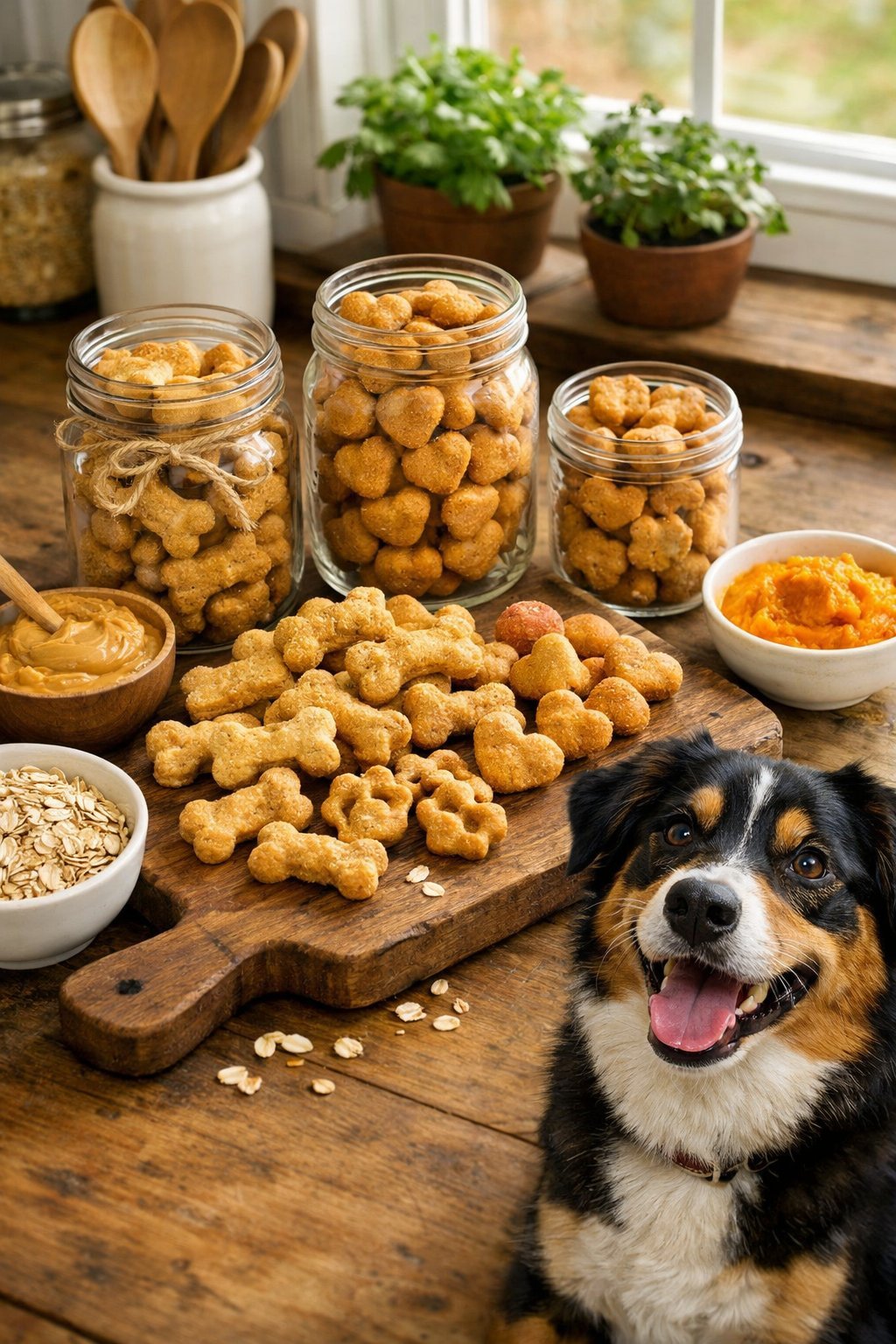
I’ve found that homemade shelf-stable treats work great for daily training sessions, special celebrations, and thoughtful gifts for other dog owners. These treats stay fresh for weeks, so you can prepare them once and use them in lots of creative ways.
Everyday Treats for Training
I use my homemade treats during training sessions because they’re the perfect size for quick rewards. I break larger treats into small pieces so my dog doesn’t get too full during practice.
Training Tips:
- Keep treats in a small pouch on your belt for easy access
- Use tiny pieces about the size of a pea for frequent rewards
- Store a week’s worth in an airtight container by your door
- Bring them on walks to reinforce good leash behavior
I always bring these treats when we go to the park or visit friends. They help redirect my dog’s attention and reward calm behavior around distractions.
The shelf-stable nature means I can keep them in my car or bag without worry. I also hide treats around the house for scent games.
My dog loves searching for them, and it keeps him busy on rainy days.
Special Occasion Presentation Ideas
I arrange treats on a plate for my dog’s birthday or adoption anniversary. It makes the celebration feel more special and gives me great photo opportunities.
Creative Presentation Ideas:
- Stack treats in a pyramid shape on a dog-safe plate
- Thread treats onto a rope toy for an edible puzzle
- Fill a muffin tin with treats for a fun feeding game
- Create a treat “cake” by layering different shapes with dog-safe frosting
I sometimes pack treats in a small travel container when we go camping or on road trips. My dog gets excited when I pull out his special snack box.
For holidays, I arrange treats in festive shapes or use cookie cutters that match the season. Bone shapes work great for Halloween, and hearts are perfect for Valentine’s Day.
Creative Gift Packaging
I package my homemade dog treats that don’t need refrigeration in mason jars with ribbons for other dog owners. They make thoughtful gifts for friends and family.
Packaging Ideas:
- Mason jars: Add a handwritten label with treat ingredients and storage instructions
- Cellophane bags: Tie with colorful ribbon and attach a gift tag
- Small tins: Decorate with stickers or paint for a personalized touch
- Brown paper bags: Stamp with paw prints and fold over the top
I always include a note about how long the treats will stay fresh. Most shelf-stable treats last 3-4 weeks in an airtight container at room temperature.
I give treat packages as holiday gifts, thank-you presents for dog sitters, or welcome gifts for new dog owners in my neighborhood. Other dog parents appreciate knowing exactly what ingredients are in the treats their pets eat.
Keeping Your Dog Happy and Healthy With Homemade Treats
Making treats at home gives me full control over my dog’s snacks. It’s important to know how much to feed and what ingredients work best for your pet’s specific needs.
Portion Control and Treat Frequency
I follow the 10% rule when giving my dog treats. This means treats should make up no more than 10% of my dog’s daily calories.
For a 50-pound dog eating 1,000 calories per day, I limit treats to 100 calories. If my homemade treats are about 25 calories each, I can give four treats daily.
I space out treats throughout the day rather than giving them all at once. This helps with training and keeps my dog interested without overfeeding.
Daily Treat Guidelines:
- Small dogs (under 20 lbs): 1-2 small treats
- Medium dogs (20-50 lbs): 2-4 medium treats
- Large dogs (over 50 lbs): 3-5 large treats
I always reduce my dog’s regular meal portions slightly on days when I give more treats. This prevents weight gain and keeps my dog at a healthy size.
Matching Treats to Your Dog’s Dietary Needs
I adjust my homemade dog treat recipes based on my dog’s age, size, and health conditions.
For dogs with sensitive stomachs, I stick to simple ingredients like rice flour, lean proteins, and pumpkin. I avoid common allergens such as wheat, corn, and soy if my dog has shown reactions.
Senior dogs need softer treats that are easier to chew. I bake treats until they’re less crispy or make them smaller for easier eating.
Special Diet Considerations:
- Weight management: I use low-calorie ingredients like carrots and green beans
- Joint health: I add ingredients rich in omega-3s
- Dental health: I make crunchy treats that help clean teeth
- Food allergies: I substitute problem ingredients with safe alternatives
I always check with my vet before adding new ingredients if my dog has existing health problems or takes medication.
Frequently Asked Questions
Making shelf-stable dog treats at home raises common questions about ingredients, safety, and storage. Here are some helpful answers to make sure your treats stay fresh and safe for your pup.
What ingredients do I need for vet-approved homemade dog treats?
I recommend starting with basic ingredients like whole wheat flour or oat flour as your base. Peanut butter (xylitol-free), pumpkin puree, and eggs work well as binding agents and add nutrition.
For protein, I use lean meats or fish that have been fully cooked. Sweet potato and carrots make great healthy additions.
I avoid ingredients like chocolate, grapes, onions, garlic, and anything with xylitol since these are toxic to dogs.
How can I ensure my homemade dog treats remain safe and shelf stable for weeks?
I bake my treats at low temperatures for longer periods to remove as much moisture as possible. Dry treats stay fresh longer than soft ones.
Homemade dog treats can last about 1 week at room temperature for dry treats, or 1-2 weeks when refrigerated if they contain perishable ingredients. I make sure my treats are completely cool before storing them to prevent condensation.
I add natural preservatives like cinnamon, rosemary, or sage to my recipes. These spices help preserve baked goods naturally without artificial additives.
What are some simple 3-ingredient dog treat recipes?
I love making treats with just flour, peanut butter, and water. I mix two cups of whole wheat flour with half a cup of peanut butter and enough water to form a dough.
Another easy recipe uses oat flour, mashed banana, and an egg. I blend these together, roll them out, and cut them into shapes.
After baking at 300°F until crispy, they last for weeks. My dogs also enjoy treats made from sweet potato puree, coconut flour, and a single egg.
I bake these at a low temperature until they’re completely dry and crunchy.
Are there specific techniques to follow when making homemade dog treats?
I always roll my dough thin, about 1/4 inch thick. Thinner treats dry out faster and last longer on the shelf.
I bake at lower temperatures between 275°F and 325°F for extended periods. This dries the treats thoroughly instead of just cooking them.
I leave them in the oven after turning it off to continue drying. I test my treats by snapping them in half.
If they break cleanly with a crisp sound, they’re dry enough. Soft or bendy treats need more baking time.
What storage methods should I use for homemade dog treats to keep them fresh?
I store my completely cooled treats in airtight containers or glass jars. I place them in a cool, dry spot away from direct sunlight and humidity.
For treats with perishable ingredients, I keep them in the refrigerator in sealed containers. Freezing extends shelf life to several months for any type of homemade treat.
I add food-grade silica gel packets to my storage containers to absorb any excess moisture. I label each container with the date I made them so I know when to use them by.
Can you suggest any healthy additives or supplements for homemade dog treats?
I add turmeric to my recipes for its anti-inflammatory properties. A small amount goes a long way—usually just 1/4 teaspoon per batch.
Ground flaxseed is great for omega-3 fatty acids. I usually mix one to two tablespoons into the dough.
Dried parsley can help freshen breath and adds some vitamins. I also sometimes include spirulina powder for extra protein and nutrients.
Unsweetened applesauce works well as a healthy binder and adds fiber. I always keep portions small since these are treats, not meals.

