
Skunk Smell Out of Dog: Fast and Effective Home Remedies That Actually Work

Skunk Smell Out of Dog – If your dog has been sprayed by a skunk, you know that awful smell hits you right away. The thick, oily spray sticks to your dog’s fur and seems impossible to wash off.
You might feel panicked about how to help your pup and get rid of the stench.
The most effective way to remove skunk smell from your dog is to use a mixture of hydrogen peroxide, baking soda, and dish soap applied to dry fur before rinsing. Don’t bring your dog inside or try to wash them with just water first.
Water alone will not remove skunk odor and can actually make the problem worse.
I’ll walk you through everything you need to know about getting that terrible smell off your dog. You’ll learn why the odor is so strong, what steps to take right away, and which solutions actually work.
Key Takeaways
- Mix hydrogen peroxide, baking soda, and dish soap to create an effective homemade solution that breaks down skunk spray oils.
- Keep your dog outside after being sprayed and avoid using water first since it spreads the oily spray instead of removing it.
- Check your dog’s eyes and face for irritation after a skunk encounter since the spray can cause pain and temporary vision problems.
Why Skunk Smell Lingers on Dogs
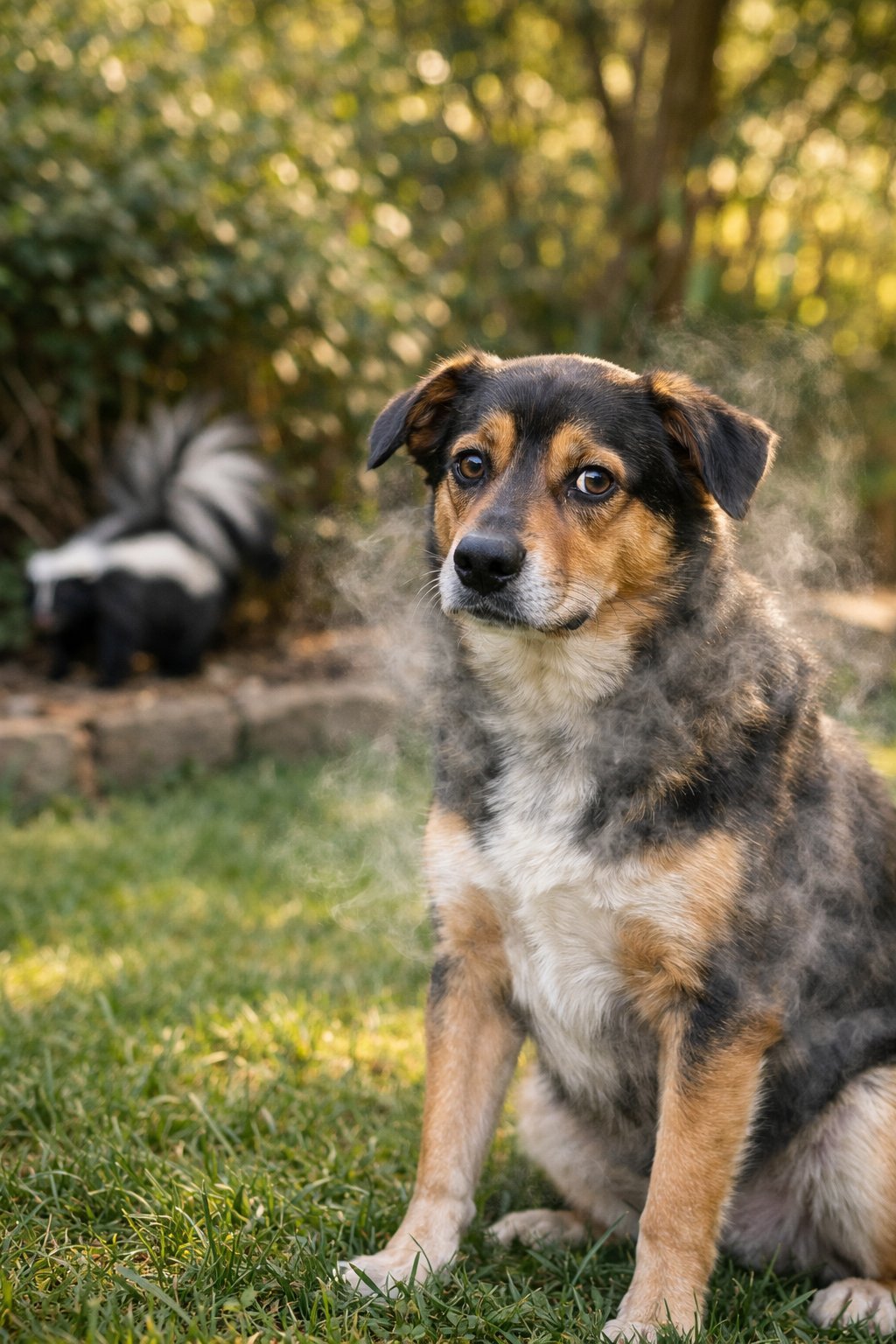
Skunk spray contains powerful chemicals that bond to your dog’s fur and skin, making the smell incredibly hard to remove. The oily nature of the spray allows it to stick deep into your dog’s coat, where it can last for days or even weeks without proper treatment.
Understanding Skunk Spray Chemicals
Skunk spray contains chemicals called thiols. These are sulfur-based compounds that create the strong, unpleasant odor we all recognize.
Thiols are incredibly potent. Even tiny amounts can produce a smell that humans can detect from miles away.
When a skunk sprays your dog, these chemicals are released in an oily liquid that coats their fur. Water alone won’t break down these sulfur-based chemicals.
That’s why regular soap and water baths don’t work well for removing skunk odor. The chemical structure of thiols makes them resist normal cleaning methods.
How Skunk Oil Adheres to Fur
The oily nature of skunk spray is what makes it so difficult to remove from your dog’s coat. This oil penetrates deep into each strand of fur and into the skin underneath.
Skunk oil lingers in the air around your dog until they’re completely clean. The oil bonds to the individual hairs on your dog’s body, creating a coating that regular shampoo struggles to break through.
Dogs with thick or long coats face even bigger challenges. The spray can work its way down to the undercoat, where it becomes trapped.
Each time your dog moves or gets wet, the oils can release more odor into the air. The porous nature of fur and skin allows the oily spray to soak in rather than sit on the surface.
Importance of Immediate Action
Taking quick action after your dog gets sprayed makes a huge difference in how long the smell lasts. The sooner you treat your dog, the less time the oils have to penetrate deeply into their coat.
Keeping your dog outside after they get sprayed is the first step I recommend. This prevents the skunk smell from getting into your house, furniture, and carpets.
If you wait too long, the skunk smell can linger for several days even with treatment. The oils continue to spread and bond more strongly to your dog’s fur with each passing hour.
Immediate Steps to Get Skunk Smell Out of Dog
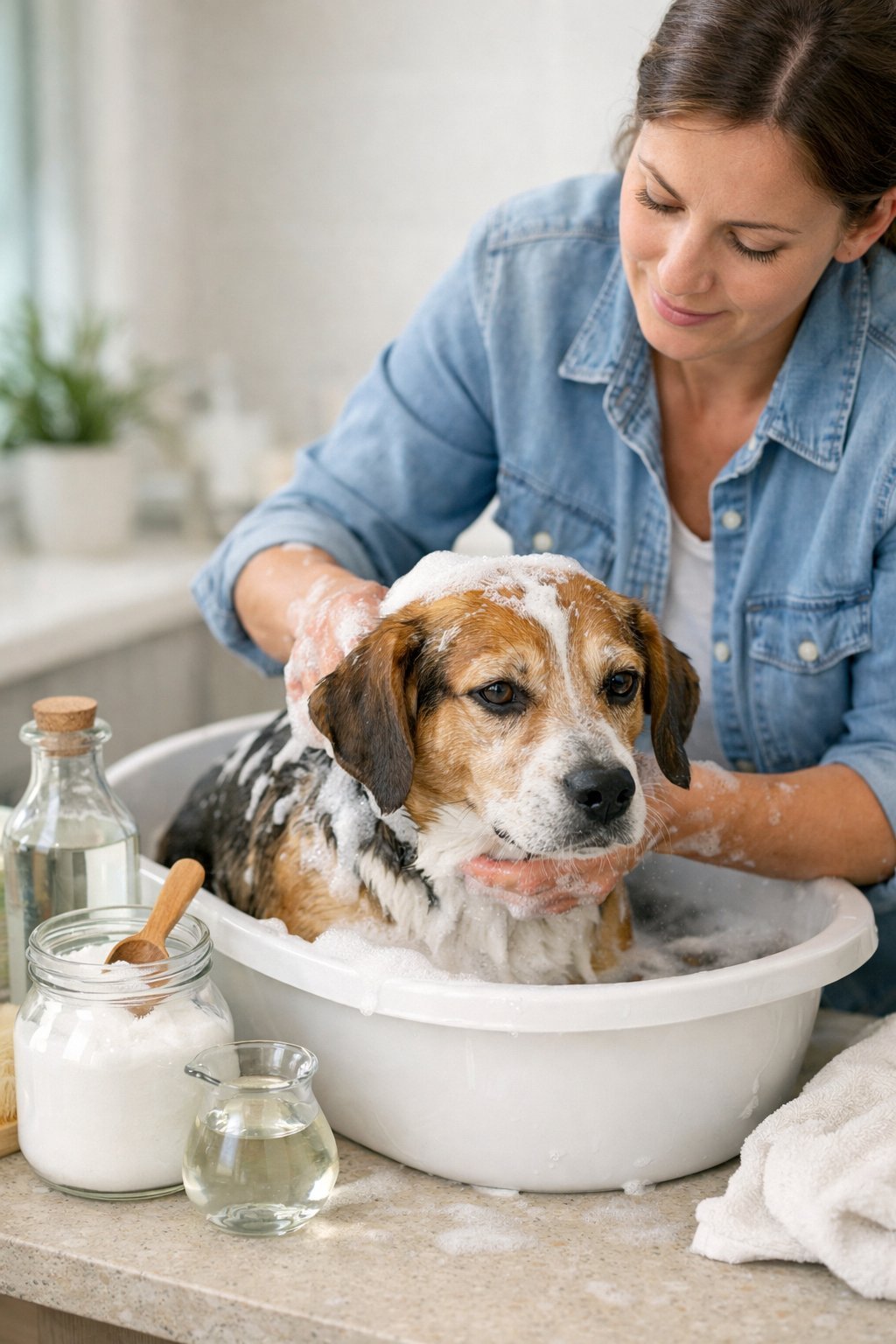
Acting quickly after a skunk sprays your dog helps prevent the smell from setting into their fur and spreading throughout your home. Keeping your dog outside and protecting yourself during the cleanup process makes the situation much easier to manage.
Preventing the Spread of Odor Indoors
I need to keep my dog outside right away after they get sprayed. The skunk’s oily spray will transfer to furniture, carpets, and walls if I let my dog inside.
If my dog is already indoors, I should move them to an outdoor area or garage immediately. The chemicals in skunk spray bind to surfaces quickly, making the odor harder to remove later.
I recommend setting up a bathing area outside with all my supplies ready. This includes towels, cleaning solution, and a hose or buckets of water.
Having everything prepared beforehand saves time and keeps the smell contained. Bathing your dog immediately prevents the chemicals from drying and binding to the fur.
Keeping Your Dog Calm and Safe
My dog might be scared or agitated after getting sprayed, especially if the spray hit their face. I need to speak in a calm, gentle voice to help them feel safe.
I should check my dog’s eyes for redness or irritation. Skunks can spray up to 15 feet, and dogs often get sprayed directly in the face.
If my dog is pawing at their eyes or squinting, I need to flush their eyes with clean water. I avoid letting my dog rub their face on the ground or roll around.
This spreads the spray to more areas of their body. Keeping them still and controlled makes the cleaning process easier.
Protecting Yourself During Cleanup
I always wear old clothes that I don’t mind throwing away or washing separately. Skunk spray transfers easily to whatever it touches, including my clothing.
Rubber gloves protect my hands from the oily spray and keep the smell off my skin. I also recommend wearing safety glasses if I’m working near my dog’s head area.
I work in a well-ventilated outdoor space whenever possible. The fumes from skunk spray can be overwhelming in enclosed areas.
If I must work in a garage, I open all doors and windows to create airflow.
Effective Home Remedies to Remove Skunk Smell
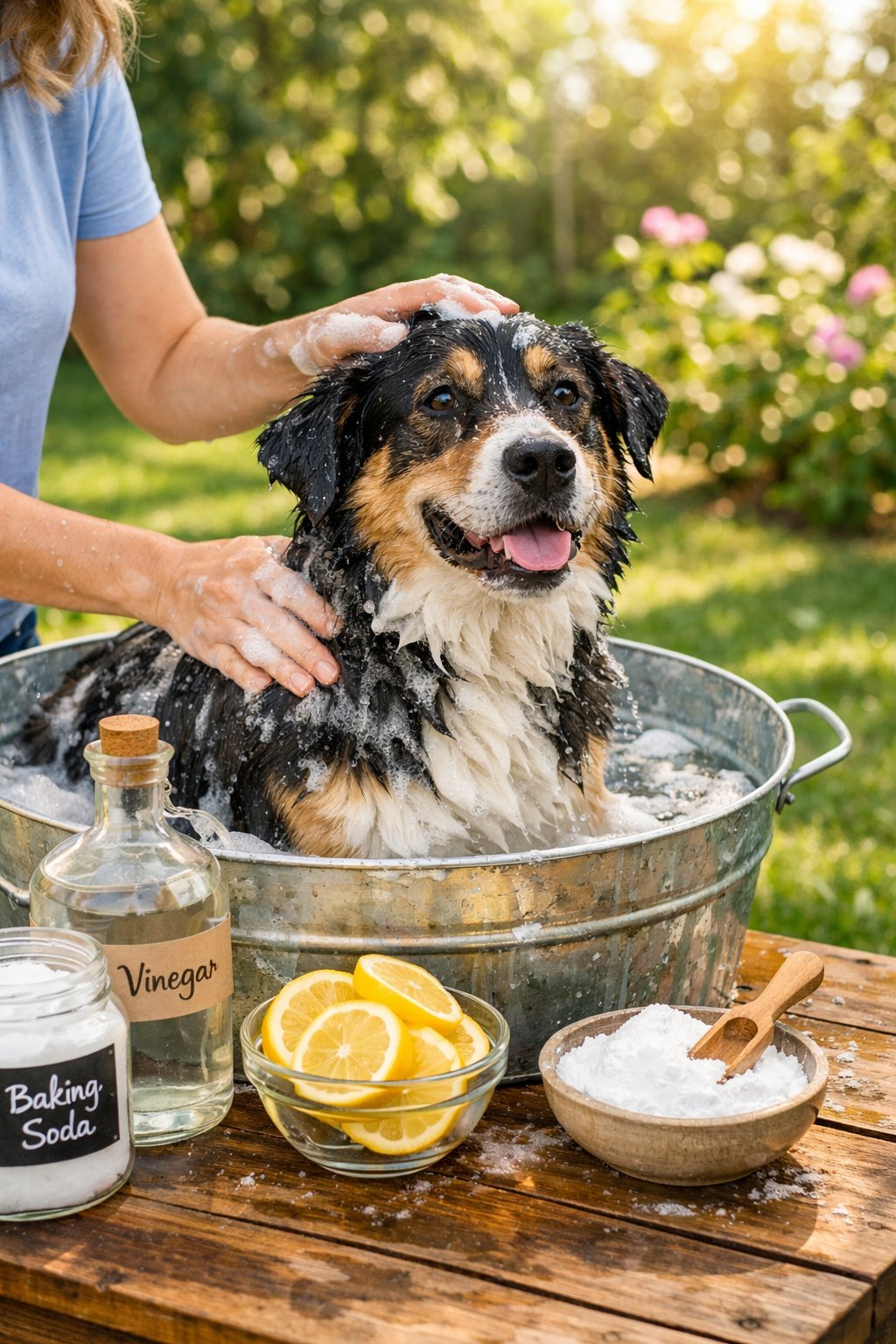
The best way to neutralize skunk odor is with a simple mixture of hydrogen peroxide, baking soda, and dish soap that breaks down the oily compounds in skunk spray. Acting quickly and using proper bathing methods makes all the difference in getting your dog clean and fresh-smelling again.
Homemade Skunk Odor Removal Solutions
The most effective homemade solution mixes together 1/4 cup of baking soda, 2 teaspoons of dish soap, and 4 cups of 3% hydrogen peroxide. This combination works because the hydrogen peroxide oxidizes the thiols in skunk spray while the baking soda neutralizes odors.
I recommend making this mixture fresh each time you need it. Never store it in a closed container because it can build up pressure and explode.
Important ingredients:
- Hydrogen peroxide (3%) – breaks down odor molecules
- Baking soda – absorbs and neutralizes smells
- Dish soap – cuts through the oily skunk spray
You can also buy commercial skunk smell removers if you prefer a ready-made option. These products are specially formulated to target skunk odor compounds.
Bathing Techniques for Best Results
I always start by keeping my dog outside to prevent spreading the smell indoors. Wear rubber gloves to protect your hands from both the solution and the skunk spray.
Apply the mixture to your dog’s dry fur first. Starting at the neck, work the solution carefully toward the tail.
I avoid the eyes, nose, and mouth completely. Let the mixture sit on the fur for 5 to 10 minutes.
This gives it time to break down the skunk oils. Then rinse thoroughly with warm water.
You may need to repeat this process 2-3 times for strong odors.
Common Mistakes to Avoid
Never use tomato juice as your main cleaning method. This old remedy only masks the smell temporarily instead of eliminating it.
Don’t wet your dog before applying the deodorizing solution. Water can make the skunk oil spread and set the odor deeper into the fur.
I never bring a sprayed dog inside right away. The oils transfer easily to furniture, carpets, and clothing.
Keep your dog outside until you’ve completed the cleaning process. Avoid getting any cleaning solution in your dog’s eyes or letting them drink it.
If this happens, rinse immediately with clean water.
Commercial Products for Skunk Odor Removal
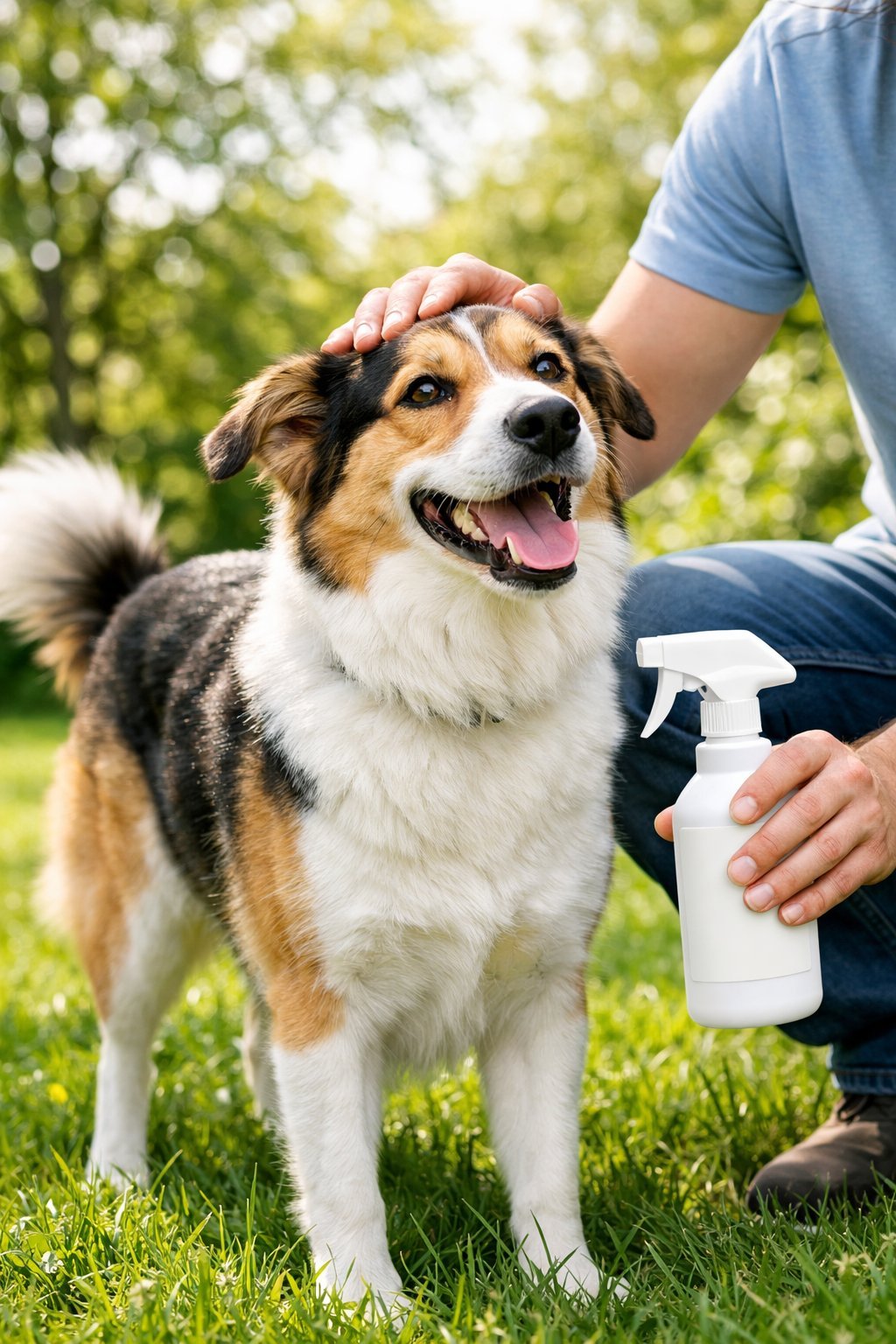
I recommend looking for products specifically designed to neutralize skunk spray rather than just mask the smell. Enzyme cleaners break down the odor-causing substances permanently instead of covering them up with a stronger scent.
Choosing the Right Skunk Odor Remover
When I shop for a commercial skunk odor remover, I always check that the label specifically states it’s safe for use on pets. Not all odor removal products are pet-safe, and I don’t want to risk harming my dog’s skin or health.
I look for products labeled specifically for skunk odor removal because regular pet shampoos won’t work on skunk spray. The best products contain enzymes or oxidizing agents that actually neutralize the thiols in skunk spray.
I avoid products that only mask odors with perfumes. These might smell nice at first, but the skunk odor will return once the fragrance fades.
Recommended Application Methods
I always follow the product instructions carefully, paying close attention to the recommended contact time and rinsing steps. Most commercial products need to sit on my dog’s fur for several minutes to work properly.
Before applying any product, I keep my dog outside to prevent spreading the smell indoors. I wear gloves to protect my hands from both the skunk spray and the cleaning solution.
I apply the product directly to the affected areas, working it into my dog’s coat thoroughly. I focus on the spots where the spray hit, which is usually the face, head, and chest area.
After the recommended wait time, I rinse completely with warm water and repeat if needed.
Caring for Your Dog After Skunk Exposure
After the initial cleanup, I need to watch my dog closely for signs of irritation or health problems. Skunk spray contains chemicals that can harm skin, eyes, and even internal health in rare cases.
Checking for Skin Irritation or Injury
I always examine my dog’s skin carefully after a skunk encounter. The spray can cause redness, burning, or irritation where it made contact with fur and skin.
I pay special attention to my dog’s face and eyes. If skunk spray got directly in the eyes, I’ll notice redness, squinting, or excessive tearing.
I rinse the eyes gently with cool water or saline solution to help flush out the chemicals.
I check for any scratches or bite marks on my dog’s body. Sometimes dogs get into physical confrontations with skunks before getting sprayed.
These wounds need cleaning to prevent infection.
I watch my dog’s behavior over the next few hours. If I see pawing at the face, excessive drooling, or signs of discomfort, the spray may be causing more irritation than expected.
When to Visit the Veterinarian
I contact my vet if my dog shows signs of serious health problems after skunk exposure.
Most skunk encounters can be handled at home, but some situations need professional care.
I watch for these warning signs:
- Lethargy or unusual tiredness
- Loss of appetite
- Vomiting or diarrhea
- Brownish-colored gums
- Dark-colored urine
- Weakness or trouble walking
These symptoms can indicate that skunk spray caused red blood cell damage, which is rare but serious.
I get my dog to the vet right away if I notice any of these issues.
I also call my vet if the spray got directly in my dog’s eyes and rinsing doesn’t help.
Eye injuries from skunk spray need professional treatment to prevent lasting damage.
