
Training A Puppy: Easy Steps to Build Good Habits and a Happy, Well-Behaved Companion

Training a puppy can feel overwhelming at first. You might wonder when to start, what to teach first, and how to handle accidents or bad behavior.
The good news is that puppy training doesn’t have to be complicated, and the right approach makes all the difference.
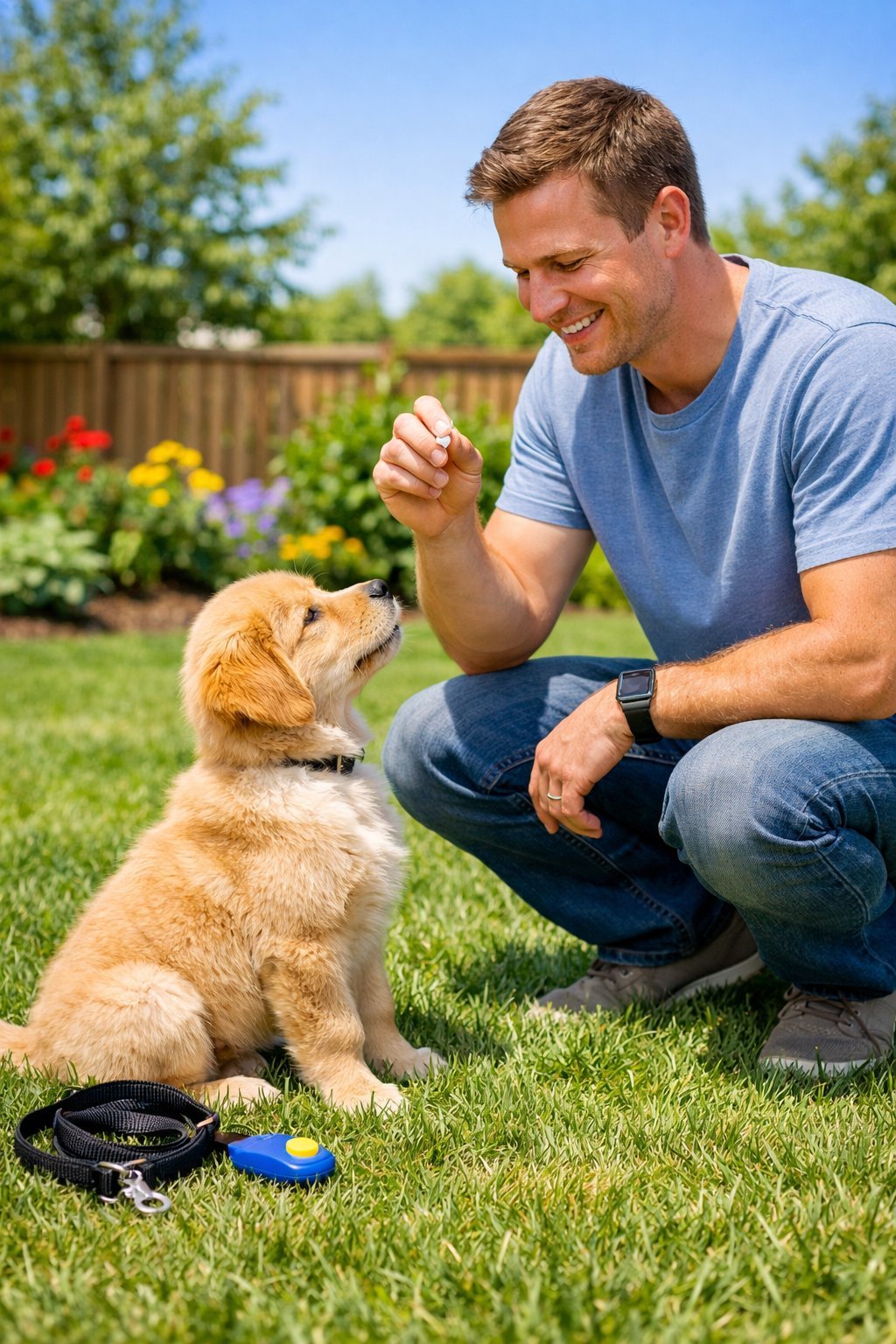
The key to successful puppy training is using positive reinforcement, maintaining consistency, and starting early with a structured routine. When you reward good behavior and create clear expectations, your puppy learns faster and builds confidence.
Dogs respond best when training feels like a fun activity rather than a chore. The early weeks and months shape your puppy’s behavior for life.
Whether you’re working on basic obedience cues like sit and stay, housebreaking, or social skills, the methods I’ll share help you build a strong foundation.
Let me walk you through simple strategies that work for puppies of all breeds and temperaments.
Key Takeaways
- Start training your puppy early using positive reinforcement and consistent routines to build good habits
- Focus on teaching basic commands, potty training, and socialization during the first few months
- Stay patient with setbacks and challenges because every puppy learns at their own pace
Getting Started With Puppy Training
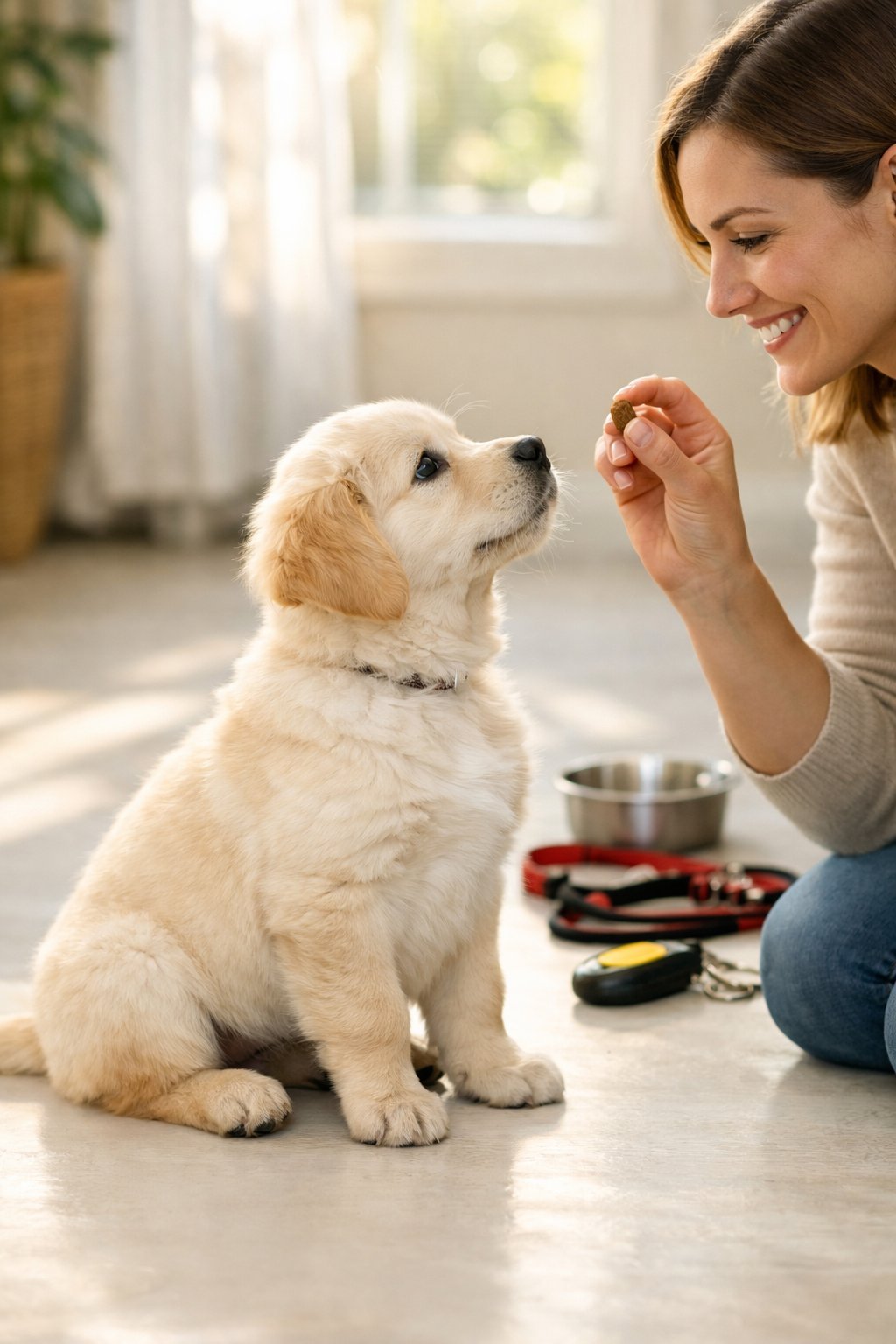
Success with puppy training starts well before the first command. The right setup makes everything easier for both you and your pup.
Choosing the Right Training Environment
Start training in a quiet, familiar space with minimal distractions. Your living room or kitchen works well for initial sessions because your puppy already feels comfortable there.
Once your puppy masters a skill indoors, gradually add distractions. Practice in the backyard, then on the front porch, and eventually in busier areas.
Think of it as turning up the difficulty level in a video game. Avoid crowded parks or noisy streets for beginners, since too many sights, sounds, and smells make it nearly impossible for a young puppy to focus.
Save challenging environments for after your puppy has learned the basics in calmer settings. Make sure the space is safe and enclosed, with no escape routes or hazards.
Establishing a Routine
Puppies thrive on predictability, so set consistent times for training sessions throughout the day. Keep each session short, usually 5-10 minutes, since puppies have limited attention spans.
Schedule training before meals when your puppy is hungry and motivated by treats. This timing makes food rewards more effective.
Plan sessions after naps when energy levels are good but not too hyperactive. A typical daily routine might look like this:
- Morning session: Basic commands after breakfast prep
- Midday session: Potty training and short obedience work
- Evening session: Review of learned skills before dinner
Staying consistent with the timing each day helps your puppy know what to expect and when to focus.
Gathering Essential Training Supplies
Stock up on supplies before bringing your puppy home. The most important item is small, soft training treats that your puppy can eat quickly without getting distracted by chewing.
Here’s what to keep in your training kit:
| Item | Purpose |
|---|---|
| High-value treats | Rewarding good behavior |
| Clicker (optional) | Marking exact moments of success |
| 6-foot leash | Controlling movement during training |
| Treat pouch | Keeping rewards easily accessible |
| Toys | Alternative rewards for play-motivated dogs |
Choose treats that are pea-sized and low in calories since you’ll use many during training. Keep a water bowl nearby for longer sessions.
Having everything ready means you can focus on training instead of searching for supplies.
Basic Obedience Essentials
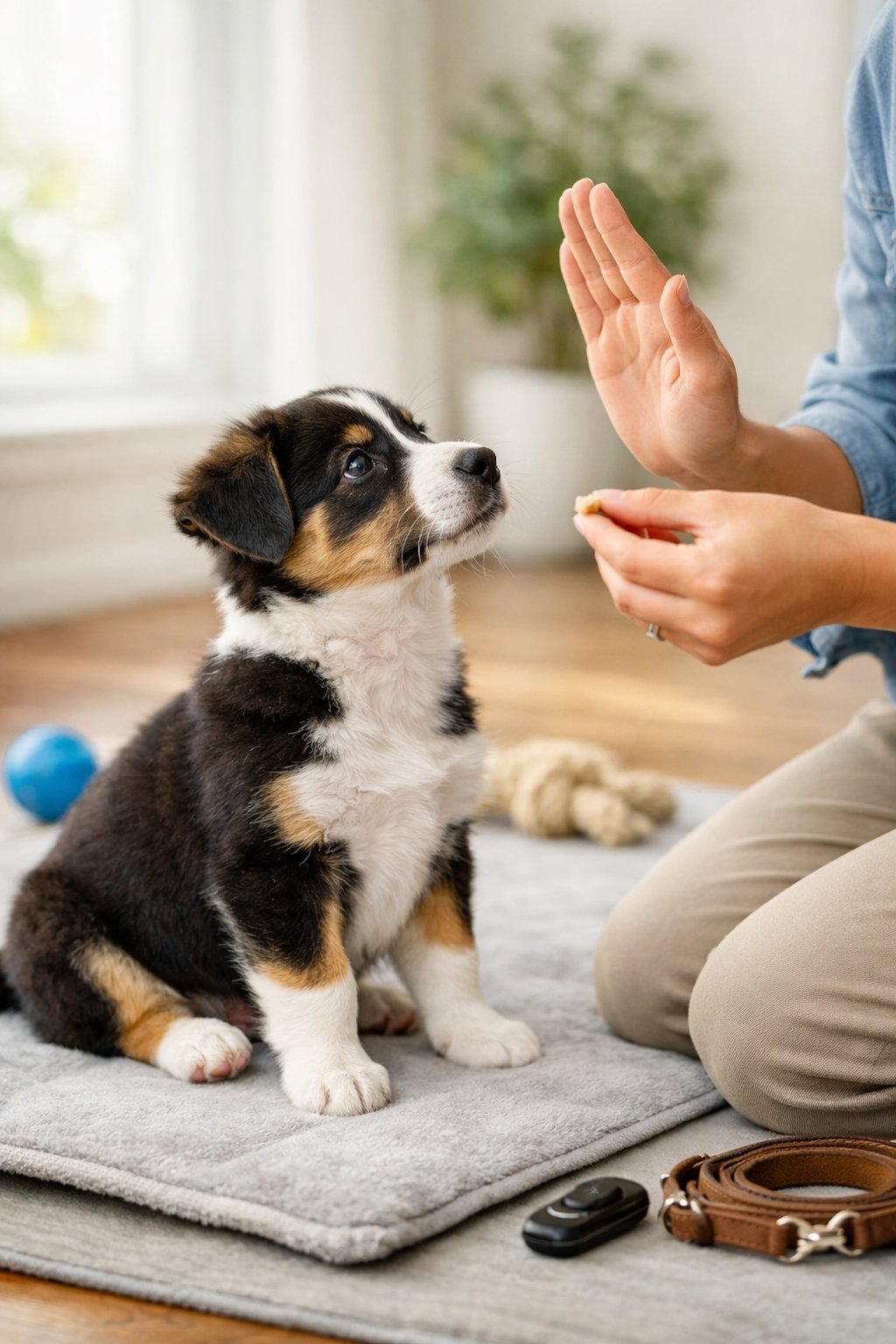
Teaching your puppy basic commands creates a foundation for good behavior and strengthens your bond.
Focus on three core commands that every puppy should learn early, using rewards and encouragement to make training enjoyable.
Teaching Sit, Stay, and Come
Start with “sit” because it’s one of the easiest commands for puppies to learn. Hold a treat close to your puppy’s nose and slowly move it up and back over their head.
Their bottom naturally drops to the ground as they follow the treat. Once your puppy sits reliably, add “stay” to build impulse control.
Ask your puppy to sit, then take one step back while holding your hand up in a stop signal. If they stay put for even two seconds, reward them immediately.
The “come” command keeps your puppy safe in any situation. Practice this in a hallway or fenced area where distractions are minimal.
Crouch down, say “come” in an upbeat voice, and reward your puppy the moment they reach you. These five basic cues form the foundation of puppy training.
Using Positive Reinforcement
Positive reinforcement builds trust and makes your puppy eager to learn. When your puppy does something right, immediately give them a small treat, praise, or a favorite toy.
The timing matters—reward within one to two seconds so your puppy connects the action with the reward. Keep training sessions short, around five to ten minutes.
Multiple short sessions throughout the day work better than one long session. Never use punishment or harsh corrections.
If your puppy makes a mistake, just withhold the reward and try again. This creates a clear line of communication between you and your puppy without causing fear or anxiety.
Introducing Simple Commands
Introduce new commands one at a time to avoid overwhelming your puppy. Each command needs three to five days of practice before adding another one.
Use the same word and hand signal every time to maintain consistency.
Basic command progression:
- Week 1-2: Sit and their name
- Week 3-4: Stay and come
- Week 5-6: Down and leave it
Practice basic commands like sit, stay, and come in different locations around your home.
This helps your puppy understand that commands apply everywhere, not just in one room. Gradually add distractions like toys or family members walking by as your puppy improves.
Potty Training Strategies
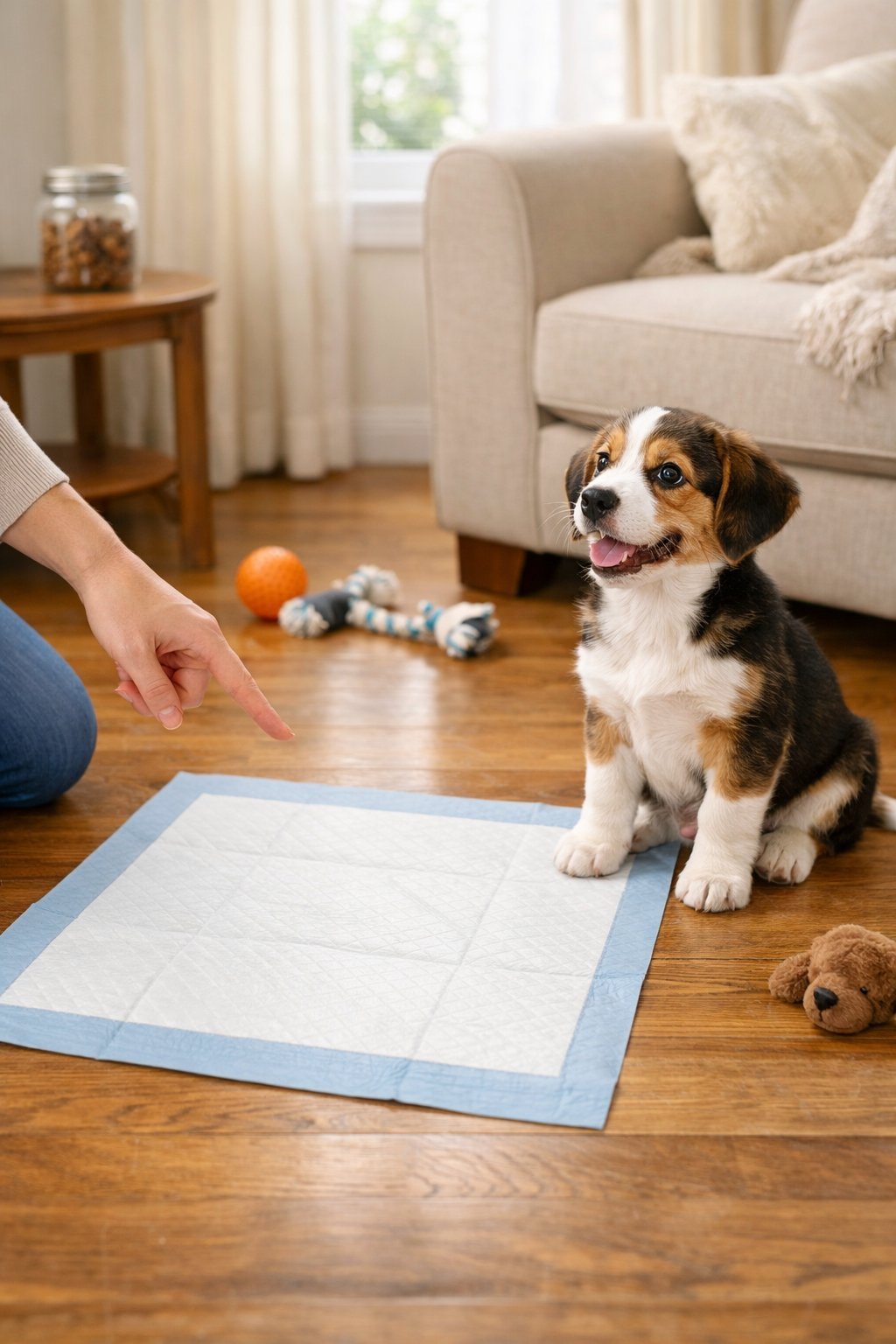
Successful potty training relies on three main elements: a predictable bathroom schedule, proactive accident management, and consistent positive reinforcement when your puppy eliminates in the right spot.
Setting a Toilet Schedule
Take your puppy outside at specific times throughout the day. Young puppies need to go out every 1-2 hours, plus immediately after waking up, after eating, after playing, and before bedtime.
Most puppies can hold their bladder for about one hour per month of age. A three-month-old puppy might last three hours, but don’t push it that far during training.
Keep a written log for the first few weeks. Note what time your puppy goes out and whether they pee, poop, or both.
This helps you spot patterns and adjust the schedule. Establishing a consistent routine is the foundation of successful house training.
Take your puppy to the same spot each time so the smell encourages them to go.
Accident Prevention Tips
Don’t give your puppy free run of the house during training. Use baby gates to block off rooms and keep them in spaces where you can watch them closely.
When you can’t supervise, use a crate or small puppy-proofed area. Dogs naturally avoid soiling their sleeping space, which makes crate training an effective tool for preventing accidents.
Watch for warning signs like sniffing, circling, whining, or walking toward the door. When you see these behaviors, immediately take your puppy outside.
If an accident happens, clean it with an enzyme cleaner designed for pet messes. Regular cleaners don’t remove the scent completely, and puppies will return to the same spot.
Reward-Based House Training
Always reward your puppy within seconds of them finishing their business outside. Use small, high-value treats and excited praise like “Good potty!”
The timing matters more than the size of the reward. Positive reinforcement works better than punishment because it teaches your puppy what you want them to do.
Never scold your puppy for accidents. Punishment creates fear and confusion without teaching them where they should go.
If you catch them in the act, calmly interrupt and take them outside to finish. Stay outside with your puppy until they eliminate.
Some people send their dog out alone, but then they can’t reward at the right moment or know if their puppy actually went.
Socialization and Manners
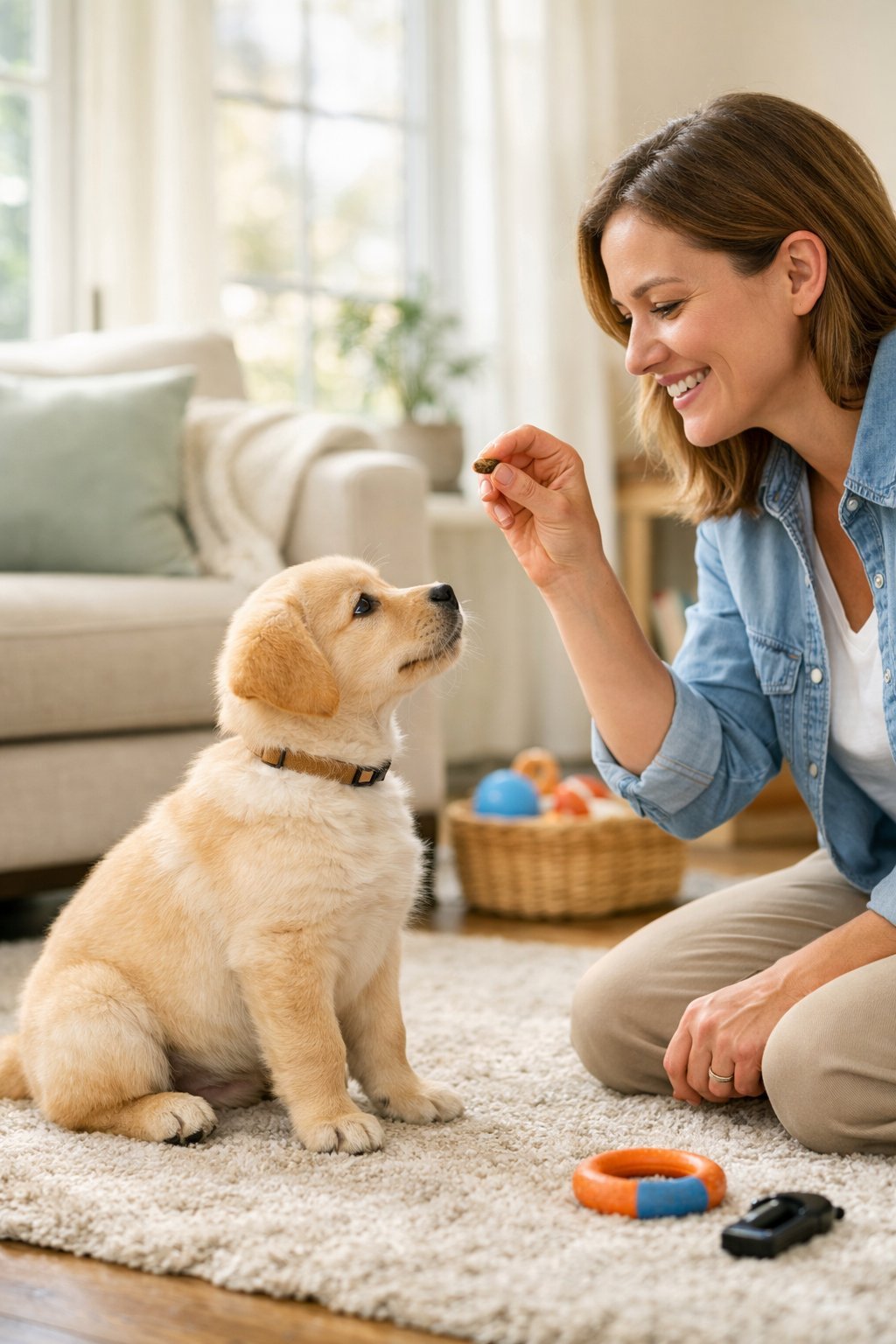
Getting your puppy comfortable with different people, places, and situations early on helps prevent fear and anxiety later in life.
Proper socialization creates a confident dog who can handle new experiences calmly.
Introducing Your Puppy to New People
Start introductions slowly and keep them positive. Let your puppy meet different types of people, including children, older adults, and people wearing hats or glasses.
Ask visitors to stay calm and let your puppy approach them first. This gives your puppy control over the interaction.
Never force your puppy to say hello if they seem scared or hesitant. Always reward your puppy with treats when they greet someone politely.
Positive reinforcement builds confidence and encourages good behavior around new people. Keep initial meetings short, around 5 to 10 minutes.
Teach people the right way to pet your puppy. Ask them to avoid reaching over the head, which can feel threatening.
Instead, have them gently touch the chest or side of the body.
Experiencing Different Environments
Take your puppy to various locations to build their confidence. Start with quiet places like a friend’s yard before moving to busier spots like parking lots or outdoor cafes.
Exposing your puppy to new places helps them learn that different environments are safe.
Bring high-value treats to create positive associations with each new location. Watch your puppy’s body language closely.
If they seem overwhelmed with tucked tail, flattened ears, or excessive panting, move to a quieter area. Pushing too hard can create fear instead of confidence.
Expose your puppy to different surfaces like grass, concrete, gravel, and tile. This prevents them from being afraid of unfamiliar textures later.
Also introduce them to everyday sounds like traffic, doorbells, and household appliances.
Early Play and Interaction Tips
I set up puppy socialization experiences with vaccinated, friendly dogs. This helps puppies learn bite inhibition and communication skills from other dogs.
Supervised play sessions should last 10 to 15 minutes. I watch for good play signs like play bows, loose body language, and taking turns chasing.
If play gets too rough or one puppy seems scared, I give them a break. This helps everyone stay safe and comfortable.
During playtime, I reward gentle behavior to teach basic manners. If my puppy mouths too hard, I yelp and stop playing for a moment.
Setting boundaries early is important. I don’t allow jumping, excessive barking, or aggressive behavior during play.
Consistent rules during these early months help prevent bad habits from forming.
Handling Common Training Challenges
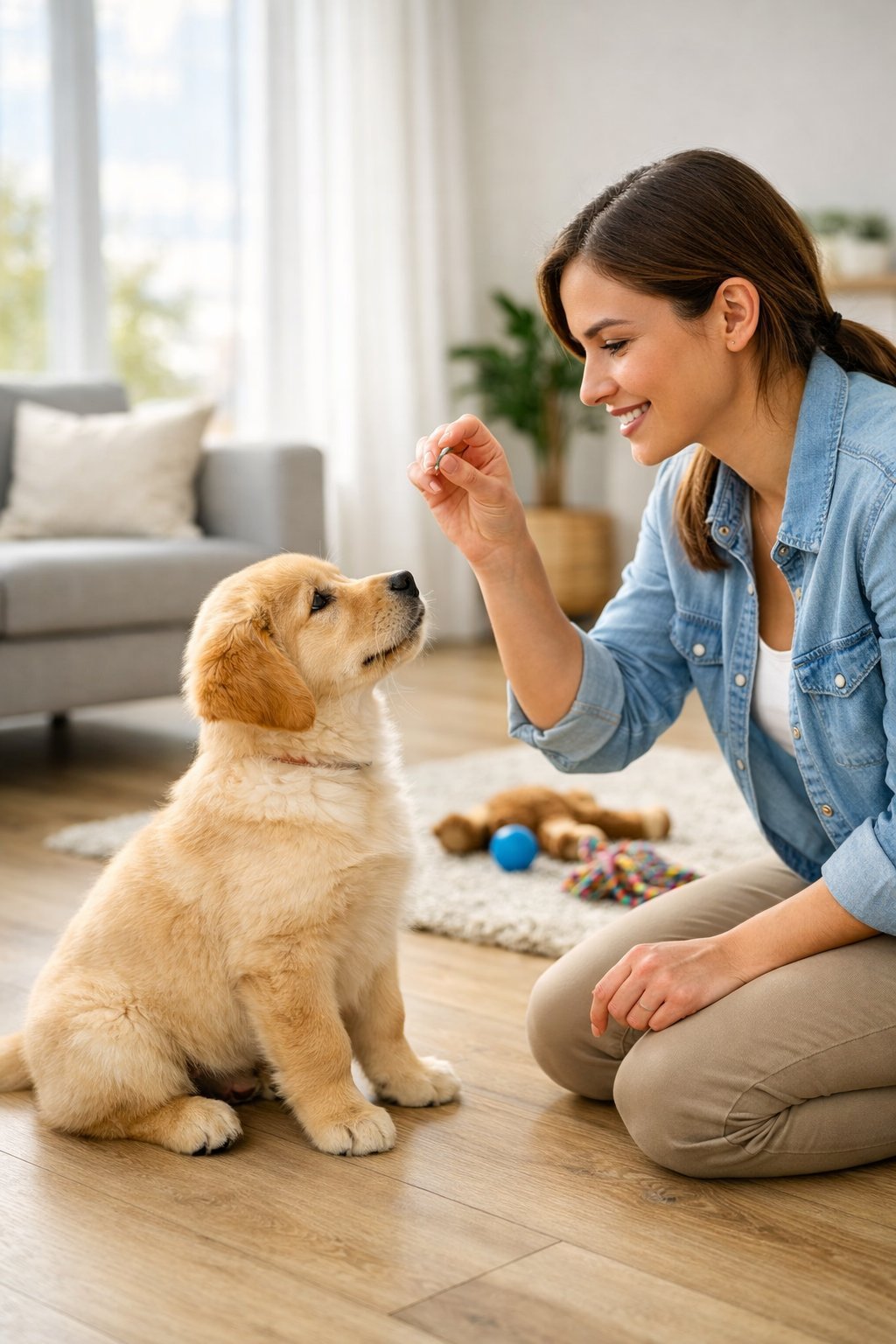
Puppies naturally explore their world through their mouths. They also make noise to communicate and can feel stressed when left alone.
Addressing these behaviors early with patience and the right techniques makes a big difference.
Dealing With Biting and Chewing
Puppies bite and chew because they’re teething or just exploring. When my puppy bites during play, I let out a high-pitched “ouch” and stop the interaction for 10-20 seconds.
This teaches them that biting ends the fun. I always redirect their chewing to appropriate items like rubber toys or frozen washcloths.
Keeping several chew toys in different rooms means my puppy always has something safe to gnaw on. Positive reinforcement with treats and praise helps with nipping behavior.
I puppy-proof my home by removing shoes, charging cables, and other tempting items. When I catch my puppy chewing something they shouldn’t, I calmly take it away and offer a toy instead.
Praising them when they chew the right things reinforces good habits.
Managing Excessive Barking
Barking is normal for dogs, but excessive barking needs to be addressed. I first figure out why my puppy is barking—whether it’s boredom, alerting me, or seeking attention.
For attention-seeking barking, I ignore the behavior until my puppy quiets down. Then I reward the silence with attention or treats.
This teaches them that being quiet gets them what they want. I make sure my puppy gets plenty of mental and physical exercise throughout the day.
A tired puppy barks less because they’re content and relaxed. Puzzle toys and training sessions help keep their mind busy.
When my puppy barks at noises or people outside, I use the “quiet” command. I wait for a brief pause in barking, say “quiet,” and immediately reward them.
Consistency is key for this to work.
Reducing Separation Anxiety
Separation anxiety happens when puppies get upset being alone. I start by leaving my puppy alone for just 30 seconds, then gradually increase the time as they stay calm.
I create a safe, comfortable space like a crate or a specific room with their bed and toys. Making departures and arrivals low-key helps—I don’t make a big fuss when leaving or coming home.
Leaving a piece of clothing with my scent or turning on calming music can comfort an anxious puppy. I also give them a special treat or puzzle toy that they only get when I leave.
Practice sessions throughout the day help build confidence. I grab my keys or put on shoes without actually leaving, which helps my puppy get used to departure cues.
Frequently Asked Questions

New puppy owners often wonder about the right commands to teach first and when training should begin. They also need practical solutions for common challenges like house-training, leash walking, and separation anxiety.
What are the basic commands every puppy should learn first?
I always recommend starting with five essential commands that form the foundation of good behavior. The five basic cues every dog should know are sit, stay, down, come, and walk on a leash.
“Sit” is usually the easiest command to teach first. I hold a treat near my puppy’s nose and slowly move it up and back over their head, which naturally causes them to sit.
“Come” is one of the most important commands for safety. I practice this in a safe, enclosed area by calling my puppy’s name followed by “come” while backing away and rewarding them when they reach me.
The “stay” command takes more patience. I start by having my puppy sit, then take one step back while holding up my hand and saying “stay.”
How can I effectively house-train my new puppy?
House-training requires consistency and a regular schedule. I take my puppy outside first thing in the morning, after meals, after naps, and before bedtime.
I choose a specific spot outside where I want my puppy to go. Taking them to the same location each time helps them associate that area with bathroom breaks.
When my puppy goes in the right spot, I praise them immediately. Timing is important because puppies only connect rewards with actions that just happened.
I never punish accidents inside the house. Instead, I quietly clean them up with an enzyme cleaner that removes odors completely.
Young puppies can’t hold their bladder for long periods. I follow the rule that puppies can hold it for about one hour per month of age, plus one.
What is the best way to teach my puppy to walk on a leash?
I start by letting my puppy get comfortable wearing a collar or harness indoors. They need a few days to adjust before I attach a leash.
Once they’re comfortable, I attach the leash and let them drag it around the house under supervision. This helps them get used to the weight and sensation.
For actual leash walking skills, I begin in a quiet area with few distractions. I hold treats in my hand and reward my puppy for walking beside me.
When my puppy pulls, I stop walking immediately. I only move forward again when the leash is loose and they’re by my side.
I keep training sessions short at first, maybe just five to ten minutes. Puppies have short attention spans and tire easily.
How can I help my puppy overcome separation anxiety?
I start by leaving my puppy alone for very short periods, even just a few minutes. Gradually increasing the time helps them learn that I always come back.
Creating a safe, comfortable space helps my puppy feel secure when alone. I use a crate or a puppy-proofed room with their bed, toys, and water.
I don’t make a big deal about leaving or returning home. Keeping departures and arrivals low-key prevents my puppy from getting overly excited or anxious.
Leaving an item with my scent, like an old t-shirt, can comfort my puppy. I also leave interactive toys or puzzle feeders to keep them occupied.
I avoid reinforcing anxious behavior by staying calm. If my puppy whines or barks when I leave, I don’t rush back right away because that teaches them that making noise brings me back.
At what age should I start training my puppy, and how frequently should sessions be?
I can start training as early as eight weeks old. Puppies are capable learners at this young age and benefit from early structure.
I keep training sessions very short with young puppies, usually five to ten minutes at a time. Multiple short sessions throughout the day work better than one long session.
As my puppy gets older and their attention span increases, I gradually extend sessions to fifteen or twenty minutes. I always stop before they get bored or frustrated.
I aim for three to five training sessions per day when my puppy is young. This frequency helps reinforce learning without overwhelming them.
Consistency matters more than session length. I practice commands during regular daily activities like before meals or during playtime.
What are some positive reinforcement techniques to encourage good behavior in puppies?
I use treats as my main training reward. Small, soft pieces that my puppy can eat quickly work best.
High-value treats like tiny bits of chicken or cheese are great for teaching new commands. Timing is key—I make sure to reward my puppy within a couple of seconds of the good behavior.
Praise and petting are also effective. An enthusiastic “good dog” in a happy voice lets my puppy know they’ve done something right.
Play is another great reward for many puppies. After my puppy follows a command, I might reward them with a quick game of tug or fetch.
I like to mix up the rewards to keep things fun. Sometimes it’s a treat, other times it’s praise or a little playtime.

