7 Healthy Dog Food Recipes Dogs Go Crazy For: Simple Homemade Meals Your Pup Will Love

healthy dog food recipes – Making your own dog food at home gives you total control over what goes into your pup’s bowl. Homemade dog food means you can pick fresh, quality ingredients and skip the fillers and preservatives in some store-bought foods.
A lot of dogs get super excited for home-cooked meals made with real meat and veggies. Plus, it’s nice knowing exactly what your dog is eating.

Switching to homemade food might seem overwhelming at first. But making healthy meals at home doesn’t have to be hard or take a ton of time.
The seven recipes here are easy to whip up and give your dog the nutrients they need to stay happy and energetic. Before you start, remember that not all homemade dog food is automatically healthy.
Dogs need a specific balance of nutrients to thrive. These recipes focus on high quality proteins, healthy fats, and balanced nutrients to keep your furry friend feeling their best.
Key Takeaways
- Homemade dog food lets you control ingredients and avoid fillers and preservatives.
- Dogs need balanced meals with the right amounts of protein, fat, vitamins, and minerals.
- Always transition to homemade food slowly over several days to avoid tummy troubles.
Benefits of Homemade Dog Food

Making dog food at home means I can pick exactly what goes into my dog’s meals. Using fresh ingredients and avoiding unnecessary fillers just feels better.
Nutritional Advantages
Homemade dog food lets me customize each meal for my dog’s needs. Dogs need a good balance of protein, fat, carbs, vitamins, and minerals.
I’ve seen dogs have fewer stomach issues and shinier coats with home-cooked food. What your dog eats can really affect how they feel day to day.
Recipes can be tweaked based on your dog’s age, weight, and activity level. Puppies, for example, usually need more protein and calories than older dogs.
Control Over Ingredients
Making homemade dog food means I know exactly what’s in every bite. This is great for dogs with allergies or sensitivities.
I can choose organic veggies or high-quality proteins when I want. It’s also handy for saving money by buying in bulk or using up leftovers.
Freshness and Flavor
Fresh food just tastes better to dogs. My dog gets way more excited for homemade meals than for kibble.
The ingredients are fresh and haven’t been sitting around for months. Dogs can definitely tell the difference.
I like to switch up proteins and veggies to keep things interesting. Variety helps prevent boredom at mealtime.
Essential Ingredients for Healthy Dog Meals
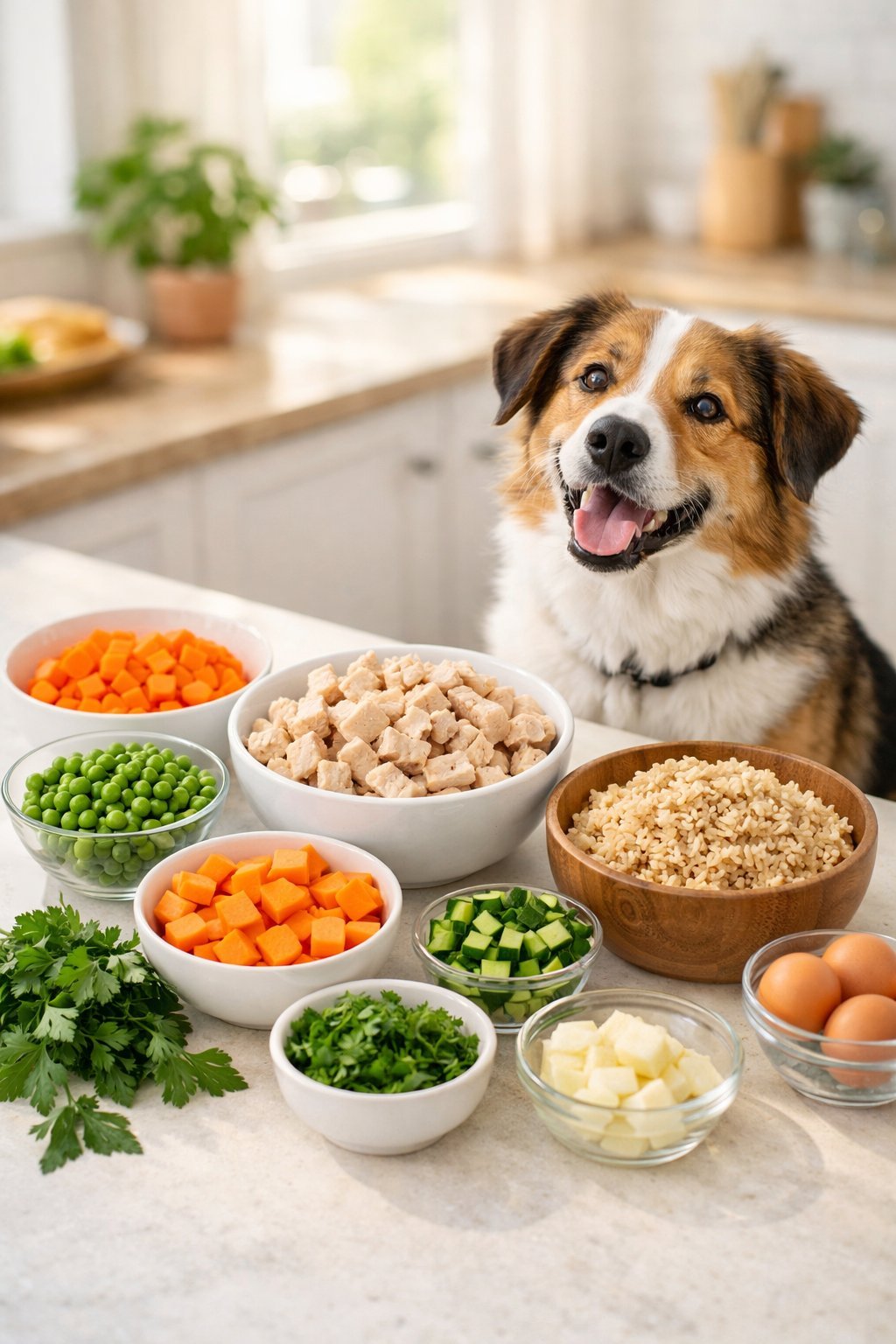
Dogs need a mix of proteins, veggies, fruits, and grains to stay healthy and energetic. Each ingredient helps support their muscles, immune system, and overall health.
Quality Proteins
I always start with protein as the base of homemade dog food. Lean meats are usually the best choice.
Best protein options include:
- Chicken (boneless, skinless)
- Turkey (ground or breast)
- Beef (lean cuts)
- Fish (salmon, whitefish)
- Eggs (cooked)
Chicken, beef, and fish are packed with the amino acids dogs need. For adult dogs, protein should make up about 40-50% of each meal.
All meats should be cooked thoroughly to kill any harmful bacteria. I always remove bones before serving, since cooked bones can splinter and cause problems.
Safe Vegetables and Fruits
Veggies and fruits add vitamins, minerals, and fiber for digestion and immune health. Dog-safe veggies like carrots, sweet potatoes, and green beans are great picks.
Safe vegetables:
- Carrots (raw or cooked)
- Sweet potatoes (cooked)
- Green beans
- Peas
- Spinach
- Pumpkin
Safe fruits:
- Blueberries
- Apples (no seeds)
- Bananas
I usually steam or lightly cook veggies to make them easier to digest. Sweet potatoes should always be cooked.
Never use onions, garlic, grapes, or raisins—they’re toxic for dogs. Avocado is another no-go.
Veggies and fruits should be about 20-30% of the meal.
Wholesome Grains
Grains give dogs energy through healthy carbs and add B vitamins and fiber. Whole grains plus lean meats and veggies make a complete meal.
Best grain choices:
| Grain | Benefits |
|---|---|
| Brown rice | Easy to digest, good for sensitive stomachs |
| Oatmeal | High in fiber, supports digestion |
| Quinoa | Complete protein, nutrient-dense |
| Barley | Rich in fiber and selenium |
All grains should be cooked until soft. Brown rice is a go-to for many dogs.
Some dogs have grain sensitivities. If you notice itching or tummy troubles, try grain-free options like sweet potatoes instead.
Grains should be about 20-30% of each meal. Let them cool before mixing with other ingredients.
Important Safety Tips for Cooking Dog Food

Whenever I cook dog food at home, safety is my top priority. Knowing which foods to avoid and keeping things clean helps keep my pup healthy.
Foods to Avoid
I never add onions or garlic—they’re bad for dogs’ red blood cells. Grapes and raisins are also a big no, since they can cause kidney failure.
Chocolate is off-limits, especially dark and baking chocolate. Xylitol (found in some peanut butter and sugar-free foods) is extremely toxic for dogs.
I skip avocado, macadamia nuts, and raw dough, too. And I always remove bones before serving.
Raw or undercooked eggs and meat can carry bacteria, so I make sure everything is cooked well.
Safe Preparation Methods
I wash my hands before and after handling raw ingredients. All my utensils and cutting boards get cleaned with hot, soapy water.
Meats are cooked to safe temperatures—ground meat to 160°F, poultry to 165°F. Veggies get washed and chopped into bite-sized pieces.
I use separate cutting boards for meats and veggies to avoid cross-contamination. Measuring ingredients helps keep meals balanced.
Before making big changes to my dog’s diet, I check with my vet about supplements. Dogs may need certain vitamins and minerals that homemade meals might miss.
Proper Storage and Handling
Cooked dog food should cool to room temp within two hours. After that, bacteria can start to grow.
Meals stay fresh in the fridge for three to four days if you use airtight containers. I always label containers with the date.
For longer storage, I freeze portions in containers or bags. Batch cooking and freezing is a real time-saver.
Frozen meals last up to three months. I thaw them in the fridge overnight, or microwave and stir well to make sure they’re evenly warmed.
My dog’s bowl gets washed after every meal. Any uneaten wet food gets tossed after 30 minutes.
7 Healthy Dog Food Recipes Dogs Go Crazy For

Here are four easy recipes for fresh, balanced dog meals using simple ingredients you probably already have. Each one combines protein, carbs, and veggies to keep your pup happy and healthy.
Chicken and Sweet Potato Delight
This recipe is gentle on sensitive stomachs and super nutritious. It’s a hit with dogs of all ages.
Start with 2 cups of boneless, skinless chicken breast, cut into small pieces. Add 1 cup of diced sweet potato and 1/2 cup of chopped green beans.
Cook the chicken in a pan with a splash of water until it’s done. Steam the sweet potatoes until they’re soft enough to mash.
Mix everything together and let it cool before serving. Sweet potatoes add vitamin A and fiber, chicken brings lean protein, and green beans give extra vitamins.
Store leftovers in the fridge for up to three days, or freeze individual portions for later.
Turkey and Quinoa Mix
This one’s great when your dog needs a break from chicken. Turkey is easy to digest and quinoa is a powerhouse protein.
Ingredients:
- 2 pounds ground turkey
- 1 cup uncooked quinoa
- 1 cup chopped carrots
- 1/2 cup peas
- 2 tablespoons olive oil
Cook the quinoa according to the package. Brown the turkey in a large pan, breaking it up as it cooks.
Add the carrots and let them soften. Stir in the peas for the last few minutes.
Mix the cooked quinoa with the turkey and veggies. Drizzle olive oil on top and stir everything together.
Quinoa has all nine essential amino acids, and olive oil helps keep your dog’s coat shiny. This meal is awesome for active pups who need extra energy.
Beef and Vegetable Medley
I make this when I want to treat my dog to something hearty and filling. Beef provides iron and zinc that support immune health.
Use 2 pounds of lean ground beef and cook it completely. Chop 1 cup of broccoli, 1 cup of butternut squash, and 1/2 cup of spinach into small pieces.
Steam the vegetables until tender. Mix the beef and vegetables together with 1 cup of cooked white rice.
Add a teaspoon of fish oil for omega-3 fatty acids. The vegetables in this nutritionally balanced recipe offer different vitamins and minerals.
Broccoli gives vitamin C while squash adds potassium. Spinach brings iron to the mix.
Let the food cool to room temperature before serving. Start with small portions if your dog isn’t used to homemade food.
Salmon and Brown Rice Bowl
This is my go-to recipe for dogs with dry, flaky skin. Salmon contains omega-3 fatty acids that reduce inflammation and support joint health.
Cook 1 cup of brown rice according to instructions. Bake or grill 2 cups of fresh salmon until it flakes easily with a fork.
Remove all bones carefully. Add 1/2 cup of diced zucchini and 1/2 cup of diced carrots.
You can steam these or serve them raw if your dog handles raw vegetables well. Break the salmon into bite-sized pieces and mix everything together.
Brown rice digests slower than white rice, keeping your dog fuller longer. The fiber also helps with regular bowel movements.
Zucchini adds hydration since it’s mostly water. Serve this meal twice a week for best results.
Too much fish can lead to an imbalance in nutrients over time.
More Homemade Recipes Dogs Love

Lamb and Pumpkin Stew
I love making this stew when my dog needs something gentle on their stomach. Lamb provides high-quality protein that’s easy to digest, while pumpkin adds fiber and helps with digestion.
To make this recipe, I brown one pound of ground lamb in a large pot. Then I add two cups of diced pumpkin (fresh or canned, but make sure it’s plain pumpkin without spices).
Add one cup of chopped carrots and one cup of green beans. Pour in three cups of low-sodium chicken broth and let everything simmer for 30 minutes.
The stew is ready when the vegetables are soft and the flavors have mixed together. This recipe makes about four servings for a medium-sized dog.
Store leftovers in the fridge for up to three days or freeze portions for later use.
Egg and Veggie Scramble
This quick breakfast option takes less than 10 minutes to prepare. I scramble four eggs in a pan with a tiny bit of olive oil, then add chopped spinach, diced bell peppers, and shredded carrots.
Key ingredients:
- 4 eggs
- 1/2 cup spinach
- 1/4 cup bell peppers
- 1/4 cup carrots
The eggs cook fast, so I stir constantly to keep them soft. Once the vegetables are slightly tender, I remove the pan from heat and let it cool completely before serving.
I sometimes add a tablespoon of cottage cheese for extra calcium. This meal works great as a quick dinner or special treat.
Peanut Butter Dog Biscuits
These homemade dog food recipes make perfect training treats or rewards. I mix two cups of whole wheat flour, one egg, half a cup of natural peanut butter (without xylitol), and half a cup of water in a bowl.
I roll the dough out flat and use cookie cutters to make fun shapes. The biscuits bake at 350°F for 20 minutes until they turn golden brown.
Always check that your peanut butter doesn’t contain xylitol, which is toxic to dogs. These biscuits stay fresh in an airtight container for two weeks.
Or freeze them for up to three months. The recipe makes about 30 small biscuits depending on the size of your cutters.
How to Transition Your Dog to Homemade Meals
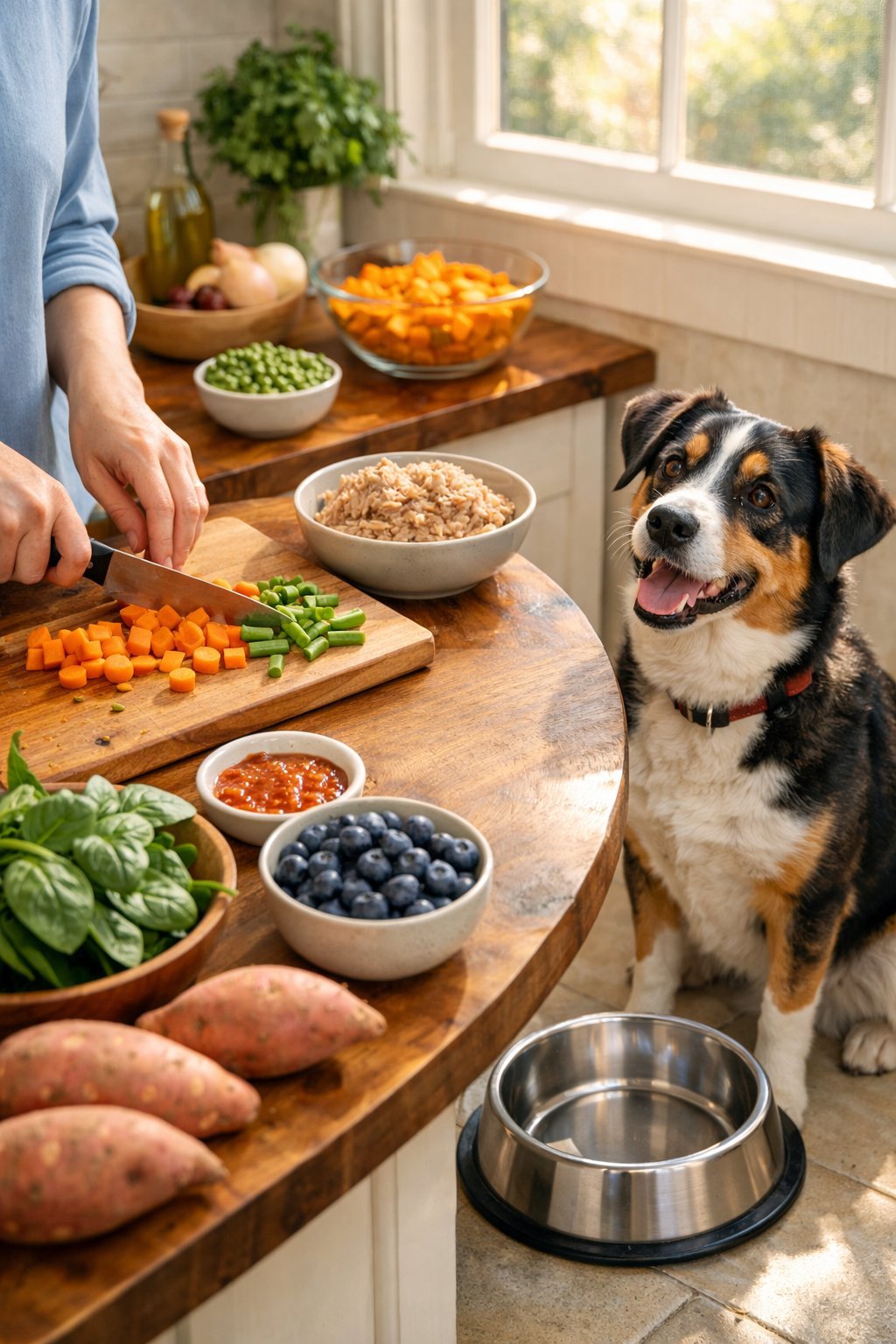
Switching your dog from commercial food to homemade meals requires patience and careful observation. I recommend taking at least 7-10 days to make the change so your dog’s digestive system can adjust properly.
Gradual Introduction
I always start by mixing a small amount of homemade food with my dog’s current kibble. On days 1-2, I replace just 25% of the regular food with the new homemade recipe.
This small amount lets my dog’s stomach get used to the change without causing upset. On days 3-4, I increase the homemade portion to 50% while reducing the kibble to half.
My dog usually adapts well at this stage, but I watch for any signs of digestive issues. Days 5-6 involve feeding 75% homemade food and only 25% of the old diet.
By days 7-10, I can transition completely to home-cooked food if everything goes smoothly. Some dogs need more time, and that’s perfectly fine.
I keep the feeding schedule consistent during this period. Sudden changes in meal times can add extra stress on top of the dietary switch.
Monitoring Your Dog’s Health
I watch my dog’s stool quality closely during the transition. Firm, well-formed stools mean the change is going well.
Loose stools or diarrhea tell me I need to slow down the process.
Energy levels give me important clues about how my dog is adapting. I look for normal playfulness and activity.
A lack of energy might signal that something isn’t right with the new diet.
I check my dog’s coat condition weekly. A shiny, healthy coat often appears after a few weeks on fresh, whole-food diets.
Dull or dry fur could mean nutritional gaps.
Weight monitoring matters too. I weigh my dog every week during the first month to make sure they’re maintaining a healthy weight.
Any sudden weight loss or gain means I need to adjust portion sizes or check with my vet about the recipe balance.