Kitchen Island With Dog Feeding Station: Smart Solutions for Pet-Friendly Homes

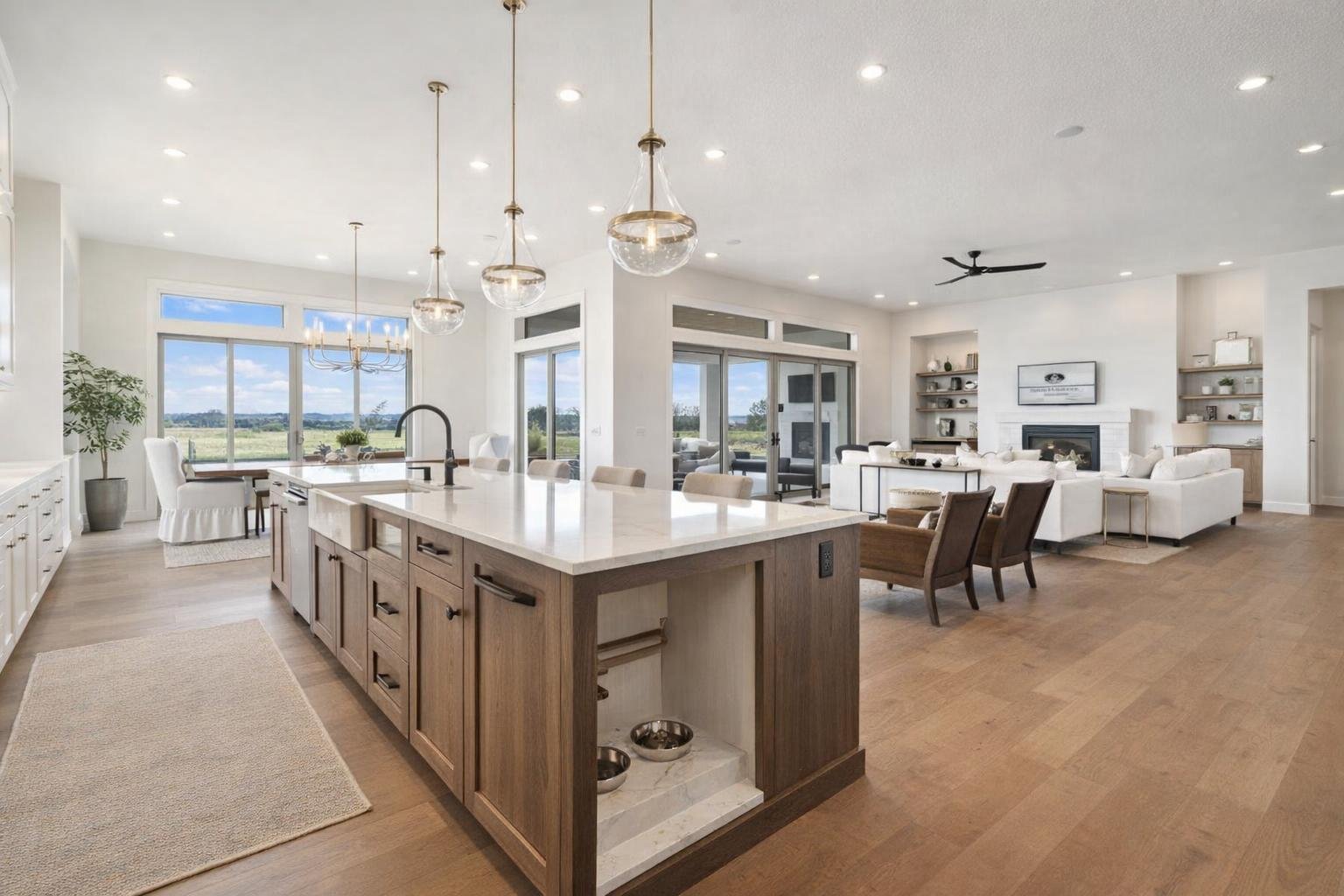
Pet bowls scattered across the kitchen floor can disrupt your daily routine and take away from your home’s design. A kitchen island with a built-in dog feeding station combines style and function by creating a dedicated space for your pet’s meals while keeping bowls off the floor and out of the way. This smart design solution helps you avoid tripping over dishes and makes cleaning up after mealtime much easier.
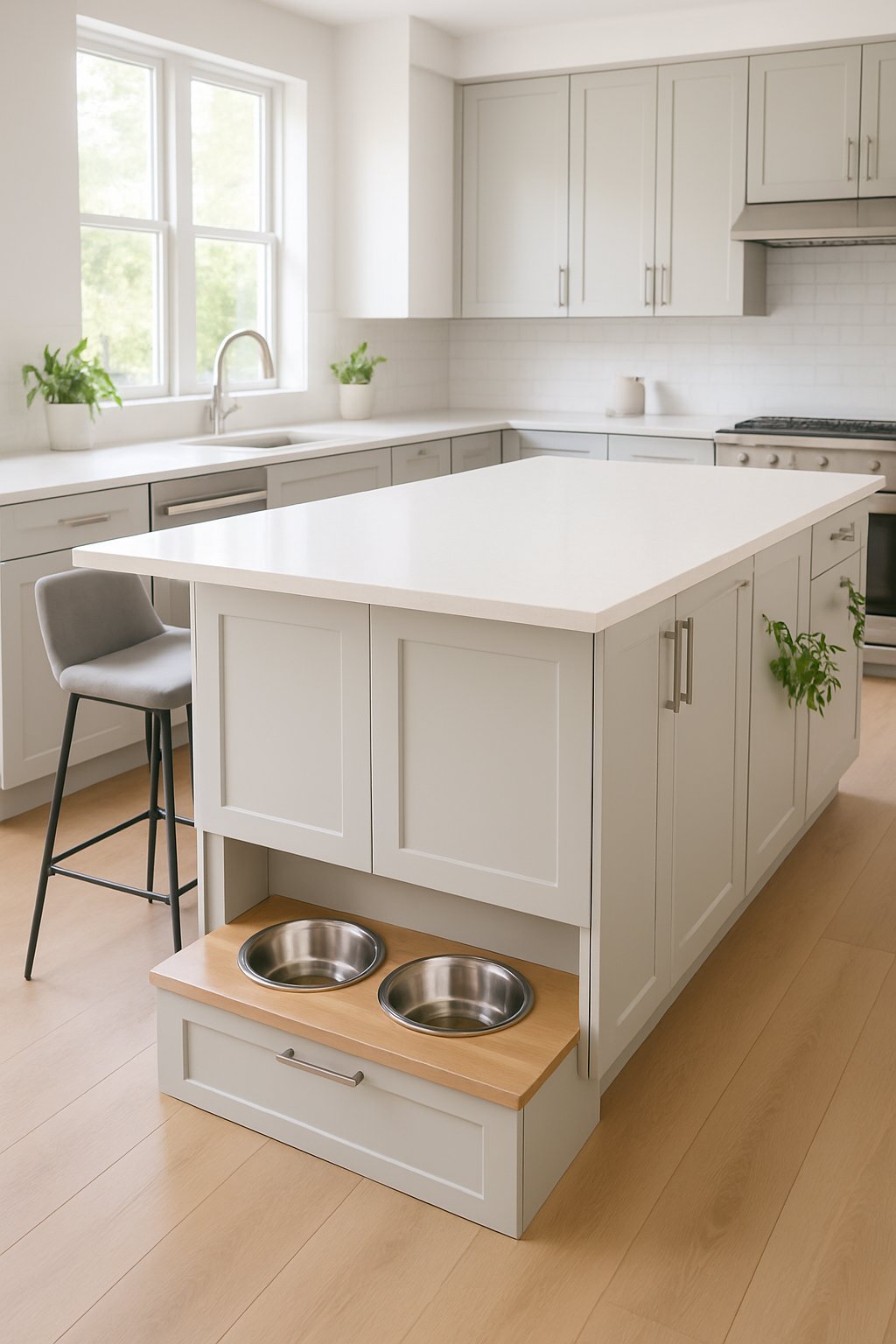
I’ve seen more homeowners add built-in pet feeding stations to their kitchen islands during remodels. These setups can include raised bowls at the right height for your dog, storage for food and treats, and even hooks for leashes. The best part is that you can customize the design to match your kitchen’s style while giving your pet a comfortable place to eat.
Whether you’re planning a full kitchen remodel or just want to upgrade your current island, adding a dog feeding station is easier than you might think. From DIY built-in dog feeding stations to professional custom designs, there are options for every budget and skill level.
Key Takeaways
- Kitchen island dog feeding stations keep pet bowls organized and off the floor while matching your kitchen design
- You can customize feeding stations with storage compartments, raised bowls, and accessories like hooks for leashes
- Both DIY modifications and professional installations work for different budgets and kitchen layouts
Key Benefits of a Kitchen Island With Dog Feeding Station
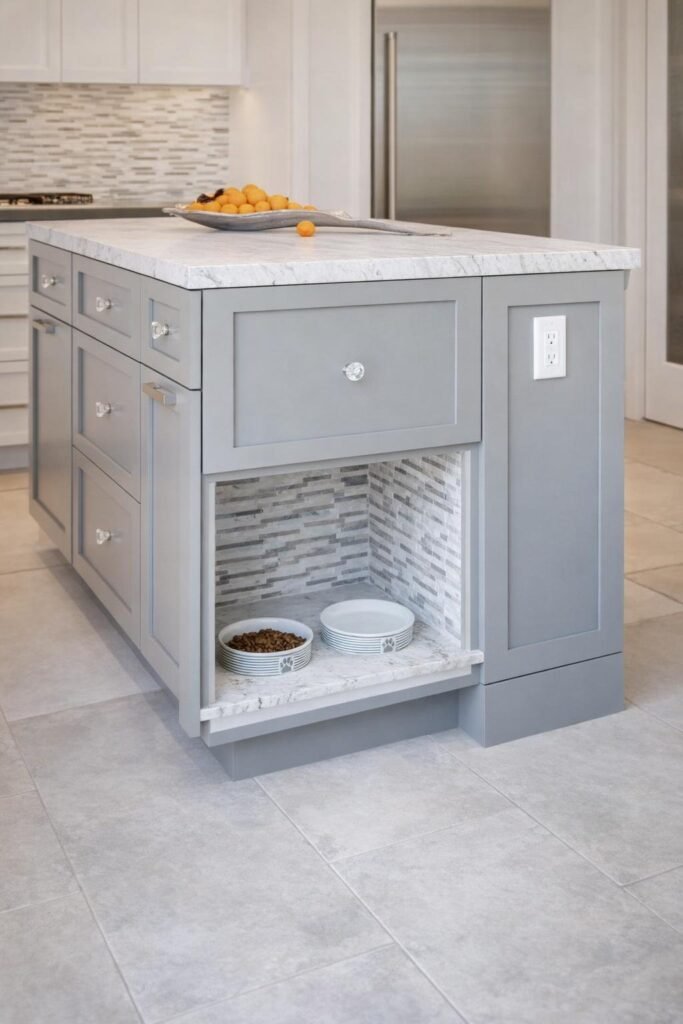
Adding a dog feeding station to your kitchen island creates a practical solution that keeps pet bowls organized while maintaining your home’s visual appeal. This design choice offers multiple advantages that make daily pet care easier and more efficient.
Improved Functionality and Convenience
I find that built-in feeding stations in kitchen islands offer incredible ease of use because they provide quick access to a nearby sink. Filling water bowls becomes effortless when I only need to take a few steps.
The setup eliminates the need for separate feeding areas that take up floor space. I can easily monitor my dog’s food and water intake throughout the day since the bowls are right in my main work area. This visibility helps me ensure my pet stays properly hydrated and well-fed.
Key convenience features include:
- Quick refills without carrying bowls across the room
- Easy cleanup with sink access nearby
- Better monitoring of pet eating habits
- Reduced trips around the kitchen during meal prep
Enhanced Kitchen Aesthetics
Integrating the feeding station into my kitchen island creates a seamless and polished appearance that matches my existing cabinetry. The bowls stay hidden within the island structure rather than sitting out on the floor.
This design approach adds charm to my home while solving a practical problem. The built-in station becomes a conversation piece that showcases thoughtful planning. I appreciate how it maintains my kitchen’s clean lines and modern look without obvious pet accessories cluttering the space.
Organization and Cleanliness
The built-in station keeps everything in one designated spot rather than scattered across my floor. I no longer kick over bowls while cooking or walking through my kitchen during daily routines.
Kitchen islands with built-in dog bowls reduce clutter by eliminating separate feeding and watering stations. Food spills stay contained in one area that’s easy to wipe down. The elevated position also works better for my dog’s comfort and digestion.
My kitchen stays tidier because pet supplies have their own dedicated space. I can quickly clean the feeding area without moving furniture or reaching under tables.
Design Options for Integrated Feeding Stations
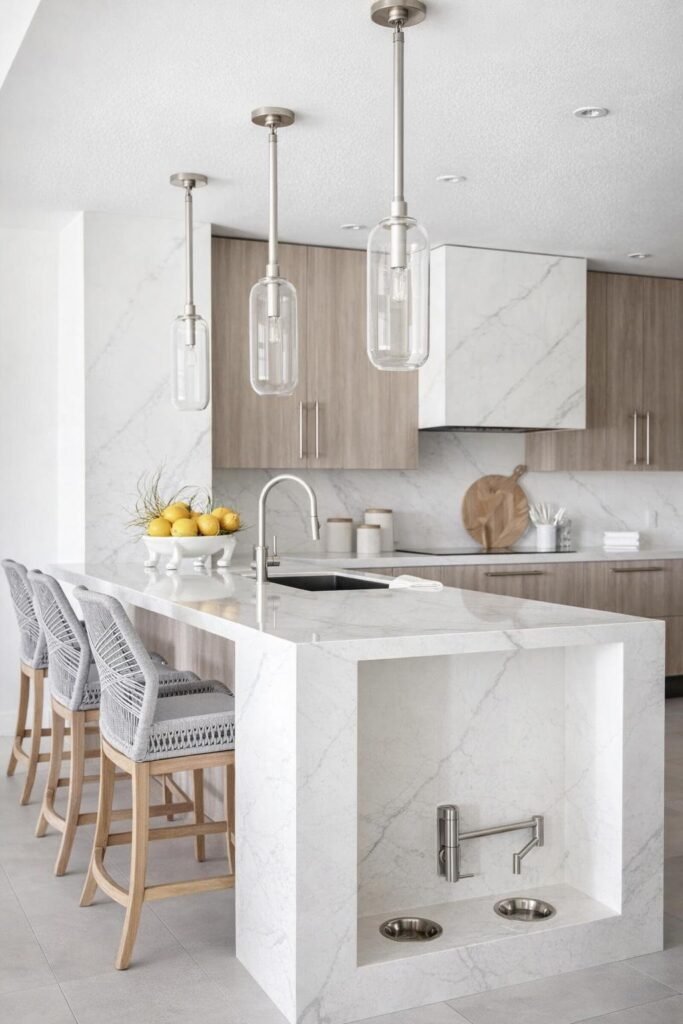
When I plan a built-in feeding station for my kitchen island, I focus on three main approaches that work well in different spaces. Each option offers unique benefits depending on my layout and my dog’s needs.
Built-In Drawer Solutions
I find drawer-style feeding stations to be one of the most practical choices for keeping my kitchen looking clean. These stations slide out when it’s time to feed my dog and tuck away completely when not in use.
The drawer system includes raised platforms or cutouts that hold food and water bowls securely in place. I can pull the drawer out at mealtime and push it back in afterward, which keeps the bowls off the floor and out of my walking path.
Most drawer solutions feature a moisture-resistant lining to protect the wood from water spills. I appreciate that I can add dividers to separate dry food storage from the bowl area. Some designs even include a removable tray that makes cleanup quick and easy.
Under-Counter Feeding Nooks
Creating a designated alcove within my kitchen island gives my dog a permanent spot to eat without taking up extra floor space. These recessed areas fit bowls into the island’s base, leaving them accessible but tucked away.
I can design the nook with a small opening on one side of the island or create a deeper recess that my dog can step into. The integration directly into kitchen cabinetry makes the feeding area look like part of my original kitchen design.
Adding a lip or raised edge around the nook helps contain spills. I also benefit from easy access to a nearby sink for filling water bowls quickly.
Customizable Bowl Heights
Adjustable feeding stations let me change the bowl height as my dog grows or if I have multiple pets of different sizes. I can install platforms that raise or lower to match my dog’s shoulder height, which promotes better posture during eating.
Fixed-height options work well too when I know my dog’s exact measurements. Standard heights range from 4 inches for small dogs to 12 inches for larger breeds. I make sure the bowls sit at a level where my dog doesn’t have to strain their neck down or reach up uncomfortably.
Choosing Materials and Finishes for Durability
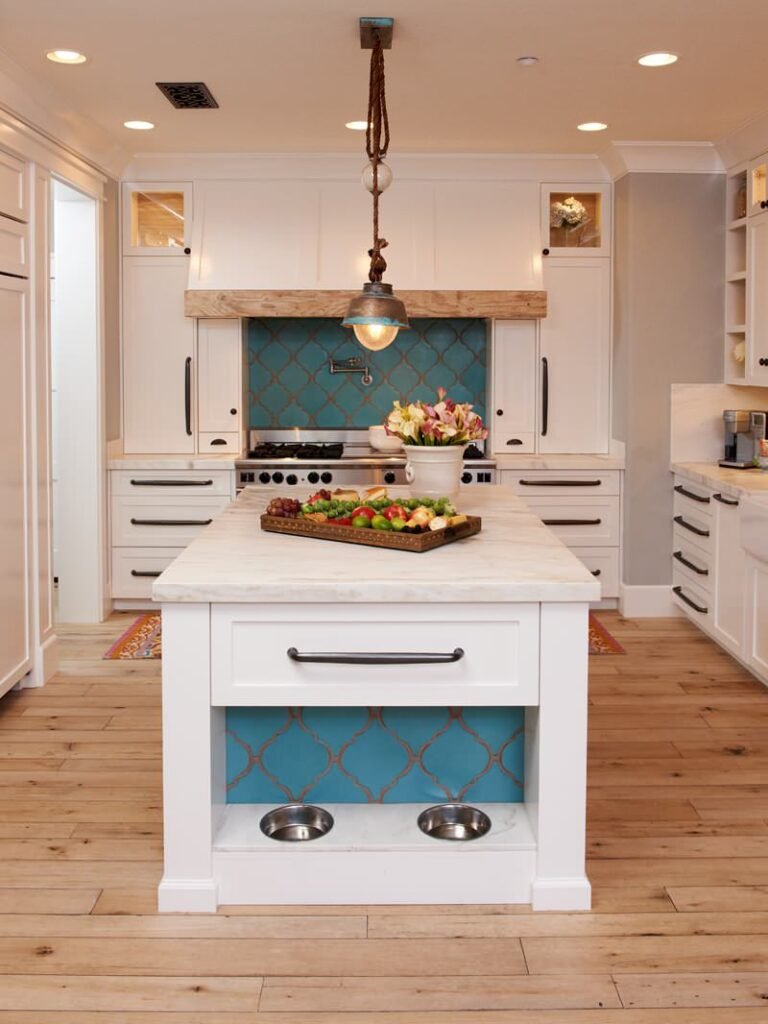
The materials you pick for your dog feeding station need to handle water spills, food messes, and daily wear while looking good in your kitchen. I focus on surfaces that resist moisture damage and clean up quickly.
Water-Resistant Surfaces
I always recommend non-porous materials like stainless steel, ceramic, or stone for the feeding station area. These surfaces prevent water from seeping into the wood and causing damage over time.
Sealed wood works well too, but you need to apply a high-quality waterproof sealant. I suggest polyurethane or marine-grade varnish that can handle constant exposure to water bowls.
Tile is another solid choice for the bottom of your feeding station. It wipes clean easily and won’t warp if water sits on it. Make sure to seal the grout lines properly to stop moisture from getting underneath.
Easy-to-Clean Bowl Areas
I look for smooth surfaces without grooves or texture where food particles can hide. A simple flat base makes wiping up kibble and water spots much faster.
Stainless steel bowls are my top pick because they don’t hold bacteria and go right in the dishwasher. The feeding station itself should have removable inserts or a finish that lets you clean thoroughly around the bowl edges.
Skip porous materials like untreated wood in the immediate bowl area. Food and water will stain these surfaces and create cleaning headaches. I prefer materials you can spray down and wipe without worrying about damage.
Matching Kitchen Decor
Your feeding station should blend with your existing cabinetry instead of standing out awkwardly. I match the wood stain or paint color to my current kitchen island for a cohesive look.
White quartz countertops and matte black handles work beautifully in modern kitchens. For traditional spaces, I stick with warm wood tones and classic hardware.
The bowl material matters for aesthetics too. Ceramic bowls in coordinating colors look nicer than plastic, and they’re heavier so they won’t slide around during meals.
Practical Accessories and Custom Features
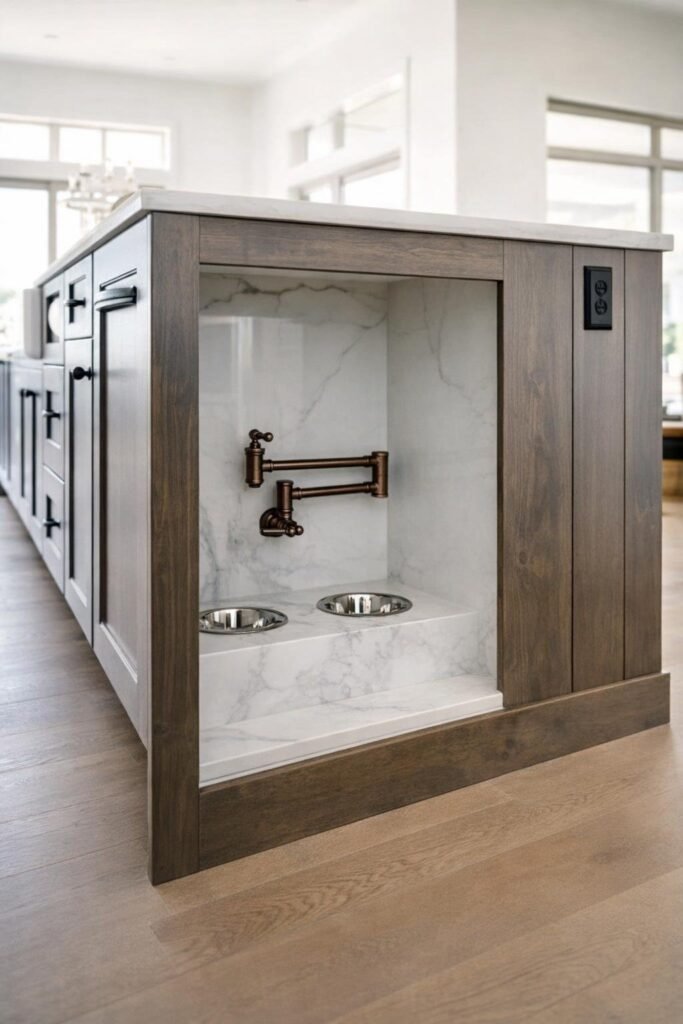
The right accessories can turn a basic feeding station into a highly functional space that saves time and reduces mess. Smart storage solutions and protective features make daily pet care easier while keeping your kitchen looking clean.
Pull-Out Bowls and Storage
I find that pull-out feeding stations are one of the most popular custom cabinetry solutions for pet-friendly kitchens. These systems hide bowls inside a drawer or cabinet when not in use, which keeps my kitchen looking tidy.
The pull-out design gives me easy access to fill and clean bowls without bending down. I can slide the station back into the island when my dog finishes eating.
Many pull-out units include raised platforms that hold bowls at a comfortable height for pets. This design helps with digestion and reduces strain on their neck and joints. Some versions come with adjustable heights to grow with your pet or accommodate multiple animals of different sizes.
Spill-Proof Mats and Trays
Waterproof mats protect my kitchen island from water splashes and food spills. I use rubber or silicone mats because they’re easy to wipe down and won’t slip around.
Built-in trays with raised edges catch spills before they reach the cabinet floor. These trays typically slide out for quick cleaning in the sink. Some custom feeding stations include integrated drip trays that match the island’s finish.
I prefer mats with textured surfaces because they give my dog better traction while eating. Removable inserts make daily maintenance simple since I can toss them in the dishwasher.
Food and Water Storage Solutions
I keep my pet food fresh by storing it in airtight containers built into the island cabinetry. Pull-out bins with tight-sealing lids protect dry food from moisture and pests.
Dedicated drawers for treats, medications, and feeding accessories keep everything organized in one spot. I appreciate having scoops, leashes, and toys stored right where I need them.
Some islands include space for automatic water fountains or gravity feeders. These features ensure my pet always has access to fresh water, even when I’m away for a few hours.
Tips for a Seamless Kitchen Integration
The key to a successful built-in feeding station lies in smart placement that maintains your kitchen’s flow, using pet-safe materials and finishes, and selecting cabinet styles that match your existing design. These elements work together to create a feeding area that looks intentional rather than added as an afterthought.
Optimizing Kitchen Layout
I recommend placing your dog’s feeding station in a low-traffic area of your kitchen island to prevent tripping hazards. The end panel of an island works well because it keeps bowls out of the main walkway while staying accessible for your pet.
Consider the height of your dog when planning the station. Larger breeds benefit from elevated bowls built into the cabinetry, which promote better posture during meals. I’ve found that integrating the feeding station into existing cabinetry transforms what used to be a floor-level tripping hazard into an organized space.
Think about water access too. Some homeowners install small pot fillers near the feeding area to make refilling water bowls easier. Just make sure any plumbing additions don’t interfere with your existing kitchen systems.
Ensuring Pet Safety
I always use non-toxic finishes and sealants around the feeding station since dogs will be eating in this space daily. Water-based polyurethane works well because it’s safe once fully cured and protects wood from spills.
Important safety features include:
- Rounded edges on cutouts to prevent injuries
- Slip-resistant bowls or bowl holders
- Adequate ventilation to prevent moisture buildup
- Easy-to-clean surfaces that won’t harbor bacteria
Make sure the station sits at a comfortable height for your dog’s size. Bowls that are too high or too low can cause neck strain and digestive issues over time.
Blending Feeding Stations With Existing Style
I match the feeding station cabinetry to my existing kitchen cabinets so it looks like part of the original design. This means using the same wood species, stain color, and hardware throughout.
Creating a seamless and polished look means paying attention to small details. I use the same crown molding, baseboards, and door styles that appear elsewhere in my kitchen. The feeding station should blend in rather than stand out as a separate addition.
Stainless steel bowls work with modern kitchens, while ceramic bowls suit traditional styles better. I choose bowl materials and colors that complement my countertops and backsplash. Some people add decorative touches like tile backsplashes or custom trim around the feeding area to enhance the look even more.