Coffee Bar Dog Feeding Station: A Stylish Way to Organize Your Pup’s Mealtime

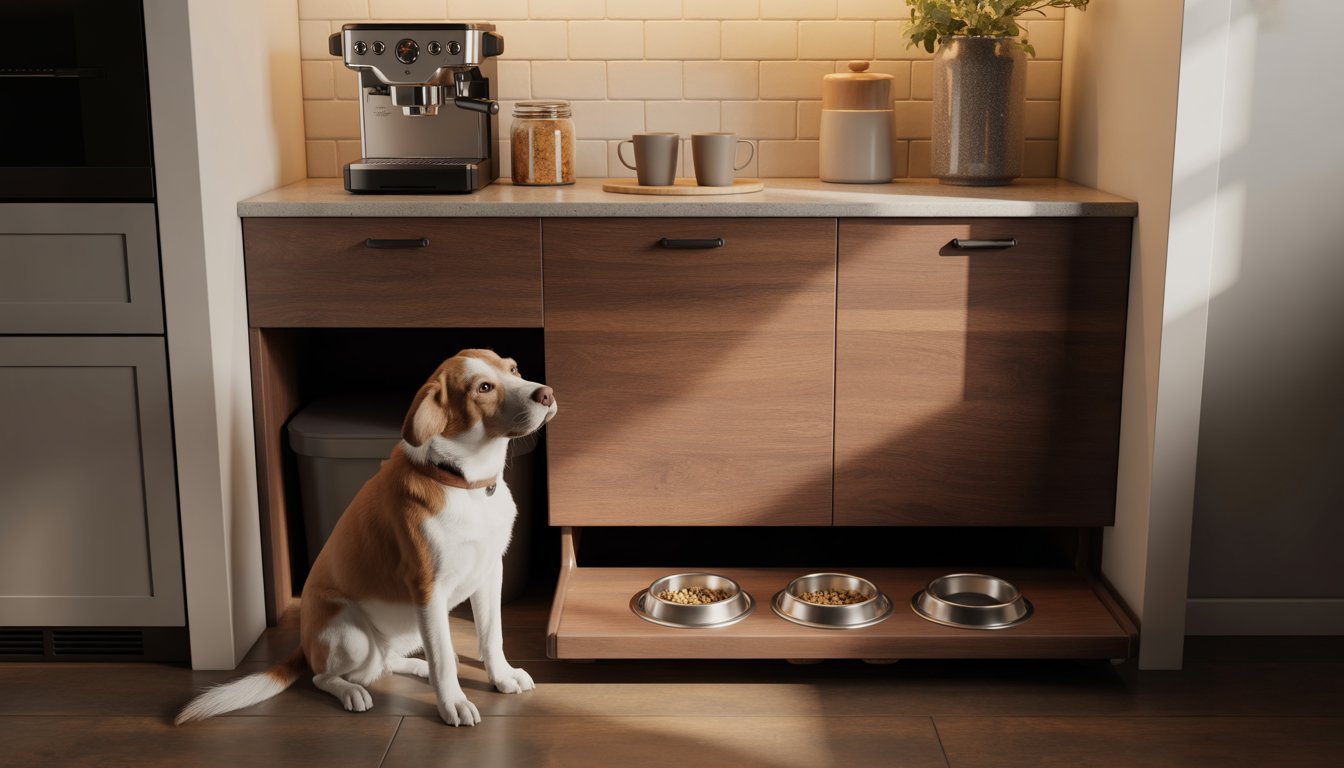
A coffee bar dog feeding station combines two things many of us love: our morning coffee routine and caring for our pets. This dual-purpose furniture piece puts elevated dog bowls right into your coffee station, saving space while making it easier for your dog to eat and drink. Instead of having pet supplies scattered around your kitchen, everything stays organized in one stylish spot.
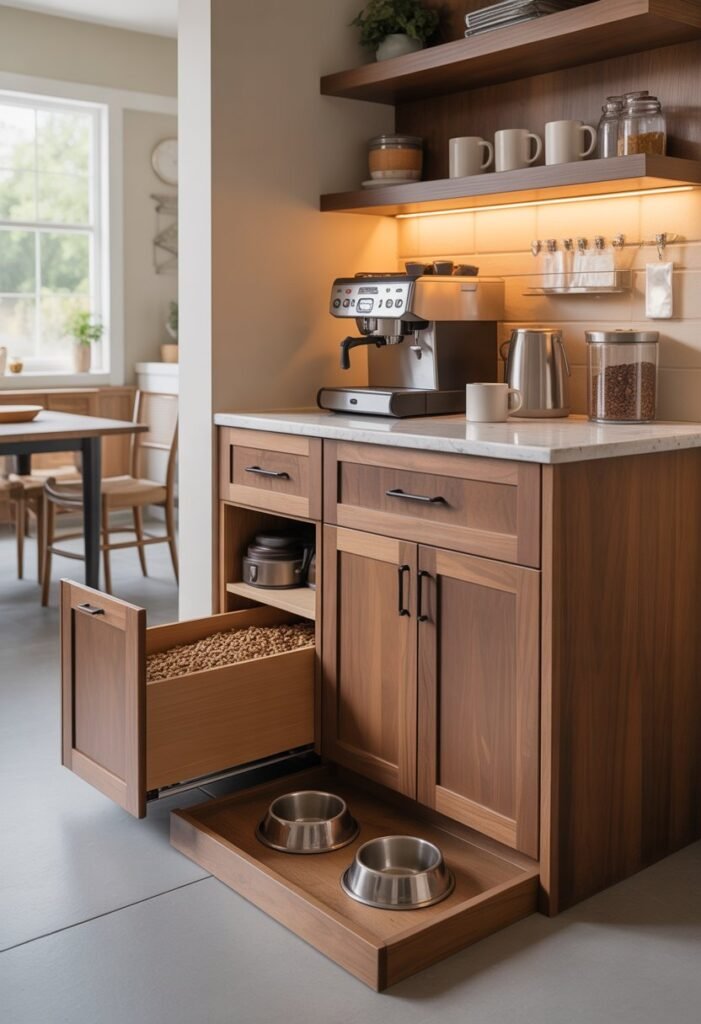
I’ve seen more pet owners looking for ways to blend their pet care items into their home design. A coffee-themed dog feeding station solves the problem of ugly plastic bowls on the floor. These stations often include storage drawers for dog food, raised bowls that help with digestion, and counter space for your coffee maker or supplies.
Whether you want to buy a ready-made unit or transform an old coffee table into a custom feeding station, the options fit different budgets and skill levels. The result is a cleaner kitchen and a more comfortable eating experience for your dog.
Key Takeaways
- A coffee bar dog feeding station combines pet feeding areas with coffee stations to save space and improve home organization
- Elevated bowls help reduce neck strain in dogs and promote better digestion during mealtimes
- These stations can be purchased ready-made or built as DIY projects using existing furniture pieces
What Is a Coffee Bar Dog Feeding Station?
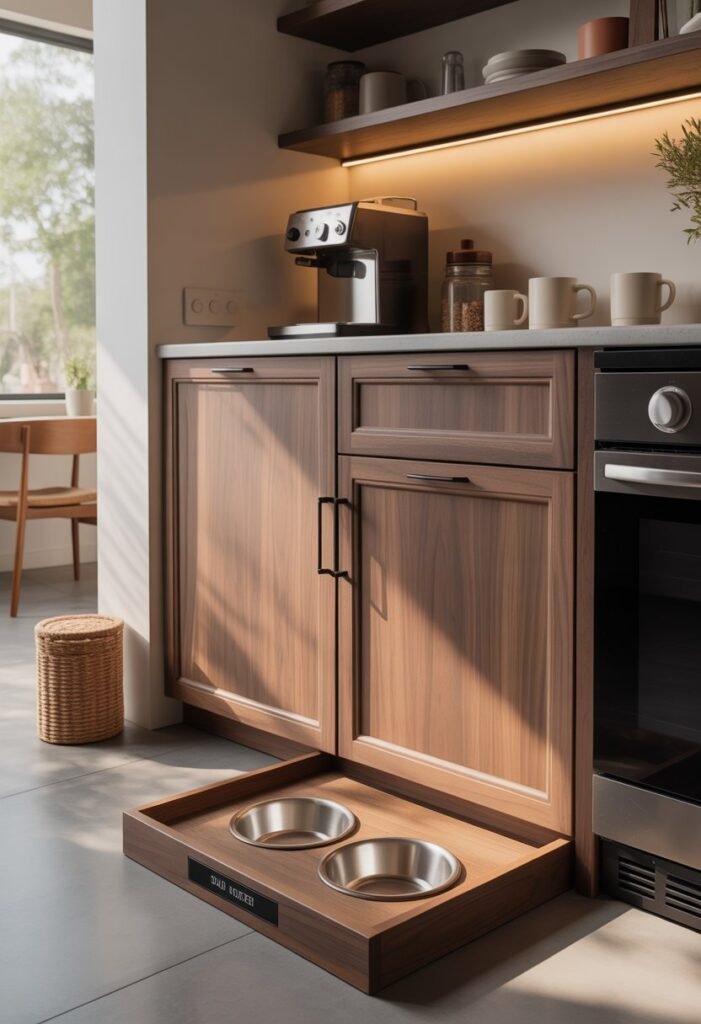
A coffee bar dog feeding station combines your morning coffee setup with a designated feeding area for your dog in one shared space. This dual-purpose station keeps both human and pet essentials organized while saving valuable kitchen counter or floor space.
Core Features and Purpose
A coffee bar dog feeding station typically includes a raised platform or built-in area that holds dog food and water bowls alongside coffee-making equipment. The elevated design helps dogs eat at a more comfortable height, which can improve their posture during meals.
I’ve found that these stations often include storage compartments underneath for dog food bags, treats, and coffee supplies. Many designs incorporate a pot filler or water source for easy bowl refilling without trips to the sink. The feeding area usually sits at floor level or on a lower shelf, while the coffee bar occupies the main counter space above.
The purpose goes beyond just combining two functions. It creates a centralized spot in your kitchen where you can prepare your morning coffee while your dog eats breakfast nearby. This setup works especially well in smaller homes where every inch of space counts.
Benefits for Pet Owners and Dogs
The biggest advantage I see is the space-saving design that eliminates the need for separate areas. Instead of having dog bowls scattered on the floor and coffee supplies spread across counters, everything stays in one organized location.
For dogs, elevated feeding stations promote better posture and digestion by reducing the strain on their neck and joints. The raised bowls make swallowing easier, especially for larger breeds or older dogs with mobility issues. The contained feeding area also means fewer spills and messes throughout your kitchen.
I appreciate how these stations keep pet supplies hidden but accessible. Storage drawers or cabinets hold food bags, measuring cups, and treats out of sight. This creates a cleaner, more streamlined look in your kitchen while keeping everything you need within arm’s reach during morning routines.
Difference from Traditional Feeding Stations
Traditional dog feeding stations focus solely on pet needs, with just bowls and food storage. They’re often standalone pieces of furniture that sit in a corner or against a wall. A coffee bar version integrates human and pet functions into one cohesive unit.
Regular feeding stations don’t include any provisions for coffee equipment or human use. The built-in dog feeding station concept takes this further by incorporating countertop workspace, electrical outlets for coffee makers, and upper cabinetry for mugs and coffee beans.
The design aesthetic differs too. Coffee bar combinations tend to match your kitchen decor and cabinetry rather than looking like a pet accessory. They blend into your home’s existing style while serving both you and your dog at the same time.
Planning Your Coffee Bar Dog Feeding Station
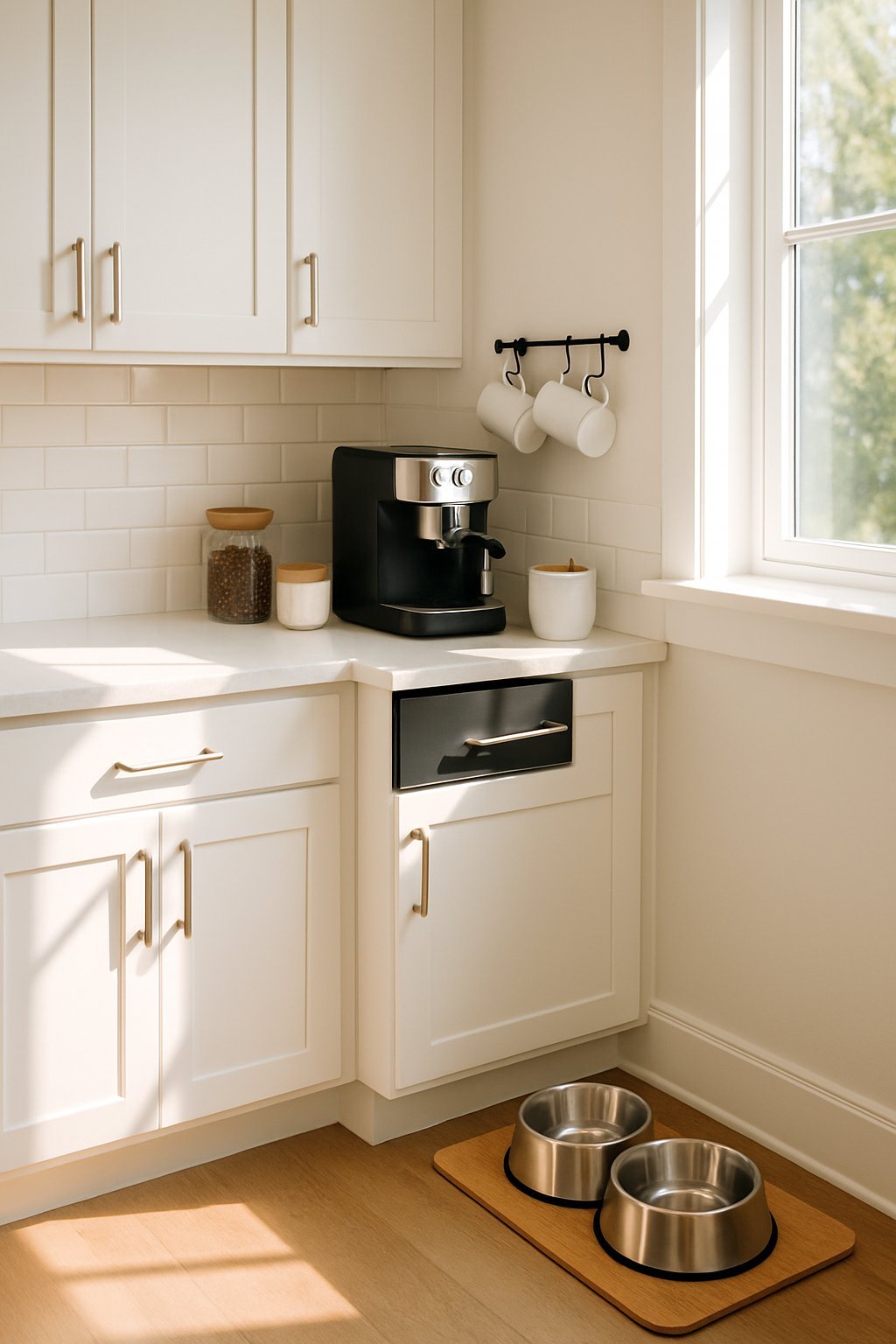
The right location and thoughtful layout will make your coffee bar dog feeding station work smoothly for both you and your pet. Storage solutions keep supplies organized while maintaining a clean, functional space.
Choosing the Right Location
I recommend placing your coffee bar dog feeding station in a high-traffic area where you already spend time making drinks. The kitchen is ideal since you’ll have easy access to water for both coffee and your dog’s bowl.
Corner spaces work well for this dual-purpose setup. They keep your pet’s bowls out of the main walkway while giving you counter space for your coffee maker and supplies.
Make sure the spot has access to electrical outlets for your coffee equipment. A dedicated feeding area keeps mealtime organized and mess-free while blending with your home’s look. If you’re planning something more permanent, consider adding a pot filler faucet above the station to fill both coffee pots and water bowls without carrying them to the sink.
Space and Layout Considerations
I measure my dog’s height from floor to shoulder before building any feeding station. Large dogs need bowls raised 12-15 inches off the ground, while small dogs do better with 3-6 inch heights.
Plan for at least 24 inches of width to fit two bowls side by side. Raised platforms help promote better posture and digestion for your pet during meals.
Leave 6-8 inches of space between your coffee equipment and dog bowls. This prevents spills from mixing and keeps things sanitary. Your coffee maker should sit on the upper level while dog bowls stay at their appropriate height below.
Integrating Storage Solutions
I always include storage for both coffee supplies and dog food in my station design. Pull-out drawers work great for storing bags of coffee beans and dog treats in separate compartments.
Mount hooks on the side of your station for hanging measuring scoops and dish towels. Use airtight containers to store ground coffee and dry dog food to keep both fresh longer.
Building your own station gives you full control over storage that fits your specific needs. I add a small shelf above the coffee maker for mugs and a bin below for storing extra dog bowls and cleaning supplies.
Design Ideas and Styles
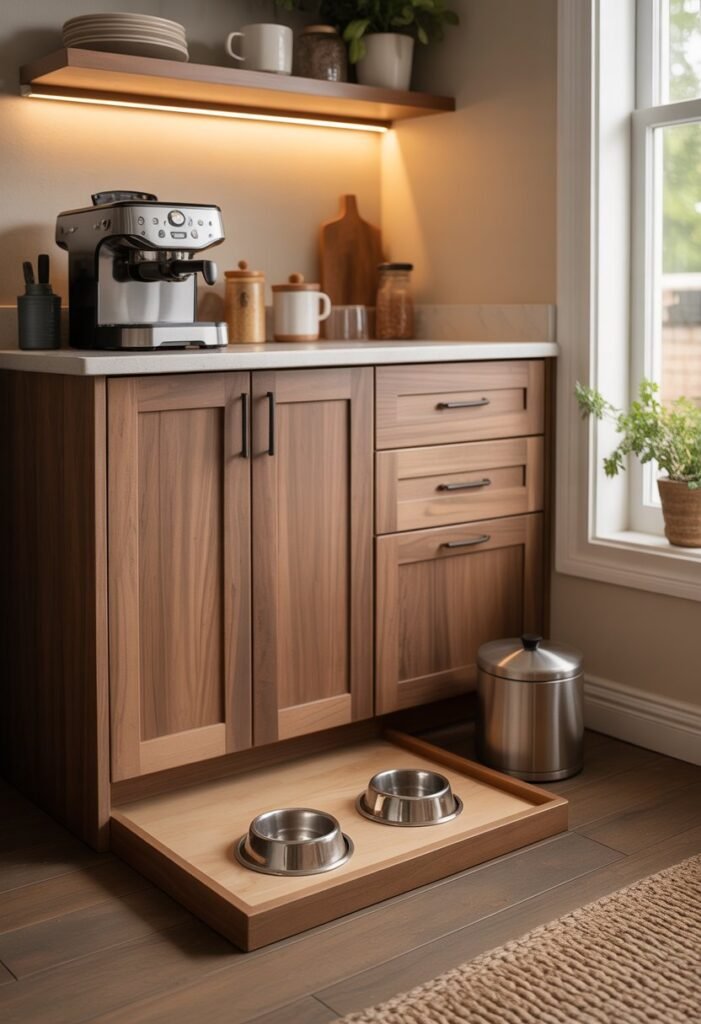
A coffee bar dog feeding station can match any home style, from sleek modern looks to cozy farmhouse vibes. You can also hide the feeding area completely when guests visit or keep it on display as part of your kitchen design.
Modern and Minimalist Designs
I love how modern dog feeding stations blend seamlessly into contemporary kitchens. Clean lines and neutral colors work best for this style.
Metal stands with matte black or brushed silver finishes look great next to stainless steel appliances. I recommend pairing these with ceramic or stainless steel bowls in white, gray, or black.
Built-in drawer feeding stations offer the ultimate minimalist approach. The bowls sit in a pull-out drawer at floor level, keeping everything flush with your cabinetry. When not in use, I can simply slide the drawer closed for a completely clean look.
Floating shelves above the feeding area provide storage for dog food and treats without adding bulk. Keep accessories to a minimum with just one or two items displayed.
Rustic and Ethnic Inspirations
Eco-friendly bamboo stations bring natural warmth to any coffee bar area. The light wood tones complement farmhouse and cottage styles perfectly.
Reclaimed wood platforms create character and save materials at the same time. I find that weathered barn wood or pallet wood adds texture and tells a story. You can stain or paint these pieces to match your existing furniture.
Woven baskets underneath the feeding bowls hide food containers while adding a handmade touch. Metal buckets or galvanized tins work well for storing kibble in country-style kitchens.
Wrought iron stands with decorative scrollwork fit Mediterranean and Spanish-inspired homes. These elevated feeders often come in bronze or oil-rubbed finishes that age beautifully over time.
Hidden and Pull-Out Feeding Stations
I appreciate how hidden feeding stations keep my kitchen looking tidy when company comes over. Cabinet doors conceal the bowls completely until mealtime arrives.
Pull-out drawers at the base of kitchen islands work perfectly for this purpose. I can slide the feeding station out when my dog needs to eat, then push it back in afterward. The bowls stay in place thanks to cutout holes in the drawer base.
False cabinet fronts create another clever hiding spot. These swing open to reveal a feeding nook built into the lower cabinets. I added a small mat inside to catch spills and protect the cabinet floor.
Toe-kick drawers use that empty space below your cabinets. Though shallow, they fit water bowls and work well for small dogs or cats sharing the coffee bar area.
DIY and Customization Tips
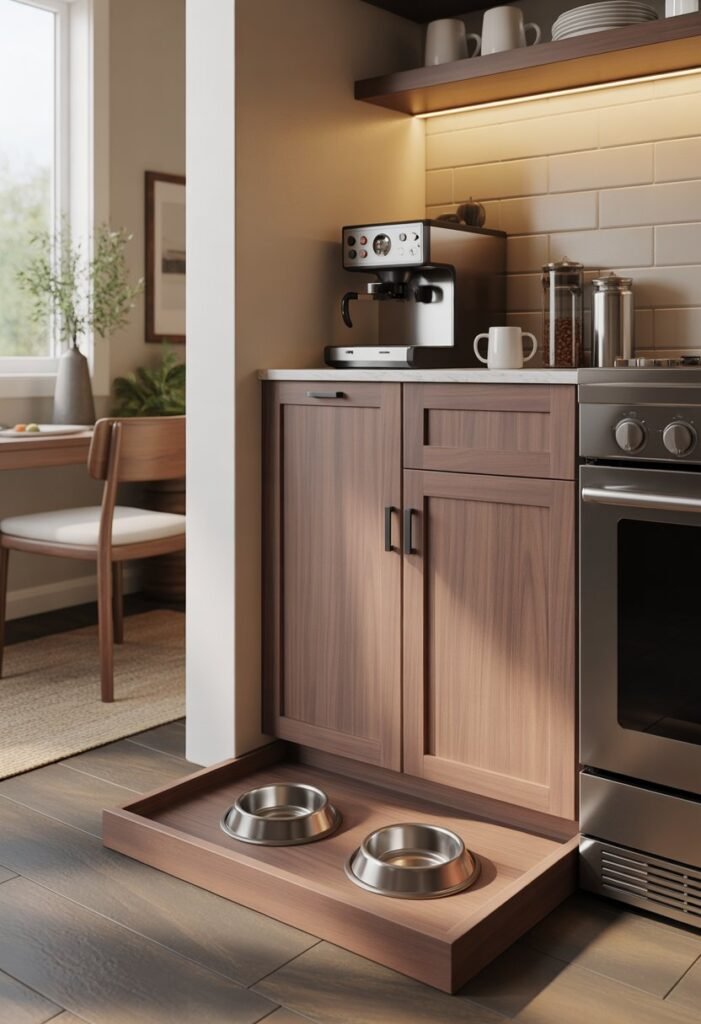
Making your own coffee bar dog feeding station lets you match your kitchen style while creating a perfect spot for your pet. You can start with simple changes or add personal touches that make the space feel custom-built.
Easy Upgrades and Modifications
I recommend starting with a basic coffee table conversion if you want a quick project. You can paint it any color that matches your coffee bar area. I like using waterproof paint or sealant on the top surface to protect against water splashes.
Adding a raised platform helps dogs digest food better and keeps their necks comfortable. I suggest using wood blocks or PVC pipe legs to lift the bowls 4-8 inches off the ground depending on your dog’s size. You can also install hooks on the side to hang leashes or store feeding accessories.
Storage compartments make a big difference. I cut out a space underneath for dog food containers or treat jars. Simple drawer pulls or rope handles make these compartments easy to open.
Personalized Decor and Touches
I paint my dog’s name on the front panel using stencils for a clean look. You can also add decorative tiles that match your coffee bar backsplash. Metal bowl holders in copper or brushed nickel give the station a more finished appearance.
Chalkboard paint on one section lets me write feeding times or reminders. I’ve seen people add small signs with sayings or their pet’s photo in a frame nearby. Matching the wood stain to your coffee bar cabinets creates a seamless look that doesn’t stand out as pet furniture.
Adapting for Multiple Dogs
I space bowls at least 12 inches apart to prevent dogs from crowding each other during meals. For two dogs, I use a longer station with dividers between the feeding areas. This gives each dog their own space.
Color-coded bowls help me remember which dog gets which food. I assign each dog a specific side of the station and keep their supplies in separate compartments below. For homes with multiple pets, I recommend building a station that’s at least 36 inches wide.
Different bowl heights work well if your dogs are different sizes. I drill separate holes at varying depths to accommodate both a small and large dog comfortably.
Health and Safety Considerations
Setting up a dog feeding station at a coffee bar requires careful attention to materials, sizing, and cleanliness to protect both pets and customers. These three areas form the foundation of a safe and functional feeding space.
Choosing Safe Materials
I always recommend stainless steel bowls for coffee bar dog feeding stations. They don’t harbor bacteria like plastic can, and they’re nearly impossible for dogs to break or chew.
Ceramic bowls work well too, but I make sure to check them regularly for chips or cracks. A damaged bowl can cut a dog’s tongue or harbor germs in the cracks.
For the station base or stand, I avoid materials that can splinter or contain toxic finishes. Food-grade materials matter here since dogs will be eating and drinking from these surfaces. Wood stands need to be sealed with pet-safe finishes.
I skip plastic bowls entirely at my coffee bar. They scratch easily, and those scratches become breeding grounds for bacteria no matter how well I clean them.
Proper Bowl Height for Different Dogs
I’ve learned that bowl height directly affects a dog’s digestion and joint comfort. Small dogs under 15 pounds do best with bowls sitting right on the floor or raised just 1-2 inches.
Medium-sized dogs between 15-50 pounds need their bowls raised about 4-8 inches off the ground. Large dogs over 50 pounds require elevation of 8-12 inches or more.
I measure from the floor to the dog’s chest to find the right height. The goal is for dogs to eat with their neck in a neutral position, not straining up or bending too far down. This prevents neck pain and reduces the risk of bloat in deep-chested breeds.
Maintaining Cleanliness and Hygiene
I wash all feeding bowls with hot soapy water after each dog uses them. This prevents the spread of illnesses between different pets visiting my coffee bar.
The feeding station area gets wiped down multiple times per day. I use pet-safe disinfectants that won’t harm dogs but still kill germs effectively. Health and safety concerns at coffee shops require careful management when pets are present.
I keep the feeding station away from where I prepare human food and drinks. Before opening a business where pets and customers eat or drink, it’s important to check local health department rules.
Water bowls need refreshing every few hours, not just when they’re empty. I also place rubber mats under the station to catch spills and prevent slipping hazards for both dogs and people.