DIY Dog Fence: Build the Perfect Pet Enclosure for Your Yard

Building a dog fence yourself can save you hundreds of dollars compared to hiring professionals while giving you complete control over the design and materials. A DIY dog fence keeps your dog safe in your yard, prevents them from running into dangerous situations, and gives them the freedom to play outside without constant supervision.
Whether you have a small backyard or a large property, there are affordable and easy-to-build solutions that fit your specific needs.
I’ve put together this guide to walk you through everything from choosing the right type of fence to actually building it. You’ll learn about different materials like chain link, wood, vinyl, and wire mesh, plus creative options you might not have considered.
I’ll also share tips on making your fence dig-proof and climb-proof so your dog stays safely contained. The best part about building your own dog fence is that you can customize it to match your budget and your dog’s behavior.
From rustic pallet fences to sturdy wire designs, there’s a solution that works for every yard and every dog.
Key Takeaways
- DIY dog fences are cost-effective alternatives to professional installation that you can customize for your yard and dog’s needs
- Popular fence types include chain link, wood, vinyl, metal, and wire mesh, each with different costs and benefits
- Proper installation requires setting posts below the frost line and adding dig-proof features to keep your dog safely contained
Types of DIY Dog Fences
Building your own dog fence means choosing from several proven options. Wire fences offer flexibility and affordability, wooden styles provide privacy and classic appeal, metal options deliver long-lasting strength, and invisible systems use technology to create boundaries without physical barriers.
Wire Dog Fence Options
Wire dog fences are among the most budget-friendly choices I recommend for DIY projects. These fences use welded wire panels or woven wire mesh attached to posts, creating a see-through barrier that keeps dogs contained while maintaining visibility.
The most common wire options include:
- Welded wire panels (4-6 feet tall)
- Chicken wire (best for small dogs only)
- Cattle panels (heavy-duty for large breeds)
- Wire mesh rolls (customizable height)
I find wire fences work best when paired with sturdy wooden or metal posts set in concrete. The gaps in the wire should be small enough that your dog can’t squeeze through or get their head stuck.
For affordable and customizable options, wire fencing ranks high. Wire fences install quickly compared to solid barriers.
You can attach the wire using fence staples, zip ties, or metal clips. Just make sure the bottom edge sits close to the ground or is buried a few inches to prevent digging escapes.
Wooden Dog Fence Styles
A wooden fence gives my yard privacy while keeping my dog safely contained. Wood offers natural beauty and can be painted or stained to match your home’s exterior.
Popular wooden fence styles include:
| Style | Height | Privacy Level | Best For |
|---|---|---|---|
| Board-on-board | 5-6 feet | High | Large dogs, full privacy |
| Picket fence | 3-4 feet | Low | Small dogs, decorative look |
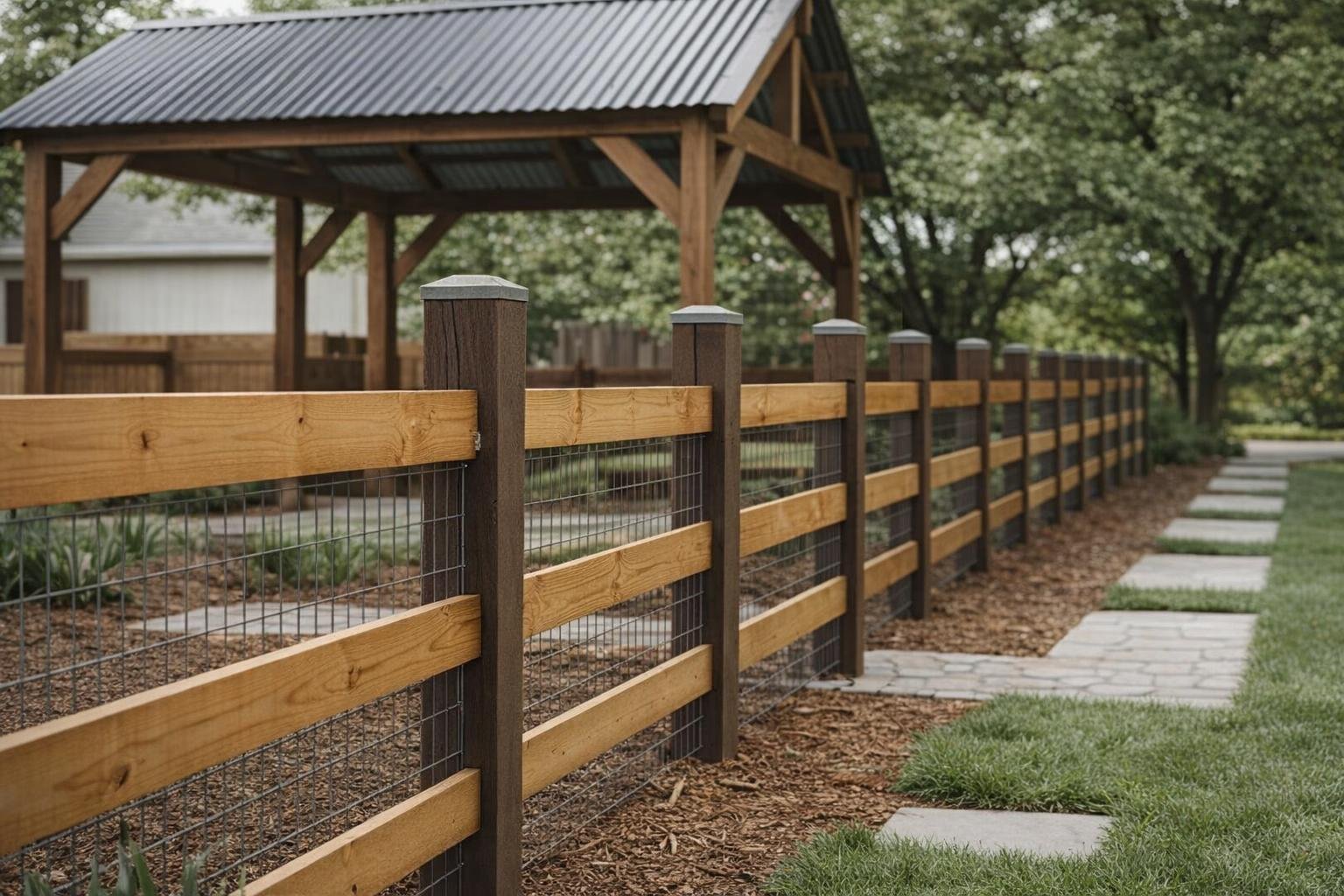
| Split rail | 3-4 feet | Low | Country aesthetic, gentle dogs |
| Privacy panels | 6-8 feet | Very high | Reactive dogs, full containment |
I prefer using pressure-treated lumber or cedar for DIY wooden dog fences because they resist rot and weather damage. The posts need to be set at least 2 feet deep in concrete for stability.
A wooden fence requires more maintenance than other options. I apply weatherproof sealant every 2-3 years to prevent warping and decay.
Check regularly for loose boards or protruding nails that could injure your dog.
Metal and Chain Link Dog Fences
Metal dog fences provide the strongest and most durable containment solution. A chain link fence is my top choice for active or large dogs who might damage lighter materials.
Chain link fencing consists of galvanized steel wire woven into a diamond pattern. The standard heights range from 4 to 6 feet, with posts set in concrete every 8-10 feet.
I’ve found that chain link installations last decades with minimal upkeep.
Metal fence options include:
- Galvanized chain link (rust-resistant, affordable)
- Vinyl-coated chain link (attractive, color options)
- Wrought iron panels (decorative but expensive)
- Cattle panels (extremely strong grid pattern)
The main advantage of a metal fence is its strength. Dogs can’t chew through it or push it over easily.
I add privacy slats to chain link if my dog gets overstimulated by passing pedestrians or animals. Installation requires fence stretchers and special tools, but the result is a virtually indestructible barrier.
Metal fences need very little maintenance beyond occasional hose-downs.
Invisible and Electric Dog Fences
An invisible fence uses underground wires and a special collar to create boundaries without physical barriers. When my dog approaches the buried wire, the collar beeps as a warning, then delivers a mild static correction if they continue.
How invisible fences work:
- Bury wire around your property perimeter
- Connect wire to a transmitter box
- Fit your dog with a receiver collar
- Train your dog to recognize the warning signals
I consider invisible fences best suited for well-trained dogs who respond to correction. They won’t stop other animals or people from entering your yard, which is a major drawback for pet containment.
Electric fences differ slightly by using a single wire strand above ground, typically 6-12 inches high. These systems work for farm animals but aren’t ideal for most dogs.
Some dogs will run through the momentary shock, especially if highly motivated.
Pros and cons of invisible systems:
- Pros: No visual barrier, works on any terrain, relatively inexpensive
- Cons: Requires training, doesn’t keep threats out, may not work for stubborn dogs
I only recommend invisible or electric fences as supplements to physical barriers, not replacements. They work best for dogs with calm temperaments who stay close to home naturally.
Creative DIY Dog Fence Ideas
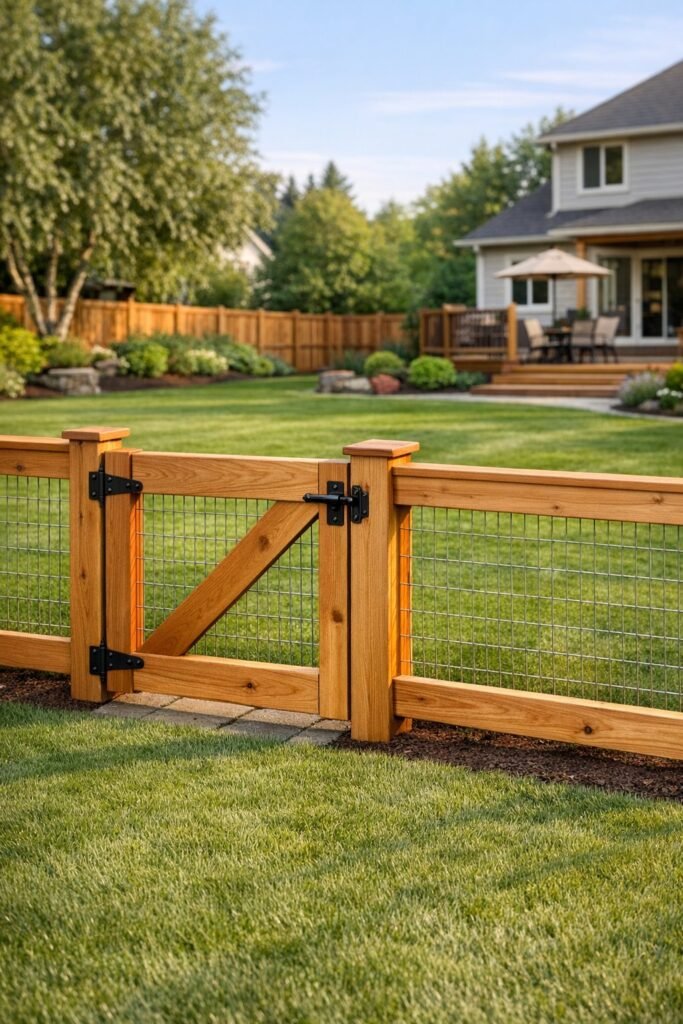
You can build a custom fence for your dog using affordable materials you might already have around your house. Pallet wood, lattice panels, PVC pipes, and temporary fencing solutions offer flexible options that work for different yard sizes and budgets.
Pallet Dog Fence
I’ve found that reclaimed pallets make excellent DIY dog fences because they’re often free or very cheap to source. You can get pallets from local businesses, hardware stores, or warehouse facilities.
To build a pallet fence, I stand the pallets upright and secure them together with wood screws or heavy-duty bolts. The slats provide good visibility while keeping your dog contained.
You’ll need to reinforce the structure with wooden posts set in concrete at the corners and every 8-10 feet along the fence line. I recommend sanding down rough edges to prevent splinters that could hurt your dog.
You can also paint or stain the pallets to match your yard’s look. Keep in mind that pallets work best for small to medium dogs since larger breeds might push through weaker sections.
Lattice and Garden Trellis Fence
Lattice panels offer a decorative option that adds charm to your yard while keeping your dog safe. I attach lattice sheets to a wooden frame made from 2×4 posts for stability.
Garden trellis fencing creates an open, airy feel that doesn’t block your view. I’ve installed these by mounting trellis panels between sturdy posts set 6-8 feet apart.
The crisscross pattern makes it harder for dogs to climb compared to chain link. You can enhance these fences by growing climbing plants like ivy or jasmine along them.
This creates a natural privacy screen over time. I suggest checking the lattice regularly for any broken sections since the thin wood strips can break if your dog jumps against them repeatedly.
Portable and Temporary Fencing
Portable dog fencing gives you flexibility when you need containment that moves with you. I use lightweight metal panels or plastic mesh fencing that connects with stakes driven into the ground.
These temporary solutions work great for camping trips, visiting friends, or creating play areas in different parts of your yard. The panels typically fold flat for easy storage and transport.
I can set up a 50-foot perimeter in about 15 minutes. Wire exercise pens make good temporary barriers for small dogs.
For larger spaces, I connect multiple pen sections together. Just remember that temporary fencing isn’t as secure as permanent options, so I only use it when I’m supervising my dog.
PVC Dog Fence Variations
PVC pipe creates a lightweight fence that resists rust and weather damage. I build these by creating a frame from 1-inch or 1.5-inch PVC pipes connected with elbow and T-joint fittings.
For the barrier material, I stretch welded wire, chicken wire, or plastic mesh across the PVC frame. I secure it with zip ties every few inches to keep it tight.
The white PVC looks clean and modern, or you can spray paint it any color you want. One variation I like uses horizontal PVC rails with vertical wire attached between posts.
This keeps costs down while providing good containment. PVC fences work best for calm dogs since aggressive chewers might damage the plastic pipes.
The material stays cool in summer unlike metal fencing.
Building Your Own Dog Fence: Plans and Materials
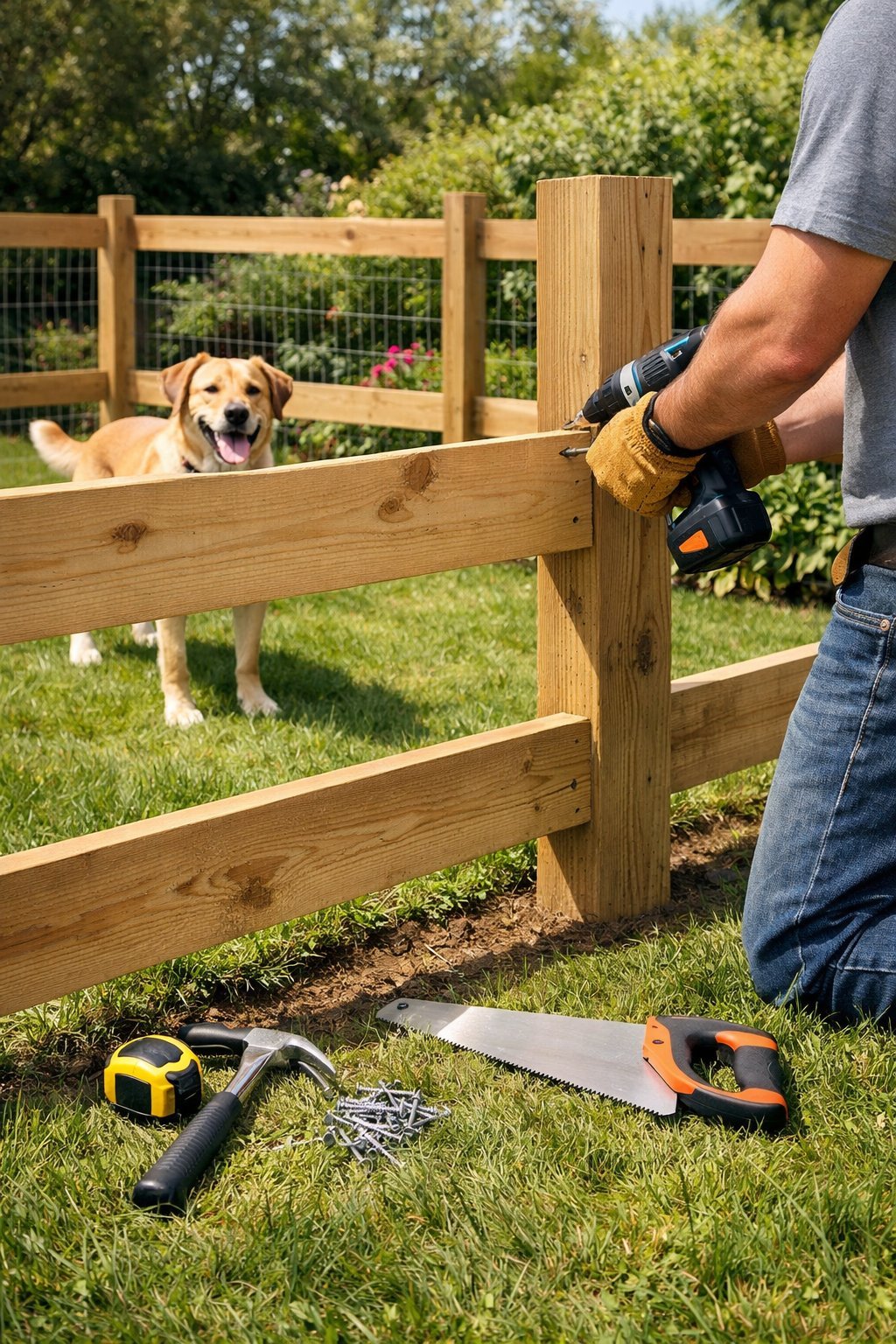
I’ve found that successful fence building starts with careful planning and choosing the right supplies for your yard and dog. The key is matching your fence design to your space while selecting durable materials that fit your budget.
Planning the Dog Fence Design
I always start by measuring my yard and deciding where the fence will go. Walking the fence line helps me spot obstacles like trees, slopes, or underground utilities that might affect my plans.
I mark the corners with stakes and run string between them to visualize the fence layout. This shows me exactly how much material I’ll need and whether the design works for my space.
Dog fence plans come in many styles, from simple wire enclosures to wooden privacy fences. I consider my dog’s size and behavior when choosing a fence height.
Small dogs need at least 4 feet, while larger breeds or jumpers require 6 feet or higher. If my dog digs, I plan to bury the fence 6-12 inches underground or add a dig guard along the bottom.
Selecting Materials and Tools
I’ve built fences with several different materials, and each has benefits. Wire mesh fence or welded wire attached to wooden posts works well for most dogs and costs less than solid wood.
Woven wire is flexible and strong, while metal wire fence panels are easy to install. For posts, I use treated wood or metal T-posts spaced 6-8 feet apart.
I need a post hole digger to create holes at least 2 feet deep for stability. My basic tool list includes:
- Post hole digger or auger
- Level for straight posts
- Wire cutters and pliers
- Zip ties or fence staples
- Drill and screws
- Measuring tape
I buy extra zip ties because they’re perfect for attaching wire to posts quickly. Pre-made dog fence kits include most materials but cost more than buying supplies separately.
Step-by-Step Construction Overview
I start by digging holes for my fence posts using a post hole digger. Each hole should be about one-third the height of the post above ground.
I set the corner posts first, making sure they’re level and plumb. I pack dirt or add concrete around each post for extra stability.
After the corners are secure, I install the line posts between them. Next, I unroll my wire mesh fence or attach panels to the posts.
I work from one corner to the next, pulling the wire tight before securing it. I use fence staples on wood posts or zip ties on metal posts every 6 inches.
For wooden fences, I attach boards horizontally or vertically to the posts with screws. I leave no gaps wider than my dog’s head to prevent escapes.
Adding Gates and Entrances
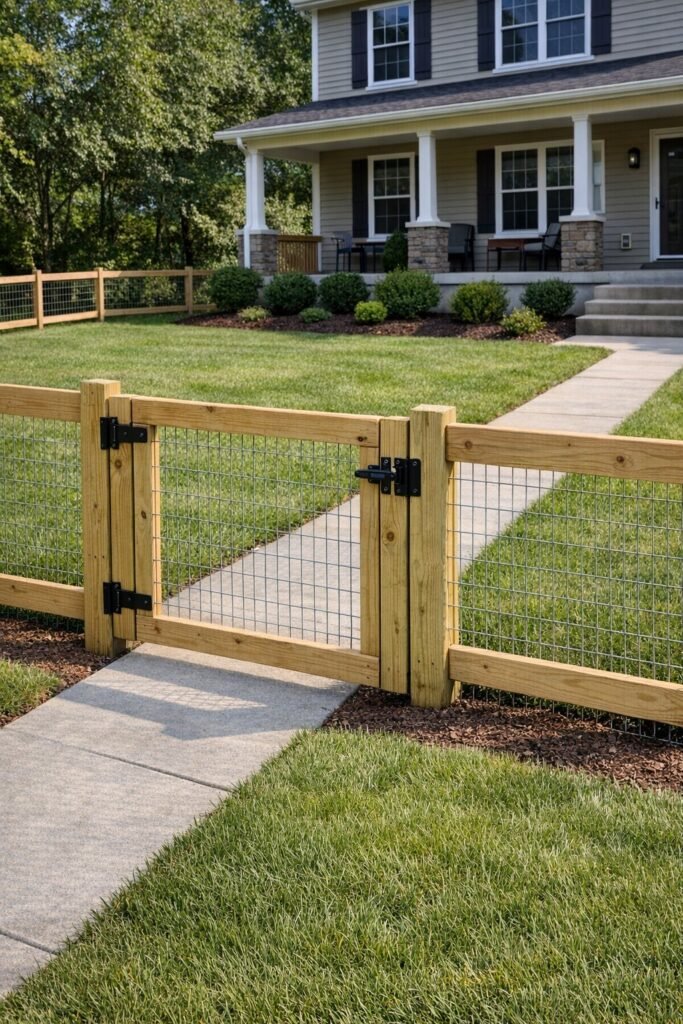
I always include at least one gate for easy access to the fenced area.
I position my fence with gate in a convenient spot where I enter most often.
I build the gate frame slightly smaller than the opening to allow for hinges and clearance.
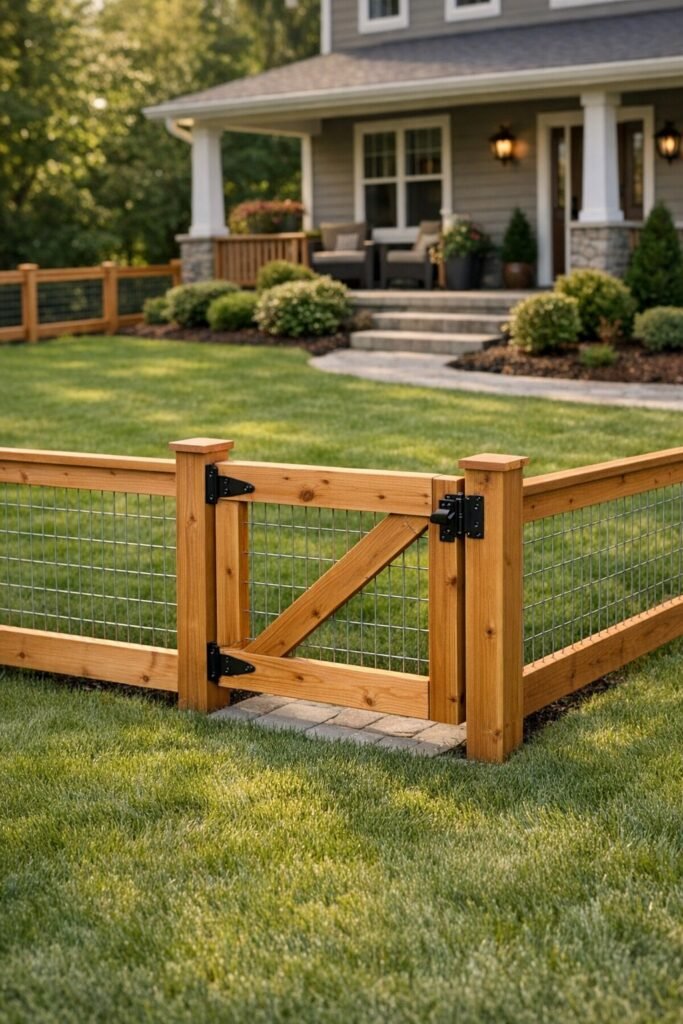
Using 2×4 boards, I create a rectangle and add a diagonal brace for stability.
I attach the same fence material to match the rest of my fence.
I mount heavy-duty hinges on the gate and post, making sure the gate swings freely without dragging.
I add a secure latch that my dog can’t open but I can operate easily.
Spring-loaded latches or barrel bolts work well for keeping dogs contained.
Safety and Functionality for Every Dog
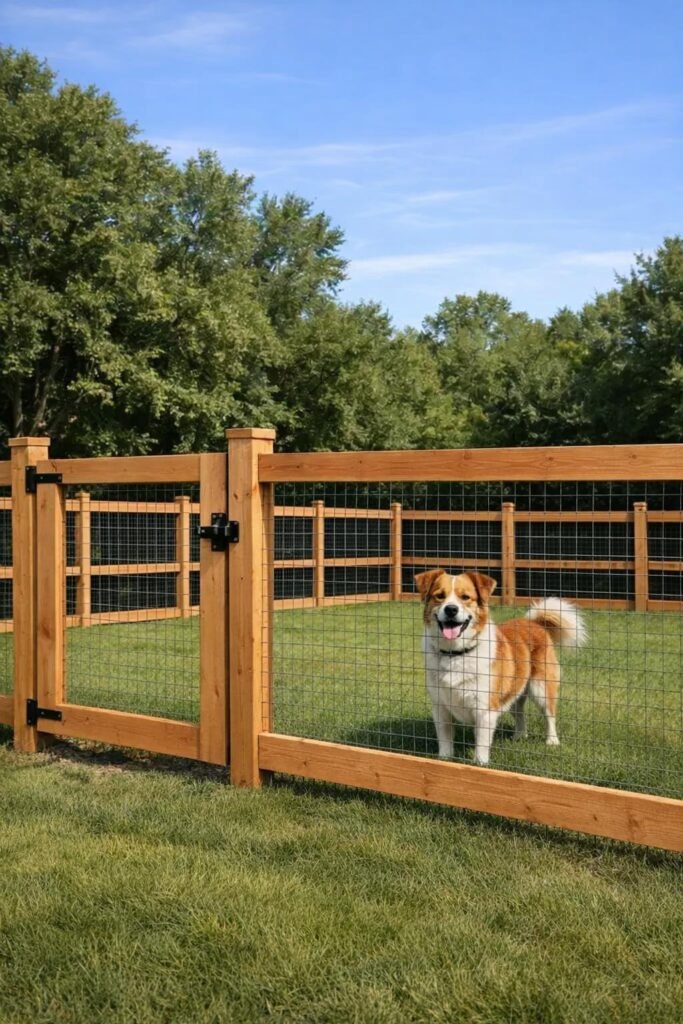
Different dogs have different needs based on their size, behavior, and energy levels.
A fence that works for a calm small dog won’t necessarily contain a large digger or jumper.
Solutions for Diggers and Jumpers
Some dogs are natural escape artists.
If your dog loves to dig, a dig resistant dog run is essential to keep them safely contained.
I recommend burying wire mesh or chicken wire at least 6 to 12 inches below ground level along the fence line.
This creates a barrier that stops most dogs from digging their way out.
Another option is to pour a concrete footer along the base of your fence.
For jumpers, height matters more than anything else.
A tall dog fence of at least 6 feet works well for most large or athletic breeds.
Some dogs can clear 4-foot fences with ease, so I always suggest going higher rather than lower.
You can also add an inward-angled topper to your fence.
This makes it much harder for dogs to get a grip and pull themselves over.
Wire or PVC extensions angled at 45 degrees work great for this purpose.
Indoor Dog Fencing
An indoor fence gives puppies or small dogs a safe space inside your home without locking them in a crate all day.
I find these especially useful during house training or when you need to keep your dog away from certain rooms.
You can build a simple indoor fence using PVC pipes, wooden frames, or even baby gates connected together.
The fence doesn’t need to be as sturdy as outdoor options since indoor dogs typically don’t put as much pressure on barriers.
I suggest making your indoor fence at least 24 to 36 inches tall for small dogs and puppies.
Make sure there are no gaps at the bottom where tiny paws can squeeze through.
The best indoor fences are lightweight enough to move around but stable enough that they won’t tip over easily.
Enclosures for Small Spaces
Not everyone has a large backyard for a full dog run.
A dog enclosure in a small yard or side area can still give your pet room to play safely.
Wire panels work perfectly for creating a compact dog run in tight spaces.
I like using wire dog fence panels because you can arrange them in different shapes to fit odd corners or narrow areas.
These panels are usually 4 to 6 feet wide and can be connected with zip ties or metal clips.
For very small spaces, consider a modular design that you can take apart and store when not in use.
PVC fencing is lightweight and easy to move around, though it works best for calm, smaller dogs.
Considerations for Multiple Dogs
Managing multiple dogs adds complexity to your pet fence planning.
I need to think about how my dogs interact with each other and whether they might gang up to escape.
Multiple dogs can be more destructive than a single pet.
They may work together to dig under fences or push against weak points.
I always reinforce corners and gates when building a dog run for more than one dog.
Space is another important factor.
Each dog needs enough room to move around without feeling crowded or territorial.
I aim for at least 100 square feet per dog in my dog enclosure, though bigger is always better.
Watch how your dogs play together before deciding on the final size and layout of your fence.
Budget-Friendly and Stylish Dog Fence Solutions
Building a dog fence doesn’t mean choosing between saving money and creating an attractive yard.
Materials like pallets, chicken wire, and bamboo can cost as little as $15 to $50 while adding unique character to your outdoor space.
Cheap Dog Fence Ideas
I’ve found that rustic pallet fences cost between $20 and $50, making them one of the most affordable options available.
You can source free pallets from warehouses or online marketplaces, but I always check for the “HT” marking to ensure they’re heat-treated and safe for pets.
Chicken wire offers another budget-friendly solution at just $15 to $40 for materials.
I recommend driving wooden posts every 3 to 4 feet and stapling the wire taut between them.
For dogs that like to dig, I bury the bottom edge or place rocks along the base.
PVC pipe fences work well for temporary setups and cost around $30 to $60.
I cut the pipes to my desired lengths, connect them with elbow and T-joints, then wrap mesh netting around the frame.
This design disassembles easily for storage when not in use.
Fabric mesh pens provide the cheapest option at $15 to $35.
I use deer netting from garden stores wrapped around stakes or a simple PVC frame, securing everything with zip ties.
Decorative and Customizable Designs
I love how lattice panels create an attractive fence while costing only $20 to $50.
These panels look great when stained or painted to match my home’s exterior.
I add climbing plants like jasmine or morning glories for a natural, green wall effect.
Bamboo poles offer a tropical aesthetic for $25 to $50.
I tie the poles horizontally to wooden posts with rope, creating a zen-like enclosure that blends seamlessly into my garden.
Sealing the bamboo with weatherproof coating helps it last longer.
Repurposed garden trellises cost as little as $10 to $30 from thrift stores.
I arrange them in a perimeter and secure them to wooden stakes.
The lattice design allows me to weave string lights or artificial vines through the openings for extra visual appeal.
Wooden picket fences remain a classic choice at $30 to $70.
I paint mine in bright colors or soft pastels to complement my backyard’s style.
Maintenance and Longevity Tips
I apply exterior paint or sealant to all wood fence materials to prevent weathering and rot.
Reapplying every 2 to 3 years keeps my fence looking fresh.
For chicken wire and mesh materials, I choose galvanized options to prevent rust.
I inspect connections monthly and replace worn zip ties or staples before they fail.
I sand rough edges on pallets and wooden pickets to protect my dog from splinters.
Checking for loose boards or gaps every few weeks prevents escape attempts.
When I notice any damage, I repair it immediately.
Concrete or gravel flooring inside the enclosure makes cleaning easier and prevents muddy paws.
I hose down these surfaces weekly to maintain hygiene.
For wooden posts, I treat the buried portions with wood preservative before installation to slow underground decay.