
Home Made Dog Treats: Easy and Healthy Recipes Your Pup Will Love

Home Made Dog Treats – Making treats for your dog at home lets you control what goes into their snacks and saves money compared to buying them from stores. You can create healthy, tasty treats using simple ingredients like peanut butter, pumpkin, and oats that are already in your kitchen. Store-bought treats often contain preservatives and additives that you might want to avoid.
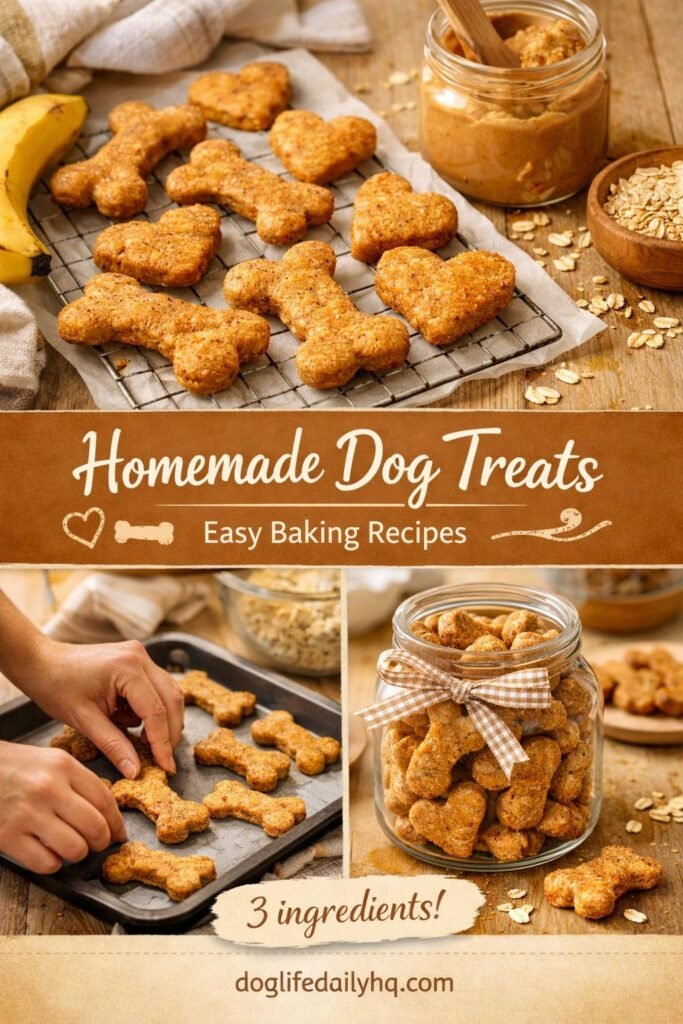
I’ve found that homemade dog treats are surprisingly easy to make, with many recipes requiring just three to five ingredients. Whether your dog prefers crunchy biscuits or soft frozen snacks, you can customize treats to match their taste preferences and dietary needs. Plus, baking for your pet is a fun activity that shows them extra love.
The best part about making your own dog treats is knowing exactly what your pup is eating. You can avoid ingredients that cause allergies or upset stomachs while adding nutrients that support their health. Many veterinarians approve of homemade treats because they contain wholesome ingredients without unnecessary fillers.
Key Takeaways
- Making dog treats at home gives you full control over ingredients and helps you avoid preservatives found in store-bought options
- Most recipes need only three to five simple ingredients that you likely already have in your pantry
- You can customize treats to match your dog’s preferences and dietary requirements while saving money
Benefits of Home made Dog Treats
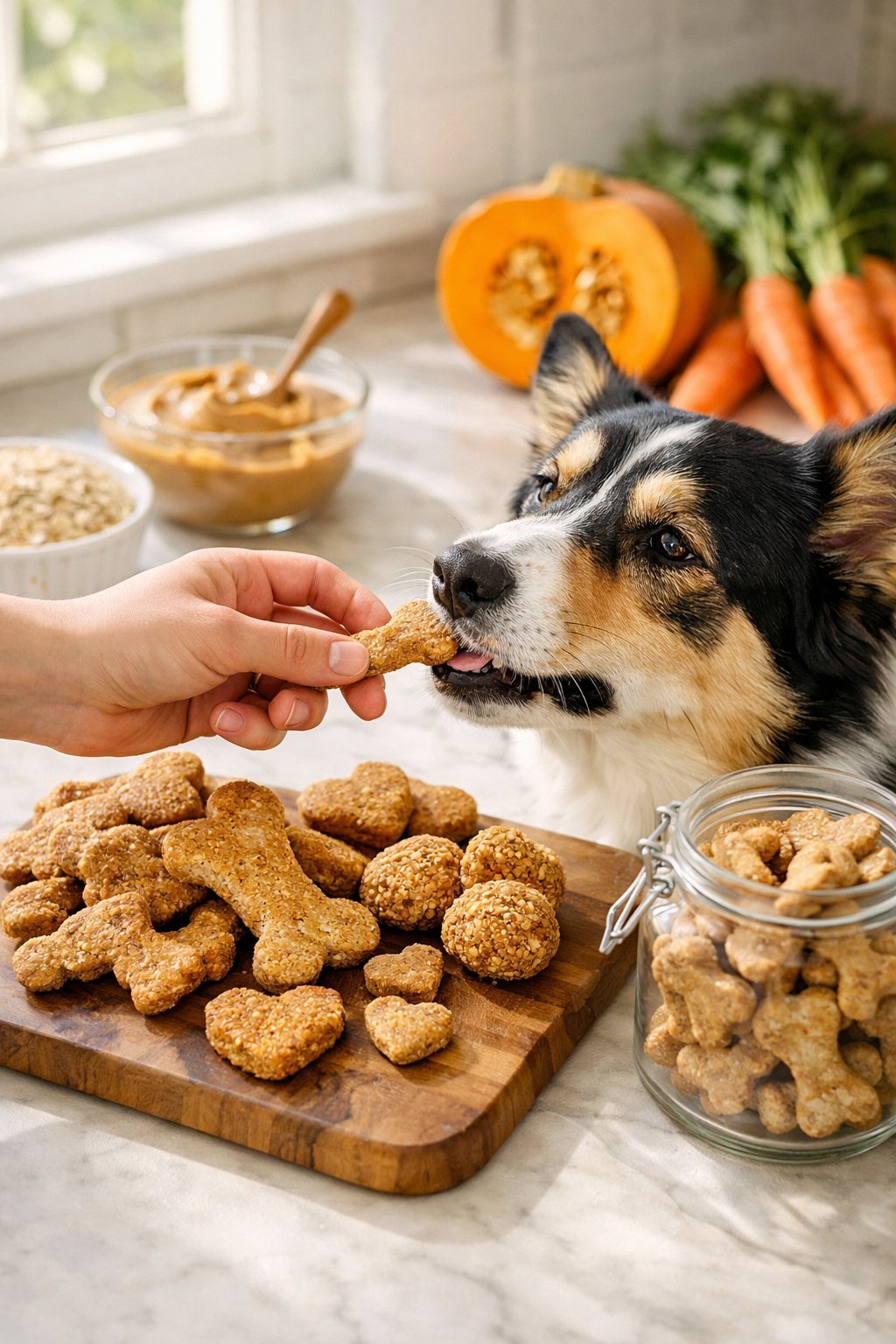
Making treats at home lets me control what goes into my dog’s snacks while saving money and meeting their specific dietary needs.
Healthier Ingredients
When I make treats at home, I know exactly what my dog eats. Store-bought snacks often contain artificial preservatives and fillers that can cause allergies or upset stomachs. I skip those and use fresh, whole foods instead.
I can choose ingredients like peanut butter, pumpkin, sweet potatoes, apples, and oats. These foods are safe and packed with nutrients my dog needs. Fresh pumpkin adds fiber for digestion, while oats provide energy without harsh chemicals.
By selecting natural options, I avoid ingredients that might harm my pet. No mystery additives or strange preservatives. Just real food that I’d feel comfortable eating myself.
Dietary Customization
Making dog treats at home gives me complete control over the ingredients, which helps when my dog has special needs. If my pet has food allergies, I can leave out problem ingredients entirely. Dogs with sensitive stomachs need carefully chosen foods, and homemade treats let me adjust recipes to fit.
I can create treats for specific health goals too. Low-calorie snacks work great for dogs watching their weight. High-protein options suit active dogs who need extra energy.
Homemade treats provide an energy boost with endless benefits tailored to each dog’s requirements. I adjust portion sizes and ingredients based on my dog’s age, size, and activity level.
Cost Savings
Making treats at home costs less than buying premium store brands. I buy basic ingredients in bulk like flour, oats, and peanut butter. These items make dozens of treats for just a few dollars.
One bag of quality store-bought treats might cost $10 to $15. That same amount buys ingredients for several batches of homemade snacks. The savings add up quickly, especially for dogs who eat treats daily.
I also reduce waste since I control batch sizes. No more half-eaten bags going stale in the pantry.
Essential Ingredients for Homemade Dog Treats
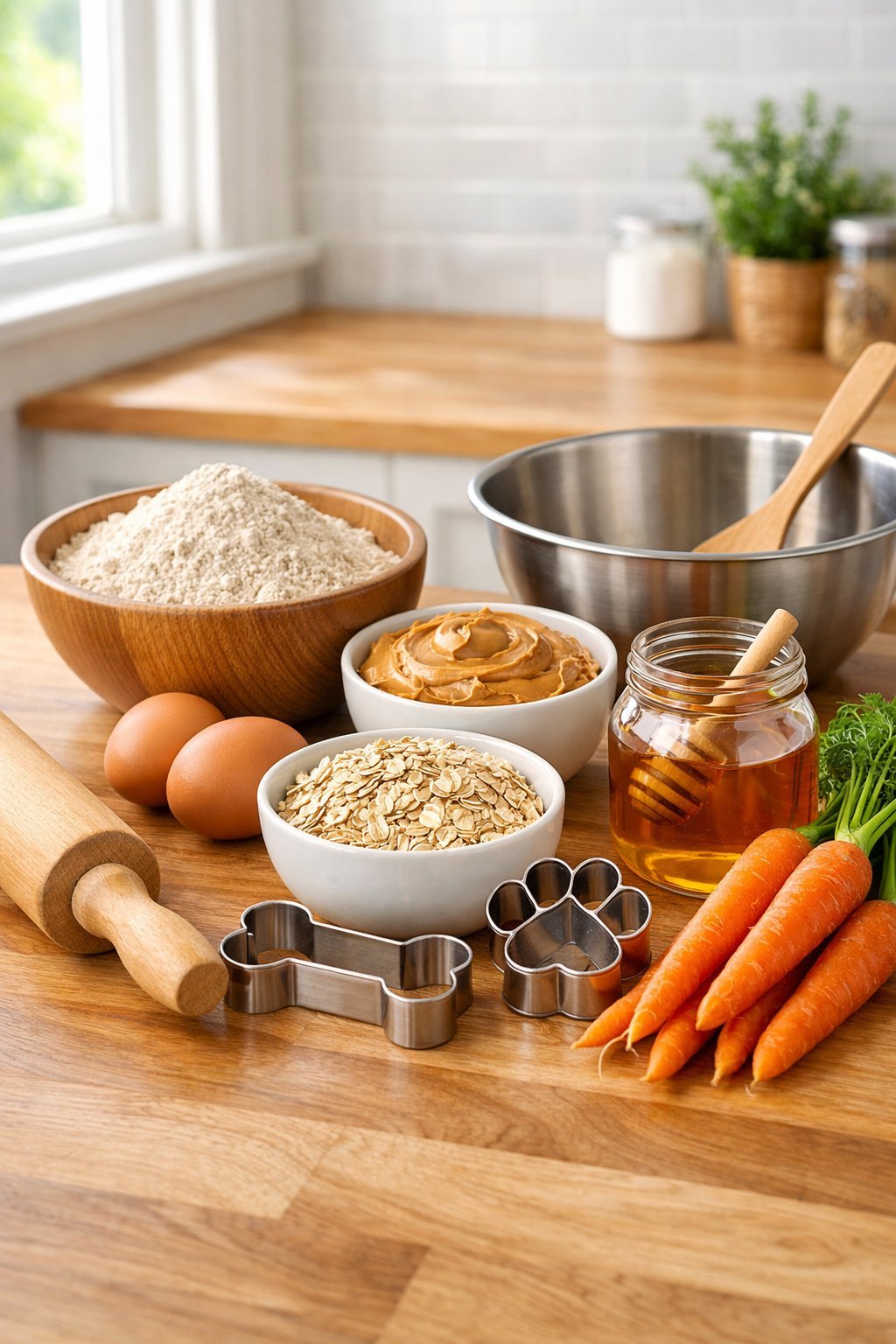
Making treats at home means choosing ingredients that are both safe and healthy for your dog. I focus on selecting quality flours as my base, adding nutritious extras for flavor and health benefits, and knowing which common foods to keep out of the bowl.
Dog-Safe Flours
Whole wheat flour works as my go-to base for most dog treats. It provides fiber and essential nutrients that support digestion. I use it in nearly all my baking because it’s affordable and easy to find.
For dogs with wheat sensitivities, I switch to oat flour. I make it myself by grinding regular oats in a blender. It’s gentle on sensitive stomachs and adds a mild, slightly sweet taste dogs enjoy.
Rice flour is another excellent option for dogs with allergies. Brown rice flour offers more nutrients than white rice flour. I’ve found it creates a slightly crunchier texture that some dogs prefer.
Coconut flour absorbs a lot of liquid, so I use less of it in recipes. A little goes a long way with this option. It adds healthy fats and works well mixed with other flours.
Nutritious Additions
Peanut butter ranks as one of the most popular ingredients in homemade dog treats. I always choose unsalted versions without xylitol, which is toxic to dogs. It adds protein and makes treats irresistible.
Pumpkin puree provides fiber and vitamins A and C. I use plain canned pumpkin, not pie filling. It helps with digestion and adds moisture to treats.
Sweet potatoes offer beta-carotene and vitamins. I bake them until soft, then mash them into my treat dough. They naturally sweeten treats without added sugar.
Eggs bind ingredients together and add protein. I use them in most of my recipes. They help treats hold their shape during baking.
Oats add fiber and give treats a hearty texture. I prefer rolled oats over instant varieties. They’re filling and budget-friendly.
Ingredients to Avoid
Xylitol is extremely dangerous for dogs and appears in many sugar-free products. I check every label carefully, especially on peanut butter and baked goods. Even small amounts can cause serious health problems.
Chocolate contains theobromine, which dogs cannot process safely. I never add cocoa powder or chocolate chips to any dog treats. Dark chocolate poses the highest risk.
Grapes and raisins can cause kidney failure in dogs. I keep these completely out of my kitchen when baking for my pup. The exact toxic dose varies by dog, so I avoid them entirely.
Onions and garlic damage red blood cells in dogs. I skip these even in small amounts. Many store-bought broths contain these, so I read labels carefully.
Macadamia nuts cause weakness and tremors in dogs. I stick to dog-safe options like unsalted peanut butter instead. The symptoms can appear within 12 hours of eating them.
Popular Homemade Dog Treat Recipes
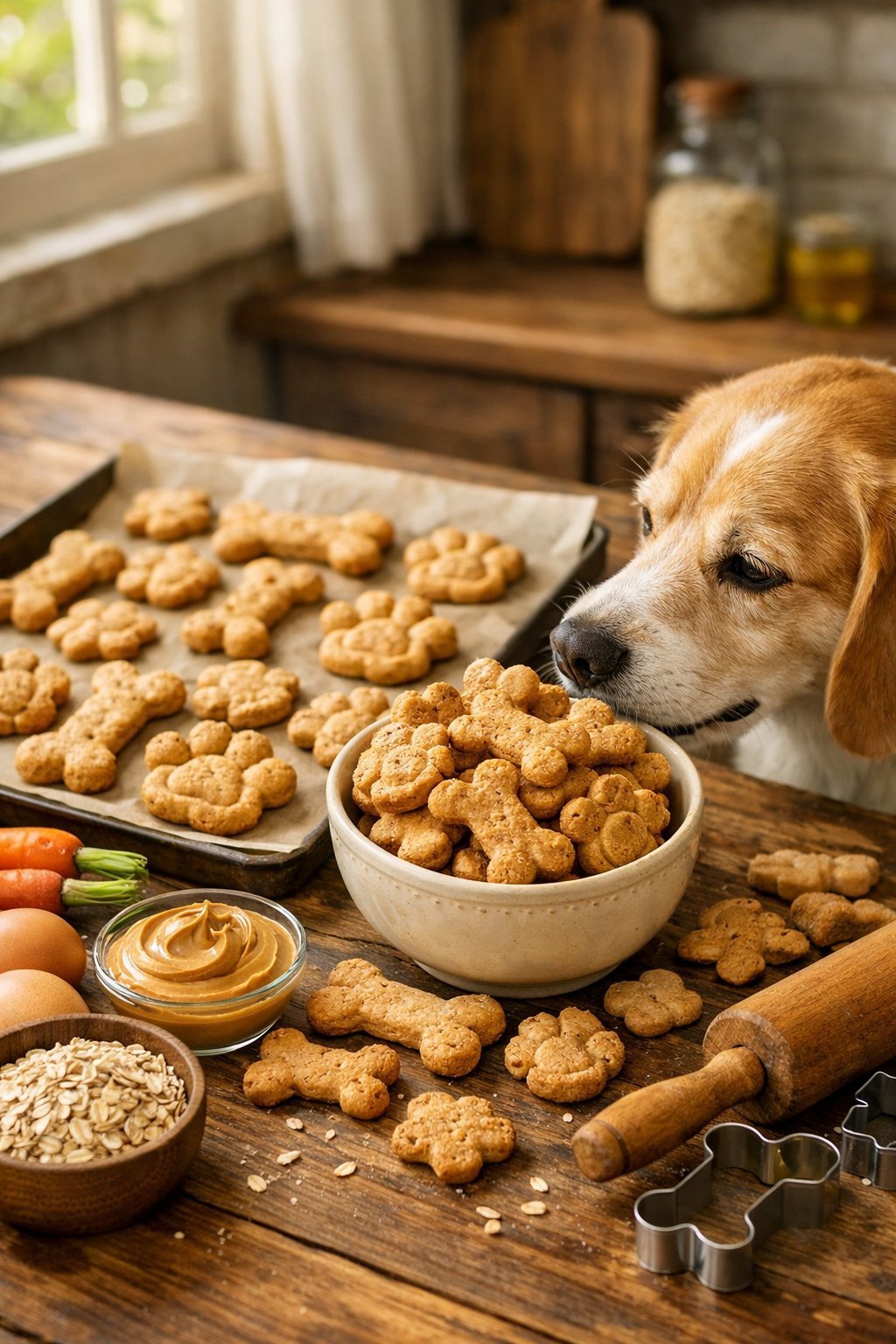
Making treats at home lets you control what goes into your dog’s snacks while saving money. These four recipes use simple ingredients you probably already have in your kitchen.
Peanut Butter Biscuits
I love making peanut butter biscuits because they only need three basic ingredients. You’ll need two cups of whole wheat flour, one cup of natural peanut butter, and two eggs.
Mix everything together until you get a firm dough. Roll it out to about half an inch thick and cut it into shapes with cookie cutters. My dogs go crazy for bone shapes!
Bake the biscuits at 350°F for 20 minutes until they turn golden brown. Let them cool completely before giving them to your pup. They’ll stay fresh in an airtight container for up to two weeks.
Important tip: Always check that your peanut butter doesn’t contain xylitol, which is toxic to dogs. Stick with plain, unsweetened peanut butter.
Pumpkin and Oat Cookies
Pumpkin cookies are perfect for dogs with sensitive stomachs. I use one cup of canned pumpkin puree (not pie filling), two and a half cups of oat flour, and one egg.
The mixture should be thick but spreadable. Drop spoonfuls onto a baking sheet lined with parchment paper. I usually make them about the size of a quarter.
Bake at 350°F for 25 to 30 minutes until the edges get crispy. These homemade dog treat recipes are gentle on digestion and low in calories.
You can add a tablespoon of honey if your dog prefers sweeter treats. Store them in the fridge for up to a week or freeze them for longer.
Chicken and Rice Bites
I make these protein-packed bites when my dogs need something more filling. Cook one cup of rice according to package directions and let it cool. Mix it with one cup of finely chopped cooked chicken and one egg.
Form the mixture into small balls about an inch wide. Place them on a greased baking sheet and flatten them slightly with your palm.
Bake at 350°F for 15 to 18 minutes until firm. These treats work great for training because they’re easy to break into smaller pieces. Keep them refrigerated and use within five days since they contain meat.
Frozen Yogurt Snacks
Frozen treats are my go-to during summer months. Mix two cups of plain Greek yogurt with mashed banana or blueberries. Pour the mixture into ice cube trays or silicone molds.
Freeze for at least four hours until solid. Pop them out and store in a freezer bag for up to three months.
Serving tips:
- Give smaller dogs half a cube at a time
- Let larger dogs enjoy a full cube
- Offer them outside to avoid messy floors
I like adding a small spoonful of peanut butter to each cube before freezing. The yogurt provides probiotics that support digestive health while keeping your dog cool.
Baking and Storage Tips
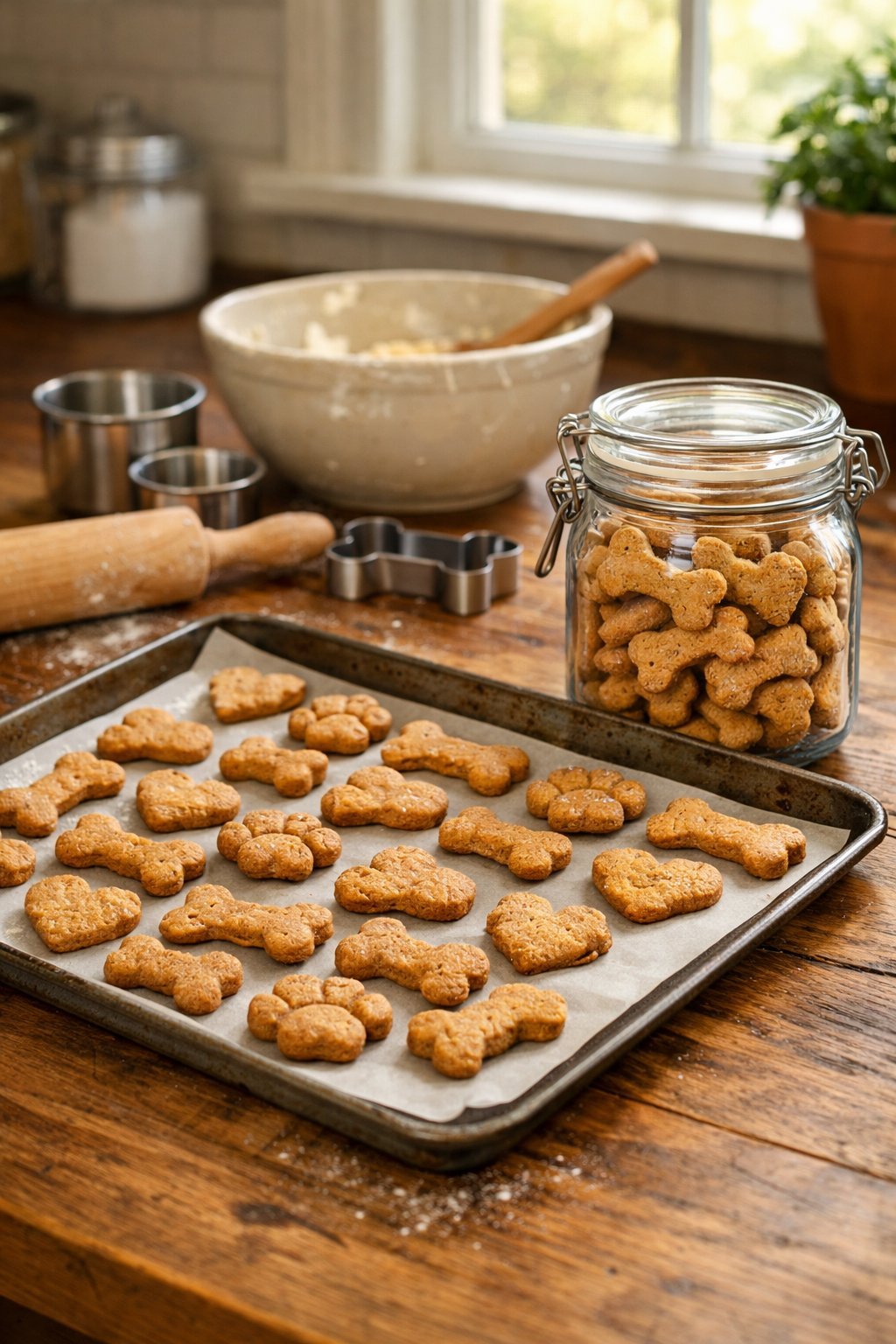
Getting your treats fully cooled and stored correctly makes the difference between snacks that last days versus weeks. The ingredients you choose and how you package them determine whether your dog enjoys fresh treats or you end up tossing spoiled batches.
Safe Baking Techniques
I always bake my dog treats at lower temperatures for longer periods. This method removes more moisture from the treats, which helps them stay fresh longer.
Most recipes work well between 300°F and 350°F. I bake until the treats feel completely dry and hard to the touch.
Never store treats while they’re still warm. Cooling treats completely before storing prevents condensation inside containers. I let mine cool on wire racks for at least two hours.
For extra-dry treats that last longer, I leave softer treats in the turned-off oven with the door cracked open. This removes even more moisture without burning them.
I avoid ingredients that spoil quickly like fresh meat or dairy unless I plan to freeze the treats right away. Peanut butter, pumpkin puree, and oats are stable options that extend shelf life.
Proper Storage Methods
I store crunchy treats in airtight glass jars or sealed plastic containers at room temperature. They typically last one to two weeks this way.
Storage times for homemade dog treats depend on where you keep them:
- Counter: 1-2 weeks for dry treats
- Refrigerator: 1-2 weeks for soft or meat-based treats
- Freezer: 2-3 months for all treat types
I label each container with the date I made the batch. This helps me rotate treats and use older ones first.
For freezer storage, I double-bag treats in freezer-safe bags to prevent freezer burn. I remove as much air as possible before sealing.
Soft treats with moisture need refrigeration within two hours of cooling. I keep these in sealed containers on a low shelf where my kids can’t accidentally leave them out.
Fun Presentation and Serving Ideas
Making homemade dog treats look special adds extra joy for both pets and their owners. Creative shapes and thoughtful packaging turn simple treats into memorable gifts.
Personalized Treat Shapes
I love using cookie cutters to make treats that match different occasions and personalities. Bone-shaped cutters are classic, but I also use hearts for Valentine’s Day, pumpkins for fall, and stars for celebrations. Pet-themed shapes like paw prints, fire hydrants, and dog houses make the treats feel more special.
For a personal touch, I press my dog’s initial into each treat before baking using alphabet stamps or small letter cutters. Some bakers even create custom shapes that look like the recipient’s specific dog breed. I keep different sized cutters on hand since small dogs need smaller treats while large dogs can enjoy bigger ones.
The shape affects baking time, so I watch thin or small treats carefully to prevent burning. Thicker shapes need a few extra minutes in the oven to bake through completely.
Gift Wrapping for Pet Lovers
Thoughtful packaging transforms simple treats into special gifts that dog owners appreciate. I use clear cellophane bags tied with colorful ribbons so people can see the treats inside. Mason jars work well for storing multiple treats and look nice sitting on a counter.
For a rustic look, I wrap treats in brown kraft paper and tie them with twine. Adding a handwritten label with the treat name and ingredients helps owners know what’s inside. Mini bundles paired with a small toy or bandana create complete gift sets.
I include the baking date and storage instructions on each package. Airtight containers keep treats fresh longer and make practical gifts that owners can reuse.
Printable Recipe Card
Want just the essential recipe details without scrolling through the article? Get our printable recipe card with just the ingredients and instructions.
