
Dog Training Made Simple: A Friendly Guide to Raising Your Perfect Companion

Dog Training creates a stronger bond between you and your pet while making daily life easier for both of you. Whether you’re dealing with a new puppy or an older dog with habits to break, the right training approach makes all the difference.
Effective dog training combines positive reinforcement, consistency, and patience to teach commands, prevent behavioral problems, and help your dog become a well-adjusted family member.

I’ve seen firsthand how proper training transforms not just dogs but entire households. From basic commands like sit and stay to addressing issues like barking or jumping, training gives dogs the structure they need to feel secure.
Many professional dog trainers in Los Angeles and across the country now use positive reinforcement methods that focus on rewarding good behavior rather than punishing mistakes.
The good news is that any dog can learn at any age. While puppies may pick up new skills faster, older dogs benefit just as much from training.
Understanding how dogs learn and communicating clearly with your pet sets the foundation for success in everything from basic obedience to solving specific behavioral challenges.
Key Takeaways
- Dog training strengthens your bond with your pet and makes everyday life more manageable through consistent practice
- Positive reinforcement methods work better than punishment and are endorsed by veterinarians and animal welfare organizations
- Both puppies and adult dogs can learn new skills when you use clear communication and patient repetition
Fundamentals of Dog Training
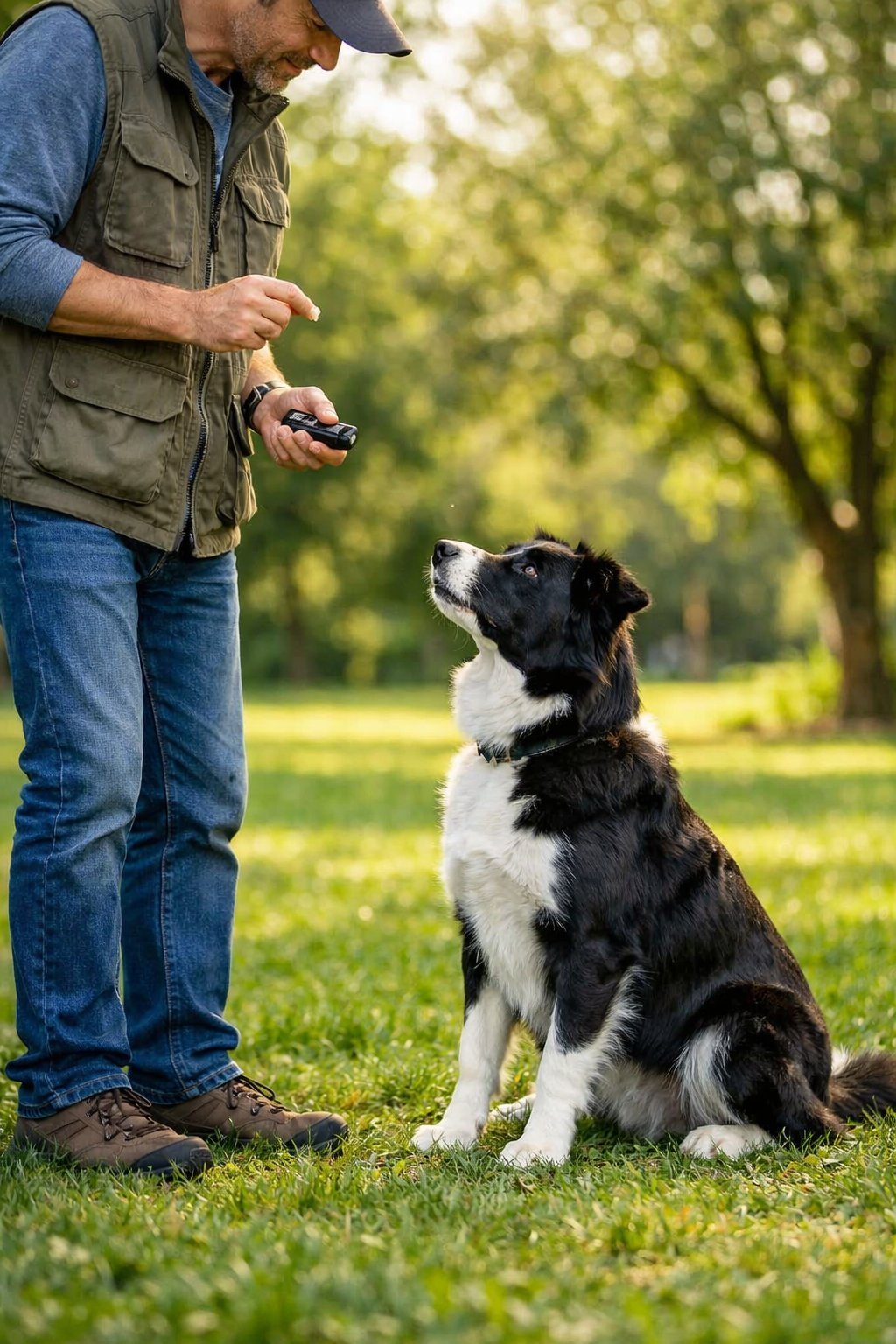
Training your dog successfully starts with reward-based methods, recognizing how your dog thinks and communicates, and creating goals that match your dog’s abilities and your lifestyle.
Positive Reinforcement Methods
Positive reinforcement training means rewarding your dog when they do something right instead of punishing them for mistakes. I give my dog treats, praise, or playtime immediately after they perform the behavior I want.
This helps them connect the action with something good. The timing matters a lot.
I reward within one to two seconds of the correct behavior so my dog understands what earned the reward. If I wait too long, my dog might not make the connection.
I keep training sessions short and fun. Dogs learn better in five to ten minute sessions rather than long, boring ones.
I also make sure to use rewards my dog actually cares about, which might be food, toys, or even just my excited voice.
Understanding Your Dog’s Behavior
Dogs communicate through body language, not words. I watch my dog’s tail, ears, and overall posture to understand how they’re feeling.
A relaxed dog has soft eyes and a loose body, while a scared dog might have tucked ears and a low tail. Dogs are always learning, whether I’m actively training them or not.
My dog picks up on my habits and routines. If I always grab the leash before a walk, my dog learns that signal and gets excited.
I also recognize that some behaviors are natural for dogs. Barking, digging, and chewing aren’t problems to fix but instincts to redirect.
Instead of stopping these behaviors completely, I give my dog appropriate outlets like chew toys or designated digging spots.
Setting Realistic Training Goals
I start with basic commands like sit, stay, and come before moving to advanced tricks. Building these foundation skills makes everything else easier.
Each dog learns at their own pace, so I don’t compare my progress to others. I break big goals into smaller steps.
Teaching “stay” might start with my dog staying for just two seconds, then five seconds, then ten seconds. Each small success builds confidence for both of us.
Age and breed affect what I can expect. Puppies have short attention spans, while older dogs might need more repetition.
Some breeds were developed for specific jobs, which influences their natural behaviors and learning style.
Basic Obedience Skills

Teaching your dog fundamental commands creates a foundation for good behavior and strengthens the bond between you and your pup. These core skills help keep your dog safe in everyday situations and make life together more enjoyable.
Sit and Stay Commands
The sit command is usually the first thing I teach because it’s simple and useful in many situations. To teach sit, I hold a treat close to my dog’s nose and slowly move my hand up, which causes their head to follow the treat and their bottom to lower.
The moment their rear touches the ground, I say “sit” and give them the treat. Once my dog masters sit, I move on to stay.
I start by asking my dog to sit, then I hold my palm out and say “stay.” I take one step back and immediately return to reward them if they stayed put.
Teaching basic cues helps strengthen the human-canine bond and creates habits that last a lifetime. I gradually increase the distance and duration, always returning to my dog to give them the treat rather than calling them to me.
This prevents confusion with the recall command.
Recall Training
Getting my dog to come when called can literally save their life. I start recall training in a quiet, enclosed space with minimal distractions.
I say my dog’s name followed by “come” in an excited, happy voice while backing away from them. When they reach me, I give them high-value treats and lots of praise.
I never call my dog to me for something unpleasant like a bath or nail trimming, as this creates negative associations. I practice recall multiple times throughout the day during normal activities.
Short, frequent training sessions work better than long ones. I always make coming to me more rewarding than whatever else my dog finds interesting.
Once my dog reliably comes indoors, I move to a fenced outdoor area before trying longer distances.
Loose Leash Walking
Walking without pulling makes outings pleasant for both me and my dog. I start by teaching my dog that pulling gets them nowhere—literally.
When the leash gets tight, I stop moving completely and wait for my dog to look back at me or slacken the leash. The second the leash loosens, I praise them and start walking again.
This teaches my dog that a loose leash means we keep moving, but tension means we stop. I keep treats on the side where I want my dog to walk and reward them frequently when they’re in the right position.
I use a consistent cue like “let’s go” or “with me” to signal that we’re walking together. Basic obedience training techniques using positive reinforcement help shape good habits quickly.
Changing directions frequently keeps my dog focused on me instead of everything around us. I make sure to practice in different locations since dogs don’t automatically generalize skills to new environments.
Advanced Training Techniques
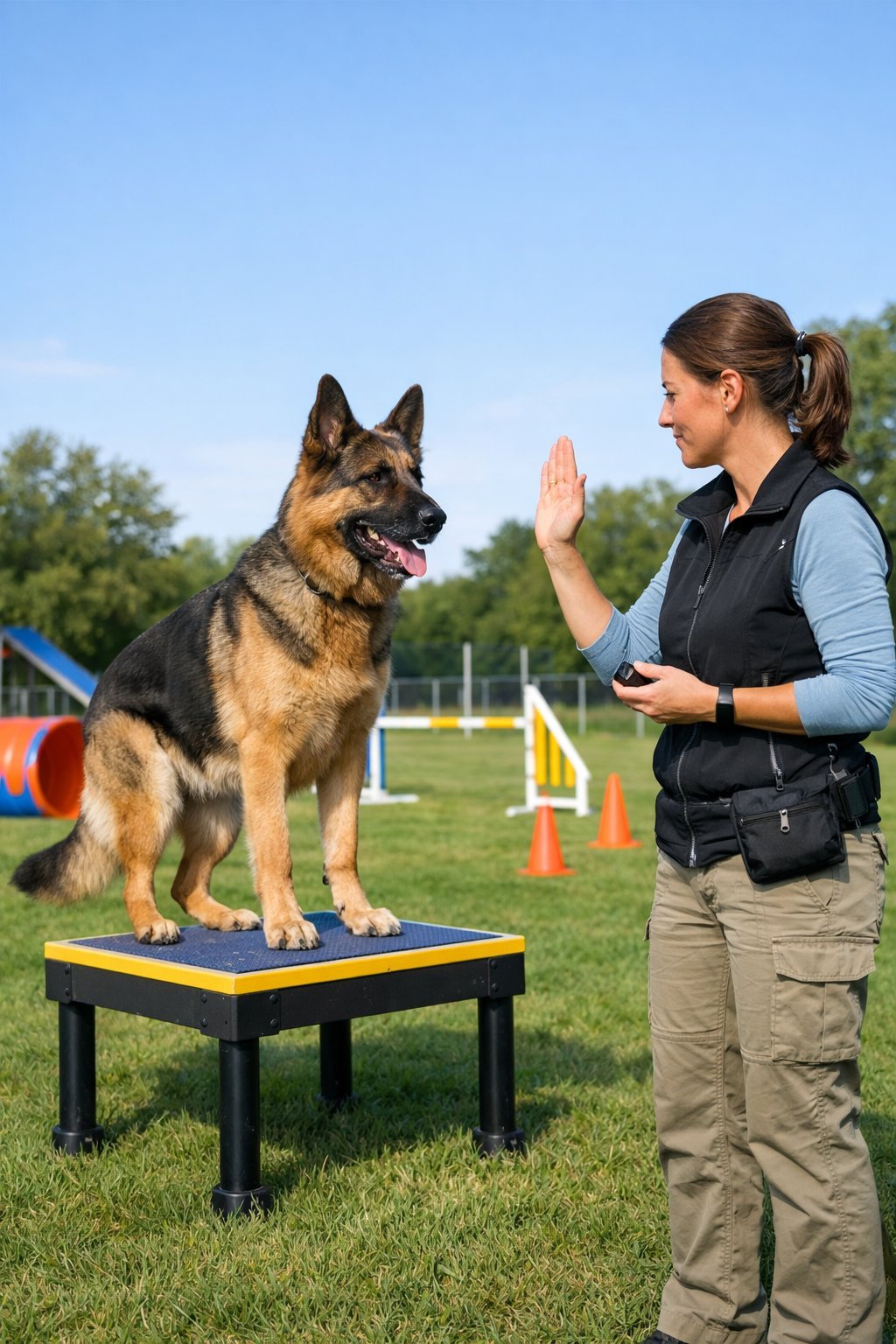
Building stronger control and reliability requires teaching your dog to respond in challenging situations. These methods focus on self-control, working at greater distances, and performing commands despite distractions.
Impulse Control Exercises
I teach impulse control by asking my dog to wait before getting what they want. This builds patience and helps prevent jumping, bolting, or grabbing food without permission.
The “leave it” command is essential for impulse control. I place a treat on the floor and cover it with my hand when my dog approaches.
Once they back away or look at me instead of the treat, I reward them with a different treat from my other hand.
Key impulse control exercises I use:
- Wait at doorways until released
- Sit and stay before meals
- Ignore treats placed on paws
- Hold a down-stay while toys roll past
Advanced obedience training techniques emphasize that these exercises improve communication and mental stimulation. I practice impulse control daily in short sessions of 3-5 minutes.
This prevents my dog from getting frustrated while building their self-control gradually.
Distance and Duration Challenges
I increase the difficulty of basic commands by adding distance and extending how long my dog holds a position. This builds reliability when I’m not standing right next to them.
For distance work, I start with my dog in a stay position. I take one step back, wait two seconds, then return and reward.
I gradually increase the distance to 10, 20, then 30 feet over several weeks. Duration training requires patience.
I ask my dog to hold a sit or down position for longer periods. I begin with 10 seconds and add 5-10 seconds each session until they can hold the position for several minutes.
Distance commands and off-leash obedience require consistent practice. I combine both elements by moving away while my dog stays in position for extended periods.
If my dog breaks the stay, I reduce the difficulty and rebuild from there.
Distraction Proofing
I train my dog to respond to commands even when exciting things happen around them. This ensures reliability in real-world situations like parks, busy streets, or when visitors arrive.
I start with mild distractions in a controlled environment. I might have someone walk past while my dog holds a stay, or practice recalls while another person bounces a ball nearby.
As my dog succeeds, I introduce stronger distractions like other dogs, food, or exciting toys. The three-step process I follow:
- Low distraction: Practice in a quiet room or familiar yard
- Medium distraction: Train with background noise or people present
- High distraction: Work in parks, near playgrounds, or around other animals
I never move to the next level until my dog responds correctly 8 out of 10 times at the current level. This gradual approach prevents overwhelming my dog and builds confidence in challenging environments.
Solving Common Behavioral Issues

I’ve found that most dog behavior problems stem from unmet needs, lack of consistency, or misunderstanding between you and your pet. Early intervention and consistent training create meaningful and lasting change by addressing the root cause rather than just the symptoms.
House Training Solutions
House training accidents frustrate many dog owners, but I’ve learned that success comes down to timing and routine. I recommend taking your dog outside first thing in the morning, after meals, after naps, and before bedtime.
Puppies typically need bathroom breaks every two to three hours. When your dog eliminates in the right spot, I suggest rewarding them immediately with treats and praise.
This positive reinforcement helps them understand what you want. If accidents happen inside, clean them thoroughly with an enzyme cleaner to remove odors that might attract your dog back to the same spot.
I never punish my dog for indoor accidents, especially if I didn’t catch them in the act. Punishment creates fear and confusion without teaching the right behavior.
Instead, I focus on preventing accidents by watching for signs like sniffing, circling, or whining. Crate training can speed up the house training process since dogs naturally avoid soiling their sleeping area.
I make sure the crate is just large enough for my dog to stand, turn around, and lie down comfortably.
Excessive Barking Management
I’ve discovered that understanding what triggers excessive barking is the first step to controlling it. Dogs bark to alert you, seek attention, express anxiety, or respond to other dogs.
For attention-seeking barking, I ignore my dog completely until they’re quiet for at least five seconds, then reward the silence. I never yell at my dog to stop barking because they perceive this as me joining in.
When my dog barks at passersby or other dogs, I redirect their attention with a command like “look at me.” I reward them for focusing on me instead.
I teach the “quiet” command by letting my dog bark a few times, then saying “quiet” while holding a treat near their nose. Most dogs stop barking to sniff the treat.
I immediately praise and reward them for the silence. If my dog barks when left alone, I address the underlying anxiety rather than just the noise.
I also make sure my dog gets enough physical exercise and mental stimulation throughout the day. Tired dogs bark less.
Dealing With Separation Anxiety
Separation anxiety shows up as destructive behavior, excessive barking, or house soiling when I leave. I start addressing this by making my departures and arrivals low-key to reduce the emotional intensity of these moments.
I practice leaving for very short periods, starting with just 30 seconds, then gradually increase the time. This helps my dog learn that I always come back.
I never make a big fuss when leaving or returning home. This reinforces anxious behavior.
I create positive associations with alone time by giving my dog a special treat or puzzle toy that they only get when I leave. I make sure to remove it when I return so it stays special.
Interactive toys keep my dog’s mind busy and distracted from my absence. Exercise before I leave helps reduce anxiety since a tired dog is generally calmer.
I also establish a consistent routine so my dog knows what to expect each day. For severe cases, I consult with my veterinarian about whether anxiety medication might help alongside behavior modification training.
Curbing Jumping and Pulling
I prevent jumping by teaching my dog that four paws on the floor gets attention while jumping gets ignored. When my dog jumps on me, I turn away and cross my arms without making eye contact or speaking.
The moment all four paws touch the ground, I immediately give praise and attention. I ask visitors to follow the same rule so my dog receives consistent messages.
If my dog struggles with impulse control, I have them sit before greeting people. I practice this at the door by not opening it until my dog sits calmly.
For leash pulling, I stop walking the instant my dog pulls and only continue when the leash has slack. This teaches my dog that pulling doesn’t get them where they want to go.
I reward my dog with treats and praise when they walk beside me with a loose leash. I use a front-clip harness rather than a collar since it gives me better control and reduces strain on my dog’s neck.
I keep training sessions short and positive. I change directions frequently during walks to keep my dog’s attention on me.
Socialization and Enrichment
Dogs need regular interaction with other animals and people to develop confidence and good behavior. Mental challenges keep their minds sharp and prevent boredom-related problems.
Safe Introduction to Other Dogs
I always recommend starting with controlled, one-on-one meetings in neutral spaces like parks or quiet sidewalks. This approach helps dogs feel less territorial and more open to making friends.
Before introducing dogs, I make sure both animals are calm and on leash. I let them sniff each other briefly, then create distance by walking parallel to each other.
This gives them time to process the new experience without feeling overwhelmed.
Signs of positive interaction include:
- Loose, wiggly body language
- Play bows (front end down, rear end up)
- Taking turns chasing
- Brief pauses during play
I watch for stiff postures, raised hackles, or prolonged staring, which signal discomfort. If I see these signs, I calmly separate the dogs and try again later.
Dog socialization classes focus on obedience first to ensure dogs have self-control before meeting other animals.
Exposing Your Dog to New Environments
I take my dog to different locations regularly to build their confidence around unfamiliar sights and sounds. Starting with quiet areas like empty parking lots helps ease them into busier settings.
Each new environment should feel positive. I bring treats and let my dog explore at their own pace without forcing interactions.
Short visits of 10-15 minutes work better than overwhelming them with long outings.
Good places to practice include:
- Pet-friendly stores
- outdoor cafes
- walking trails
- quiet neighborhoods
I gradually increase difficulty by visiting busier locations as my dog becomes comfortable. The goal is helping them stay relaxed whether they’re at home or somewhere completely new.
Mental Stimulation Activities
I use puzzle toys and training games to keep my dog’s brain active between walks.
Food puzzles make dogs work for their meals by hiding treats in compartments they must open. I also practice scent games by hiding treats around the house for my dog to find.
These activities tap into their natural hunting instincts.
Training new tricks provides excellent mental workouts. Even spending 5-10 minutes teaching simple commands like “spin” or “touch” challenges their thinking.
I rotate different activities throughout the week to maintain their interest and prevent boredom.
