
Dog Gravy Recipe: Simple Homemade Topper to Make Your Pup’s Meals Irresistible

Dog Gravy Recipe – Does your dog turn up their nose at dinner time? I’ve been there, watching my pup push their bowl around instead of eating.
A homemade dog gravy is a simple food topper you can make in about 20 minutes using basic ingredients like chicken broth and vegetables that transforms plain kibble into a meal your dog will actually want to eat.
Making homemade dog gravy isn’t just about adding flavor. It helps keep your dog hydrated and lets you control exactly what goes into their food.
You can skip the mystery ingredients found in store-bought options and use real, wholesome foods instead. I’ll show you how to make a basic gravy recipe that works for most dogs, plus ways to adjust it for picky eaters or dogs with special dietary needs.
You can store leftover gravy in the refrigerator for up to 3 days or freeze it in ice cube trays for easy serving later.
Key Takeaways
- Homemade dog gravy makes plain kibble more appealing while adding hydration and nutrition to your dog’s meals
- You can make basic dog gravy in 20 minutes using simple ingredients like broth and vegetables
- Gravy can be customized for different dietary needs and stored in the fridge or freezer for convenient use
Why Add Gravy to Your Dog’s Food?
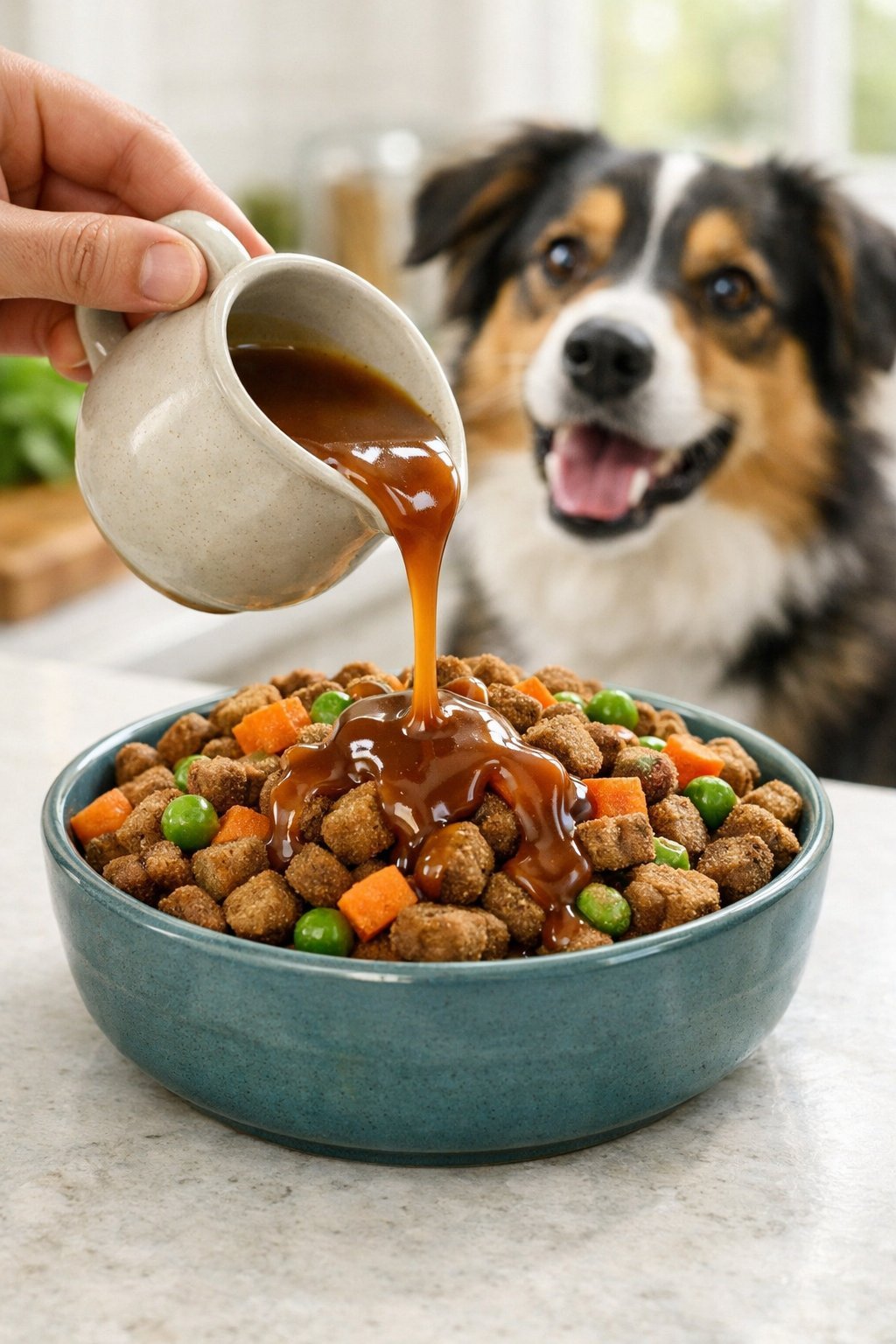
Adding gravy to your dog’s meals does more than just make dinner taste better. It provides real health benefits and helps dogs who need extra moisture or encouragement to eat.
Health Benefits of Dog Gravy
I’ve found that homemade dog gravy adds important nutrients to my dog’s diet. When I use bone broth as a base, it provides minerals like calcium and phosphorus that support joint health.
The protein content in gravy made with meat or organ meats helps maintain muscle mass. I can also add healthy fats that support my dog’s skin and coat health.
Gravy helps dogs absorb vitamins better since some nutrients need fat to be properly used by the body. When I make gravy at home, I control exactly what goes in.
This means no preservatives, artificial flavors, or fillers that might upset my dog’s stomach. For older dogs or those recovering from illness, gravy provides extra nutrition in an easy-to-eat form.
The liquid consistency makes it gentle on sensitive stomachs.
Improving Palatability and Hydration
My picky eater finally gets excited about meals when I add gravy. The enhanced flavor and smell make food more appealing, especially for dogs who turn their noses up at plain kibble.
Key ways gravy improves meals:
- Makes dry kibble softer and easier to chew
- Adds moisture for dogs who don’t drink enough water
- Helps older dogs with dental issues eat comfortably
- Creates a more interesting texture
The hydration boost is one of my favorite benefits. Many dogs don’t drink as much water as they should, and gravy helps increase their fluid intake naturally through their food.
I notice my dog licks the bowl clean when I add gravy. This means less wasted food and a happier pup at mealtime.
Essential Ingredients for a Healthy Dog Gravy
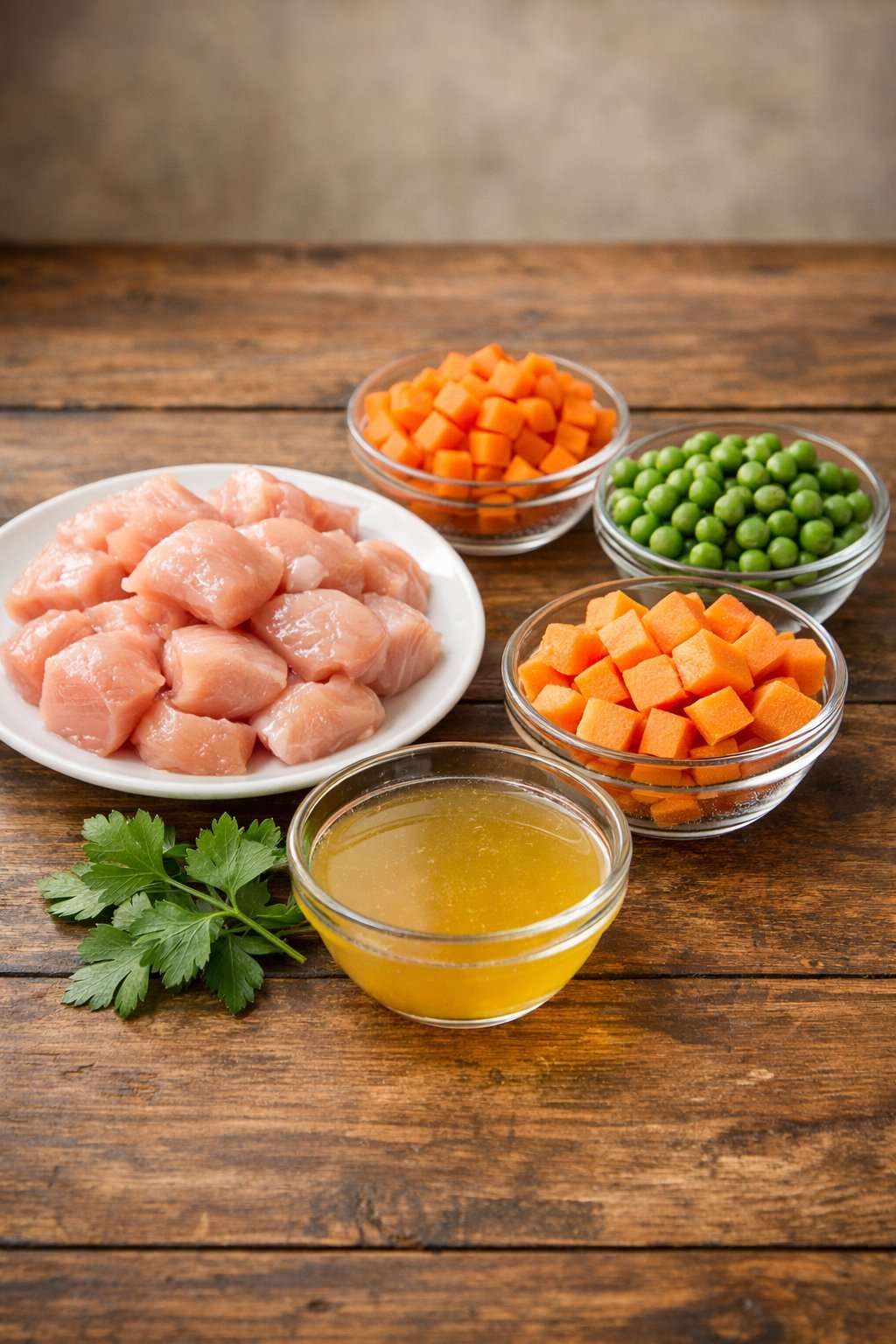
When I make dog gravy at home, I focus on three key elements: quality proteins that provide nutrition, safe vegetables that add vitamins and flavor, and knowing which ingredients could harm my pup.
Recommended Protein Sources
I always start with lean proteins as the base of my gravy. Ground chicken works perfectly because it’s gentle on dogs’ stomachs and cooks quickly.
Ground turkey is another excellent choice that’s low in fat and high in protein. Beef broth made from bones provides natural collagen and minerals that support joint health.
I make sure to use low-sodium or homemade broth since store-bought versions often contain too much salt for dogs. Ground chicken is a lean protein source that forms the foundation of many dog gravy recipes.
I also use leftover cooked meats like shredded chicken breast or ground beef with the fat drained off. Fish like salmon or whitefish can add omega-3 fatty acids to the gravy.
I cook these proteins thoroughly before adding them to ensure they’re safe for my dog to eat.
Dog-Safe Vegetables and Herbs
I add vegetables to boost the nutritional value of my dog’s gravy. Carrots provide fiber, beta-carotene, and a natural sweetness that dogs enjoy.
I chop them into small pieces so they cook faster and blend smoothly. Green peas are packed with vitamins A, K, and B vitamins.
Frozen green peas add texture and essential nutrients to the gravy mixture. Sweet potatoes give the gravy a thicker consistency while providing vitamin C and potassium.
I sometimes include fresh parsley in small amounts since it helps freshen breath. Green beans add bulk without many calories, which is great for dogs watching their weight.
Safe vegetable options:
- Carrots
- Peas
- Green beans
- Sweet potatoes
- Pumpkin
- Zucchini
Ingredients to Avoid
I never use onions or garlic in my dog gravy recipes. These ingredients can damage red blood cells and cause anemia in dogs, even in small amounts.
Excessive salt is dangerous for dogs and can lead to sodium poisoning. I skip added salt entirely and use low-sodium broths when needed.
Butter and cream might upset my dog’s stomach since many dogs are lactose intolerant.
Toxic ingredients to exclude:
- Onions and garlic
- Grapes and raisins
- Chocolate
- Xylitol (artificial sweetener)
- Excessive salt
- Raw yeast dough
I avoid using store-bought gravy packets designed for humans. These contain preservatives, artificial flavors, and sodium levels that are too high for dogs.
Alcohol and caffeine should never be in dog food either.
Step-By-Step Dog Gravy Recipe
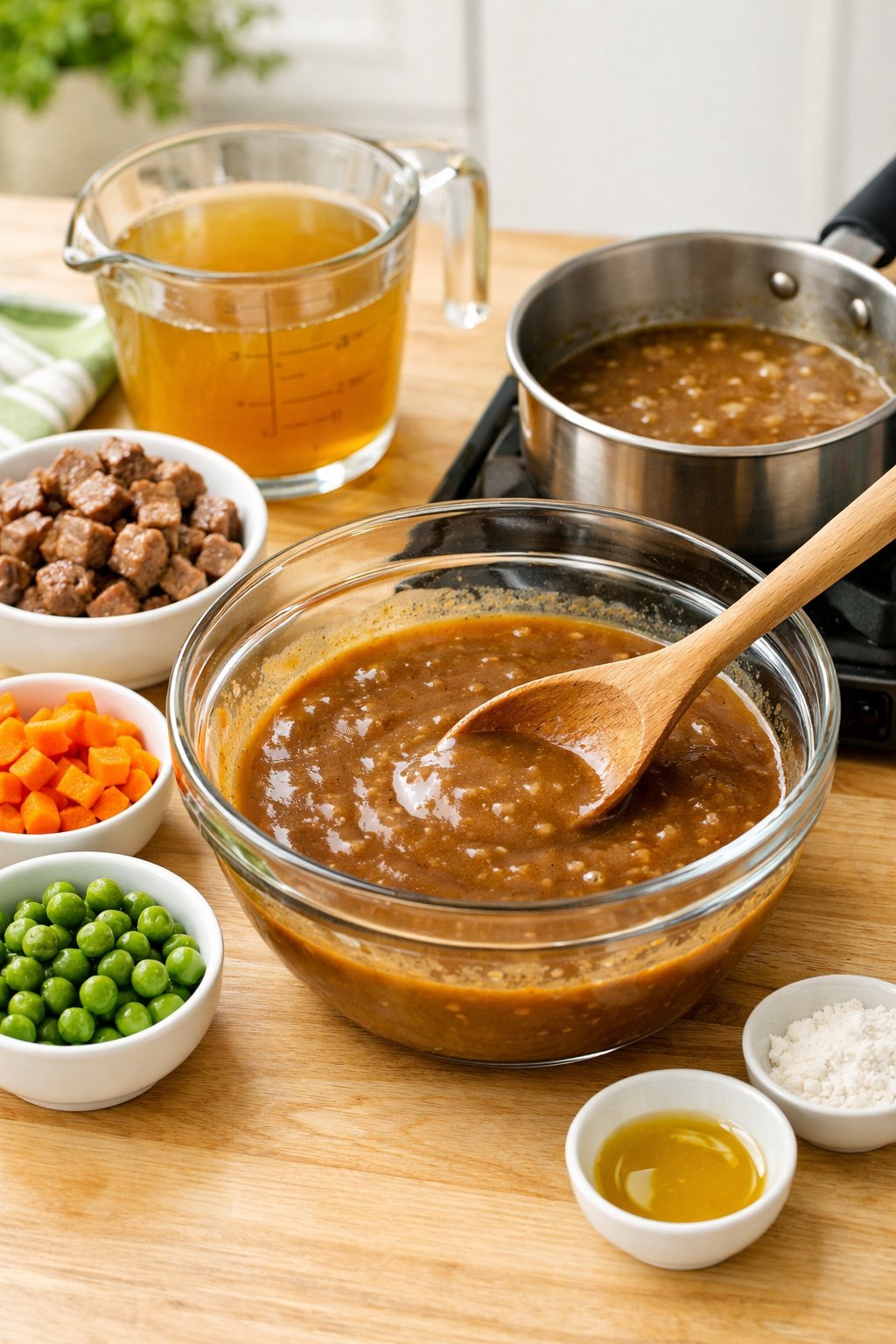
Making gravy for your dog takes about 15 minutes from start to finish using basic kitchen ingredients. I’ll walk you through prepping your ingredients, cooking the gravy to the right thickness, and storing it properly so it stays fresh.
Preparation Guide
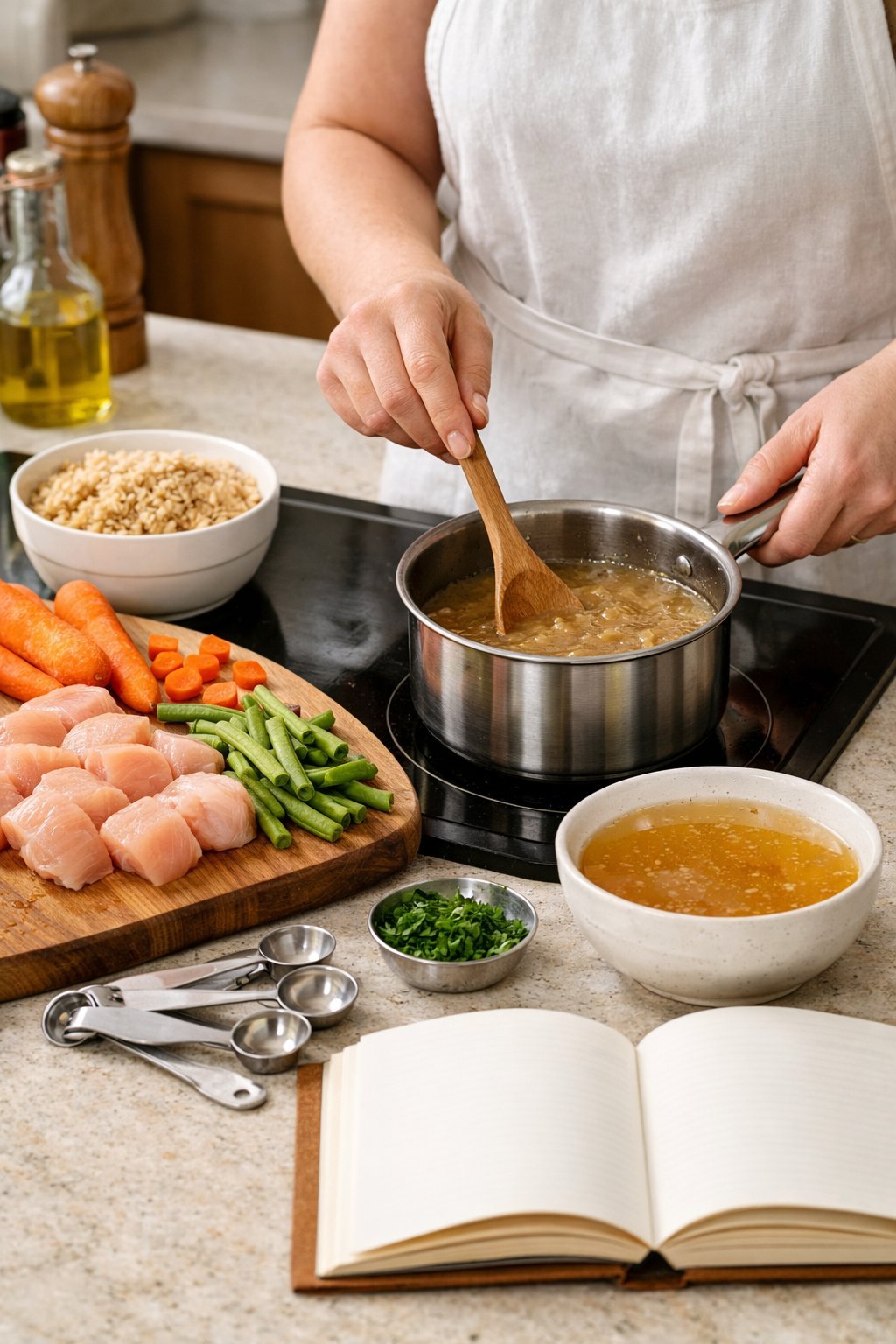
Before I start cooking, I gather all my ingredients and tools. I need 2 cups of low-sodium chicken or beef broth, 2 tablespoons of cornstarch or flour, and optionally some finely chopped vegetables like carrots or sweet potatoes.
I measure out the cornstarch into a small bowl. Then I add about 1/4 cup of cold broth to it and whisk until completely smooth with no lumps.
This step is important because it prevents clumps from forming in the gravy later. I also chop any vegetables very finely or mash them so they’re easy for my dog to eat and digest.
I keep my measuring cups, whisk, and a medium saucepan ready on the counter. Having everything prepared makes the actual cooking go much faster and smoother.
Cooking Instructions
I pour the remaining broth into my medium saucepan and bring it to a simmer over medium heat. Once I see small bubbles forming, I slowly pour in my cornstarch mixture while whisking constantly.
The gravy will start to thicken within 2-3 minutes. I keep stirring to prevent any lumps and ensure even cooking throughout.
If I’m adding vegetables, I toss them in now and let everything simmer together for another 2-3 minutes. I watch the consistency carefully because I want it thick enough to coat a spoon but still pourable.
Once the gravy reaches the right texture, I remove it from heat and let it cool completely before serving. Hot gravy can burn my dog’s mouth, so I always test the temperature on my wrist first.
The gravy will thicken slightly more as it cools.
How to Store Homemade Dog Gravy
I transfer any leftover gravy to an airtight container once it’s completely cool. It stays fresh in the refrigerator for up to 3 days.
For longer storage, I pour the gravy into ice cube trays and freeze them. This gives me perfect single-serving portions that I can pop out whenever needed.
Each ice cube equals about 2 tablespoons of gravy. I thaw frozen cubes in the refrigerator overnight or warm them gently in the microwave for 10-15 seconds.
I always label my containers with the date so I know when I made the gravy. If it smells off or looks different when I open the container, I throw it out and make a fresh batch.
Customizing Gravy for Special Dietary Needs
Dogs with food sensitivities or health conditions need gravy recipes that avoid certain ingredients while still providing flavor and nutrition. I’ve found that simple ingredient swaps can make gravy safe for dogs with grain allergies or protein sensitivities.
Grain-Free Options
Many dogs struggle with grain digestion or have grain allergies. I recommend using alternatives like arrowroot powder or tapioca starch instead of wheat flour when thickening your gravy.
Grain-Free Thickeners:
- Arrowroot powder (1 tablespoon per cup of liquid)
- Tapioca starch (1 tablespoon per cup of liquid)
- Potato starch (use sparingly as it’s very thick)
- Cornstarch (if your dog tolerates corn)
I mix the thickener with cold water before adding it to hot broth. This prevents clumping and creates a smooth texture.
For a grain-free base, I use bone broth made from chicken, beef, or turkey bones simmered for several hours. Sweet potatoes work well as a natural thickener too.
I puree cooked sweet potato and blend it into the gravy for added nutrients and a thicker consistency without any grains.
Allergy-Friendly Modifications
I adapt gravy recipes based on my dog’s specific allergies by switching protein sources and vegetables. If your dog has chicken allergies, I suggest using beef, lamb, or fish as the protein base instead.
Common Allergen Substitutions:
- Replace chicken with turkey or duck
- Use lamb or venison for beef allergies
- Swap carrots for zucchini or pumpkin
- Choose green beans instead of peas
I always avoid onions and garlic when making allergen-free gravies. These ingredients are toxic to dogs even in small amounts.
For dogs with multiple allergies, I keep recipes simple with just one protein and one vegetable. Low-sodium recipes work best for dogs with heart or kidney issues.
I make broth from scratch without adding salt and use fresh ingredients rather than canned broths that contain high sodium levels.
Tips for Serving and Portion Control
Getting the right amount of gravy and mixing it properly makes meals more enjoyable for your dog without upsetting their stomach or adding too many extra calories.
How Much Gravy to Serve
I recommend starting with just a teaspoon or tablespoon for dogs who haven’t tried gravy before. This lets you see how their stomach handles it.
For regular servings, larger dogs can have about 1/4 cup while smaller breeds need less. I typically use 2-3 tablespoons as a topper for most medium-sized dogs.
Size-Based Guidelines:
- Small dogs (under 20 lbs): 1-2 tablespoons
- Medium dogs (20-50 lbs): 2-3 tablespoons
- Large dogs (over 50 lbs): 3-4 tablespoons or up to 1/4 cup
Remember that gravy adds calories to your dog’s diet. I always account for this by slightly reducing their regular food if I’m adding gravy daily.
Best Practices for Mixing with Dog Food
I find that cooling the gravy to room temperature before serving prevents burns and makes it more appealing.
Never pour hot gravy directly onto food.
Pour the gravy over kibble or homemade meals and mix it gently with a spoon.
This helps coat the food evenly so every bite has flavor.
For picky eaters, I sometimes let the gravy sit on dry kibble for a few minutes to soften it.
If you’re using frozen gravy cubes, thaw them overnight in the fridge or warm them gently.
I avoid microwaving because it can create hot spots that might burn your dog’s mouth.
Printable Recipe Card
Want just the essential recipe details without scrolling through the article? Get our printable recipe card with just the ingredients and instructions.