
Dog Food Recipes Crockpot: Easy Homemade Meals Your Pup Will Love

Dog Food Recipes Crockpot – Making dog food at home doesn’t have to be complicated or time-consuming. Crockpot dog food recipes let you prepare healthy meals for your dog by simply adding ingredients to a slow cooker in the morning and coming home to finished food.
I’ve found this method saves money compared to store-bought options while giving me control over what my dog eats.

Using a crockpot takes the stress out of cooking for your pet. You don’t need fancy skills or expensive ingredients to make nutritious meals your dog will love.
Most recipes use basic ingredients like lean meat, vegetables, and grains that you might already have in your kitchen. I’m excited to share simple crockpot recipes that are perfect for busy pet owners who want to feed their dogs better food without spending hours in the kitchen.
These meals are packed with protein and healthy ingredients that support your dog’s health.
Key Takeaways
- Crockpot dog food recipes save time by letting you prep ingredients in the morning and return to a finished meal
- Homemade dog food gives you control over ingredients while often costing less than commercial options
- Most recipes use simple ingredients like lean meat, vegetables, and grains that are easy to find
Benefits of Homemade Dog Food in a Crockpot
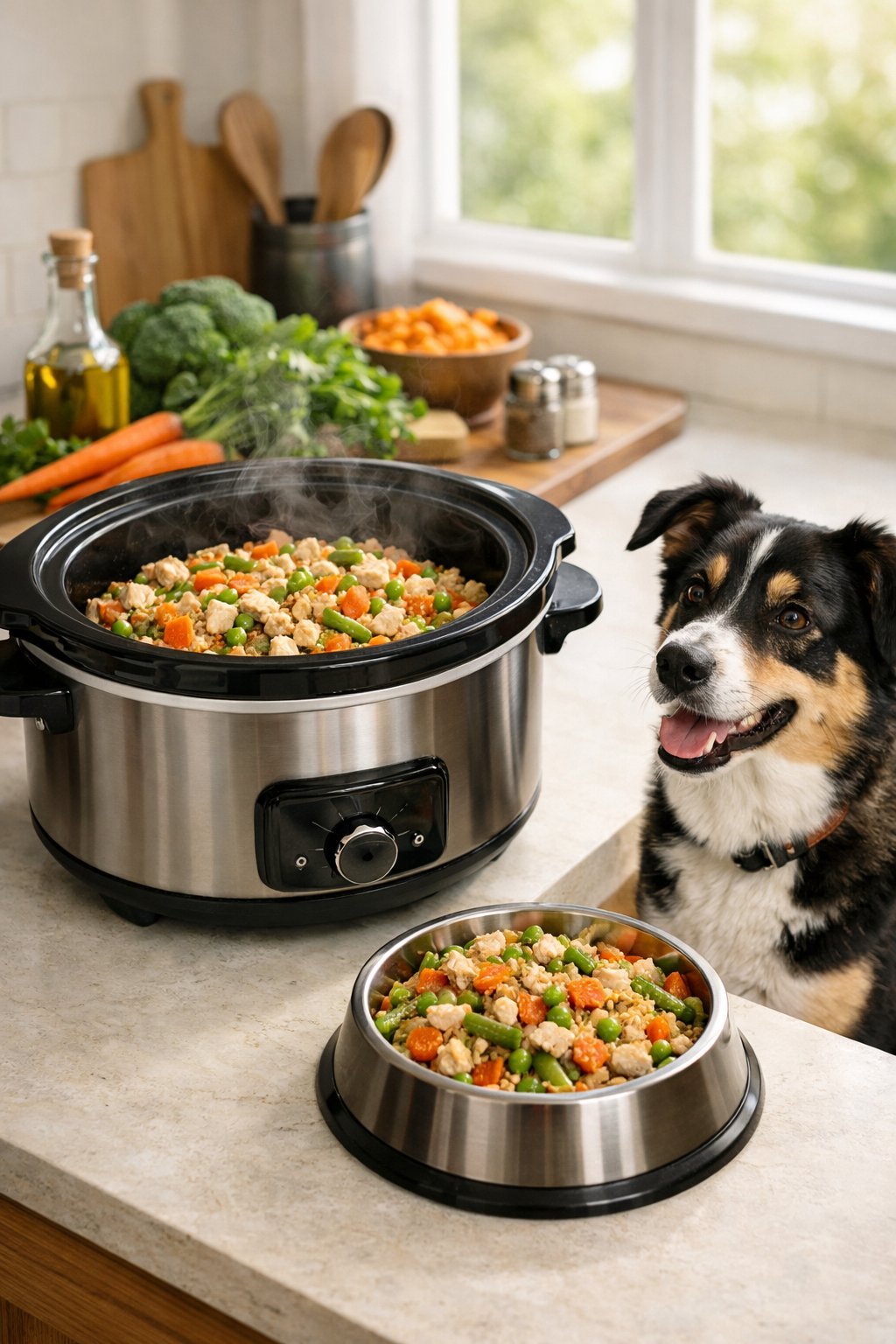
Making dog food in a crockpot gives you control over what goes into your pet’s meals while fitting into a busy schedule. You can provide fresh, whole ingredients tailored to your dog’s specific health needs without spending hours in the kitchen.
Nutritional Advantages
When I make dog food in my crockpot, I know exactly what my dog is eating. Homemade crockpot recipes provide essential nutrients like protein, carbohydrates, water, fat, vitamins, and minerals that dogs need to thrive.
Store-bought dog food often contains fillers, artificial preservatives, and mystery ingredients. With homemade meals, I can use real chicken, beef, or turkey as the protein source.
I add fresh vegetables like carrots, green beans, and sweet potatoes for vitamins and fiber. The slow cooking process helps retain nutrients that might be lost with other cooking methods.
Proteins stay tender and digestible. Vegetables soften while maintaining their nutritional value.
I can also adjust ingredient quality based on my budget and preferences. Organic vegetables, grass-fed meats, and whole grains are all options when I control the recipe.
Convenience and Time-Saving
Crockpot dog food is almost as easy as buying food at the store. I toss ingredients into the slow cooker, turn it on, and walk away.
In 3 to 6 hours, I have perfectly cooked homemade dog food ready. I can prepare a week’s worth of meals in one batch.
This saves me multiple trips to the pet store and reduces daily meal prep time. While the food cooks, I can work, run errands, or relax.
The cleanup is simple too. Most crockpots have removable inserts that go right in the dishwasher.
I spend less time scrubbing pots and pans compared to stovetop cooking. I also save money over time.
Buying ingredients in bulk costs less than premium dog food brands. The investment pays off when I see my dog’s improved health and energy.
Customizing for Dietary Needs
My crockpot lets me create meals for dogs with special dietary requirements. If my dog has food allergies, I can eliminate problematic ingredients completely.
Dogs sensitive to chicken can eat beef or fish-based recipes instead. I can adjust recipes for different life stages.
Puppies need more protein and calories for growth. Senior dogs benefit from lower-fat options with joint-supporting ingredients.
Active dogs require higher calorie meals than couch potatoes. Consulting with my veterinarian helps me make dietary changes safely.
My vet can recommend specific ingredients or supplements to add based on my dog’s health conditions. Dogs with kidney issues might need lower protein levels.
Dogs with diabetes benefit from controlled carbohydrate amounts. I can also rotate proteins and vegetables to provide variety.
This keeps mealtime interesting and ensures my dog gets a range of nutrients from different food sources.
Essential Ingredients for Crockpot Dog Food

Making homemade dog food in a crockpot requires three main components: quality proteins for muscle health, nutritious vegetables for vitamins, and whole grains for energy.
I’ve found that choosing the right ingredients ensures my dog gets a balanced meal every time.
Protein Sources
Protein forms the foundation of any healthy dog food recipe. I always use lean meats like chicken breasts, turkey, or ground beef as my primary protein source.
These meats provide essential amino acids that help build and repair my dog’s muscles. Chicken and turkey work especially well in slow cookers because they stay moist and tender during the long cooking process.
I also rotate in fish occasionally for omega-3 fatty acids. Salmon and white fish are excellent choices that support skin and coat health.
When using ground meats, I choose options with less than 10% fat to keep the meal lean and healthy. For variety, I sometimes add eggs to my recipes.
They’re an affordable protein source that dogs digest easily. One important tip: I always remove bones from chicken or turkey before cooking since cooked bones can splinter and harm dogs.
Healthy Vegetables
Vegetables provide vitamins, minerals, and fiber that support my dog’s digestive system. I regularly use carrots, green beans, and peas in my crockpot recipes because they’re safe and nutritious.
Sweet potatoes are one of my favorite additions. They’re packed with vitamin A and provide complex carbohydrates for steady energy.
I dice them into small pieces so they cook evenly in the slow cooker. Spinach and kale add iron and calcium to the meal.
I use these leafy greens in moderation since too much can upset some dogs’ stomachs. Zucchini and butternut squash are other vegetables I rotate in for different nutrients and flavors.
I always avoid onions, garlic, and grapes since these are toxic to dogs. I also skip heavily seasoned vegetables and stick to fresh or frozen options without added salt or butter.
Whole Grains
Whole grains give my dog lasting energy and help with digestion. Brown rice is my go-to grain because it cooks well in the crockpot and most dogs tolerate it easily.
I measure about one cup of brown rice per batch and let it simmer with the other ingredients. The slow cooking process breaks down the grain, making it easier for my dog to digest.
Oatmeal is another grain I use, especially for dogs with sensitive stomachs. Quinoa offers more protein than regular grains and contains all nine essential amino acids.
I sometimes substitute it for rice when I want to boost the protein content. Sweet potatoes can replace grains entirely if my dog needs a grain-free option.
I avoid white rice and processed grains since they lack the fiber and nutrients found in whole grains. The cooking liquid helps soften the grains perfectly, creating a texture that mixes well with the meat and vegetables.
How to Prepare Dog Food in a Crockpot

Making dog food in a crockpot takes about 3 to 6 hours of hands-off cooking time. I’ll walk you through the basic steps, safety measures, and storage tips to ensure your pup gets nutritious meals.
Step-by-Step Preparation Guide
I start by choosing a protein source like chicken, beef, turkey, or fish. I cut the meat into chunks and place it at the bottom of the crockpot.
Next, I add vegetables such as carrots, sweet potatoes, green beans, or peas. I keep the pieces fairly large since they’ll break down during cooking.
For grains, I use brown rice, oatmeal, or quinoa to provide energy and fiber. I pour in enough water or low-sodium broth to cover all the ingredients.
The liquid should reach about an inch above the food. I set my crockpot on low and let it cook for 6 to 8 hours, or on high for 3 to 4 hours.
Once everything is tender and fully cooked, I let the food cool completely. I use a fork or potato masher to break up the meat and mix everything together.
The final texture should be chunky but easy for my dog to eat.
Food Safety Tips
I always make sure meat reaches an internal temperature of 165°F to kill harmful bacteria. I use a meat thermometer to check before serving.
I avoid ingredients that are toxic to dogs, including:
- Onions and garlic
- Grapes and raisins
- Chocolate
- Xylitol (artificial sweetener)
- Avocados
- Macadamia nuts
I wash all vegetables thoroughly before adding them to the crockpot. I also clean my crockpot, utensils, and work surfaces with hot soapy water after each batch.
If meat smells off or looks discolored, I throw it away rather than risk my dog’s health.
Storing and Serving Guidelines
I let the cooked food cool to room temperature before storing it. I portion the food into meal-sized containers based on my dog’s daily needs.
Storage times I follow:
| Storage Method | Duration |
|---|---|
| Refrigerator | 3-5 days |
| Freezer | 2-3 months |
I use airtight containers or freezer bags to prevent freezer burn. I label each container with the date so I know when I made it.
When serving, I warm refrigerated food slightly in the microwave or let frozen portions thaw in the fridge overnight. I never leave homemade dog food out at room temperature for more than two hours.
I start with small portions when introducing new recipes to make sure my dog tolerates the food well.
Popular Dog Food Recipes for the Crockpot

Making homemade meals in a crockpot gives your dog fresh, wholesome food without spending hours in the kitchen. These four recipes use common ingredients that provide the protein, carbs, and nutrients dogs need to stay healthy.
Chicken and Rice Delight
I love this recipe because it’s simple and works well for dogs with sensitive stomachs. You’ll need 2 chicken breasts, 1 cup of brown rice, 1 cup of diced carrots, 1 cup of chopped green beans, and 1/2 cup of peas.
Start by placing the chicken breasts at the bottom of your crockpot. Add the rice and vegetables on top.
Pour in 4 cups of water or low-sodium chicken broth. Cook on low for 6-8 hours or high for 3-4 hours.
The chicken should shred easily when it’s done. Shred the chicken with two forks and mix everything together.
Let it cool completely before serving. This chicken and veggie recipe gives your dog lean protein from the chicken and fiber from the vegetables and brown rice.
Beef and Sweet Potato Stew
Ground beef and sweet potatoes make a hearty meal that most dogs go crazy for. I use 2 pounds of lean ground beef, 2 cups of diced sweet potatoes, 1 cup of chopped spinach, and 1/2 cup of green peas.
Brown the ground beef in a pan first to drain excess fat. This keeps the meal healthier for your pup.
Add the browned beef to your crockpot along with the sweet potatoes, spinach, and peas. Pour in 3 cups of water.
Cook on low for 6 hours until the sweet potatoes are soft. Stir everything together and let it cool down before serving.
Sweet potatoes give your dog vitamin A and fiber. The beef provides protein and iron that help keep muscles strong.
Turkey and Pumpkin Medley
Turkey and pumpkin work great together, especially for dogs with digestion issues. I combine 2 pounds of ground turkey, 1 cup of pure pumpkin puree (not pie filling), 1 cup of quinoa, and 1 cup of chopped carrots.
Place all ingredients in your crockpot. Add 4 cups of low-sodium chicken broth or water.
Mix everything so the quinoa doesn’t clump together. Cook on low for 5-6 hours.
The quinoa should be fluffy and the turkey fully cooked. Break up any large chunks of turkey as you stir.
Pumpkin helps with both diarrhea and constipation in dogs. Turkey is a lean protein that’s easier on some dogs’ stomachs than beef or chicken.
Fish and Brown Rice Mix
Fish gives dogs omega-3 fatty acids that help their coat stay shiny and healthy. I use 1 pound of white fish like cod or tilapia, 1 cup of brown rice, 1 cup of diced sweet potatoes, and 1/2 cup of broccoli florets.
Put the brown rice and sweet potatoes in first. Add 3 cups of water.
Cook on low for 4 hours. Add the fish and broccoli during the last hour of cooking.
Fish cooks quickly and falls apart easily. Flake the fish with a fork and mix everything together.
Check carefully for any bones before serving. This fish and sweet potato combination provides protein and healthy fats without common allergens like chicken or beef.
Tips for Transitioning to Homemade Crockpot Dog Food
Switching your dog from commercial kibble to homemade meals requires a gradual approach to avoid digestive upset. I recommend taking at least 7-10 days to make the full transition while keeping a close eye on your dog’s response.
Introducing New Recipes
I start by mixing small amounts of the new homemade food with my dog’s current diet. On day one, I use about 25% homemade food and 75% regular kibble.
This gentle start helps my dog’s digestive system adjust to the new ingredients. Every 2-3 days, I increase the homemade portion by another 25%.
By day 7-10, my dog is eating 100% homemade crockpot meals. If I notice any loose stools or stomach upset, I slow down the transition and stay at the current ratio for a few extra days.
I introduce only one new recipe at a time. This way, if my dog has a reaction to a specific ingredient, I can identify it quickly.
Once my dog tolerates one recipe well, I can add variety by rotating different homemade crockpot dog food recipes throughout the week.
Monitoring Your Dog’s Health
I watch for several key signs that tell me if the new diet is working well. My dog’s energy levels should stay consistent or improve.
Their coat should look shiny and feel soft to the touch. I check my dog’s stool daily during the transition.
Normal stool should be firm and easy to pick up. Loose stools, constipation, or changes in frequency can signal that I need to adjust the recipe or slow down the transition.
I weigh my dog weekly to ensure they’re maintaining a healthy weight. I also schedule a vet checkup about 4-6 weeks after completing the transition.
My vet can run basic bloodwork to confirm my dog is getting proper nutrition from their new diet.
Adjusting Portion Sizes
I calculate portion sizes based on my dog’s weight, age, and activity level.
Adult dogs typically need about 2-3% of their body weight in food per day.
A 50-pound dog would eat roughly 1-1.5 pounds of food daily.
Factors that affect portions:
I divide the daily amount into two meals for adult dogs.
Puppies need 3-4 smaller meals spread throughout the day.
If my dog is gaining weight, I reduce portions by 10-15%.
If they’re losing weight or seem hungry, I increase by the same amount.
