DIY Dog Toys: 10 Easy Homemade Toys (Including for Heavy Chewers)

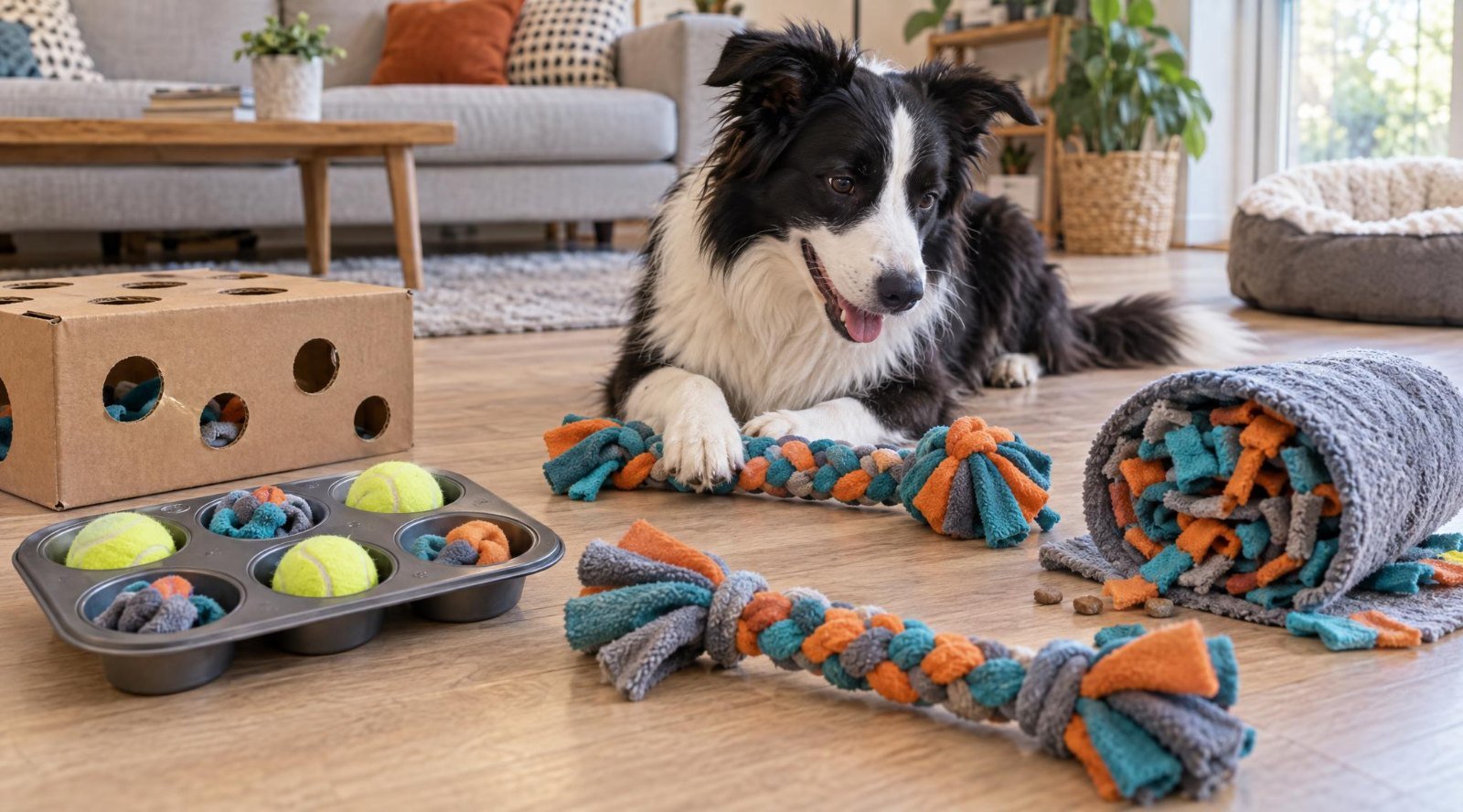
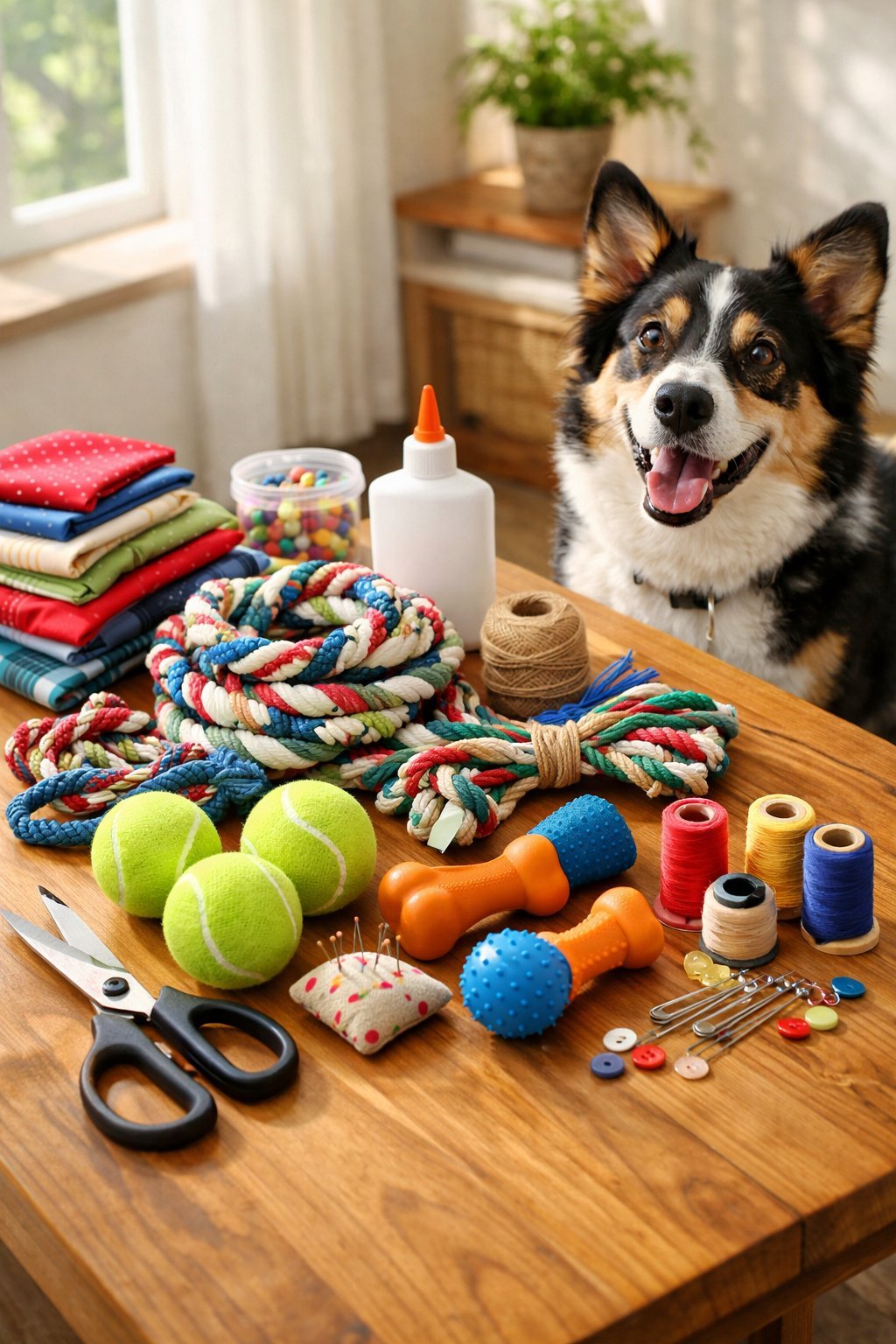
Most good DIY dog toys come from things already in your house: old fleece or T-shirts for tug ropes, a muffin tin and tennis balls for a puzzle, a towel for a sniffing game, a cardboard box to shred. Below are 10 easy homemade dog toys with materials and steps, which ones hold up to heavy chewers, and the safety rules that matter, because homemade toys aren’t as tough as store-bought ones and some common DIY ideas carry real swallowing risks.
This post contains affiliate links. As an Amazon Associate I earn from qualifying purchases.
Ready-made toys worth a look:
KONG Classic, Dog puzzle toy, Snuffle mat, Lick mat, Treat-dispensing ball, Tug rope toy.
Quick Answer
| Toy | Made from | Best for | Heavy chewers? |
|---|---|---|---|
| 1. Braided fleece tug | Fleece fabric | Tug, puppies | Supervised tug only |
| 2. T-shirt rope tug | Old T-shirts | Tug, fetch | Supervised tug only |
| 3. Fire hose tug | Retired fire hose | Tough tug | Yes, supervised |
| 4. Flirt pole | Dowel or PVC, rope, fleece | High-energy dogs | Yes, you hold it |
| 5. Muffin tin puzzle | Muffin tin, tennis balls | Brain games | Yes, supervised |
| 6. Towel snuffle roll | Old towel | Sniffing, slow eating | Supervised |
| 7. Box shred | Cardboard box, paper | Shredders, bored dogs | Supervised |
| 8. Treat bottle | Plastic bottle | Food puzzles | No |
| 9. Crinkle sock toy | Sock, plastic bottle | Gentle players | No |
| 10. Frozen broth block | Broth, water, treats | Hot days, teething | Yes |
Rule for every homemade toy: supervise, and take it away once it starts to come apart.
Tug and Rope Toys
1. Braided Fleece Tug (No Sew)
You need: about 1/2 yard of fleece, scissors.
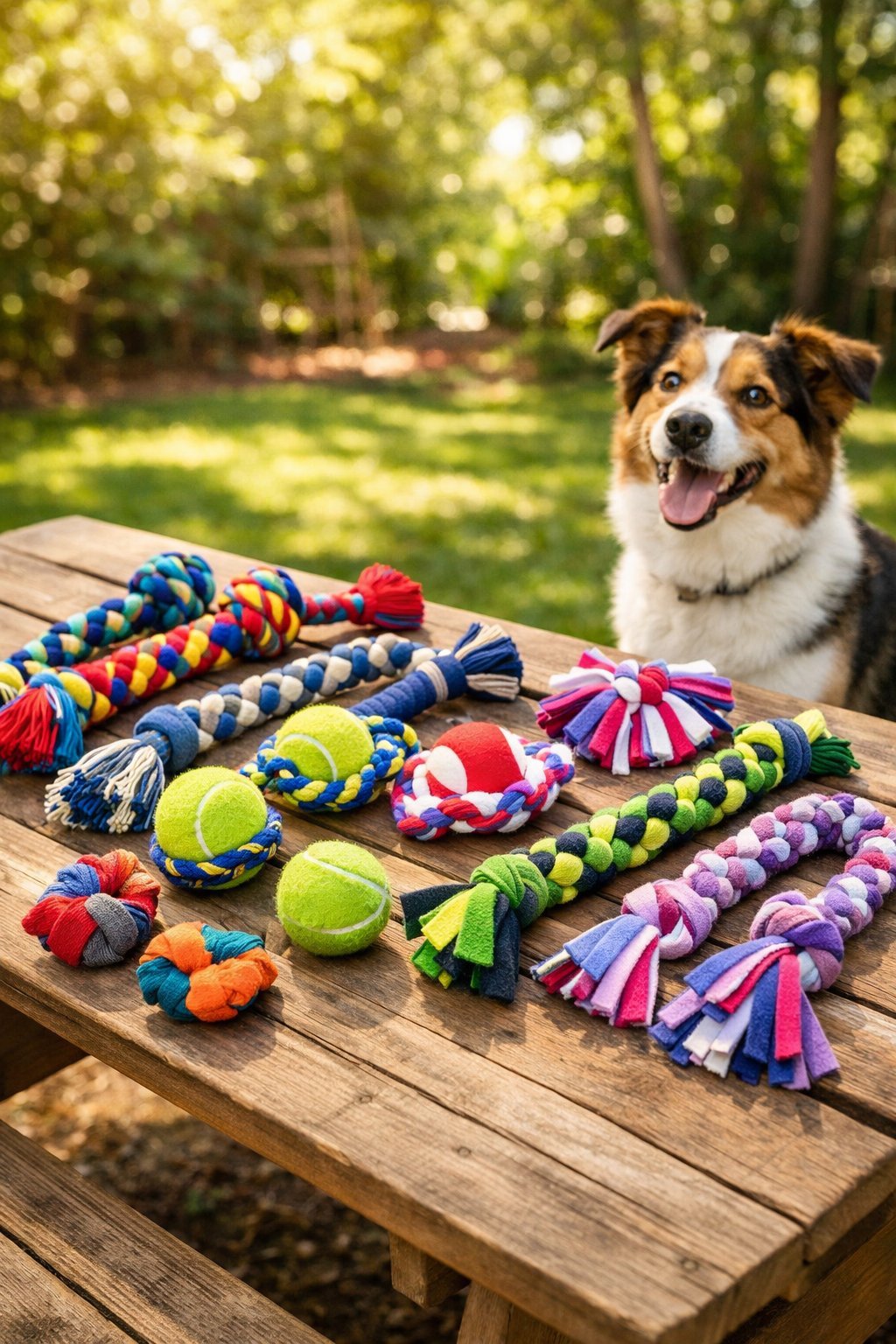
- Cut 3 strips about 3 inches wide and 24 to 36 inches long. Fleece doesn’t fray, so no hemming.
- Knot the three strips together at one end.
- Braid tightly, pulling each strip snug.
- Tie a tight knot at the other end and trim the tails short.
For a thicker toy, use 6 strips and braid them in pairs. Fleece is soft on puppy teeth.
2. T-Shirt Rope Tug
You need: 2 or 3 old cotton T-shirts, scissors.
- Cut each shirt into strips about 2 inches wide, cutting across the body to make loops. Stretch them so they curl.
- Gather 6 to 9 strips, knot one end, and braid in three groups.
- Finish with a tight knot and trim the ends.
Cotton T-shirt rope frays faster than fleece. Throw it out once threads start pulling loose.
3. Fire Hose Tug (Heavy Chewers)
You need: a section of retired fire hose (fire stations and online sellers often have it), a utility knife.
- Cut 3 strips about 1 1/2 inches wide and 24 inches long.
- Braid them tightly, or weave two strips in a simple box-knot pattern.
- Secure the ends with a tight knot or heavy rivets.
Fire hose is woven to resist abrasion, so it’s the most durable homemade tug material. It’s still a supervised toy.
4. Flirt Pole
You need: a 3 to 4 foot dowel or 3/4 inch PVC pipe, about 4 feet of soft rope, a braided fleece tug for the lure, duct tape or a screw eye.
- Attach the rope securely to one end of the pole with a screw eye or a tight knot wrapped with tape.
- Tie the fleece lure to the other end of the rope.
- Drag the lure along the ground in circles and let your dog chase it. Let them “win” it every few rounds.
A few minutes of flirt pole play tires out high-energy dogs fast. Keep sessions short, play on grass, and skip it for puppies under about a year and dogs with joint problems, since the quick turns are hard on joints.
Puzzle and Sniffing Toys
5. Muffin Tin Puzzle
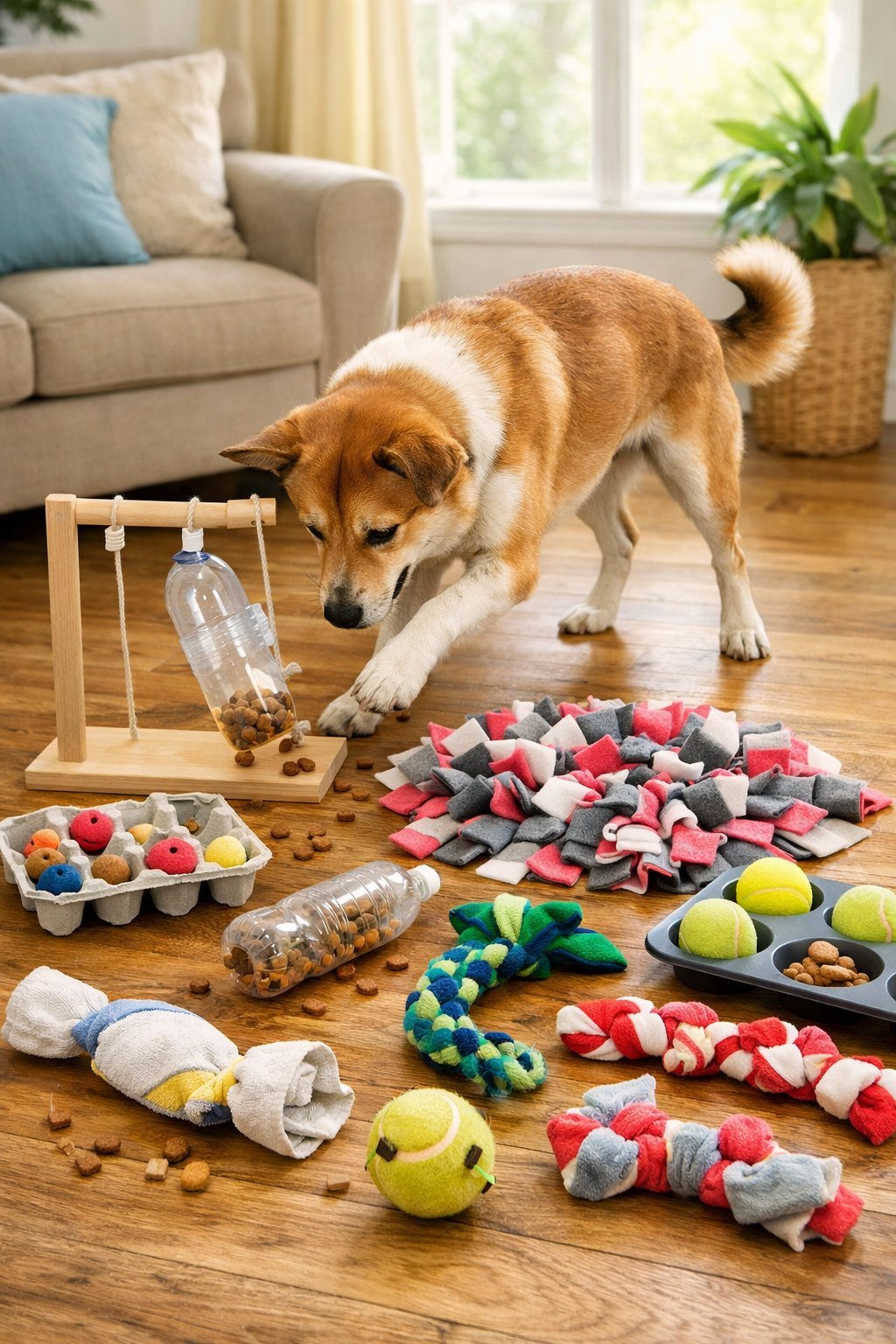
You need: a 6 or 12 cup muffin tin, tennis balls, treats.
- Put a treat in a few of the cups.
- Cover every cup with a tennis ball.
- Let your dog figure out how to move the balls to find the treats.
Start with treats in plain sight, then cover them once your dog gets the idea. Put it away after the game.
6. Towel Snuffle Roll
You need: an old bath towel, kibble or small treats.
- Lay the towel flat and sprinkle kibble across it.
- Roll it up from one long edge, then twist it or tie a loose knot in the middle.
- Let your dog unroll and sniff out the food.
Sniffing is calming and tiring for dogs. For a reusable version, see our DIY snuffle mat.
7. Cardboard Box Shred
You need: a cardboard box, crumpled packing paper, treats.
- Remove all tape, staples and plastic.
- Fill the box with crumpled paper and drop in a few treats.
- Fold the flaps closed loosely and let your dog dig and rip in.
Clean up the scraps afterward. If your dog eats cardboard rather than just tearing it, skip this one.
8. Treat Dispenser Bottle
You need: a clean, sturdy plastic bottle, kibble, scissors or a drill.
- Remove the cap and the plastic ring around the neck. Both are choking hazards.
- Cut or drill 3 or 4 holes slightly bigger than a piece of kibble. Sand or tape the edges smooth.
- Add kibble and let your dog roll it around to get it out.
Supervise closely and throw it out the moment the plastic cracks. Not for dogs that chew plastic.
Soft and Cooling Toys
9. Crinkle Sock Toy
You need: a clean, thick sock and a small empty plastic bottle with the cap and ring removed.
- Slide the bottle into the sock.
- Tie a tight knot at the open end.
Dogs love the crinkle noise. This is a gentle-play toy only. Socks are one of the most common things dogs swallow, so supervise and put it away after play.
10. Frozen Broth Block
You need: low-sodium broth with no onion or garlic, water, a few treats or chunks of carrot, a plastic container or bowl.
- Mix the broth half and half with water and pour it into the container.
- Drop in the treats or carrot pieces.
- Freeze overnight, pop it out and serve outside or on a towel.
Great for hot days and teething puppies. For more frozen ideas, see our pup cups recipe.
DIY Toys for Heavy Chewers
Honest answer: most homemade toys won’t survive a power chewer. Fabric, rope, bottles and socks all come apart, and swallowed pieces can block the gut. What works best:
- Fire hose tugs for supervised tug games.
- Flirt poles, because you hold them and put them away after play.
- Frozen broth blocks, which melt instead of breaking into pieces.
- Puzzles you control, like the muffin tin game, that get put away after each session.
- For unsupervised chewing, a durable store-bought rubber chew toy sized for your dog, which you can stuff and freeze for a longer challenge.
See our guide to indestructible dog toys for tougher options.
Safety Rules for Homemade Toys
- Supervise every homemade toy, especially the first few times.
- Size matters: toys should be too big to swallow. Avoid small tennis balls for large dogs.
- Watch rope and fabric. Swallowed strings and threads can cause a dangerous intestinal blockage. Throw out anything fraying or unraveling.
- No small parts: no buttons, beads, bells, googly eyes, squeakers from old toys, staples or bottle caps.
- Skip stuffing in toys for chewers.
- Use clean materials with no strong dyes, chemicals or odors.
- Know the warning signs: vomiting, not eating, belly pain, straining or not pooping after a toy goes missing. Call your vet right away.
Cleaning
- Fleece and T-shirt toys: machine wash warm in a mesh laundry bag and air dry.
- Fire hose tugs: scrub with warm soapy water and air dry.
- Muffin tins: dishwasher.
- Bottles and boxes: treat as disposable.
Frequently Asked Questions
What can I use to make a dog toy at home?
Fleece, old T-shirts, towels, cardboard boxes, a muffin tin and tennis balls, and plastic bottles with the cap and ring removed. Retired fire hose makes the toughest tug toys.
Are homemade dog toys safe?
They’re safe with supervision. Use toys too big to swallow, avoid small parts, and throw away anything that starts to fray or break.
What’s the best DIY toy for a dog that destroys everything?
A fire hose tug or a flirt pole for supervised play, plus frozen broth blocks. For chewing on their own, use a durable rubber chew toy instead of a homemade one.
Can puppies play with homemade toys?
Yes. Soft fleece tugs, towel snuffle rolls and frozen broth blocks are good for puppies. Always supervise, and skip flirt poles until they’re older.
Are plastic water bottles safe for dogs?
Only with supervision, and only after removing the cap and the ring. Throw the bottle away as soon as it cracks, since sharp pieces can cut the mouth or be swallowed.
The Short Version
- Fleece and T-shirt tugs, a muffin tin puzzle and a towel snuffle roll are the easiest starters.
- For heavy chewers: fire hose tugs, flirt poles and frozen broth blocks.
- Supervise, size toys too big to swallow, and toss anything fraying or broken.