Sourdough Dog Treats: 6 Easy Discard Recipes

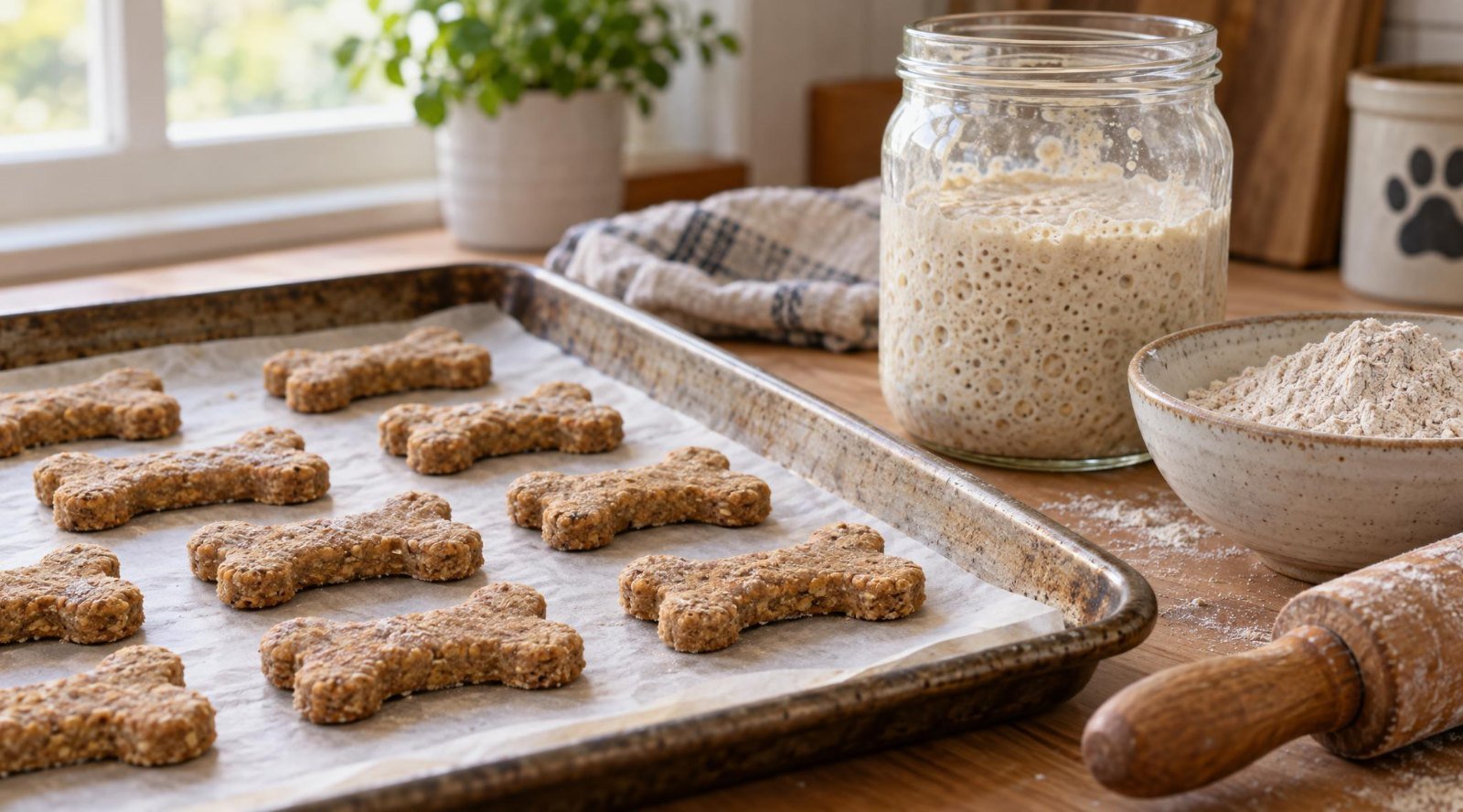
Sourdough dog treats are a good use for leftover starter discard. The discard replaces some of the flour and liquid in a simple dog biscuit dough, and once the treats are fully baked they’re safe for dogs. Below are six recipes with exact amounts, bake times and rough calories per treat, plus the one safety rule that matters: dogs should never eat raw starter or unbaked dough.
🐾 Quick Picks: Everything You Need to Bake These Treats
Grab these essentials before you start baking:
- 🦴 Best Cookie Cutters: Wilton Dog Bone Cookie Cutter Set →
- 🌾 Best Flour: King Arthur Baking Whole Wheat Flour →
- 🥜 Best Peanut Butter (Xylitol-Free): Crazy Richard’s 100% Pure Peanut Butter →
- 🎃 Best Pumpkin Puree: Libby’s 100% Pure Pumpkin →
- 🍪 Best Baking Mat: OXO Good Grips Silicone Baking Mat →
As an Amazon Associate I earn from qualifying purchases.
Quick Answer
- Basic recipe: 3/4 cup sourdough discard + 1 egg + 1 to 1 1/4 cups whole wheat flour. Roll 1/4 inch thick, bake at 350°F for 25 to 30 minutes.
- Discard or active starter: either works. Discard straight from the fridge is fine.
- Safety: raw starter and raw dough are dangerous for dogs. Only give fully baked treats, and keep the starter jar out of reach.
- Calories: about 30 to 45 per treat, depending on the recipe.
- Storage: plain crunchy biscuits keep 1 to 2 weeks airtight. Treats with meat or fresh fruit go in the fridge and keep about 5 to 7 days.
Is Sourdough Safe for Dogs?
Baked sourdough treats: yes. Once baked all the way through, the yeast is dead and the treat is just a wheat biscuit with a slightly tangy flavor.
Raw starter or dough: no. Raw yeast dough can keep rising in a dog’s warm stomach, causing painful bloating, and the fermenting yeast produces alcohol. If your dog eats raw starter or dough, call your vet or a pet poison hotline right away.
Some people say fermentation makes wheat easier to digest. That may be true for some dogs, but sourdough treats are still wheat treats. Skip them if your dog has a wheat allergy, and treat them as a snack, not a health supplement.
What You Need
- Sourdough discard or starter: 3/4 cup per batch. It should smell sour and yeasty, not moldy. Pink, orange or fuzzy spots mean throw it out.
- Whole wheat flour, such as King Arthur Whole Wheat Flour.
- Xylitol-free peanut butter, such as Crazy Richard’s 100% Pure Peanut Butter, which lists peanuts as the only ingredient.
- Plain pumpkin puree, such as Libby’s 100% Pure Pumpkin. Not pumpkin pie filling.
- A bone-shaped cutter like the Wilton dog bone cutter set, and parchment or a silicone baking mat.
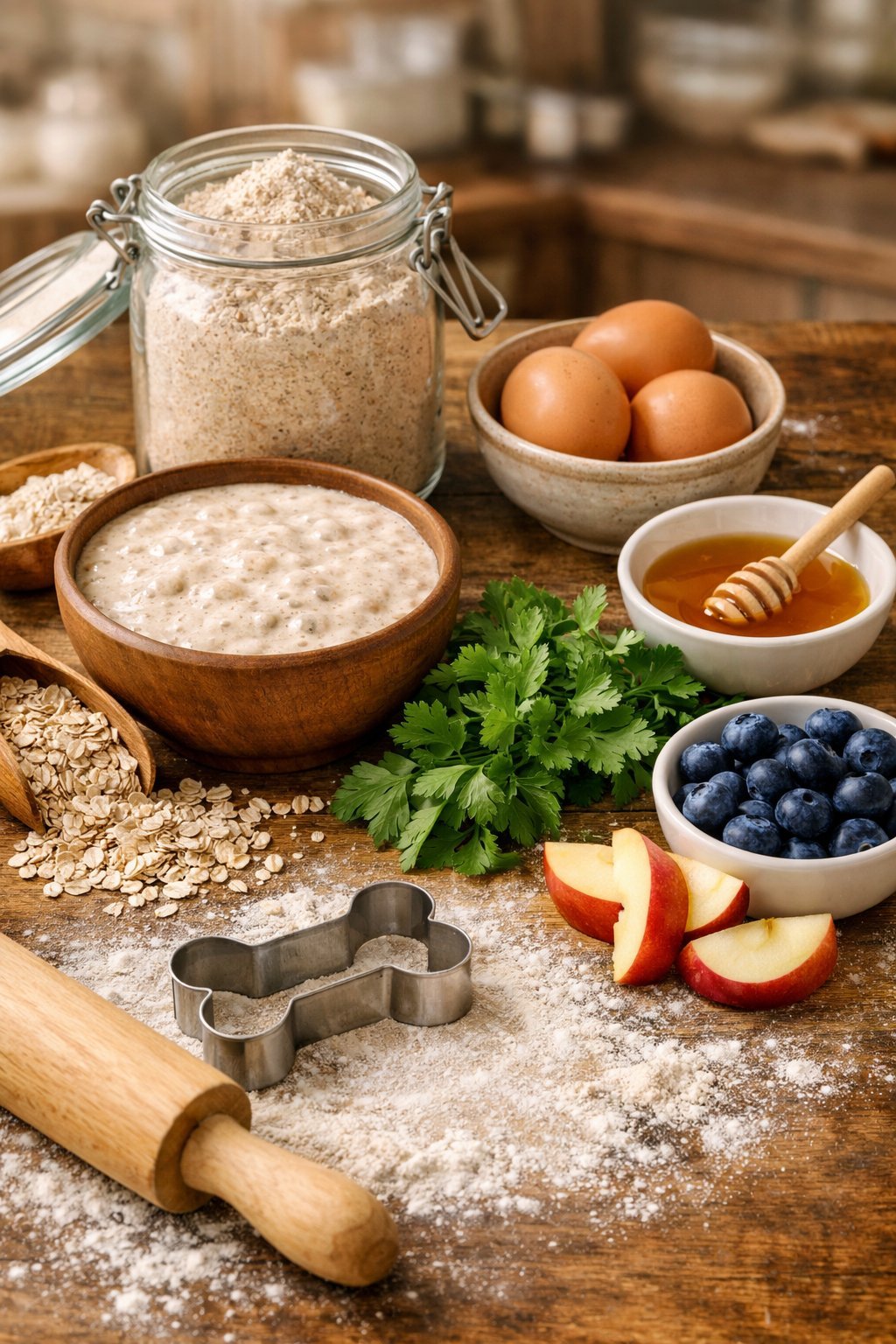
Recipe 1: Classic Sourdough Discard Biscuits
Makes: about 25 biscuits (2 inch) | Bake: 25 to 30 min | About 30 calories each
- 3/4 cup sourdough discard
- 1 large egg
- 1 to 1 1/4 cups whole wheat flour
- Heat the oven to 350°F. Line a baking sheet with parchment.
- Whisk the discard and egg. Stir in 1 cup flour, then add more a tablespoon at a time until the dough is firm and not sticky.
- Roll to 1/4 inch thick on a floured surface and cut into shapes.
- Bake 25 to 30 minutes until golden and firm.
- For extra crunch and longer storage, turn the oven off and leave them inside for 1 hour.
- Cool completely before storing.
Recipe 2: Peanut Butter Sourdough Bones
Makes: about 30 biscuits | Bake: about 30 min | About 45 calories each
- 3/4 cup sourdough discard
- 1/3 cup xylitol-free peanut butter
- 1 large egg
- 1 to 1 1/2 cups whole wheat flour
- Heat the oven to 325°F.
- Mix the discard, peanut butter and egg until smooth. Add flour until you have a stiff dough that isn’t crumbly.
- Roll to 1/4 inch and cut into bones.
- Bake about 30 minutes, flipping halfway.
Peanut butter adds fat, so store these in the fridge if your kitchen is warm.
Recipe 3: Pumpkin Sourdough Biscuits
Makes: about 30 biscuits | Bake: 30 to 35 min | About 30 calories each
- 3/4 cup sourdough discard
- 1/2 cup plain pumpkin puree
- 1 large egg
- 1 3/4 to 2 cups whole wheat flour
- Optional: 1/4 teaspoon cinnamon
- Heat the oven to 350°F.
- Mix the discard, pumpkin and egg. Add flour until the dough holds together.
- Roll to 1/4 inch, cut and bake 30 to 35 minutes. Pumpkin adds moisture, so these need a few minutes longer.
Free: 5 Easy Homemade Dog Treats
Get our printable recipe sampler: five simple treats made with ingredients you already have. Enter your email and we will send it right over, plus occasional dog-care tips. No spam.
Recipe 4: Sweet Potato Sourdough Cookies
Makes: about 40 cookies | Bake: 25 to 30 min | About 35 calories each
- 3/4 cup sourdough discard
- 1 cup mashed cooked sweet potato (plain, no butter or sugar)
- 1 large egg
- About 2 cups whole wheat flour
- Heat the oven to 350°F.
- Mix everything into a firm, slightly tacky dough. Add flour if it’s too sticky to roll.
- Roll to 1/4 inch, cut and bake 25 to 30 minutes.
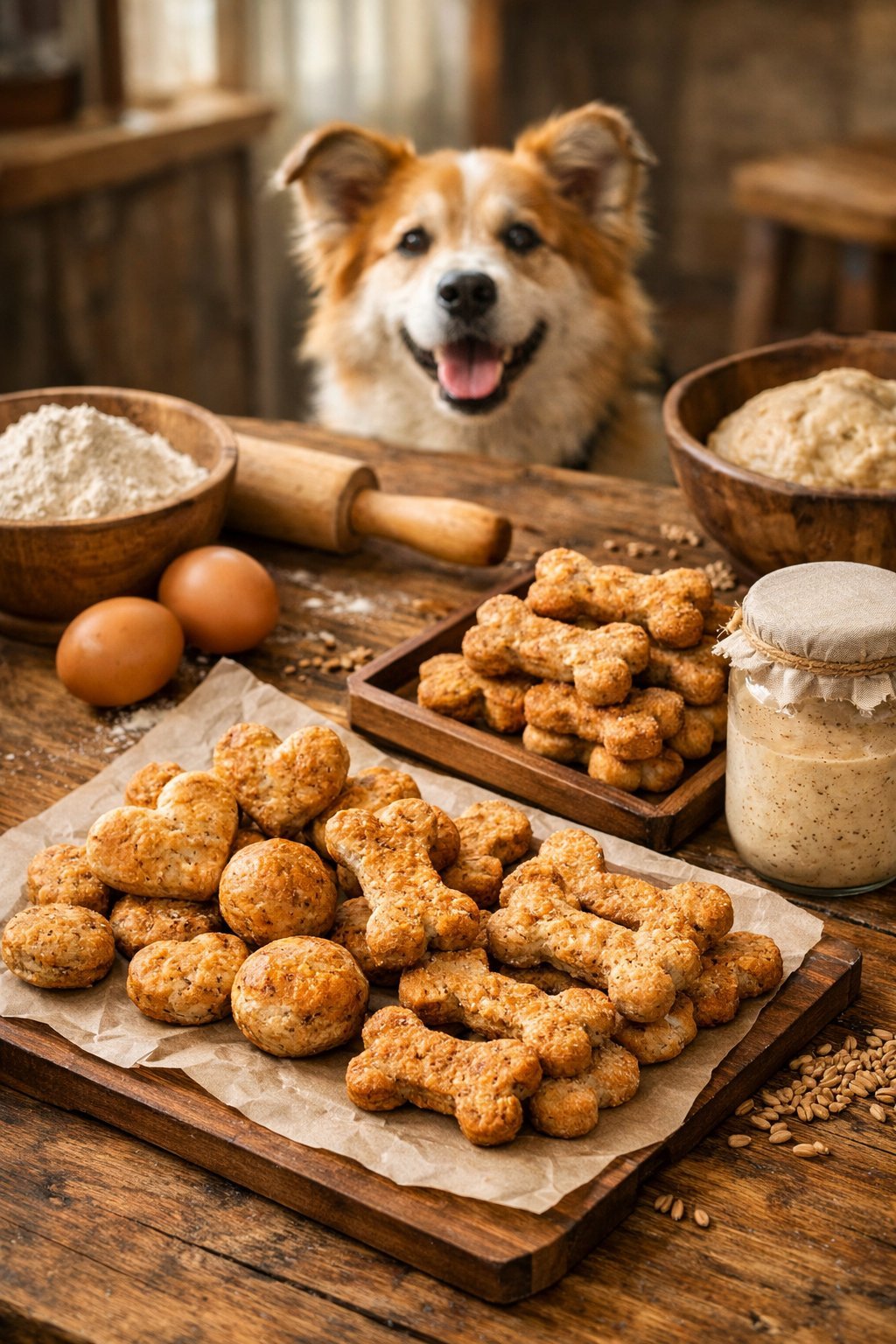
Recipe 5: Chicken and Parsley Sourdough Bites
Makes: about 30 bites | Bake: 20 to 25 min | About 30 calories each
- 3/4 cup sourdough discard
- 1/2 cup cooked, finely shredded chicken (plain, no seasoning)
- 2 tablespoons fresh chopped parsley
- 1 to 1 1/2 cups oat flour
- Heat the oven to 350°F.
- Mix everything. This dough is sticky, so roll it into 1 inch balls with damp hands.
- Flatten slightly on the baking sheet and bake 20 to 25 minutes.
Because these contain meat, keep them in the fridge and use within 5 days, or freeze.
Recipe 6: Apple Oat Sourdough Rounds
Makes: about 30 rounds | Bake: 30 to 35 min | About 40 calories each
- 3/4 cup sourdough discard
- 1 medium apple, cored, seeds removed, grated and squeezed dry in a towel
- About 2 cups oat flour
- 1/2 teaspoon cinnamon
- Heat the oven to 325°F.
- Mix everything into a soft dough. Add a little more oat flour if it’s sticky.
- Roll into 1 inch balls, flatten into rounds and bake 30 to 35 minutes until firm and golden.
Fresh apple keeps these moist, so refrigerate and use within a week. For more apple recipes see our applesauce dog treats.
Swaps and Add-Ins
| Instead of | Use | Note |
|---|---|---|
| Whole wheat flour | Oat flour | About 1 1/4 times as much. Softer dough. |
| Whole wheat flour | Brown rice flour | Same amount. Crumbly, so press into balls instead of rolling. |
| Whole wheat flour | Coconut flour | Only about 1/3 as much. Very absorbent. |
| Peanut butter | Plain sunflower seed butter | Same amount. Check for xylitol and added salt. |
| Egg | 1 tablespoon ground flaxseed + 3 tablespoons water | Let it sit 5 minutes first. |
Note: your starter is still made from wheat flour, so swapping the extra flour doesn’t make these treats wheat-free.
Good add-ins: grated carrot, blueberries, unsweetened applesauce, fresh parsley.
Never add: xylitol, chocolate, grapes, raisins, onion, garlic or macadamia nuts. Skip honey and sugar too; dogs don’t need them.
Storage Guide
| Treat | Room temperature (airtight) | Fridge | Freezer |
|---|---|---|---|
| Classic, pumpkin, sweet potato (fully crisp) | 1 to 2 weeks | 2 to 3 weeks | 3 months |
| Peanut butter bones | About 1 week | 2 weeks | 3 months |
| Chicken bites | No | Up to 5 days | 2 to 3 months |
| Apple rounds | No | Up to 1 week | 2 to 3 months |
Cool treats completely before sealing them, and throw out anything with mold or a sour, off smell.
Troubleshooting
- Dough too sticky: discard varies in thickness. Add flour a tablespoon at a time.
- Dough crumbly: add water a tablespoon at a time.
- Treats puffed up: active starter rises more than discard. Prick each treat with a fork before baking, or use discard.
- Soft in the middle: roll thinner or bake 5 to 10 minutes longer, then leave them in the turned-off oven.
- Uneven browning: rotate the baking sheet halfway through.
How Many to Give
Keep all treats to about 10% of your dog’s daily calories. As a rough guide with 30 to 45 calorie treats: 1 a day for small dogs, 2 for medium dogs and 3 to 4 for large dogs. Break them into small pieces for training.
Frequently Asked Questions
Can dogs eat sourdough discard?
Not raw. Raw discard contains live yeast that can cause bloating and produce alcohol in a dog’s stomach. It’s fine once it’s baked into a fully cooked treat.
Can I use discard straight from the fridge?
Yes. Let it sit at room temperature for 20 to 30 minutes so it mixes more easily. Don’t use discard with mold or pink or orange streaks.
Are sourdough dog treats good for dogs with sensitive stomachs?
Some dogs do fine with them, but they’re still wheat treats. Introduce one small piece at a time and skip them for dogs with a wheat allergy.
Can I use a gluten-free starter?
Yes. A starter fed with rice or sorghum flour works in these recipes, paired with oat or rice flour for a wheat-free treat.
Why are my sourdough dog treats puffy?
Active starter makes the dough rise. Use discard, or prick the treats with a fork before baking.
The Short Version
- 3/4 cup discard + 1 egg + about 1 cup whole wheat flour, rolled 1/4 inch, 350°F for 25 to 30 minutes.
- Only give fully baked treats. Raw starter and dough are dangerous for dogs.
- Crunchy biscuits keep 1 to 2 weeks airtight. Meat and fruit versions go in the fridge.
- Keep treats to about 10% of daily calories.