
10 Sourdough Dog Treats Recipes Dogs Go Crazy For: Healthy Homemade Snacks Your Pup Will Love

I’ve been baking sourdough for years, and I always felt guilty throwing away my starter discard until I discovered I could turn it into treats for my dog. You can transform your leftover sourdough starter into healthy, homemade dog treats that save money, reduce waste, and give your pup a nutritious snack they’ll love.
My dog goes absolutely wild every time I pull out the cookie cutter now. Making sourdough dog treats is easier than you might think. The recipes I’m sharing use simple ingredients like pumpkin, peanut butter, and oats that you probably already have in your kitchen. Whether you have an active starter or discard that’s been sitting in your fridge, both work perfectly for these treats.
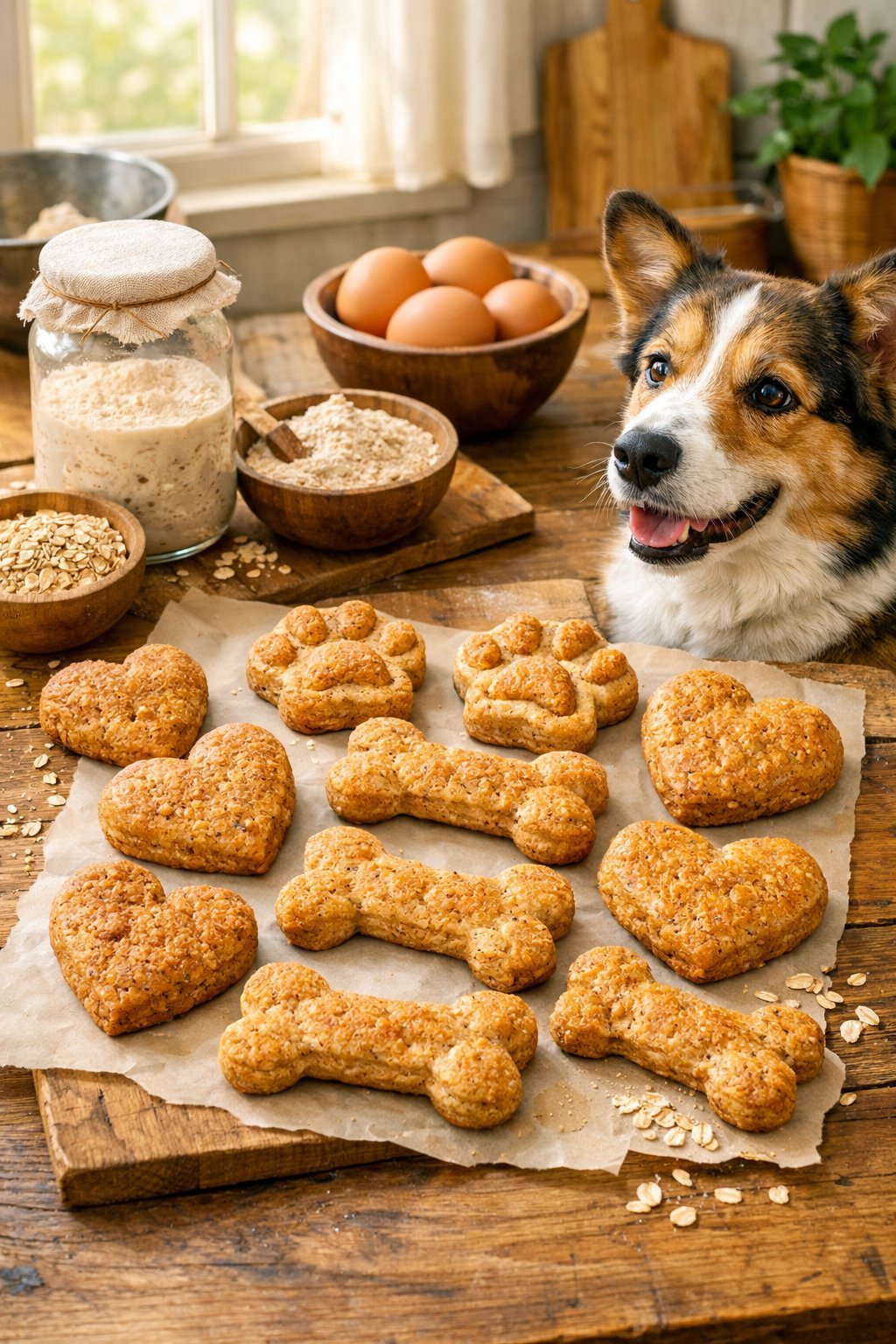
I’ve tested dozens of recipes to find the ones that get the best reaction from dogs while being genuinely good for them. These ten recipes range from basic bone-shaped biscuits to gut-friendly variations that support your dog’s digestion. Each one is designed to be straightforward to make, even if you’ve never baked dog treats before.
Key Takeaways
- Sourdough discard can be used to make healthy, homemade dog treats instead of being thrown away
- Basic ingredients like pumpkin puree and peanut butter combine with sourdough starter to create nutritious snacks
- Proper baking and storage techniques keep homemade treats fresh and safe for your dog to enjoy
🐾 Quick Picks — Everything You Need to Bake These Treats
Grab these essentials before you start baking:
- 🦴 Best Cookie Cutters: Wilton Dog Bone Cookie Cutter Set →
- 🌾 Best Flour: King Arthur Baking Whole Wheat Flour →
- 🥜 Best Peanut Butter (Xylitol-Free): Crazy Richard’s 100% Pure Peanut Butter →
- 🎃 Best Pumpkin Puree: Libby’s 100% Pure Pumpkin →
- 🍪 Best Baking Mat: OXO Good Grips Silicone Baking Mat →
As an Amazon Associate I earn from qualifying purchases.
Benefits of Homemade Sourdough Dog Treats
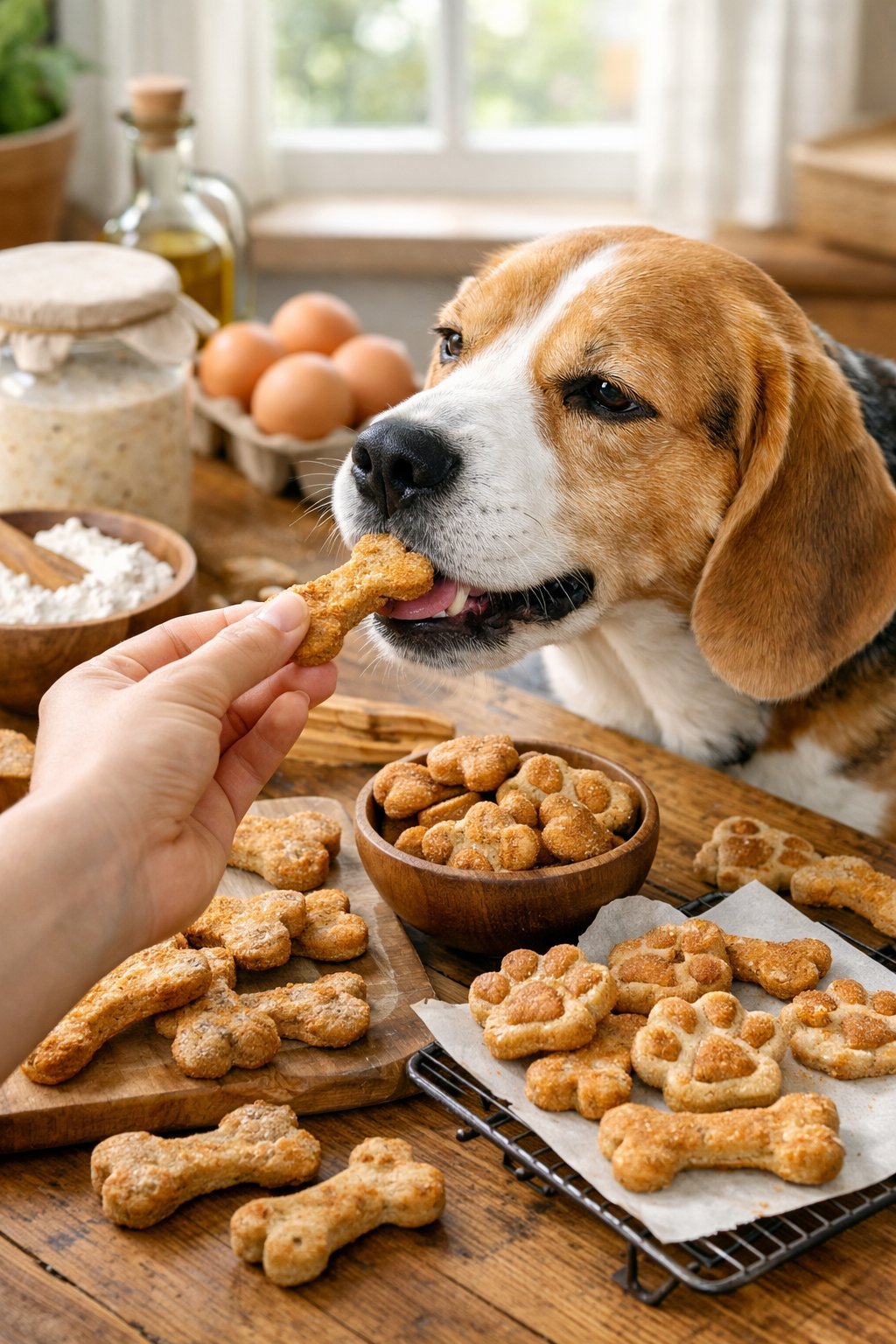
Making sourdough treats at home gives you control over ingredients while supporting your dog’s digestive system. The fermentation process breaks down compounds that can be hard for dogs to digest, and you can avoid fillers and preservatives found in store-bought options.
Nutritional Advantages
When I make treats at home, I know exactly what goes into my dog’s bowl. Store-bought treats often contain artificial preservatives, colors, and fillers that offer little nutritional value. Sourdough starter adds B vitamins and minerals to treats through the fermentation process — the lactic acid bacteria produce nutrients that weren’t present in the original flour.
Common nutritious additions include:
- Pumpkin puree for fiber and vitamin A
- Oat flour for additional protein
- Peanut butter for healthy fats
- Sweet potato for vitamins and minerals
The best sourdough dog treat recipes let me customize treats based on my dog’s specific needs. If my dog needs more protein, I add an extra egg. If they need fewer calories, I adjust the portion size before baking.
Digestibility and Gut Health
The fermentation in sourdough starter breaks down phytic acid, a compound that binds minerals and makes them harder to absorb. This means my dog gets more nutrition from each treat. Sourdough contains beneficial bacteria similar to probiotics — while baking kills most live cultures, the fermented flour remains easier to digest than regular wheat flour.
Dogs with sensitive stomachs often handle sourdough dog treats better than treats made with regular flour. The long fermentation time partially breaks down gluten and other proteins that can upset digestion. I’ve noticed my dog has fewer stomach issues when I give homemade sourdough treats compared to commercial brands.
Allergy-Friendly Ingredients
I can easily modify sourdough dog treats to avoid ingredients that trigger my dog’s allergies. Many commercial treats contain common allergens like corn, soy, or certain proteins. If my dog can’t have wheat, I can maintain a sourdough starter using rice flour, oat flour, or other gluten-free options.
Allergen-free substitutions:
- Use oat or rice flour instead of wheat
- Replace peanut butter with sunflower seed butter
- Swap regular eggs for flax eggs
- Choose sweet potato over pumpkin if needed
Making homemade sourdough dog treats means I can read every ingredient on the package because I wrote the recipe myself. This control is especially valuable for dogs with multiple food sensitivities.
Essential Ingredients and Tools for Sourdough Dog Treats
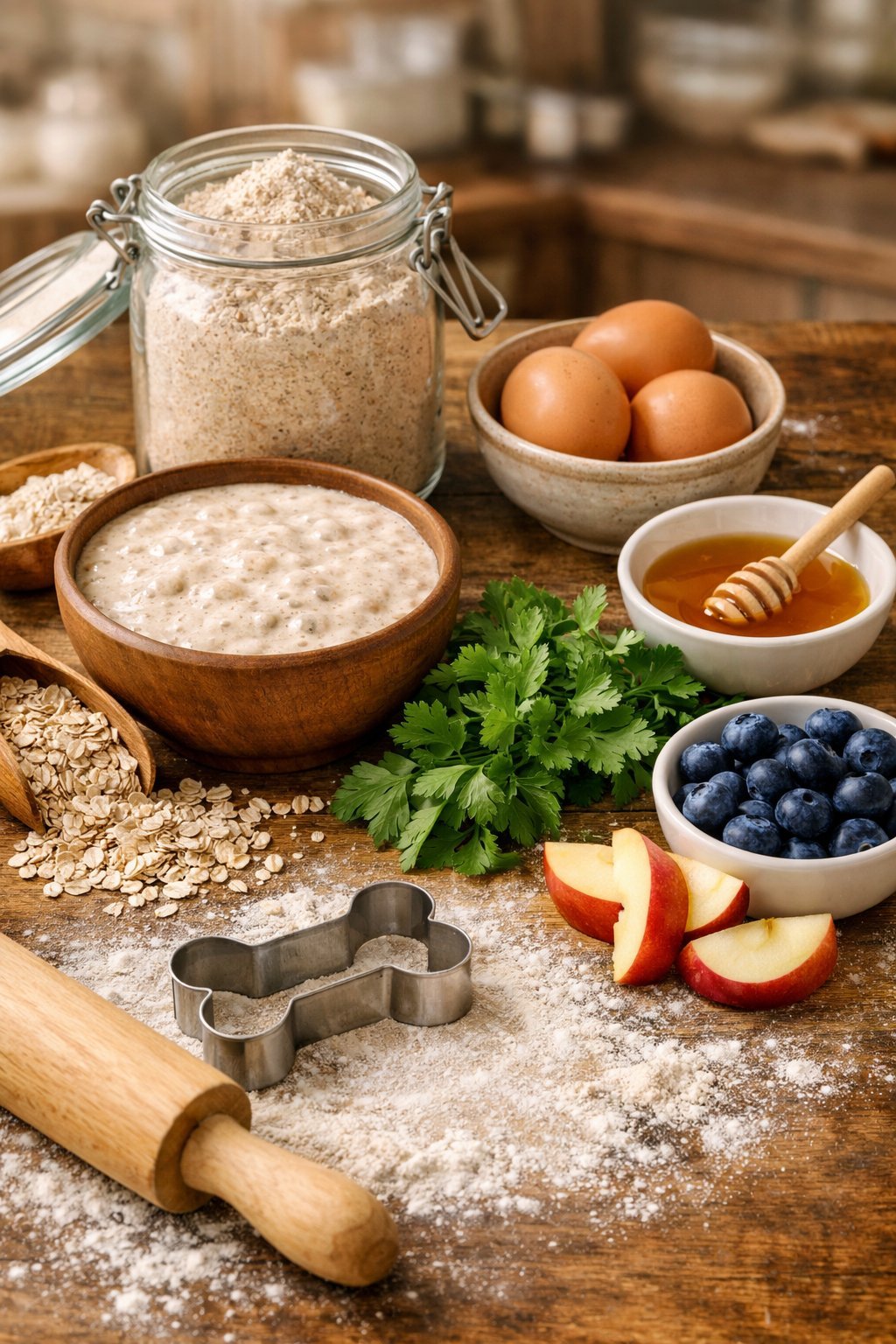
The base of any good dog treat starts with sourdough starter, but the right ingredients and tools make the whole process faster and more consistent. Here are the five things I always have on hand before I start a batch.
1. Wilton Dog Bone Cookie Cutter Set
Getting that classic bone shape makes homemade treats look just as good as store-bought ones — and my dog seems to think they taste better too. The Wilton Dog Bone Cookie Cutter Set comes with multiple sizes so I can make small training treats or larger biscuits depending on what I need. The edges cut cleanly through firm sourdough dough without dragging or tearing, and cleanup is quick with a simple rinse.
2. King Arthur Baking Whole Wheat Flour
The flour you use matters more than you’d think. King Arthur Whole Wheat Flour is my go-to because it’s unbleached, high quality, and produces a firm dough that holds its shape during baking. It has a higher protein content than most store brands which gives treats better structure and a satisfying crunch dogs love. I’ve tried cheaper flours and the treats always come out softer and don’t last as long.
3. Crazy Richard’s 100% Pure Peanut Butter
This is the only peanut butter I use in dog treats. Crazy Richard’s contains just one ingredient — peanuts — with absolutely no xylitol, added sugar, salt, or oils. Xylitol is an artificial sweetener found in many peanut butter brands that is extremely toxic to dogs, so checking the label before you buy is non-negotiable. Crazy Richard’s gives me complete peace of mind and my dog absolutely loves the flavor.
4. Libby’s 100% Pure Pumpkin
Pumpkin puree is one of the most useful ingredients in dog treat baking. It adds moisture to the dough, helps bind everything together, and provides fiber that supports healthy digestion. Libby’s 100% Pure Pumpkin is exactly what it says — just pumpkin, nothing else. Make sure you’re buying the plain pumpkin and not pumpkin pie filling, which contains spices and sugars that aren’t safe for dogs. I keep several cans in my pantry at all times.
5. OXO Good Grips Silicone Baking Mat
Parchment paper works fine but a silicone baking mat is a game changer for making dog treats regularly. The OXO Good Grips mat gives a perfectly non-stick surface so treats lift off cleanly every time without breaking. It distributes heat evenly which means no burnt bottoms and no soft centers — every treat comes out consistently. It’s reusable, easy to clean, and saves money over buying parchment paper constantly.
Choosing the Right Sourdough Starter
I use either active starter or discard for my sourdough dog treats. Both work perfectly fine. Active starter gives a slightly tangier flavor while discard works just as well and helps reduce waste in my kitchen. The starter should be unfed or fed within the last 12 hours with no mold or off smells.
Starter Guidelines:
- Use 3/4 to 1 cup per batch
- Room temperature works best
- Week-old discard is fine
- No mold or off smells
Dog-Safe Flavor Additions
I stick to ingredients I know are safe for dogs. Pumpkin puree is my go-to because it adds fiber and supports digestion. Peanut butter is another favorite, but I always check the label carefully — only use natural peanut butter with no xylitol, which is toxic to dogs.
Safe Add-Ins I Use:
- Plain pumpkin puree (not pie filling)
- Unsweetened applesauce
- Mashed sweet potato
- Shredded carrots
- Fresh parsley
- Blueberries
I avoid onions, garlic, grapes, raisins, and chocolate completely. These are all dangerous for dogs. I also skip any artificial sweeteners.
Gluten-Free and Grain Alternatives
Some dogs need gluten-free options due to allergies or sensitivities. Oat flour works great and I make it by grinding oats in my blender. Rice flour is another good choice that’s easy to digest.
Flour Alternatives:
- Oat flour
- Rice flour
- Coconut flour (use less, it’s very absorbent)
- Chickpea flour
I adjust liquid amounts when using alternative flours. Coconut flour soaks up way more moisture than wheat flour so I usually need to add extra pumpkin or water to get the right dough consistency.
10 Sourdough Dog Treats Recipes Dogs Go Crazy For
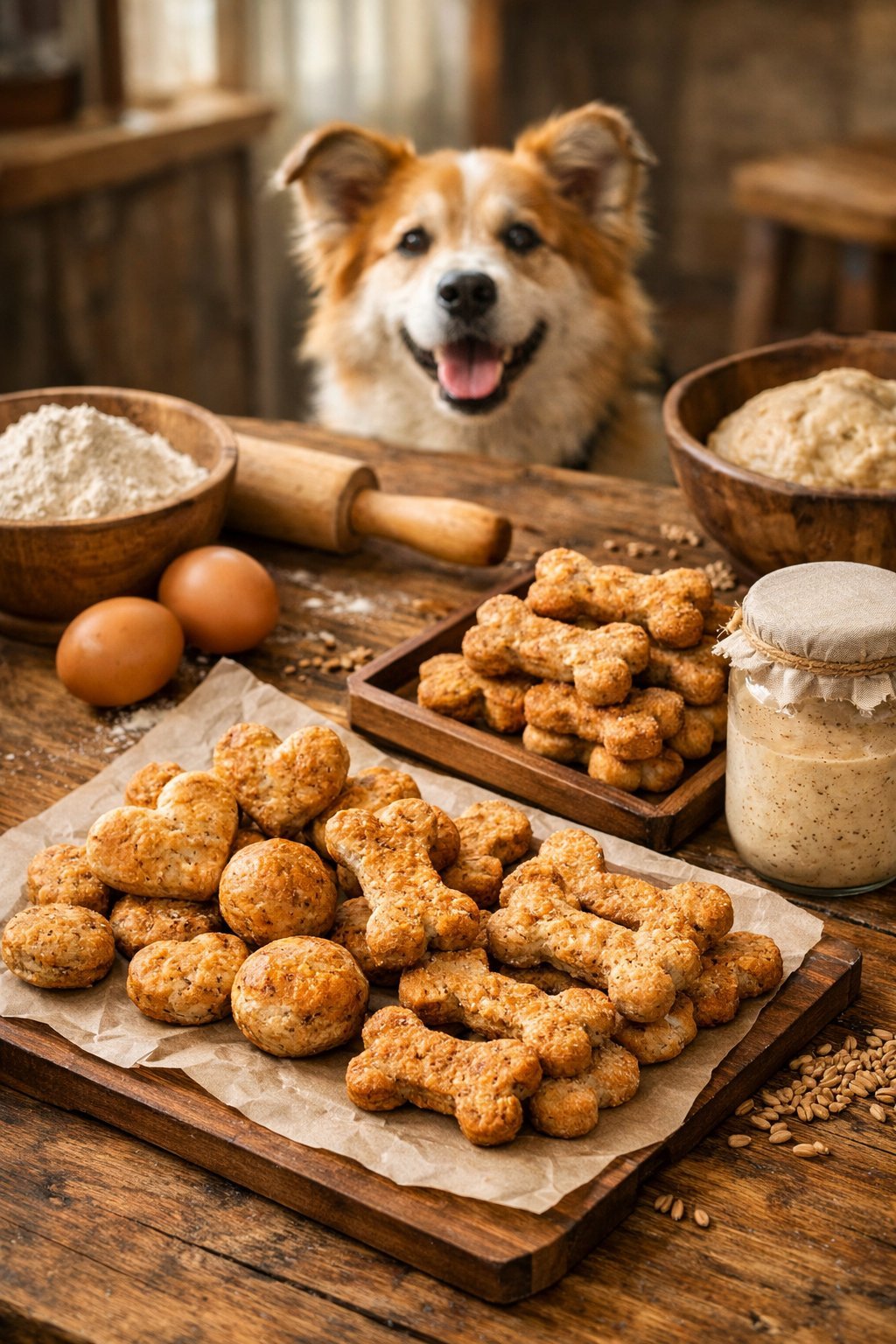
These recipes use simple ingredients you probably already have in your kitchen. Each one puts your sourdough starter or discard to good use while creating treats your dog will love.
Classic Sourdough Biscuits
I start with the most basic recipe that never fails. You need 3/4 cup sourdough starter (active or discard works fine), 1 cup whole wheat flour, and 1 egg. Mix everything in a bowl until you get a firm dough, then roll it out to about 1/4 inch thickness on a floured surface.
Cut into shapes with cookie cutters or just slice into squares with a knife. Place them on a parchment-lined baking sheet and bake at 350°F for 25-30 minutes until they’re golden and crispy. Let them cool completely before giving them to your pup.
These simple sourdough dog treats store well in an airtight container for up to two weeks. The crunchy texture helps clean your dog’s teeth while they chew. My dogs always sit patiently by the oven when I make these.
Peanut Butter Sourdough Bones
This recipe combines two things dogs love: peanut butter and crunchy biscuits. Mix 3/4 cup sourdough starter with 1/3 cup natural peanut butter (make sure it contains no xylitol, which is toxic to dogs), 1 egg, and enough whole wheat flour to make a workable dough — usually about 1 to 1 1/2 cups.
The dough should be stiff but not crumbly. Roll it out and use bone-shaped cutters if you have them. These peanut butter sourdough treats need about 30 minutes in a 325°F oven — I flip them halfway through baking to get even crispness on both sides. Store these in the refrigerator if your kitchen gets warm since peanut butter can go rancid.
Chicken and Parsley Sourdough Bites
For a savory option, I use 3/4 cup sourdough starter, 1/2 cup cooked shredded chicken, 2 tablespoons fresh chopped parsley, and 1 to 1 1/2 cups oat flour. The parsley helps freshen your dog’s breath naturally. Mix all ingredients until combined — this dough is stickier than the others so I roll it into small balls instead of using cutters.
Place the balls on a baking sheet and flatten them slightly with your palm. Bake at 350°F for 20-25 minutes. These chicken-flavored dog treats don’t last as long as the other recipes because of the meat — keep them in the fridge and use within one week. The chicken provides extra protein that active dogs need.
Creative Sourdough Dog Treat Variations
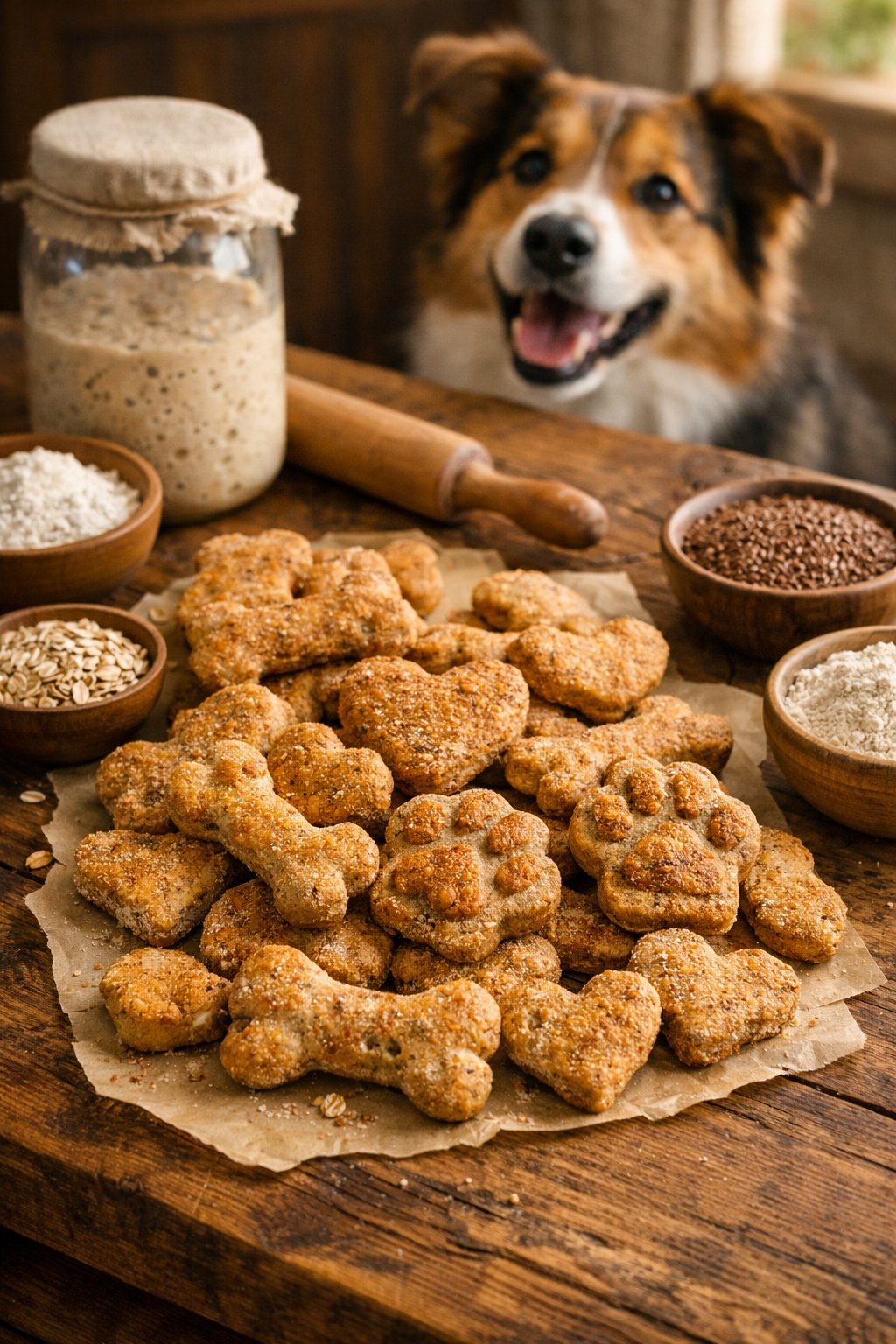
Adding fruits and vegetables to your sourdough discard creates nutritious treats with flavors dogs love. These variations pack extra vitamins and fiber while keeping the gut-friendly benefits of sourdough.
Sweet Potato Sourdough Cookies
I love using sweet potatoes in dog treats because they’re packed with vitamins A, C, and B6. Mix one cup of mashed cooked sweet potato with 3/4 cup of sourdough discard, two cups of whole wheat flour, and one egg to bind everything together. The dough should feel firm but slightly sticky.
Roll the dough to about quarter-inch thickness and cut it into shapes. Bake at 350°F for 25 to 30 minutes for a crispy outside with a slightly chewy center. These sourdough dog treats store well in an airtight container for up to two weeks.
Apple and Cinnamon Sourdough Rounds
Apples give a crunchy texture and natural sweetness that most dogs love — always remove the seeds and core because apple seeds aren’t safe for dogs. Grate one medium apple and squeeze out the extra moisture with a clean kitchen towel. Mix the grated apple with 3/4 cup of sourdough starter, two cups of oat flour, and half a teaspoon of cinnamon.
Shape the dough into small balls before flattening them into rounds. Bake at 325°F for 35 minutes until golden and firm. Store these in the fridge since the fresh apple makes them a bit moist.
Blueberry Sourdough Snacks
Blueberries are packed with antioxidants and add a fun burst of flavor. Fold half a cup of blueberries into 3/4 cup of sourdough discard, two cups of brown rice flour, and one mashed banana. The banana binds everything together and adds sweetness. Use a small cookie scoop to portion the dough and press each round flat on a baking sheet.
Bake at 350°F for 20 to 25 minutes. These homemade sourdough dog treats are great for training and freeze well in small batches for later.
Tips for Baking and Storing Sourdough Dog Treats
Proper baking temperature and storage can help your homemade treats last up to two weeks. A few simple tricks will keep them fresh and safe for your pup.
Safe Storage Methods
I always keep my finished sourdough dog treats in an airtight container on the counter for up to two weeks. Make sure the treats are totally cool before sealing them up to avoid moisture and mold. For longer storage, I freeze the treats separated with parchment paper so they don’t stick. If you live somewhere humid, store treats in the fridge in a sealed container or bag.
Batch Preparation Advice
I preheat my oven to 350°F and line baking sheets with parchment paper or a silicone mat to prevent sticking. When making sourdough dog treats, I roll the dough to about 1/4 inch thick for even baking. I bake treats for 20 minutes if my dog likes them softer, or 25-30 minutes for crunchier ones. Scoring the dough before baking makes it easy to break apart later. Making double batches saves time — I freeze half for later.
Troubleshooting Common Issues
If treats come out too hard, reduce baking time by five minutes next batch. Too soft means they need a few extra minutes in the oven. The dough should feel like play-dough when properly mixed — crumbly treats usually mean the dough was too dry, so add water one tablespoon at a time until the dough holds together. Sticky dough needs more flour added gradually.
When treats spread too much during baking, chill the dough for 15 minutes before cutting shapes. Uneven browning means you need to rotate the baking sheet halfway through cooking time.
