Dog Corner Ideas for Small Homes That Actually Work: Space-Saving Solutions Your Pup Will Love

Dog Corner Ideas – Living in a small home doesn’t mean your dog has to go without their own special spot.
You can create a cozy, functional dog corner in even the tiniest spaces by using unused areas like under stairs, empty corners, or closet nooks.
I’ve found that transforming unused corners into dog-friendly spaces makes both pets and owners happier.
The key is choosing smart furniture and layout options that work for your home’s size.
It can feel tricky to give your pup a dedicated area without making your space feel cramped.
That’s why I’ve put together practical ideas that actually fit in small homes.
These space-saving corner ideas for small dog areas help you make the most of what you have.
Whether you rent an apartment or own a compact house, you’ll find solutions that keep your dog comfortable without taking over your living room.
Key Takeaways
- Empty corners and unused spaces can become perfect dog areas with the right setup
- Multi-purpose furniture and wall-mounted accessories help maximize floor space
- A well-organized dog corner keeps pet supplies tidy while giving your dog their own retreat
Choosing the Perfect Spot for Your Dog Corner

Finding the right location for your dog’s space means looking at rooms you already use and finding spots that won’t get in the way.
The best dog corners balance your pet’s comfort with your home’s flow.
Assessing Unused Spaces
I always start by walking through my home and looking for areas that sit empty most of the day.
Under-the-stairs areas make excellent dog corners because they provide natural boundaries and a cave-like feel that many dogs love.
Empty corners in rooms often go unnoticed until you start looking for them.
I check behind doors, next to furniture, and in spots where traffic doesn’t flow heavily.
Closets can work well if you remove the door or keep it open.
The enclosed feeling helps anxious dogs feel secure.
Just make sure there’s enough ventilation and the space isn’t too cramped for your dog to turn around comfortably.
I measure any potential spot before buying supplies.
My dog needs enough room to stretch out fully when lying down, plus a few extra inches on each side.
Integrating into Living Areas
Small dog corners work well when they blend into spaces I already spend time in.
I put my dog’s bed in a living room corner so he can be near me without blocking walkways.
The key is choosing a spot away from high-traffic paths.
I avoid placing dog corners near doorways or in front of hallways where people walk constantly.
Corner placement in living rooms lets me use two walls as natural boundaries.
This takes up less floor space than a bed sitting in the middle of a room.
I keep dog toys in decorative baskets that match my furniture.
This keeps the area tidy and makes it look intentional rather than messy.
Utilizing Bedroom or Hallway Nooks
I find that bedroom corners work perfectly for dogs who like sleeping near their owners at night.
The quiet atmosphere helps them rest better.
Hallway nooks often have awkward dimensions that don’t fit regular furniture.
These spots work great for creating cozy dog spaces because dogs don’t need much room.
I use a small bed or cushion in my hallway nook and add a wall-mounted hook above it for leashes and bags.
This creates a functional pet station without taking up valuable square footage.
Wide hallways can fit a dog corner along one wall without blocking the path.
I make sure there’s at least 30 inches of clear walking space remaining.
Creative Dog Corner Ideas for Small Homes

Unused spaces in your home can transform into perfect dog zones with smart planning.
I’ve found that stairs, windows, and closets offer the best opportunities for creating comfortable pet areas without taking up valuable floor space.
Under-Stair Dog Dens
The space beneath your stairs is one of the most overlooked areas in small homes.
I love using this spot because it naturally creates a cave-like feeling that many dogs prefer for sleeping and relaxing.
Start by measuring the height and depth of your under-stair space.
You’ll want at least 24 inches of height for small to medium dogs.
Add a cushioned bed or mat that fits snugly into the space.
Essential items for under-stair dens:
- Washable cushion or dog bed
- Small LED light for visibility
- Gate or curtain for privacy
- Storage basket for toys
Consider installing a small gate or hanging a curtain at the opening.
This gives your dog a sense of security and helps block out household noise.
Paint the interior walls a calming color like light blue or soft gray to make the space more inviting.
Window Seat Dog Areas
Window seats give dogs entertainment and comfort in one compact spot.
I’ve noticed dogs love watching outdoor activity, and a window seat dog area keeps them engaged for hours.
Build or buy a low platform that sits beneath a window at your dog’s eye level when they’re lying down.
The platform should be sturdy enough to support your dog’s weight plus the bedding.
Add a thick foam cushion covered with waterproof fabric.
This protects against accidents and makes cleaning easier.
Place the cushion directly on the platform and secure it with velcro strips to prevent sliding.
I recommend choosing a window with a good view of the street or yard.
Your dog will appreciate watching birds, squirrels, and passing neighbors.
Just make sure to add curtains or blinds that you can close during hot afternoons to prevent overheating.
Closet Conversions for Pet Retreats
Empty closets make excellent private retreats for anxious or older dogs.
I find that closet conversions work especially well in bedrooms or hallways where dogs already spend time.
Remove the closet door completely or replace it with a pet gate.
Your dog needs easy access in and out without feeling trapped.
Keep the original door only if you plan to leave it open permanently.
Install ventilation by adding small holes near the top or using a battery-powered fan.
Good airflow prevents the space from getting stuffy or too warm.
Line the floor with vinyl planks or washable rugs for easy maintenance.
Closet setup checklist:
- Remove or secure hanging items
- Add soft lighting (battery-operated)
- Include comfortable bedding
- Place water bowl near entrance
Personalize the space with your dog’s favorite blanket and a few safe toys.
The familiar scents help your dog feel comfortable in their new retreat.
Space-Saving Furniture and Accessories

The right furniture and accessories can give your dog a comfortable spot without taking up too much room.
Smart choices like beds with hidden storage or items that fold away when not needed help you maximize every inch of your home.
Multi-Functional Dog Beds
I always recommend dog beds that do more than one job.
Beds with built-in storage drawers underneath let you keep toys, treats, and leashes in one spot.
Some beds even have raised sides that double as cushioned backrests for humans.
Ottoman-style dog beds work great because they look like regular furniture.
Your guests might not even know it’s a pet bed until your dog hops in.
These pieces blend into your living room while giving your dog a cozy place to rest.
Elevated dog beds with space underneath are perfect for small dog areas that need smart storage.
I use the space below to slide in a basket of dog supplies.
The open design also keeps air flowing, which helps in warmer months.
Foldable or Stackable Pet Supplies
Collapsible food and water bowls save cabinet space when I’m not using them.
These bowls flatten down to about an inch thick and work perfectly for travel too.
I keep a set in my car for trips to the park.
Folding pet crates are a must-have in small homes.
When my dog isn’t using the crate, I fold it flat and slide it under my bed or behind a door.
This beats having a bulky metal crate taking up floor space all day.
Stackable storage bins keep dog supplies organized without spreading across multiple rooms.
I label each bin for different items like grooming supplies, toys, and seasonal gear.
The bins stack vertically to use wall height instead of valuable floor space.
Built-In Storage Solutions
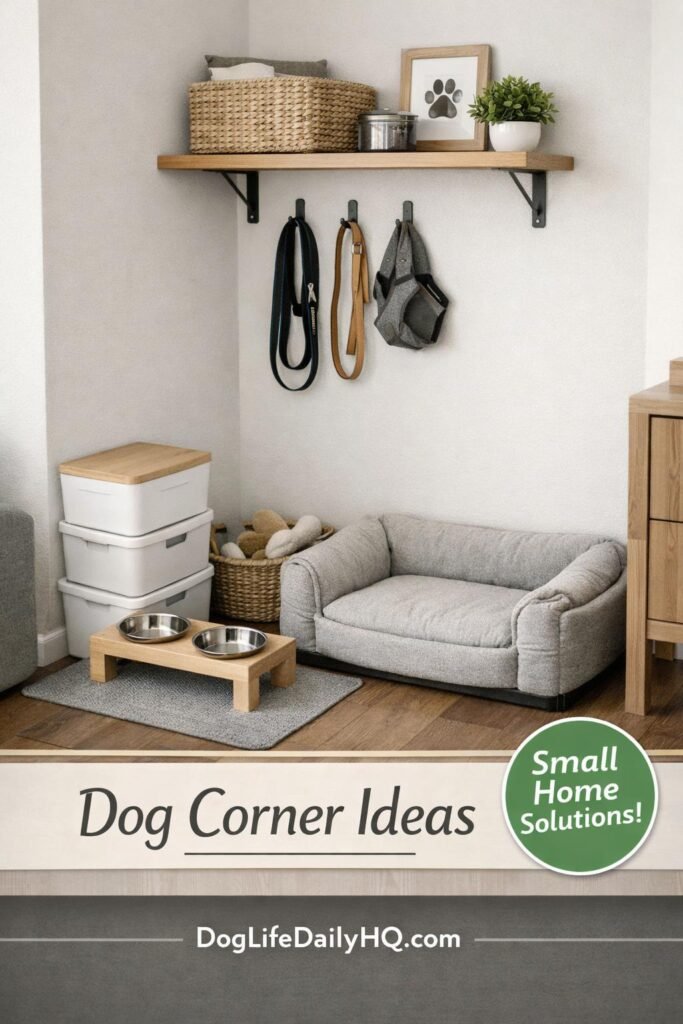
I converted an unused corner into a feeding station with a small wall-mounted shelf.
The shelf holds food bowls at a comfortable height for my dog and keeps them off the floor.
I mounted hooks below for leashes and a small basket for waste bags.
Kitchen cabinet stations work well if you have lower cabinets you don’t use much.
I removed the shelves from one cabinet and added a pull-out drawer with built-in food bowls.
All the dog food and supplies stay hidden behind the cabinet door.
Wall-mounted leash holders with small shelves keep everything in one spot near the door.
Mine has hooks for leashes and collars plus a tiny shelf for my keys and wallet.
This setup turns a blank wall into functional storage that keeps your home clutter-free.
Decorating and Personalizing Your Pet’s Space
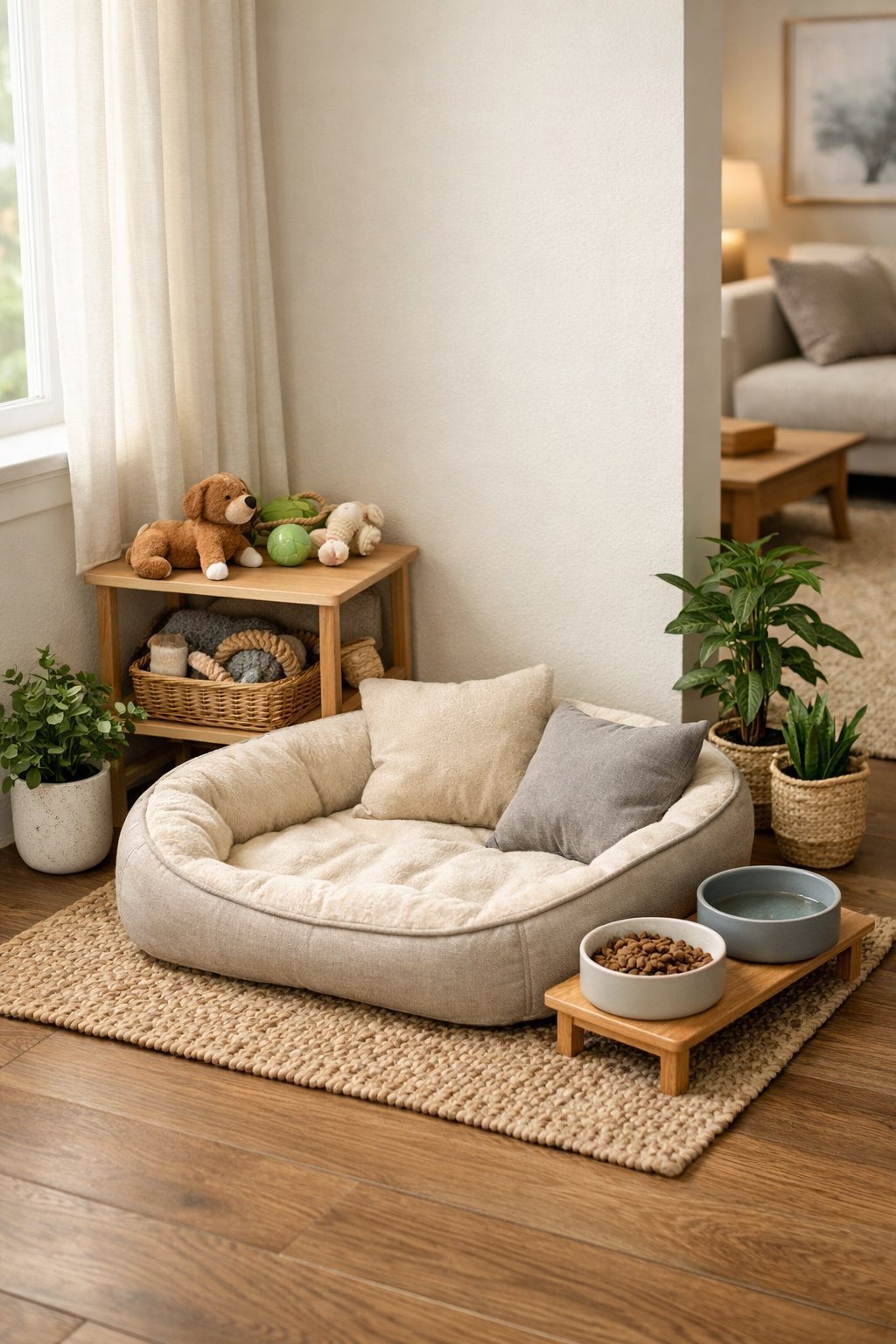
Soft textures and personal touches transform a basic corner into a space your dog will love.
Adding custom elements like wall art makes the area feel special while keeping it functional.
Cozy Bedding and Fabrics
I recommend choosing bedding that fits your dog’s size and sleeping style.
Dogs that like to curl up do well with round bolster beds, while stretchers need rectangular mats with extra length.
Washable fabrics are essential for keeping the space clean.
I look for materials like microfiber or canvas that can handle regular washing without falling apart.
Dark colors or patterns hide stains better than light fabrics.
Adding a soft blanket gives your dog options for comfort.
Some dogs like to burrow under blankets, while others prefer to sleep on top.
I keep an extra blanket nearby so I can swap them out during washing.
Consider the thickness of the bedding too.
Older dogs need more cushioning for their joints, so memory foam or orthopedic beds work best.
Puppies and young dogs usually do fine with simpler padding.
Chic Wall Art and Name Tags
Personalized dog corners can blend comfort and style when you add decorative elements that match your home.
I hang framed photos of my dog or simple paw print art above the corner space.
A custom name tag or wall sign makes the area feel like it truly belongs to your pet.
You can find wooden signs, metal plaques, or vinyl decals that display your dog’s name.
I mounted a small wooden sign with my dog’s name above her bed.
Wall hooks near the corner keep leashes and collars organized.
I installed decorative hooks that match my home’s style so they look intentional rather than messy.
Hooks with fun shapes like bones or paws add personality without taking up floor space.
Small shelves above the corner hold grooming supplies or treats.
I keep everything at eye level so it’s easy to grab what I need during our daily routine.
Maintaining a Clean and Organized Dog Corner
Keeping your dog’s corner fresh and tidy requires choosing materials that wipe down easily and creating storage systems that keep toys and treats under control.
Easy-Clean Materials
I always recommend waterproof or water-resistant fabrics for dog beds and cushions in small spaces. These materials prevent accidents from soaking through to your floors and wipe clean with a damp cloth.
Washable bed covers are a must-have. I throw mine in the washing machine once a week to keep odors away.
For flooring in the dog corner, I suggest using materials that help with odor control like vinyl or tile instead of carpet. These surfaces don’t trap smells and clean up quickly with regular mopping.
Rubber mats work well under food and water bowls. They catch spills and crumbs, and I can shake them outside or rinse them in the sink.
The non-slip backing keeps bowls from sliding around during mealtime.
Smart Toy and Treat Storage
I use baskets or bins to keep all dog toys in one spot. Clear containers let me see what’s inside without digging through everything.
Wall-mounted organizers save floor space in small homes. I hang hooks for leashes and use small shelves for treat jars.
Storage solutions that reduce clutter keep the corner looking neat while making items easy to grab.
I rotate toys weekly by keeping some stored away and swapping them out. This keeps my dog interested and prevents the corner from overflowing with toys.
For treats, I use airtight containers that seal in freshness and keep bugs out.
Frequently Asked Questions
Setting up a dog corner in a tight space raises practical questions about design and comfort. Here are answers to common concerns about creating functional pet spaces in small homes.
How can I create a cozy dog nook in a limited space?
I find that unused corners work perfectly for dog nooks even in the smallest apartments. Look for spots under stairs, next to furniture, or in hallway corners that aren’t being used.
Add a soft bed or cushion that fits the space. I recommend measuring the corner first so you get a bed that doesn’t stick out too much.
Include a small basket or bin nearby for storing toys and treats. This keeps everything your dog needs in one spot without cluttering other areas.
What are some DIY dog corner ideas that are perfect for small homes?
I’ve seen great results with built-in dog beds that fit into existing furniture or wall spaces. You can repurpose an old end table by removing the bottom shelf and adding a cushion inside.
Floating shelves above the dog corner help maximize vertical space for storing supplies. I mount these about 3-4 feet high so they don’t interfere with the pet area below.
Crate covers made from fabric or wood panels can turn a standard dog crate into a stylish side table. This gives your dog a den-like space while adding furniture to your room.
What are the best dog corner design tips found on Pinterest?
I notice that pet-friendly corner designs often blend with existing decor rather than standing out. Choose beds and accessories in colors that match your room’s palette.
Multi-functional furniture appears frequently in popular designs. Examples include storage benches with built-in dog beds or console tables with pet spaces underneath.
Wall-mounted feeding stations save floor space and look cleaner than traditional bowl setups. I see these paired with pull-out drawers for food storage quite often.
How can you ensure a dog corner is both functional and stylish in a small home?
I focus on pieces that serve two purposes whenever possible. A decorative storage ottoman can hold dog supplies while providing extra seating.
Keep the color scheme simple and cohesive with your existing furniture. Neutral tones like gray, beige, or white help the dog corner blend in rather than create visual clutter.
Good lighting makes any small space feel bigger and more welcoming. I add a small lamp or use existing overhead lights to brighten the dog’s area.
What should be avoided when building a dog house in a small space?
I avoid placing dog corners in high-traffic walkways where people constantly pass by. This stresses dogs out and creates tripping hazards.
Don’t use materials that trap odors or are hard to clean. Skip fabric that can’t be washed and avoid porous wood that absorbs moisture.
I steer clear of oversized furniture or structures that overwhelm the room. Measure carefully and choose items scaled appropriately for both your dog and your space.
Do dogs appreciate having their own designated corner in the house?
Yes, dogs benefit from having a consistent spot they recognize as theirs. I’ve noticed my dog returns to her corner when she wants to rest or feel secure.
A dedicated pet space gives dogs a sense of routine and territory within the home. This can reduce anxiety and help with behavior training.
Even small corner setups provide dogs with boundaries and comfort. Dogs tend to sleep better when they have a specific place rather than wandering around looking for a spot.