Puppy Training: Essential Steps for First-Time Dog Owners to Build Good Habits

Puppy Training – Bringing home a new puppy is exciting, but it can also feel a bit overwhelming if you’re not sure where to start with training. The key is to start early, be consistent, and use positive methods that help build trust and good habits from the very beginning.
I’ve put together this guide to help you understand the basics of puppy training. You’ll get tips on everything from preparing your home to teaching basic commands and handling common issues like chewing or potty accidents.
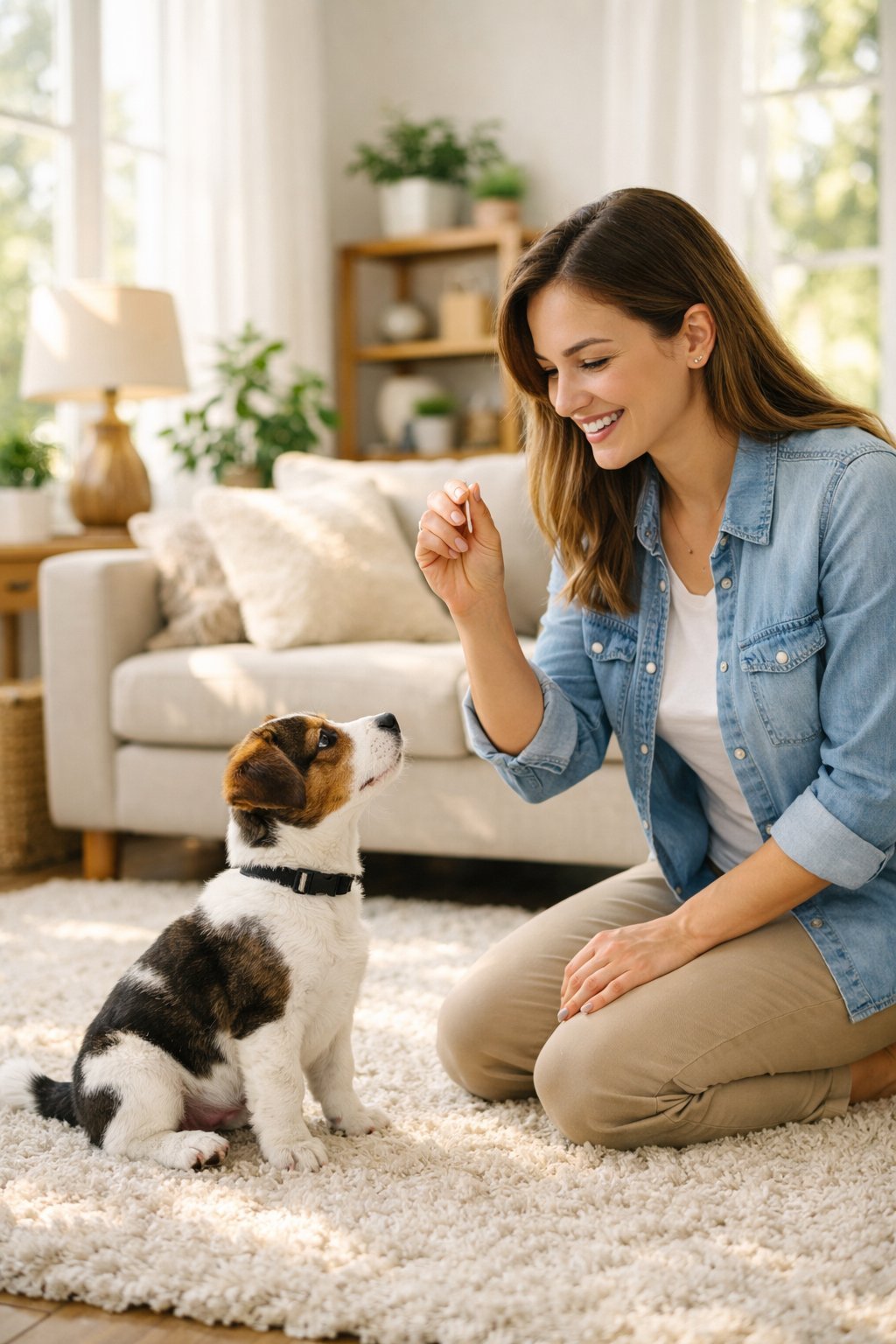
Puppies learn super fast in their first few months, so early training really matters. The sooner you start teaching them, the easier it is for both of you.
I’ll walk you through practical steps that actually work, so you can enjoy a strong bond with your dog for years to come.
Key Takeaways
- Start training your puppy early with positive methods to build good habits and trust.
- Create daily routines for feeding, potty breaks, and socialization to help your puppy adjust.
- Address common challenges like chewing and barking with patience and consistent training techniques.
Getting Ready for Your Puppy
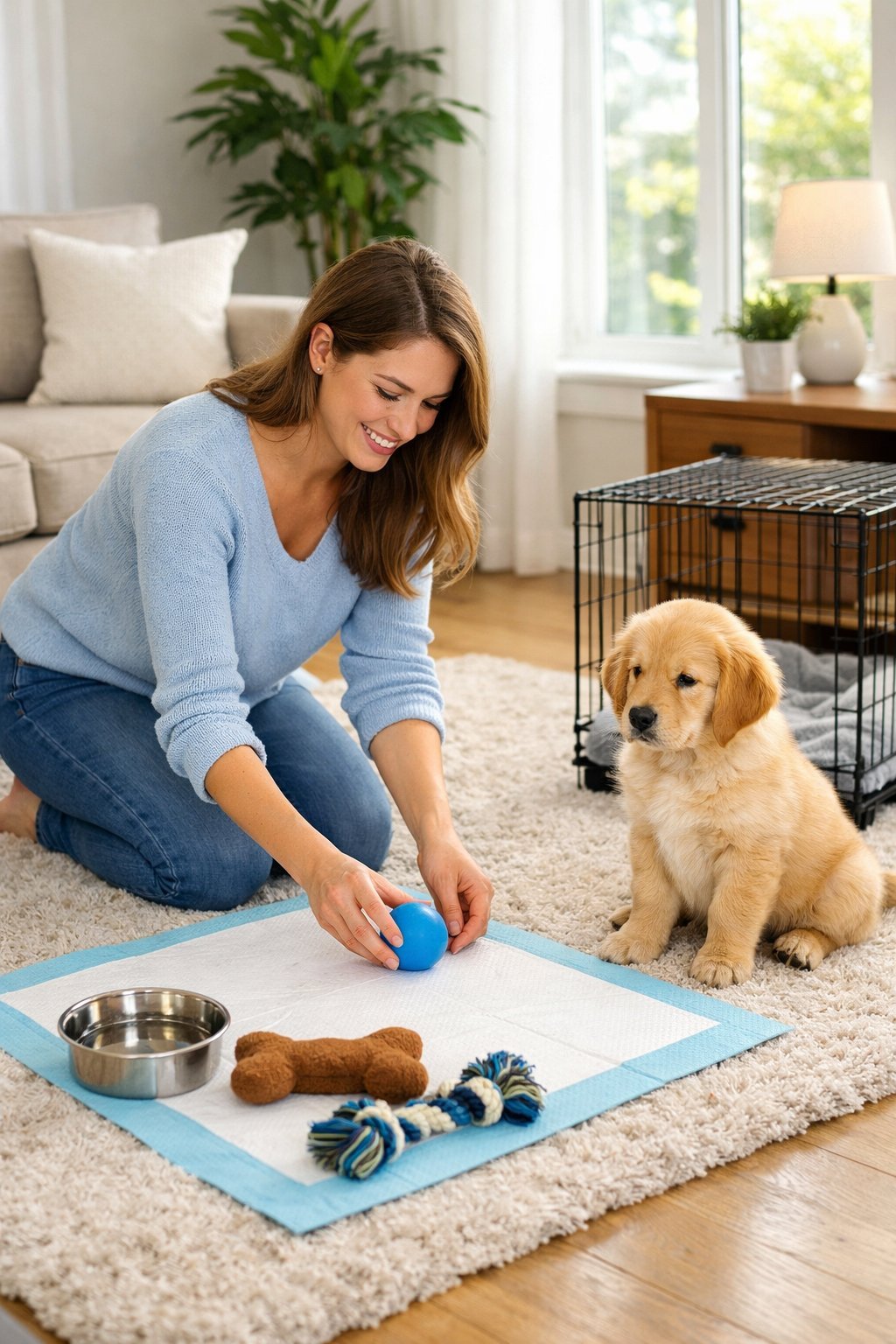
Before your puppy comes home, set up a safe space, gather the right supplies, find a good vet, and remove any dangers from your home.
Preparing Your Home
Set up a dedicated space for your puppy before they arrive. Make sure it has a comfy bed, food and water bowls, and a few toys.
Pick a quiet spot away from heavy foot traffic so your puppy can rest without constant interruptions. Your puppy needs a place to call their own.
A crate works great as a safe den where they can sleep and relax. The crate should be big enough for your puppy to stand up, turn around, and lie down comfortably.
Keep your puppy in one or two rooms at first to make supervision and potty training easier. As they learn the house rules, you can let them explore more areas.
Essential Puppy Supplies
Here’s what you’ll want to have ready:
- Food and water bowls (stainless steel or ceramic are best)
- High-quality puppy food recommended by your vet
- Collar and leash for walks and ID
- ID tag with your phone number
- Crate sized for your puppy’s adult weight
- Bed or blankets for comfort
- Toys for chewing and play
- Treats for training rewards
- Cleaning supplies for accidents
Having everything ready makes those first few days a lot smoother. Don’t forget waste bags for outdoor potty breaks and a brush suited to your puppy’s coat type.
Choosing the Right Vet
Schedule a vet visit within the first few days of bringing your puppy home. This first checkup confirms your puppy is healthy and gets their medical records started.
Ask friends or family for vet recommendations nearby. Look for a clinic that’s convenient and has good hours.
During your first visit, bring any health records from the breeder or shelter. Ask about spaying or neutering, parasite prevention, and what to do in emergencies.
Puppy-Proofing Tips
Check every room your puppy will explore for potential dangers. Get down on your hands and knees to see things from a puppy’s point of view.
Common household dangers to remove:
- Electrical cords and cables
- Toxic plants (like lilies, azaleas, and sago palms)
- Cleaning products and chemicals
- Small objects that could be swallowed
- Medications and vitamins
- Trash cans without lids
Secure cabinets with childproof locks and move breakables up high. Keep shoes, socks, and clothes off the floor since puppies love to chew on them.
Block off stairs with baby gates until your puppy is old enough to handle them. Check your yard for gaps in fencing and remove any poisonous plants.
Store gardening tools and fertilizers in a locked shed so curious puppies can’t get to them.
Building Routines and Socialization
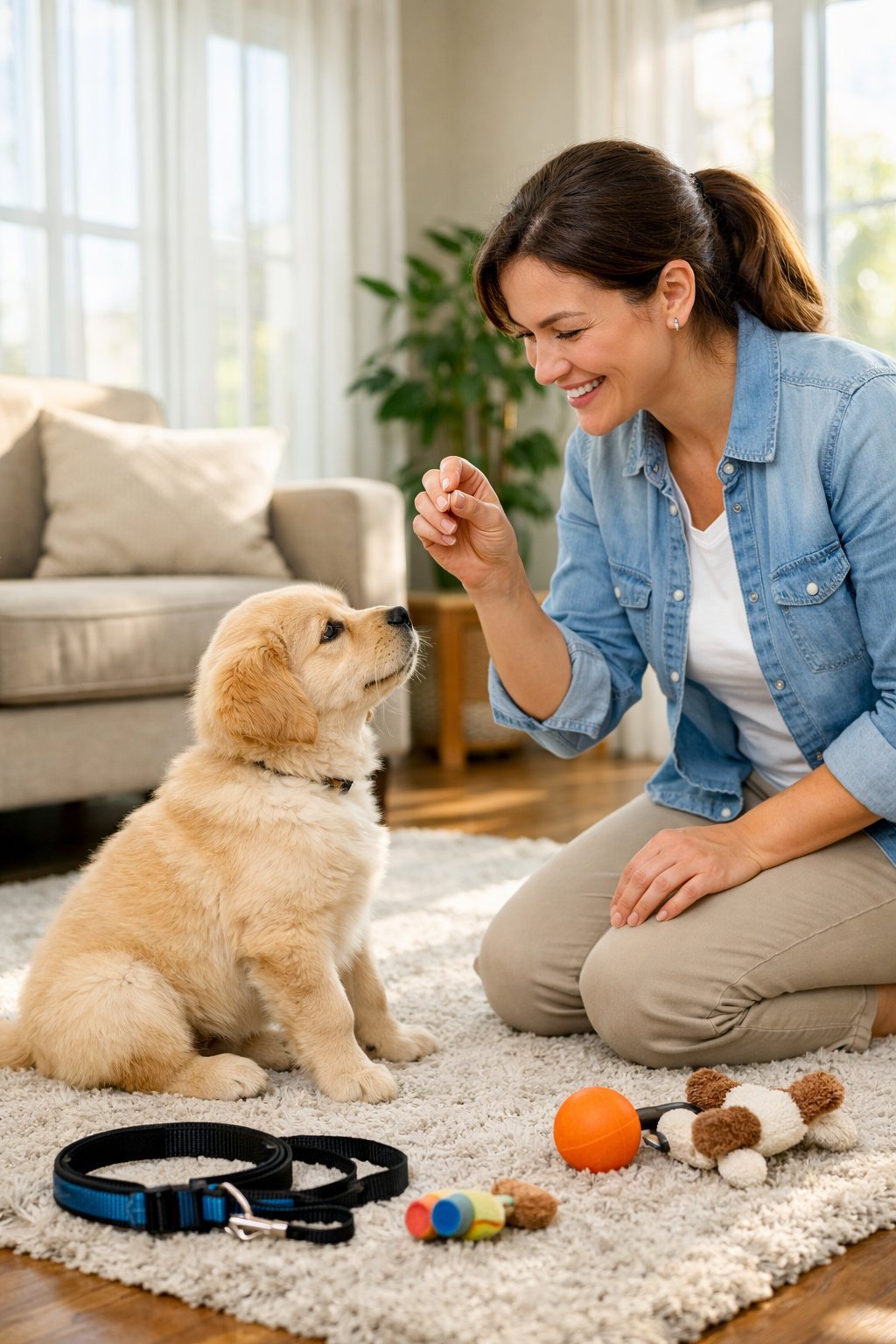
Puppies do best with predictable daily patterns. Creating a consistent training schedule with regular feeding times and planned social experiences helps your puppy feel secure.
Establishing Feeding Schedules
Feed your puppy at the same times every day. This routine helps with housetraining since puppies usually need to go potty 15-30 minutes after eating.
Most puppies under six months need three meals a day. I like to space them out, like 7 AM, noon, and 5 PM.
Sample Feeding Schedule:
- 8 weeks to 3 months: 4 meals daily
- 3 to 6 months: 3 meals daily
- 6 months and older: 2 meals daily
Measure each portion based on your puppy’s weight and the food instructions. Avoid free-feeding so you can predict bathroom breaks and prevent overeating.
Early Socialization Basics
The critical socialization window is between 3-16 weeks. This is when puppies are most open to new experiences.
Expose your puppy to different people, sounds, surfaces, and situations during this time. Keep things positive and don’t overwhelm them.
Introduce one or two new things per session and watch for signs of stress like tucked tails or panting.
Fundamental Training Techniques
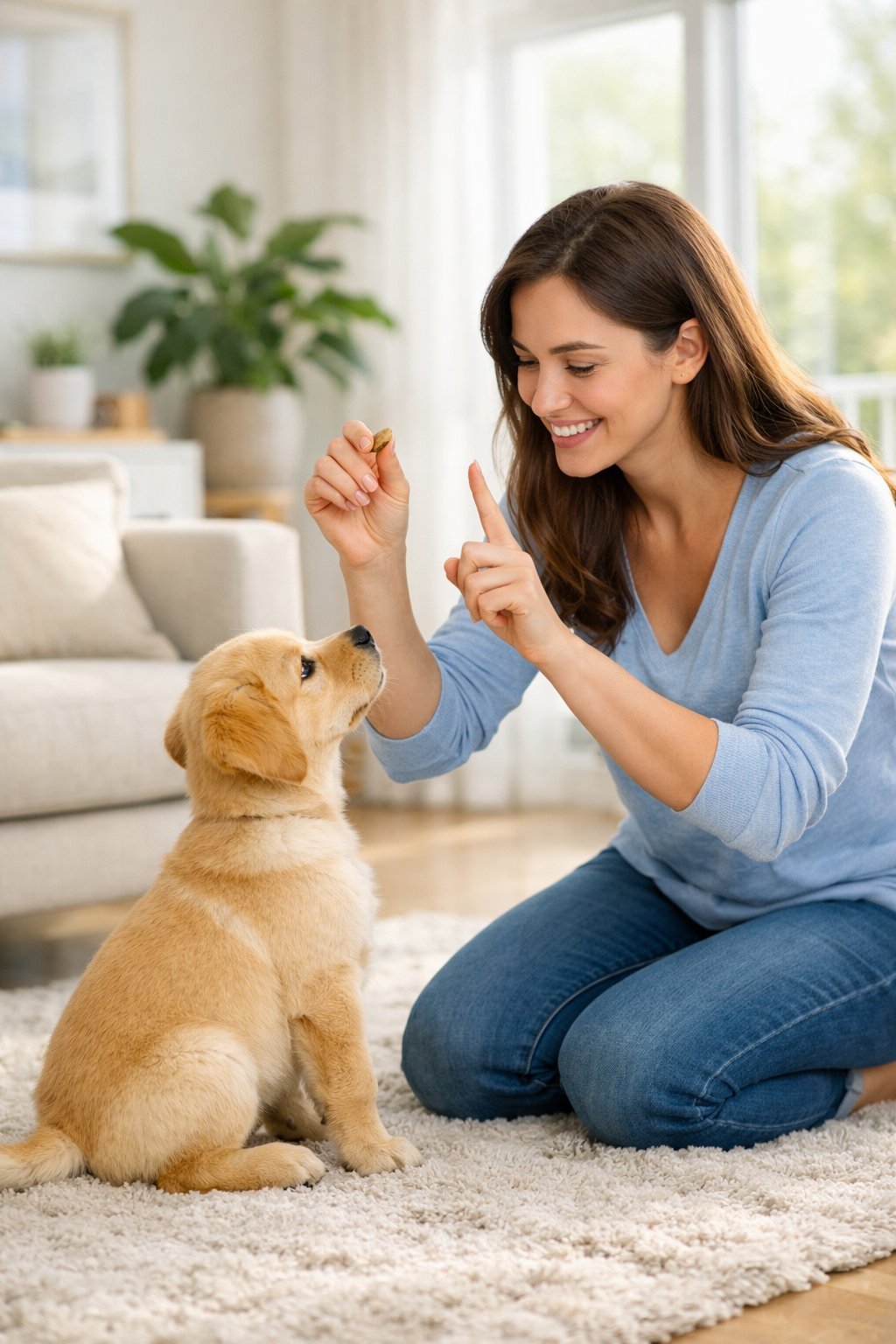
Using the right training methods makes a big difference in how quickly your puppy learns. I always use positive approaches to build trust and good habits.
Housebreaking Your Puppy
Start housebreaking by taking your puppy outside often. Young puppies need bathroom breaks every 1-2 hours, plus right after eating, drinking, playing, or waking up.
Pick one specific spot in your yard for potty breaks. Puppies learn faster when they go in the same place and smell their own scent.
Use a simple phrase like “go potty” every time you’re at the spot. Stick to a routine:
- First thing in the morning
- After meals (within 15-20 minutes)
- After naps
- After playtime
- Before bedtime
If accidents happen indoors, clean them with an enzyme cleaner. Never punish your puppy for accidents—just focus on teaching the right behavior.
Crate Training Essentials
Use crate training as a safe space, not a punishment. The crate should be just big enough for your puppy to stand, turn around, and lie down.
Make the crate cozy with a soft blanket and a safe toy. Start by feeding meals inside the crate with the door open to create positive vibes.
Gradually increase crate time. Close the door for a few minutes while you’re in the room, then slowly extend the time.
Your puppy can usually hold their bladder for one hour per month of age, plus one hour.
Teaching Basic Commands
Start with sit, stay, come, and down. These commands keep your puppy safe and make life easier.
For sit, hold a treat near your puppy’s nose and move it up and back over their head. Say “sit” as their bottom goes down and reward them right away.
For come, get down to your puppy’s level and say their name followed by “come” in an excited voice. Reward them every time they come to you.
Keep training sessions short—about 5-10 minutes. Multiple short sessions throughout the day work better than one long one.
Reward-Based Training Methods
Reward-based training works wonders for building confidence and strengthening your bond. Reward good behavior instead of punishing mistakes.
Treats should be small, soft, and something your puppy loves. Use tiny pieces so your puppy doesn’t get full during training.
Praise and petting are also great rewards. Timing is everything—reward your puppy within a couple seconds of the right behavior.
Ignore unwanted behaviors when you can. Puppies often act out for attention, so ignoring them teaches that those actions don’t work.
If you need to stop a behavior, redirect your puppy to something appropriate instead.
Addressing Common Puppy Challenges
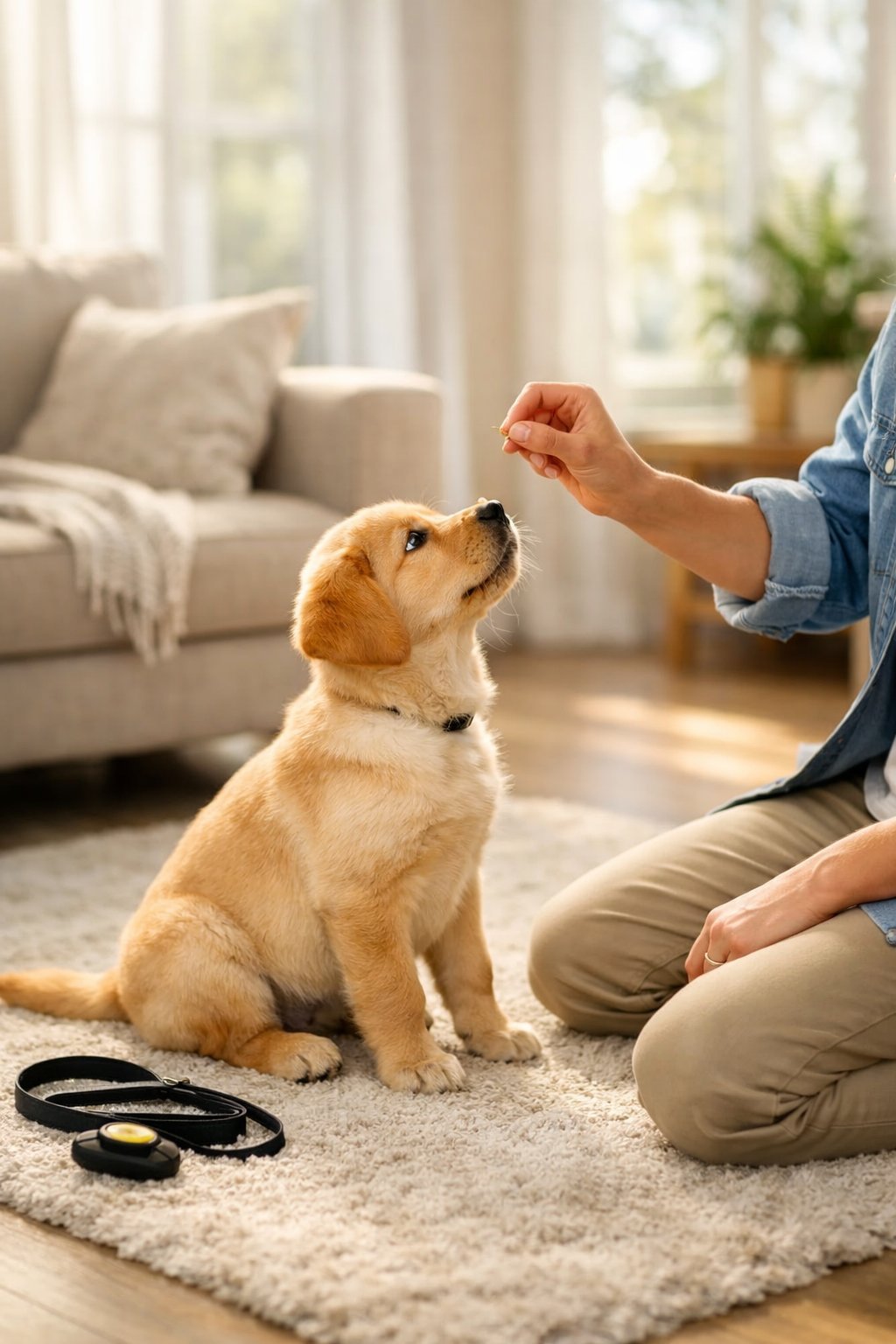
Puppies explore with their mouths, which means they’ll bite and chew things they shouldn’t. Barking is normal too, but it can get out of hand if not managed early.
Managing Play Biting
Play biting is normal, but it’s important to teach your puppy that human skin isn’t a toy. When your puppy bites during play, let out a high-pitched “ouch” and stop playing for 10-20 seconds.
This shows your puppy that biting ends the fun. Redirect their biting to toys instead of your hands or clothes.
Keep toys nearby during playtime so you can quickly swap your hand for a chew toy. Here’s what works:
- Stop all interaction when biting happens
- Praise gentle, calm behavior
- Never use your hands as toys
- Offer lots of safe chew toys
Puppies under four months are still learning bite control, so be patient and consistent. If your puppy gets too wound up and won’t stop biting, give them a short timeout in a quiet space to calm down.
Preventing Chewing Problems
Puppies chew to explore, relieve teething pain, and entertain themselves. I puppy-proof my home by removing items my puppy shouldn’t chew, like shoes, remote controls, and electrical cords.
I give my puppy a variety of safe chew toys with different textures. Frozen toys or wet washcloths placed in the freezer help soothe sore gums during teething.
When I catch my puppy chewing something inappropriate, I calmly take it away and immediately offer an approved toy instead.
Puppy-safe chew options:
- Rubber toys designed for puppies
- Rope toys for tugging
- Frozen Kong toys stuffed with treats
- Puppy-specific dental chews
I make sure my puppy gets enough physical exercise and mental stimulation each day. A bored puppy is more likely to find trouble by chewing on furniture or other household items.
I supervise my puppy closely and keep them in a safe area when I can’t watch them.
Reducing Excessive Barking
Barking is how puppies communicate, but I need to teach my puppy when barking is appropriate. I first identify why my puppy is barking—whether from boredom, fear, excitement, or wanting attention.
For attention-seeking barking, I ignore my puppy completely until they’re quiet. I don’t make eye contact, talk to them, or touch them while they bark.
The moment my puppy stops barking, even for a few seconds, I immediately reward them with attention or treats. I teach a “quiet” command by waiting for my puppy to stop barking naturally, then saying “quiet” and giving a treat.
With practice, my puppy learns that being quiet earns rewards. Exercise is critical—a tired puppy barks less than one with pent-up energy.
If my puppy barks at people or other dogs during walks, I create distance and redirect their attention to me with treats or toys. I never yell at my puppy for barking, as this can actually make the behavior worse.
Raising a Happy, Confident Dog
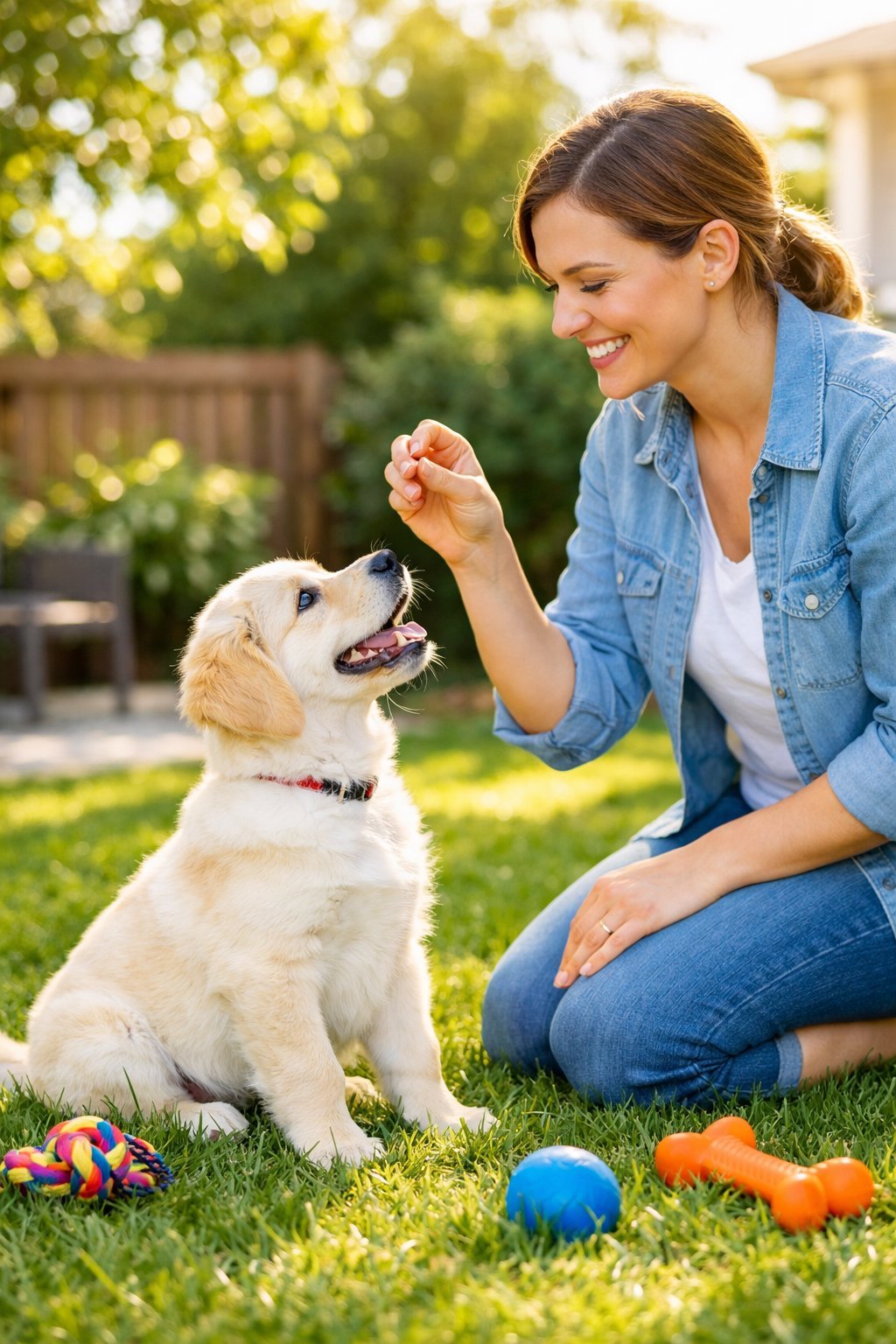
A well-rounded puppy needs more than basic commands to thrive. Mental challenges, strong bonds with their owner, and ongoing learning opportunities help dogs feel secure and behave well.
Providing Mental Stimulation
A tired puppy is a good puppy, but mental exhaustion is just as important as physical exercise. Puppies need their brains challenged every day to prevent boredom and destructive behaviors.
Puzzle toys are one of my favorite tools for raising a confident puppy. I fill them with treats or kibble and let my puppy work to get the food out.
This simple activity can keep a puppy busy for 15-30 minutes. I also rotate my puppy’s toys every few days.
When I bring back a toy they haven’t seen in a week, it feels brand new again. This prevents toy boredom without spending extra money.
Simple Mental Stimulation Activities:
- Hide treats around the house for your puppy to find
- Teach new tricks like spin, shake, or roll over
- Use snuffle mats during feeding time
- Practice basic commands in new locations
- Introduce safe, novel objects for exploration
Building Trust and Bonding
Trust forms the foundation of every strong relationship between me and my puppy. I build this trust through consistent, positive interactions that make my puppy feel safe and loved.
I spend dedicated one-on-one time with my puppy each day. This might be a training session, a walk, or simply sitting together while I gently pet them.
These moments create security and strengthen our connection. I never use punishment or harsh corrections.
Instead, I focus on rewarding good behavior and redirecting unwanted actions. When my puppy makes mistakes, I stay calm and patient.
Trust-Building Practices:
- Hand-feed meals occasionally to create positive associations
- Respect your puppy’s body language and boundaries
- Be consistent with rules and routines
- Handle paws, ears, and mouth gently to prepare for grooming and vet visits
- Always follow through on promises (like coming back after leaving)
Continuing Education for Your Puppy
Training doesn’t stop after my puppy learns basic commands. I view education as a lifelong journey that keeps my dog’s mind sharp and behavior solid.
I introduce new skills every month, even after mastering the basics. Advanced commands like “stay” for longer periods, “leave it” with tempting items, or fun tricks keep learning fresh.
I also expose my puppy to new environments regularly. A puppy who only knows their house and yard will struggle in unfamiliar places.
I take mine to pet-friendly stores, different parks, and friends’ homes to build confidence. Group training classes offer benefits beyond what I can teach alone.
My puppy learns to focus around distractions and interact appropriately with other dogs. These classes also give me professional guidance when I encounter training challenges.
Frequently Asked Questions
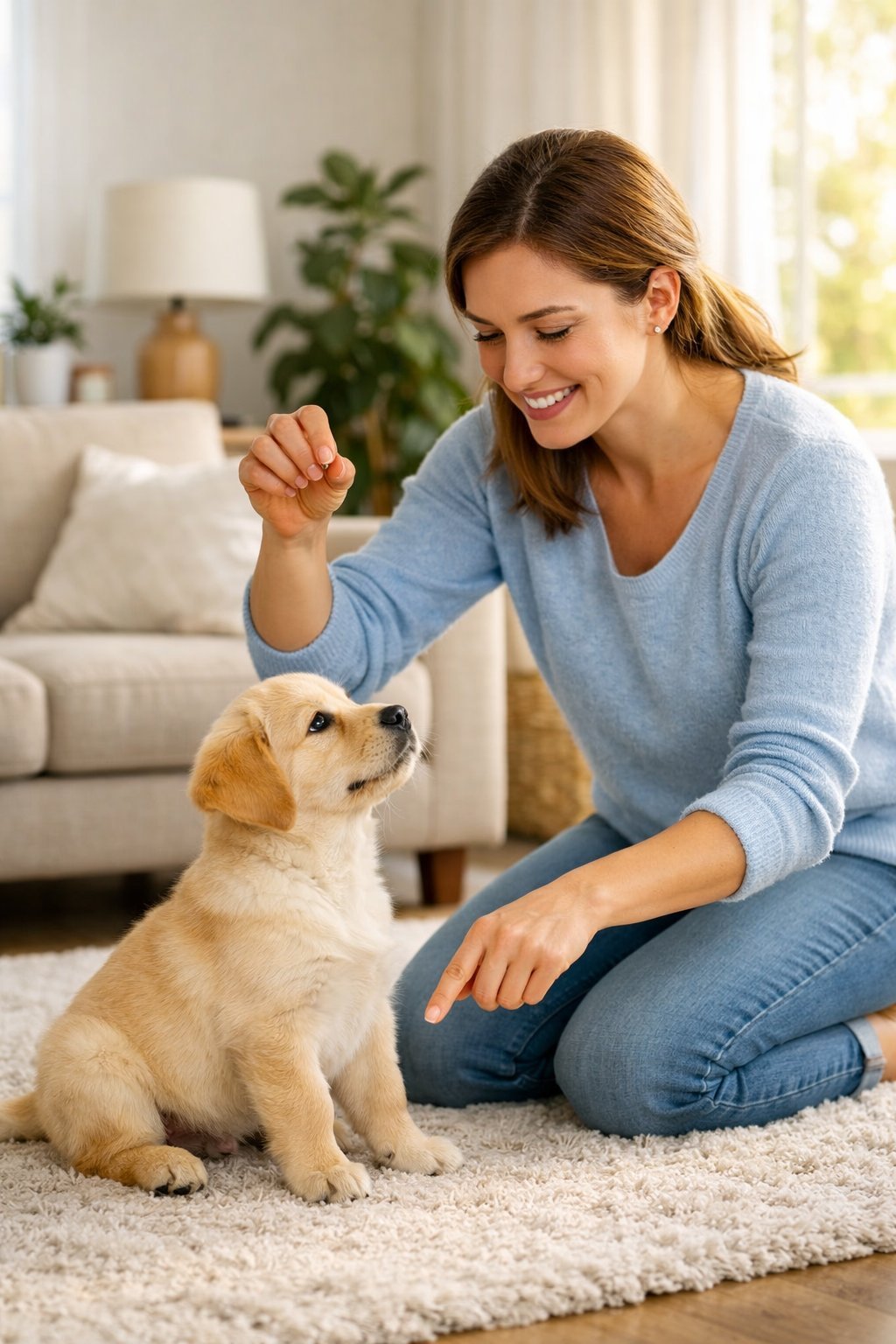
New puppy owners often wonder about the same basic training challenges, from house training accidents to teaching good manners. These answers cover the most common concerns you’ll face in the early months with your puppy.
What are the first steps in training my new puppy?
I recommend starting with bonding and creating a routine before diving into formal commands. Your puppy needs to feel safe and trust you first.
Set up a consistent schedule for feeding, potty breaks, playtime, and sleep. Puppies thrive on predictability, and a routine helps them learn what to expect throughout the day.
I also focus on positive training methods from day one. This means rewarding good behavior with treats, praise, or play instead of punishing mistakes.
Your puppy will learn faster and build confidence when training feels fun and rewarding.
How can I housebreak or potty train my puppy effectively?
I take my puppy outside frequently, especially after meals, naps, and playtime. Young puppies need to go out every one to two hours during the day.
Choose a specific spot in your yard for potty breaks. I always take my puppy to the same area so they associate that location with going to the bathroom.
When your puppy goes potty outside, give them immediate praise and a small treat. Timing matters here because puppies connect rewards with whatever just happened.
If you wait too long, they won’t understand what they did right. Accidents will happen indoors, and that’s normal.
I clean them up without making a fuss or scolding my puppy. Potty training takes time and patience, usually several weeks to a few months.
What are some essential commands that every puppy should learn?
I start with “sit” because it’s one of the easiest commands for puppies to learn. Hold a treat near your puppy’s nose and slowly move it up and back over their head.
Their bottom will naturally lower to the ground as they follow the treat. “Come” is another critical command that could save your puppy’s life one day.
I practice this in a safe, enclosed area at first. Say your puppy’s name followed by “come” in a happy, excited voice, then reward them when they reach you.
“Stay” teaches your puppy self-control. I ask my puppy to sit, then hold my hand up like a stop sign and say “stay.”
I only wait a second or two at first, then gradually increase the time before giving a reward. “Down” and “leave it” are also important commands.
Down helps calm an excited puppy, while leave it prevents them from picking up dangerous items.
How can I help my puppy with socialization?
I expose my puppy to new people, animals, sounds, and environments during their first few months of life. This critical period, usually between 3 and 14 weeks old, shapes how confident and friendly they’ll be as adults.
I invite friends and family to meet my puppy in calm, controlled settings. I make sure each interaction is positive by letting my puppy approach new people at their own pace.
Taking my puppy to different locations helps them adapt to new experiences. I visit pet-friendly stores, parks, and quiet outdoor areas.
I keep these trips short and positive to avoid overwhelming them. Puppy classes offer structured socialization opportunities with other vaccinated puppies.
These classes teach basic obedience while letting puppies play and interact under supervision.
What is the best way to deal with biting and chewing in young puppies?
I understand that puppies explore the world with their mouths, especially when teething. Biting and chewing are normal behaviors that need to be redirected, not punished.
When my puppy bites during play, I immediately stop the interaction and say “ouch” in a high-pitched voice. This mimics how their littermates would react.
I then turn away or leave the room for a few seconds to show that biting ends the fun. I provide plenty of appropriate chew toys to satisfy my puppy’s need to chew.
I rotate different textures and types to keep them interesting. Frozen toys can soothe sore gums during teething.
I never let my puppy chew on my hands or clothes, even in play. This sends mixed messages about what’s acceptable.
Instead, I redirect their attention to a toy whenever they try to mouth me.
How can I ensure my puppy is well-behaved around other dogs and people?
I start by teaching my puppy basic impulse control at home. Commands like sit and stay help them learn to calm down before getting what they want.
When meeting new people, I ask my puppy to sit before they get attention. This helps prevent jumping and shows them that calm behavior gets rewards.
I also ask visitors to ignore my puppy if they’re jumping or acting overly excited.
For interactions with other dogs, I choose playmates carefully at first. I look for well-behaved dogs that are friendly and patient with puppies.
I supervise all play sessions and step in if things get too rough.
I keep an eye on my puppy’s body language during interactions. Relaxed, wiggly movements and play bows are good signs.
If I notice stiff posture, a tucked tail, or excessive barking, I give my puppy a break.
I practice greetings on leash in low-distraction areas first. I reward my puppy for walking calmly past people and dogs without pulling or lunging.
As they get better, I slowly add more challenging situations.