Puppy Potty Training Schedule: How Often to Go Out at Every Age

A puppy potty training schedule takes your puppy out at the times they are most likely to need to go: first thing in the morning, after every meal, nap and play session, before bed, and every 1 to 2 hours in between for young puppies. Below is how often to go out at each age, a full sample day you can copy, the overnight plan, how to handle accidents, and how long potty training usually takes.
This post contains affiliate links. As an Amazon Associate I earn from qualifying purchases.
Training gear worth a look:
Crate with divider, Puppy playpen, Soft training treats, Treat pouch, Potty training bells, Enzyme cleaner, Puppy teething toys.
Quick Answer
- Always go out: right after waking, 5 to 15 minutes after eating or drinking, after play, after a nap, and before bed.
- Between those: every 1 to 2 hours at 8 to 10 weeks, stretching to every 3 to 4 hours by 4 months.
- Rough holding guide: about 1 hour per month of age, plus 1, up to about 8 hours. A 3-month-old can hold it about 4 hours at most, and less when active.
- Reward right away: praise and a treat within a second or two of finishing, outside.
- Typical timeline: most puppies are reliable by 4 to 6 months. Some take until 8 to 12 months.
How Often to Take a Puppy Out, by Age
| Age | Daytime potty breaks | Max hold (rough guide) | Overnight |
|---|---|---|---|
| 8 to 10 weeks | Every 1 to 2 hours, plus after meals, naps and play | About 2 to 3 hours | 1 to 2 trips |
| 10 to 12 weeks | Every 2 hours | About 3 hours | 1 trip |
| 3 months | Every 2 to 3 hours | About 4 hours | 0 to 1 trip |
| 4 months | Every 3 to 4 hours | About 5 hours | Most sleep through |
| 5 to 6 months | Every 4 to 5 hours | About 6 to 7 hours | Sleep through |
| 6+ months | Every 4 to 6 hours | Up to about 8 hours | Sleep through |
The max hold is the longest stretch while resting in a crate, not a goal. Active, playing puppies need to go much sooner. Small breeds often need more frequent breaks.
Sample Potty Schedule for an 8 to 12 Week Puppy
| Time | What to do |
|---|---|
| 6:30 AM | Wake up. Carry or leash your puppy straight outside. |
| 6:45 AM | Breakfast and water. |
| 7:00 AM | Potty break. |
| 7:15 AM | Supervised play. |
| 7:45 AM | Potty break, then nap in crate. |
| 9:30 AM | Wake up. Potty break right away. |
| 10:30 AM | Potty break, then nap. |
| 12:00 PM | Wake up, potty, lunch, potty again 15 minutes later. |
| 1:00 PM | Potty break, then nap. |
| 3:00 PM | Wake up, potty, play. |
| 4:00 PM | Potty break, then nap. |
| 5:30 PM | Wake up, potty, dinner, potty again 15 minutes later. |
| 7:00 PM | Potty break, family time. |
| 8:00 PM | Pick up the water bowl (unless your vet advises otherwise). |
| 8:30 PM | Potty break. |
| 9:30 PM | Last potty break, then bed in the crate. |
| About 1:00 to 3:00 AM | One quiet potty trip if your puppy wakes and whines. |
Adjust the clock times to your day. What matters is the pattern: wake, potty, activity, potty, sleep. For the full training routine around these breaks, see our puppy training schedule by age.
How to Do a Potty Break
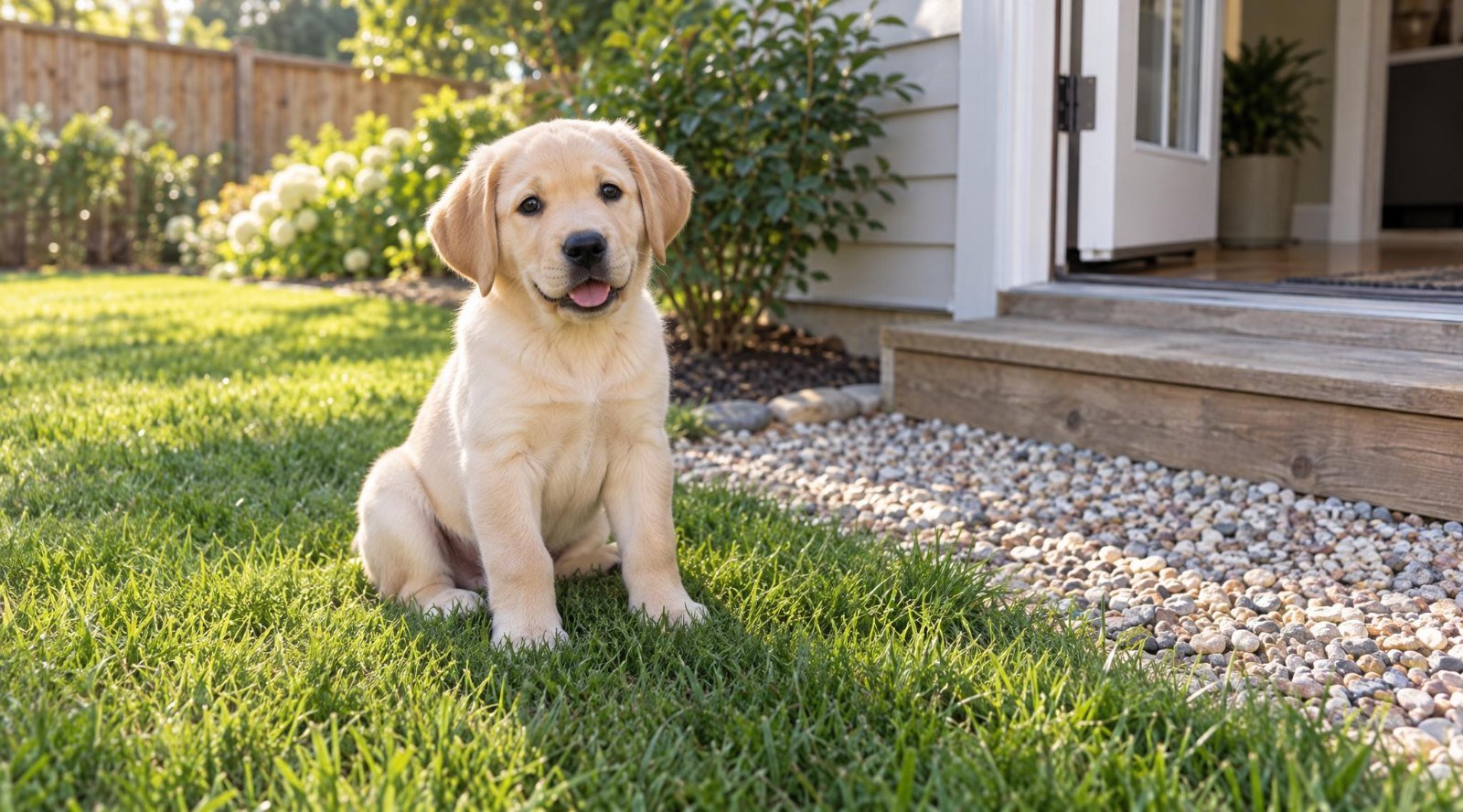
- Use the same door and the same spot each time. The smell tells your puppy what this place is for.
- Keep your puppy on a leash so they stay focused instead of playing.
- Say a cue like “go potty” once, then stand quietly.
- Wait up to 5 minutes. Be boring. No play yet.
- Reward the moment they finish: calm praise and a small treat, outside, right there.
- Then play or walk a little as a bonus.
- No potty after 5 minutes? Go back inside, put your puppy in the crate or keep them close for 10 to 15 minutes, then try again.
The Overnight Plan
- Put the crate in or near your bedroom so you hear your puppy wake up.
- Take the last potty break right before bed.
- If your puppy wakes and whines in the night, take them out quietly: no lights, no play, straight back to the crate.
- Most puppies can sleep through the night by about 4 months.
- If you set an alarm for a young puppy, push it 15 minutes later every few nights.
Signs Your Puppy Needs to Go
- Sniffing the floor or circling
- Suddenly stopping play and wandering off
- Whining, scratching or sitting at the door
- Heading to a spot where they had an accident before
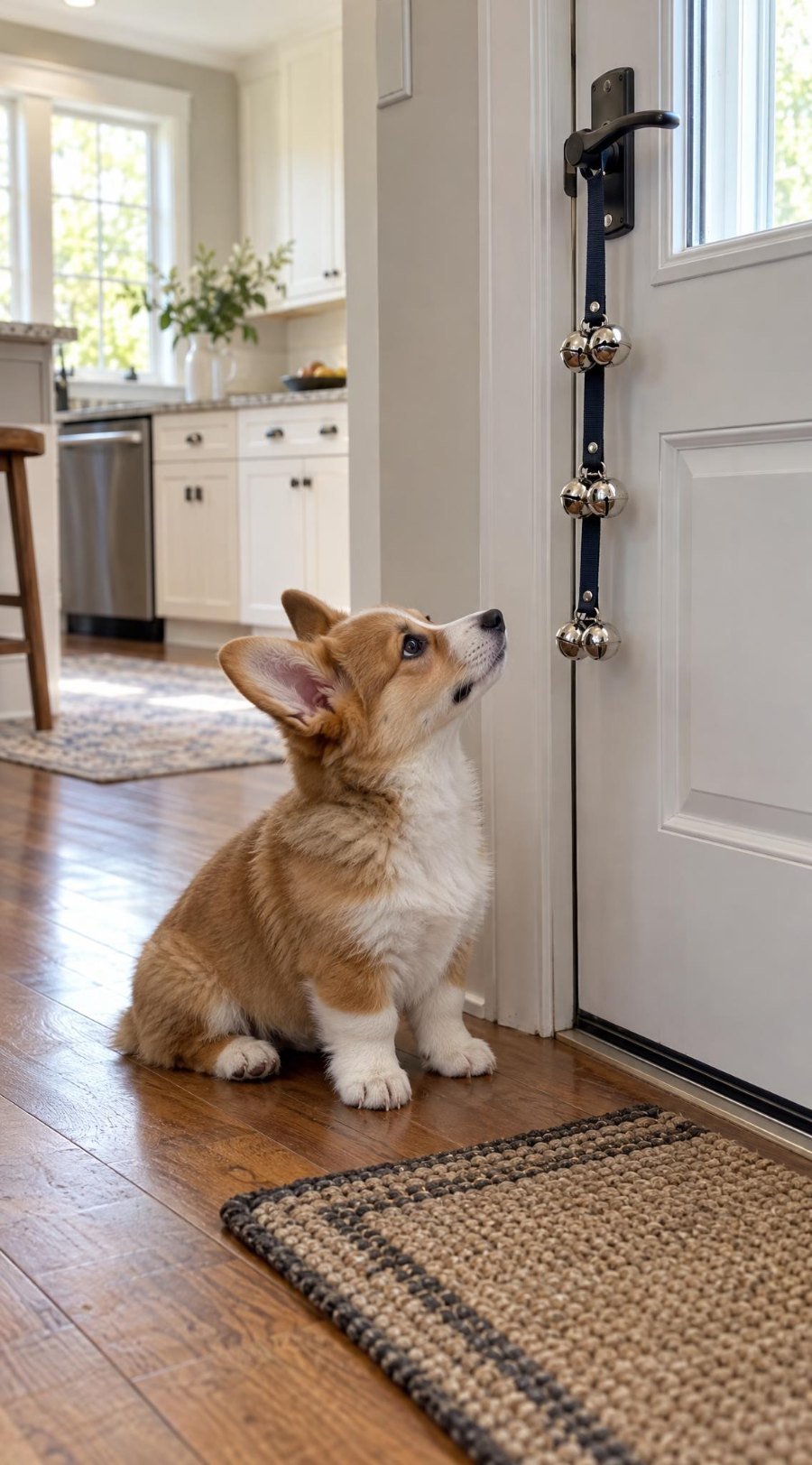
Potty bells on the door give your puppy a clear way to tell you. Ring them every time you go out for a potty break, and your puppy will start ringing them on their own.
What to Do About Accidents
- Catch them in the act? Calmly interrupt, carry or lead them outside, and reward if they finish there.
- Find it later? Just clean it up. Puppies can’t connect a scolding to something they did earlier, and punishment teaches them to hide when they potty.
- Use an enzyme cleaner. Regular cleaners leave a scent that draws puppies back to the same spot.
- Look at the pattern. Accidents usually mean too much freedom, too long between breaks, or a missed after-meal trip.
Crate Training and Potty Training
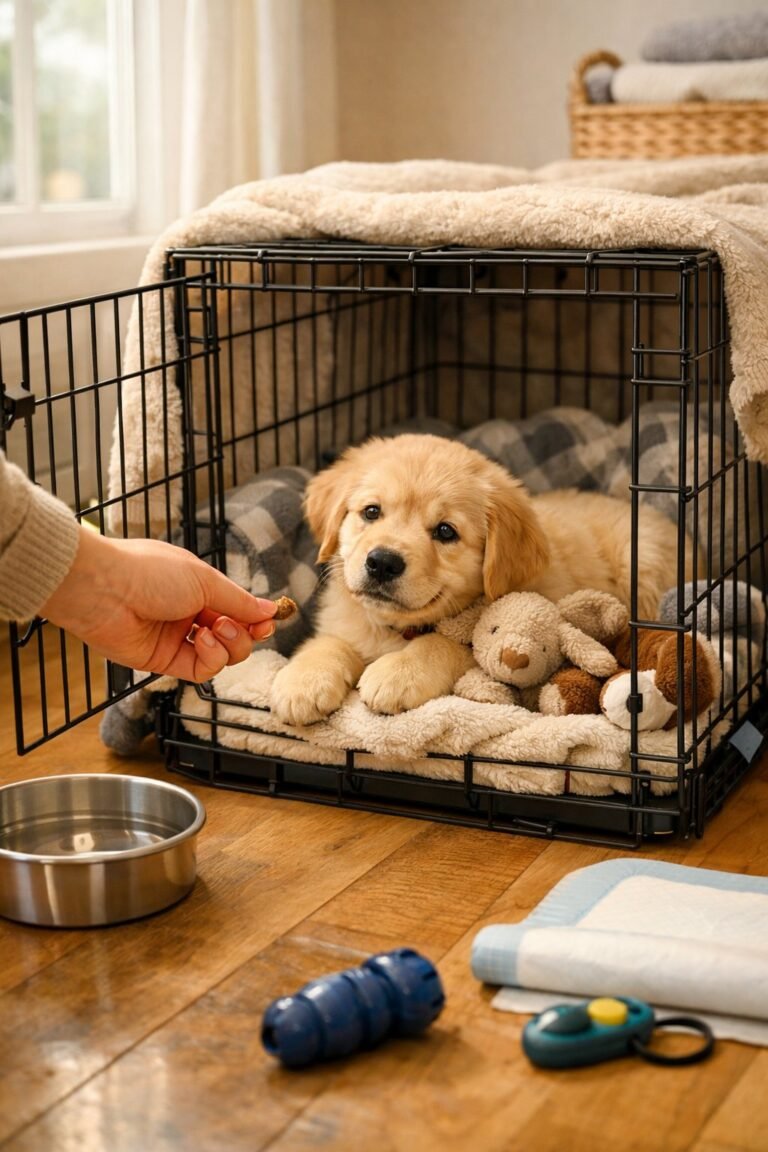
Most puppies avoid soiling the place they sleep, so a crate helps them learn to hold it. The crate should be just big enough to stand up, turn around and lie down. Use a divider in a larger crate. Don’t leave a puppy in the crate longer than they can hold it, and never use the crate as punishment.
What If You Work All Day?
- Come home at lunch, or ask a neighbor or dog walker for a midday potty break.
- For long stretches with a young puppy, use a playpen with a bed on one side and a potty pad or grass patch on the other, instead of a closed crate.
- Expect training to take a bit longer, and be consistent on weekends.
When to Call the Vet
Call your vet if your puppy suddenly has more accidents after doing well, pees very often in small amounts, strains, has blood in the urine, or drinks much more than usual. These can be signs of a urinary tract infection or another medical problem, not a training issue.
Frequently Asked Questions
How long does it take to potty train a puppy?
Most puppies are mostly reliable by 4 to 6 months with a consistent schedule. Small breeds and puppies with less supervision can take up to a year.
Should I use puppy pads?
Pads help if you live in an apartment or are away for long stretches, but they can teach puppies that it’s fine to go indoors. If your goal is outdoor potty, move away from pads as soon as you can.
Should I take water away at night?
Many owners pick up water about an hour before bed for young puppies. Make sure your puppy drinks well during the day, and ask your vet if your puppy has any health condition.
Why does my puppy pee right after coming inside?
They got distracted outside. Stay out a few minutes longer on a leash, keep it boring until they go, and reward the moment they finish.
The Short Version
- Go out after waking, eating, playing, napping and before bed.
- Every 1 to 2 hours for young puppies, stretching with age.
- Reward within seconds, outside.
- Clean accidents with an enzyme cleaner and never punish.
- Expect 4 to 6 months for most puppies.