
Puppy Training Schedule By Age: Essential Skills to Teach Your Dog From 8 Weeks to Adulthood

Puppy Training Schedule By Age – Bringing home a new puppy is exciting, but it can also feel overwhelming when you don’t know where to start with training.
I remember feeling lost during those first few weeks with my own puppy, wondering what I should be teaching and when.
The good news is that puppies learn best when training aligns with their natural development stages, and following an age-based training schedule makes the process much easier for both you and your pup.
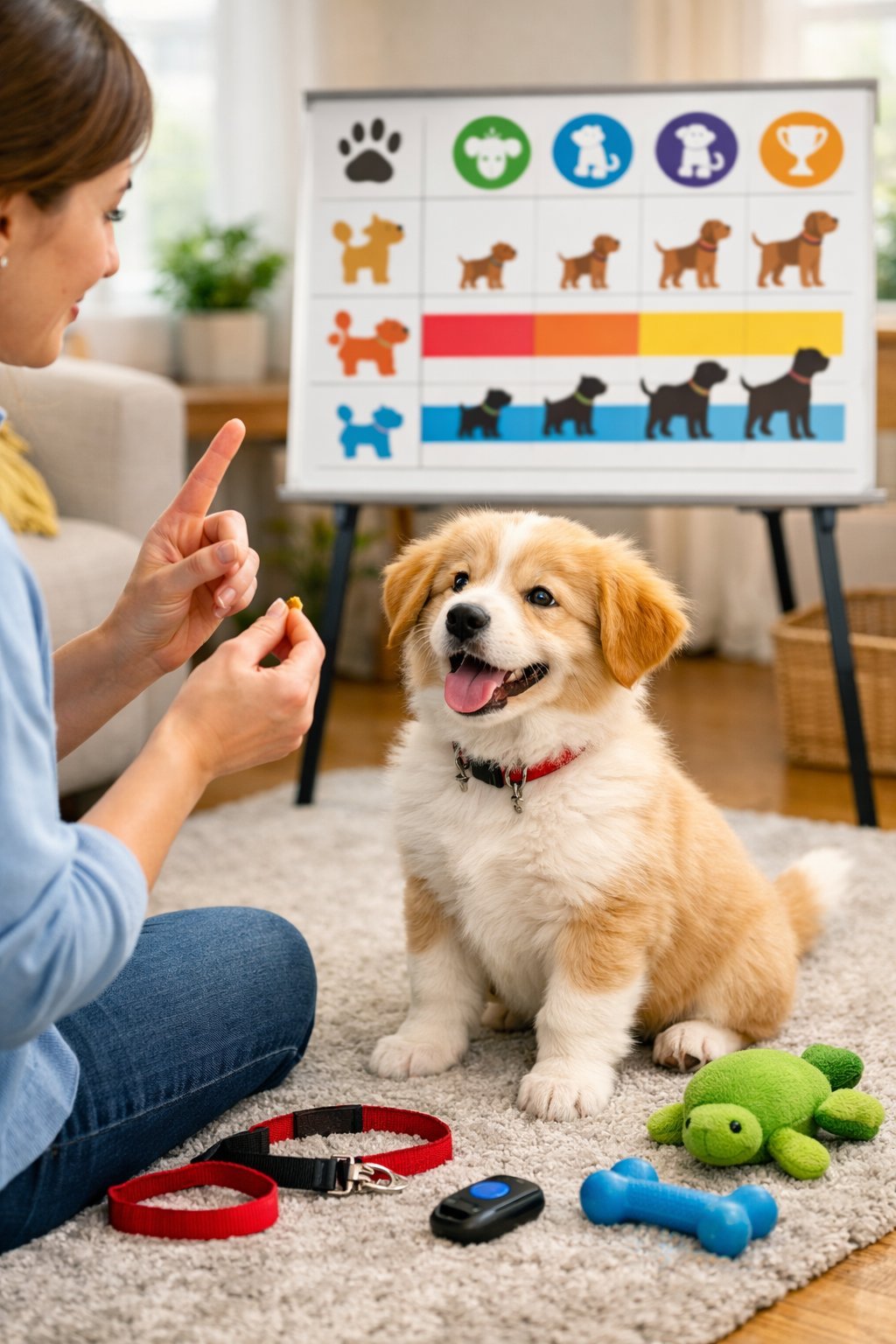
I’ve put together this guide to walk you through exactly what to teach your puppy at each stage of their development.
From their first weeks at home to their teenage months and beyond, you’ll know which skills to focus on and when your puppy is ready to learn them.
Training your puppy at the right age helps build a strong foundation for good behavior throughout their life.
Whether you’re working on potty training, basic commands, or socialization, timing matters.
Let me show you how to set your puppy up for success at every stage.
Key Takeaways
- Puppies go through distinct development stages that determine what they can learn and when they’re ready to learn it
- The 8 to 16 week period is the most important time for socialization and building basic training foundations
- Training continues well into your puppy’s first year with more advanced skills building on earlier lessons
Understanding Puppy Development Stages
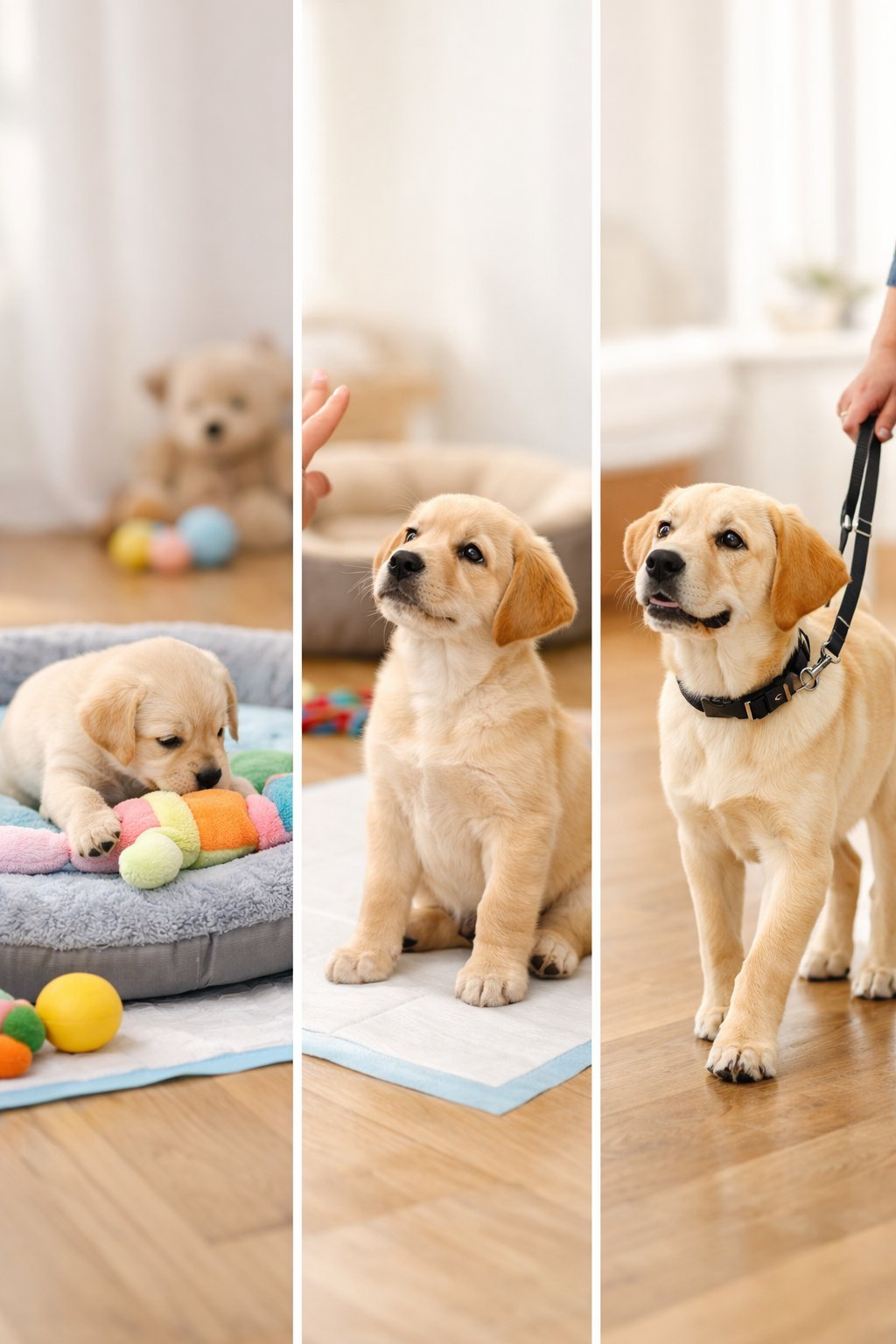
Puppies go through distinct growth phases that affect how they learn, what they fear, and when they’re ready for different types of training.
Each stage brings specific physical changes and mental abilities that shape the best approach to teaching new skills.
Critical Periods of Puppy Growth
The first few months of a puppy’s life contain windows of time when certain experiences have the biggest impact.
From birth to 3 weeks, puppies rely completely on their mother and can’t see or hear yet.
Between 3 and 12 weeks, they enter what I call the most critical period in your puppy’s life, often called the socialization window.
This is when puppies learn fastest and form lasting impressions about the world.
What they experience during weeks 8 to 12 sticks with them for life.
Positive encounters with people, animals, and environments during this time help prevent fear and anxiety later.
The juvenile period runs from 3 to 6 months, when puppies start testing boundaries and can be more independent.
Then comes adolescence at 6 to 18 months, which brings hormonal changes and sometimes a return of behaviors you thought were gone.
Physical and Cognitive Milestones
Puppies open their eyes around 2 weeks old and start hearing shortly after.
By 4 weeks, they’re walking and playing with their littermates.
Their baby teeth come in between 3 and 6 weeks, which is why they want to chew on everything.
At 8 weeks old, puppies can start learning basic commands because their brains are ready to make simple connections.
Their attention span is short, though—just a few minutes at a time.
Between 3 and 4 months, they begin to understand cause and effect better.
Key Physical Changes:
- 8-12 weeks: Can control bladder for 1-2 hours
- 3-4 months: Losing baby teeth, adult teeth coming in
- 4-6 months: Better coordination and motor control
- 6-12 months: Reaching adult size (varies by breed)
Socialization Benchmarks
I recommend exposing puppies to at least 100 different people, places, and things before they turn 12 weeks old.
This doesn’t mean overwhelming them—it means controlled, positive experiences.
Take them to different surfaces like grass, concrete, and tile.
Let them hear various sounds like vacuums, cars, and doorbells.
Puppy classes starting at 8 weeks help them learn how to interact with other dogs appropriately.
They need to meet friendly adult dogs, calm children, and people wearing hats or using wheelchairs.
Each new experience should be pleasant and brief.
Between 8 and 16 weeks, puppies go through a fear period where they may suddenly act scared of things that didn’t bother them before.
I avoid forcing them into scary situations during this time and instead let them approach new things at their own pace.
Puppy Training Schedule: Birth to 8 Weeks
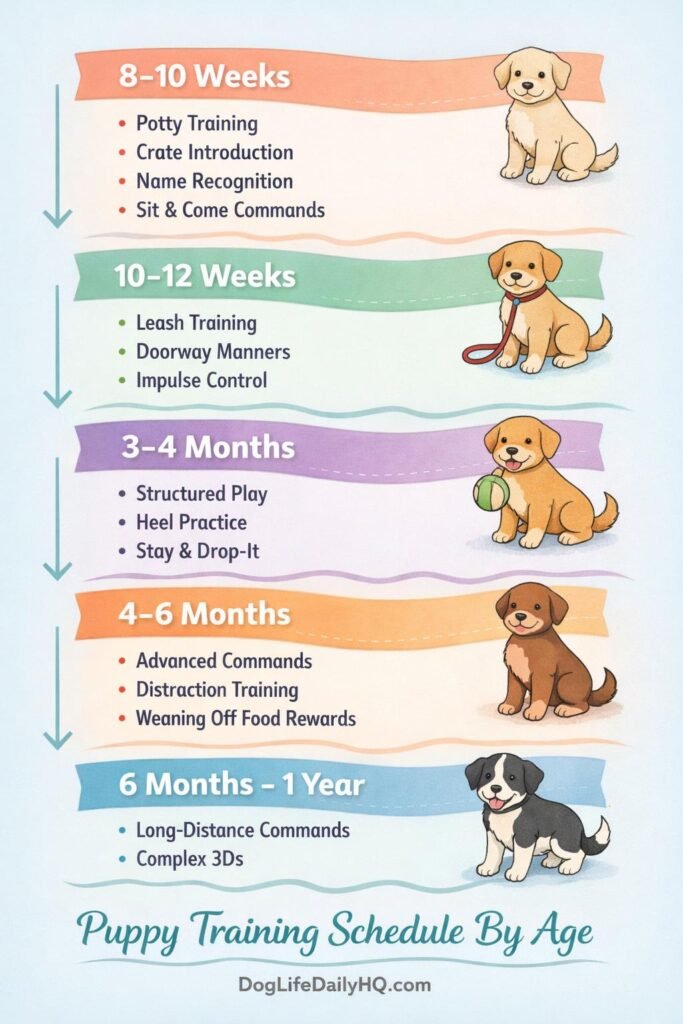
During the first eight weeks, puppies stay with their mother and littermates to learn basic social skills and body awareness.
I focus on gentle interactions during this critical period to help puppies develop confidence and prepare for life with humans.
Gentle Handling and Early Exposure
I start touching puppies gently from around three weeks old when their eyes and ears open.
This includes softly holding their paws, touching their ears, and running my hands along their body.
These brief handling sessions last just a few seconds at first.
I make sure each puppy gets individual attention every day.
This helps them get used to human touch and scent.
I keep the sessions calm and quiet to avoid overwhelming them.
Between four and seven weeks, I gradually introduce new textures like soft blankets, different floor surfaces, and safe toys.
I also expose puppies to household sounds at low volumes, such as a television, gentle music, or kitchen noises.
This early socialization window shapes how puppies respond to their environment later in life.
Building Trust and Safety
I let the mother dog do most of the teaching during these weeks.
She shows puppies how to communicate with other dogs and sets boundaries when they bite too hard or play too rough.
I watch for signs that puppies feel comfortable, like relaxed body language and willingness to explore.
If a puppy seems scared or pulls away, I give them space and try again later with an even gentler approach.
I never force interactions or startle puppies during this time.
My goal is to create positive associations with people so puppies view humans as safe and friendly.
I speak in a soft, happy voice when I’m near them.
Foundation for Future Training
The experiences puppies have before eight weeks affect their entire life.
I focus on making every interaction positive and stress-free.
This builds a strong foundation for puppy training that happens later.
I observe which puppies are bold and which are more cautious.
This helps me understand their personalities and what they might need when they go to new homes.
Some puppies need more encouragement, while others need gentle boundaries.
I don’t start formal training like sit or stay during this period.
Instead, I let puppies develop naturally while providing safe exploration opportunities.
The mother dog and littermates teach bite inhibition and basic dog manners better than I can.
Puppy Training Basics: 8 to 12 Weeks

I find that the 8 to 12 week period is when your puppy’s brain works like a sponge, ready to absorb new information.
This stage focuses on establishing a bathroom routine, teaching your pup to recognize simple words like “sit” and “come,” and exposing them to different people, animals, and places in a positive way.
House Training Essentials
I always start with a consistent potty schedule during these early weeks.
Take your puppy outside first thing in the morning, after meals, after naps, and before bedtime.
Puppies this age need to go out every 1 to 2 hours during the day.
I recommend taking them to the same spot each time so they recognize the area by smell.
Watch for signs your puppy needs to go, like sniffing around, circling, or whining.
When they go in the right spot, I give them a treat right away and use happy praise.
Accidents will happen, and I never punish my puppy for them.
I just clean up the mess with an enzyme cleaner and move on.
At this age, your puppy is learning name recognition and needs to establish a potty routine as their first training priorities.
Crate training helps with house training because puppies don’t want to mess where they sleep.
I make sure the crate is just big enough for my puppy to stand up, turn around, and lie down.
Introducing Basic Commands
I start with the command “sit” because it’s the easiest for puppies to learn.
Hold a treat near your puppy’s nose and slowly move it up and back over their head.
Their bottom will naturally lower to the ground.
Say “sit” once as they move into position, then give the treat right away.
I practice this 3 to 5 times per session, keeping sessions short at just 5 minutes.
The “come” command is next on my list.
I kneel down, say my puppy’s name followed by “come,” and hold out a treat.
When they move toward me, I praise them and give the reward.
I also work on name recognition during this time.
I say my puppy’s name in a happy voice and reward them when they look at me.
This builds the foundation for all other commands.
Early Socialization Techniques
The weeks between 8 and 12 are part of what experts call the critical socialization window.
I expose my puppy to new sights, sounds, and experiences during this time.
I introduce my puppy to different types of people, including children, men with beards, and people wearing hats.
Each positive meeting helps build confidence.
Safe interactions with vaccinated, friendly dogs teach my puppy proper play behavior.
I look for calm, gentle dogs that won’t overwhelm my young pup.
I also expose my puppy to everyday sounds like the vacuum cleaner, doorbell, and TV.
I start at a low volume and pair each sound with treats so my puppy forms positive connections.
Car rides, different floor surfaces, and various locations all count as valuable socialization experiences at this age.
Puppy Training Milestones: 12 to 16 Weeks
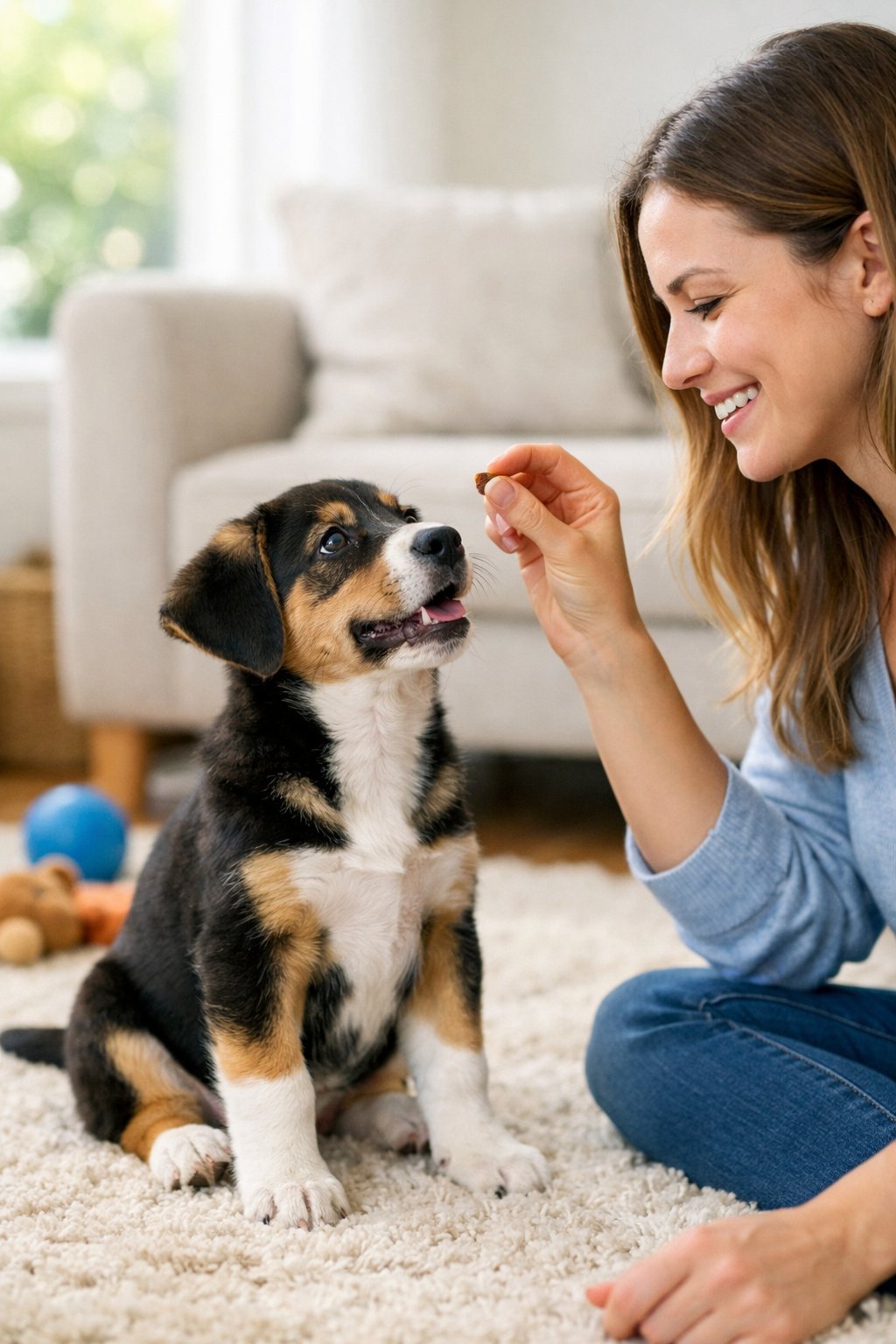
At this stage, your puppy is ready to learn more complex skills and build on the foundation you’ve already established.
This period focuses on teaching new commands, getting comfortable with leash walking, and learning how to behave politely around people and animals.
Expanding Command Vocabulary
Your puppy’s brain is ready to absorb more commands during the 12 to 16 week period.
I recommend adding commands like “leave it,” “drop it,” and “stay” to what your puppy already knows.
Start with “leave it” by placing a treat on the ground and covering it with your hand.
When your puppy stops trying to get it, reward them with a different treat.
Practice this several times each day.
“Drop it” is important for safety.
Trade your puppy a toy for a treat, saying “drop it” as they release the item.
This teaches them that giving up something leads to good things.
For “stay,” start small.
Have your puppy sit, then take one step back.
Return immediately and reward them if they didn’t move.
Gradually increase the distance and time as they improve.
Keep training sessions short, around 5 to 10 minutes each.
Puppies at this age have limited attention spans and learn better with multiple brief sessions throughout the day.
Leash Introduction and Practice
Leash training during weeks 12 to 16 helps your puppy learn to walk calmly beside you. I suggest starting indoors where there are fewer distractions.
Let your puppy wear their collar and leash around the house first. This lets them get used to the feeling before you start walking.
Reward them for calm behavior while wearing it. When you begin walking practice, use treats to encourage your puppy to stay near your side.
Stop moving if they pull ahead, and only continue when the leash is loose. This teaches them that pulling doesn’t get them where they want to go.
Practice in different locations as your puppy improves. Start in your yard, then move to quiet sidewalks before trying busier areas.
Change the environment slowly so your puppy can build confidence. I find that keeping walks short at first works best.
Aim for 10 to 15 minutes initially, focusing on quality practice rather than distance covered.
Manners Around People and Other Pets
Teaching your puppy proper social behavior now helps prevent problems later. I focus on three areas: not jumping on people, greeting others politely, and playing gently with other animals.
To stop jumping, I turn away and ignore my puppy when they jump up. The moment all four paws are on the ground, I give them attention and treats.
This shows them that calm behavior gets rewards. Practice greetings with friends and family members.
Ask them to only pet your puppy when they’re sitting calmly. If your puppy gets too excited, the person should stop interacting until they settle down.
For interactions with other pets, arrange playtime with vaccinated, friendly dogs. Watch for signs of good play like taking turns chasing and play bows.
Step in if play gets too rough or one puppy seems scared. I always supervise these interactions closely.
Puppies at this age are still learning social cues and may need guidance on appropriate behavior.
Ongoing Training: 4 to 6 Months
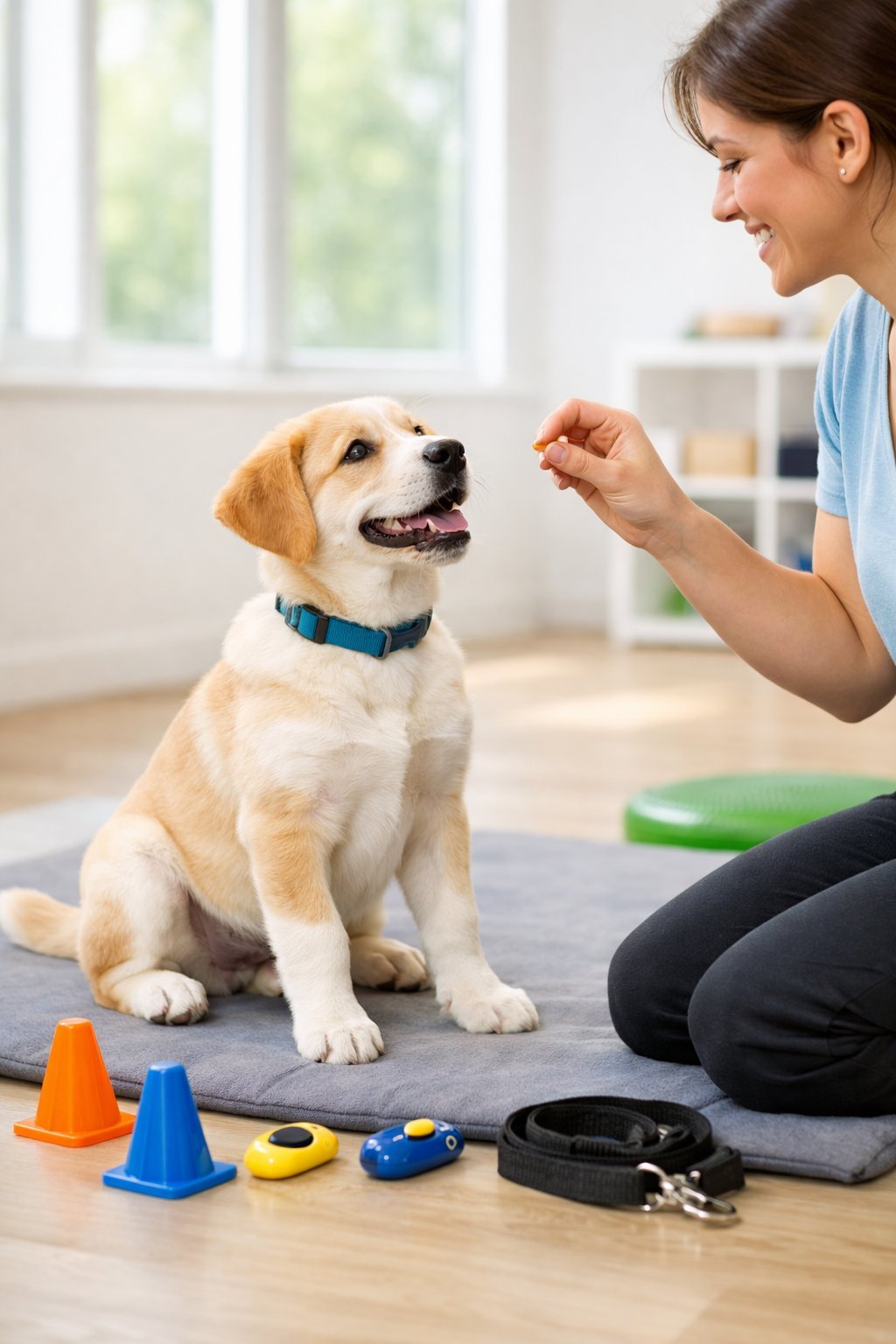
Between 4 and 6 months, I focus on strengthening what my puppy already knows while handling any new challenges. This is when puppies may start to regress or rebel, so consistency is extra important.
Reinforcing Positive Behaviors
I reward my puppy every time they get something right during this stage. Even if they’ve mastered a command like “sit” or “stay,” I keep using treats, praise, or play to reinforce these behaviors.
My puppy’s attention span can waver, so I keep training sessions short—about 5 to 10 minutes—and repeat them a few times throughout the day. This helps them stay focused without getting overwhelmed.
I start adding distractions gradually, like practicing commands in different rooms or with the TV on. This teaches my puppy to listen even when other things are happening.
Key behaviors to reinforce:
- Basic commands (sit, stay, come, down)
- Walking nicely on a leash
- Quiet behavior when asked
- Appropriate play with toys instead of hands or furniture
Problem Prevention Strategies
I tackle potential issues before they become bad habits. Chewing, jumping, and nipping often increase during this age, so I redirect these behaviors right away.
When my puppy starts chewing furniture, I give them an appropriate toy instead. I make sure they have plenty of safe items to chew on since their adult teeth are coming in.
For jumping, I turn away and ignore my puppy until all four paws are on the ground, then reward them with attention. I never punish my puppy harshly during this stage.
Instead, I use positive redirection and remove access to things they shouldn’t have. If they’re getting into trouble repeatedly, I ask myself if they’re getting enough exercise and mental stimulation.
Gradual Exposure to New Environments
Now that my puppy’s fully vaccinated, I take them to new places regularly. Different environments help them become confident and well-adjusted adults.
I start with quieter locations like empty parking lots or calm neighborhoods. As my puppy shows comfort, I move to busier places like pet stores or outdoor cafes.
During each new experience, I watch my puppy’s body language. If they seem scared or overwhelmed, I create more distance from whatever is bothering them.
I let them approach new things at their own pace and reward brave behavior.
Places to visit:
- Different types of flooring (grass, gravel, tile, carpet)
- Car rides to various destinations
- Friends’ homes
- Quiet outdoor events
- Pet-friendly stores
Advanced Puppy Training by Age: 6 Months and Beyond

By 6 months, your puppy has mastered the basics and is ready for more complex commands and behaviors. This stage is all about refining skills, handling teenage behaviors, and building lifelong habits.
Fine-Tuning Obedience Skills
I recommend working on improving the reliability of basic commands during this phase. Your puppy should respond to sit, stay, come, and down even with distractions.
Practice commands in different environments like parks, pet stores, and busy sidewalks. Start adding duration to behaviors by asking your puppy to hold a sit or down position for longer.
Try introducing distance work, where you move farther away while your puppy maintains their position.
Key skills to refine include:
- Off-leash recall in safe, enclosed areas
- Leave it with tempting items like food or toys
- Heel during walks without pulling
- Wait at doors and before meals
Polite play behaviors are especially important now. Your puppy needs to learn when playtime is over and how to calm down on cue.
Preparing for Adolescence Challenges
Between 6 and 18 months, puppies enter adolescence and may test boundaries like teenagers. Sometimes, puppies seem to “forget” commands they knew well.
Your puppy’s hormones are changing, which can affect their behavior and attention span. They might become more distracted by other dogs, more fearful of new things, or more stubborn about listening.
Stay consistent with your training routine even when progress seems to slow down. I keep training sessions short and positive during this time.
Reward good behavior generously and try not to get frustrated when your puppy makes mistakes.
Common adolescent behaviors to address:
- Selective hearing or ignoring commands
- Increased reactivity to other dogs
- Counter surfing and stealing items
- Testing household rules
Setting Long-Term Training Goals
This is a great time to think about what you want your adult dog to be like. Age-appropriate training goals should fit your lifestyle and your dog’s abilities.
Consider activities that match your puppy’s breed and energy level. Sporting breeds might enjoy agility or fetch, while scent hounds could love nose work.
Explore different options to find what your puppy enjoys most. Set realistic expectations for ongoing training throughout your dog’s first year and beyond.
Training continues well into adulthood as you maintain good habits and prevent new problems. Make training part of your daily routine instead of a temporary project.
Frequently Asked Questions
New puppy owners often wonder when to start specific training activities and how to handle common challenges like potty training and basic commands. The timing and methods you choose can really help your puppy’s development.
What are the essentials to include in an 8-week-old puppy’s training schedule?
At 8 weeks old, I focus on helping my puppy adjust to their new home and building trust. This age is perfect for starting gentle socialization by introducing them to new sounds, people, and safe environments.
I begin with simple name recognition by saying their name in a happy voice and rewarding them when they look at me. Crate training should start now too, making the crate a positive space with treats and toys.
Potty training is another essential at this stage. I take my puppy outside every 1-2 hours, after meals, and after naps to establish good habits early.
Where can I find a printable puppy training schedule to help organize my dog’s training routine?
I can find printable puppy training schedules organized by age that break down training into manageable steps for each stage. Many pet training websites offer free downloadable schedules with daily routines and training goals.
These guides usually cover feeding times, potty breaks, play sessions, and training activities. I look for schedules that include check-off boxes so I can track my puppy’s progress.
Some schedules also have space to record my puppy’s achievements and any challenges I notice. This helps me stay consistent and see patterns in my puppy’s behavior.
At what age is it most effective to start enrolling a puppy in training classes?
I can start enrolling my puppy in training classes around 7-8 weeks old, as long as they’ve had their first set of vaccinations. Puppy kindergarten classes are designed for young puppies and focus on socialization and basic skills.
Most trainers recommend starting formal classes between 8-16 weeks of age. This window is critical for socialization and learning.
I make sure to check with my veterinarian about vaccination requirements before enrolling. Some classes require puppies to have completed certain vaccinations to protect all the dogs in the group.
What are some effective strategies for potty training a new puppy within the first week?
In the first week, I take my puppy outside immediately after waking up, after eating, after playing, and every 1-2 hours during the day. Consistency is the most important factor in quick potty training success.
I choose one specific spot outside and take my puppy to the same location each time. When they go potty in the right spot, I praise them enthusiastically and give them a small treat right away.
I watch for signs my puppy needs to go, like sniffing, circling, or whining. If accidents happen inside, I clean them up without punishment and just take my puppy outside more often.
At night, I limit water intake 2 hours before bedtime and take my puppy out right before we go to sleep. Young puppies can’t hold their bladder all night, so I set an alarm to take them out once during the night.
How can I teach my 4-month-old puppy basic obedience commands as part of their training?
At 4 months old, my puppy is ready to learn essential commands like sit, stay, come, and down. I keep training sessions short—around 5-10 minutes, 2-3 times per day—to keep their attention.
I start with “sit” by holding a treat above my puppy’s nose and moving it backward over their head. As their bottom touches the ground, I say “sit” and immediately give them the treat.
For “come,” I start in a hallway or enclosed area with minimal distractions. I say my puppy’s name followed by “come” in an excited voice, then reward them when they reach me.
I use positive reinforcement with every command, rewarding my puppy with treats, praise, or play. I avoid repeating commands multiple times, which can teach my puppy to ignore me.
Can you provide guidance for creating a well-rounded training program for different puppy development stages?
I build my training program around key developmental milestones that happen at specific ages. From 8-12 weeks, I focus on socialization, house training, and name recognition.
Between 12-16 weeks, I start introducing basic commands. Socialization continues with new people, animals, and different environments.
This is also the time to begin leash training and help your puppy get comfortable walking nicely. At 4-6 months old, I work on polite play behaviors and impulse control.
My puppy learns not to jump on people and to wait patiently for things they want. From 6-12 months, I reinforce previous training and introduce more advanced commands.
I also keep an eye out for teenage behaviors like testing boundaries. I adjust my approach based on my puppy’s personality and breed, since some pups learn faster while others need more patience.
